Chicken
Air Frying Chicken Breast: Foolproof, Succulent Results
Master air frying chicken breast with tested times, temperature, flipping tips, and safe doneness for juicy, reliable results. Discover the method.
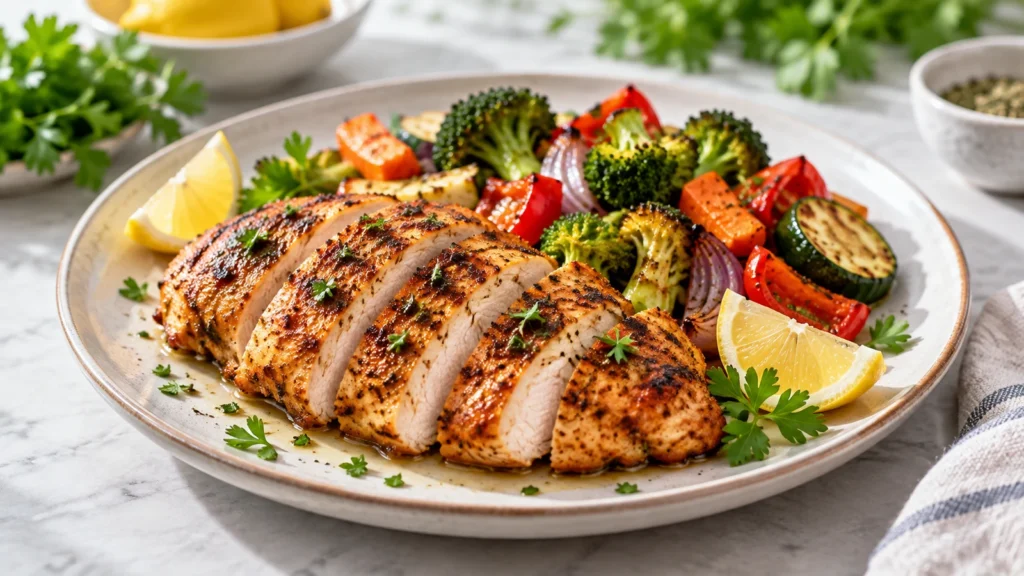
Air frying chicken breast delivers a juicy, evenly cooked main dish with a lightly seasoned exterior in less than 25 minutes. The keys are uniform thickness, a hot air fryer, and checking doneness early instead of relying only on the clock. This simple air fryer chicken method is practical for busy dinners, meal prep, salads, wraps, and sandwiches.
Quick answer:
- Temperature: 375°F (190°C)
- Approximate cooking time: 10 to 18 minutes, depending on weight and thickness
- Safe doneness: 165°F (74°C) at the thickest point
Table of Contents
Why You’ll Love This Recipe
- Ready in about 20 minutes with minimal cleanup.
- Reliable timing guidance for breasts of different sizes.
- Easy to adapt with gluten-free or low-sodium seasonings.
- Useful for salads, sandwiches, grain bowls, and weekly meal prep.
- Cooking chicken in air fryer appliances keeps the kitchen cooler than turning on a full-size oven.
- The seasoning is simple enough for everyday meals but easy to customize.
Unlike recipes that depend on one fixed cooking time, this approach considers both weight and thickness. That distinction helps prevent dry edges and an undercooked center, especially when air frying chicken breast pieces that are not naturally uniform.
Ingredients
- 2 boneless, skinless chicken breasts, 6 to 8 ounces (170 to 225 grams) each
- 2 teaspoons olive oil or avocado oil
- 1 teaspoon paprika
- 1 teaspoon garlic powder
- 1/2 teaspoon onion powder
- 1/2 teaspoon kosher salt
- 1/4 teaspoon ground black pepper
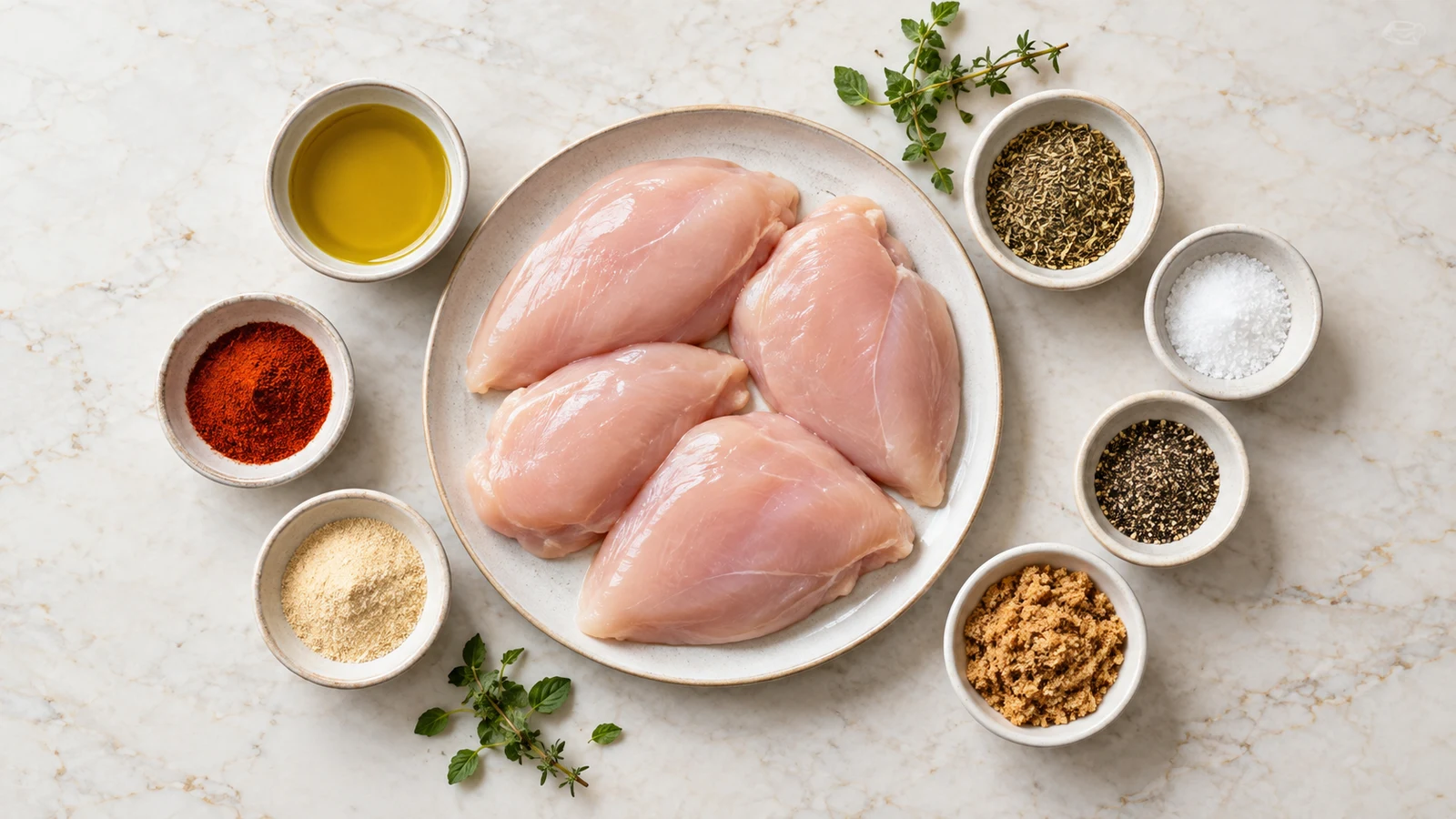
For a lower-sodium version, reduce the salt to 1/4 teaspoon or use a salt-free seasoning blend. The basic recipe is naturally gluten-free, but check every packaged spice blend for wheat-containing additives or cross-contact warnings.
Choosing Chicken Breasts
Look for pieces that are close in size so they finish at approximately the same time. A very thick breast and a small breast should not be treated as an identical pair. If their sizes differ, begin checking the smaller piece first and remove it as soon as it reaches the safe temperature.
Air-chilled chicken can be easier to brown because its surface often contains less retained moisture, but conventional chicken also works well when thoroughly patted dry. If the label says the chicken contains a solution, remember that it may already include added salt.
Equipment
- Basket or oven-style air fryer
- Instant-read meat thermometer
- Meat mallet or rolling pin
- Tongs
A thermometer is the most important tool for reliable air fryer chicken. Appliance wattage, basket shape, meat thickness, and starting temperature can all alter the cooking time, so visual appearance alone cannot confirm doneness.
Preparation and Thickness Guidance
Pat the chicken dry. Place each breast between sheets of parchment paper and gently pound the thick end until the meat has a mostly uniform thickness of 3/4 to 1 inch. Even thickness matters more than exact weight because it helps the center cook before the thinner edges become dry.
Rub the chicken with oil, then combine the paprika, garlic powder, onion powder, salt, and pepper. Season all sides evenly. Let the chicken stand for 10 minutes while the air fryer heats, but do not leave raw poultry at room temperature for an extended period.
Avoid pounding aggressively, which can tear the meat and create thin areas that overcook. Use firm, controlled taps and work outward from the thickest section. This small preparation step makes air frying chicken breast considerably more predictable.
How to Make Air Frying Chicken Breast Foolproof
- Preheat: Heat the air fryer to 375°F (190°C) for 3 to 5 minutes if the manufacturer recommends preheating.
- Arrange: Put the breasts in a single layer with space around them. Do not stack or overlap the meat.
- Cook: Air fry according to the chart below. Flip halfway through for more even browning.
- Check: Insert an instant-read thermometer horizontally into the thickest section, avoiding the basket and any thin edge.
- Rest: Remove the chicken when it reaches 162°F to 165°F (72°C to 74°C). Rest for 5 minutes; carryover heat may raise the temperature several degrees.
- Slice: Confirm a final internal temperature of 165°F (74°C), then slice across the grain.
When cooking chicken in air fryer baskets, open the appliance only when needed. Frequent checking releases heat and can make the total time less predictable. Start testing near the low end of the recommended range, then continue in short intervals.
Cooking-Time Chart
- 4 to 5 ounces, about 1/2 inch thick: 8 to 11 minutes
- 6 to 8 ounces, about 3/4 inch thick: 11 to 15 minutes
- 9 to 10 ounces, about 1 inch thick: 15 to 18 minutes
- 11 to 12 ounces, thicker than 1 inch: 18 to 22 minutes; pounding or butterflying is recommended
These ranges are starting points because wattage, basket size, and starting temperature vary. When cooking chicken in air fryer models for the first time, begin checking at the low end of the range.
The chart applies to boneless, skinless breasts rather than thighs or bone-in pieces. Anyone asking how long to air fry chicken thighs should use guidance developed specifically for that cut because its fat content, shape, and bone affect the timing.
Basket Versus Oven-Style Air Fryers
A basket model usually circulates heat closely around the food and may cook a few minutes faster. In an oven-style model, place the tray in the middle position and rotate it halfway through cooking. If two trays are used, swap their positions as well as rotating them, and allow extra time.
Different models also vary in how accurately they maintain the selected temperature. Record the weight, thickness, and successful cooking time the first time you make this air fryer chicken. Those notes provide a useful personalized guide for your appliance.
Do You Need to Preheat and Flip?
Preheating promotes predictable timing and better color, especially in larger oven-style units. If your model does not require it, you can start cold but may need 2 to 4 additional minutes. Flipping is not essential in every basket, yet it produces more even browning and prevents the underside from remaining pale.
Use silicone-tipped tongs to turn the chicken without scraping the basket coating. Do not pierce the meat repeatedly with a fork. Although a single puncture will not ruin it, tongs make handling easier and keep the seasoning crust intact.
Safe Doneness and Thermometer Placement
The USDA safe temperature chart specifies 165°F (74°C) for poultry. Slide the probe into the thickest part from the side so its sensing area sits in the center. Check each breast separately because pieces may finish at different times.
Carryover cooking can increase the temperature during resting, but always verify that the chicken reaches 165°F before serving. For additional handling guidance, consult the USDA’s chicken safety information.
Wash hands, utensils, and surfaces after contact with raw poultry. Do not reuse a plate or tongs that held raw chicken unless they have been properly washed. These habits are just as important as checking the final temperature when cooking chicken in air fryer appliances.
Brining Versus No Brining
Brining is optional. Uniformly pounded breasts stay succulent without it when they are not overcooked. For extra insurance, dissolve 2 tablespoons kosher salt in 4 cups cold water, submerge the chicken for 20 to 30 minutes in the refrigerator, then drain and pat dry. Reduce or omit the salt in the seasoning afterward.
Skip brining when sodium is a concern or when using chicken labeled enhanced, injected, or containing a solution. Those products already contain added liquid and salt.
Dry the chicken especially well after brining. Surface moisture must evaporate before browning begins, so excess water can leave air fryer chicken pale even when the interior is properly cooked.
Expert Tips for Juicy Air Fryer Chicken
- Match thickness, not just weight: Two breasts with equal weight can cook differently if one is tall and narrow while the other is broad and thin.
- Season evenly: Rub the spice mixture over the top, bottom, and sides so every slice has balanced flavor.
- Keep the coating light: A thin film of oil supports browning without leaving the basket greasy.
- Allow airflow: Leave space around each piece rather than crowding the basket.
- Check individually: Remove the first breast when it is ready and let the thicker one continue if necessary.
- Rest before cutting: Five minutes helps the juices settle and allows the temperature to equalize.
- Slice across the grain: Shorter muscle fibers make each bite feel more tender.
For repeatable air frying chicken breast, note the thickest measurement before cooking and the exact time your appliance required. A brief cooking log is more dependable than assuming every fryer and every package of chicken will behave alike.
Variations and Substitutions
- Lemon herb: Replace paprika with dried Italian herbs and add lemon zest after cooking.
- Smoky: Use smoked paprika and 1/4 teaspoon ground cumin.
- Spicy: Add 1/4 teaspoon cayenne or chipotle powder.
- Oil-free: Lightly coat the chicken with plain Greek yogurt instead of oil, watching for faster surface browning.
- Low-sodium: Use salt-free garlic, herbs, paprika, and lemon juice.
Seasoning Ideas for Different Meals
For a Mediterranean-style meal, use dried oregano in place of paprika and finish with lemon. For a warm, earthy flavor, add cumin to the existing spice mixture. Dried thyme or rosemary can also complement the basic seasoning without changing the air frying chicken breast method.
If using a prepared seasoning blend, check whether salt is listed near the beginning of the ingredient list. Reduce the recipe’s kosher salt as needed. Avoid thick, sugary sauces at the start because they can scorch before the center reaches a safe temperature.
Barbecue sauce or another sweet glaze is better brushed on during the final few minutes. Watch closely after adding it, since concentrated sugars can darken rapidly in the strong circulating heat of an air fryer.
Fresh Versus Frozen Chicken
Fresh or fully thawed chicken gives the most even seasoning and texture. To cook frozen breasts, separate them, air fry at 360°F (182°C) for 10 minutes, then brush with oil, season, and continue for 10 to 18 minutes. Flip once and verify 165°F (74°C) in the center; very thick frozen pieces may cook unevenly and are better thawed first.
Do not pound frozen chicken. Thaw it safely in the refrigerator before reshaping it. Cooking chicken in air fryer baskets directly from frozen is most successful with individually frozen pieces of similar thickness rather than breasts frozen together in a solid block.
Make-Ahead and Meal-Prep Guidance
You can pound and season the chicken up to 24 hours ahead. Place it in a covered container in the refrigerator and keep it chilled until cooking. If it goes into the fryer directly from the refrigerator, expect it to need more time than chicken that stood for the stated 10 minutes.
For meal prep, cook the breasts whole and let them cool before slicing. Whole pieces generally retain moisture better during storage. Divide the sliced air fryer chicken among containers with rice, vegetables, salad ingredients, or potatoes, keeping wet dressings and sauces separate until serving.
Air frying chicken breast ahead of time is useful for cold lunches as well as reheated meals. If it will be served cold, slice it shortly before assembling the dish to minimize exposed surfaces and preserve its texture.
Troubleshooting Air Frying Chicken Breast
- Dry meat: The chicken was too thin or cooked too long. Check earlier and remove finished pieces individually.
- Burnt spices: Lower the heat to 360°F (182°C), avoid sugary rubs, and use only a light oil coating.
- Pale exterior: Preheat the fryer, dry the surface thoroughly, and avoid crowding.
- Rubbery texture: Cook to temperature rather than adding time for extra browning, then rest before cutting.
- Undercooked center: Return the chicken to the fryer in 2-minute intervals and recheck the thickest point.
- Uneven results: Pound the thick end more evenly and choose pieces with similar dimensions.
- Seasoning falls off: Pat the surface dry before applying a thin layer of oil and press the spices on gently.
Why Is the Outside Done Before the Center?
The breast is probably too thick or the cooking temperature is too high for its shape. Lowering the temperature slightly can help, but pounding or butterflying a very thick piece before cooking is the most reliable solution. Never serve it until the center reaches 165°F (74°C).
Why Is There Liquid in the Basket?
Some chicken releases retained water as it heats, particularly when the package states that a solution has been added. Crowding can also trap steam. Pat each piece dry, leave space between portions, and empty accumulated liquid between batches after the appliance has cooled enough to handle safely.
Serving Ideas
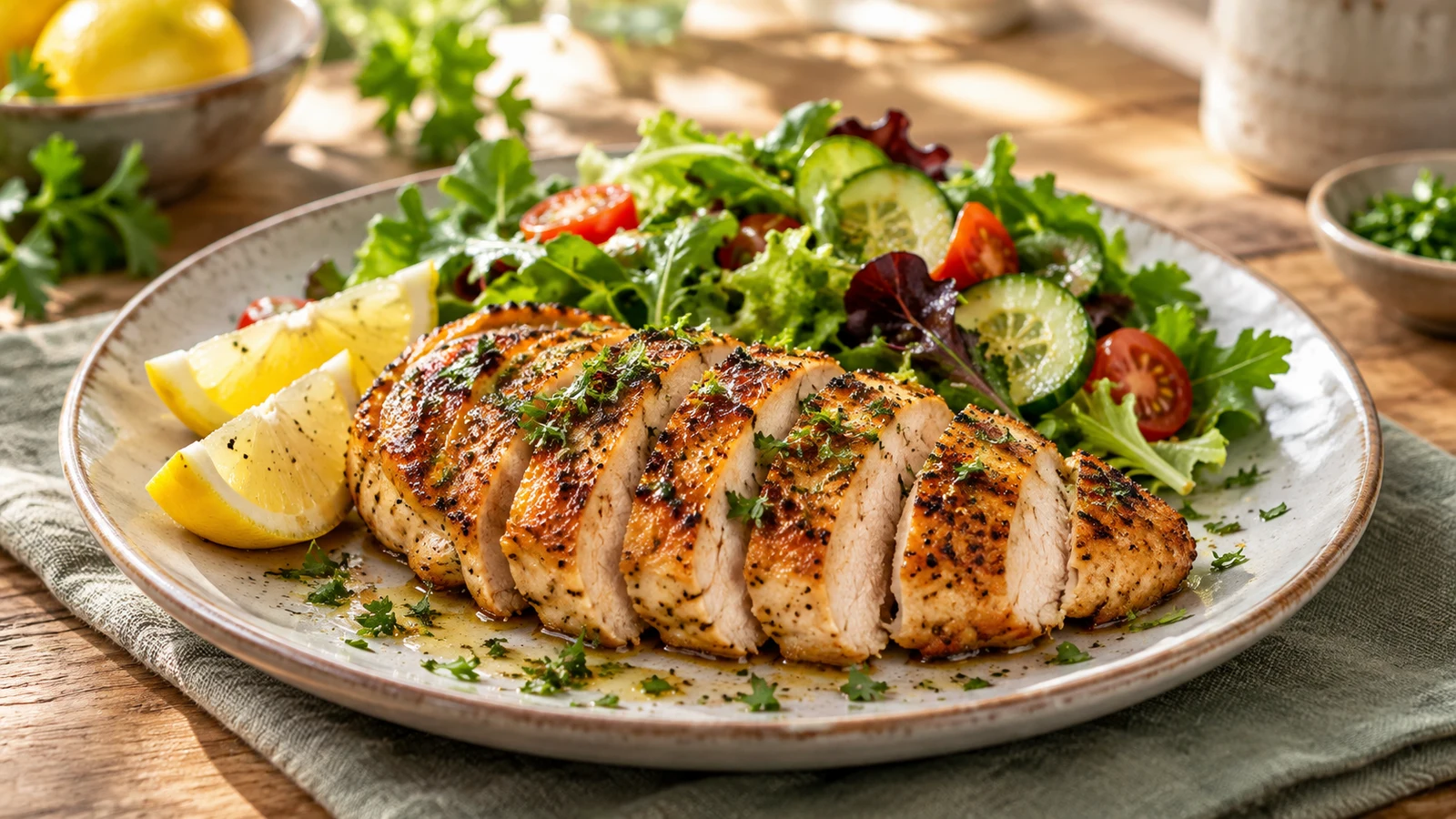
Slice the chicken over salad, tuck it into wraps, or serve it with rice and vegetables. For an easy air-fryer dinner, pair it with crispy air fryer roasted potatoes. Chopped leftovers also work well in pasta, quesadillas, soups, and meal-prep bowls.
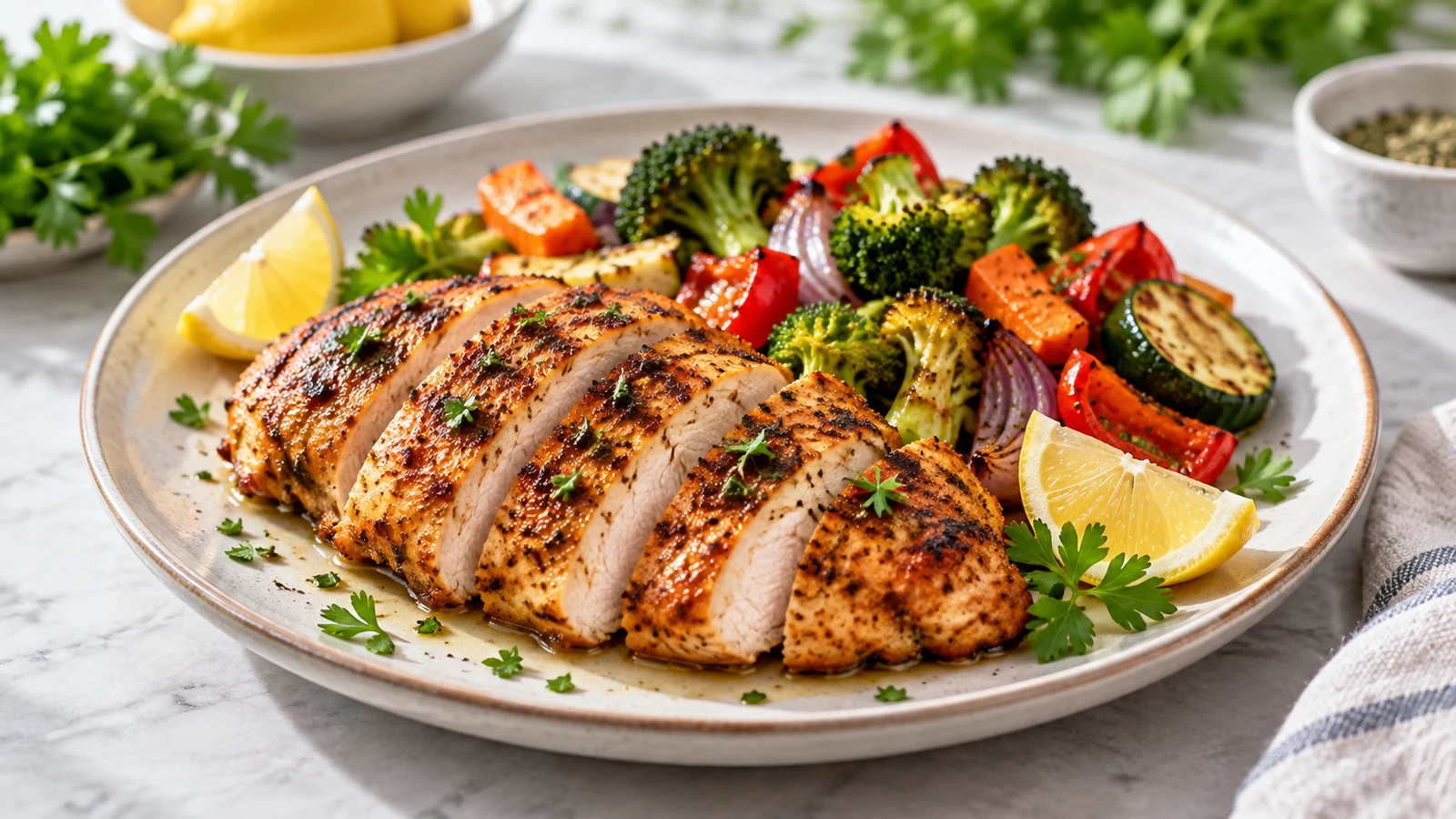
For a balanced plate, add a crisp green vegetable and a starch that can absorb the flavorful juices. Broccoli, green beans, asparagus, couscous, quinoa, mashed potatoes, and brown rice all pair naturally with the mild seasoning.
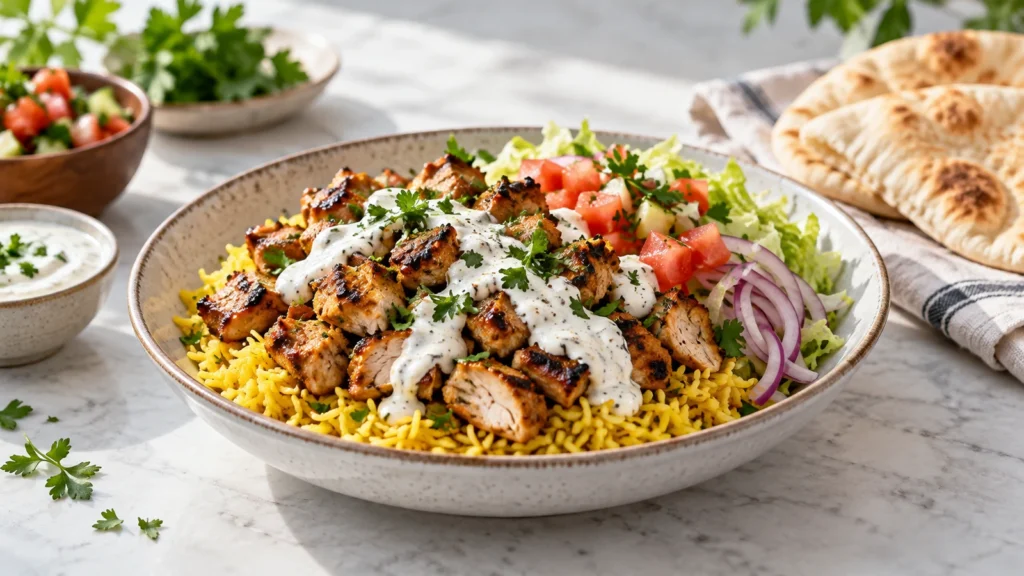
Serve air fryer chicken whole for a hearty main course or slice it thinly for tacos and sandwiches. A squeeze of fresh lemon adds brightness, while a spoonful of yogurt-based sauce provides a cool contrast without overwhelming the chicken.
How to Store and Reheat
Refrigerate cooled chicken in an airtight container within 2 hours and use it within 3 to 4 days. Freeze whole or sliced portions for up to 3 months, pressing out excess air to reduce freezer burn. Thaw overnight in the refrigerator.
Reheat at 350°F (177°C) for 3 to 5 minutes, just until hot, since prolonged reheating dries lean meat. You can also microwave covered portions with a teaspoon of water in short intervals.
Freezing Individual Portions
Wrap or separate portions before placing them in a freezer-safe container so you can thaw only what you need. Label the container with the freezing date. Although sliced chicken freezes successfully, whole breasts have fewer exposed edges and may retain moisture more effectively.
For the best reheated air fryer chicken, avoid repeatedly warming the same portion. Reheat only the amount you plan to serve, and check that stored leftovers are hot throughout before eating.
Chicken Breasts Versus Chicken Thighs
Chicken breasts are lean and can dry out quickly after reaching doneness. Thighs contain more fat and connective tissue, so they generally tolerate a longer cook. This is why air fryer chicken thighs bone in require their own temperature and timing instructions.
If you are deciding how long to air fry chicken thighs, do not substitute the breast chart. Bone-in thighs have an irregular shape, and the thermometer must be positioned away from the bone. Their skin also benefits from preparation designed to encourage crispness.
Related Chicken Recipes
For dark meat, try air fryer chicken thighs bone in. If you are wondering how long to air fry chicken thighs, follow that recipe’s separate temperature and timing guidance rather than using breast cooking times.
The air fryer chicken thighs bone in recipe is a useful choice for diners who prefer richer dark meat and crisp skin. Keep the cuts separate during cooking because breast and thigh meat do not share the same ideal timing.
For a comforting oven meal, make this roast chicken and potatoes recipe. It is a useful alternative when feeding a larger group.
Frequently Asked Questions
Can I cook more than two breasts at once?
Yes, if they fit in one layer without touching. Cook in batches when necessary; crowding blocks airflow and extends the cooking time. A second batch may cook slightly faster because the appliance is already thoroughly heated.
Why does air fryer chicken dry out?
Boneless breast meat is lean and becomes dry when overcooked. Pound it evenly, check it several minutes early, and rest it before slicing. The thermometer reading is more useful than trying to judge doneness from browning.
Can I use parchment paper?
Use perforated air-fryer parchment only when food weighs it down. Never place loose parchment in the fryer during preheating because it can lift into the heating element. Check the appliance instructions before using any liner.
How can I tell whether the center is cooked?
Do not judge by exterior color. Measure the center of the thickest area with an instant-read thermometer and confirm 165°F (74°C). Test every breast because one may finish before another.
What temperature is best for air frying chicken breast?
For this recipe, 375°F (190°C) balances browning with even cooking. A much higher setting can darken the spices before the center is done, while a lower setting may produce less color and require additional time.
Should chicken breast be at room temperature before air frying?
No. The chicken only stands for 10 minutes while the appliance heats. Keep raw poultry refrigerated until preparation, and never leave it at room temperature for an extended period.
Can I stack chicken breasts in the basket?
No. Stacking blocks circulating air and creates unevenly cooked surfaces. Arrange the pieces in one layer or cook separate batches. Good airflow is central to successful cooking chicken in air fryer baskets.
Can I use chicken tenderloins?
Yes, but they are much thinner and will cook faster than whole breasts. Use the same safe final temperature, begin checking early, and do not rely on the breast timing chart.
How long to air fry chicken thighs instead of breasts?
The answer depends on whether the thighs are boneless or bone-in and whether they have skin. For air fryer chicken thighs bone in, use the dedicated linked recipe rather than adapting these breast times.
Can I double the seasoning?
You can double the seasoning when doubling the chicken, but use only enough oil to coat each surface lightly. Cook in batches unless all pieces fit in a single uncrowded layer.
Why should I slice across the grain?
Cutting across the visible muscle fibers shortens them, which makes the cooked chicken easier to chew. Let the meat rest first so fewer juices escape onto the cutting board.
Nutrition
One serving provides approximately 260 calories, 44 grams protein, 8 grams fat, and 1 gram carbohydrate, depending on breast size and oil absorption. Values are estimates; the USDA FoodData Central chicken breast listings can help with ingredient-specific nutrition calculations.
Recipe Card
- Yield: 2 servings
- Prep time: 10 minutes
- Cook time: 11 to 18 minutes
- Rest time: 5 minutes
- Temperature: 375°F (190°C)
Method: Pound two 6- to 8-ounce chicken breasts to 3/4-inch thickness. Coat with 2 teaspoons oil and season with paprika, garlic powder, onion powder, salt, and pepper. Air fry in a preheated appliance at 375°F (190°C) for 11 to 15 minutes, flipping halfway. Confirm 165°F (74°C) internally and rest for 5 minutes before slicing.
A Reliable Method for Busy Meals
With uniform thickness, an accurate thermometer, and a brief rest, air frying chicken breast becomes a dependable method for quick dinners and practical meal prep. Keep the pieces in one layer, begin checking early, and let temperature rather than appearance determine when they are ready.
Once you know how your appliance performs, cooking chicken in air fryer models becomes easy to repeat. Use the breast-specific guidance here, and turn to the separate air fryer chicken thighs bone in recipe whenever you need to know how long to air fry chicken thighs safely and successfully.
Reviews
Reader reviews are managed separately (outside this build).