Cake
Best Moist Peach Cobbler Pound Cake Recipe
Try this peach cobbler pound cake recipe for a moist Southern Bundt layered with juicy ripe peaches, cinnamon streusel, and our luscious peach glaze.
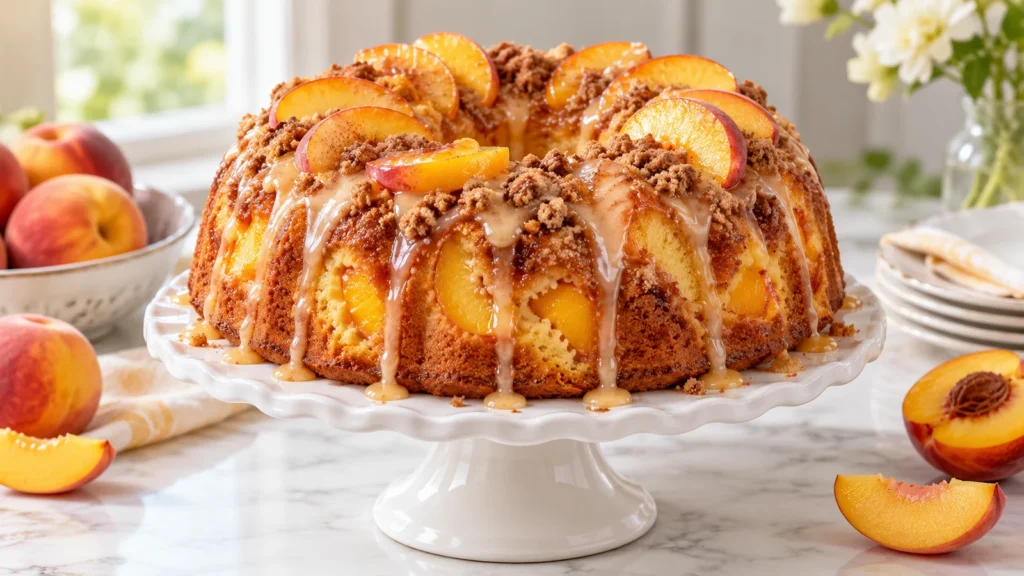
This peach cobbler pound cake recipe combines a buttery sour-cream cake, cinnamon-coated peaches, brown sugar streusel, and a simple peach glaze. The crumb stays moist while the fruit creates tender cobbler-style pockets throughout every slice.
Careful draining, layering, and cooling prevent the gummy streaks and sticking that can trouble fruit-filled Bundt cakes. Unlike a standard sour cream pound cake recipe, this dessert adds juicy fruit and crisp crumbs without sacrificing a rich texture. Serve it at room temperature or slightly warm with vanilla ice cream.
Table of Contents
Why You’ll Love This Peach Cobbler Pound Cake Recipe
- Two desserts in one: It pairs classic pound-cake richness with warm peach-cobbler flavors.
- Reliable texture: Sour cream keeps the cake moist without making the batter runny.
- Flexible fruit options: Fresh, canned, or frozen peaches all work with the preparation notes below.
- Make-ahead friendly: The flavor and texture remain excellent for several days.
- Celebration worthy: The peach glaze, streusel, and sculpted Bundt shape create an impressive dessert without complicated decorating.
Ingredients
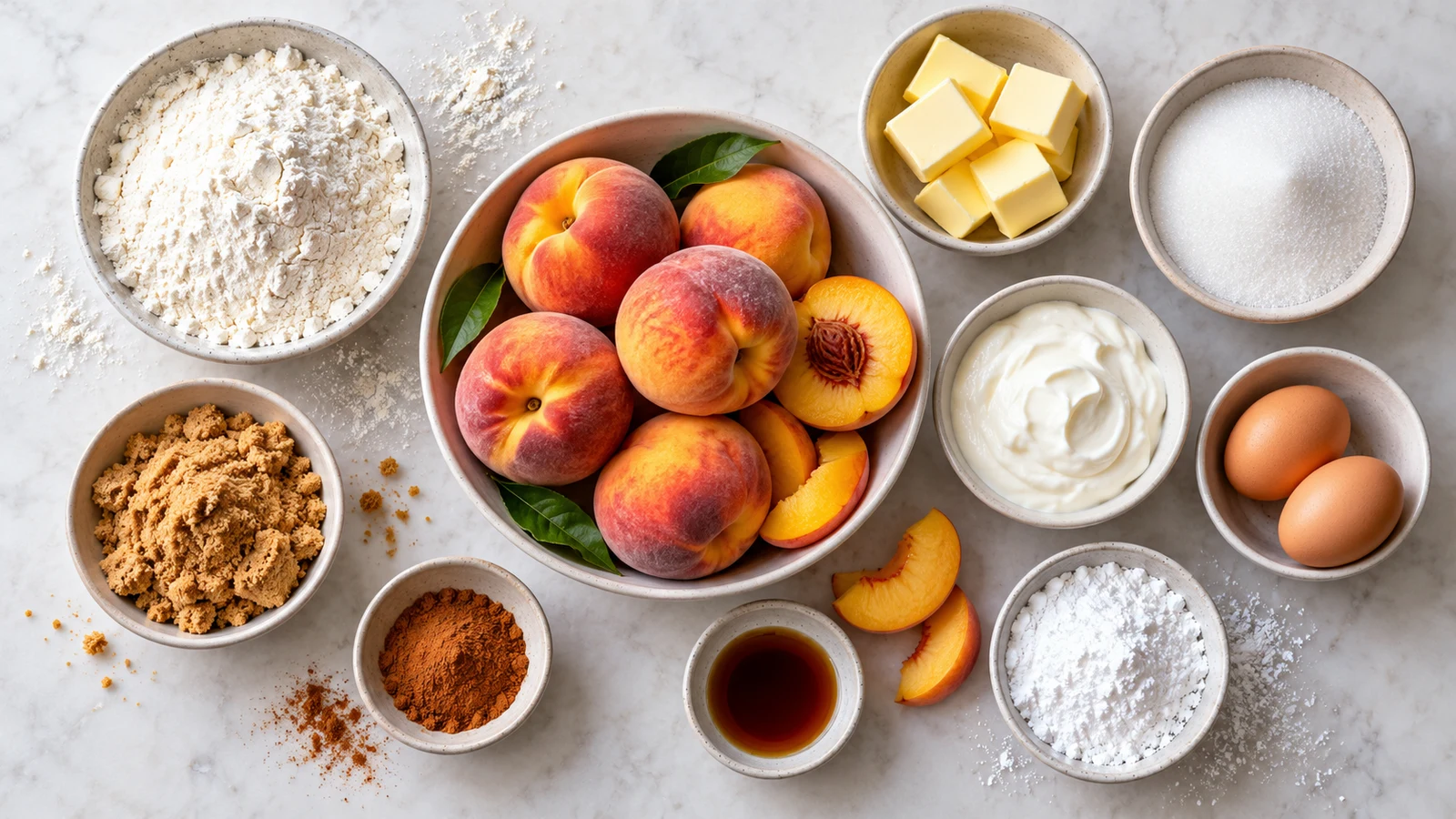
- For the peaches: 2 cups (300 g) peeled, diced peaches; 1 tablespoon granulated sugar; 1 tablespoon all-purpose flour; and 1/2 teaspoon ground cinnamon
- For the streusel: 1/2 cup (100 g) packed light brown sugar, 1/2 cup (63 g) all-purpose flour, 1 teaspoon cinnamon, and 4 tablespoons (57 g) cold unsalted butter
- For the cake: 1 cup (227 g) unsalted butter, softened; 2 cups (400 g) granulated sugar; 4 large eggs, room temperature; 2 teaspoons vanilla extract; 3 cups (375 g) all-purpose flour; 1 teaspoon baking powder; 1/2 teaspoon baking soda; 1/2 teaspoon fine salt; and 1 cup (240 g) full-fat sour cream, room temperature
- For the peach glaze: 1 1/2 cups (180 g) powdered sugar, 2 to 3 tablespoons peach juice or milk, 1/2 teaspoon vanilla, and a pinch of cinnamon
- For serving: Thin fresh-peach slices and vanilla ice cream, optional
Understanding the Key Ingredients
Peaches
Firm-ripe peaches provide flavor while retaining their shape in the oven. Fruit that is extremely soft or dripping with juice can create wet channels in the crumb. Whether you use fresh, canned, or frozen fruit, measure it after peeling, draining, and dicing so the peach-to-batter ratio remains correct.
Sour Cream
Full-fat sour cream contributes moisture, gentle tang, and enough body to support the peaches. That is the same advantage it offers in a traditional sour cream pound cake recipe. Low-fat products contain more water and may produce a less velvety crumb, so full-fat sour cream is the dependable choice.
Butter, Eggs, and Sugar
Butter supplies richness and traps air during creaming. Sugar sweetens the cake and helps it retain moisture, while eggs provide structure and emulsify the fat and liquid. Room-temperature ingredients combine more smoothly, reducing the chance of a curdled batter or unevenly textured cake.
Flour and Leavening
All-purpose flour gives the cake enough strength to hold the fruit and streusel. Baking powder and baking soda supply controlled lift, but the cake remains denser than 7up recipes pound cake that depend on a different flavor and aeration approach. Accurate measurements keep the crumb tender rather than heavy.
Equipment and Bundt-Pan Preparation
Use a 10- to 12-cup Bundt pan, mixing bowls, an electric mixer, a silicone spatula, and a cooling rack. Thoroughly coat every ridge of the pan with softened shortening or baking spray containing flour; ordinary cooking spray is more likely to leave intricate areas exposed.
A 10-inch tube pan also works. For two 9-by-5-inch loaf pans, divide the batter evenly, begin checking after 55 minutes, and never fill either pan more than two-thirds full. Set the Bundt pan on a rimmed baking sheet if its capacity is uncertain.
A light-colored metal pan promotes gradual, even browning. A dark pan can brown the exterior more quickly, so inspect the cake early and cover it loosely with foil if necessary. Before filling the pan, confirm that no pooled coating remains in the decorative grooves.
Peach Filling and Cinnamon Streusel
Fresh peaches should be ripe but firm. Drain canned peaches very well, pat them dry, and omit the tablespoon of sugar if they are packed in syrup. Thaw frozen peaches completely, drain them in a sieve, pat dry, and dice them before measuring; controlling surface moisture prevents gummy streaks.
Toss the prepared fruit with sugar, flour, and cinnamon. For the streusel, mix brown sugar, flour, and cinnamon, then rub in the cold butter until coarse crumbs form. Chill it while preparing the batter.
The flour coating absorbs a small amount of peach juice and helps the pieces stay suspended. Cold streusel is equally important because distinct butter crumbs melt more gradually. If left in a warm kitchen, place the prepared fruit and streusel in the refrigerator until the cake batter is ready.
How to Make This Peach Cobbler Pound Cake Recipe
- Prepare the oven and pan. Heat the oven to 325°F (165°C). Grease and flour the Bundt pan carefully, tapping out loose flour.
- Combine the dry ingredients. Whisk 3 cups flour with the baking powder, baking soda, and salt. This distributes the leavening evenly.
- Cream the butter and sugar. Beat softened butter for 1 minute. Gradually add the granulated sugar and beat on medium speed for 4 to 5 minutes, until pale and fluffy. Proper creaming produces a finer, lighter crumb.
- Add eggs and vanilla. Beat in the eggs one at a time, mixing just until each disappears. Scrape the bowl after every second egg, then mix in the vanilla.
- Finish the batter. On low speed, add the flour mixture in three portions, alternating with the sour cream in two portions. Begin and end with flour. Stop mixing as soon as no dry streaks remain.
- Layer the cake. Spoon one-third of the batter into the pan. Add half the peaches and one-third of the streusel, keeping the fruit about 1/2 inch from the pan edges. Repeat, then cover with the remaining batter and half the remaining streusel. Reserve the rest for garnish.
- Bake. Bake for 75 to 90 minutes. The cake is ready when the top springs back, a skewer inserted into a cake-only area has a few moist crumbs, and the center registers about 205°F to 210°F (96°C to 99°C). If it browns early, loosely cover it with foil.
- Cool and unmold. Cool in the pan for 15 to 20 minutes. Gently loosen the upper edge, place a rack over the pan, and invert in one confident motion. Leaving it much longer can let caramelized fruit adhere to the pan.
- Glaze and garnish. Cool completely. Whisk powdered sugar, vanilla, cinnamon, and 2 tablespoons liquid, adding more by the teaspoon until thick but pourable. Drizzle over the cake and finish with reserved streusel and thin peach slices shortly before serving.
Expert Tips for a Reliable Peach Cobbler Pound Cake Recipe
- Warm ingredients gradually: Bring butter, eggs, and sour cream to room temperature so the batter emulsifies instead of curdling. Set them out before preparing the pan rather than trying to warm them aggressively.
- Measure flour carefully: Weigh the flour when possible. Otherwise, fluff it, spoon it into the measuring cup, and level the top rather than packing it.
- Prepare uniform fruit: Dice peaches into 1/2-inch pieces and coat them with flour. Large, wet pieces are more likely to sink.
- Protect the pan edges: Keep fruit away from the pan surface, where its sugar can caramelize and cause sticking.
- Mix with restraint: Avoid overmixing after adding flour; excess mixing can create tunnels and a tough crumb.
- Layer gently: Spread thick batter with a spatula instead of pressing hard. Aggressive spreading can push fruit outward and compress the air created during creaming.
- Test more than one area: Peach pockets stay moist, so check a cake-only section with a skewer and thermometer before deciding whether the center is done.
- Wait before glazing: A warm cake melts the glaze and absorbs it unevenly. Cool the cake completely for a neat, opaque drizzle.
The creaming stage is especially important in this peach cobbler pound cake recipe. Butter should be soft enough to indent with a finger but not shiny or melted. Beat until the mixture looks visibly paler and increased in volume, then add the eggs gradually to preserve the air bubbles.
For another fruit-forward bake, try this strawberry pound cake recipe. Bakers comparing methods may also find this peach pound cake technique useful.
Variations and Substitutions
Greek Yogurt and Flavor Extracts
Greek yogurt can replace sour cream in equal measure, although full-fat sour cream gives the richest result. This change makes the cake slightly tangier than the original sour cream pound cake recipe. Almond extract may replace 1/2 teaspoon of the vanilla for a subtle bakery-style flavor that complements peaches.
Nectarine and Mixed-Fruit Variations
Nectarines can stand in for peaches without peeling. Keep the total fruit at 2 cups so extra juice does not alter the structure. For another moist fruit cake, see this blueberry pound cake recipe.
Lemon-Peach Variation
Add finely grated lemon zest for a brighter finish. This will suggest the citrus character of an afroman lemon pound cake recipe while keeping all liquid quantities unchanged. Do not add a large amount of lemon juice to the batter, because extra liquid and acidity can affect its consistency.
Chocolate and Soda-Based Comparisons
This formula is not interchangeable with 7up recipes pound cake, which use soda for flavor and lift, or a chocolate pound cake recipe, which requires different dry-to-liquid ratios. Adding cola, lemon-lime soda, cocoa, or melted chocolate without reformulating the batter could make this fruit-filled cake dense or unstable.
Warm-Spice Variation
For a deeper autumn flavor, add a small pinch of nutmeg to the peach coating or glaze. Keep cinnamon as the leading spice so the dessert still tastes like cobbler. Avoid heavy additions that would mask the fruit or turn the peach cobbler pound cake recipe into a strongly spiced cake.
Make-Ahead Plan
You can prepare several components in stages. Dice and dry the peaches, mix their coating, and make the streusel earlier on baking day. Keep the fruit and streusel covered and refrigerated, but let the eggs and sour cream reach room temperature before mixing the batter.
Bake the cake one day before serving for the easiest schedule. Once completely cool, cover it and leave it unglazed. The crumb settles overnight, making clean slices easier, while the flavors of this peach cobbler pound cake recipe become more cohesive.
Prepare the glaze shortly before decorating or refrigerate it in a covered container. If it firms up, let it stand at room temperature and stir in liquid by the teaspoon. Add fresh peach slices only shortly before serving because they release juice and discolor as they sit.
Troubleshooting Common Problems
Why Did the Peaches Sink?
Cut the fruit smaller, dry it thoroughly, coat it in flour, and use firm rather than overripe peaches. Make sure the butter and sugar are fully creamed, because poorly aerated or unusually loose batter provides less support for the fruit.
Why Are There Gummy Streaks?
Drain the fruit better and confirm doneness in a cake-only section, not inside a peach pocket. Gummy bands can also result from overmixing once the flour is added. Use low speed, scrape the bowl gently, and stop as soon as the batter is uniform.
Why Is the Crumb Dry?
Measure flour accurately, use full-fat sour cream, and begin checking the cake at 75 minutes. A dry result is usually caused by excess flour or overbaking, not by the basic sour cream pound cake recipe method. Remember that dark metal pans may finish sooner.
Why Did the Batter Overflow?
Use a pan holding at least 10 cups and fill it no more than two-thirds full. Pan shapes vary even when their outer dimensions appear similar. Place the pan on a rimmed baking sheet if you are uncertain about its capacity.
Why Did the Cake Stick?
Coat every Bundt-pan ridge and unmold after 15 to 20 minutes. Fruit pressed against the pan can caramelize into a sticky patch, so maintain a border of batter around every peach layer. Do not leave the baked cake in the pan until completely cold.
How Do I Fix the Glaze?
For thin glaze, whisk in powdered sugar 1 tablespoon at a time. If it is too thick, add liquid by the teaspoon. The ideal glaze falls from the whisk in a slow ribbon and settles over the ridges without running completely off the cake.
Why Is the Cake Heavy?
Heavy texture can come from cool ingredients, insufficient creaming, expired leavening, or overmixing. Unlike some 7up recipes pound cake preparations, this batter relies on carefully creamed butter plus measured baking powder and soda. Follow the mixing order so each source of lift can work properly.
For another perspective on layering the fruit and cake, review this peach cobbler cake method.
Serving Ideas for Every Occasion
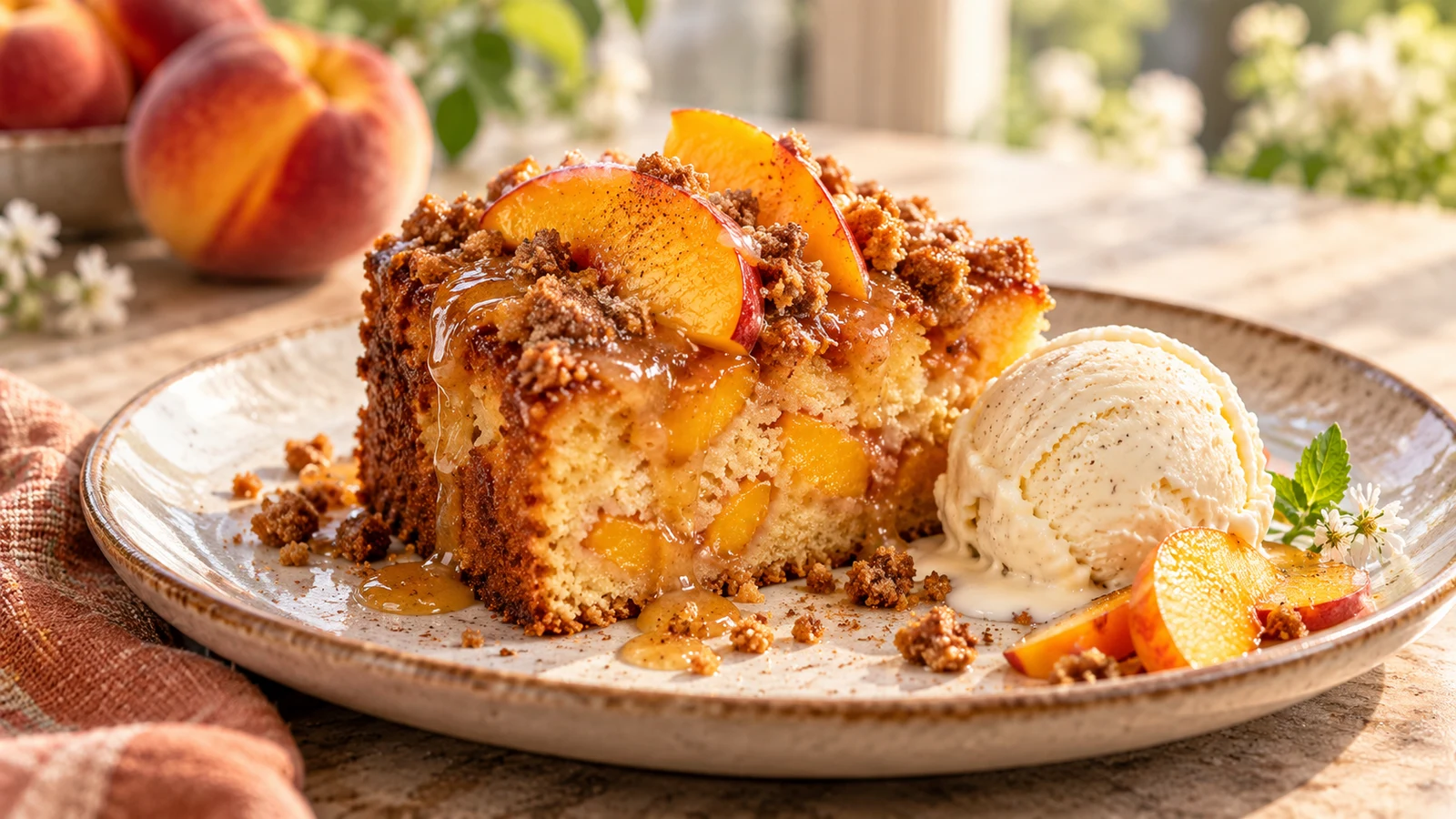
Serve slices at room temperature for the cleanest crumb, or warm individual portions briefly and add vanilla ice cream. Fresh peach slices are attractive, but add them just before serving so they do not release juice onto the glaze. The cake also pairs well with coffee or lightly whipped cream.
For brunch, cut modest slices and offer them with fresh berries, yogurt, and hot coffee. For a summer cookout, serve the peach cobbler pound cake recipe with cold vanilla ice cream. At an autumn gathering, a light dusting of cinnamon reinforces the warm streusel flavor.
A serrated knife produces tidy portions without compressing the crumb. Wipe the blade between cuts if the glaze becomes sticky. Because this is a rich cake, narrow slices are usually satisfying, and optional toppings can be offered separately so guests can customize each serving.
If your dessert table includes several cakes, contrast the peach flavor with a chocolate pound cake recipe or a bright afroman lemon pound cake recipe. The different colors and flavor profiles give guests choices, while this cake remains the fruit-forward centerpiece.
How to Store and Reheat
Store the uncut cake covered at room temperature for up to 2 days, or refrigerate it for up to 5 days. Because cut peaches add moisture, refrigerate leftovers sooner in a warm kitchen. Bring chilled slices to room temperature before serving or microwave each slice for 10 to 15 seconds.
For freezing, wrap unglazed individual slices tightly and place them in a freezer-safe container for up to 3 months. Thaw overnight in the refrigerator, then bring to room temperature and glaze. The cake can be baked one day ahead; keep it covered and apply the glaze before serving.
Freeze slices in a single layer until firm before arranging them in a container if you want them to retain clean edges. Place wrapping directly against the cut surfaces to reduce freezer burn. Label the container so the peach cobbler pound cake recipe is enjoyed within the recommended storage period.
Avoid reheating the entire glazed cake repeatedly. Warm only the portions you plan to eat because repeated temperature changes can dry the crumb and make the glaze runny. A short rest at room temperature is often enough to restore the soft texture without using a microwave.
For more classic technique, explore this Southern pound cake recipe. For broader serving inspiration, these fruit-dessert serving ideas offer useful pairing examples.
Frequently Asked Questions About This Peach Cobbler Pound Cake Recipe
Can I use canned peaches?
Yes. Drain them thoroughly, pat them dry, and measure 2 cups after draining. Peaches packed in juice are preferable; if using fruit in syrup, omit the sugar from the filling. This preparation keeps excess syrup from producing wet bands in the cake.
Can I use frozen peaches in the peach cobbler pound cake recipe?
Yes. Thaw them completely, drain them in a sieve, pat them dry, and dice them before measuring. Do not add frozen pieces directly to the batter, as they release water while baking and can cool the surrounding batter unevenly.
Do I need to peel fresh peaches?
The ingredient list calls for peeled peaches. Removing the skin gives the filling a softer, more consistent texture and prevents curled pieces of peel from separating during slicing. A brief blanch in hot water can make ripe peaches easier to peel.
How do I know when the cake is fully baked?
Look for a deeply golden surface that springs back when lightly pressed. A skewer should show a few moist crumbs, and an instant-read thermometer inserted into cake—not fruit—should register 205°F to 210°F (96°C to 99°C).
Why did my Bundt cake break during unmolding?
The pan may have been incompletely coated, or exposed peach pieces may have caramelized against it. Cool for 15 to 20 minutes, loosen only the accessible upper edge, and invert while the cake is still slightly warm.
Can I make this like a sour cream pound cake recipe without peaches?
The peaches, their coating, streusel, and glaze are integral to the stated dessert. Omitting those components would change its character and baking behavior. If you want a plain cake, use a formula specifically developed as a sour cream pound cake recipe rather than altering this one.
Can I turn this into 7up recipes pound cake?
No direct substitution is recommended. Established 7up recipes pound cake balance soda with their other ingredients, while this batter is designed around sour cream and moisture from peaches. Adding soda here could thin the batter, weaken the layers, and affect the final rise.
Can I add cocoa for a chocolate pound cake recipe?
Simply adding cocoa is not advisable because cocoa absorbs liquid and changes the balance of flour, fat, and sugar. For a true chocolate pound cake recipe, follow a tested chocolate formula. Chocolate sauce can instead be offered as an optional topping without changing this cake’s structure.
How is this different from an afroman lemon pound cake recipe?
An afroman lemon pound cake recipe centers on bright citrus flavor, while this dessert features cinnamon peaches, brown sugar streusel, and peach glaze. You may add lemon zest for contrast, but the finished cake will remain a peach-cobbler-inspired dessert.
Can I bake the batter in loaf pans?
Yes. Divide it evenly between two 9-by-5-inch loaf pans, fill neither more than two-thirds full, and begin checking after 55 minutes. Keep peach pieces away from the pan surfaces and use the same visual, skewer, and temperature tests for doneness.
Should the cake be refrigerated?
The uncut cake may remain covered at room temperature for up to 2 days. Refrigerate it for storage up to 5 days, and refrigerate cut leftovers sooner when the kitchen is warm. Allow cold slices to lose their chill before serving for the best crumb.
What is the approximate yield and nutrition?
The recipe makes one 10-inch Bundt cake, or about 14 slices. Preparation takes approximately 35 minutes, baking takes 75 to 90 minutes, and cooling takes about 2 hours. One slice contains roughly 520 calories; actual nutrition varies with brands, portion size, and optional toppings.
A Moist, Fruit-Filled Dessert Worth Sharing
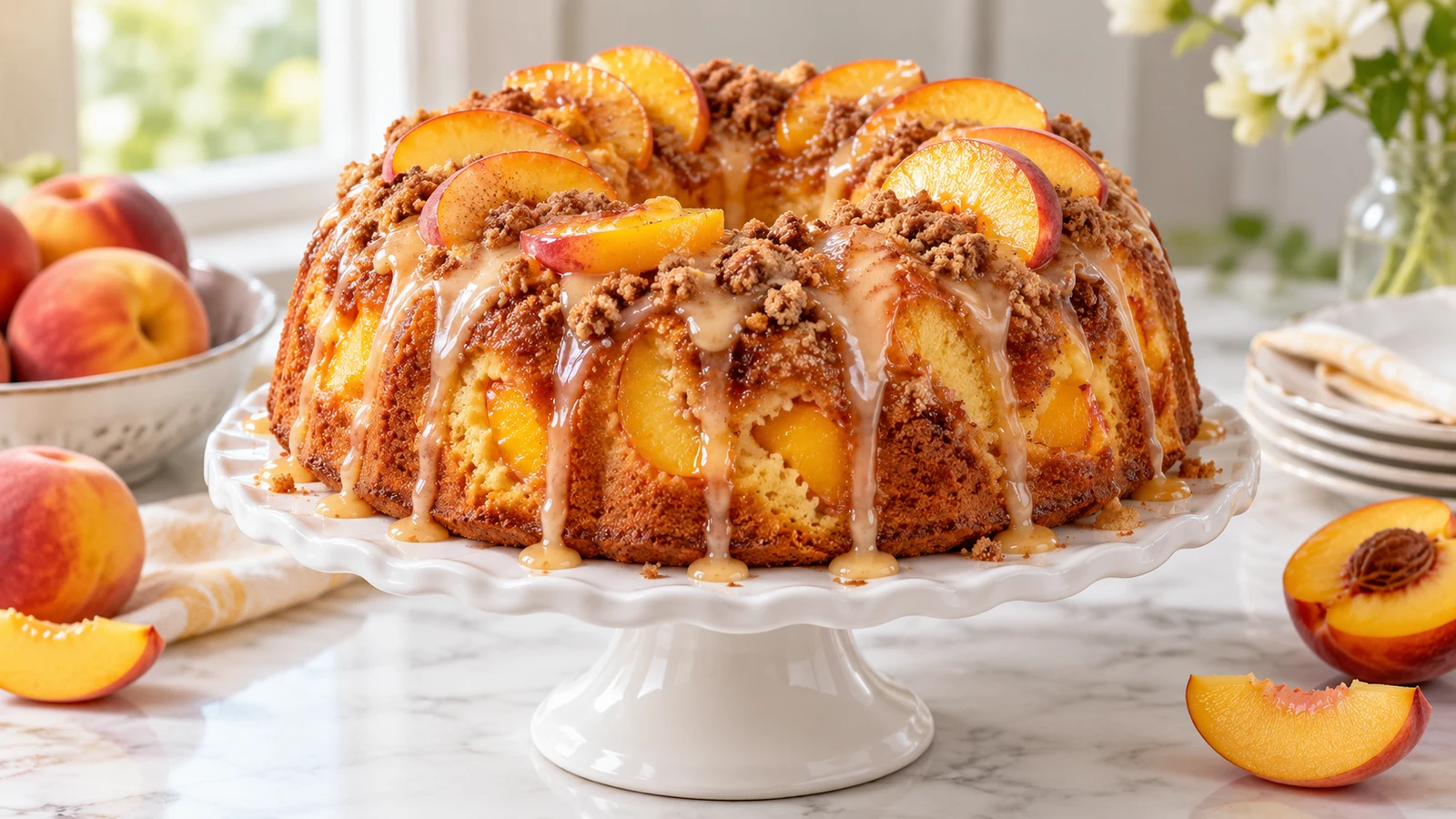
This peach cobbler pound cake recipe delivers distinct layers of tender cake, warmly spiced fruit, buttery crumbs, and peach glaze. It combines the lasting moisture associated with a sour cream pound cake recipe with the homestyle appeal of peach cobbler.
Although 7up recipes pound cake, a chocolate pound cake recipe, and an afroman lemon pound cake recipe each offer their own signature flavors, this cake is an especially welcoming choice when peaches are the star. With properly drained fruit, accurate mixing, and patient cooling, it slices neatly and makes an inviting dessert for gatherings or make-ahead entertaining.
Reviews
Reader reviews are managed separately (outside this build).