Cake
Easy vanilla sheet cake recipe: Fluffy Party Favorite
Try this easy vanilla sheet cake recipe for a moist, fluffy 9×13-inch party cake topped with creamy vanilla buttercream and rainbow sprinkles.
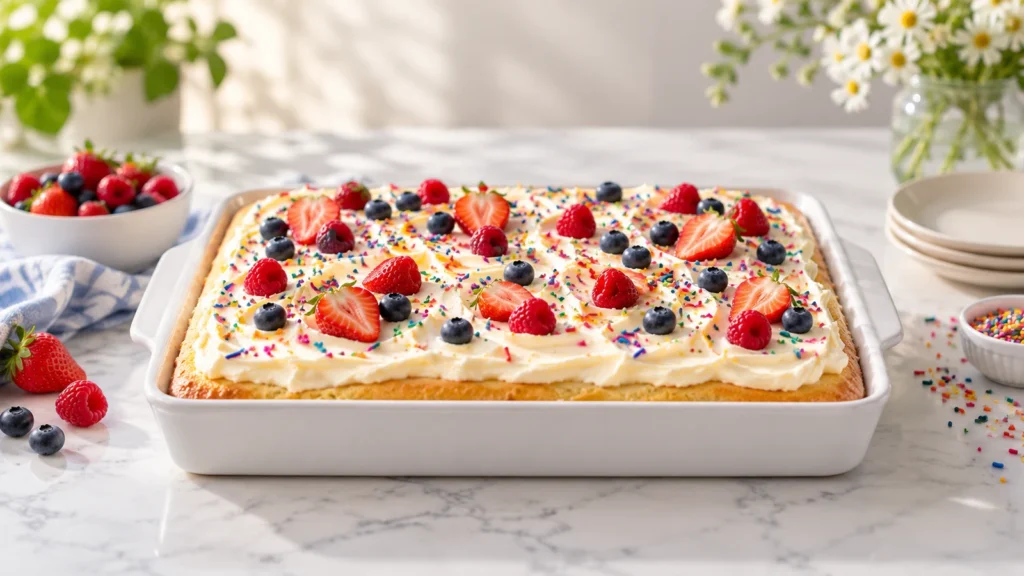
This vanilla sheet cake recipe makes a soft, moist cake with an even crumb and creamy vanilla buttercream. Baked in a 9×13-inch pan, it is easy to decorate, transport, and slice for birthdays, potlucks, or family celebrations.
Room-temperature ingredients and a simple mixing method help prevent a dense or gummy center. This recipe for fluffy vanilla cake serves 12 generously or up to 20 when cut into smaller party portions. Unlike a vanilla pound cake recipe, it has a lighter texture that pairs beautifully with a smooth vanilla icing recipe for cake.
Table of Contents
Why You’ll Love This Vanilla Sheet Cake Recipe
- Soft and fluffy: Cake flour and properly creamed butter create a tender crumb.
- Party-friendly: The rectangular cake is easy to frost, decorate, carry, and serve.
- Reliable: Clear doneness cues help prevent dry edges and a sunken center.
- Make-ahead option: The cake and frosting can be prepared in advance.
- Easy to customize: Simple flavor additions and toppings make it suitable for almost any celebration.
This vanilla sheet cake recipe also avoids the extra assembly required for a layer cake. You can frost it directly in the pan for casual serving or turn it out onto a platter for a more polished presentation.
Ingredients
- 2 3/4 cups (330 g) cake flour
- 2 1/2 teaspoons baking powder
- 1/2 teaspoon fine salt
- 3/4 cup (170 g) unsalted butter, softened to about 65°F (18°C)
- 1 3/4 cups (350 g) granulated sugar
- 4 large eggs, at room temperature
- 1 tablespoon pure vanilla extract
- 1 cup (240 ml) whole milk, at room temperature
- 1/4 cup (60 ml) sour cream, at room temperature
- For the buttercream: 1 cup (226 g) unsalted butter, softened
- 3 1/2 cups (420 g) confectioners’ sugar
- 2 teaspoons vanilla extract
- 1/4 teaspoon fine salt
- 3 to 4 tablespoons (45 to 60 ml) heavy cream or whole milk
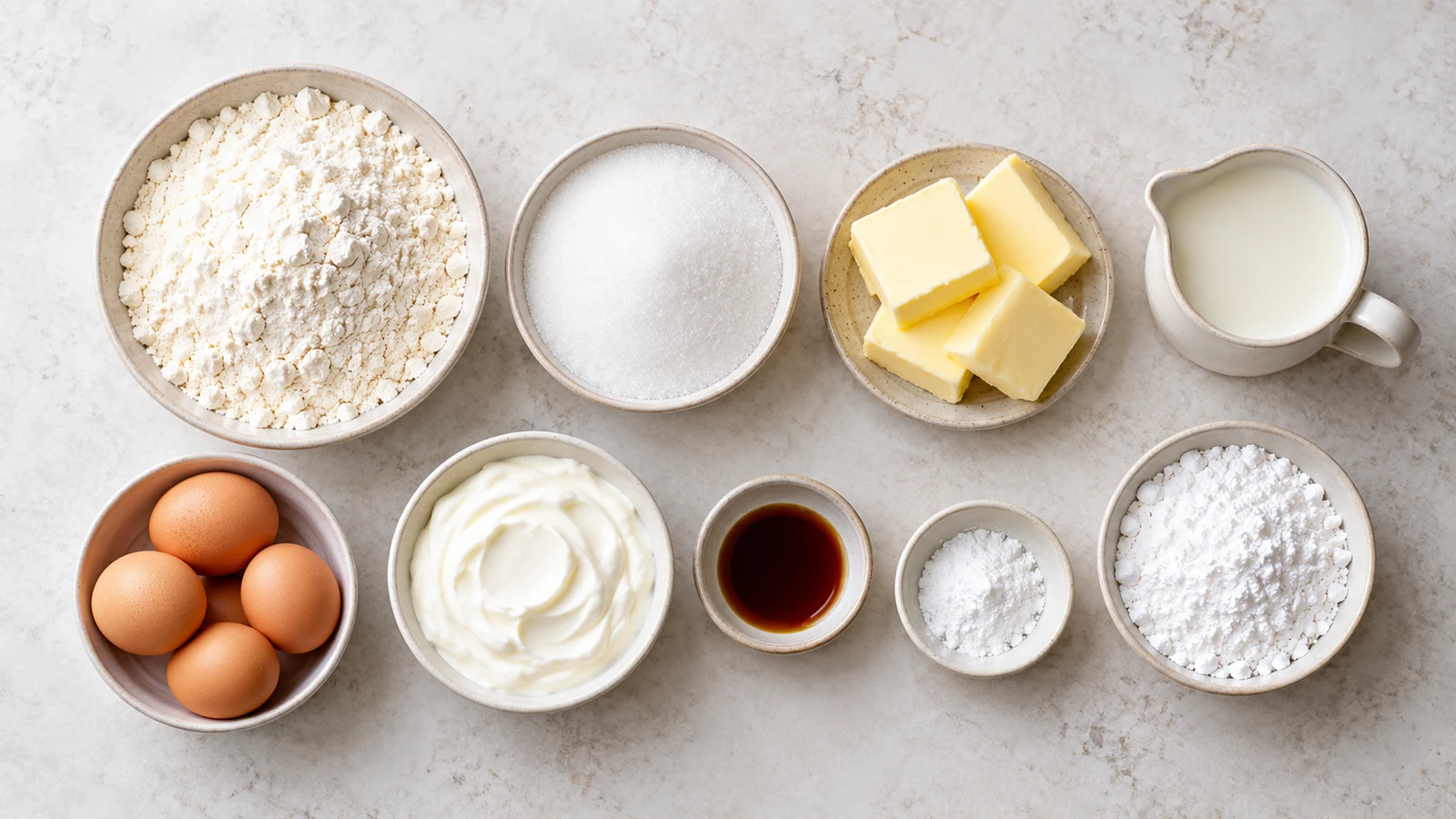
Cake flour gives the crumb a delicate texture because of its lower protein content; this guide to cake flour explains how it behaves in cakes. Baking powder supplies lift, sour cream adds moisture, and salt balances the sweetness.
Why Room-Temperature Ingredients Matter
Butter, eggs, milk, and sour cream combine most evenly when they are close in temperature. A smooth emulsion traps the tiny air bubbles created during creaming, which helps this recipe for fluffy vanilla cake rise evenly. Cold dairy can harden the butter and produce a curdled mixture with an uneven crumb.
If you forget to set out the eggs, place them in a bowl of warm water for 5 to 10 minutes. Measure the milk and sour cream before beginning so they can gradually lose their chill. Do not microwave the butter until it melts; softened butter should bend under gentle pressure while still holding its shape.
Equipment and 9×13-Inch Pan Guide
Use a 9×13-inch metal pan, parchment paper, mixing bowls, an electric mixer, a whisk, and a flexible spatula. A light-colored metal pan produces the most even browning. A dark metal pan may brown the edges faster, so check early.
A glass pan heats more slowly but retains heat longer. Reduce the oven temperature to 325°F (165°C) and expect the cake to need about 5 to 10 additional minutes. Do not substitute a smaller pan unless you divide the batter, because an overfilled pan can spill or remain gummy in the center.
A straight-sided pan makes the vanilla sheet cake recipe easier to portion neatly. Before adding the batter, check that the oven rack is centered and the pan sits level. An oven thermometer is helpful if baked goods regularly finish earlier or later than expected.
How to Make This Vanilla Sheet Cake Recipe
- Prepare the oven and pan. Heat the oven to 350°F (175°C). Grease a 9×13-inch metal pan, line the bottom with parchment, and lightly grease the parchment.
- Combine the dry ingredients. Whisk the cake flour, baking powder, and salt for about 30 seconds. This distributes the leavener and reduces uneven tunnels.
- Cream the butter and sugar. Beat them on medium speed for 3 to 4 minutes, scraping the bowl twice, until pale and visibly fluffy. This aeration is central to a dependable recipe for fluffy vanilla cake.
- Add the eggs and vanilla. Beat in the eggs one at a time, mixing until each disappears before adding the next. Mix in the vanilla. If the mixture looks slightly curdled, continue with the recipe; the flour will bring it together.
- Add flour and dairy. Stir the milk and sour cream together. On low speed, add the flour mixture in three additions, alternating with the dairy in two additions. Begin and end with flour, and mix only until the last streaks disappear.
- Bake. Spread the batter evenly in the pan and tap it gently once on the counter. Bake for 30 to 36 minutes, rotating once after 24 minutes only if the oven browns unevenly.
- Cool completely. Cool in the pan on a rack for 20 minutes. Carefully turn out the cake, remove the parchment, and let it cool completely before frosting.
- Make the buttercream. Beat the softened butter for 2 minutes. Add the confectioners’ sugar gradually on low speed, then add vanilla, salt, and 3 tablespoons cream. Beat for 2 to 3 minutes, adding the remaining cream if needed. For more frosting guidance, see this vanilla icing recipe for cake.
Expert Tips for a Fluffy, Even Cake
Measure Flour Accurately
Weighing 330 g of flour gives the most consistent result. If you use measuring cups, loosen the flour, spoon it into the cup, and sweep away the excess. Scooping directly from the container compresses flour and can make a vanilla sheet cake recipe dry or heavy.
Cream Butter and Sugar Thoroughly
Do not rush the 3 to 4 minutes of creaming. The mixture should become paler, increase in volume, and cling softly to the sides of the bowl. Stop twice to scrape the bottom and sides so no dense patches remain. This step creates the fine air pockets needed in a recipe for fluffy vanilla cake.
Alternate the Wet and Dry Ingredients
Adding all the liquid at once can overwhelm the butter mixture, while adding all the flour first encourages too much gluten development. Alternating the additions keeps the batter stable. Use low speed and stop as soon as the last flour streak disappears.
Spread the Batter Evenly
Push batter gently into the corners and level the surface with a flexible spatula. A uniform layer helps the center and edges finish together. Tap the pan only once; repeated hard tapping can remove useful air incorporated during creaming.
Use Several Doneness Cues
The cake is done when the top springs back after a light touch, the edges begin to pull from the pan, and a toothpick comes out clean or with a few moist crumbs. An instant-read thermometer inserted in the center should register about 205°F to 210°F (96°C to 99°C).
Do not taste raw batter because uncooked flour and eggs can carry harmful germs. Review the FDA’s raw flour safety advice, and wash utensils and surfaces that have touched the batter.
Vanilla Icing Recipe for Cake Success
The buttercream should be soft enough to spread without pulling crumbs from the surface. If it feels stiff, mix in the remaining cream a little at a time. If it becomes too loose, add a small amount of confectioners’ sugar until it holds gentle swirls.
For the smoothest finish, apply a thin crumb coat first and chill the cake briefly. Spread the remaining vanilla icing recipe for cake over the top with long, light strokes. A spoon can create casual swoops, while an offset spatula makes a flatter party-cake finish.
Always wait until the cake is completely cool. Even slight warmth can melt the buttercream, leaving it greasy or causing it to slide. If your kitchen is warm, chill the finished frosting for a few minutes, then stir or rewhip it before decorating.
Variations and Substitutions
- Dairy-free: Use plant-based butter, unsweetened soy milk, and dairy-free yogurt. Check every packaged ingredient for your allergens.
- No cake flour: For every cup, measure 1 cup all-purpose flour, remove 2 tablespoons, and replace them with 2 tablespoons cornstarch. Whisk and sift well.
- Frosting alternatives: Use chocolate buttercream, cream cheese frosting, whipped ganache, or a light dusting of confectioners’ sugar.
- Citrus: Rub 1 tablespoon lemon or orange zest into the sugar before creaming.
- Two-layer cake: Divide the batter between two greased 9-inch round pans and begin checking at 24 minutes.
Flavor and Decoration Ideas
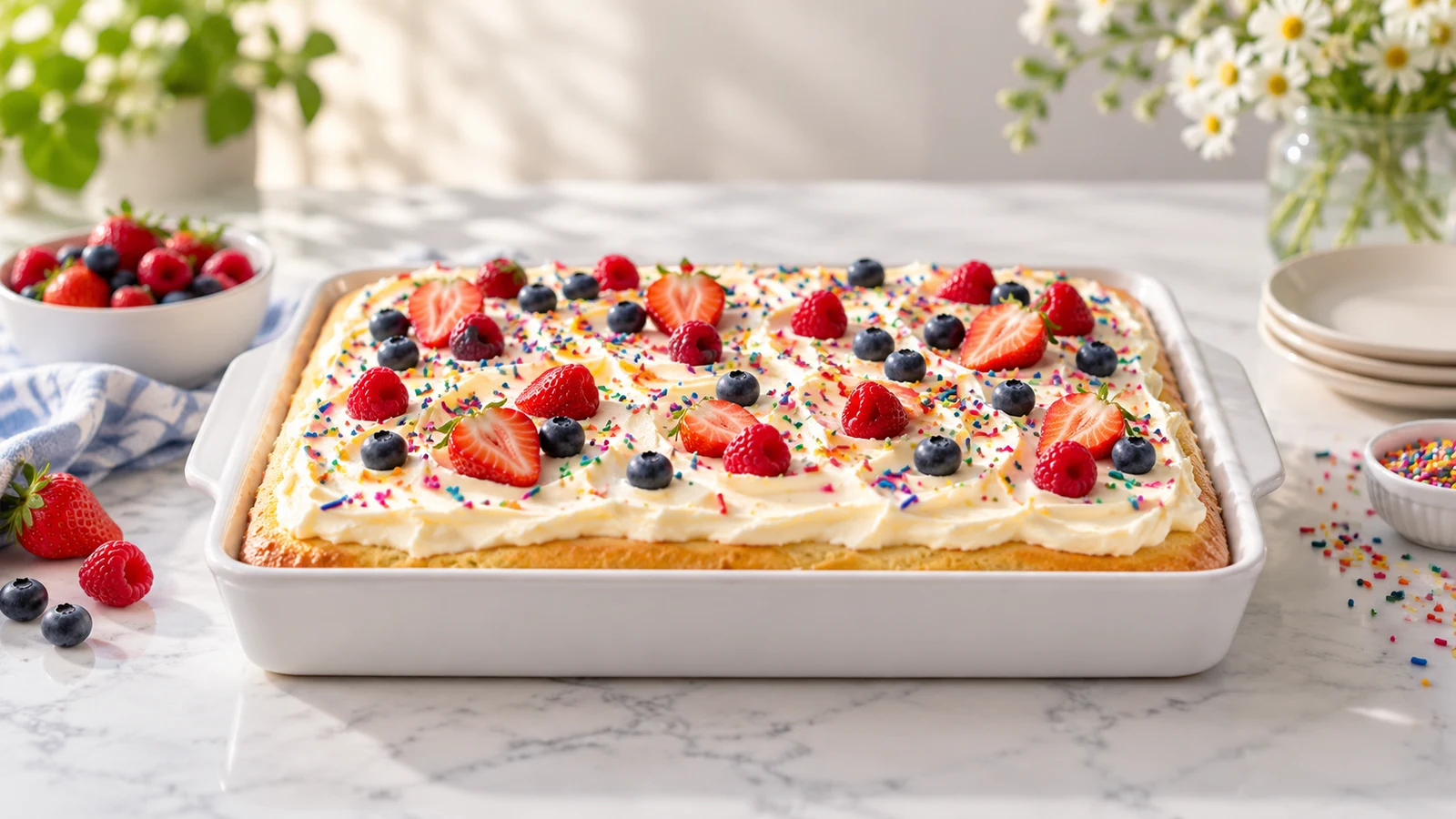
Fold sprinkles gently into the finished batter for a celebration cake, taking care not to overmix. You can also finish the vanilla icing recipe for cake with fresh berries, toasted coconut, chopped nuts, chocolate curls, or colorful sprinkles. Add crunchy toppings shortly before serving so they retain their texture.
For a subtle almond note, replace only a small portion of the vanilla extract with almond extract. For stronger vanilla character, keep the listed extract and add vanilla bean seeds to the frosting. These changes preserve the familiar character of the vanilla sheet cake recipe without changing its structure.
High-Altitude Adjustment
For high-altitude baking above about 3,500 feet, reduce baking powder to 2 teaspoons, decrease sugar by 2 tablespoons, add 2 tablespoons milk, and raise the oven to 365°F (185°C). Begin checking several minutes early, since conditions vary by elevation and oven.
Troubleshooting Common Problems
- Dense cake: The butter may have been too cold, the creaming time too short, or the batter overmixed after adding flour.
- Dry cake: Too much flour, excessive baking, or a dark pan is usually responsible.
- Sunken center: Avoid opening the oven early, underbaking, or using expired baking powder.
- Gummy streaks: Mix only until combined and make sure all dairy ingredients are near room temperature.
- Overbrowned edges: Use a light metal pan and loosely shield the edges with foil near the end if needed.
- Large holes: Overbeating after adding flour or failing to distribute the baking powder evenly can create tunnels.
- Crumbly slices: Let the cake cool fully and use a sharp knife, wiping the blade between cuts.
- Sliding frosting: The cake was probably still warm, or the buttercream became too soft in a hot kitchen.
Why Did My Cake Bake Unevenly?
An off-center oven rack, a warped pan, or an oven with strong hot spots may create one high or dark side. Center the pan and rotate it only after 24 minutes if necessary. Opening the door earlier can release heat before the structure of this recipe for fluffy vanilla cake has set.
Why Did the Buttercream Look Grainy?
Confectioners’ sugar may form small lumps, or the ingredients may not have mixed long enough. Add the sugar gradually and beat the finished frosting for 2 to 3 minutes. Scraping the bowl ensures the vanilla icing recipe for cake becomes consistent from top to bottom.
Flour is a raw agricultural ingredient, so keep measuring tools and work surfaces clean and wash them after contact with batter. These flour-handling precautions provide additional practical guidance.
Serving Ideas for Vanilla Sheet Cake
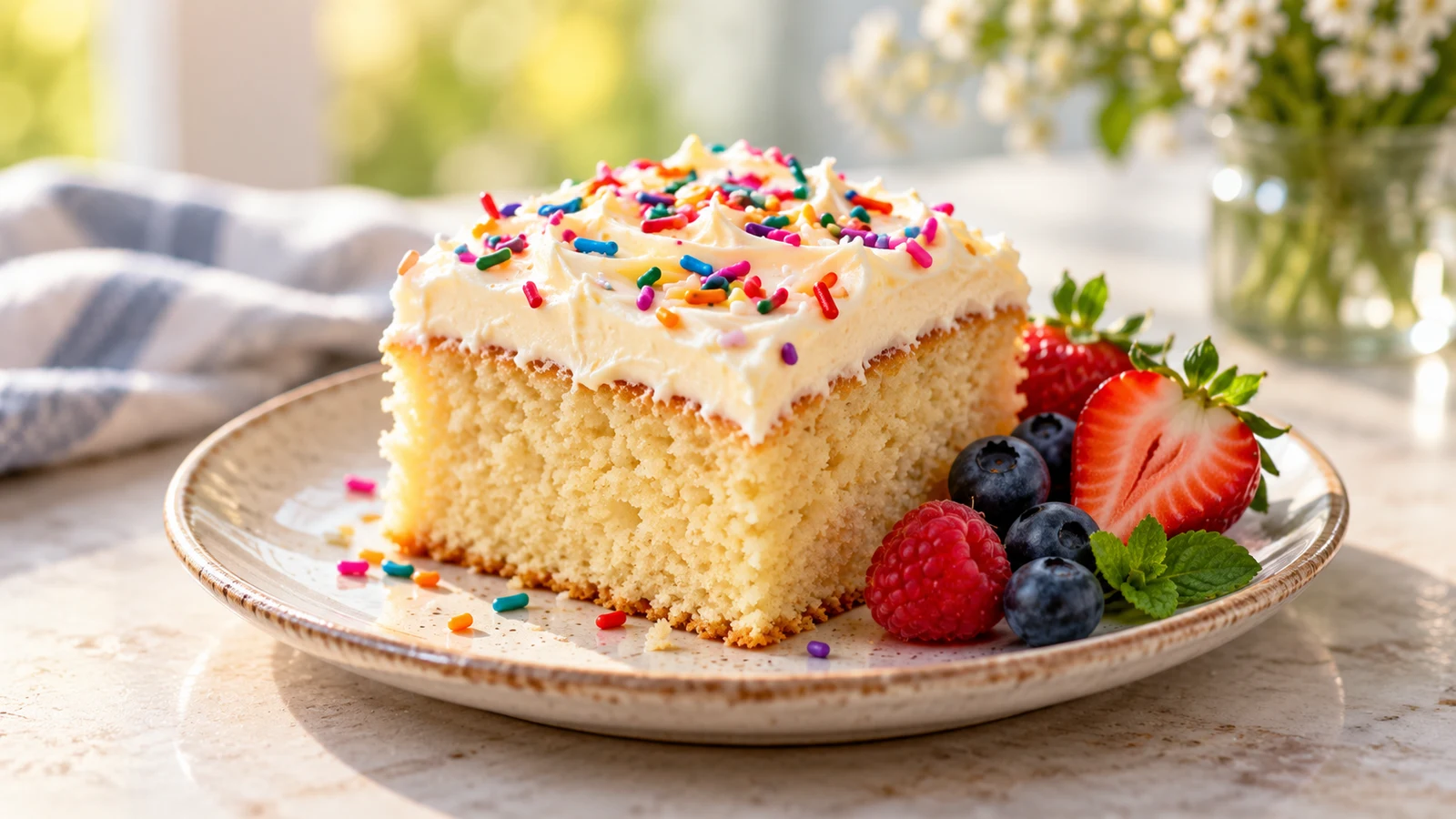
Serve the cake with berries, sprinkles, toasted coconut, or a small scoop of vanilla ice cream. Tart raspberries or strawberries balance the sweet buttercream, while sliced peaches make a pleasant summer topping. For a dessert buffet, cut smaller party portions and place them in a single layer on a platter.
This vanilla sheet cake recipe is a practical base for birthday themes because the broad, flat top provides plenty of decorating space. Add candles, piped borders, or sprinkles after the frosting has been spread. Avoid placing juicy fruit on top too far ahead, since it can release moisture.
For transport, chill the frosted cake for 20 minutes, cover the pan without touching the icing, and keep it level in a non-slip carrier. In hot weather, keep it out of direct sunlight and avoid leaving it in a parked vehicle.
Make-Ahead, Storage, and Freezing
Making the Cake Ahead
Bake the cake one day in advance and wrap it after it has cooled completely. You may keep the unfrosted cake covered at room temperature overnight. Frost it the next day, or prepare the vanilla icing recipe for cake separately and refrigerate it in a covered container.
Buttercream can be refrigerated for one week. Let it soften until it is no longer firm, then rewhip it before spreading. If needed, add a small splash of the measured cream or milk to restore a light, spreadable texture.
Storing the Frosted Cake
Keep the frosted cake covered at room temperature for up to 2 days if the room is cool, or refrigerate it for up to 5 days. Let refrigerated slices stand for 20 to 30 minutes before serving; buttercream and cake taste softer at room temperature.
Reheating is unnecessary, but an unfrosted slice can be microwaved for 8 to 10 seconds. Do not microwave a decorated slice unless you are comfortable with the frosting softening or melting.
How to Freeze It
Freeze the unfrosted cake, wrapped in plastic and foil, for up to 3 months. Thaw it overnight in the refrigerator while wrapped, then bring it to room temperature and frost. Keeping it wrapped during thawing helps prevent condensation from settling directly on the crumb.
You may also freeze individual unfrosted portions for convenient treats. Separate the slices with wrapping so you can remove only what you need. Although a vanilla mug cake recipe is faster for a spontaneous dessert, frozen portions offer the flavor and texture of a full-sized cake.
Vanilla Sheet Cake Recipe Compared with Other Vanilla Cakes
A vanilla mug cake recipe is designed for one quick serving and usually cooks in a microwave. It is useful when you want dessert immediately, but it will not have the same evenly baked crumb or generous serving size as this vanilla sheet cake recipe.
A vanilla pound cake recipe produces a richer, tighter crumb and is commonly served in slices without a thick layer of frosting. The sheet cake is softer, lighter, and better suited to decorating for a crowd.
If your main goal is height and tenderness, review the linked recipe for fluffy vanilla cake. If you want to explore frosting consistency and flavor in more detail, the linked vanilla icing recipe for cake provides additional guidance. Each recipe meets a different baking need while keeping vanilla at the center.
Frequently Asked Questions
Can I double this vanilla sheet cake recipe?
Yes. For the most consistent result, mix two separate batches and bake them in two 9×13-inch pans. Crowding two pans on one rack can slow baking, so leave space for air circulation and rotate their positions late in baking if necessary.
Can I use all-purpose flour?
Yes, but the crumb will be slightly firmer. Use 330 g all-purpose flour or make the cake-flour substitute described above, taking care not to overmix. Cake flour remains the better choice when you want a particularly delicate recipe for fluffy vanilla cake.
How far ahead can I decorate the cake?
You can frost and decorate it one day before serving. Cover it carefully and store it in a cool room or refrigerator, depending on the frosting and room temperature. Add fresh fruit close to serving for the neatest appearance.
Does this recipe contain common allergens?
Yes. The standard version contains wheat, eggs, and dairy. Ingredient brands and substitutions vary, so anyone with an allergy should check labels and avoid cross-contact.
Can I leave the cake in the pan?
Yes. Let the cake cool completely in the pan, then apply the vanilla icing recipe for cake directly on top. This is the easiest option for transport and casual gatherings. Lining the bottom is still useful if you might decide to remove it later.
Can I bake this vanilla sheet cake recipe in a glass pan?
Yes. Reduce the oven temperature to 325°F (165°C) and expect about 5 to 10 additional minutes of baking. Check the center with the same visual, toothpick, and temperature cues rather than relying only on time.
Why is my vanilla sheet cake dense?
Cold ingredients, insufficient creaming, excess flour, and overmixing are common causes. Bring the dairy and eggs to room temperature, cream for the full 3 to 4 minutes, and stop mixing as soon as the flour disappears.
Can I turn this into cupcakes?
The batter can be divided among lined cupcake wells, but their baking time will be shorter than the stated 30 to 36 minutes. Because the tested instructions are written for a 9×13-inch pan, monitor cupcakes closely and use the doneness cues rather than the sheet-cake timing.
Is this the same as a vanilla pound cake recipe?
No. A vanilla pound cake recipe generally has a denser, richer crumb, while this cake is designed to be light and soft. Both have a clear vanilla flavor, but they suit different occasions and serving styles.
When should I choose a vanilla mug cake recipe?
Choose a vanilla mug cake recipe when you want a single serving with minimal preparation. Choose this sheet cake when you need consistent party portions, a broad decorating surface, or a dessert that can be prepared ahead.
How do I get clean slices?
Chill the frosted cake for about 20 minutes to firm the surface. Use a long, sharp knife and wipe it clean between cuts. Mark the portions lightly before slicing if you need 20 evenly sized party servings.
Printable Recipe Card
Vanilla Sheet Cake Recipe
- Preparation: 25 minutes
- Baking: 30 to 36 minutes
- Cooling: About 1 hour 20 minutes
- Total time: About 2 hours 20 minutes
- Yield: 12 large or 20 party-size servings
- Oven: 350°F (175°C) for metal; 325°F (165°C) for glass
- Nutrition estimate: About 510 calories per large serving, including buttercream; values vary by brands and portion size.
- Notes: Use room-temperature ingredients, weigh flour when possible, avoid overmixing, and cool completely before frosting.
A Dependable Cake for Any Celebration
This vanilla sheet cake recipe combines a tender crumb, straightforward preparation, and an easy-to-decorate shape. Careful measuring, full creaming time, gentle mixing, and accurate doneness checks provide the most reliable results.
Whether you serve it with berries, sprinkles, or the included vanilla icing recipe for cake, it is simple enough for everyday baking and polished enough for a celebration. For different occasions, a vanilla mug cake recipe offers speed, while a vanilla pound cake recipe provides a richer texture. Follow the temperature and mixing cues, cool the cake completely, and enjoy each soft vanilla slice.
Reviews
Reader reviews are managed separately (outside this build).