Potato
Loaded Mashed Potatoes Recipe: Easy Guide
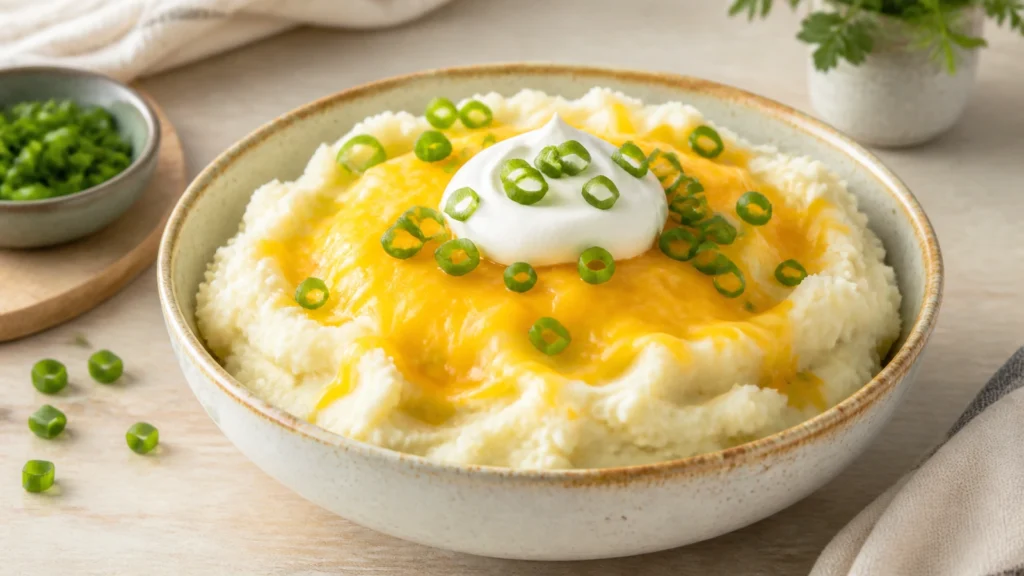
A loaded mashed potatoes recipe takes the plain side dish and turns it into the thing people actually go back for: sharp cheddar melted through, sour cream for tang, and a scattering of green onion over the top.
The name comes from a loaded baked potato, and the logic is the same. Everything you would pile onto a split potato gets folded into the mash instead, which means every spoonful tastes the same rather than only the top.
Below you will find the ingredient table, a potato comparison guide, step-by-step directions, tips, variations, serving ideas, troubleshooting, storage guidance, and six common questions.
Table of Contents
Key Takeaways for This Loaded Mashed Potatoes Recipe
- Russets give the fluffiest mash; Yukon Gold gives the creamiest.
- Warm the dairy before it goes in, or the potatoes turn cold and stiff.
- Grate cheese from a block so it melts smoothly into the hot mash.
- Never use a blender or food processor; it turns potato into glue.
- Sour cream goes in off the heat, after the butter and milk.
- A loaded mashed potatoes recipe serves eight as a side.
What Makes Mashed Potatoes Loaded
Plain mash is potato, butter, milk and salt. Loaded means adding the three things that define a loaded baked potato: cheese, sour cream, and green onion.
The order matters more than the quantity. Butter goes in first because fat coats the starch granules and stops them turning gummy. Warm milk follows, then cheese while the mash is hot enough to melt it, then sour cream off the heat so it does not split.
Get that sequence right and a loaded mashed potatoes recipe stays light rather than heavy, even with three dairy additions in it.
Loaded Mashed Potatoes at a Glance
Here is what a loaded mashed potatoes recipe looks like before you start.
| Detail | Value |
|---|---|
| Prep time | 20 minutes |
| Cook time | 20 minutes |
| Method | boiled, then mashed by hand |
| Potato | russet or Yukon Gold |
| Finish | cheese hot, sour cream off the heat |
| Yield | 8 servings |
Ingredients for Loaded Mashed Potatoes
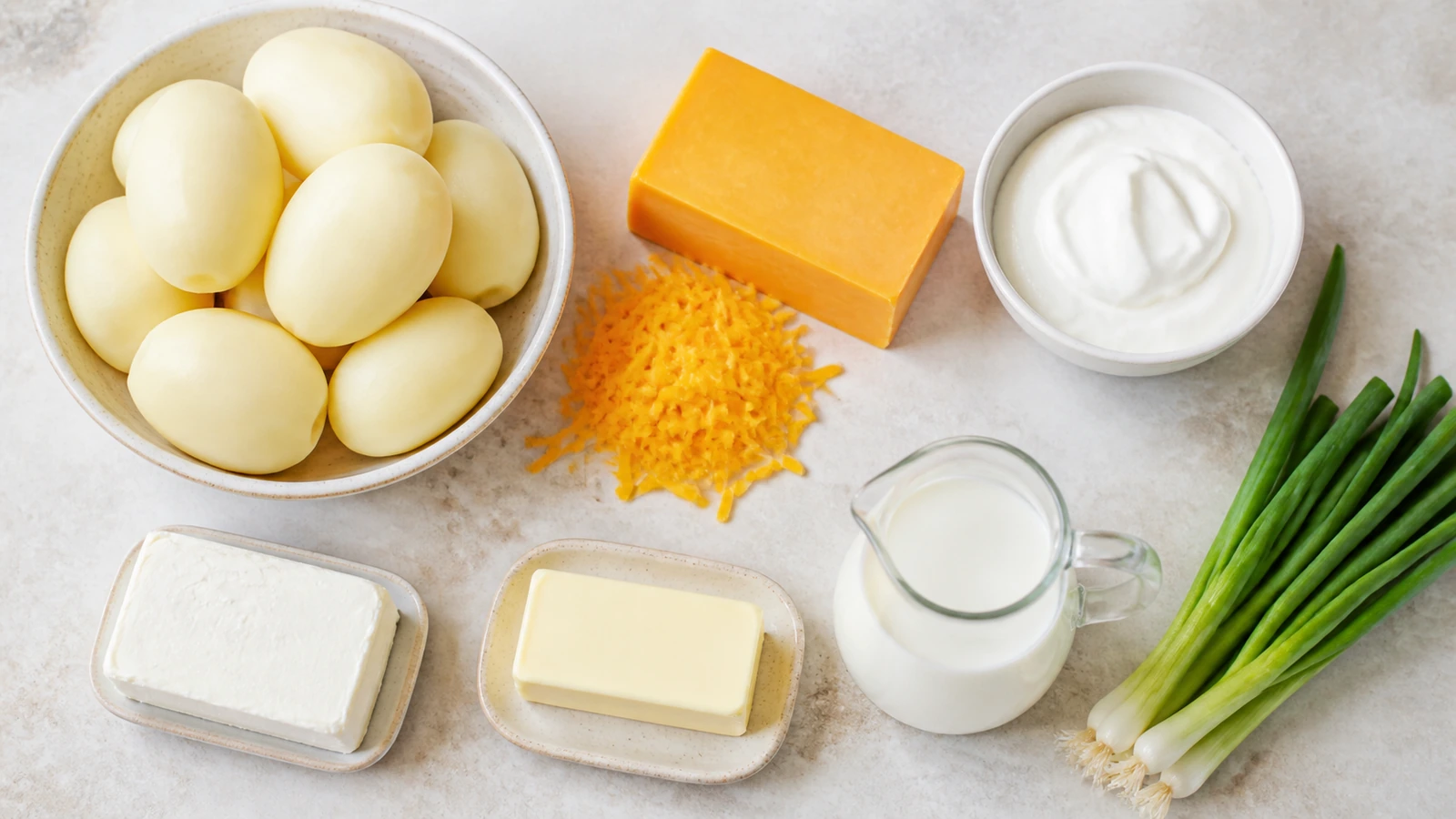
Everything in this loaded mashed potatoes recipe is a standard supermarket item.
| Ingredient | Amount | Why it matters |
|---|---|---|
| Russet potatoes, peeled and cubed | 3 pounds | High starch; mashes light and fluffy. |
| Sharp cheddar, grated from a block | 2 cups | The main flavor; sharp carries through the dairy. |
| Sour cream, full fat | 1 cup | Tang and richness; added off the heat. |
| Whole milk, warmed | 1 cup | Cold milk stiffens the mash instantly. |
| Butter, cubed | 8 tablespoons | Goes in first to coat the starch. |
| Cream cheese | 4 ounces | Keeps the texture glossy rather than grainy. |
| Green onions, sliced | 6 | Freshness and color against the cheese. |
| Garlic powder | 1 teaspoon | Depth without raw garlic bite. |
| Smoked paprika | 1 teaspoon | A little smoke behind the cheddar. |
| Salt | to taste | Salt the cooking water generously too. |
| Black pepper | to taste | Coarse ground, at the end. |
Choosing the Right Potato
Russets are the standard for a loaded mashed potatoes recipe. Their high starch and low moisture mash into a light, fluffy texture that absorbs butter and milk readily.
Yukon Gold gives a denser, creamier, more buttery result and needs slightly less dairy. Red and other waxy potatoes resist mashing and turn sticky when worked, so they suit a rustic smashed style rather than this one.
Why the Dairy Must Be Warm
Hot potato meeting cold milk drops the temperature fast, and starch that cools while being worked tightens and turns claggy.
Warm the milk in a small pan or the microwave until it steams, and let the butter and sour cream sit out while the potatoes boil. The mash stays hot, loose, and far easier to season.
How to Make Loaded Mashed Potatoes Step by Step
The method for this loaded mashed potatoes recipe is straightforward, and the order of additions is the technique.
- Peel the potatoes and cut them into even 2 inch chunks so they cook at one rate.
- Put them in cold salted water, bring to a boil, then simmer 15 to 18 minutes.
- They are ready when a knife slides through with no resistance.
- Drain thoroughly and return them to the hot dry pan for 1 minute to steam off moisture.
- Mash by hand with a masher or pass through a ricer. Do not use a blender.
- Add the butter and cream cheese first and stir until melted.
- Pour in the warm milk gradually until the texture is right.
- Stir in the cheddar while the mash is still hot enough to melt it.
- Take the pan off the heat, then fold in the sour cream, garlic powder, and paprika.
- Season with salt and pepper, top with green onions, and serve.
How to Tell When the Potatoes Are Ready
A knife should pass through a chunk with no resistance at all. Any firmness in the centre means lumps you will never mash out.
Undercooked potato is the most common cause of lumpy mash, and it is not fixable later. Give it another three minutes rather than draining early.
Safe Handling and Storage
Cool leftovers in shallow containers and refrigerate within two hours rather than leaving the pan out; the USDA guidance on leftovers and food safety covers safe cooling and storage times.
A large bowl of hot mash holds heat for a long time, so spread it out rather than refrigerating it in one deep dish.
Potato Comparison Guide
The potato you choose changes the result of a loaded mashed potatoes recipe more than anything else.
| Potato | Texture | Boil time | Dairy needed |
|---|---|---|---|
| Russet | Light and fluffy | 15 to 18 min | Most |
| Yukon Gold | Creamy and dense | 15 to 18 min | Less |
| Red | Firm, slightly sticky | 12 to 15 min | Least |
| White | Middle ground | 15 min | Moderate |
| Fingerling | Waxy, rustic | 12 min | Least |
| Half russet, half Yukon | Fluffy but rich | 15 to 18 min | Moderate |
Why You Must Not Use a Blender
Potato starch granules are fragile. A blade spinning at speed ruptures them and releases free starch, which turns the mash into something closer to wallpaper paste.
A hand masher, a ricer, or a food mill all break the potato without shearing it. If you want the smoothest possible result, use a ricer, not a machine.
Best Tips
A few habits separate a good loaded mashed potatoes recipe from a heavy or gluey one.
- Start in cold water. Potatoes dropped into boiling water cook unevenly.
- Salt the water properly. It is the only chance to season the potato itself.
- Dry them after draining. A minute in the hot pan drives off water that would dilute the dairy.
- Butter before milk. Fat first protects the starch from turning gummy.
- Grate your own cheese. Pre-shredded is coated in starch and melts grainy.
- Do not over-mix. Stop the moment it looks smooth.
Easy Variations to Try
Once the basic loaded mashed potatoes recipe works, these are the directions worth taking it in.
- Cheese forward. Double down with the cheesy mashed potatoes recipe.
- Baked and browned. Spread into a dish and finish it as in the baked mashed potatoes recipe.
- Tangier. Push the sour cream further with the mashed potato and sour cream recipe.
- Skin on. Use red potatoes and leave the skins, as in the mashed red potatoes recipe.
- Ahead of time. Follow the make ahead mashed potatoes recipe.
- Ranch style. A tablespoon of dried dill, garlic powder and onion powder folded through.
What to Serve With It
A loaded mashed potatoes recipe is rich enough to stand next to almost anything simple.
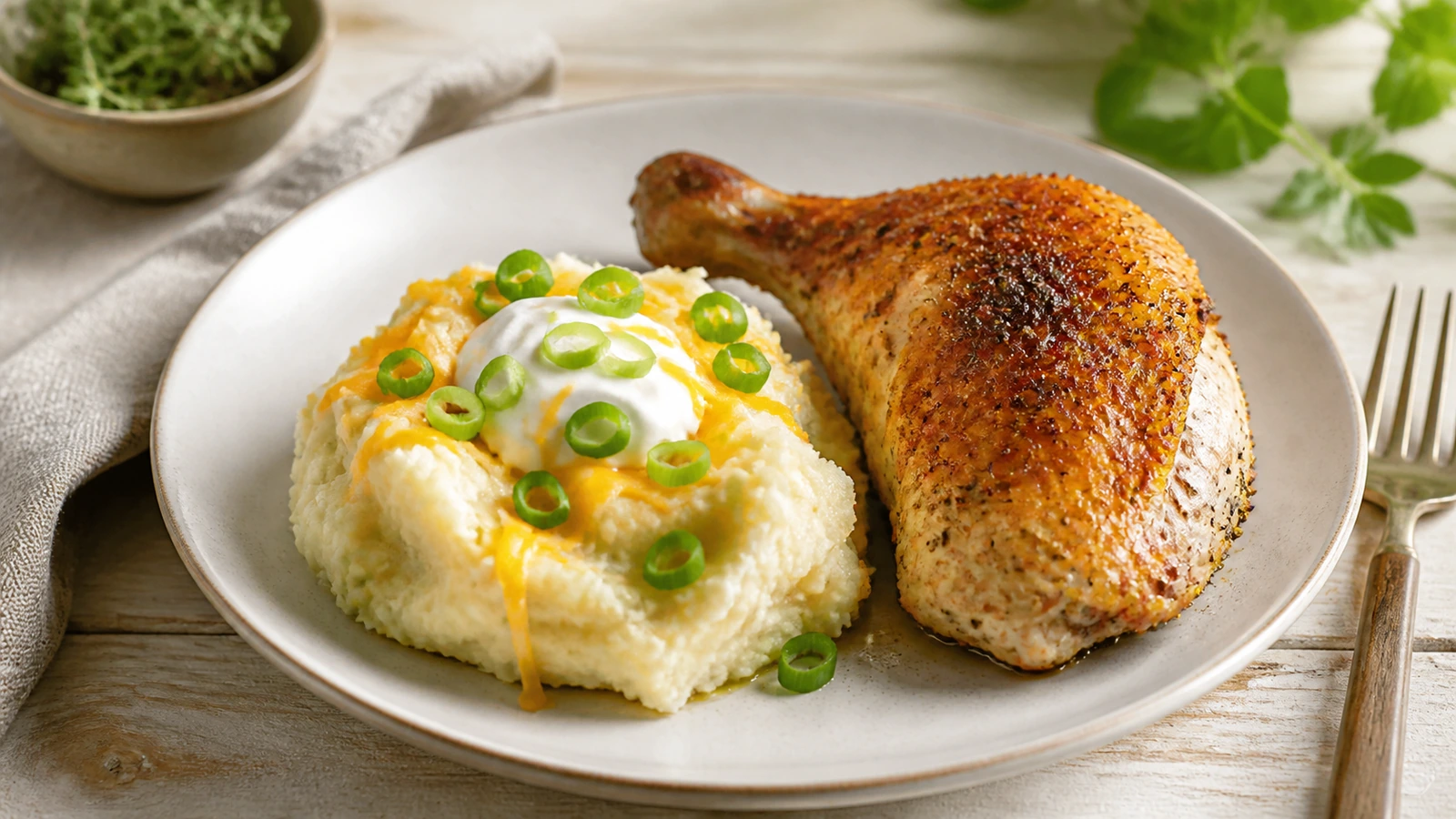
- Roast chicken or turkey.
- Braised beef or a pot roast.
- Meatloaf, which suits the cheese particularly well.
- Steamed green beans to cut the richness.
- A sharp green salad with vinaigrette.
- Roasted carrots or parsnips.
Build a Balanced Plate
This side carries cheese, butter, milk and sour cream, so the rest of the plate should stay plain.
A modest scoop next to a lean protein and something green keeps the meal in proportion without changing the recipe.
Troubleshooting Guide
Most problems with a loaded mashed potatoes recipe come down to temperature or over-working.
| Problem | Likely cause | Fix |
|---|---|---|
| Gluey texture | Blended, or over-mixed | Mash by hand; stop when smooth. |
| Lumpy | Potatoes undercooked | Boil until a knife meets no resistance. |
| Cold and stiff | Cold milk added | Warm the dairy first. |
| Watery | Not drained and dried | Return to the hot pan for a minute. |
| Cheese stringy | Added over direct heat | Stir it in off the burner. |
| Bland | Water not salted | Salt the cooking water generously. |
If It Turns Gluey
Gluey mash means the starch has been sheared, and there is no way to reverse it once done.
You can soften the effect by folding in extra warm milk and butter, but the real fix is next time: hand masher or ricer only, and stop mixing early.
If It Is Too Thick
Mashed potato firms up as it sits, so a batch that looked right in the pan can be stiff ten minutes later.
Warm milk, added a splash at a time and folded gently, brings it back. Avoid adding more butter alone, which makes it greasy rather than loose.
How to Store and Reheat
Leftover loaded mashed potatoes recipe reheats well as long as you add liquid back.
Refrigerator Storage
Airtight container at 40°F or below for up to four days. It will set firm when cold, which is normal.
Reheat in a covered dish with a splash of milk, stirring halfway. Low heat keeps the dairy from separating.
Freezer and Make-Ahead Notes
Mash with plenty of fat in it freezes better than lean mash, so this version holds up for three months.
Thaw overnight and reheat gently with extra milk. For a version built specifically to be made in advance, see the make ahead method.
Using the Leftovers
Cold leftover mash is the starting point for potato cakes, which is arguably a better second meal than a reheat.
It also works as a topping for a shepherd style bake, or thinned with broth into a quick potato soup.
Frequently Asked Questions
The questions below come up most often about this loaded mashed potatoes recipe.
What makes mashed potatoes loaded?
Cheese, sour cream, and green onion folded through the mash, taking the toppings from a loaded baked potato and putting them inside instead of on top.
Which potato is best?
Russets for a light fluffy mash, Yukon Gold for a creamier denser one. Half and half gives you both.
Why are my mashed potatoes gluey?
A blender or food processor was used, or they were over-mixed. Use a hand masher or ricer and stop as soon as they look smooth.
Can I make them ahead?
Yes. Refrigerate up to two days and reheat covered with extra milk, or follow the dedicated make ahead method for the best result.
Should the milk be warm?
Yes. Cold dairy cools the potato while you are working it, which tightens the starch and makes the mash stiff.
How much does this serve?
Three pounds of potatoes serves about eight as a side dish, or six if it is the main starch on the plate.
More Mashed Potato Recipes to Try
If this loaded mashed potatoes recipe worked for you, these are the natural next ones to cook. Every exact keyword links to its recipe page:
- mashed potatoes recipe easy
- cheesy mashed potatoes recipe
- mashed potato and sour cream recipe
- baked mashed potatoes recipe
- mashed potato cakes recipe
The warm dairy and hand mashing behind this loaded mashed potatoes recipe apply to every one of them.
Final Thoughts on This Loaded Mashed Potatoes Recipe
Three things decide this dish: cook the potatoes until a knife meets no resistance, warm the dairy before it goes in, and mash by hand.
Get those right and a loaded mashed potatoes recipe gives you eight servings of the side dish people come back for, from about forty minutes and one pan.
There are no reviews yet. Be the first one to write one.
Reviews
Reader reviews are managed separately (outside this build).