Potato
Easy Roasted Potatoes and Carrots Recipe: Crisp & Tender
Try this roasted potatoes and carrots recipe for an easy oven-baked side dish with crisp-edged potatoes, tender carrots, and simple savory flavors.
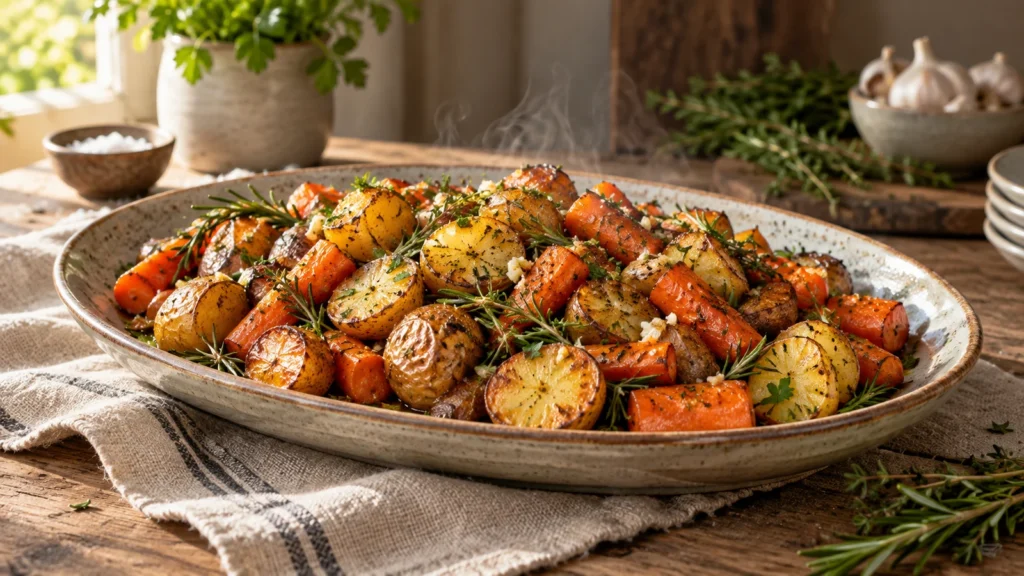
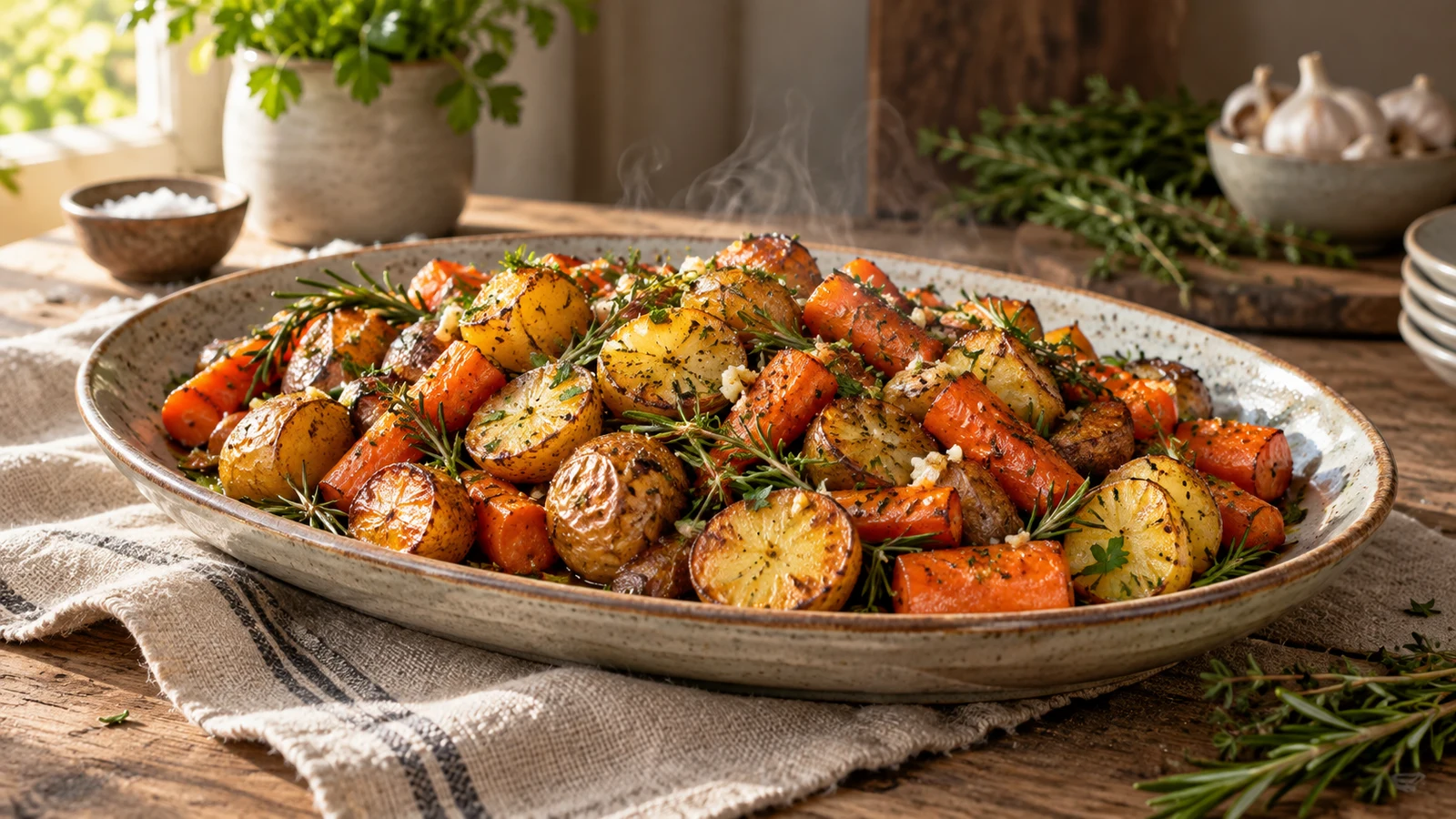
This roasted potatoes and carrots recipe turns simple vegetables into a savory side dish with crisp, browned edges and tender centers. Cutting the vegetables evenly and giving them enough room on the pan helps them roast instead of steam.
The recipe takes about 45 minutes from start to finish and pairs well with chicken, beef, pork, fish, or plant-based mains. It is naturally gluten-free, dairy-free, vegan, and free from common allergens when prepared with uncontaminated ingredients.
Once you understand the basic method, you can adapt this roasted potatoes and carrots recipe with different potato varieties, herbs, and finishing touches. The key principles are consistent cuts, dry vegetables, sufficient oil, high heat, and an uncrowded metal pan.
Table of Contents
Why You’ll Love This Recipe
- Easy preparation: Peeling is optional, and the vegetables cook together on one pan.
- Reliable texture: Precise cuts keep the potatoes and carrots on the same schedule.
- Flexible seasoning: The simple herb blend works with many meals.
- Scalable: Make a smaller batch for two or use multiple pans for a crowd.
- Everyday ingredients: The vegetables and pantry seasonings are easy to find throughout the year.
- Meal-prep friendly: Leftovers reheat well in the oven or air fryer.
Ingredients
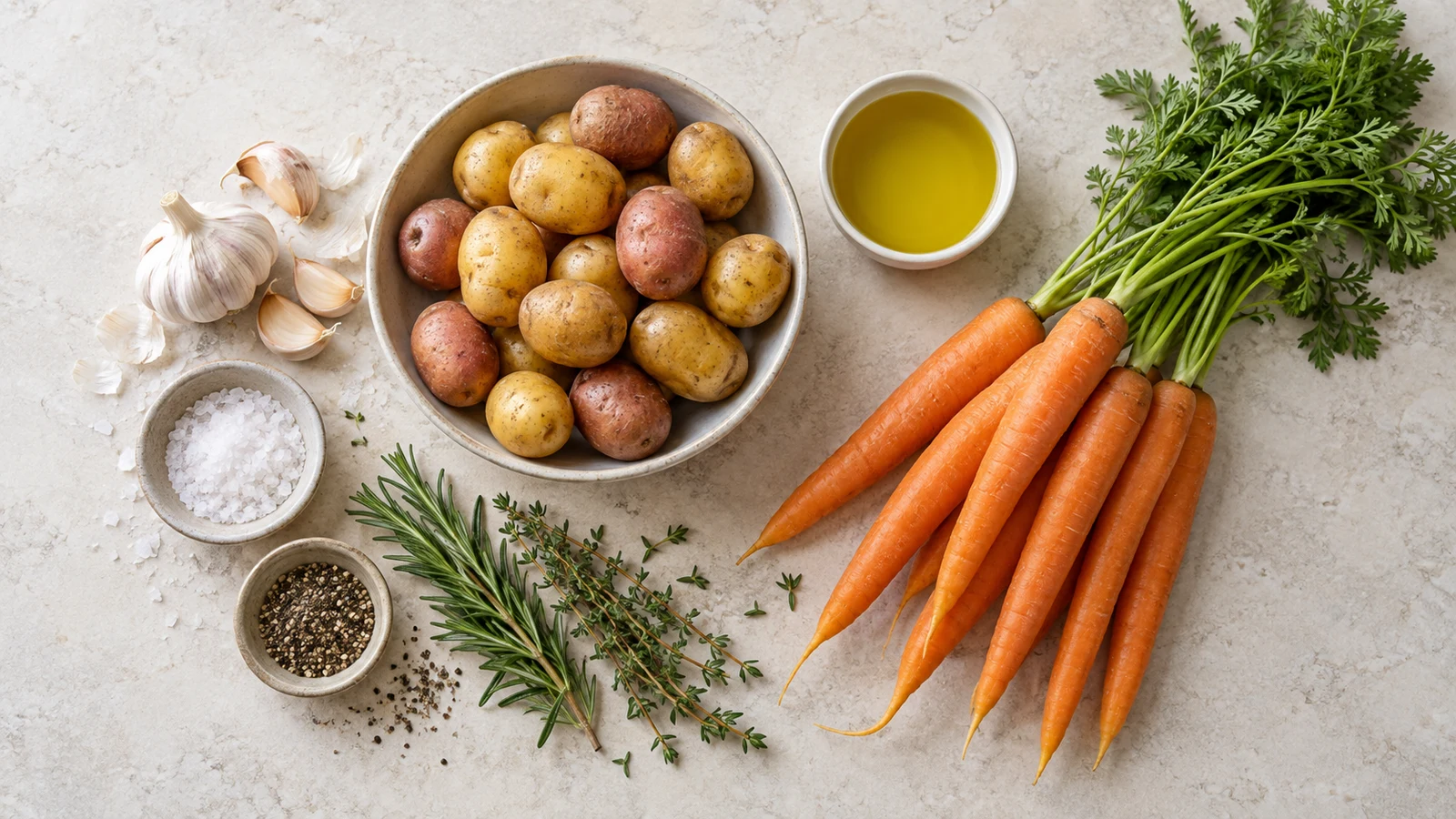
- 1 1/2 pounds (680 g) Yukon Gold potatoes, scrubbed
- 1 pound (454 g) medium carrots, scrubbed or peeled
- 3 tablespoons extra-virgin olive oil
- 1 teaspoon kosher salt
- 1/2 teaspoon garlic powder
- 1/2 teaspoon onion powder
- 1/2 teaspoon dried thyme
- 1/4 teaspoon black pepper
- 1 tablespoon chopped fresh parsley, optional
Ingredient Notes
Yukon Gold potatoes have thin skins, creamy flesh, and enough structure to hold their shape. Scrubbing rather than peeling them saves time and preserves their appealing golden edges. Choose potatoes without green patches, sprouts, or deeply wrinkled skin.
Medium carrots are easier to cut consistently than very thick carrots. If the upper ends are much wider than the tips, cut the wide sections into smaller rounds or half-moons. This adjustment helps every piece finish at approximately the same time.
Extra-virgin olive oil supplies flavor and conducts heat across the vegetable surfaces. Garlic powder and onion powder distribute more evenly than fresh minced aromatics, which can burn during a long, hot roast. Dried thyme tolerates the oven well, while fresh parsley brings color after cooking.
Equipment and Preparation
Use a large rimmed metal baking sheet, a sharp knife, a cutting board, a large bowl, and a flexible spatula. A light-colored metal pan encourages even browning; glass dishes retain moisture and generally produce softer vegetables.
Cut the potatoes into 3/4-inch pieces. Slice thick carrot sections into 1/2-inch rounds and narrow ends into 1-inch lengths. Carrots do not require a separate head start at these sizes because their smaller pieces become tender in roughly the same time as the potatoes.
A pan with a broad, flat surface is important for this roasted potatoes and carrots recipe. If the vegetables overlap in the center or form a deep layer, divide them between two pans. More exposed surface area allows moisture to escape and encourages caramelized edges.
Best Potatoes for Roasting
Yukon Gold potatoes are the most dependable choice because their creamy interiors hold together well. Red potatoes are slightly waxier and remain firm; for another approach, try this oven roasted red potatoes recipe.
Russets develop especially crisp edges but can break apart if stirred aggressively. Fingerlings also work when halved lengthwise; this roasted fingerling potatoes recipe provides more variety-specific guidance. Baby gold or red potatoes can be halved for a roasted mini potatoes recipe variation.
When using red potatoes, keep the skin on and follow the cutting and spacing lessons from the oven roasted red potatoes recipe. If you choose fingerlings, arrange their cut faces against the pan as you would in a roasted fingerling potatoes recipe. Small baby potatoes are best when uniformly sized for a roasted mini potatoes recipe.
How to Make This Roasted Potatoes and Carrots Recipe
- Heat the oven: Place a rack in the middle and preheat a conventional oven to 425°F (220°C), or a convection oven to 400°F (205°C).
- Dry the vegetables: After washing, pat the potatoes and carrots thoroughly dry. Surface water delays browning.
- Cut evenly: Cut potatoes into 3/4-inch pieces and carrots as directed above. Keep the pieces as uniform as practical.
- Season: Toss the vegetables with olive oil, salt, garlic powder, onion powder, thyme, and pepper until every piece has a thin, even coating.
- Arrange the pan: Spread everything in one layer with a little space between pieces. Place flat potato surfaces against the pan for stronger browning.
- Roast: Cook for 20 minutes, flip with a spatula, and roast for another 15 to 20 minutes. General guidance for roasting vegetables with high heat and adequate spacing explains why this method promotes caramelization.
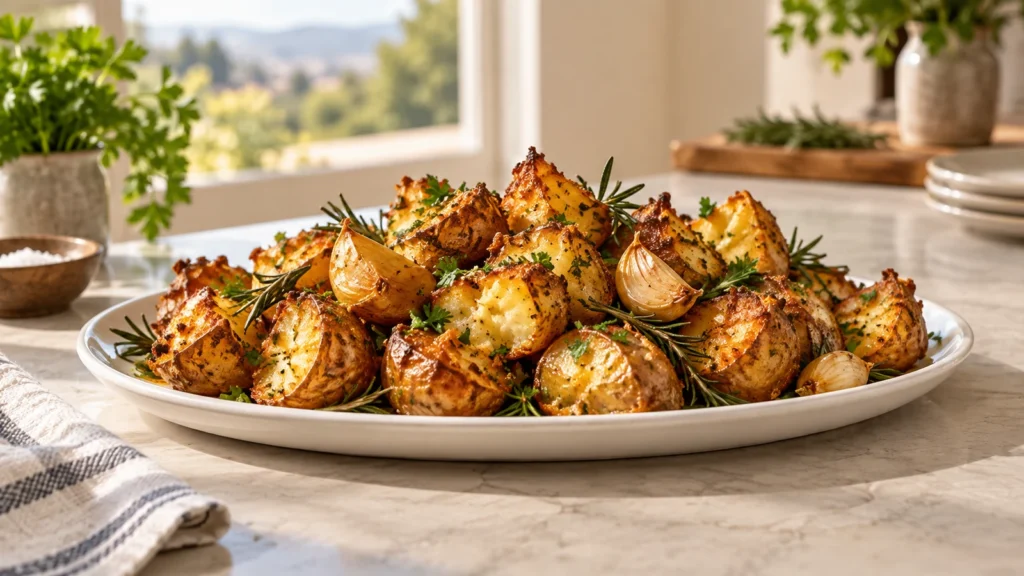
- Check doneness: The potatoes should have deep golden edges, the carrots should show browned spots, and a paring knife should slide easily through both. Add parsley and serve hot.
Roasting Temperature and Time
- Conventional oven: 425°F (220°C) for 35 to 40 minutes.
- Convection oven: 400°F (205°C) for 30 to 35 minutes; begin checking at 28 minutes.
- Larger 1-inch pieces: 425°F (220°C) for approximately 40 to 50 minutes.
Ovens and pans vary, so use color and tenderness rather than time alone. A similar roasted carrots and potatoes method also demonstrates how these vegetables can share a pan successfully.
Opening the oven repeatedly releases heat, so inspect the vegetables when it is time to flip and again near the end. Dark pans may brown the bottoms faster than light pans. If your pan is dark, check early without changing the stated temperature.
Expert Tips for Crisp, Evenly Cooked Vegetables
Remove Surface Moisture
Water must evaporate before browning begins. After scrubbing the vegetables, dry their skins and every cut surface with a clean towel. This small step makes the roasted potatoes and carrots recipe noticeably more golden without requiring additional oil.
Coat Every Piece Evenly
Toss until no dry, powdery seasoning remains in the bottom of the bowl. The oil should form a thin film, not a heavy layer. Seasoning in a bowl is more reliable than drizzling directly over the pan because every piece receives a similar coating.
Use the Pan Surface
Flat potato sides brown best when they touch hot metal. After spreading the vegetables, turn as many potato pieces cut-side down as practical. Leave small gaps so steam can escape, especially around the moisture-rich carrots.
Flip Only Once
Leaving the vegetables undisturbed for the first 20 minutes lets a crust form. Frequent stirring cools the pan and interrupts browning. Use a thin spatula to release any stuck pieces, then return another flat surface to the pan.
Finish by Sight and Texture
Exact timing varies with vegetable moisture, pan color, and oven calibration. The best roasted potatoes and carrots recipe is ready when the edges are deeply golden and both vegetables yield easily to a knife without collapsing.
More Tips for the Best Results
- Dry vegetables well and preheat the oven completely before roasting.
- Do not crowd the pan. Divide the vegetables between two pans if pieces overlap.
- Use enough oil to coat each piece lightly, but do not leave oil pooling on the pan.
- Rotate the pan after flipping if the back of the oven browns food faster.
- For fresh herbs, replace 1 teaspoon dried herbs with 1 tablespoon chopped fresh herbs. Add delicate fresh herbs after roasting so they remain bright.
- Measure the vegetable pieces rather than guessing if this is your first attempt.
- Use a flexible metal spatula to lift browned surfaces without tearing them.
- Taste after roasting before adding extra salt, especially when serving the vegetables with a salty sauce.
Variations and Substitutions
Replace thyme with dried rosemary, Italian seasoning, smoked paprika, or a salt-free herb blend. For a sweet-savory finish, toss the carrots with 1 teaspoon maple syrup during the final 10 minutes; adding it earlier can cause scorching.
Use red potatoes, fingerlings, baby potatoes, or russets while maintaining the specified cut size. For faster cooking, an air fryer roasted potatoes recipe is a useful alternative, although the carrots may need their own batch for consistent browning.
Red Potato Variation
Red potatoes produce firm, tidy pieces with thin skins. Use the same weight and cut them to the stated size. This variation borrows the waxy texture of an oven roasted red potatoes recipe while retaining the carrots and original seasonings.
Fingerling Potato Variation
Halve fingerlings lengthwise and keep very small ones whole. Their elongated shape gives plenty of creamy interior and a broad surface for browning. Treat this as a roasted fingerling potatoes recipe variation and begin checking narrow pieces a few minutes early.
Baby Potato Variation
Use evenly sized baby gold or red potatoes, halving pieces larger than a bite. A roasted mini potatoes recipe works best when all the potatoes have similar diameters. Keep the total potato weight unchanged so the oil and seasonings remain balanced.
Air Fryer Variation
For a smaller quantity, use the principles in the air fryer roasted potatoes recipe and avoid filling the basket too deeply. Because carrots and potatoes can brown at different rates in compact appliances, cooking separate batches offers greater control.
Seasoning Variations
For a smoky version, replace the thyme with smoked paprika. For an Italian-inspired side, use Italian seasoning and add grated Parmesan at the table. Lemon zest can brighten the finished vegetables without changing their cooking behavior.
A salt-free herb blend is useful when diners prefer to control sodium at the table. Avoid seasoning mixes with added sugar unless they are applied near the end, because sugar can darken before the vegetable centers become tender.
Serving Ideas
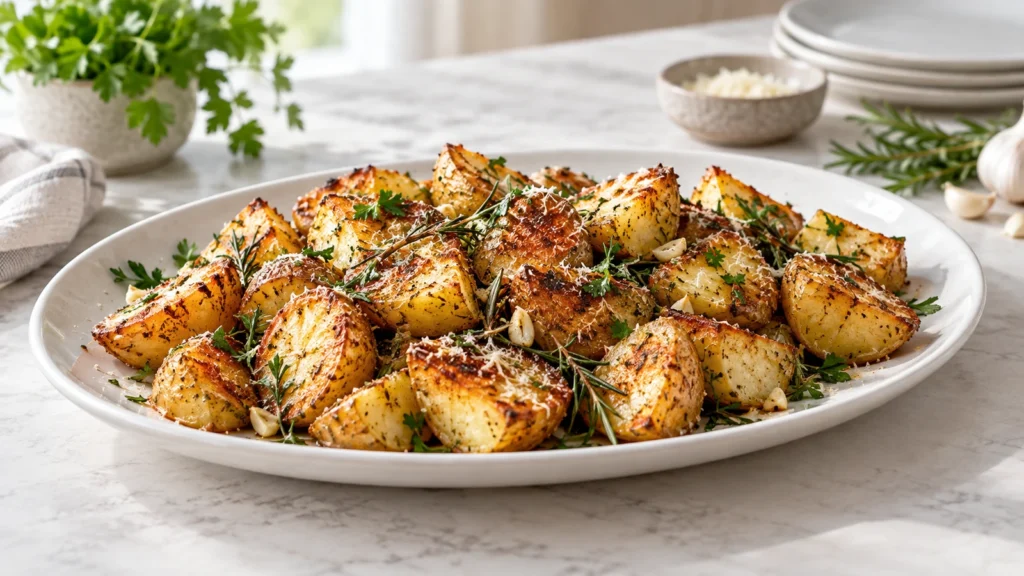
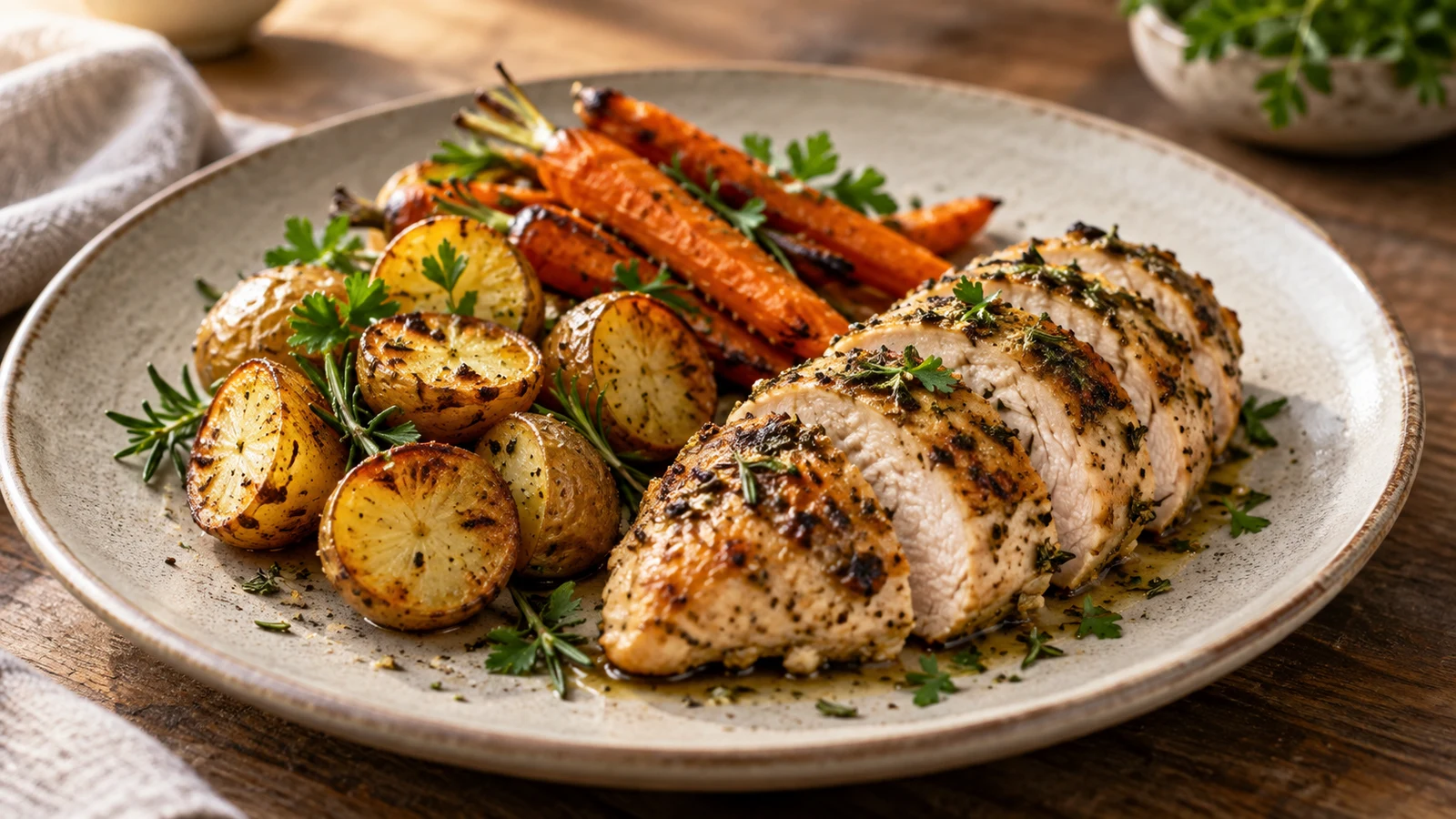
Serve these oven-roasted vegetables with roast chicken, meatloaf, pork tenderloin, salmon, lentil patties, or a grain bowl. Lemon zest, grated Parmesan, or a spoonful of garlic yogurt can be added at the table. For another seasoning perspective, see these seasoned roast potatoes and carrots.
For a comforting dinner, pair the roasted potatoes and carrots recipe with a simple protein and a crisp green salad. The vegetables also work beside holiday roasts because their familiar flavors complement gravy, cranberry sauce, and other traditional sides.
To build a vegetarian bowl, place the vegetables over cooked grains and add chickpeas, leafy greens, and a tangy dressing. Leftovers can accompany eggs at breakfast or become a warm filling for a lunch wrap.
If you are serving a crowd, transfer the vegetables to a warmed platter and scatter parsley over the top just before serving. A wide platter preserves more crisp surface than a deep bowl, where trapped steam can soften the browned edges.
Make-Ahead Instructions
Cut the vegetables up to one day ahead and refrigerate them separately in airtight containers. Dry them again before adding oil and seasonings. Do not store raw potatoes submerged in water for this recipe unless you drain and dry them exceptionally well.
You may also measure the dried seasonings in advance and keep them covered at room temperature. Wait to combine the vegetables with oil and salt until shortly before roasting. Salting too early draws moisture to the surface and can reduce browning.
For a busy dinner, prepare the vegetables while the oven preheats and place the seasoned pan in the refrigerator briefly if needed. Letting a cold metal pan enter the oven may slow initial browning, so a room-temperature pan is preferable.
Storage, Freezing, and Reheating
Cool leftovers and refrigerate them in a shallow airtight container for up to four days. Reheat on a sheet pan at 400°F (205°C) for 8 to 12 minutes, or air-fry at 375°F (190°C) for 4 to 7 minutes, until hot and crisp. A microwave is convenient but softens the edges.
Freeze cooled vegetables in a single layer, then transfer them to a freezer container for up to two months. Reheat from frozen at 425°F (220°C) for 15 to 20 minutes. The texture will be softer than freshly roasted vegetables.
Store sauces and fresh garnishes separately so they do not make the vegetables damp. When reheating the roasted potatoes and carrots recipe, spread the pieces apart and avoid adding more oil unless they appear unusually dry.
Do not leave cooked vegetables at room temperature longer than necessary. Refrigerating them in a shallow container helps them cool efficiently. For the best quality, reheat only the portion you plan to serve.
How to Scale the Recipe
For two people, halve every ingredient and use a quarter-sheet pan; the cooking time remains similar. The vegetables still need a single layer, so avoid choosing a pan so small that the pieces touch throughout.
For eight to ten servings, double the recipe and use two large pans on separate racks. Rotate the pans from top to bottom and front to back halfway through cooking. Do not place a double batch on one pan.
When doubling the roasted potatoes and carrots recipe, mix each pan’s vegetables separately if your bowl cannot hold everything comfortably. This ensures the oil and seasoning are distributed evenly instead of collecting on the pieces at the bottom.
Troubleshooting
- Soggy vegetables: The pan was crowded, the vegetables were wet, or the oven was not fully heated. Spread them out and roast a little longer.
- Burnt edges with firm centers: Pieces were too large or the oven ran hot. Reduce the temperature by 25°F (15°C) and cut smaller next time.
- Uneven cooking: Inconsistent cuts or an unrotated pan are common causes. Remove tender pieces and continue roasting the rest.
- Pale potatoes: Place cut sides against the metal pan and avoid excessive stirring.
- Sticking: Make sure the vegetables have an even oil coating and allow browned surfaces to form before flipping.
- Overly oily vegetables: Toss thoroughly so the measured oil coats all pieces instead of settling in one area.
- Burned herbs: Use sturdy dried herbs during roasting and add delicate fresh herbs after the pan leaves the oven.
- Carrots finish first: Cut the next batch of carrot rounds slightly thicker or remove tender pieces while the potatoes continue roasting.
If the bottoms brown much faster than the tops, your pan may be dark or positioned too close to the lower heating element. Move the rack to the middle and check earlier. Oven thermometers can help identify a temperature that differs from the control setting.
Frequently Asked Questions
Should I boil the potatoes before roasting?
No. The 3/4-inch pieces become tender during the stated roasting time. Parboiling can create extra-crisp surfaces, but it adds work and is unnecessary here.
Do carrots take longer to roast than potatoes?
Whole carrots may take longer, but 1/2-inch carrot rounds cook alongside 3/4-inch potato pieces. Matching the cut sizes by density is more important than making both vegetables identical in shape.
Can I roast the vegetables at 400°F?
Yes. In a conventional oven, roast them at 400°F (205°C) for about 40 to 50 minutes. Their edges may be slightly less crisp, so keep the pan uncrowded.
Can I add onions?
Yes. Add one onion cut into 1-inch wedges. Keep the root ends attached where possible so the wedges do not separate and burn.
Do I need to peel the potatoes and carrots?
No. Scrub both vegetables thoroughly and remove only damaged areas. Yukon Gold skins are thin, and leaving them intact adds texture. Peeling is an option if you prefer a smoother finish.
Why is my roasted potatoes and carrots recipe not crispy?
Excess moisture and crowding are the most common causes. Dry the vegetables, use a metal pan, leave room between pieces, and preheat the oven fully. Avoid lining the vegetables up in overlapping layers.
Can I use the oven roasted red potatoes recipe method with carrots?
Yes. Red potatoes and carrots can share a pan when cut to compatible sizes. Preserve the ingredient quantities and timing given here while using the oven roasted red potatoes recipe as additional guidance for handling waxy potatoes.
Can I turn this into a roasted fingerling potatoes recipe?
Yes. Replace the Yukon Gold potatoes with the same weight of fingerlings and halve them lengthwise. A roasted fingerling potatoes recipe variation benefits from placing the broad cut sides directly against the metal pan.
Can I make a roasted mini potatoes recipe with these seasonings?
Yes. Use the same weight of evenly sized baby potatoes and halve larger pieces. For a successful roasted mini potatoes recipe, keep all potato pieces close in size and retain enough space around the carrots.
Can I adapt this to an air fryer roasted potatoes recipe?
Yes, but work in small batches so hot air can circulate. An air fryer roasted potatoes recipe generally browns quickly, and the carrots may finish on a different schedule. Separate batches provide the most consistent result.
Can I prepare this roasted potatoes and carrots recipe without oil?
Oil is important for the intended browning, seasoning coverage, and crisp texture. Omitting it will produce a drier, paler result, so the recipe is most reliable when prepared with the stated quantity.
How do I know when the vegetables are done?
Look for deep golden edges and browned spots, then insert a paring knife into the centers. It should slide through both vegetables easily. If the color is good but the centers resist, reduce the heat slightly and continue cooking.
Related Roasted-Potato Recipes
The linked oven roasted red potatoes recipe suits waxy potatoes, while the roasted fingerling potatoes recipe highlights creamy, elongated potatoes. Choose the air fryer roasted potatoes recipe when oven space is limited, or adapt the method into a roasted mini potatoes recipe by halving evenly sized baby potatoes.
Each method emphasizes a different strength: the oven roasted red potatoes recipe holds its shape well, the roasted fingerling potatoes recipe offers creamy centers, and the air fryer roasted potatoes recipe is convenient for compact batches. A roasted mini potatoes recipe is especially attractive for family-style serving.
Recipe Card
- Prep time: 10 minutes
- Cook time: 35 to 40 minutes
- Total time: 45 to 50 minutes
- Yield: 6 side-dish servings
- Doneness: Deeply golden edges with centers easily pierced by a knife
- Estimated nutrition: Approximately 210 calories, 32 g carbohydrate, 4 g protein, 9 g fat, 5 g fiber, and 430 mg sodium per serving
Nutrition is an estimate and varies with ingredient brands and portion size. Prepared as written, the recipe is vegan, dairy-free, egg-free, nut-free, and gluten-free; check packaged seasonings if cross-contact is a concern.
A Dependable Vegetable Side Dish
With even cuts, a hot oven, and an uncrowded pan, this roasted potatoes and carrots recipe delivers tender vegetables and satisfyingly crisp edges. Serve it straight from the oven for the best texture and color.
Once the core technique feels familiar, choose the potato variety and seasoning variation that best suits your meal. The straightforward preparation makes this roasted potatoes and carrots recipe useful for weeknight dinners, meal prep, and relaxed holiday gatherings alike.
Reviews
Reader reviews are managed separately (outside this build).