Potato
Mashed Potato and Sour Cream Recipe: Easy Guide
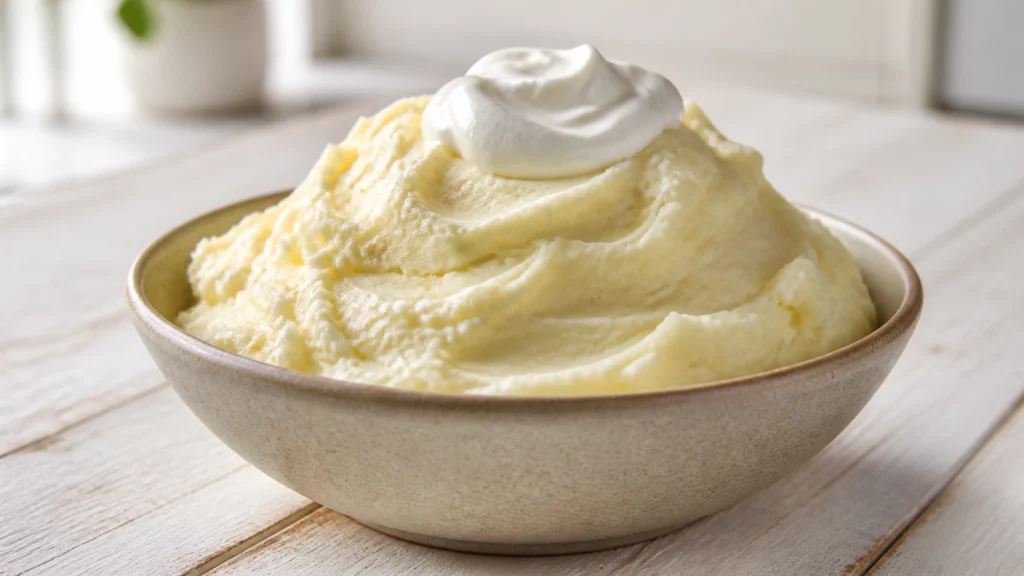
A mashed potato and sour cream recipe swaps some of the milk for sour cream, and the difference is bigger than the substitution suggests: tangier, denser, and far less likely to taste flat.
Sour cream brings acidity, which plain mash has none of. That is why buttery mashed potato so often needs gravy to feel finished, and why this version does not.
Below you will find the ingredient table, a ratio guide, step-by-step directions, tips, variations, serving ideas, troubleshooting, storage guidance, and six common questions.
Table of Contents
Key Takeaways for This Mashed Potato and Sour Cream Recipe
- Sour cream goes in off the heat; direct heat splits it.
- Use full fat; light sour cream separates and tastes chalky.
- Let it come to room temperature while the potatoes boil.
- Reduce the milk when you add sour cream, or the mash goes loose.
- The acidity means it needs less salt than plain mash to taste seasoned.
- This mashed potato and sour cream recipe serves six.
Why Sour Cream Works So Well Here
Mashed potato is starch and fat, and both are flat on the palate. There is nothing acidic in it at all, which is why it pairs so naturally with gravy, and why it can taste dull on its own.
Sour cream fixes that from the inside. Its lactic acid gives the mash a gentle tang that makes the potato taste more like itself, and its fat content adds body without the heaviness of extra cream.
It is also thicker than milk, so a mashed potato and sour cream recipe comes out denser and holds a peak on the plate rather than spreading.
Mashed Potato and Sour Cream at a Glance
Here is what a mashed potato and sour cream recipe looks like before you start.
| Detail | Value |
|---|---|
| Prep time | 15 minutes |
| Cook time | 20 minutes |
| Method | boiled, mashed by hand |
| Sour cream | full fat, off the heat |
| Texture | dense and tangy |
| Yield | 6 servings |
Ingredients for Mashed Potato and Sour Cream
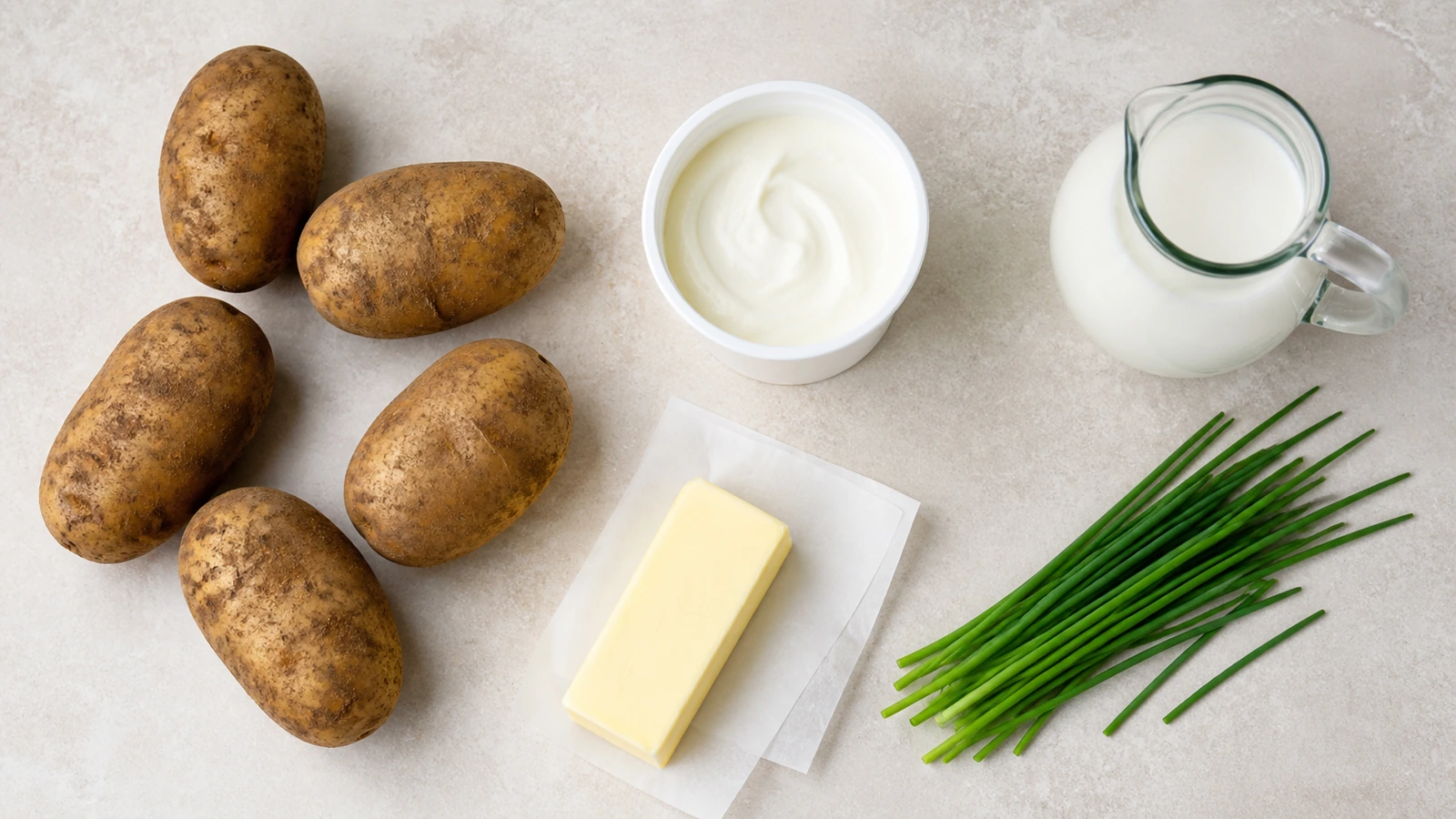
Everything in this mashed potato and sour cream recipe is a standard supermarket item.
| Ingredient | Amount | Why it matters |
|---|---|---|
| Russet potatoes, peeled and cubed | 2.5 pounds | Starchy; takes the extra body well. |
| Sour cream, full fat | 1 cup | The defining ingredient; room temperature. |
| Butter, cubed | 6 tablespoons | Goes in before any liquid. |
| Whole milk, warmed | ½ cup | Less than usual, since sour cream adds moisture. |
| Garlic powder | 1 teaspoon | Depth without competing with the tang. |
| Chives, sliced | 3 tablespoons | The classic partner to sour cream. |
| Salt | 1 tablespoon for the water | Season the water generously. |
| White pepper | to taste | Keeps the colour clean; black works too. |
Why Full Fat Only
Light and fat free sour cream replace fat with starch, gums, and water. Stirred into hot potato they thin out and can turn slightly chalky.
Full fat sour cream holds its structure, adds genuine richness, and is far less likely to split. This is one ingredient where the reduced version is not worth using.
Getting the Liquid Balance Right
Sour cream is mostly liquid, so adding a full cup without adjusting the milk gives a loose, soupy mash.
Halve the milk you would normally use and add it gradually after the sour cream is in. It is far easier to loosen a stiff mash than to rescue a runny one.
How to Make It Step by Step
The method for this mashed potato and sour cream recipe is a standard mash with one careful step at the end.
- Take the sour cream out of the refrigerator before you start.
- Peel and cube the potatoes into even 2 inch chunks.
- Start them in cold salted water, boil, then simmer 15 to 18 minutes until soft throughout.
- Drain thoroughly and dry them in the hot pan for 1 minute.
- Mash by hand, then stir in the butter until fully melted.
- Take the pan off the heat completely.
- Fold in the sour cream and garlic powder.
- Add the warm milk a splash at a time only if it needs loosening.
- Season, stir through the chives, and serve.
Why It Goes In Off the Heat
Sour cream is an emulsion held together by protein. Direct heat tightens those proteins and squeezes out water, which shows up as a grainy texture with liquid pooling at the edges.
Off the heat, the residual warmth of the potato is more than enough to bring it to temperature without breaking it. Room temperature sour cream splits even less readily.
Safe Handling and Storage
Cool leftovers in shallow containers and refrigerate within two hours; the USDA guidance on leftovers and food safety covers safe cooling and storage times.
Sour cream left out while the potatoes boil is fine, but do not leave it on the counter for hours before you start.
Ratio Guide
How much sour cream you use changes the character of a mashed potato and sour cream recipe completely.
| Sour cream | Milk | Result | Best for |
|---|---|---|---|
| ½ cup | ¾ cup | Subtle tang | Everyday side. |
| 1 cup | ½ cup | Clearly tangy, dense | The recommended balance. |
| 1½ cups | ¼ cup | Very tangy, thick | Holds a peak; good under gravy. |
| 2 cups | none | Almost like a dip | Too much for most plates. |
| 1 cup plus cream cheese | ½ cup | Rich and stable | Make ahead versions. |
| 1 cup, light | ½ cup | Thin, can turn chalky | Not recommended. |
Why It Needs Less Salt
Acidity heightens the perception of salt, which is why a squeeze of lemon can make a dish taste better seasoned without adding any.
A mashed potato and sour cream recipe therefore reaches the right point with noticeably less salt than plain mash. Taste before adding more, or it ends up over-seasoned.
Best Tips
A few habits separate a good mashed potato and sour cream recipe from a split one.
- Room temperature sour cream. Cold dairy into hot potato is what splits it.
- Off the heat, always. Residual warmth is plenty.
- Cut the milk in half. Sour cream brings its own moisture.
- Full fat only. Light versions thin out and taste chalky.
- Taste before salting. The acidity does some of that work already.
- Chives, not parsley. The onion note is what suits sour cream.
Easy Variations to Try
Once the basic mashed potato and sour cream recipe works, these are the directions worth taking it in.
- Loaded. Add cheddar and green onion, as in the loaded mashed potatoes recipe.
- Cheesy. Fold in sharp cheddar using the cheesy mashed potatoes recipe method.
- Made ahead. Add cream cheese and follow the make ahead mashed potatoes recipe.
- Rustic. Use the mashed red potatoes recipe as the base and keep the skins.
- Baked. Spread and brown as in the baked mashed potatoes recipe.
- With horseradish. A teaspoon stirred through suits beef particularly well.
What to Serve With It
A mashed potato and sour cream recipe cuts through rich main courses better than plain mash does.
- Roast beef or steak.
- Braised short ribs.
- Roast chicken with pan juices.
- Steamed green beans or broccoli.
- Roasted carrots.
- Anything heavy that needs something sharp beside it.
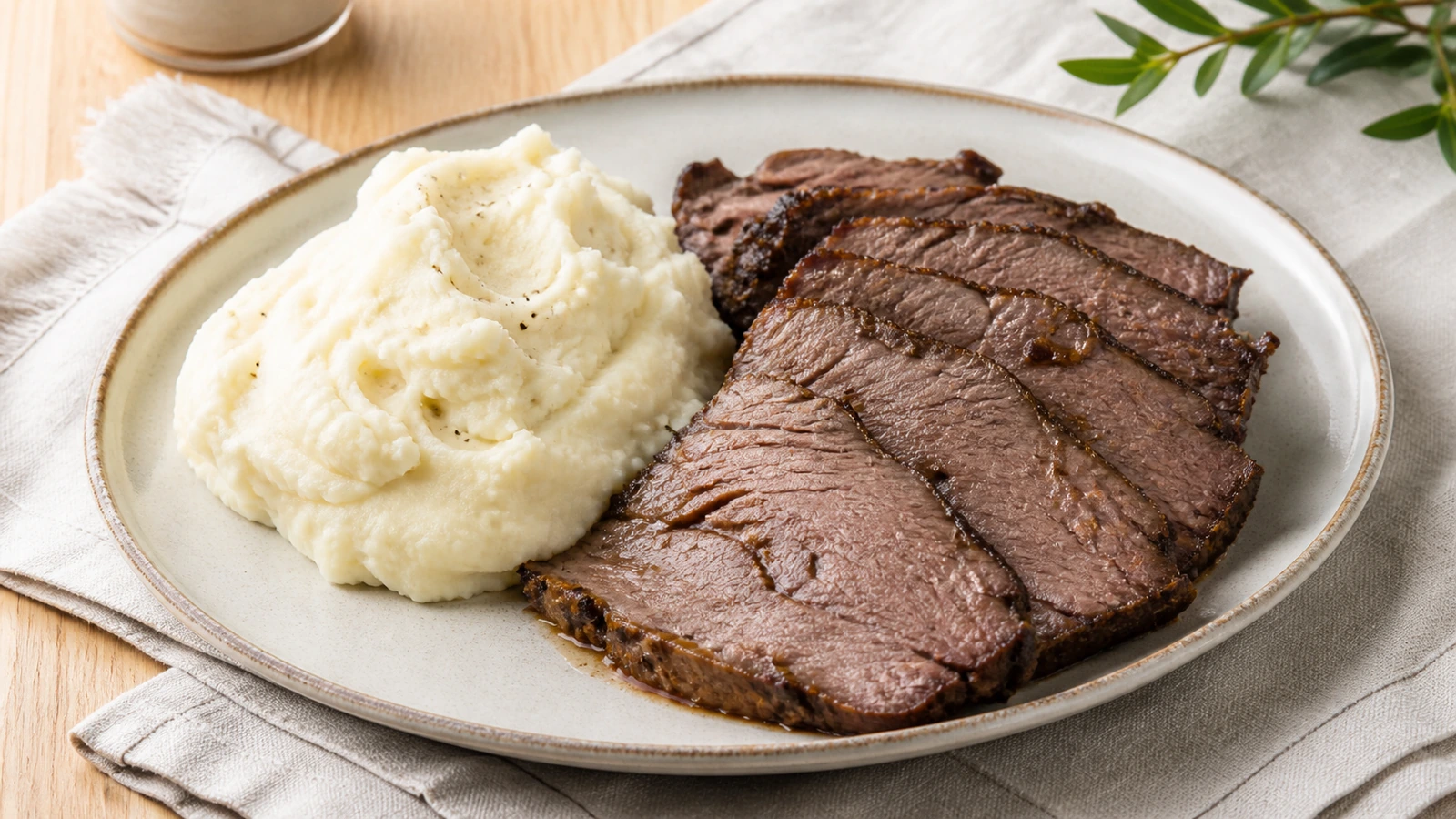
Build a Balanced Plate
This version is denser than plain mash but carries less milk, so it sits about the same overall.
A normal scoop with a protein and a green vegetable works, and the tang means it needs less gravy to feel complete.
Troubleshooting Guide
Most problems with a mashed potato and sour cream recipe come from heat or the wrong sour cream.
| Problem | Likely cause | Fix |
|---|---|---|
| Grainy or split | Added over the heat | Off the burner; use room temperature sour cream. |
| Thin and runny | Milk not reduced | Halve the milk when sour cream goes in. |
| Chalky | Light sour cream used | Full fat only. |
| Too tangy | Too much sour cream | Balance with butter and a little milk. |
| Over-salted | Seasoned like plain mash | Acidity boosts salt perception; taste first. |
| Gluey | Over-mixed after the sour cream | Fold gently and stop. |
If It Splits
Split sour cream shows as grainy flecks with a little liquid separating out. It is a texture fault, not a safety one.
Fold in a tablespoon of softened butter or cream cheese off the heat. The extra fat usually brings it back together well enough to serve.
If It Is Too Tangy
A full cup is assertive, and on a plate without a rich main it can dominate.
Stir in another knob of butter and a splash of warm milk to soften the edge. Next time start at half a cup and work up.
How to Store and Reheat
Leftover mashed potato and sour cream recipe needs gentle heat, since the sour cream can split a second time.
Refrigerator Storage
Airtight container at 40°F or below for up to three days. It sets firm and thick when cold.
Reheat covered over low heat with a splash of milk, stirring gently. Avoid boiling and avoid full-power microwaving.
Freezer and Make-Ahead Notes
Sour cream freezes poorly on its own and can turn grainy. Adding cream cheese alongside it stabilises the mix enough to freeze for two months.
For anything planned days ahead, the dedicated make ahead method is the more reliable route.
Using the Leftovers
The density makes excellent potato cakes, which hold together better than those made from a looser mash.
It also works as a topping for a bake, browning well under a grill thanks to the fat content.
Frequently Asked Questions
The questions below come up most often about this mashed potato and sour cream recipe.
Can you put sour cream in mashed potatoes?
Yes, and it improves them. It adds acidity that plain mash lacks entirely, plus body. Add it off the heat so it does not split.
How much sour cream per pound of potatoes?
About a third of a cup per pound. One cup for two and a half pounds gives a clearly tangy but balanced result.
Do I still need milk?
A little, and only to adjust the texture at the end. Halve what you would normally use, since sour cream brings its own moisture.
Why did mine go grainy?
It went in while the pan was on the heat, or it was cold from the refrigerator. Both cause the proteins to tighten and split.
Can I use Greek yogurt instead?
Yes, though it is tangier and splits more easily. Use full fat, take the pan off the heat, and fold it in slowly.
Does it need less salt?
Yes. Acidity heightens salt perception, so this version tastes properly seasoned with noticeably less than plain mash needs.
More Mashed Potato Recipes to Try
If this mashed potato and sour cream recipe worked for you, these are the natural next ones to cook. Every exact keyword links to its recipe page:
- loaded mashed potatoes recipe
- cheesy mashed potatoes recipe
- make ahead mashed potatoes recipe
- mashed red potatoes recipe
- baked mashed potatoes recipe
The off-the-heat dairy rule behind this mashed potato and sour cream recipe applies to every one of them.
Final Thoughts on This Mashed Potato and Sour Cream Recipe
Three things decide this dish: use full fat sour cream at room temperature, fold it in off the heat, and cut the milk in half to compensate.
Get those right and a mashed potato and sour cream recipe gives you six servings of dense, tangy mash that does not need gravy to taste finished.
There are no reviews yet. Be the first one to write one.
Reviews
Reader reviews are managed separately (outside this build).