
Potato
Creamy Scalloped Potatoes Recipe That Never Curdles
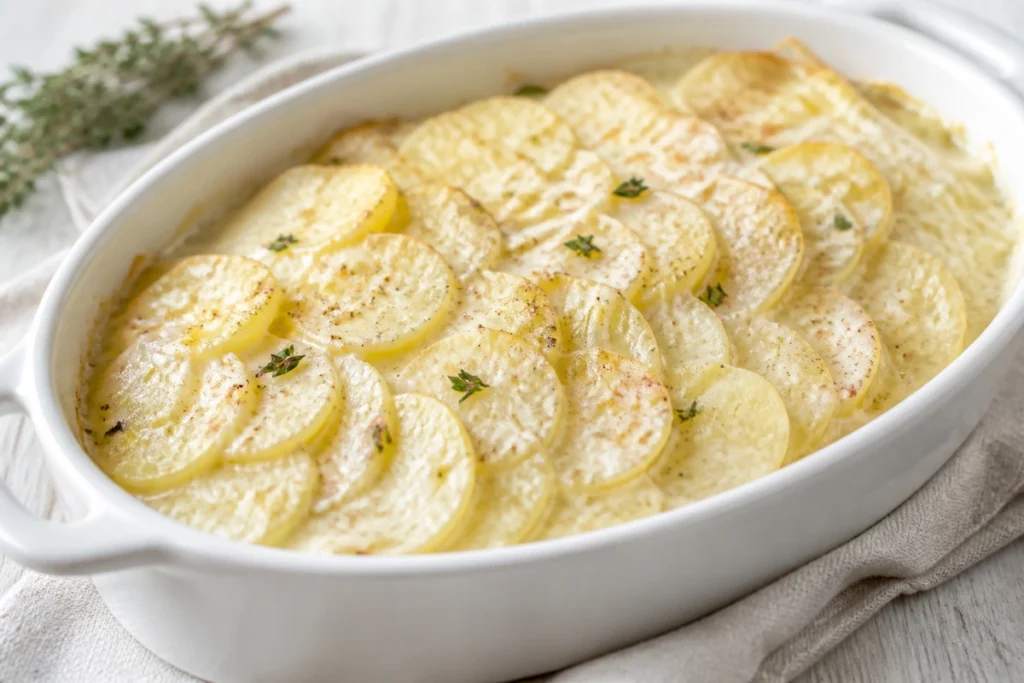
A creamy scalloped potatoes recipe is a sauce problem before it is a potato problem. Everyone knows what they want the sauce to look like; far fewer know why theirs turned grainy or thin.
Dairy curdles above about 180°F unless something protects it. Starch does that, which is why the roux matters, why the potato slices should never be rinsed, and why cheese belongs off the heat if it goes in at all.
Below you will find the ingredient table, a dairy comparison, the method, tips, variations, serving ideas, troubleshooting, storage notes and six common questions.
Table of Contents
Key Takeaways for This Creamy Scalloped Potatoes Recipe
- Fat and starch both protect dairy from curdling. Use both.
- Heavy cream is far more stable than milk under heat.
- Never rinse the potato slices; that starch thickens the sauce.
- Bake at 350°F, lower and longer than a quick version.
- Add cheese off the heat, in three handfuls.
- This creamy scalloped potatoes recipe serves eight.
Why Cream Sauces Break
Milk and cream are suspensions of fat and protein in water. Heat makes the proteins contract and bond to each other, squeezing out the water and leaving visible grains. That is curdling.
Two things prevent it. Fat gets between the protein molecules and physically keeps them apart, which is why cream survives heat that ruins milk. Starch does the same job, which is why a flour roux stabilises a sauce that would otherwise split.
A creamy scalloped potatoes recipe uses both, and that is the entire reason it stays smooth where a thrown-together version does not.
The Recipe at a Glance
Here is what a creamy scalloped potatoes recipe looks like before you start.
| Detail | Value |
|---|---|
| Prep time | 20 minutes |
| Bake time | 75 minutes |
| Oven | 350°F (177°C) |
| Curdling point | above 180°F unprotected |
| Slice thickness | ⅛ inch |
| Yield | 8 servings |
The proportions in a creamy scalloped potatoes recipe are weighted toward sauce stability rather than speed.
Ingredients
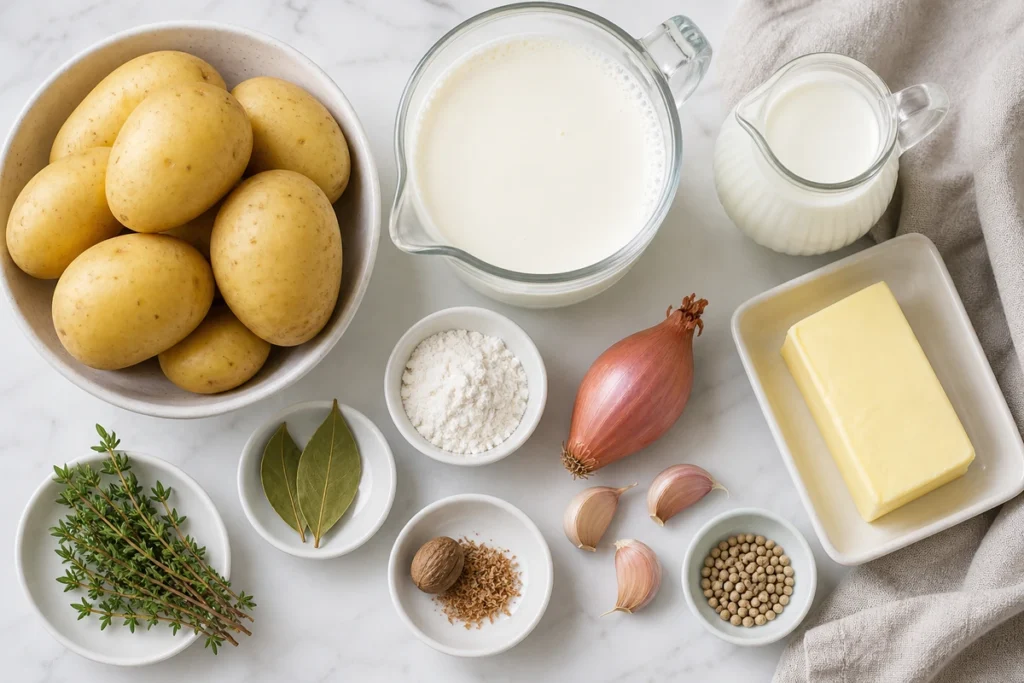
The proportions below are weighted toward sauce stability rather than speed.
| Ingredient | Amount | Why it matters |
|---|---|---|
| Yukon Gold potatoes | 3 pounds | Release starch that thickens the sauce. |
| Heavy cream | 2 cups | High fat, resists curdling. |
| Whole milk | 1 cup | Lightens it without risking much. |
| Butter | 5 tablespoons | Base of the roux. |
| All-purpose flour | ⅓ cup | More than a quick version; this is the insurance. |
| Garlic | 4 cloves, sliced | Infused into the cream. |
| Shallot | 1, minced | Milder than onion under cream. |
| Bay leaf | 1 | Infused, then removed. |
| Fresh thyme | 1 tablespoon | Classic pairing. |
| Nutmeg | ¼ teaspoon | Traditional with dairy. |
| Salt | 1½ teaspoons | Season the sauce, not the layers. |
| White pepper | ½ teaspoon | Keeps the sauce pale. |
Infusing the Cream First
Warm the cream with the garlic and bay leaf for ten minutes before it goes into the roux, then strain them out. The flavour goes right through the sauce instead of sitting in pockets.
Keep it below a simmer while it infuses. Boiling cream at this stage is the first place a creamy scalloped potatoes recipe goes wrong.
Why White Pepper
Black pepper works perfectly well and leaves dark flecks through a pale sauce. White pepper gives the same heat and keeps the dish looking clean.
It is purely cosmetic, but in a dish whose entire appeal is the colour of the sauce, it earns its place.
How to Make It Step by Step
This version bakes lower and longer than a quick one, which is easier on the dairy.
- Heat the oven to 350°F and butter a 9×13 dish.
- Warm the cream, milk, garlic and bay leaf together for 10 minutes below a simmer.
- Strain and set the infused dairy aside.
- Melt the butter in a saucepan and cook the shallot 4 minutes.
- Stir in the flour and cook 2 full minutes.
- Add the infused dairy gradually, whisking constantly, until smooth.
- Simmer 5 minutes with the thyme, nutmeg, salt and white pepper.
- Slice the potatoes ⅛ inch thick. Do not rinse them.
- Layer a third of the potatoes and a third of the sauce, three times over.
- Cover with foil and bake 45 minutes.
- Uncover and bake 30 minutes more until golden and bubbling.
- Rest 15 minutes before serving.
Add the Dairy Gradually
Pouring all the liquid into the roux at once leaves lumps of flour that never disperse, and lumps mean pockets of unprotected dairy that curdle in the oven.
Add a splash, whisk until smooth, then repeat. The first two additions are the ones that matter; after that it comes together easily.
Every step in a creamy scalloped potatoes recipe is designed to keep the dairy below the point where it breaks.
If You Want Cheese
Strictly, cheese makes it potatoes au gratin rather than scalloped. If you want it anyway, take the sauce off the heat first and add two cups of grated Gruyère in three handfuls.
Cheese stirred into a simmering sauce is the most common cause of a grainy creamy scalloped potatoes recipe. Off the heat, the residual warmth melts it without seizing the proteins.
Dairy Comparison
What you pour in decides how much margin for error you have.
| Dairy | Fat | Stability under heat |
|---|---|---|
| Heavy cream | 36% | Excellent; very hard to split. |
| Half and half | 12% | Good with a roux behind it. |
| Whole milk | 3.5% | Needs a roux; splits without one. |
| Low-fat milk | 1% | Poor; curdles readily. |
| Evaporated milk | 8% | Good; stabilised during processing. |
| Cream cheese | 33% | Excellent, but changes the flavour. |
Why Not Just Use All Cream
You can, and it will not split. It will also be extremely rich and slightly heavy, and the potato flavour disappears underneath it.
Two parts cream to one part milk gives you a sauce that still tastes of potato while staying comfortably on the safe side.
Best Tips
Six habits that keep a creamy scalloped potatoes recipe smooth.
- Cook the flour a full two minutes. Undercooked roux tastes raw and thickens poorly.
- Never rinse the slices. Surface starch is doing real work.
- Keep the oven at 350°F. Lower and longer is kinder to dairy.
- Whisk the dairy in gradually. Lumps become curdled pockets.
- Cheese off the heat only. And in three handfuls.
- Rest 15 minutes. The sauce sets as it cools.
Easy Variations to Try
The stable sauce base takes several directions.
- Faster version. The quick and easy scalloped potatoes recipe takes 45 minutes.
- Slow cooker. See the crockpot scalloped potatoes recipe.
- Au gratin. Gruyère off the heat, plus a breadcrumb top.
- Caramelised onion. Twenty minutes of onion instead of four of shallot.
- Mustard. A tablespoon of Dijon cuts the richness.
- Leek and thyme. Swap the shallot for a whole softened leek.
The dairy you choose decides how much margin a creamy scalloped potatoes recipe gives you.
What to Serve With It
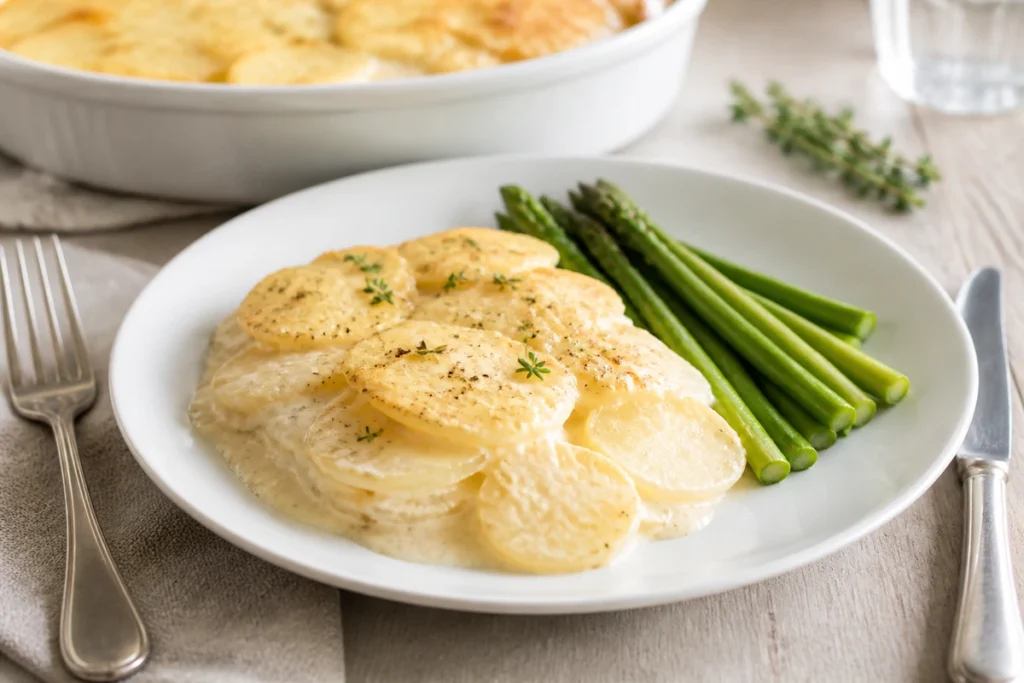
This is the richest of the three versions on the site, so keep everything else sharp.
- Roast chicken.
- Sliced roast beef.
- Green beans with lemon.
- A salad with vinegar dressing.
- Pickled onions.
- Steamed broccoli.
Build a Balanced Plate
Two cups of cream across eight servings makes this a genuinely rich side, richer than it looks on the plate.
Something acidic alongside does more for the meal than another vegetable would.
Troubleshooting Guide
Nearly every problem with a creamy scalloped potatoes recipe is the sauce, not the potatoes.
| Problem | Likely cause | Fix |
|---|---|---|
| Grainy sauce | Dairy overheated, or low-fat used | Cream plus a roux; 350°F oven. |
| Oily film on top | Cheese added over heat | Off the heat, three handfuls. |
| Thin sauce | Slices rinsed, or too little flour | Do not rinse; ⅓ cup flour. |
| Lumpy sauce | Dairy added too fast | Splash at a time, whisking. |
| Raw flour taste | Roux undercooked | Two full minutes. |
| Ran off the spoon | Not rested | 15 minutes out of the oven. |
How to Rescue a Split Sauce
Caught in the pan, take it off the heat, add two tablespoons of cold cream, and whisk hard from the centre out. The temperature drop plus the extra fat usually pulls it back.
Caught in the oven, whisk cold cream into the sauce at the edges of the dish and return it covered for ten minutes.
Once the sauce is reliable, a creamy scalloped potatoes recipe takes variations easily.
If It Is Not Creamy Enough
Thin sauce almost always traces to rinsed potatoes or a light hand with the flour. Both remove the starch the sauce depends on.
For the dish in front of you, uncover it and give it another fifteen minutes; evaporation will tighten it. Next time, keep the starch.
How to Store and Reheat
A well-stabilised sauce reheats far better than a fragile one, which is another argument for the roux.
Refrigerator Storage
Cover and refrigerate at 40°F or below for up to four days, as set out in the USDA guidance on leftovers and food safety.
Reheat covered at 325°F for 30 minutes with a splash of cream stirred in at the edges. A lower oven than the original bake protects the sauce.
Freezer and Make-Ahead Notes
Assemble the day before and refrigerate unbaked, then add ten minutes to the covered bake. That is the reliable make-ahead route.
Freezing splits the sauce on thawing even with the roux behind it, so it is not worth doing.
The problems below are the ones people hit most often with a creamy scalloped potatoes recipe.
Using the Leftovers
Cold leftovers cut into squares and fried in butter make an excellent potato cake, crisp outside and creamy in the middle.
They also thin into a fast potato soup with stock and a little more cream.
Frequently Asked Questions
These come up most often about a creamy scalloped potatoes recipe.
Why is my sauce grainy?
The dairy got above about 180°F without enough fat or starch protecting it. Use heavy cream, cook a proper roux, and bake at 350°F.
Cream or milk?
Two parts heavy cream to one part whole milk. All cream is very rich; all milk splits easily unless the roux is doing all the work.
Leftovers from a creamy scalloped potatoes recipe reheat well because the roux holds the sauce together.
Should I rinse the potato slices?
No. The surface starch thickens the sauce as it bakes. Rinsing is the most common reason a sauce ends up thin.
When do I add cheese?
Off the heat, in three handfuls. Cheese stirred into a simmering sauce seizes and turns grainy and oily.
What is the difference from au gratin?
Scalloped potatoes are baked in cream sauce. Add cheese and it becomes potatoes au gratin. That is the whole distinction.
How long should it rest?
Fifteen minutes. The sauce keeps setting as it cools, and a slice cut straight from the oven will run across the plate.
These are the questions readers ask most often about a creamy scalloped potatoes recipe.
More Scalloped Potato Recipes to Try
If this creamy scalloped potatoes recipe worked for you, these are the next ones:
The fat-and-starch rule behind this creamy scalloped potatoes recipe applies to every cream sauce you will ever make.
Final Thoughts on This Creamy Scalloped Potatoes Recipe
Protect the dairy with both fat and starch, keep the oven at 350°F, and never rinse the slices.
Those three things are why a creamy scalloped potatoes recipe comes out smooth, and why most versions people complain about do not.
There are no reviews yet. Be the first one to write one.
Reviews
Reader reviews are managed separately (outside this build).