Chicken
Red Chimichurri Recipe (Chimichurri Rojo)
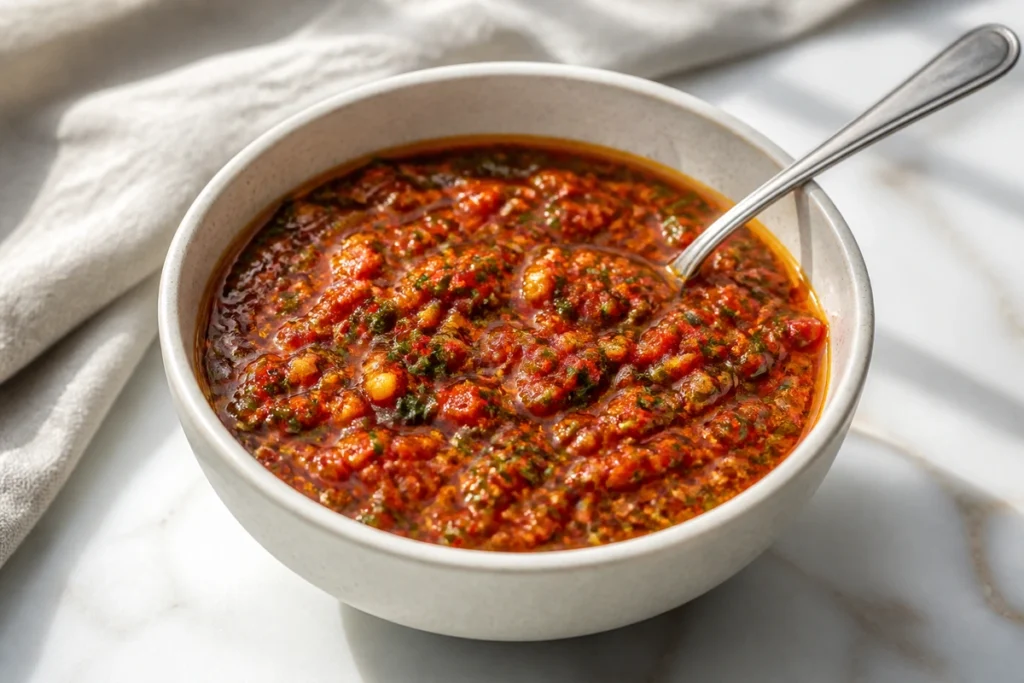
A red chimichurri recipe, chimichurri rojo, is the red cousin of the classic green sauce. The colour and the deeper, sweeter flavour come from red bell pepper and paprika, not from tomato, which is a common misunderstanding.
It is still a raw, hand-chopped sauce, but the roasted or smoked paprika and the red pepper give it a rounder, less grassy taste than the green version. Get the paprika right and balance it against the vinegar, and you have a sauce that stands up to richer grilled meats.
Below you will find the ingredient table, a technique guide, the method, tips, variations, serving ideas, troubleshooting, storage notes and six common questions.
Table of Contents
Key Takeaways for This Red Chimichurri Recipe
- The red comes from red pepper and paprika, not tomato.
- Smoked paprika adds depth; sweet paprika keeps it milder.
- Still hand-chopped, like the green version.
- Balance the sweetness of the pepper with enough vinegar.
- Rest it so the paprika loses its raw, dusty edge.
- This red chimichurri recipe makes about one cup.
Where the Red Comes From
People often assume red chimichurri is green chimichurri with tomato added. It is not. The colour comes from finely chopped red bell pepper and a generous amount of paprika, which also bring a natural sweetness the green version lacks.
That sweetness is the thing to manage. It needs a sharp vinegar to balance it, or the sauce tastes flat. Smoked paprika pushes it toward a deeper, barbecue-like flavour; sweet paprika keeps it brighter.
So a good red chimichurri recipe is about the pepper and paprika in balance with the acid, while keeping the raw, hand-chopped character of a true chimichurri.
The Recipe at a Glance
Here is what a red chimichurri recipe looks like before you start.
| Detail | Value |
|---|---|
| Prep time | 15 minutes |
| Rest time | 2 hours minimum |
| Colour from | red pepper and paprika |
| Method | hand-chopped, raw |
| Yield | about 1 cup |
| Keeps | up to 2 weeks |
Ingredients
A red chimichurri recipe builds on the green base with red elements.
| Ingredient | Amount | Why it matters |
|---|---|---|
| Flat-leaf parsley | 1 bunch | The herb base. |
| Red bell pepper | 1 small, finely diced | Colour and sweetness. |
| Paprika | 1 tablespoon | Smoked or sweet. |
| Garlic | 4 cloves | Finely minced. |
| Dried oregano | 1 tablespoon | The classic pairing. |
| Cider vinegar | 3 tablespoons | Balances the sweetness. |
| Extra-virgin olive oil | ½ cup | The body. |
| Red chilli flakes | 1 teaspoon | Heat. |
| Salt | 1 teaspoon | Draws out flavour. |
| Black pepper | ½ teaspoon | Freshly ground. |
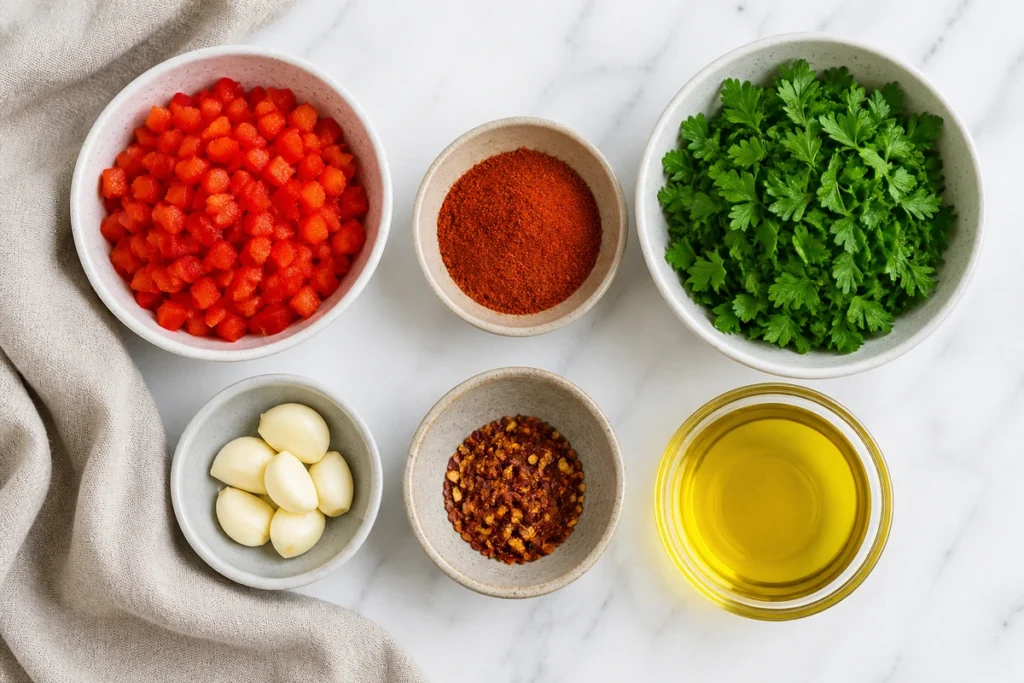
Smoked Versus Sweet Paprika
Smoked paprika gives a deep, smoky, almost barbecue flavour that suits grilled beef. Sweet paprika keeps the sauce brighter and lets the fresh pepper come through.
A mix of the two is a good middle ground. Whichever you use, add it to the vinegar first so it hydrates and loses its raw, dusty edge.
Dice the Pepper Finely
The red bell pepper should be diced as finely as the parsley is chopped, so the sauce keeps its loose, even texture. Large chunks make it a salsa rather than a chimichurri.
A very fine dice also lets the pepper release its sweetness into the oil.
How to Make It Step by Step
A red chimichurri recipe is made the same hand-chopped way as the green.
- Finely chop the parsley by hand.
- Finely dice the red bell pepper.
- Mince the garlic.
- Stir the paprika and salt into the vinegar and let it sit 10 minutes.
- Combine the parsley, pepper, garlic, oregano and chilli flakes.
- Pour in the vinegar mixture, then the olive oil, and stir.
- Taste and balance the sweetness with more vinegar if needed.
- Rest at least 2 hours before serving.
Bloom the Paprika in the Vinegar
Stirring the paprika into the vinegar for ten minutes before it meets the oil hydrates it and rounds off the raw, powdery taste that ruins many red chimichurris.
It also deepens the colour, giving the finished sauce a richer red.
Food Safety for a Raw Oil Sauce
Like all chimichurri, this is raw garlic in oil, so refrigerate it after its initial rest and follow safe storage times as in the USDA guidance on leftovers and food safety.
Keep the sauce cold between uses rather than leaving it out for long periods.
Technique Guide
These choices shape a red chimichurri recipe.
| Choice | For depth | For brightness |
|---|---|---|
| Paprika | Smoked | Sweet |
| Pepper | Roasted red pepper | Raw red bell pepper |
| Chilli | More flakes | Fewer flakes |
| Vinegar | Less | More |
| Rest | Overnight | 2 hours |
| Oil | Robust | Lighter |
Red Versus Green Chimichurri
Green chimichurri is grassy, sharp and herb-forward. Red is sweeter, deeper and rounder, thanks to the pepper and paprika.
They suit different things: green cuts through rich meat, red complements smoky grilled flavours. Neither is more authentic; both are traditional in Argentina.
Best Tips
Six habits that make a red chimichurri recipe taste balanced.
- Bloom the paprika. Hydrate it in the vinegar first.
- Dice the pepper finely. Keep the loose texture.
- Balance the sweetness. Enough vinegar to cut it.
- Chop by hand. Same rule as the green version.
- Choose your paprika. Smoked for depth, sweet for brightness.
- Rest it. The paprika needs time to settle.
Easy Variations to Try
The red base takes changes well.
- Roasted pepper. Use a roasted red pepper for a deeper, sweeter sauce.
- Green version. The authentic chimichurri recipe is the classic.
- Chipotle. The chipotle chimichurri recipe adds smoke and heat.
- Cilantro. The chimichurri recipe cilantro for a brighter herb.
- Hotter. Add a fresh red chilli, finely chopped.
- Sweeter. A pinch of sugar rounds a very sharp batch.
What to Serve With It
A red chimichurri recipe suits richer, smokier food than the green.
- Grilled steak.
- Smoky grilled chicken.
- Roasted vegetables.
- Grilled corn.
- Crusty bread.
- Roast potatoes.
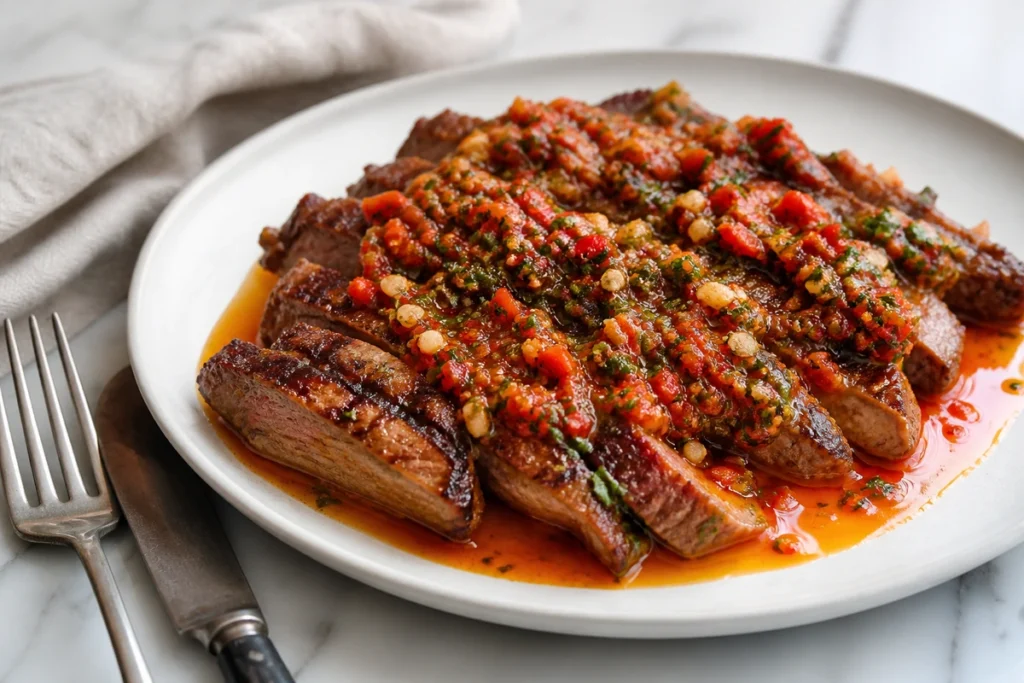
How to Use It
Spoon it over grilled food at the table, at room temperature so the oil is loose and the flavours are full.
The sweeter red version is also good stirred into rice or spread on a sandwich.
Once the base works, a red chimichurri recipe takes variations easily.
Troubleshooting Guide
Most problems with a red chimichurri recipe are the paprika or the balance.
| Problem | Likely cause | Fix |
|---|---|---|
| Dusty, raw taste | Paprika not bloomed | Hydrate it in vinegar first. |
| Too sweet | Not enough acid | Add more vinegar. |
| Watery | Pepper too wet | Pat the diced pepper dry. |
| Dull colour | Old or weak paprika | Use fresh, good paprika. |
| Paste-like | Blended | Chop and dice by hand. |
| Flat | Under-salted | More salt, then rest. |
If It Tastes Dusty
A raw, powdery taste means the paprika did not hydrate. Stir it into the vinegar and let it sit before adding the oil.
Once the sauce rests a couple of hours, that edge softens further.
If It Is Too Sweet
Red pepper and paprika are naturally sweet, so a red chimichurri needs more acid than a green one. Add vinegar a little at a time until it is balanced.
A pinch of salt also sharpens a sauce that tastes too sweet.
How to Store It
It keeps as well as the green version.
The problems below come up most often with a red chimichurri recipe.
Refrigerator Storage
Store in a sealed jar in the refrigerator at 40°F or below for up to two weeks, with the solids kept under the oil.
The oil firms up cold, so let it come to room temperature and stir before serving.
Freezer and Make-Ahead Notes
Freeze in an ice-cube tray for up to three months. The colour and flavour hold well.
It is a good make-ahead sauce, since resting improves it.
Keeping the Colour Vivid
Good fresh paprika and keeping the sauce under the oil both help the red stay vivid rather than dulling.
It will deepen slightly as it rests, which is normal and part of the flavour developing.
Frequently Asked Questions
These come up most often about a red chimichurri recipe.
What makes chimichurri red?
Finely diced red bell pepper and paprika, not tomato. Together they give the colour and a natural sweetness the green version does not have.
Smoked or sweet paprika?
Smoked gives a deep, barbecue-like flavour; sweet keeps it brighter. A mix of both is a good middle ground.
Is there tomato in red chimichurri?
No. The red comes from pepper and paprika. Adding tomato makes it a different sauce closer to a salsa.
These are the questions readers ask most about a red chimichurri recipe.
How is it different from green chimichurri?
Red is sweeter and deeper from the pepper and paprika; green is grassy and sharp. Both are traditional and hand-chopped.
Why does mine taste dusty?
The paprika was not hydrated. Bloom it in the vinegar for ten minutes before adding the oil to lose the raw, powdery taste.
How long does it keep?
Up to two weeks refrigerated in a sealed jar under the oil. Bring it to room temperature before serving.
More Chimichurri Recipes to Try
If this red chimichurri recipe worked for you, these are worth making next:
The bloom-the-paprika rule behind this red chimichurri recipe is what keeps the red version smooth.
Final Thoughts on This Red Chimichurri Recipe
Get the colour from red pepper and paprika, bloom the paprika in the vinegar, and balance the natural sweetness with enough acid.
Do that, keep it hand-chopped, and a red chimichurri recipe gives you a deeper, rounder sauce than the green.
There are no reviews yet. Be the first one to write one.
Reviews
Reader reviews are managed separately (outside this build).