Chicken
Authentic Chimichurri Recipe (Hand-Chopped, Argentine)
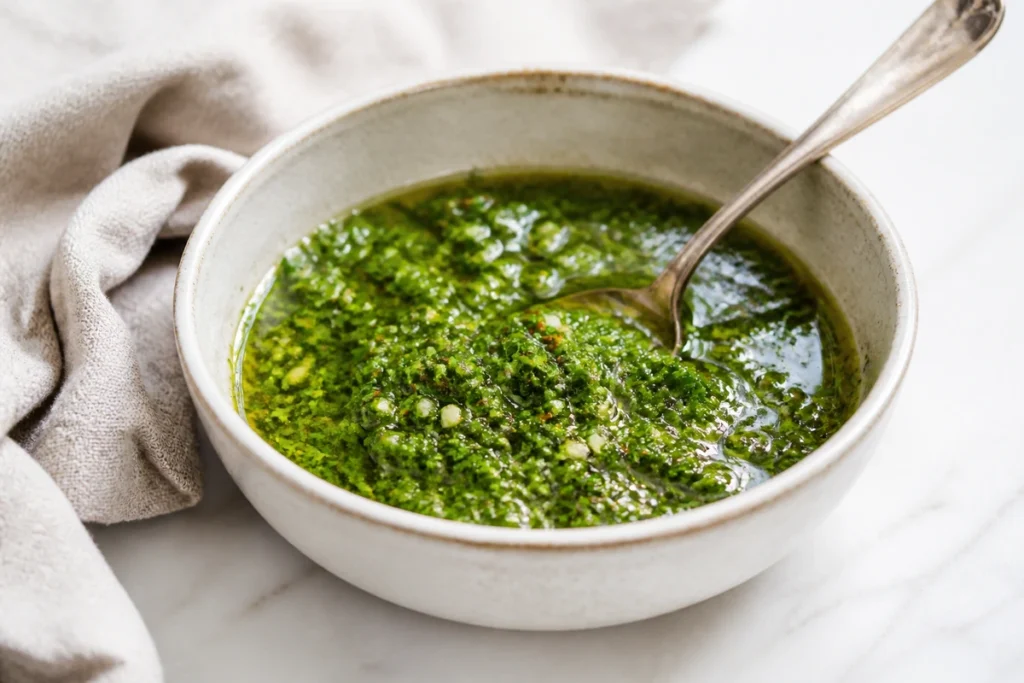
An authentic chimichurri recipe is defined by what you do not do: you do not blend it. Real Argentine chimichurri is hand-chopped, so it stays a loose, spoonable relish of distinct green flecks in oil, not the smooth emulsified paste a food processor turns it into.
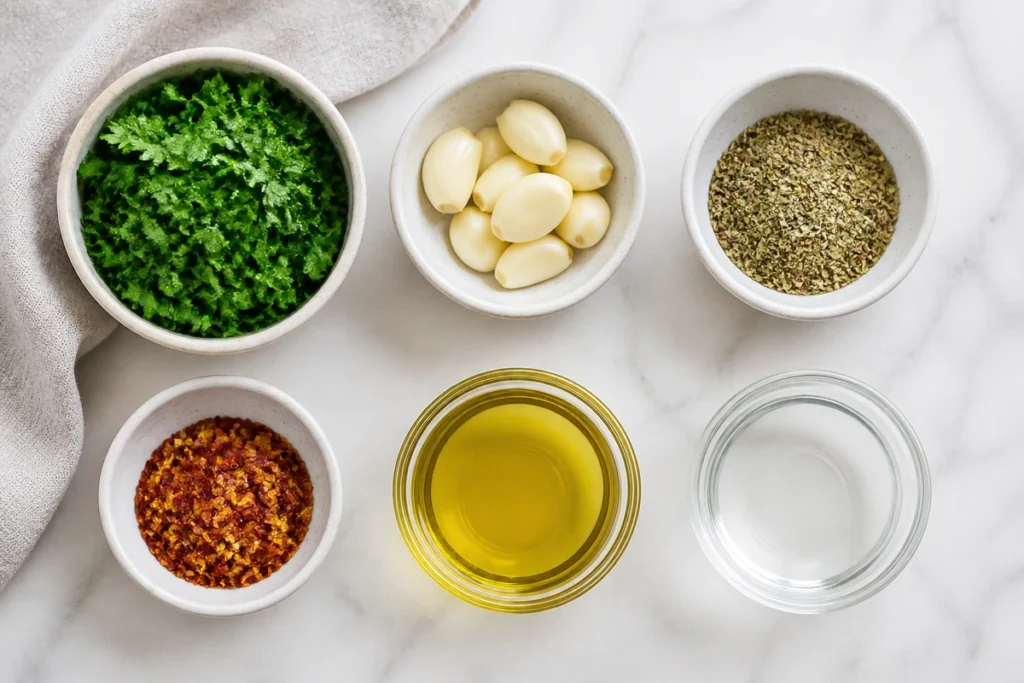
The ingredients are few and fixed: flat-leaf parsley, garlic, dried oregano, a sharp vinegar, good olive oil and chilli flakes. The technique and the resting time are what make it taste authentic, not any secret addition. Chop by hand, get the salt and acid right, and let it sit.
Below you will find the ingredient table, a technique guide, the method, tips, variations, serving ideas, troubleshooting, storage notes and six common questions.
Table of Contents
Key Takeaways for This Authentic Chimichurri Recipe
- Hand-chop everything; a blender makes a pesto-like paste, not chimichurri.
- Flat-leaf parsley and dried oregano are the classic herbs.
- Use a sharp vinegar and good olive oil in balance.
- Let it rest at least two hours so the flavours meld.
- It is a raw sauce; nothing is cooked.
- This authentic chimichurri recipe makes about one cup.
Why You Must Chop by Hand
The texture is the whole identity of chimichurri. Hand-chopped parsley stays in distinct pieces suspended in the oil and vinegar, so the sauce is loose and spoonable and each element keeps its own flavour.
A food processor does two things wrong. It bruises the parsley, which turns it dark and slightly bitter, and it emulsifies the oil into the herbs, giving a smooth green paste closer to pesto than chimichurri.
So an authentic chimichurri recipe is chopped with a knife, every time. It takes ten minutes and it is the difference between the real thing and a green sauce.
The Recipe at a Glance
Here is what an authentic chimichurri recipe looks like before you start.
| Detail | Value |
|---|---|
| Prep time | 15 minutes |
| Rest time | 2 hours minimum |
| Method | hand-chopped, raw |
| Herbs | flat-leaf parsley, oregano |
| Yield | about 1 cup |
| Keeps | up to 2 weeks |
Ingredients
An authentic chimichurri recipe is a short, fixed list.
| Ingredient | Amount | Why it matters |
|---|---|---|
| Flat-leaf parsley | 1 large bunch | The base herb; hand-chopped. |
| Garlic | 4 cloves | Finely minced. |
| Dried oregano | 1 tablespoon | The classic pairing. |
| Cider vinegar | 3 tablespoons | The sharp acid. |
| Extra-virgin olive oil | ½ cup | The body of the sauce. |
| Red chilli flakes | 1 teaspoon | The gentle heat. |
| Salt | 1 teaspoon | Draws out the flavours. |
| Black pepper | ½ teaspoon | Freshly ground. |
Parsley and Oregano, Not Anything Else
The authentic version uses flat-leaf parsley and dried oregano. Dried oregano, not fresh, is traditional here; it has a more concentrated, slightly earthy flavour that suits the sauce.
Curly parsley works but is coarser. Cilantro makes a different sauce entirely, which is its own recipe.
The Right Acid and Oil
Chimichurri needs a genuinely sharp vinegar to cut the oil. Cider vinegar gives a clean, bright acidity that works well.
Use a good extra-virgin olive oil, since it is half the sauce by volume and you taste it clearly. A dull oil makes a dull chimichurri.
How to Make It Step by Step
An authentic chimichurri recipe comes together with a knife and a bowl.
- Finely chop the parsley by hand, stems and all if tender.
- Mince the garlic very finely.
- Combine the parsley, garlic, oregano and chilli flakes in a bowl.
- Stir in the vinegar and the salt, and let it sit 10 minutes.
- Pour in the olive oil and stir to combine.
- Taste and adjust the salt, acid and heat.
- Cover and rest at room temperature for at least 2 hours.
- Stir again before serving.
Salt the Vinegar First
Stirring the salt into the vinegar and letting it sit for ten minutes before the oil goes in dissolves the salt and lets the acid start softening the garlic and herbs.
Add the oil last; oil coats everything and slows the mixing if it goes in too early.
Food Safety for a Raw Oil Sauce
Because chimichurri is raw garlic in oil, keep it refrigerated once it has had its initial rest, and follow safe storage times as in the USDA guidance on leftovers and food safety.
Do not leave a garlic-and-oil sauce at room temperature for days; refrigerate it after serving.
Technique Guide
These choices decide whether an authentic chimichurri recipe tastes authentic.
| Choice | Authentic | Common mistake |
|---|---|---|
| Chopping | By hand | Blended to a paste. |
| Parsley | Flat-leaf | Curly or bruised. |
| Oregano | Dried | Fresh, milder. |
| Oil | Good extra-virgin | Cheap, flavourless. |
| Resting | 2 hours or more | Served immediately. |
| Texture | Loose, spoonable | Thick and emulsified. |
Why It Needs to Rest
Straight after mixing, an authentic chimichurri recipe tastes raw and sharp, with the garlic and vinegar dominating. Two hours lets everything settle into a rounded, balanced sauce.
Overnight is better still. It is one of the few sauces that genuinely improves on day two.
Best Tips
Six habits that make an authentic chimichurri recipe taste like the real thing.
- Chop by hand. The single most important rule.
- Use dried oregano. It is traditional and more concentrated.
- Balance acid and oil. The vinegar must cut the oil.
- Salt the vinegar first. Then add the oil last.
- Rest it. Two hours minimum, overnight ideally.
- Use good olive oil. It is half the sauce.
Easy Variations to Try
The classic is the base for every other version.
- Red chimichurri. The red chimichurri recipe adds red pepper and paprika.
- Cilantro. The chimichurri recipe cilantro swaps the herb.
- Chipotle. The chipotle chimichurri recipe adds smoke.
- Extra garlic. Double it for a punchier sauce.
- Shallot. Add a finely minced shallot for sweetness.
- Lemon. A little zest brightens it further.
What to Serve With It
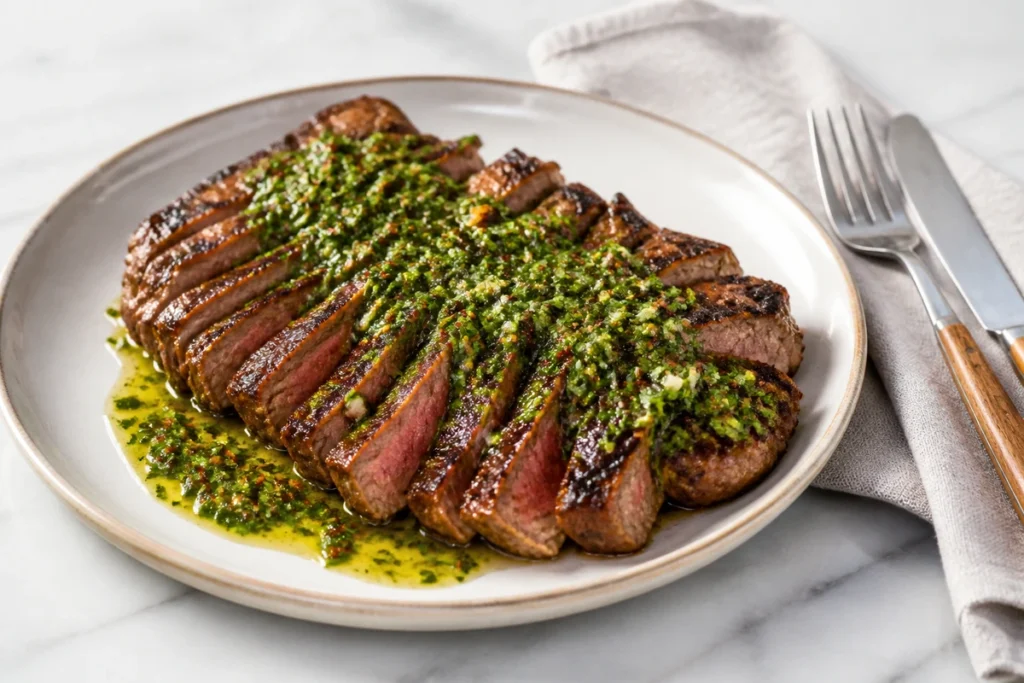
An authentic chimichurri recipe is the classic partner for grilled food.
- Grilled steak, the traditional match.
- Grilled chicken.
- Roasted vegetables.
- Grilled fish.
- Crusty bread, as a dip.
- Roast potatoes.
How to Use It
Chimichurri is spooned over food after cooking, not used as a marinade in the authentic tradition, though a little can go on before grilling too.
Serve it at room temperature so the oil is loose and the flavours are at their fullest.
Once the base works, an authentic chimichurri recipe takes variations easily.
Troubleshooting Guide
Almost every problem with an authentic chimichurri recipe is technique.
| Problem | Likely cause | Fix |
|---|---|---|
| Paste-like texture | Blended | Chop by hand next time. |
| Bitter | Parsley bruised, or blended | Chop gently with a sharp knife. |
| Too sharp | Too much vinegar, no rest | Balance with oil; let it rest. |
| Flat, dull | Cheap oil, under-salted | Good oil; more salt. |
| Too oily | Acid and oil out of balance | Add a little more vinegar. |
| Harsh garlic | Not rested | Rest 2 hours; the garlic mellows. |
If It Tastes Too Sharp
Freshly made chimichurri is always sharp; the vinegar and raw garlic dominate before it rests. Give it two hours before you judge it.
If it is still too sharp after resting, stir in a little more olive oil to balance the acid.
If It Turned to Paste
A blended batch cannot be un-blended. It still tastes good on bread or stirred into rice, but it is not chimichurri in texture.
Next time, chop by hand; it is the defining step.
How to Store It
Chimichurri keeps well because the oil and vinegar preserve the herbs.
The problems below come up most often with an authentic chimichurri recipe.
Refrigerator Storage
Store in a sealed jar in the refrigerator at 40°F or below for up to two weeks. The oil may solidify when cold; let it come to room temperature before serving.
Keep the herbs submerged under the oil, which protects them and extends the life of the sauce.
Freezer and Make-Ahead Notes
Freeze chimichurri in an ice-cube tray for up to three months, then pop out a cube whenever you need it.
It is a natural make-ahead sauce, since it needs resting time and improves over a day or two.
Keeping the Colour
The parsley darkens a little as it sits, which is normal. Keeping it under the oil slows the darkening.
For the brightest green, make it the day you serve it, though the flavour is better after resting.
Frequently Asked Questions
These come up most often about an authentic chimichurri recipe.
Should I use a blender or food processor?
No. Authentic chimichurri is hand-chopped. A blender bruises the parsley and emulsifies the oil into a paste, which is the wrong texture.
Parsley or cilantro?
The authentic version uses flat-leaf parsley. Cilantro makes a distinct, brighter sauce that is really its own recipe.
Fresh or dried oregano?
Dried oregano is traditional. It is more concentrated and slightly earthy, which suits the sauce better than fresh here.
These are the questions readers ask most about an authentic chimichurri recipe.
How long should it rest?
At least two hours, and overnight is better. Resting mellows the raw garlic and lets the flavours come together.
How long does it keep?
Up to two weeks refrigerated in a sealed jar, with the herbs kept under the oil. Bring it to room temperature before serving.
Is it a marinade or a sauce?
Traditionally a sauce, spooned over grilled food after cooking. A little can be used before grilling, but its real place is at the table.
More Chimichurri Recipes to Try
If this authentic chimichurri recipe worked for you, these are worth making next:
The hand-chopped rule behind this authentic chimichurri recipe applies to every version of the sauce.
Final Thoughts on This Authentic Chimichurri Recipe
Chop by hand, use flat-leaf parsley and dried oregano, balance the vinegar with good oil, and let it rest.
Those are the only rules that matter, and together they are what make an authentic chimichurri recipe taste the way it should.
There are no reviews yet. Be the first one to write one.
Reviews
Reader reviews are managed separately (outside this build).