Potato
Loaded Baked Potato Recipe: Easy Guide
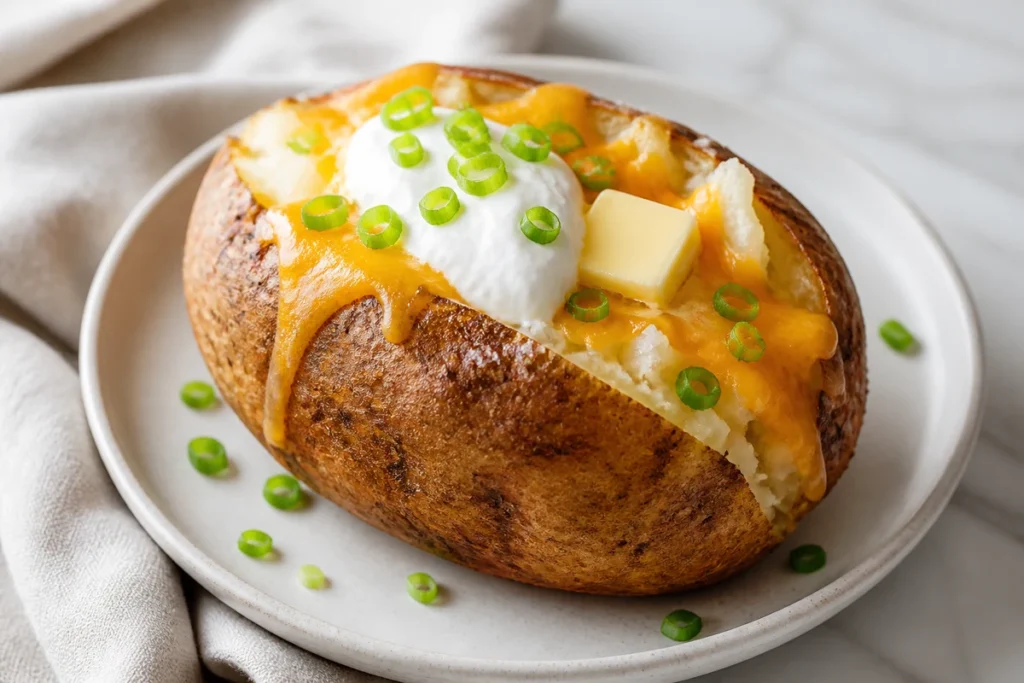
A great loaded baked potato recipe is really two techniques stacked together: a potato baked until the skin is crisp and the inside is fluffy, then a pile of toppings that turn it into a meal. Skip either half and you get a soft, pale potato or a sad, under-dressed one. This loaded baked potato recipe gets both right, with a dry, salted skin baked straight on the rack and a topping bar built for melt and freshness.
Everything here is done in the oven with a handful of pantry ingredients, and the method scales from a single potato to a tray for a crowd. If you want the same potato by another route, the air fryer method and the crock pot method are linked below.
Table of Contents
What makes a baked potato “loaded”
A plain baked potato is a blank canvas. A loaded one is dressed generously enough to eat on its own: melted cheese, a cool dollop of sour cream, a scatter of green onion, and a knob of butter working into the fluffy inside. The best loaded baked potato recipe balances rich and fresh so it never feels heavy, leaning on sharp cheddar and chives to carry the flavor. Think of the potato as the plate and the toppings as the meal built on top of it.
The balance is what keeps a loaded baked potato from feeling like too much. Rich cheese and butter are grounded by the tang of sour cream and the sharp freshness of green onion, so each bite stays interesting to the last forkful. That contrast, more than any single topping, is what people remember about a great one.
Choosing the right potato
Reach for large russets. Their high starch and low moisture bake up light and fluffy, and their thick skin crisps beautifully into the best part of the dish. Waxy potatoes like red or new potatoes stay dense and gluey and never fluff the same way. One big russet per person is the right size for a loaded baked potato recipe that eats like a meal rather than a side.
Look for even, blemish-free potatoes
Pick potatoes of similar size so they finish at the same time, and avoid any with green patches or soft spots. Uniform potatoes are the quiet secret to a batch that bakes evenly.
If you are cooking for several people, weigh a couple of potatoes in your hand to gauge consistency. A tray where every potato is within an ounce or two of the others will finish together, so nothing comes out underdone while the rest overbake.
Ingredients for this loaded baked potato recipe
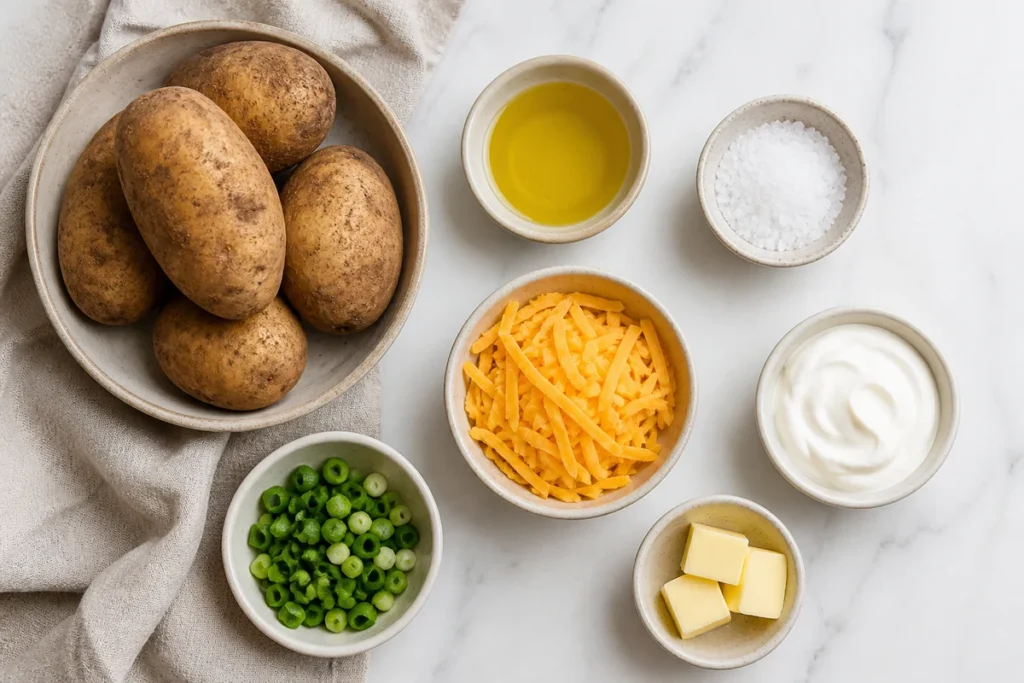
The list stays short so each part earns its place. Everything here is easy to keep on hand, and none of it fights for attention.
| Ingredient | Amount | Role |
|---|---|---|
| Large russet potatoes | 4 | The fluffy base |
| Olive oil | 2 tbsp | Crisps the skin |
| Coarse salt | 1 tbsp | Skin and seasoning |
| Sharp cheddar, grated | 1.5 cups | Melts into the top |
| Sour cream | 1 cup | Cool, tangy contrast |
| Green onions, sliced | 4 | Fresh, sharp bite |
| Butter | 4 tbsp | Richness in the flesh |
| Black pepper | to taste | Finish |
How to bake the potato
The oven does the real work here, and the goal is a crisp jacket around an interior you can fluff with a fork. Each step below is small, but together they are the difference between a bakery-quality potato and a steamy, pale one.
Dry, oil, and salt the skin
Scrub the potatoes and dry them completely — water is the enemy of crisp skin. Rub each with oil and roll in coarse salt. The oil crisps and browns the skin while the salt seasons it, and this thirty-second step is the one most cooks skip on the way to a loaded baked potato recipe.
Bake on the rack, not a tray
Set the potatoes straight on the middle oven rack at 425°F and bake about an hour. Air circulating all the way around gives an evenly crisp skin, where a baking sheet leaves a soft, flat underside. Pierce each potato a few times first so steam escapes instead of building up.
Test for doneness
A potato is ready when a knife slides into the center with no resistance and the sides give when gently squeezed. Underbaked centers stay gluey and cool, so give it the full time and add ten minutes for extra-large potatoes.
An instant-read thermometer takes the guesswork out entirely: a fully baked potato reads about 205°F to 210°F in the center. That high finish temperature is what fully bursts the starch granules and gives you a light, fluffy interior instead of a dense one.
Timing and temperature at a glance
Use this as a quick reference for different potato sizes at 425°F.
| Potato size | Approx. bake time | Skin result |
|---|---|---|
| Small (6 oz) | 40-45 min | Crisp, quick |
| Medium (8 oz) | 50-55 min | Crisp, even |
| Large (10-12 oz) | 60-70 min | Thick, crisp jacket |
| Extra large | 70-80 min | Give it the full time |
Loading it up
Timing the toppings is what separates a good loaded baked potato recipe from a great one. The order matters as much as the ingredients.
Fluff first
Split the potato lengthwise and fluff the inside with a fork before anything goes on. Work in the butter while the flesh is steaming so it melts through the potato instead of sitting on top, seasoning it from the inside out.
Melt, then finish fresh
Add the cheese while the potato is hot so it melts into the flesh, then finish with cold sour cream and green onion. Hot-then-cold layering keeps the toppings distinct instead of collapsing into one warm puddle, and the temperature contrast is half the pleasure.
Build a baked potato bar for a crowd
For a party, bake a tray of potatoes and set out bowls of toppings so everyone builds their own. This turns a single loaded baked potato recipe into a flexible, low-effort meal for a group, and it keeps everyone happy across different tastes. Keep the potatoes warm in a low oven and let the cold toppings sit over ice.
Topping ideas beyond the classic
Once the base loaded baked potato recipe is second nature, vary the bar. Broccoli and extra cheddar make it a full dinner, caramelized onions add sweetness, a spoon of chili turns it into a stuffed meal, and sauteed mushrooms bring savory depth. A shower of fresh herbs keeps even the richest version tasting bright.
Vegetables make especially good toppings because they cut the richness while adding color and substance. Roasted broccoli, sauteed spinach, charred corn, or a scoop of seasoned beans all turn a loaded baked potato recipe into a balanced plate rather than just an indulgence.
Common mistakes to avoid
Three habits keep a loaded potato from reaching its best.
Wrapping in foil
Foil traps steam and gives you a soft, boiled-tasting skin — the opposite of the crisp jacket you want. Bake the potatoes bare. Foil also raises a food-safety concern covered in the storage note below.
Skipping the oil and salt
A dry, unsalted skin bakes up bland and leathery. The oil-and-salt rub is the highest-value thirty seconds in the whole method, and it costs nothing.
Overloading so it goes cold
Piling on cold toppings too fast chills the potato through. Warm the flesh, melt the cheese, then add the cold finishes last so the potato stays hot to the last bite.
What to serve with a loaded baked potato
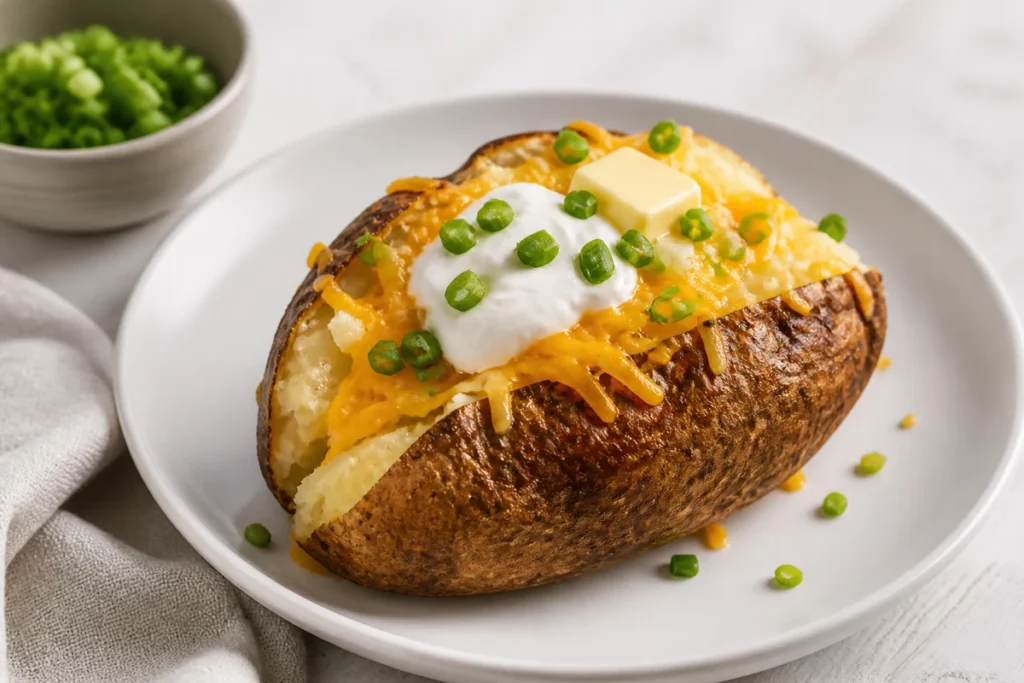
A loaded baked potato recipe is hearty enough to anchor a plate on its own. Pair it with a simple green salad, roasted vegetables, or a lean grilled protein for a rounded dinner. As a side, it slips in naturally next to steak, roast chicken, or a bowl of soup.
Storing and reheating
Bake extras on purpose — a cooked potato reheats well and feeds the leftover ideas below.
Storing safely
Refrigerate cooked potatoes within two hours, and never leave a foil-wrapped baked potato sitting at room temperature, which can let harmful bacteria grow in the sealed foil. The USDA guidance on leftovers explains the timing.
Reheating for crisp skin
Reheat in a hot oven or air fryer rather than the microwave if you want the skin to crisp again. Add fresh toppings after warming, not before. For more ways to use extras, see our leftover baked potato recipes.
Frequently asked questions
The questions that come up most about this loaded baked potato recipe.
What temperature is best?
425°F is the sweet spot — hot enough to crisp the skin while the inside bakes through in about an hour for a large russet. Lower and the skin stays soft; higher and the outside can scorch before the center is done.
Can I microwave to save time?
You can microwave to soften the inside for a few minutes, then finish in a hot oven for ten minutes to crisp the skin. A fully microwaved potato has soft, steamy skin and misses the point of a loaded baked potato recipe.
How do I make it a full meal?
Add a protein and a green vegetable to the toppings — shredded chicken with broccoli and cheddar, for example — and one potato becomes a complete dinner with no side needed.
Final thoughts
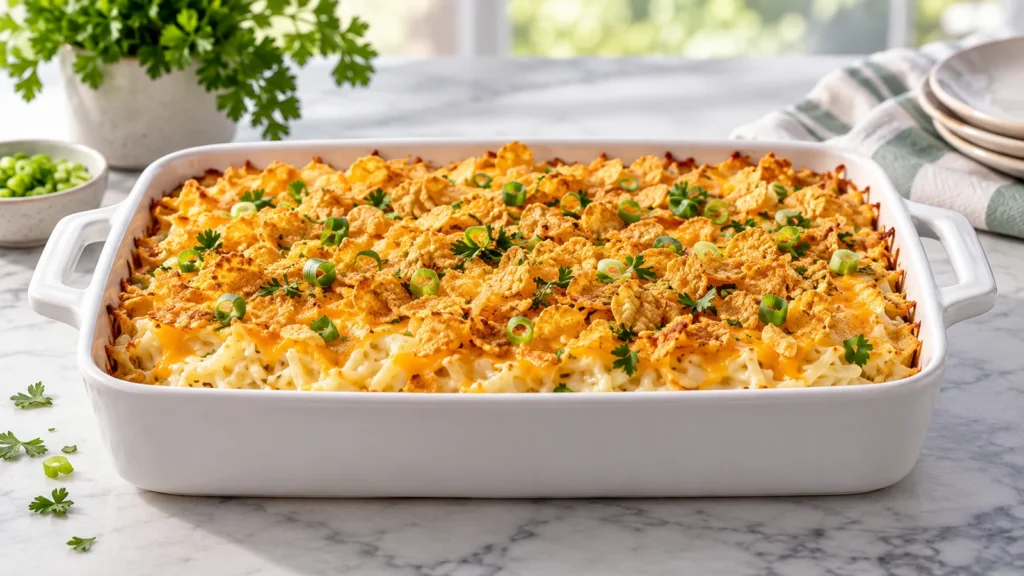
The best loaded baked potato recipe rewards two small habits: a dry, oiled, salted skin baked bare on the rack, and toppings layered hot-then-cold. Nail those and you get a crisp jacket, a fluffy inside, and a potato loaded generously enough to be the whole meal. Explore the baked potato casserole and twice baked potato casserole when you want the same flavors for a crowd.
There are no reviews yet. Be the first one to write one.
Reviews
Reader reviews are managed separately (outside this build).