Chicken
lemon chicken orzo: Easy One-Pot, Velvety Comfort
Try lemon chicken orzo, an easy one-pot dinner with tender chicken, creamy Parmesan orzo, bright lemon and spinach, ready in 30–45 minutes tonight.

Lemon chicken orzo brings tender chicken, silky pasta, spinach, Parmesan, and fresh citrus together in one pan. Among quick chicken and orzo recipes, this 40-minute dinner stands out because the sauce turns velvety without relying on heavy cream.
A precise broth ratio keeps the orzo tender rather than soupy or mushy. Lemon zest adds fragrance during cooking, while juice goes in after the pan leaves the heat so its flavor stays bright. This simple timing detail gives lemon chicken orzo a fresh, balanced finish.
Table of Contents
Why You’ll Love This Lemon Chicken Orzo
- One-pan convenience: The chicken, pasta, vegetables, and sauce cook in a single 12-inch skillet.
- Weeknight timing: Dinner is ready in about 40 minutes.
- Balanced texture: Toasted orzo becomes creamy while retaining a gentle bite.
- Fresh comfort food: Parmesan provides richness, balanced by lemon and spinach.
- Flexible serving: This chicken orzo works as a complete meal or alongside a simple vegetable or salad.
- Reliable method: Browning the chicken separately and returning it near the end helps keep every piece tender.
Ingredients
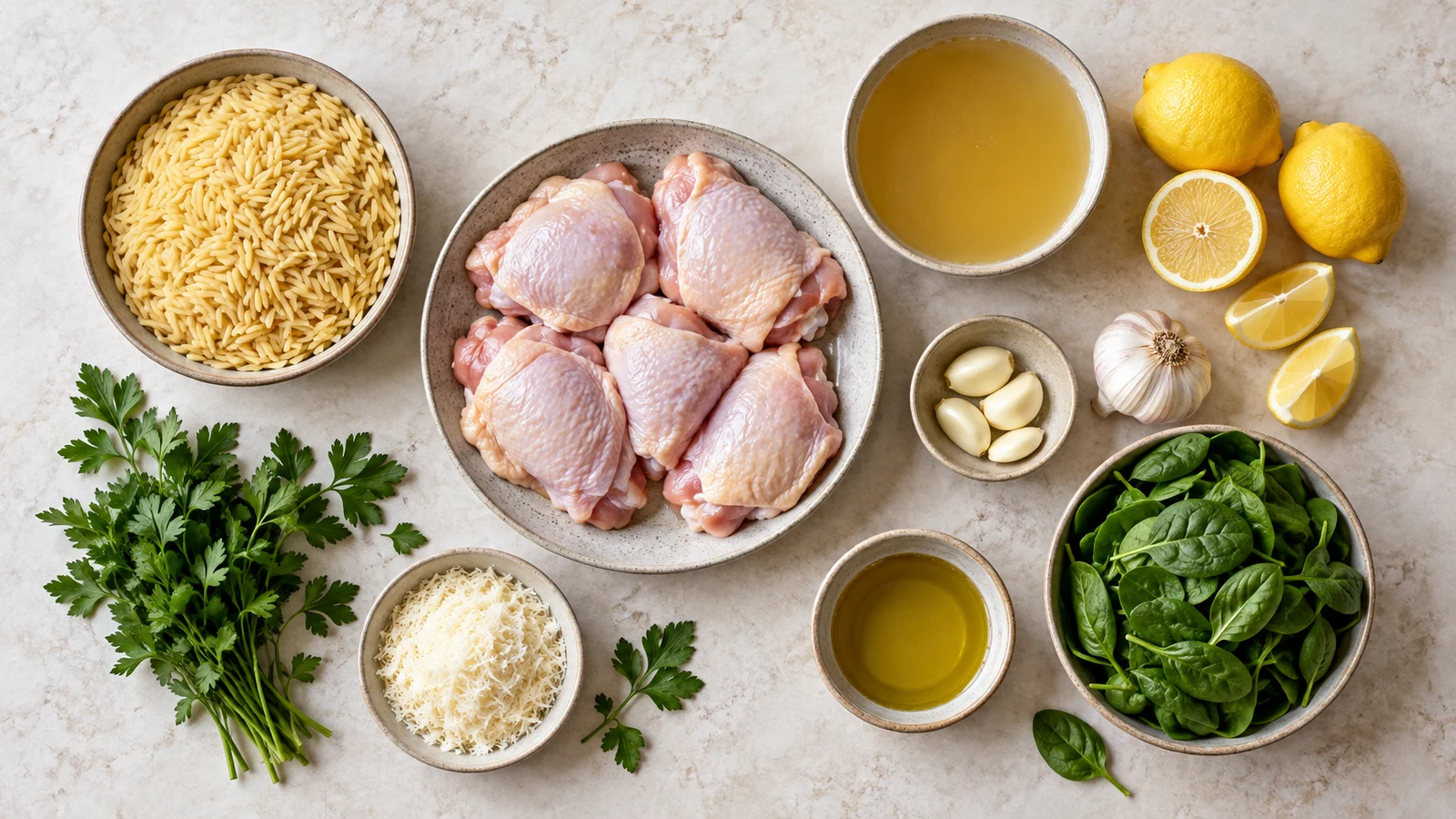
- 1 1/2 pounds (680 g) boneless, skinless chicken breasts, cut into 1-inch pieces
- 1 teaspoon kosher salt, divided
- 1/2 teaspoon black pepper
- 1 teaspoon dried Italian seasoning
- 2 tablespoons olive oil, divided
- 1 small yellow onion, finely diced
- 3 garlic cloves, minced
- 1 1/2 cups (300 g) dry orzo
- 3 cups (710 ml) low-sodium chicken broth
- 1 teaspoon finely grated lemon zest
- 3 packed cups (90 g) baby spinach
- 1/2 cup (50 g) finely grated Parmesan cheese
- 2 tablespoons fresh lemon juice, plus more to taste
- 2 tablespoons chopped fresh parsley
Ingredient Notes for Chicken Orzo
Chicken
Cut the chicken breasts into evenly sized 1-inch pieces so they cook at the same rate. Patting them dry is important because surface moisture creates steam and delays browning. If some pieces are much smaller than others, remove them from the skillet as soon as they are cooked to prevent dryness.
Orzo and broth
Although it resembles rice, orzo is a small pasta. It releases starch as it simmers, which is what gives this chicken orzo its naturally creamy consistency. Low-sodium broth allows better control over seasoning because Parmesan adds saltiness at the end.
Lemon and Parmesan
Use a fine grater for the yellow outer layer of the lemon, avoiding the bitter white pith beneath it. Freshly grated Parmesan melts more smoothly than coarse shreds. Adding both the cheese and juice away from direct heat helps the sauce stay cohesive and preserves the bright character of lemon chicken orzo.
Spinach and aromatics
Baby spinach wilts quickly and needs no advance cooking. Onion creates sweetness, while garlic adds depth without overpowering the citrus. Chop the onion finely so it softens during its short cooking time and blends into the sauce instead of leaving large, firm pieces.
Equipment and Pan Size
Use a deep, heavy 12-inch skillet or a 4-quart sauté pan with a fitted lid. A smaller pan crowds the chicken and slows evaporation, while a very wide pan may reduce the broth before the pasta becomes tender. A meat thermometer is the most reliable tool for checking the chicken.
A light-colored skillet makes it easier to judge the browning on the chicken and orzo. Keep a flexible spatula or wooden spoon nearby for scraping the flavorful browned bits from the base when the broth is added.
How to Make Lemon Chicken Orzo
- Season the chicken: Pat it dry, then toss it with 1/2 teaspoon salt, pepper, and Italian seasoning. Dry chicken browns more effectively and releases less water into the skillet.
- Sear: Heat 1 tablespoon oil over medium-high heat. Add the chicken in one layer and cook for 5 to 7 minutes, turning occasionally, until browned and cooked through. Its thickest pieces should reach 165°F (74°C), the safe minimum listed in the USDA safe temperature chart. Transfer it to a plate.
- Build the base: Reduce the heat to medium and add the remaining oil and onion. Cook for 3 minutes. Stir in the garlic for 30 seconds, just until fragrant.
- Toast the orzo: Add the dry orzo and cook for 1 to 2 minutes, stirring frequently. The grains should smell lightly nutty, but they should not turn dark brown.
- Simmer: Pour in 3 cups broth and scrape up the browned bits. Add the lemon zest and remaining salt. Bring to a gentle simmer, cover, and cook for 8 minutes, stirring once halfway through.
- Check the texture: Uncover and simmer for 2 to 4 minutes, stirring often. The orzo is ready when it is plump and tender with a faint firmness at the center. A little loose broth should remain because the pasta continues absorbing liquid as it rests.
- Finish: Lower the heat and fold in the spinach and cooked chicken. Cook for 1 to 2 minutes, until the spinach wilts and the chicken is hot. Remove the pan from the heat before stirring in Parmesan and lemon juice. Rest for 3 minutes, then garnish with parsley.
Expert Tips for the Best Lemon Chicken Orzo
- Use the tested ratio: Three cups broth for 1 1/2 cups dry orzo provides a dependable 2:1 liquid-to-pasta ratio in a covered 12-inch skillet.
- Stir strategically: Stir once during covered cooking and frequently near the end. Too little stirring can cause scorching; constant early stirring can make the pasta gummy.
- Protect the chicken: Remove it after searing and return it only at the end. Simmering it for the entire cooking time can make lean breast meat dry.
- Add lemon in stages: Zest tolerates simmering and perfumes the broth. Juice tastes fresher when added off the heat and can become bitter if cooked too long.
- Control the simmer: Look for small, steady bubbles rather than a vigorous boil. Rapid boiling evaporates the broth too quickly and can cook the outside of the pasta before its center softens.
- Grate cheese finely: Fine Parmesan melts quickly into chicken orzo. Add it gradually while stirring so it disperses evenly rather than forming clumps.
- Watch the carryover cooking: Take the skillet off the heat while the sauce still looks slightly loose. The orzo continues absorbing broth during the 3-minute rest.
- Taste at the end: Broth and Parmesan vary in saltiness. Taste the finished dish before adding salt, then adjust the lemon juice a little at a time.
- Adjust before serving: If the sauce is too thick, stir in warm broth 2 tablespoons at a time. If it is thin, simmer uncovered briefly. For another preparation with similar flavors, see this lemon chicken with orzo reference.
Troubleshooting Common Problems
Why did the orzo stick or scorch?
If the bottom scorches, the heat was likely too high or the pan too thin. Transfer the unburned portion to a clean skillet without scraping the bottom. To prevent the problem, maintain a gentle simmer and stir along the base and into the corners of the pan, especially during the final uncovered minutes.
Why is the lemon chicken orzo mushy?
Mushy orzo usually results from excess liquid, a simmer that continued too long, or an extended rest in the hot skillet. Start checking the pasta at 8 minutes. Stop cooking when it is tender with a faint firmness in the center because it will continue to soften as the sauce settles.
Why is the pasta still firm?
A wide skillet, high heat, or loose-fitting lid can cause broth to evaporate before the pasta cooks. Add hot broth 1/4 cup at a time, keep the simmer gentle, and stir regularly. Covering the skillet for a few extra minutes can help the center soften without requiring a large amount of additional liquid.
Why did the Parmesan clump?
High heat can make cheese tighten instead of melting smoothly. Remove the skillet from the burner, add finely grated Parmesan in small handfuls, and stir between additions. If clumps have already formed, stir in a splash of warm broth to loosen the sauce.
Why does the dish taste bitter?
Too much white pith may have been grated with the lemon zest, or the juice may have cooked too long. Soften mild bitterness with extra broth and Parmesan. When preparing future batches of lemon chicken orzo, grate only the bright yellow peel and stir the juice in after removing the pan from the heat.
Why did the sauce become too thick?
Orzo absorbs liquid quickly, even after cooking. A sauce that tightens while standing needs only a small splash of warm broth. Add it gradually and stir until the desired creamy consistency returns. This adjustment is especially useful when chicken orzo has waited several minutes before serving.
Variations and Substitutions
Chicken thighs and orzo variation
Boneless thighs stay especially juicy and may need 1 to 3 extra minutes when seared whole. Check that they reach 165°F (74°C), then return them at the end as directed. This chicken thighs and orzo guide offers more ideas for that pairing.
For bite-size chicken thighs and orzo, cut the thighs into pieces similar in size to the original chicken breast pieces. Their richer flavor complements lemon and Parmesan, while the same gentle-simmer technique keeps the pasta creamy.
Vegetable additions
Add asparagus pieces or peas during the final 3 minutes. Sauté sliced mushrooms before the onion, or replace spinach with chopped kale and allow 3 to 5 minutes for it to soften. Avoid overloading the skillet with watery vegetables because they can dilute the seasoning and alter the tested liquid ratio.
Dairy-free option
Omit Parmesan and finish with 1 tablespoon olive oil. Nutritional yeast can add savory flavor, although it will not melt identically. Taste before serving because removing Parmesan changes both the salt level and the body of the sauce.
Gluten-free option
Use gluten-free orzo and follow its package timing. It may absorb liquid differently, so keep an extra 1/2 cup broth nearby. Add that broth gradually rather than pouring it in all at once, and rely on texture instead of the original cooking time to judge doneness.
Creamier chicken orzo
Stir in 1/4 cup heavy cream off the heat before the lemon juice. Avoid boiling dairy with lemon because high heat and acidity can cause separation. This variation produces a richer sauce while retaining the fresh citrus flavor.
Marry me chicken orzo variation
For a flavor profile inspired by marry me chicken orzo, add sun-dried tomatoes and a richer creamy finish while keeping the pasta method controlled. Because those additions change the balance of the dish, follow a tested marry me chicken orzo recipe for the best result.
Serving Ideas for Lemon Chicken Orzo
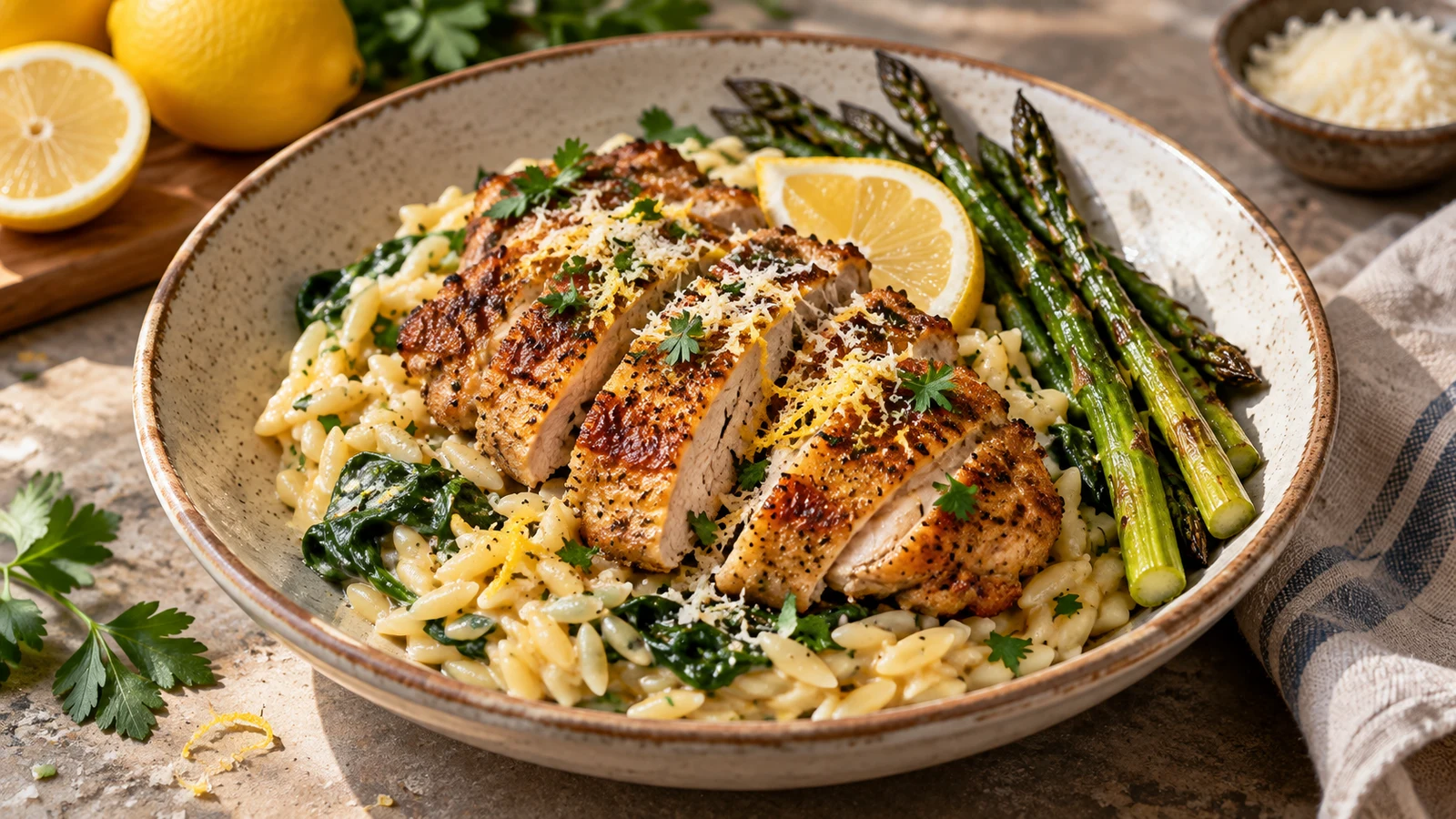
This chicken orzo is a complete meal, but roasted broccoli, green beans, asparagus, or a crisp cucumber salad adds color and texture. For a broader collection of easy combinations, browse these one-pan chicken and orzo recipes. Serve with lemon wedges so everyone can adjust the acidity.
A simple arugula salad with a mild vinaigrette contrasts nicely with the creamy pasta. If serving bread, choose a crisp loaf that can scoop up the sauce without making the meal feel too heavy. Keep side dishes simply seasoned so the citrus and Parmesan remain prominent.
For a casual family dinner, bring the skillet directly to the table on a heatproof trivet. Add parsley and a little Parmesan immediately before serving. For guests, divide the lemon chicken orzo among shallow bowls and garnish each portion with a lemon wedge.
Make-Ahead Instructions
For the best texture, prepare the components rather than fully cooking the dish several days in advance. Cut and season the chicken, dice the onion, mince the garlic, grate the Parmesan, and wash the spinach. Refrigerate each component in a separate airtight container, keeping the raw chicken away from ready-to-eat ingredients.
The chicken can also be seared one day ahead, cooled promptly, and refrigerated. When making the lemon chicken orzo, prepare the pasta as directed and return the cooked chicken during the finishing step. Make sure it heats completely to 165°F (74°C).
If the entire recipe must be prepared ahead, cook the orzo until just shy of tender and leave the sauce slightly looser than usual. Cool it promptly and reserve extra broth for reheating. Add a fresh squeeze of lemon after warming to restore the brightness that softens during storage.
How to Store and Reheat
Cool leftovers promptly and refrigerate them in a shallow airtight container for up to 3 to 4 days, following USDA leftovers and food-safety guidance. Divide a large batch into smaller containers so it cools efficiently.
Reheat individual portions in the microwave with 1 to 2 tablespoons broth, covered loosely, stirring halfway through. On the stovetop, add about 1/4 cup broth per two servings and warm gently over medium-low heat. Heat leftovers to 165°F (74°C).
Freezing is safe for up to 2 months, but the orzo and spinach will become softer after thawing. Freeze cooled portions in airtight containers, leaving a little room for expansion. Thaw overnight in the refrigerator, reheat gently, and refresh the dish with lemon juice and Parmesan.
Avoid repeatedly reheating the full batch. Warm only the amount needed so the pasta does not become excessively soft. If stored chicken orzo looks dry, loosen it before heating so the added broth has time to distribute throughout the pasta.

Frequently Asked Questions
How is this different from marry me chicken orzo?
Marry me chicken orzo usually has a richer cream sauce with sun-dried tomatoes and bold Italian seasoning. This version is lighter and more citrus-forward. Both are comforting one-pan meals, but their sauces have distinctly different characters.
Can I use chicken thighs in lemon chicken orzo?
Yes. Boneless, skinless thighs are a good substitute and stay juicy during searing. When making chicken thighs and orzo, use a thermometer rather than appearance alone to confirm doneness. Return the cooked meat near the end so it warms without becoming tough.
Can I use rice instead of orzo?
Not as a direct substitution. Rice requires different liquid ratios and cooking times, so replacing the orzo without reformulating the recipe can leave the pan watery or undercooked. For consistent results, use a recipe developed specifically for the type of rice you have.
Do I need to rinse the orzo?
No. Dry orzo goes directly into the skillet for toasting. Rinsing would add moisture and make it harder to toast evenly. The starch released during simmering is also useful because it helps create the signature creamy sauce.
Why is my orzo still firm after the broth is gone?
Your skillet may be wide, the heat may be high, or the lid may not seal well. Add hot broth 1/4 cup at a time and continue simmering until the center is just tender. Keep the heat low enough that the added liquid does not disappear immediately.
Can I double this chicken orzo recipe?
Doubling requires a much larger pan to prevent crowding and uneven cooking. It is safer to prepare two separate skillets because evaporation and simmering time change in an oversized batch. Chicken also browns better when it has enough space around each piece.
Can I make lemon chicken orzo without spinach?
Yes. Omit it without changing the broth quantity, or replace it with another quick-cooking green. Chopped kale needs several extra minutes, while arugula can be folded in off the heat. The texture will change slightly, but the pasta method remains the same.
What can I use instead of Parmesan?
Pecorino Romano can work, but it is saltier and sharper, so use less and taste before adding more salt. For a dairy-free dish, omit the cheese and finish with olive oil. Neither substitute will reproduce Parmesan exactly, but both can provide a satisfying finish.
Can I make chicken and orzo recipes in a Dutch oven?
Yes. A wide Dutch oven can replace the skillet if it has enough surface area to brown the chicken. Because its heavy sides retain heat well, lower the burner as needed and check the pasta early. Stir carefully along the bottom to prevent sticking.
How can I make the lemon flavor stronger?
Add more fresh juice after cooking, tasting between additions. Extra zest can also intensify the aroma, but avoid the white pith. Serving lemon wedges at the table is the easiest way to increase acidity without making the entire batch too sharp.
What is the approximate nutrition per serving?
Based on six servings, each portion contains approximately 510 calories, 42 grams protein, 49 grams carbohydrate, and 17 grams fat. Values vary with brands, chicken size, and the amount of Parmesan used.
Recipe Card
Prep time: 15 minutes
Cook time: 25 minutes
Total time: 40 minutes
Yield: 6 servings
Directions: Season and sear the chicken, then set it aside. Sauté onion and garlic, toast the orzo, and simmer it in broth with lemon zest. Return the chicken, wilt the spinach, and finish off the heat with Parmesan and lemon juice.
Notes: Use a deep 12-inch skillet, maintain a gentle simmer, and keep extra warm broth ready to correct the consistency. Confirm that the chicken reaches 165°F (74°C).
A Bright One-Pan Dinner
Lemon chicken orzo is an approachable one-pot dinner with tender chicken, properly cooked pasta, and a sauce that is rich without feeling heavy. Careful heat control, a measured broth ratio, and an off-heat finish make the recipe dependable for weeknights or casual entertaining.
Serve lemon chicken orzo immediately for the silkiest texture, with extra lemon at the table. Once you understand how the pasta absorbs broth, the same technique can help you approach other chicken and orzo recipes with greater confidence.
Reviews
Reader reviews are managed separately (outside this build).