Chicken
Irresistible One-Pan Chicken Thighs and Orzo
Try chicken thighs and orzo: crispy, juicy chicken over creamy lemon-garlic orzo, all in one pan for a comforting, flavor-packed weeknight dinner.
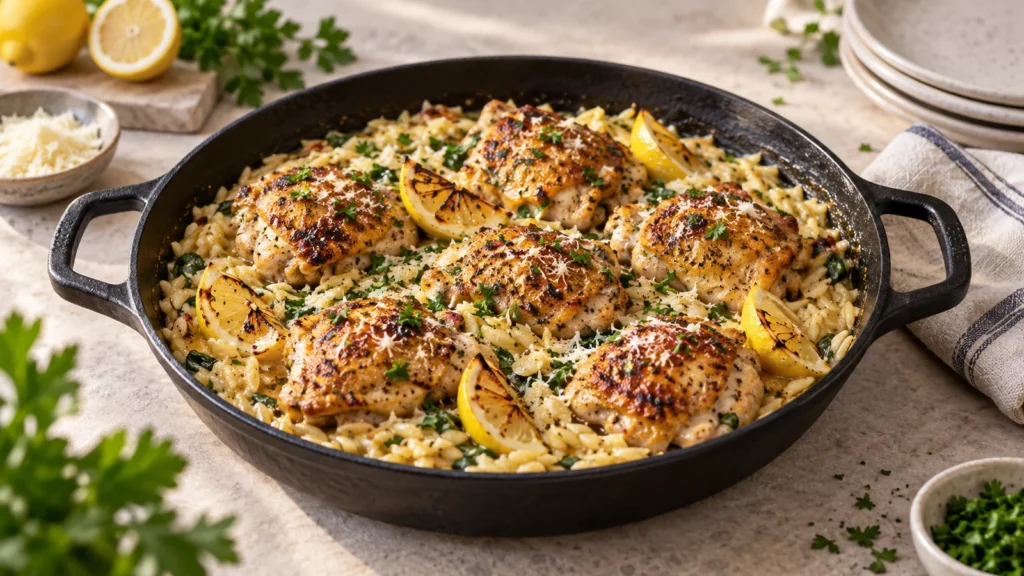
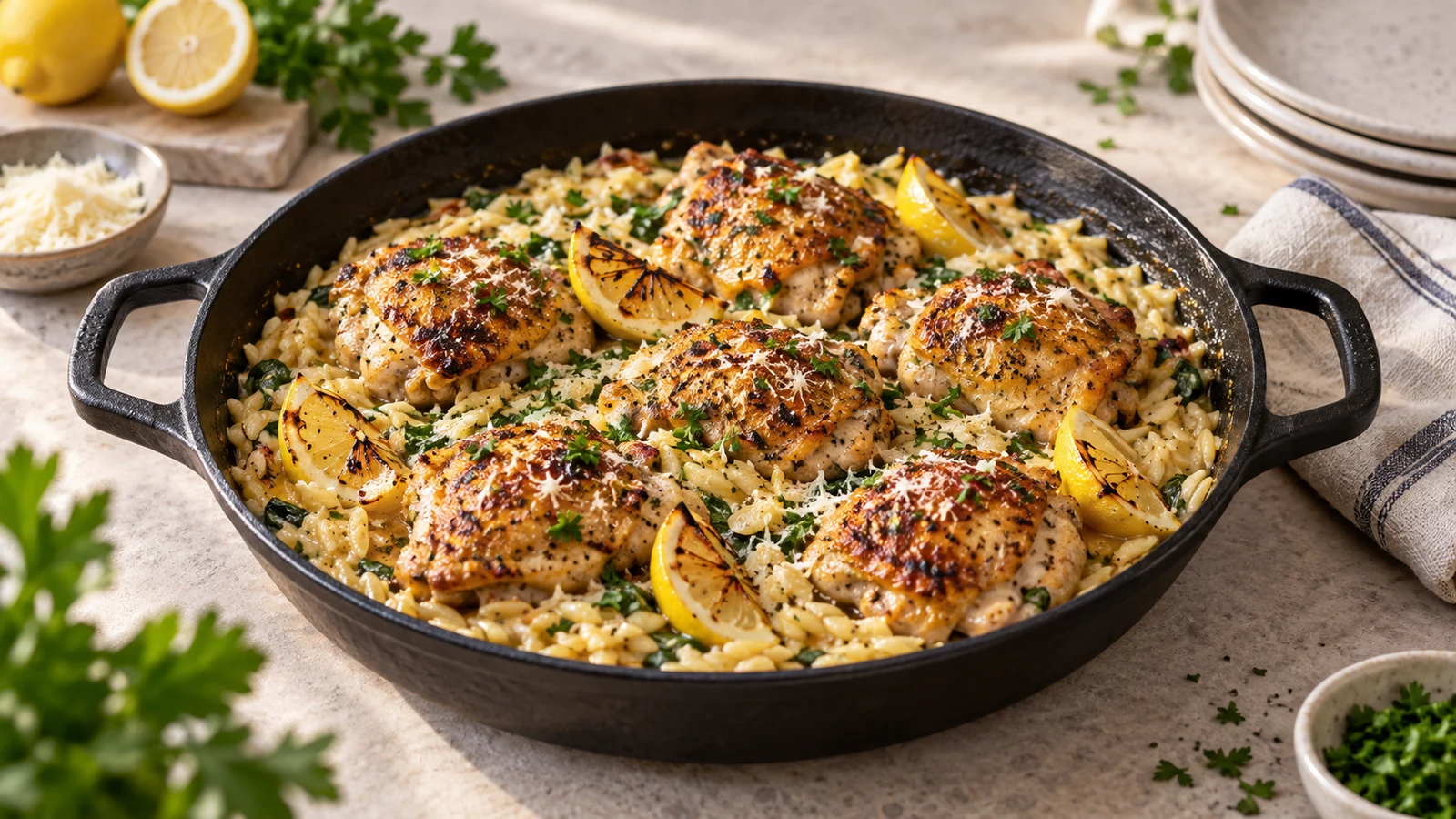
Chicken thighs and orzo bring crispy, well-seasoned chicken and creamy lemon-garlic pasta together in one skillet. The orzo absorbs savory broth and pan drippings while the chicken finishes cooking on top, giving you a satisfying dinner with minimal cleanup.
This chicken thighs and orzo recipe is practical enough for a weeknight but attractive enough for guests. Fresh lemon balances the cream and Parmesan, while spinach adds color and turns the skillet into a complete meal.
Recipe snapshot: Prep time: 15 minutes. Cooking time: 35 minutes. Servings: 4. Difficulty: Easy.
Table of Contents
Why You’ll Love This Recipe
- Everything cooks in one 12-inch skillet.
- Browning creates crisp chicken skin and a flavorful base for the orzo.
- A tested liquid ratio produces creamy pasta without making it soupy or mushy.
- The lemon chicken orzo sauce tastes rich without feeling heavy.
- It is easy to adapt with vegetables, herbs, or dairy-free ingredients.
- Unlike many chicken and orzo recipes, this method explains exactly when to stir and how to correct the sauce.
Ingredients
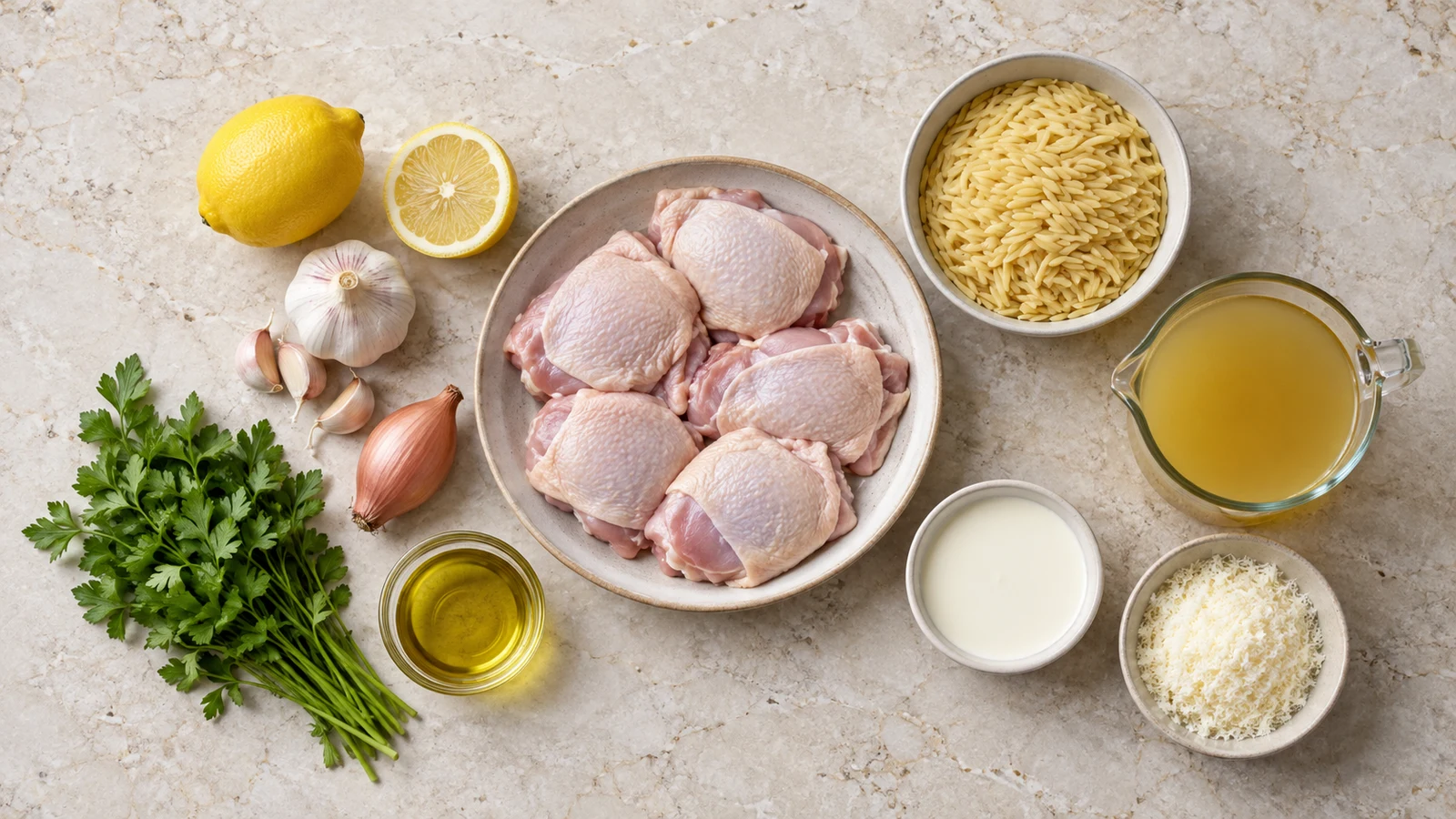
- 4 bone-in, skin-on chicken thighs, about 2 pounds (900 g)
- 1 teaspoon kosher salt, divided
- 1/2 teaspoon black pepper
- 1 teaspoon garlic powder
- 1 teaspoon dried oregano
- 1 tablespoon olive oil
- 1 small yellow onion, finely chopped
- 3 garlic cloves, minced
- 1 cup dry orzo (about 200 g)
- 2 1/4 cups low-sodium chicken broth (530 ml)
- 1/3 cup heavy cream (80 ml)
- 1 teaspoon finely grated lemon zest
- 2 tablespoons fresh lemon juice
- 1/3 cup finely grated Parmesan (30 g), plus more for serving
- 2 cups baby spinach
- 2 tablespoons chopped fresh parsley
Ingredient Notes for Chicken Orzo
Chicken thighs: Bone-in, skin-on thighs stay juicy during the covered simmer, and their rendered fat gives the pasta extra flavor. Choose pieces of similar size so they finish at roughly the same time.
Orzo: Use dry, uncooked orzo rather than a precooked product. Its small shape releases enough starch to give chicken orzo a naturally silky texture as it simmers.
Broth and cream: Low-sodium broth lets you control the seasoning. Heavy cream adds body and is less likely to separate than a lower-fat dairy product when kept at a gentle simmer.
Lemon: Zest supplies fragrant citrus oils, while juice adds acidity. Add the zest before cooking but save the juice for the finish so the lemon chicken orzo retains its fresh, bright flavor.
Parmesan and spinach: Finely grated Parmesan melts more evenly than coarse shreds. Baby spinach wilts quickly from the residual heat and does not need separate cooking.
Equipment and Recommended Skillet Size
Use a deep, oven-safe 12-inch skillet with a lid; cast iron or stainless steel works well. A smaller pan crowds the thighs and slows evaporation, while a shallow pan may allow the broth to spill. If you do not have a lid, cover the skillet tightly with foil.
An instant-read thermometer is especially helpful because chicken pieces can vary in thickness. A fine grater makes quick work of the lemon zest and creates Parmesan that disappears smoothly into the sauce.
Bone-In vs. Boneless Chicken Thighs
Bone-in thighs give the sauce richer flavor and usually need 25 to 30 minutes after browning. Boneless thighs cook faster: use six small thighs, brown them for 4 minutes on the first side and 2 minutes on the second, then begin checking for doneness after 15 minutes in the covered skillet.
If you enjoy crisp poultry prepared with another convenient method, see this guide to air-fryer bone-in chicken thighs.
How to Make Chicken Thighs and Orzo
- Season the chicken: Pat the thighs very dry. Season them with 3/4 teaspoon salt, pepper, garlic powder, and oregano.
- Brown the thighs: Heat the oil in a 12-inch skillet over medium-high heat. Place the chicken skin-side down and cook without moving it for 7 to 9 minutes. Turn and cook for 3 minutes, then transfer to a plate.
- Build the base: Carefully spoon off excess fat, leaving about 1 tablespoon in the skillet. Reduce the heat to medium, add the onion, and cook for 3 minutes. Add the garlic and stir for 30 seconds.
- Toast the orzo: Add the dry orzo and cook for 1 to 2 minutes, stirring frequently. Orzo is a small pasta, not rice, so toasting adds flavor but does not change its basic cooking method.
- Add the liquid: Stir in the broth, cream, lemon zest, and remaining 1/4 teaspoon salt. Scrape up the browned bits, bring the mixture to a gentle simmer, and return the chicken skin-side up.
- Cook: Cover, reduce the heat to medium-low, and simmer for 18 minutes. Stir the orzo around the chicken at 8 and 14 minutes so it does not stick. For bone-in thighs, uncover and continue cooking for 5 to 10 minutes as needed.
- Check and finish: Confirm that the thickest part of every thigh reaches at least 165°F (74°C), following the federal safe minimum temperature guidance. Stir in the spinach, Parmesan, and lemon juice. Rest for 5 minutes, then garnish with parsley.
Tested Broth-to-Orzo Ratio
Use 2 1/4 cups broth plus 1/3 cup cream for every 1 cup dry orzo in a covered 12-inch skillet. The pasta absorbs most of this liquid, and the remainder forms a creamy sauce. Because brands and pans vary, keep 1/4 cup warm broth nearby and add it a tablespoon at a time only if the skillet dries out before the orzo is tender.
The covered simmer limits evaporation while the chicken cooks. Once the lid is removed, the sauce reduces quickly, so judge the consistency after the required 5-minute rest. Properly prepared chicken thighs and orzo should be creamy and spoonable rather than stiff or watery.
Expert Tips for Chicken Thighs and Orzo
- Dry the skin thoroughly: Surface moisture creates steam and delays browning. Press the thighs with paper towels before adding the seasonings.
- Preheat the skillet: The oil should look fluid and shimmer slightly before the chicken goes in. This encourages even color and reduces sticking.
- Leave the chicken undisturbed: Skin releases more readily once it has formed a crisp crust. Moving it too early can cause tearing.
- Control the rendered fat: Remove all but 1 tablespoon before cooking the onion. Excess fat can make chicken orzo feel greasy and prevent the sauce from tasting balanced.
- Toast without scorching: Stir the orzo frequently for 1 to 2 minutes. A light golden aroma is desirable, but dark pieces may taste bitter.
- Deglaze thoroughly: Use a wooden spoon to loosen the browned bits after adding the liquids. Those bits contribute much of the savory flavor.
- Keep the skin above the liquid: Return the thighs skin-side up and avoid submerging their tops. This preserves more of the crisp texture.
- Maintain a gentle simmer: Rapid boiling can split the dairy and evaporate liquid before the pasta becomes tender.
- Stir around the chicken: Move the orzo from the bottom and corners without repeatedly turning or disturbing the thighs.
- Finish off the heat: Parmesan melts smoothly when the skillet is no longer boiling. Lemon juice also tastes fresher when stirred in at the end.
- Rest before serving: Five minutes allows the pasta to absorb remaining liquid and gives the sauce its final creamy consistency.
- For more guidance on timing different cuts, consult this chicken-thigh cooking-time guide.
Common Mistakes and Troubleshooting
Why is the orzo still firm?
If the orzo is firm but the pan is dry, add warm broth in 2-tablespoon increments. Cover and cook for a few more minutes, checking frequently. Cold broth temporarily stops the simmer, so warming it first provides a more predictable correction.
Why is my chicken orzo soupy?
Remove the chicken and simmer the pasta uncovered for 2 to 4 minutes. Stir gently so the bottom does not catch. Remember that the sauce thickens during the 5-minute rest, so stop reducing it while it still looks slightly looser than the desired result.
Why did the pasta become mushy?
Mushy orzo usually comes from too much liquid, vigorous stirring, or overcooking. Measure the pasta and liquids accurately, maintain low heat, and stir only at the specified intervals. Different brands may soften at slightly different rates.
Why did the chicken skin lose its crispness?
The skin may have been submerged in liquid or covered by sauce. Keep each thigh skin-side up, with the top above the broth. For the best contrast, spoon the finished orzo around the chicken instead of over it.
Why is the chicken dry or undercooked?
Thighs of unequal size finish at different times. Check each piece in its thickest area without touching the bone. Remove a finished thigh if the others need longer. The USDA safe-temperature chart offers additional food-safety guidance.
Why did the dairy separate?
The skillet probably boiled too vigorously. Reduce the heat as soon as the liquid reaches a simmer and avoid substituting low-fat milk, which is less stable. A slightly separated sauce is still usable; gentle stirring with the Parmesan usually improves its appearance.
How can I correct bland lemon chicken orzo?
First check the seasoning, especially if the broth is low in sodium. A small final pinch of salt can sharpen every flavor. Fresh lemon juice and parsley should be added at the end because extended cooking dulls their brightness.
Variations and Substitutions
Extra-Bright Lemon Chicken Orzo
For brighter lemon chicken orzo, double the zest and serve with extra lemon wedges. Keep the original 2 tablespoons of juice in the skillet so the sauce remains balanced, then let each diner add more lemon at the table.
Marry Me Chicken Orzo Variation
To make marry me chicken orzo, add 1/3 cup chopped oil-packed sun-dried tomatoes with the garlic and stir 1/2 teaspoon red-pepper flakes into the broth. Finish with basil instead of parsley. The tomatoes add sweet-tart depth without changing the core cooking method.
Dairy-Free Chicken Orzo
For a cream-free version, replace the cream with additional broth and finish with 1 tablespoon olive oil. Unsweetened cashew cream also makes a useful dairy-free substitute; omit the Parmesan or use a dairy-free alternative. The sauce will taste different but should remain pleasantly creamy.
Vegetable Additions
Many chicken and orzo recipes welcome peas, chopped asparagus, mushrooms, or zucchini. Add quick-cooking vegetables during the final 5 to 8 minutes. Sauté mushrooms after the onion if you prefer deeper browning, and avoid adding so many vegetables that the skillet becomes crowded.
Mediterranean Variation
For Mediterranean flavor, add tomatoes, olives, and feta, an established combination illustrated by this tomato-orzo chicken preparation. Because olives and feta are salty, taste before adding extra salt.
Herb Substitutions
Fresh dill is a natural partner for lemon chicken orzo, while basil works particularly well with sun-dried tomatoes. Thyme can replace the oregano for a more earthy flavor. Add delicate fresh herbs at the end so their color and aroma remain lively.
Boneless or Breast-Meat Option
Boneless thighs are the easiest direct substitution because they remain moist. Chicken breast also works, but evenly sized cutlets need close temperature monitoring. Remove any cooked piece while the pasta finishes to prevent lean meat from drying out.
Serving Ideas for Chicken Thighs and Orzo
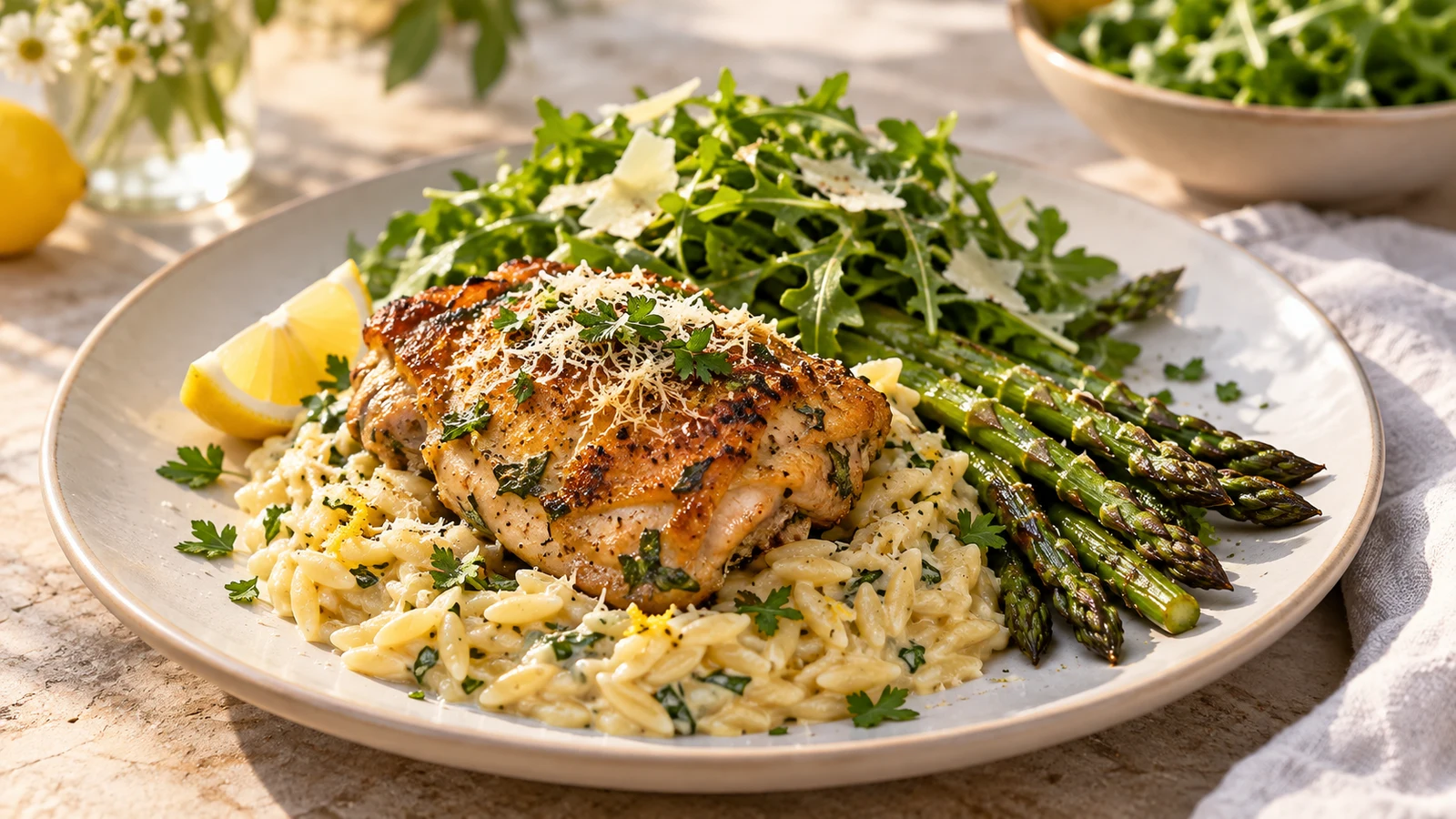
Serve the skillet dinner with roasted broccoli, green beans, asparagus, or a crisp cucumber salad. Their fresh or lightly charred flavors balance the creamy pasta. Warm crusty bread is useful for gathering the lemon-garlic sauce.
For a casual family meal, bring the skillet to the table and add lemon wedges, Parmesan, and parsley in small bowls. Guests can adjust the brightness and richness of their portions without altering the carefully seasoned base.
When serving chicken thighs and orzo for guests, start with a simple leafy salad dressed with olive oil and vinegar. A light starter keeps the menu balanced and allows the golden chicken to remain the centerpiece.
If you are planning a mixed chicken dinner, this overview of cooking chicken in an air fryer can help with an additional batch.
Make-Ahead Instructions
You can chop the onion, mince the garlic, grate the Parmesan, and measure the dry seasonings up to one day ahead. Refrigerate the onion, garlic, and cheese in separate covered containers. Keep the measured orzo and seasonings at room temperature.
The chicken can be seasoned several hours ahead and refrigerated in a covered container. Pat the skin dry again before browning because salt may draw moisture to the surface. Do not partially cook the chicken for later completion.
For the best texture, cook chicken thighs and orzo shortly before serving. Fully cooked orzo continues absorbing sauce as it sits, so assembling the entire dish far in advance produces softer pasta and less crisp chicken skin.
How to Store and Reheat
Cool leftovers promptly and refrigerate them in a shallow airtight container for up to 3 days. If practical, store the thighs above or separate from the pasta so the skin does not sit in the moist sauce.
Reheat individual portions in a covered skillet over low heat or in the microwave at 50 percent power. Add 1 to 2 tablespoons broth per serving and stir the orzo occasionally. Heat the chicken and pasta thoroughly without allowing the sauce to boil hard.
You can freeze the cooked dish for up to 2 months, although thawed orzo will be softer. Defrost it overnight in the refrigerator before reheating. Freeze individual portions in airtight containers so you only thaw what you need.
After refrigeration, chicken orzo will look much thicker because the pasta absorbs moisture. Adding a splash of broth restores creaminess more effectively than adding extra cream, which can make the reheated dish overly rich.
Frequently Asked Questions
Is orzo pasta or rice?
Orzo is wheat pasta shaped like large grains of rice. Unless you purchase a certified gluten-free variety, it contains gluten. It cooks directly in the skillet and releases starch that helps thicken the sauce.
Can I use boneless, skinless thighs?
Yes. Brown them briefly, then check them after about 15 minutes of covered cooking. Remove any thigh that reaches 165°F (74°C) while the orzo finishes.
Why is my orzo sticking to the skillet?
The heat may be too high, or the pasta may need stirring. Keep the liquid at a gentle simmer and scrape across the bottom twice during cooking. A heavy skillet also distributes heat more evenly.
Can I use chicken breast?
Yes, but cut large breasts into even cutlets and watch the temperature carefully. Breast meat is leaner and can become dry before the pasta is ready.
Can chicken thighs and orzo be made without cream?
Yes. Replace the 1/3 cup cream with the same amount of additional broth, then finish the dish with 1 tablespoon olive oil. Parmesan still adds body unless you also need a dairy-free meal.
Can I make lemon chicken orzo gluten-free?
Use certified gluten-free orzo and confirm that the broth and other packaged ingredients meet your needs. Gluten-free pasta may absorb liquid differently, so check it early and add warm broth only when necessary.
What makes marry me chicken orzo different?
Marry me chicken orzo usually includes sun-dried tomatoes, red-pepper flakes, cream, and Parmesan for a bold, savory sauce. This recipe can take on that flavor profile through the variation above without changing its essential one-pan technique.
Can I double this recipe?
A standard 12-inch skillet is too crowded for a double batch. Use two skillets and divide every ingredient evenly between them. Crowding prevents proper browning and changes the evaporation rate, making the orzo harder to cook consistently.
Should I rinse orzo before cooking?
No. Rinsing is unnecessary and removes some surface starch that helps the sauce become creamy. Add the dry pasta directly to the skillet and toast it in the rendered fat as instructed.
How do I keep the chicken skin crisp?
Begin with thoroughly dry skin, sear it without moving the thighs, and return the chicken skin-side up. Keep the tops above the liquid and avoid spooning sauce over them when serving.
Can I use a different pasta shape?
This liquid ratio and timing are designed for orzo. Larger pasta shapes cook and absorb liquid differently, so they are not a direct substitution. For predictable chicken and orzo recipes, use the pasta specified.
How do I know when chicken thighs and orzo are done?
The orzo should be tender but retain a slight bite, and the sauce should be loose enough to spoon. Every thigh must reach at least 165°F (74°C) at its thickest point without the thermometer touching bone.
Recipe Card
Summary: One-pan chicken thighs and orzo with crisp skin, tender pasta, spinach, Parmesan, and a creamy lemon-garlic sauce.
Yield: 4 servings. Prep: 15 minutes. Cook: 35 minutes. Total: 50 minutes.
Method: Season and brown 4 chicken thighs in 1 tablespoon olive oil. Sauté 1 chopped onion and 3 minced garlic cloves, toast 1 cup orzo, then add 2 1/4 cups broth, 1/3 cup cream, and lemon zest. Return the chicken, cover, and gently simmer until the orzo is tender and the chicken reaches at least 165°F (74°C). Finish with lemon juice, 1/3 cup Parmesan, 2 cups spinach, and parsley.
Estimated nutrition per serving: 640 calories, 38 g protein, 49 g carbohydrate, 32 g fat, 4 g fiber, and 780 mg sodium. Values vary with thigh size, broth, and dairy brands.
Notes: Keep extra warm broth available to correct dry pasta, drain excess chicken fat before adding the orzo, and allow the finished sauce to rest for 5 minutes before serving.
A Dependable One-Skillet Dinner
Chicken thighs and orzo balance crisp, savory chicken with creamy pasta and fresh lemon. Accurate liquid measurements, gentle heat, and a thermometer make the result dependable enough for a weeknight yet polished enough to share.
Once you understand the browning and simmering method, this dish also becomes an adaptable foundation for lemon chicken orzo, vegetable-packed versions, or marry me chicken orzo. Serve it after its short rest, with parsley and Parmesan, for the best contrast of textures and flavors.
Reviews
Reader reviews are managed separately (outside this build).