Cake
Perfect chocolate sheet cake recipe with luscious frosting
Try this chocolate sheet cake recipe for a moist, crowd-pleasing bake with rich warm frosting, tested timings, pan guidance, and easy storage tips.
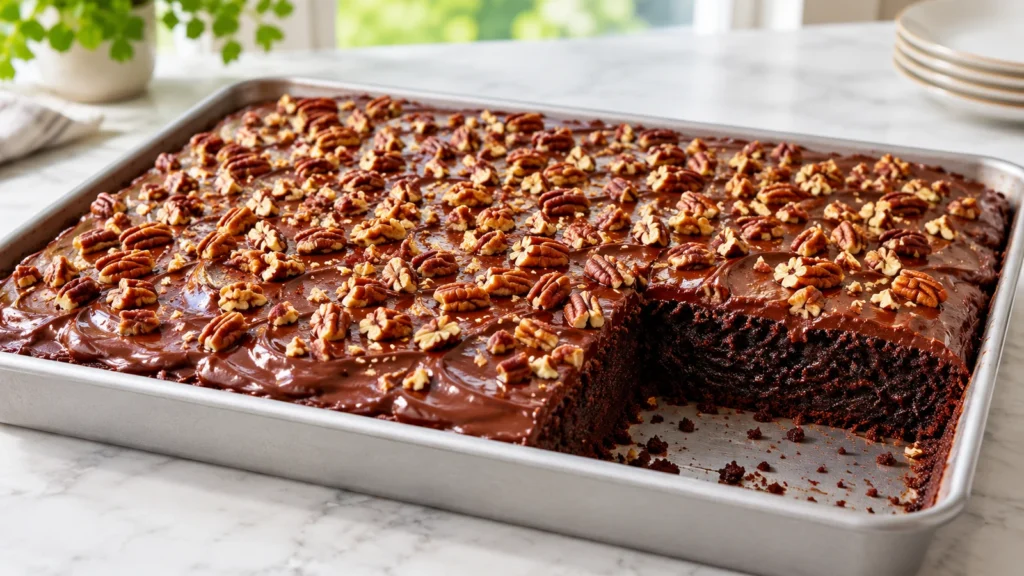
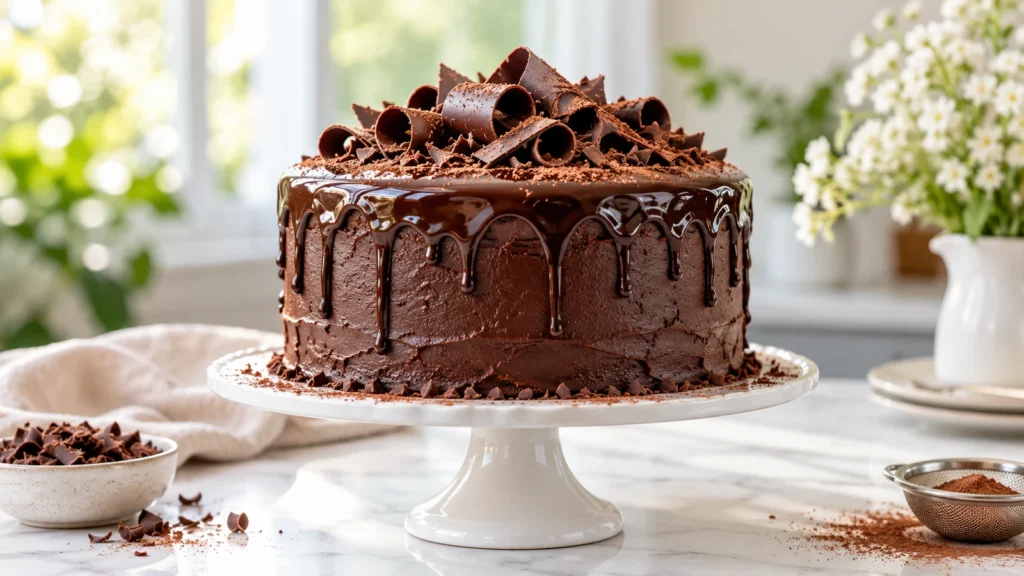
This chocolate sheet cake recipe makes a tender, deeply chocolatey cake with a thin layer of luscious frosting that settles into the warm surface. It is baked in a 13-by-18-inch pan, so it serves a crowd without requiring layers, piping, or complicated decorating.
Boiling the butter, cocoa, and water helps bloom the cocoa for fuller flavor. Warm chocolate frosting is then spread over the warm cake, creating a smooth finish and helping a little of the frosting soak into the crumb. The straightforward technique makes this chocolate sheet cake recipe a practical choice for birthdays, potlucks, school events, and casual family desserts.
Table of Contents
Why You’ll Love This Recipe
- Moist and tender: Buttermilk and butter give the cake a soft crumb.
- Quick to decorate: The pourable frosting replaces stacking and piping.
- Great for gatherings: One pan yields about 24 servings.
- Make-ahead friendly: The finished cake stores and freezes well.
- Easy to portion: The shallow rectangular cake can be cut into neat pieces of several sizes.
- Reliable chocolate flavor: Blooming the cocoa in hot liquid brings out its aroma without requiring melted chocolate.
Ingredients
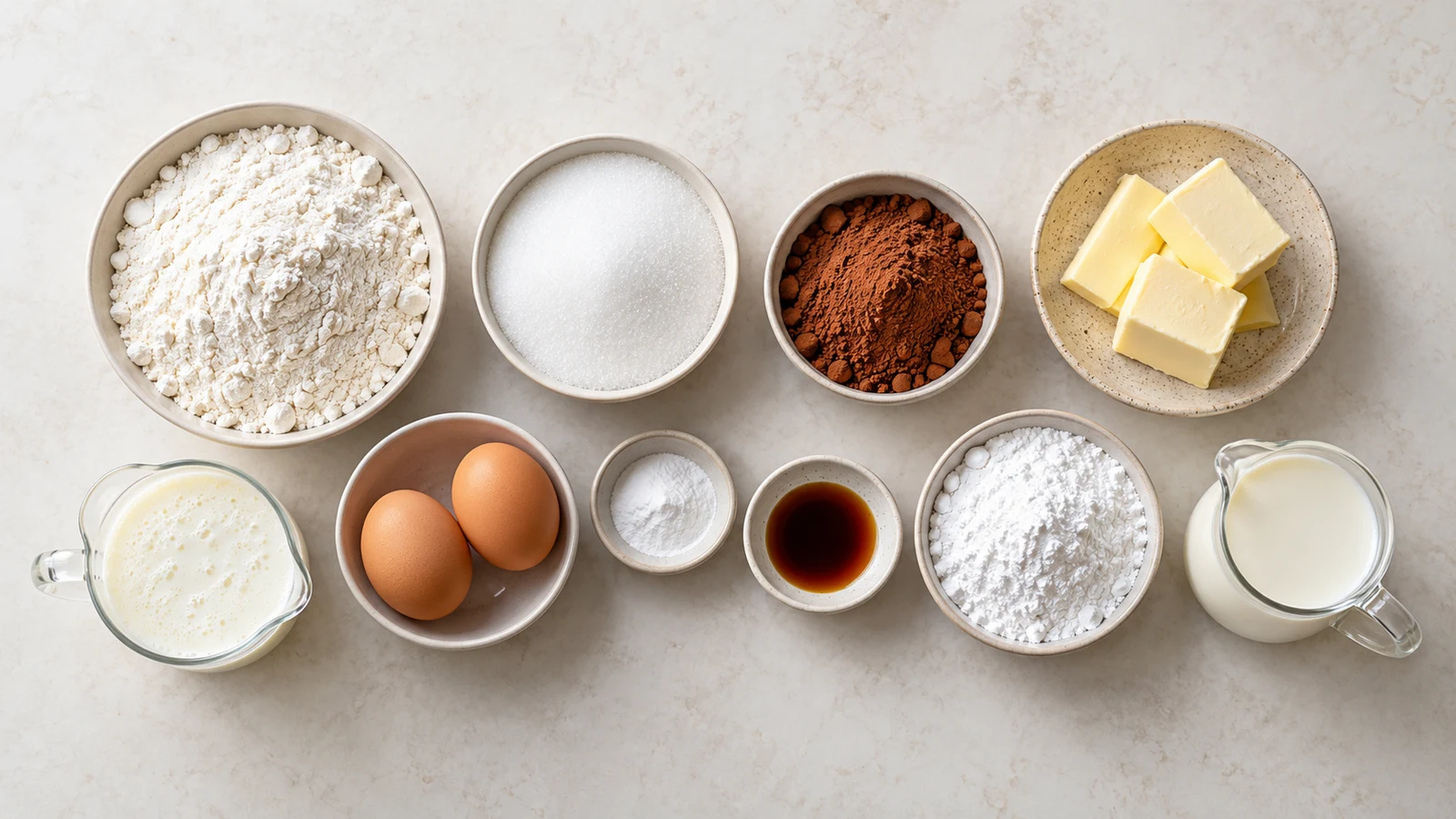
- 2 cups (240 g) all-purpose flour
- 2 cups (400 g) granulated sugar
- 1/2 teaspoon fine salt
- 1 cup (226 g) unsalted butter
- 1/3 cup (28 g) natural unsweetened cocoa powder
- 1 cup (240 ml) water
- 1/2 cup (120 ml) buttermilk
- 2 large eggs, at room temperature
- 1 teaspoon baking soda
- 2 teaspoons vanilla extract, divided
- For the frosting: 1/2 cup (113 g) unsalted butter, 1/4 cup (21 g) natural unsweetened cocoa powder, 6 tablespoons (90 ml) milk, and 4 cups (480 g) sifted powdered sugar
- Optional garnish: 3/4 cup chopped pecans or 1/2 cup chocolate shavings
Understanding the Key Ingredients
Natural cocoa works best because its acidity supports the baking soda. Dutch-process cocoa has a smoother flavor but is less acidic, so do not substitute it without adjusting the leavening. Cocoa comes from processed cacao beans; this concise overview of chocolate production explains how cocoa products are made.
Buttermilk contributes acidity, moisture, and a subtle tang that balances the sugar. Room-temperature eggs blend more smoothly into the batter, while unsalted butter lets you control the salt level. Sifting the powdered sugar is worthwhile because the frosting is applied quickly and leaves little time to work out stubborn lumps.
Vanilla does not make the cake taste less chocolatey. Instead, it rounds out the cocoa and butter flavors. Use fresh baking soda, because this thin cake depends on prompt, even leavening and has a short baking time.
Equipment and Pan-Size Guide
Use a rimmed 13-by-18-inch half-sheet pan that is at least 1 inch deep. A shallow cookie sheet can overflow. You will also need a saucepan, two mixing bowls, a whisk, and an offset spatula.
- 13-by-18-inch pan: Bake 18 to 22 minutes for a thin, classic sheet pan cake.
- 10-by-15-inch jelly-roll pan: Bake 22 to 26 minutes; do not use a pan shallower than 1 inch.
- 9-by-13-inch pan: Use only half the batter and bake 24 to 30 minutes, or divide the full batch between two pans.
To halve the recipe, use a 9-by-13-inch pan. To double it, prepare two separate 13-by-18-inch pans rather than placing all the batter in one deeper pan. Dark metal pans can brown the edges sooner than light-colored aluminum, so begin checking at the earliest stated time.
How to Make This Chocolate Sheet Cake Recipe
- Heat the oven to 350°F (175°C). Grease the sheet pan, line the bottom with parchment, and lightly grease the parchment.
- Whisk the flour, sugar, and salt in a large bowl until evenly combined.
- Place 1 cup butter, 1/3 cup cocoa, and the water in a saucepan. Bring just to a boil over medium heat, whisking frequently. Remove from the heat.
- Pour the hot cocoa mixture over the dry ingredients and whisk until no dry pockets remain.
- In a small bowl, whisk the buttermilk, eggs, baking soda, and 1 teaspoon vanilla. Stir this mixture into the batter just until smooth.
- Spread the batter evenly in the prepared pan. Bake for 18 to 22 minutes, rotating once if the oven heats unevenly.
- Set the pan on a rack while you immediately prepare the frosting. Keep the cake in its pan.
The batter may look looser than a layer-cake batter, which is expected. Once it reaches the pan, guide it into the corners with a spatula so the depth is even. An even layer is important because the cake is thin enough that high spots can overbake before deeper areas are ready.
How to Make and Apply Warm Chocolate Frosting
- Combine 1/2 cup butter, 1/4 cup cocoa, and the milk in a saucepan. Bring to a gentle simmer while whisking, then remove from the heat.
- Whisk in the sifted powdered sugar and remaining teaspoon of vanilla until glossy and smooth.
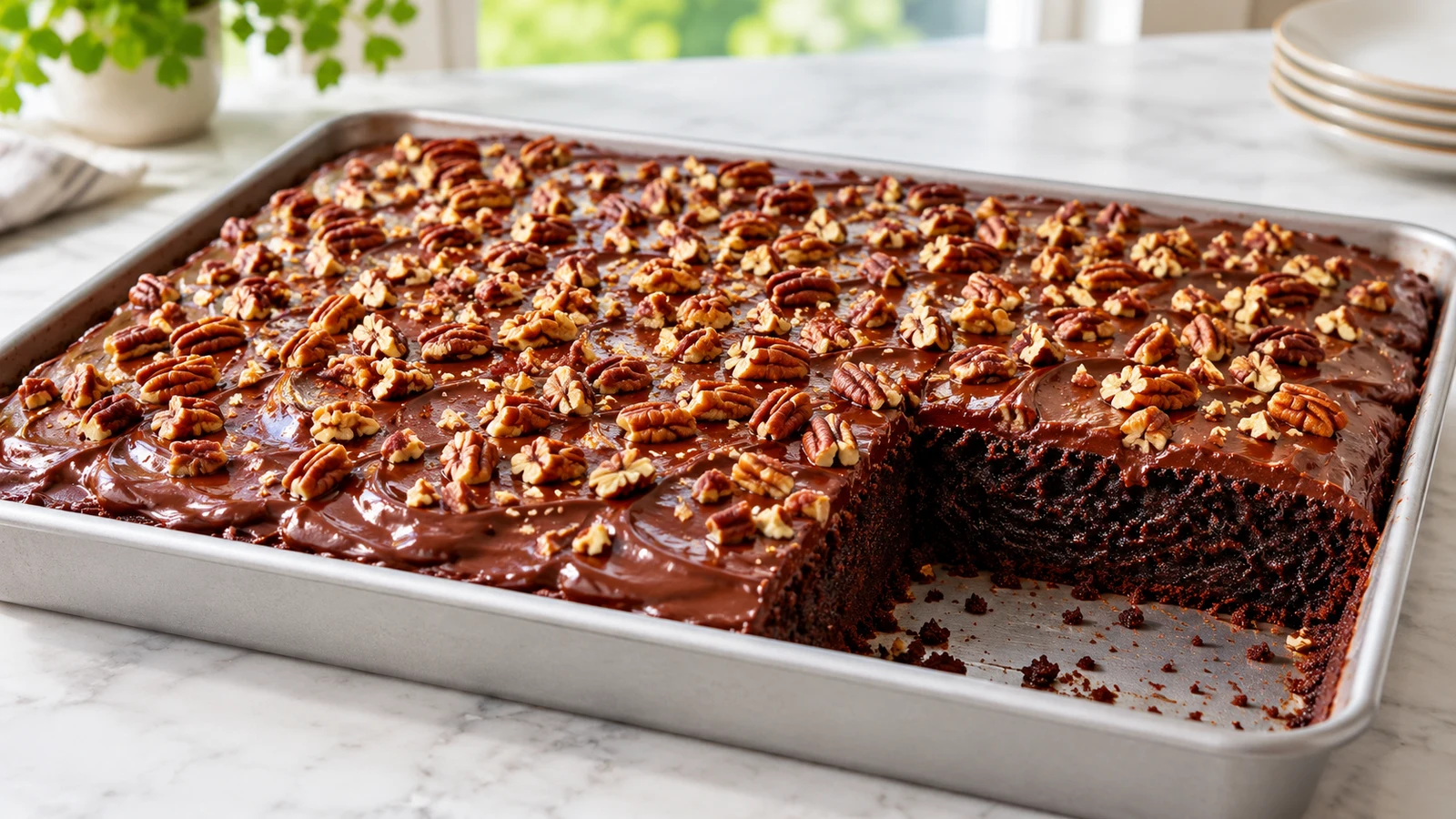
- Pour the frosting over the still-warm cake and spread it promptly to the edges. Add pecans or chocolate shavings before it sets.
The cake’s warmth keeps the frosting fluid long enough to form a thin, even layer. It also encourages slight absorption at the surface, joining the frosting and crumb without making the cake soggy. Have the powdered sugar sifted and the garnish ready before starting because the frosting firms quickly.
Pour the frosting across several areas instead of depositing all of it in the center. Use light strokes with the offset spatula and stop once the surface is covered. Repeated spreading as the frosting cools can dull its gloss or leave ridges.
Expert Tips for a Dependable Chocolate Sheet Cake Recipe
- Measure flour accurately: Weigh it or spoon it into the measuring cup and level it. Packed flour can produce a dry cake.
- Use the correct cocoa: Natural unsweetened cocoa provides the acidity expected by the baking soda.
- Bring the cocoa mixture just to a boil: It should be hot enough to bloom the cocoa, but it does not need prolonged cooking.
- Temper the cool ingredients naturally: Room-temperature eggs and buttermilk combine more readily and reduce the chance of uneven batter.
- Mix only until smooth: Stop as soon as the streaks disappear to avoid developing excess gluten.
- Spread the batter to a uniform depth: Pay particular attention to the corners, which can otherwise become thin and dry.
- Check early: The cake is done when the center springs back lightly, the edges barely pull from the pan, and a toothpick has a few moist crumbs but no wet batter.
- Prepare for frosting in advance: Sift the cocoa and powdered sugar if either looks clumpy, and measure everything before the cake leaves the oven.
- Frost promptly: Spread the frosting immediately because it firms as it cools.
- Cool before cutting: Waiting until the frosting sets gives cleaner slices and prevents the warm crumb from compressing.
How to Keep the Cake Moist
The most important safeguards are accurate flour measurement, minimal mixing, and avoiding excess baking time. Since the cake is shallow, a few additional minutes can noticeably change its texture. Cover leftovers as soon as the cake is completely cool so exposed cut edges do not dry out.
Variations and Substitutions
Nut-Free and Dairy-Free Options
For a nut-free cake, omit the pecans and use chocolate shavings. For a dairy-free version, use plant-based butter, unsweetened soy milk mixed with 1 1/2 teaspoons vinegar in place of buttermilk, and plant milk in the frosting. Check every packaged ingredient if the cake is intended for someone with an allergy.
German Chocolate-Inspired Topping
For a German-chocolate-style variation, cool the cake and top it with this german chocolate cake frosting recipe. It adds coconut and pecans but does not turn this sheet cake into traditional German chocolate cake.
The german chocolate cake frosting recipe should be applied after the sheet cake has cooled, rather than while it is warm. Its coconut-pecan texture is thicker than the pourable cocoa frosting and works best when spread gently across a stable crumb.
Simple Flavor Variations
- Pecan finish: Sprinkle the optional chopped pecans over the frosting before it sets for crunch in every serving.
- Chocolate-shaving finish: Use the optional chocolate shavings for a nut-free garnish and a more polished appearance.
- Berry serving variation: Keep the cake unchanged and add fresh strawberries or raspberries to individual plates.
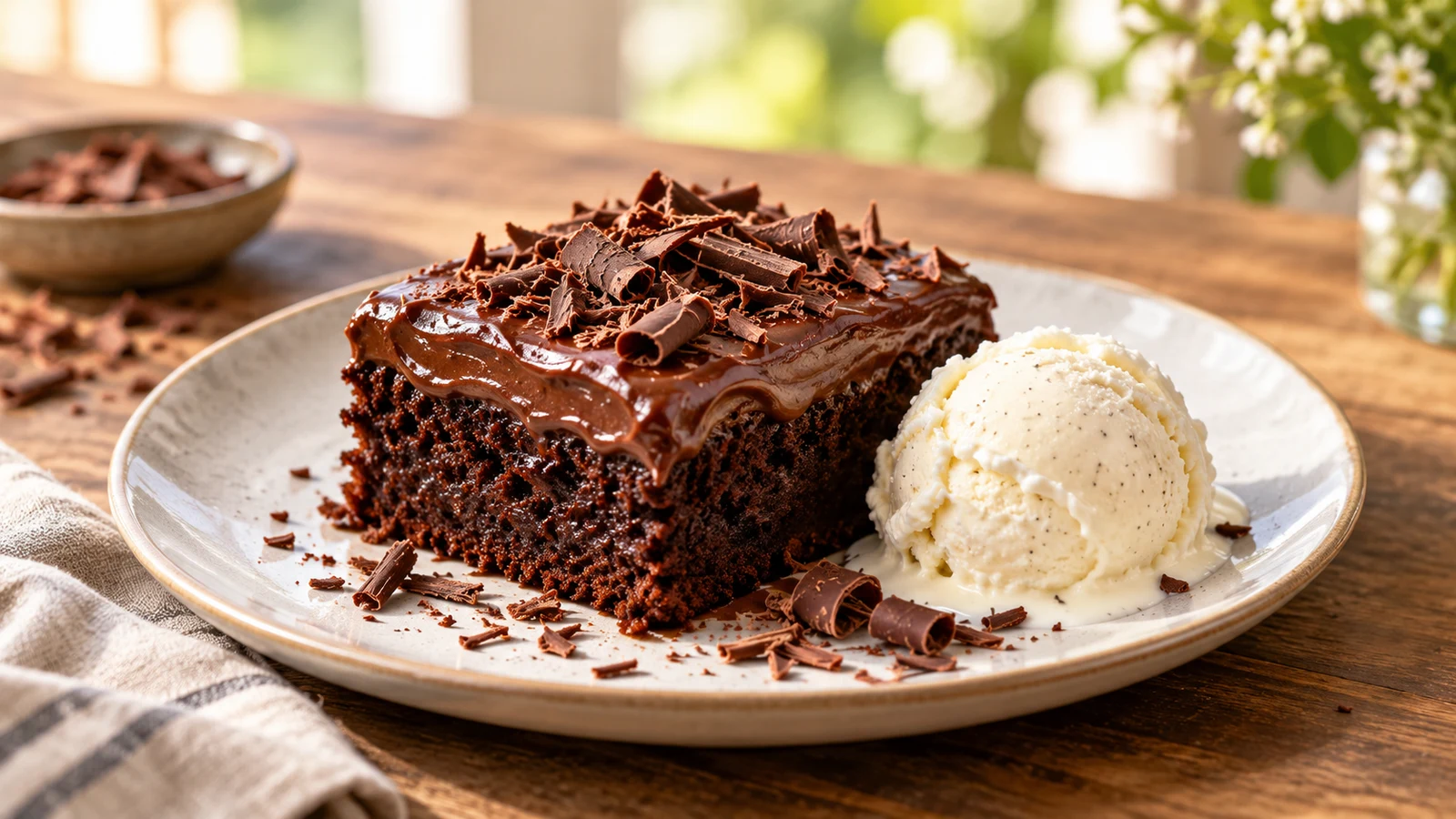
- Ice-cream dessert: Serve room-temperature or slightly warm pieces with vanilla ice cream so the temperature contrast softens the frosting.
These finishing ideas preserve the original cake formula. If you want coconut and pecans to define the dessert, the german chocolate cake frosting recipe is the clearest variation. If you prefer a molded cake or a tight butter-rich crumb, choose a purpose-built recipe instead of changing this batter.
Related Chocolate Cake Recipes
Sheet cake is defined by its broad, shallow pan. Texas sheet cake comparisons often reveal similar cocoa batter and warm frosting, although Texas versions are commonly especially thin and may include cinnamon or pecans.
A layered baker’s german chocolate cake recipe uses sweet baking chocolate and coconut-pecan filling. A chocolate bundt cake recipe is baked in a sculpted tube pan, while a chocolate pound cake recipe generally has a denser, butter-rich crumb. These are related desserts, not interchangeable formulas.
Sheet Cake Versus German Chocolate Cake
The baker’s german chocolate cake recipe is the better choice when you want distinct layers and the traditional combination of sweet chocolate cake with coconut-pecan filling. This sheet cake emphasizes speed, easy slicing, and warm cocoa frosting. Both serve celebrations well, but their batters, assembly methods, and finished textures differ.
You can borrow the topping idea from a german chocolate cake frosting recipe without changing the sheet cake batter. However, follow the baker’s german chocolate cake recipe when traditional flavor and layered presentation are the goal.
Sheet Cake Versus Bundt Cake
A chocolate bundt cake recipe needs a fluted tube pan and careful greasing around every detail. Its ring shape provides an attractive presentation without layer assembly, but releasing it cleanly requires patience. Sheet cake stays in its pan, making transport and serving simpler.
Do not pour this full sheet-cake batter into a Bundt pan and assume the same baking time. A chocolate bundt cake recipe is designed for a much deeper shape, with timing and structure suited to the pan. Choose that formula when defined ridges and a centerpiece appearance matter most.
Sheet Cake Versus Pound Cake
A chocolate pound cake recipe usually offers a close, fine crumb and a stronger emphasis on butter. It is commonly baked in a loaf or tube shape and cut into compact slices. The sheet cake is lighter, thinner, and designed for quick service to a larger group.
For afternoon coffee or small slices, a chocolate pound cake recipe may suit the occasion. For a party where guests need easy, evenly sized portions, this chocolate sheet cake recipe is usually more convenient.
Make-Ahead Instructions
You can bake and frost the cake one day before serving. Let it cool completely in the pan, then cover the pan tightly without pressing the covering into the frosting. Keep it at room temperature unless the kitchen is unusually warm.
For an event, measure the dry ingredients and sift the powdered sugar a day ahead. Store each mixture separately in an airtight container. Measure the remaining ingredients before baking, but keep the dairy products and eggs refrigerated until you are ready to bring them toward room temperature.
For the neatest presentation, wait to cut the cake until shortly before serving. If using chocolate shavings, add them while the frosting is still soft. Fresh berries and ice cream should be added to individual plates at serving time rather than stored on the cake.
How to Store, Freeze, and Reheat
Cover the pan tightly and store the cake at room temperature for up to 2 days or refrigerate it for up to 5 days. Refrigerate sooner if the room is unusually warm. General storage practices should follow current guidance about chocolate and its handling.
For freezing, chill the frosted cake until firm, cut it into portions, and wrap each piece tightly. Freeze for up to 3 months and thaw overnight in the refrigerator. Bring slices to room temperature before serving, or microwave each one for 8 to 10 seconds.
Freezing Individual Portions
Individual portions are easier to thaw and protect the rest of the cake from repeated temperature changes. Once the frosting is firm, wrap each piece closely so little air remains around the cut surfaces. Place the wrapped portions together in a suitable freezer container to help prevent crushing.
Serving After Refrigeration
Cold butter firms the crumb and frosting, so refrigerated slices may seem denser than freshly baked cake. Let them stand at room temperature before serving for a softer texture. If using the microwave, heat only one piece at a time for the stated 8 to 10 seconds.
Serving Ideas for Every Occasion
Serve the moist chocolate sheet cake plain, with vanilla ice cream, or alongside fresh strawberries and raspberries. Chocolate contains energy-dense ingredients, so modest portions are practical; this review of chocolate and health provides useful context.
- Birthday party: Cut 24 standard pieces and place them on a platter after the frosting has set.
- Potluck: Transport the cooled cake in its covered pan, then cut it at the destination.
- Dinner dessert: Plate each piece with raspberries or strawberries and a scoop of vanilla ice cream.
- Casual coffee break: Serve smaller pieces at room temperature so the cocoa flavor and soft crumb come through.
- Dessert buffet: Cut up to 30 smaller portions so guests can sample more than one sweet.
A thin knife produces tidy portions. Wipe the blade between cuts if frosting builds up. For 24 standard servings, cut six rows by four columns; for smaller party portions, plan up to 30 pieces.
Troubleshooting This Chocolate Sheet Cake Recipe
- Dry cake: Too much flour or excess baking time is usually responsible. Weigh the flour and begin checking at 18 minutes.
- Lumpy batter: Whisk the dry ingredients first and add the hot cocoa mixture gradually.
- Sunken center: Avoid opening the oven early, verify that the baking soda is fresh, and bake until the center springs back.
- Grainy frosting: Sift the powdered sugar and whisk it into the hot liquid in several additions.
- Frosting sets too quickly: Return it to low heat with 1 tablespoon milk and whisk just until fluid.
- Uneven thickness: Spread the batter carefully into every corner before baking and make sure the pan sits level.
- Tough texture: Overmixing after the flour is hydrated can build excess gluten. Stop once the batter is smooth.
- Overbrowned edges: Check the cake early, especially in a dark pan or an oven that runs hot.
- Frosting has dull streaks: It likely began setting while it was being spread. Work promptly and avoid repeated strokes.
Why Did the Cake Stick?
Greasing the pan, lining the bottom with parchment, and lightly greasing the parchment create dependable release. Still, the simplest way to serve this cake is directly from its pan. If you plan to lift portions, let the cake and frosting cool completely before cutting.
Why Is the Frosting Too Thick or Too Thin?
Frosting thickens as it cools, so judge its consistency while it is warm. If it sets before spreading, use the stated 1 tablespoon milk and low heat. Sifted sugar and accurate liquid measurements help prevent a grainy or overly loose result.
Frequently Asked Questions
Can I make the chocolate sheet cake recipe a day ahead?
Yes. Bake and frost it, let it cool completely, and cover the pan tightly. The flavor and texture remain excellent the next day. Leave the cake uncut until near serving time to reduce moisture loss from exposed edges.
Can I use Dutch-process cocoa?
Natural cocoa is recommended because the recipe relies on its acidity. A direct Dutch-process substitution may affect the rise and leave the center heavy. Use the specified natural unsweetened cocoa for the most predictable result.
How many people does it serve?
A 13-by-18-inch cake makes 24 standard servings or up to 30 smaller party portions. For uniform standard pieces, cut six rows by four columns.
Is this the same as Texas sheet cake?
It shares the thin shape and warm frosting method, but Texas sheet cake can have regional variations such as cinnamon, extra-thin batter, or pecans stirred directly into the frosting.
Can I prepare the frosting before the cake is baked?
It is better to measure and sift the ingredients in advance, then cook the frosting as soon as the cake comes out of the oven. The frosting needs to be warm and fluid when spread, while the warm cake helps it settle into a smooth layer.
Can I use a german chocolate cake frosting recipe instead?
Yes. Cool the cake completely, then apply the german chocolate cake frosting recipe. The coconut-pecan topping is thicker than this warm cocoa frosting, so it should not be poured over the hot cake.
Is a baker’s german chocolate cake recipe made with cocoa powder?
The linked baker’s german chocolate cake recipe uses sweet baking chocolate and is structured as a layered dessert. This sheet cake uses natural unsweetened cocoa and a warm pourable frosting, so the recipes should not be treated as direct substitutes.
Can I bake this batter using a chocolate bundt cake recipe method?
No. A chocolate bundt cake recipe is formulated for a deep, sculpted tube pan and requires its own preparation and baking guidance. Use the sheet pan specified here to preserve the stated baking time and texture.
Does a chocolate pound cake recipe have the same texture?
No. A chocolate pound cake recipe generally has a denser, tighter, butter-rich crumb. This cake is thinner and more tender, with a light structure suited to broad slices and warm frosting.
Should the cake be refrigerated?
It can remain tightly covered at room temperature for up to 2 days. Refrigerate it for storage up to 5 days or sooner if the room is unusually warm. Bring cold portions toward room temperature before serving for a softer crumb.
Can I leave off the optional garnish?
Yes. The chopped pecans and chocolate shavings are optional, and the cake is complete without either one. Omitting them does not change the baking or frosting instructions.
Printable Recipe Card
Yield: 24 servings. Prep time: 20 minutes. Baking time: 18 to 22 minutes. Temperature: 350°F (175°C).
Method: Whisk the dry ingredients. Boil the cake butter, cocoa, and water; combine with the dry mixture. Stir in buttermilk, eggs, baking soda, and vanilla. Bake in a greased 13-by-18-inch pan until the center springs back. Simmer the frosting butter, cocoa, and milk, whisk in powdered sugar and vanilla, and spread over the warm cake.
Estimated nutrition per serving: 390 calories, 17 g fat, 59 g carbohydrate, 3 g protein, and 180 mg sodium. Values vary with brands and optional toppings.
A Crowd-Friendly Chocolate Dessert
This chocolate sheet cake recipe delivers soft cocoa cake and glossy frosting in an approachable, crowd-friendly format. Its broad pan, short baking time, and pourable topping make it particularly useful when a layered baker’s german chocolate cake recipe or molded chocolate bundt cake recipe would require more assembly.
Serve it once the frosting has set, and keep a few portions frozen for an easy future dessert. When you want coconut-pecan richness, try the german chocolate cake frosting recipe; when you prefer a compact butter-rich crumb, choose a chocolate pound cake recipe. For easy slicing and generous party portions, this chocolate sheet cake recipe remains a dependable classic.
Reviews
Reader reviews are managed separately (outside this build).