Cake
Beloved Original baker’s german chocolate cake recipe
Bake a moist, light three-layer favorite with this baker's german chocolate cake recipe and signature coconut-pecan frosting. Get the recipe today.
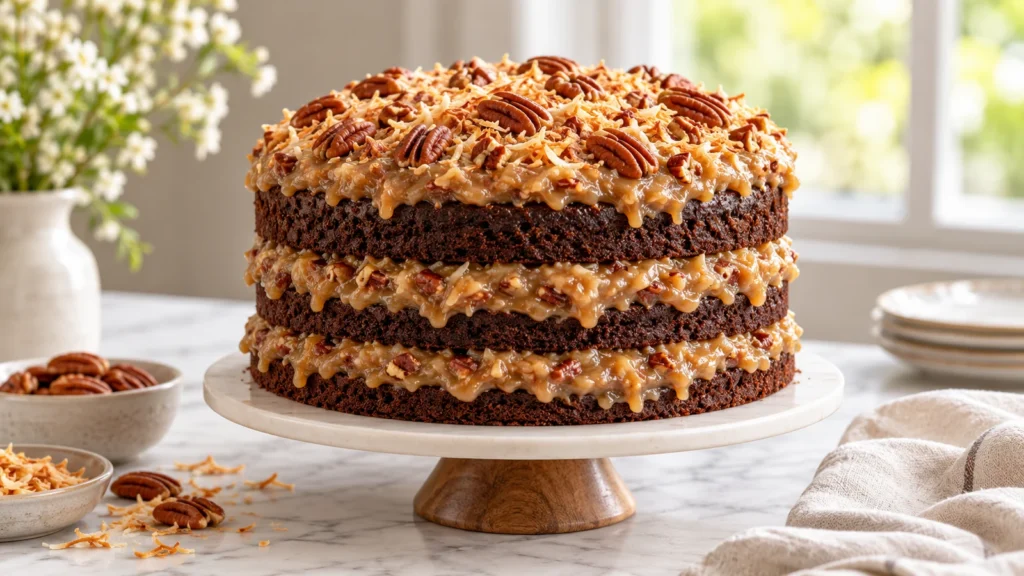
This baker’s german chocolate cake recipe creates three tender chocolate layers filled with rich coconut-pecan frosting. Separated eggs and buttermilk keep the crumb light, while German’s sweet chocolate gives the cake its traditional mild cocoa flavor. The result is an impressive celebration cake made with familiar baking techniques and practical visual cues.
Plan on 35 minutes of preparation, 30 minutes of baking, and at least 2 hours of cooling. The recipe makes one 9-inch three-layer cake, serving 12 to 16. Despite its name, the dessert is American: it was named for chocolate maker Samuel German, not the country of Germany, as explained in this history of German chocolate cake.
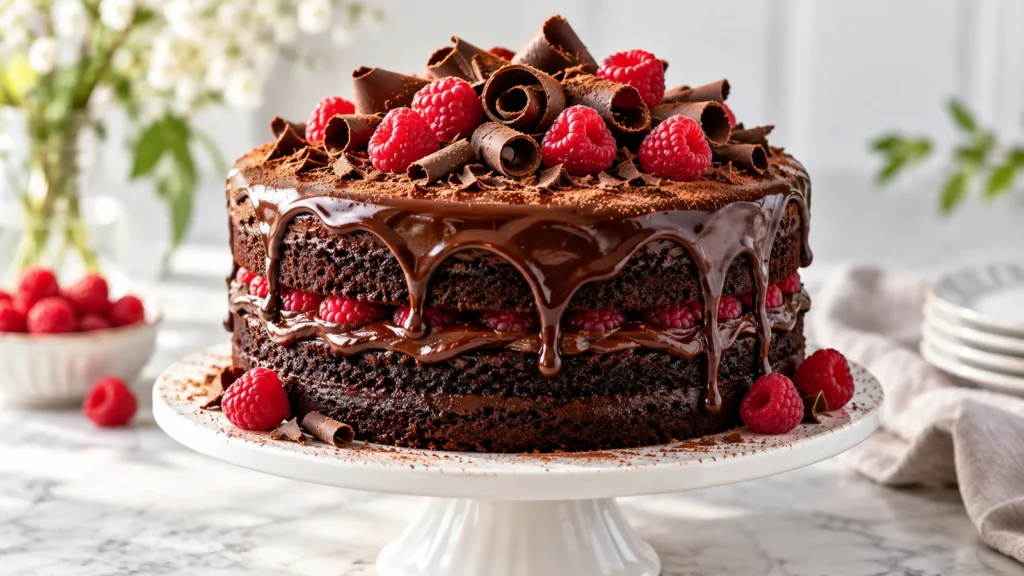
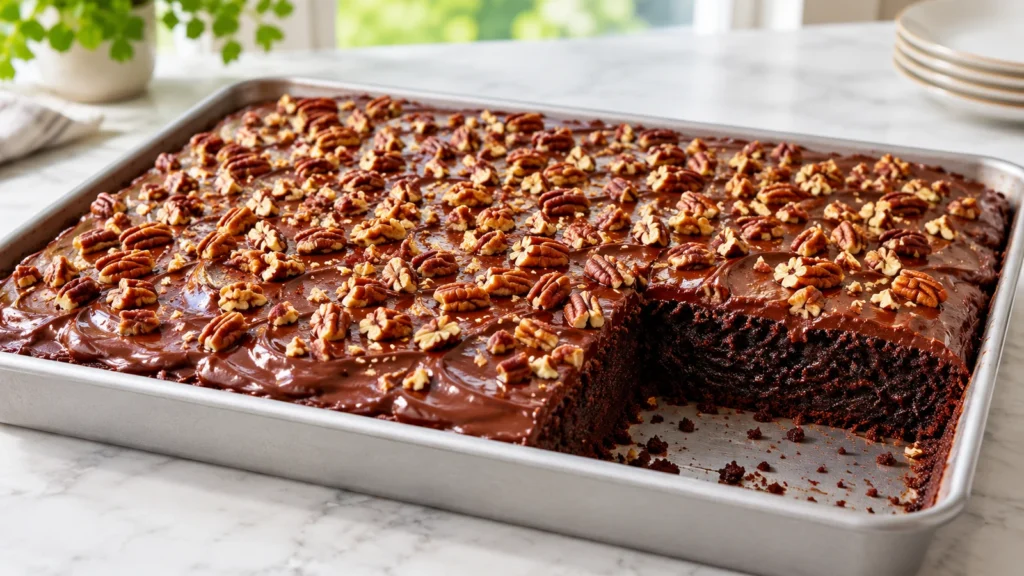
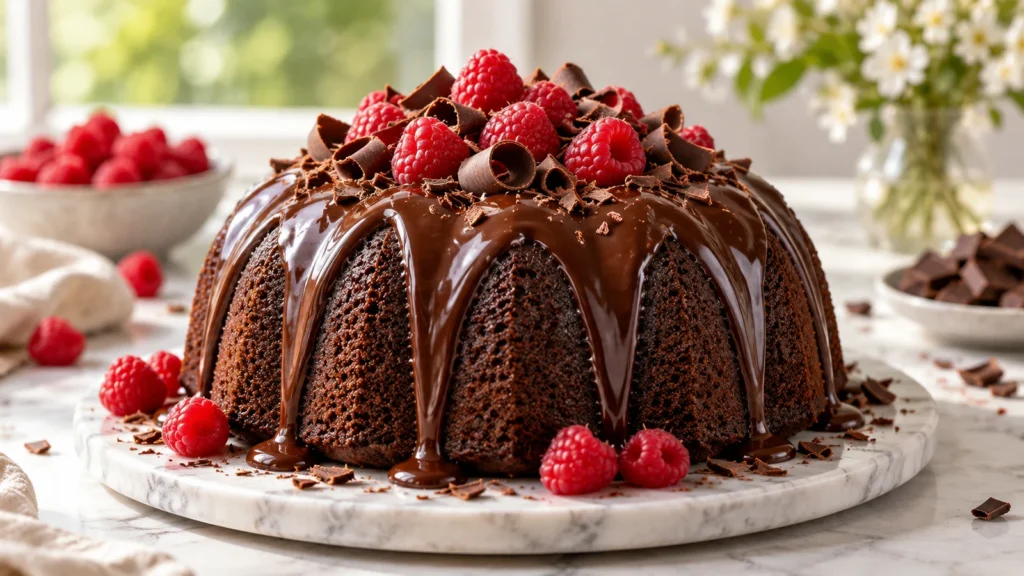
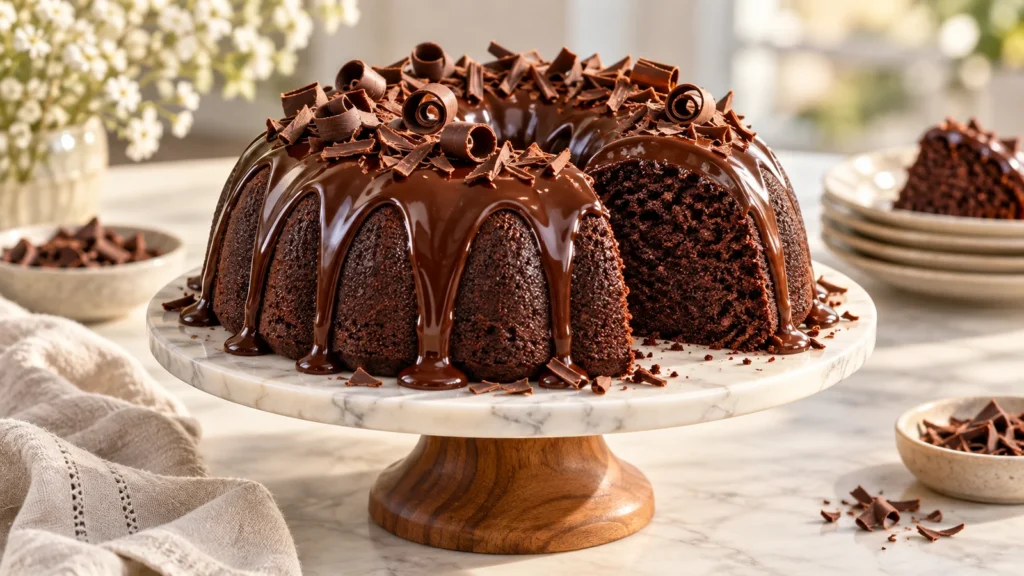
Unlike a chocolate bundt cake recipe or chocolate sheet cake recipe, this version uses three separately baked rounds. Those layers provide more room for the signature filling, so every slice includes tender cake, toasted pecans, and caramel-like coconut frosting.
Table of Contents
Why You’ll Love This Recipe
- Three moist, delicate layers with a balanced chocolate flavor.
- Homemade coconut-pecan filling requires no separate buttercream.
- Clear visual cues make the cake and frosting easier to judge.
- The components can be prepared ahead for stress-free assembly.
- The detailed baker’s german chocolate cake recipe explains temperatures, texture, cooling, and troubleshooting for more consistent results.
Ingredients
For the cake:
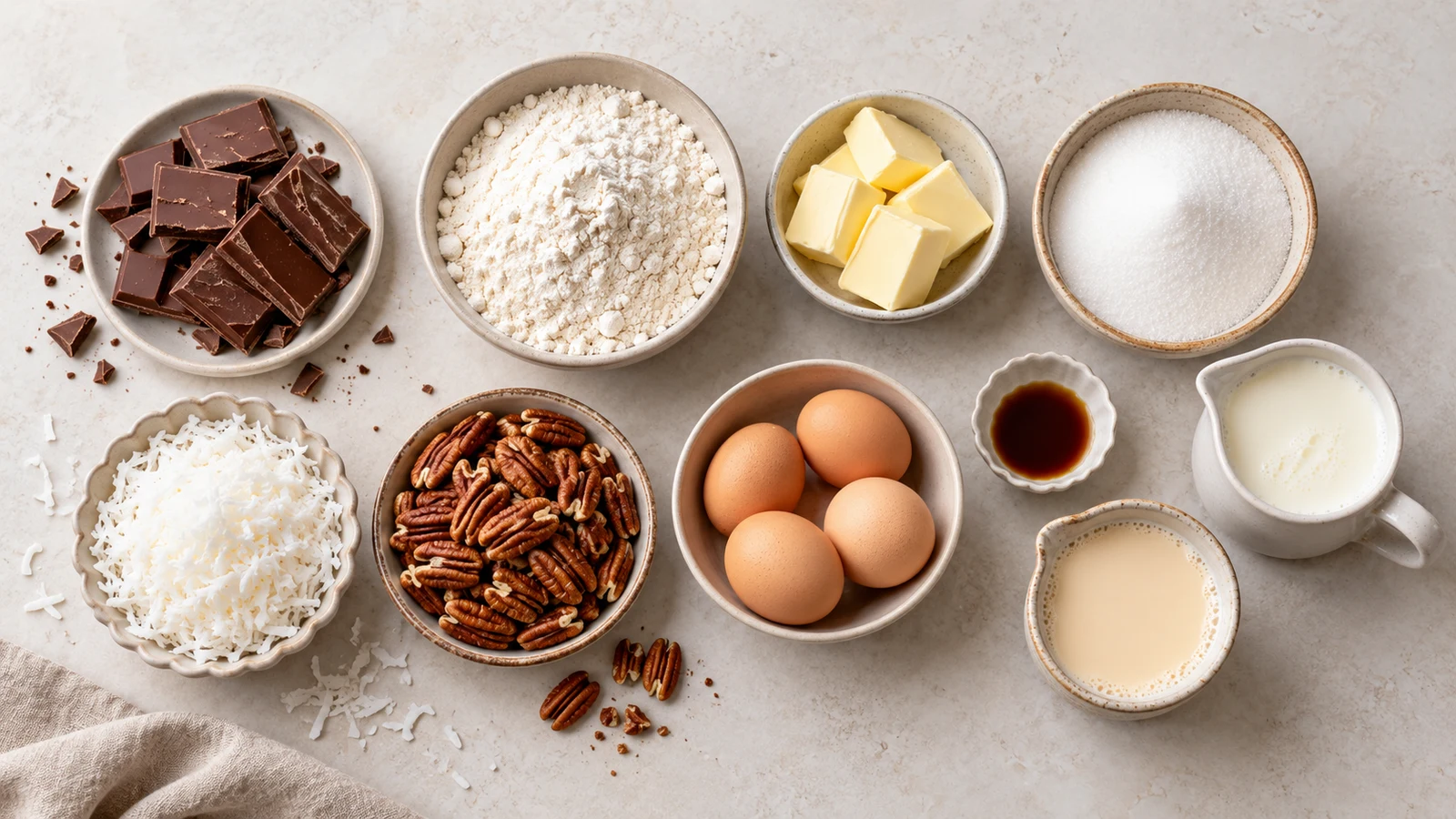
- 4 ounces (113 g) German’s sweet chocolate, chopped
- 1/2 cup (120 ml) boiling water
- 2 1/2 cups (300 g) cake flour
- 1 teaspoon baking soda
- 1/2 teaspoon fine salt
- 1 cup (227 g) unsalted butter, softened
- 2 cups (400 g) granulated sugar
- 4 large eggs, separated and at room temperature
- 1 teaspoon vanilla extract
- 1 cup (240 ml) buttermilk, at room temperature
For the frosting:
- 1 cup (240 ml) evaporated milk
- 1 cup (200 g) granulated sugar
- 3 large egg yolks
- 1/2 cup (113 g) unsalted butter, cubed
- 1 teaspoon vanilla extract
- 1 1/3 cups (115 g) sweetened shredded coconut
- 1 cup (110 g) pecans, toasted and chopped
Equipment: Three 9-inch round cake pans, parchment paper, mixer, mixing bowls, saucepan, whisk, rubber spatula, cooling racks, and an offset spatula.
What Makes the Ingredients Work
German’s sweet chocolate is milder and sweeter than unsweetened baking chocolate. Dissolving it in boiling water produces a smooth mixture that distributes evenly through the batter. Allowing it to cool before mixing protects the air incorporated during creaming.
Cake flour has less protein than all-purpose flour, helping this baker’s german chocolate cake recipe develop a fine, tender crumb. Buttermilk supplies moisture and acidity, while baking soda provides lift. The whipped egg whites add another source of aeration without changing the original ingredient quantities.
Evaporated milk gives the german chocolate cake frosting recipe richness without adding the extra water found in regular milk. Egg yolks thicken the mixture, butter provides body, and coconut and pecans create the characteristic chewy texture.
Pan Preparation and Ingredient Temperatures
Heat the oven to 350°F (175°C). Grease three 9-by-2-inch round pans, line the bottoms with parchment, grease the paper, and dust lightly with flour. This preparation helps delicate layers release cleanly.
Bring the butter, eggs, and buttermilk to room temperature for smoother mixing. Melt the chopped chocolate in the boiling water, stirring until glossy, then cool it to lukewarm, about 85°F to 90°F (29°C to 32°C). Hot chocolate can melt the creamed butter and weaken the batter’s structure.
Prepare every pan before beginning the batter. Once the whites are folded in, transfer the batter promptly so the trapped air is not lost. If the pans cannot fit on one oven rack without touching, arrange them with space for heat to circulate and rotate only near the end if necessary.
How to Make Baker’s German Chocolate Cake Recipe
- Mix the dry ingredients: Whisk the cake flour, baking soda, and salt together.
- Cream the butter and sugar: Beat for 3 to 4 minutes, until noticeably paler and fluffy. Beat in the egg yolks one at a time, followed by the vanilla and cooled chocolate.
- Finish the base: Add the flour mixture in three portions, alternating with the buttermilk in two portions. Mix only until each addition disappears.
- Whip the whites: In a clean, grease-free bowl, beat the egg whites to firm peaks. Separated eggs make a lighter crumb because the whipped whites trap air that expands in the oven.
- Fold carefully: Stir one-quarter of the whites into the batter to loosen it. Add the remainder and use a spatula to cut down through the center, sweep across the bottom, and lift the batter over the whites. Rotate the bowl and repeat just until no white streaks remain; vigorous stirring will deflate the foam.
- Bake: Divide the batter evenly among the pans and smooth the tops. Bake for 27 to 32 minutes. The layers are done when the tops spring back lightly, the edges begin pulling from the pans, and a toothpick shows a few moist crumbs rather than wet batter.
- Cool: Rest in the pans for 10 minutes, then turn onto racks, remove the parchment, and cool completely for about 90 minutes.
The method follows the familiar framework of Baker’s original-style German sweet chocolate cake, with added temperature and doneness guidance for dependable home baking.
German Chocolate Cake Frosting Recipe
Whisk the evaporated milk, sugar, and egg yolks in a heavy saucepan, then add the butter. Cook over medium heat for 10 to 14 minutes, stirring constantly and scraping the corners. It is ready when it turns golden, visibly thickens, coats the spatula, and leaves a trail across the pan bottom for a second or two.
Remove from the heat and stir in the vanilla, coconut, and toasted pecans. Transfer to a shallow bowl and cool completely, stirring occasionally. For more focused guidance, see this coconut-pecan German chocolate cake frosting recipe.
Do not judge the final consistency while the mixture is hot. This german chocolate cake frosting recipe becomes substantially thicker as the butter cools and the coconut absorbs moisture. A shallow bowl speeds cooling and makes it easier to stir the mixture evenly.
Cooling, Stacking, and Decorating
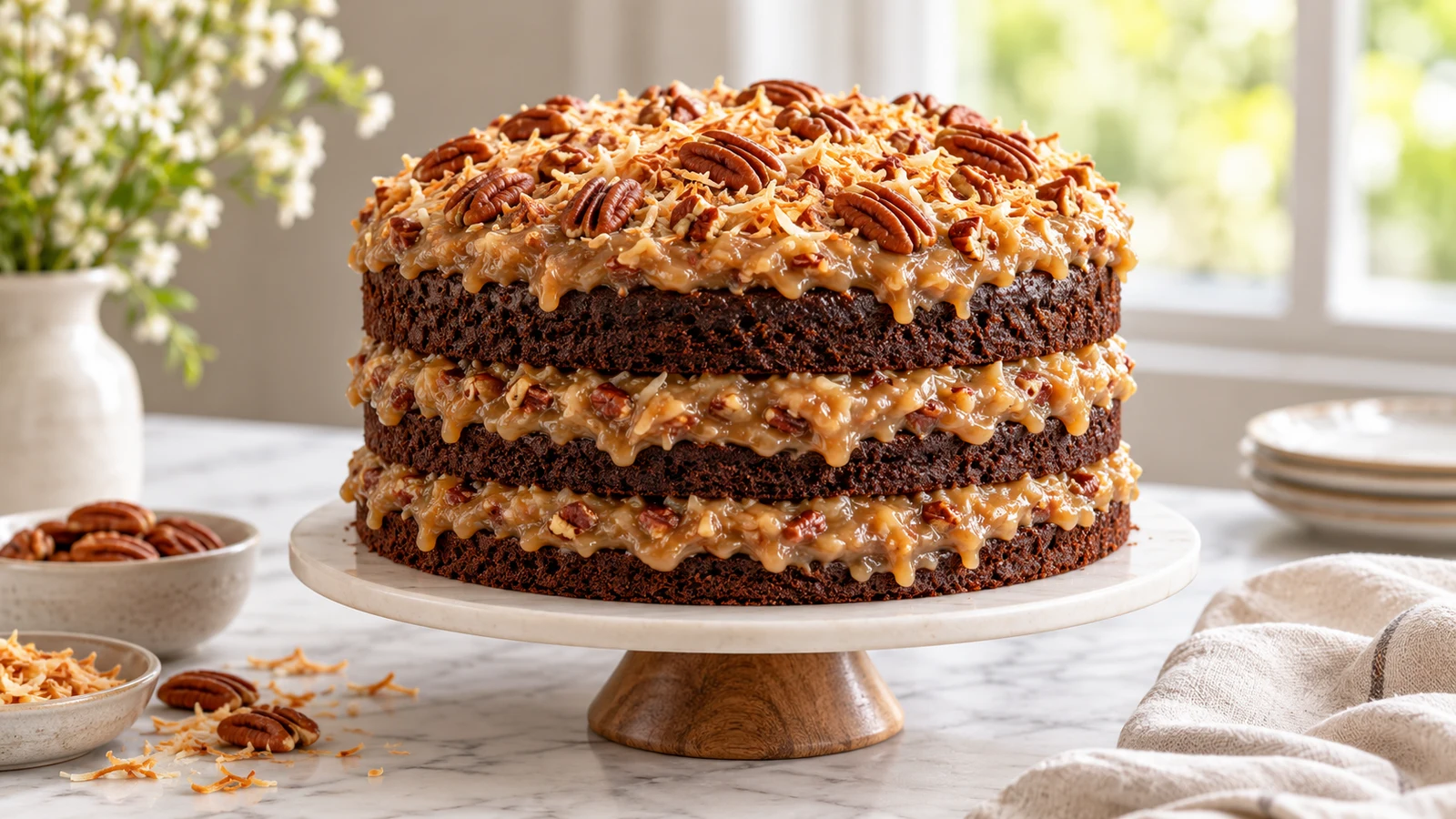
Do not assemble warm components. Place one cool layer on a plate and spread with about one-third of the frosting, stopping 1/4 inch from the edge. Repeat with the remaining layers, finishing the top with frosting; traditionally, the sides remain exposed.
Chill the assembled cake for 30 minutes before cutting. Use a long serrated knife, wipe it between cuts, and divide the cake into 12 generous or 16 smaller slices. A detailed classic preparation offers additional layer-cake assembly inspiration.
If a layer has a slightly domed top, place it dome-side down or carefully level it after it is fully cool. Set the first layer on a small dab of frosting so it does not shift. These simple steps help the baker’s german chocolate cake recipe stay straight without covering the sides.
Expert Tips for the Best Results
- Weigh the flour: Use 300 g when possible. Scooping directly from the bag can compact the flour and produce a dry cake.
- Cream thoroughly: Butter and sugar should look pale and increased in volume after 3 to 4 minutes. This aeration supports the cake’s delicate structure.
- Protect the egg-white foam: Make sure the bowl and beaters are completely free of grease, then stop when firm peaks hold their shape.
- Fold with restraint: A few deliberate turns are better than fast stirring. Finish by checking the bottom of the bowl for heavy batter.
- Toast the pecans: Toast at 350°F (175°C) for 6 to 8 minutes and cool before chopping. Warm nuts can loosen the frosting.
- Divide accurately: Weigh the filled pans so all three layers bake at the same rate and stack evenly.
- Leave the oven closed: Avoid opening it during the first 22 minutes, when the structure is still setting.
- Trust several doneness signs: Springy tops, slightly released edges, and moist crumbs are more reliable together than baking time alone.
Variations and Substitutions
Chocolate and Buttermilk Substitutions
Replace 4 ounces German’s sweet chocolate with 4 ounces semisweet chocolate plus 4 teaspoons granulated sugar. The finished cake will taste slightly darker, but the quantity of chocolate remains unchanged.
For a buttermilk substitute, put 1 tablespoon lemon juice or white vinegar in a measuring cup, add milk to reach 1 cup, and rest for 5 minutes. Use the full mixture in the batter.
Nut-Free Coconut Frosting
Omit the pecans and add another 3/4 cup coconut. Check every package for cross-contact warnings if allergies are a concern. The adapted german chocolate cake frosting recipe will be more coconut-forward and will lack the toasted crunch of pecans.
Chocolate Bundt Cake Recipe Variation
For a chocolate bundt cake recipe variation, bake the batter in a thoroughly greased and floured 12-cup Bundt pan for 45 to 55 minutes. Cool it before releasing it, then spoon the cooled frosting over the top. For more pan-release ideas, consult this carrot Bundt cake recipe.
A Bundt pan has many ridges where cake can stick, so coat every recess before adding the batter. This chocolate bundt cake recipe format offers attractive slices and simpler assembly while preserving the original ingredients.
Chocolate Pound Cake Recipe Variation
For a chocolate pound cake recipe variation, bake in two greased 9-by-5-inch loaf pans for about 45 to 55 minutes. Expect a softer, lighter texture than a true pound cake because the ingredients and mixing method remain those of the original layer cake.
Let each loaf cool for 10 minutes before turning it out. Serve the frosting on top rather than trying to split the tender loaves. This chocolate pound cake recipe adaptation is convenient for sharing or freezing in smaller portions.
Chocolate Sheet Cake Recipe Variation
For a chocolate sheet cake recipe variation, use a greased 13-by-9-inch pan and bake for 35 to 42 minutes. Cool the cake completely in the pan, then spread the frosting evenly over the top.
The chocolate sheet cake recipe option is especially useful for casual gatherings because it requires no stacking. Cut neat squares with a thin knife, cleaning the blade between cuts so the coconut topping stays defined.
Make-Ahead Plan
The baker’s german chocolate cake recipe is easier to manage when divided over two days. On the first day, bake and cool the layers. Wrap each layer tightly once fully cool and keep it at cool room temperature overnight, or refrigerate it if the kitchen is warm.
The frosting can also be prepared up to 3 days ahead and refrigerated in a covered container. Let it soften at room temperature before spreading. Stir gently to restore an even consistency, but do not warm it until runny.
For a special event, assemble the cake several hours before serving and refrigerate it. Remove it about 30 minutes before slicing so the cake and frosting lose their chill. The flavor and texture are best when the finished cake is cool rather than refrigerator-cold.
Serving Ideas
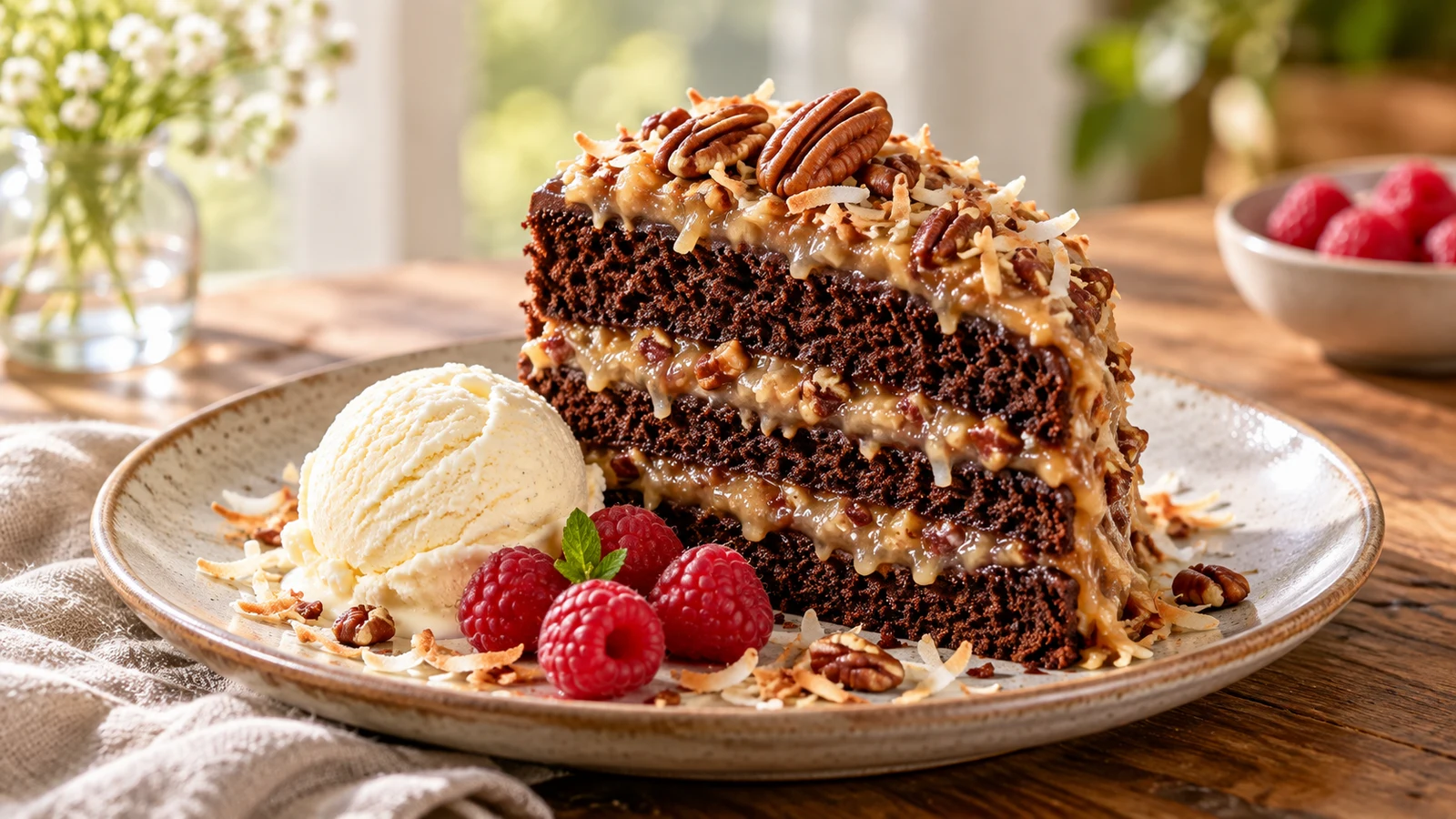
Serve at cool room temperature with coffee, cold milk, or unsweetened tea. Lightly whipped cream adds a soft contrast without making the dessert excessively sweet. Fresh raspberries or strawberries bring color and tartness to the plate.
For clean presentation, place each slice on its side so the three layers remain visible. A small spoonful of extra toasted pecans or coconut can reinforce the cake’s flavors. Coconut lovers may also enjoy this coconut and carrot cake.
Because this cake is rich, 16 slices are suitable after a large meal, while 12 slices make generous dessert portions. If comparing formats for a party, a chocolate sheet cake recipe is simplest to portion, while the layered version makes the strongest centerpiece.
How to Store and Freeze
Keep the covered cake at cool room temperature for up to 1 day or refrigerate it for up to 5 days. Let chilled slices stand for 30 minutes before serving; reheating is unnecessary and may melt the frosting.
The unfrosted layers can be wrapped tightly and frozen for up to 2 months. Place parchment between layers if they must share a container, and protect them from strong freezer odors.
Freeze frosted slices until firm, wrap individually, and store for up to 1 month. Thaw overnight in the refrigerator, then bring to room temperature. Slow thawing helps protect the coconut-pecan topping from excess condensation.
Troubleshooting Baker’s German Chocolate Cake Recipe
Why Is the Cake Dry?
Too much flour, prolonged mixing, or overbaking can dry the crumb. Measure flour accurately, stop mixing as soon as additions disappear, and remove the layers when a toothpick still carries a few moist crumbs.
Why Did the Centers Sink?
Check that the baking soda is fresh, whip the whites to firm peaks, and fold gently. Keep the oven closed during the early baking period and confirm that the centers are set before removing the pans.
Why Is the Frosting Runny?
Return it to medium-low heat and stir until it coats the spatula and leaves a clear trail across the pan. The german chocolate cake frosting recipe also thickens during cooling, so let it reach room temperature before deciding whether it needs more cooking.
Why Is the Frosting Grainy?
Use medium heat and stir constantly so the egg yolks thicken gradually. Scrape the bottom and corners of the pan, where hot spots can form. Begin with the yolks fully whisked into the milk and sugar.
Why Are the Layers Sliding?
Warm cake or frosting is usually responsible. Cool both completely, use a modest amount between layers, and chill the assembled cake for 30 minutes. Avoid pressing down on the upper layers, which can force the filling outward.
Why Did a Layer Stick to the Pan?
Grease the pans, line the bottoms with parchment, grease the paper, and dust lightly with flour. Let the cakes rest for 10 minutes, then loosen the edges gently before turning them onto racks.
Nutrition and Allergen Notes
One of 16 slices contains approximately 560 calories, though brands and serving sizes affect the estimate. This cake contains wheat, eggs, milk, coconut, and tree nuts. For nut-free preparation, follow the pecan substitution above and verify that all ingredients were processed safely for your needs.
Frequently Asked Questions
Is German chocolate cake from Germany?
No. The cake is American and takes its name from Samuel German, who developed a sweet baking chocolate.
Why does this baker’s german chocolate cake recipe separate the eggs?
Whipping the whites builds a foam that adds air to the batter. Gentle folding preserves those bubbles, producing a more delicate crumb than simply mixing whole eggs into the batter.
Can I make the baker’s german chocolate cake recipe in advance?
Yes. Bake and wrap the cooled layers one day ahead, and prepare the frosting up to 3 days ahead. Bring the frosting to room temperature before assembly, then refrigerate the completed cake until about 30 minutes before serving.
Can I frost the sides?
Yes. Make one-and-a-half batches of frosting for full coverage, or apply chocolate buttercream to the sides while keeping coconut-pecan frosting between the layers and on top.
How do I know the frosting is cool enough?
It should be room temperature, thick enough to mound on a spoon, and no longer warm underneath the bowl. Warm frosting can soften the cake and cause layers to slide.
Can I use this german chocolate cake frosting recipe on other cakes?
Yes. Once fully cooled, it can top cupcakes, loaf cakes, a chocolate bundt cake recipe adaptation, or a chocolate sheet cake recipe. Its thick texture works best on flat surfaces or between stable, completely cooled layers.
Is the chocolate pound cake recipe variation a true pound cake?
No. It uses loaf pans for convenience, but it retains the lightened batter and proportions of this cake. A traditional chocolate pound cake recipe generally has a denser crumb and a different ingredient balance.
Can I bake fewer than three layers?
The listed baking instructions are designed for three 9-inch pans. Using another format changes the depth and baking time, so follow the tested Bundt, loaf, or sheet-pan ranges above and rely on the stated doneness cues.
Should German chocolate cake be served cold?
It is best at cool room temperature. Refrigeration keeps the egg-based frosting safe during longer storage, but allowing each slice to stand for 30 minutes improves the crumb and softens the frosting.
Printable Recipe Card
Yield: One three-layer 9-inch cake; 12 to 16 servings. Prep: 35 minutes. Bake: 27 to 32 minutes. Cooling and assembly: About 2 hours 30 minutes. Oven: 350°F (175°C).
Method: Prepare three lined 9-inch pans. Melt 4 ounces German’s sweet chocolate in 1/2 cup boiling water and cool to lukewarm. Whisk 2 1/2 cups cake flour, 1 teaspoon baking soda, and 1/2 teaspoon salt. Cream 1 cup butter with 2 cups sugar; beat in 4 yolks, 1 teaspoon vanilla, and the chocolate. Alternate the dry mixture with 1 cup buttermilk. Whip 4 egg whites to firm peaks and fold them in gently. Divide among pans and bake for 27 to 32 minutes, until a toothpick has moist crumbs. Cool 10 minutes in the pans, then cool completely on racks.
Frosting and assembly: Cook 1 cup evaporated milk, 1 cup sugar, 3 yolks, and 1/2 cup butter over medium heat, stirring for 10 to 14 minutes until golden and thick. Stir in 1 teaspoon vanilla, 1 1/3 cups coconut, and 1 cup toasted pecans. Cool completely, spread between the three layers and over the top, then chill 30 minutes before slicing.
Final Baking Notes
With patient cooling and gentle folding, this baker’s german chocolate cake recipe rewards you with a light chocolate crumb, distinct layers, and a deeply satisfying coconut-pecan finish. Watch the batter and frosting for their visual cues instead of relying only on the clock.
Whether you prepare the classic layers or adapt the batter as a chocolate bundt cake recipe, chocolate pound cake recipe, or chocolate sheet cake recipe, accurate measuring and complete cooling remain essential. Follow those principles, and the cake will be easier to bake, assemble, slice, and share.
Reviews
Reader reviews are managed separately (outside this build).