Cake
Ultimate Moist coconut and carrot cake recipe
Try this coconut and carrot cake recipe for a moist, warmly spiced cake with shredded coconut, pecans, and rich cream cheese frosting in each bite.
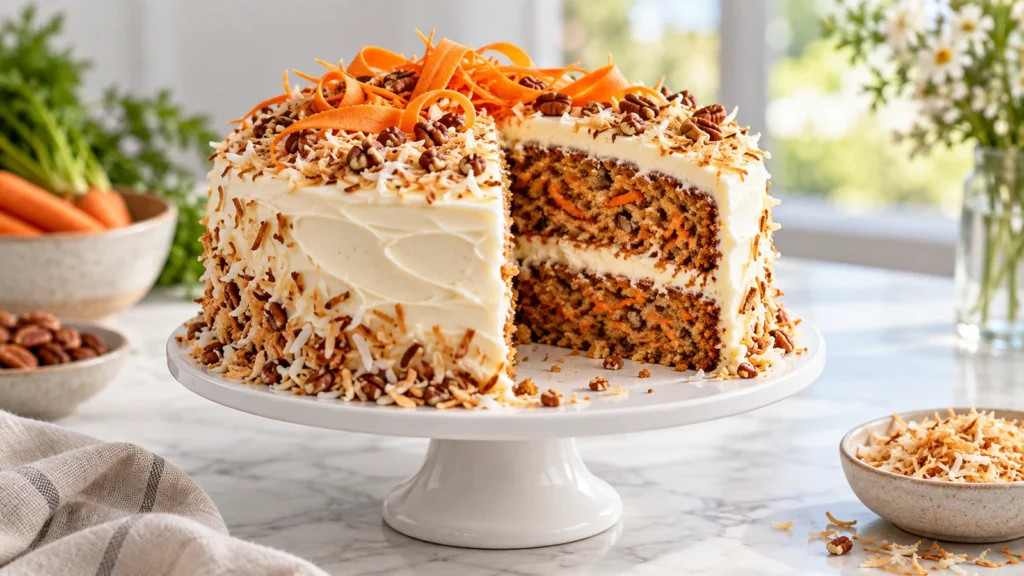
This coconut and carrot cake recipe delivers tender, warmly spiced layers packed with freshly grated carrots and coconut. Oil keeps the crumb moist, while a tangy cream cheese frosting balances the cake’s sweetness. The combination feels familiar enough for a family gathering yet special enough for birthdays, Easter, or any celebration.
It is an approachable celebration cake with dependable measurements, clear doneness cues, and flexible pan options. Allow about 30 minutes for preparation, 30 to 35 minutes for baking, and 1 hour for cooling; the recipe makes one two-layer 9-inch cake serving 12 and is moderately easy.
Unlike a carrot bundt cake recipe, this layered version provides plenty of space for creamy filling and decorative garnishes. It also offers a simpler alternative to a carrot cake cheesecake recipe while retaining the rich, festive character home bakers love.
Table of Contents
Why You’ll Love This Coconut and Carrot Cake Recipe
- Moist, flavorful crumb: Carrots, oil, brown sugar, and coconut provide lasting moisture.
- Simple mixing method: No stand mixer is needed for the cake batter.
- Flexible format: Bake it as layers, cupcakes, or a Bundt cake.
- Balanced flavor: Cinnamon, ginger, and nutmeg complement the carrots without overpowering the coconut.
- Make-ahead friendly: The layers freeze well before assembly.
This is also a practical carrot cake recipe with cream cheese frosting because the oil-based layers stay soft after refrigeration. The cool tang of the frosting offsets the sweet coconut and brown sugar, so each slice tastes balanced rather than heavy.
Ingredients
- 2 cups (240 g) all-purpose flour, spooned and leveled
- 2 teaspoons baking powder
- 1 teaspoon baking soda
- 2 teaspoons ground cinnamon
- 1/2 teaspoon ground ginger
- 1/4 teaspoon ground nutmeg
- 3/4 teaspoon fine salt
- 3/4 cup (150 g) granulated sugar
- 3/4 cup packed (160 g) light brown sugar
- 4 large eggs, at room temperature
- 1 cup (240 ml) neutral vegetable or canola oil
- 2 teaspoons vanilla extract
- 3 cups (300 g) peeled, finely grated carrots
- 1 cup (85 g) sweetened shredded coconut
- Optional: 3/4 cup (85 g) chopped toasted pecans or walnuts
- Optional: 1/2 cup (120 g) well-drained crushed pineapple
- 16 ounces (454 g) full-fat block cream cheese, softened but cool
- 1/2 cup (113 g) unsalted butter, softened
- 4 cups (480 g) confectioners’ sugar, sifted
- 1 teaspoon vanilla extract for the frosting
- Pinch of salt
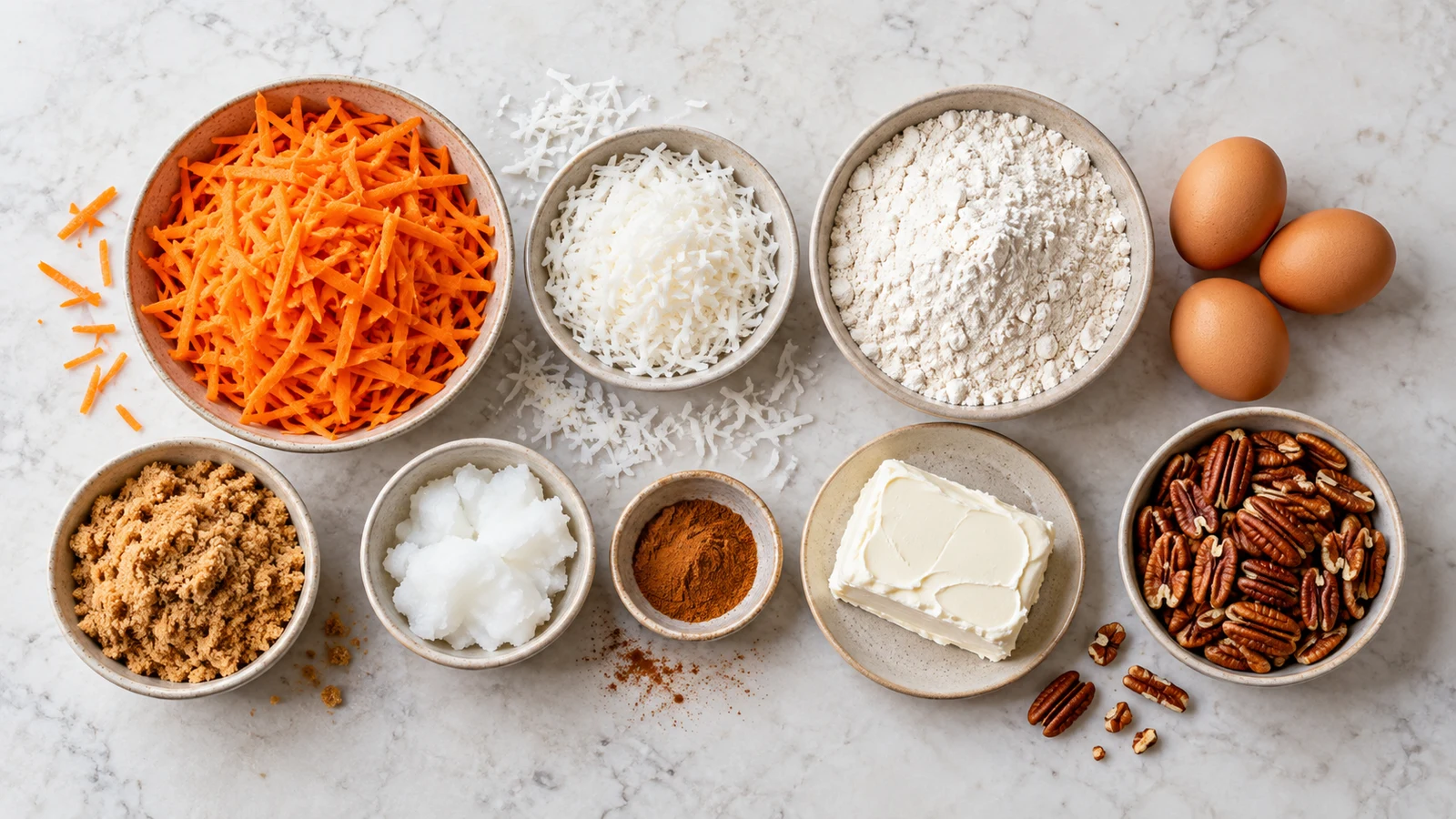
Sweetened coconut produces a softer, sweeter result; unsweetened coconut gives a subtler flavor and slightly drier crumb. If using unsweetened coconut, add 1 tablespoon of milk to the batter. Finely grate carrots on the small holes of a box grater, but do not squeeze out their moisture.
Why These Ingredients Work
Oil remains liquid when cool, helping the layers stay tender after the finished cake is refrigerated. Brown sugar adds moisture and a gentle caramel note, while granulated sugar supports a lighter crumb. Eggs bind the batter and provide structure for the generous amount of carrot and coconut.
Baking powder and baking soda work together to lift this substantial batter. The salt sharpens the spices, and vanilla rounds out their flavor. Full-fat block cream cheese is important because whipped or spreadable products contain more water and can make the frosting too loose.
Equipment
- Two 9-inch (23 cm) round cake pans
- Parchment paper and nonstick spray
- Large and medium mixing bowls
- Whisk, flexible spatula, and box grater
- Electric hand or stand mixer for frosting
- Wire cooling rack and offset spatula
How to Make This Coconut and Carrot Cake Recipe
- Prepare the oven and pans. Heat the oven to 350°F (175°C). Grease two 9-inch round pans, line their bottoms with parchment, and lightly grease the paper.
- Combine the dry ingredients. Whisk the flour, baking powder, baking soda, cinnamon, ginger, nutmeg, and salt in a medium bowl until evenly distributed.
- Mix the wet ingredients. In a large bowl, whisk both sugars with the eggs, oil, and vanilla until smooth and slightly thickened, about 1 minute. Room-temperature eggs combine more evenly and help prevent a heavy texture.
- Finish the batter. Fold the dry mixture into the wet mixture just until a few flour streaks remain. Fold in the carrots, coconut, and optional nuts or drained pineapple. Avoid vigorous mixing.
- Bake. Divide the batter evenly between the pans. Bake for 30 to 35 minutes, rotating once if your oven heats unevenly. The tops should spring back lightly, the edges should begin pulling from the pans, and a tester should emerge with a few moist crumbs rather than wet batter.
- Cool. Rest the cakes in their pans for 15 minutes, then turn them onto a rack, remove the parchment, and cool completely before frosting.
Make the Cream Cheese Frosting
Beat the softened butter for 2 minutes until creamy. Add the cool cream cheese and beat only until smooth, then mix in the vanilla, salt, and confectioners’ sugar on low speed. Overbeating warms cream cheese and can make frosting loose; chill it for 20 to 30 minutes if needed. For more guidance, see this carrot cake recipe with cream cheese frosting.
Assemble and Garnish
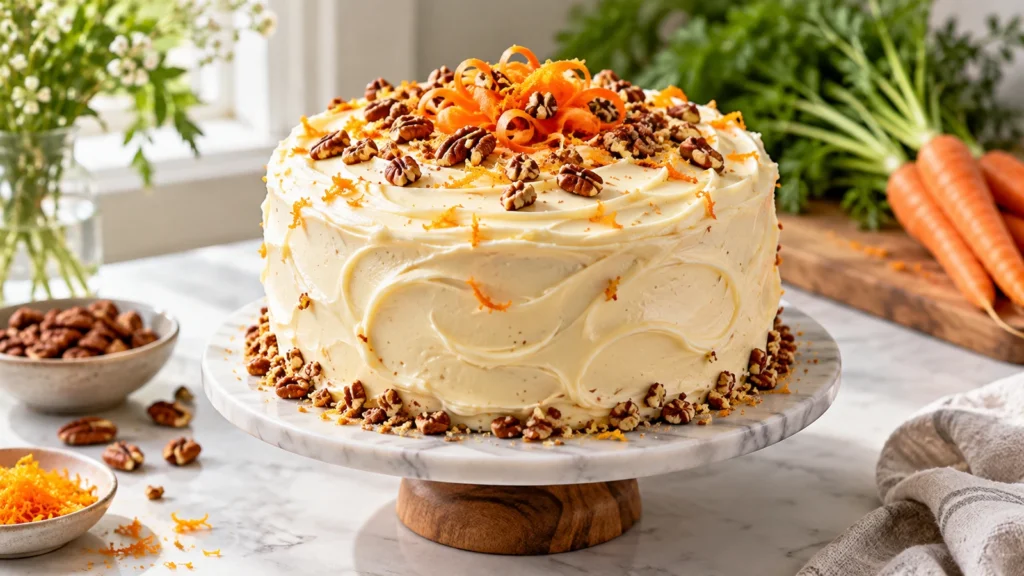
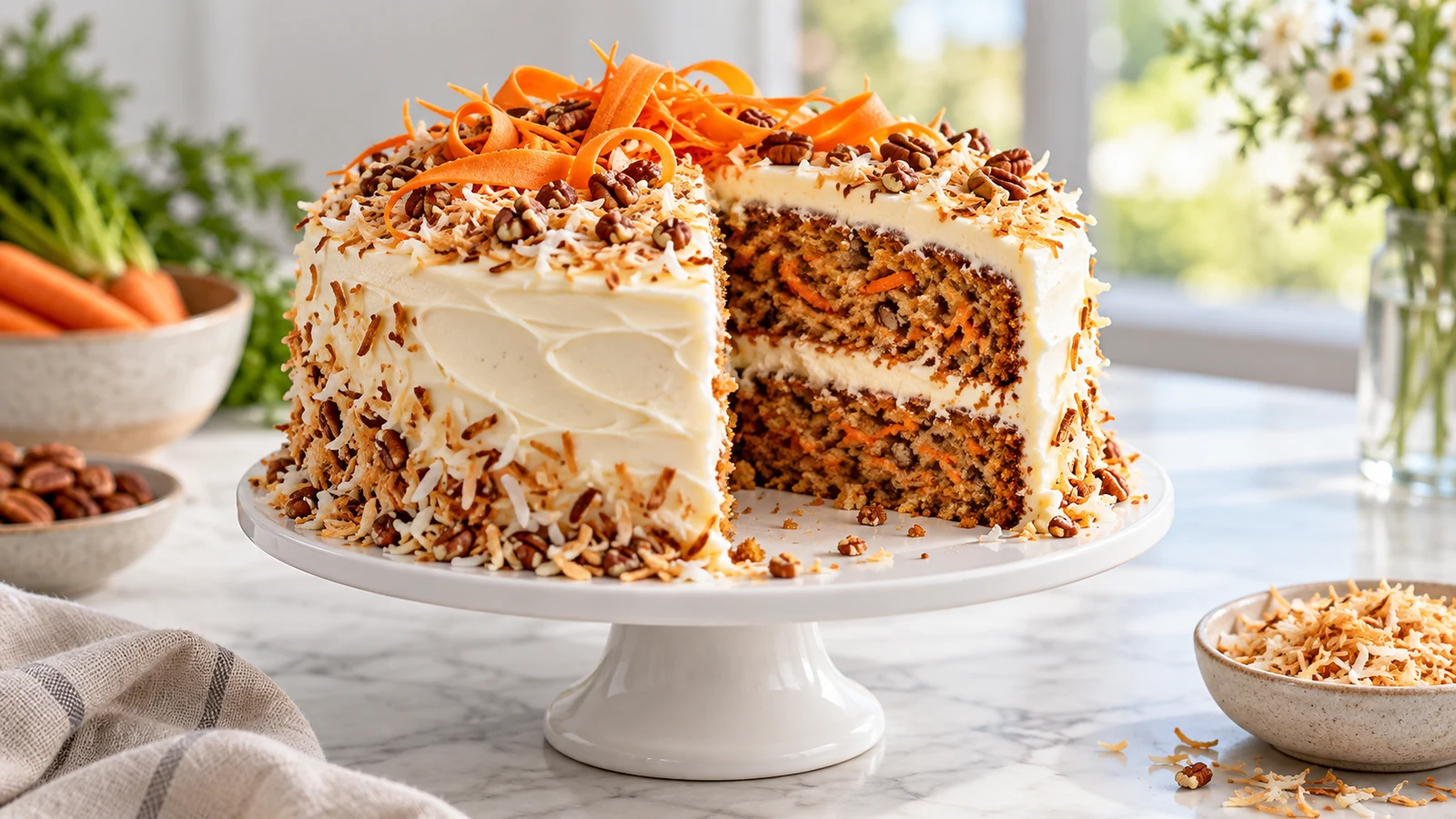
Place one cooled layer on a serving plate and spread about 1 cup of frosting over it. Add the second layer, then cover the top and sides with the remaining frosting. Garnish with toasted coconut, chopped nuts, or thin carrot curls. Chill for 30 minutes and cut with a warm, dry knife for clean slices.
If the layers have rounded tops, level them only after they are completely cool. Place the bottom layer cut side up and the second layer cut side down. This arrangement gives the coconut and carrot cake recipe a stable middle and a smooth upper surface for frosting.
Expert Tips for the Best Results
- Measure flour accurately: Weigh it when possible. Excess flour is a common cause of dry cake.
- Grate fresh carrots: Packaged shreds are usually thick and dry, so they do not soften as readily during baking.
- Use finely shredded coconut: Long strands can make slices difficult to cut neatly. Briefly chop very long shreds before measuring if needed.
- Drain pineapple thoroughly: Press out excess juice to prevent a wet, collapsing center.
- Fold gently: Stop as soon as the flour disappears. Overmixing develops gluten and creates a dense crumb.
- Divide evenly: A kitchen scale helps produce layers that bake at the same rate and stack neatly.
- Cool fully: Even slightly warm layers can soften cream cheese frosting and cause sliding.
For additional technique ideas, compare the mixing approach in this spiced carrot snacking cake guide. Its streamlined method reinforces why gentle mixing and careful doneness checks matter in a moist, spice-forward cake.
How to Toast Coconut and Nuts
Spread the garnish in a thin layer and toast it only until fragrant and lightly golden. Let it cool before applying it to the frosting. Warm garnishes can soften the surface, while deeply browned coconut may introduce bitterness that distracts from the milder flavor of this coconut and carrot cake recipe.
How to Cut Clean Slices
Chill the assembled cake for 30 minutes, then use a long sharp knife warmed under hot water. Dry the blade before cutting and wipe it between slices. Let each plated slice stand briefly before serving so the cake is cool but the frosting is pleasantly creamy.
Variations and Substitutions
Replace pecans with walnuts, omit nuts entirely, or use raisins. You can substitute unsweetened shredded coconut as noted above, but coconut flour is not a direct replacement because it absorbs far more liquid. For another expert take on this flavor combination, explore this sourdough carrot cake method.
Nut-Free and Fruit Variations
For a nut-free cake, simply omit the optional pecans or walnuts and check that decorative toppings meet your dietary needs. Raisins can add chewy sweetness without changing the listed baking temperature. If choosing the optional pineapple, keep it to 1/2 cup (120 g) and drain it well so the batter retains its intended balance.
Cupcake Variation
For cupcakes, fill 20 to 24 lined wells two-thirds full and bake at 350°F (175°C) for 18 to 22 minutes. Check the earliest batch promptly because smaller portions dry faster. Cool the cupcakes completely before piping or spreading the same cream cheese frosting on top.
Carrot Bundt Cake Recipe Conversion
For a carrot bundt cake recipe, grease and flour a 10- to 12-cup Bundt pan carefully. Bake at 350°F (175°C) for 45 to 55 minutes and begin checking at 42 minutes. Cool in the pan for 15 minutes before turning it out; consult this detailed carrot Bundt cake recipe for more pan-specific advice.
A carrot bundt cake recipe benefits from especially careful pan preparation because grated carrot and coconut can catch in detailed grooves. Brush softened butter into every crevice, add flour, and tap away the excess before filling the pan. Do not leave the baked cake in the pan longer than directed.
Carrot Cake Cookies Recipe Inspiration
A carrot cake cookies recipe-inspired variation can be made by sandwiching small cream cheese frosting portions between soft spiced oatmeal cookies and rolling the edges in toasted coconut. It is a serving idea rather than a direct conversion of this batter, since cookie dough requires a different flour-to-liquid balance.
Choose a carrot cake cookies recipe when you need portable individual treats that require no plates or slicing. Choose this layer cake when a dramatic centerpiece and a generous ratio of frosting to tender crumb suit the occasion better.
Carrot Cake Cheesecake Recipe Option
A carrot cake cheesecake recipe creates a denser, richer dessert with distinct cake and cheesecake components. Do not swirl cheesecake batter into these layers without adjusting the pan, timing, and cooling process. Use a tested formula designed for that combination to protect both textures.
Serving Ideas for Coconut and Carrot Cake
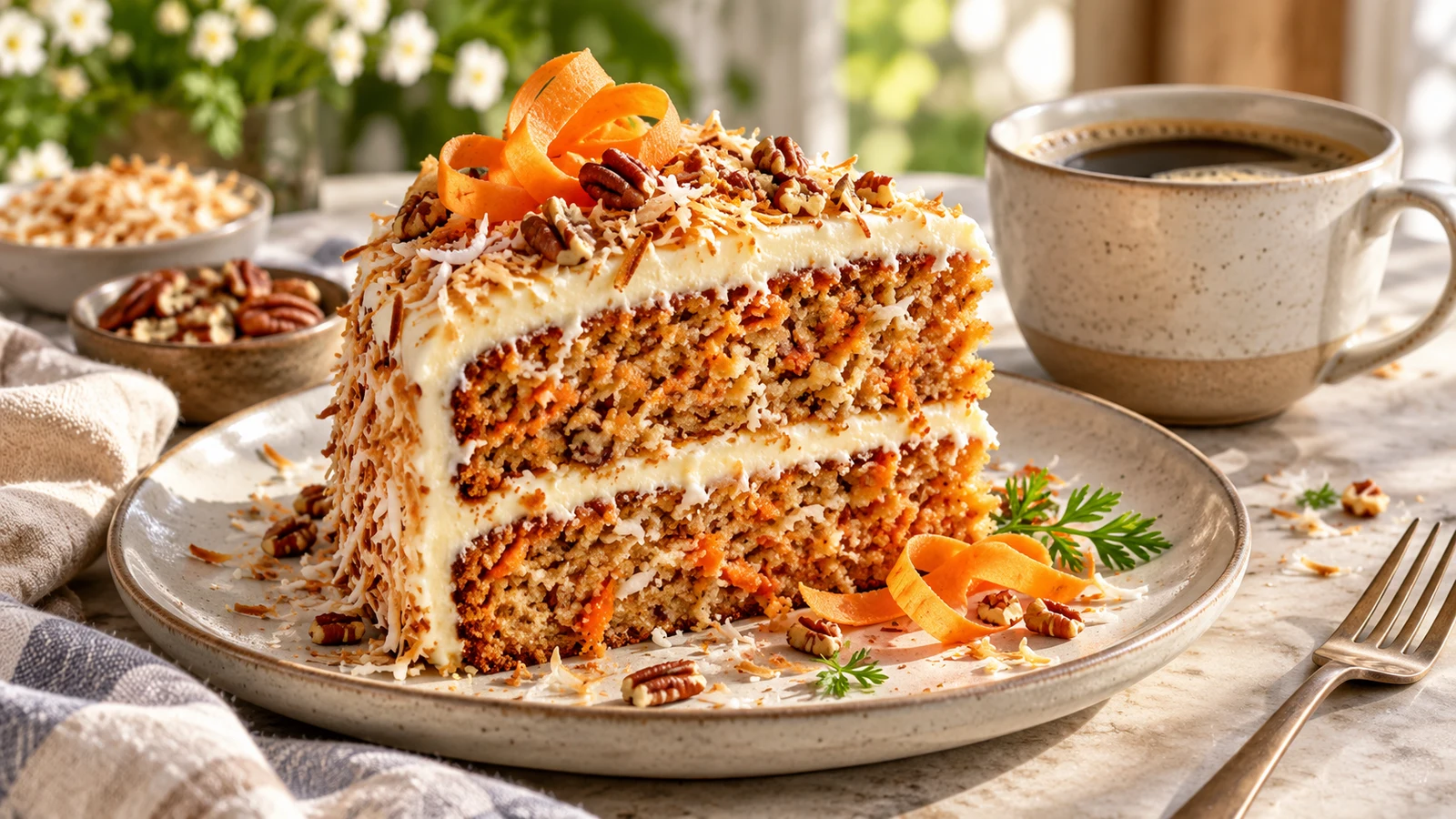
Serve the cake slightly cool or let individual slices stand at room temperature for 15 minutes. Coffee, black tea, or lightly sweetened whipped cream pairs well with its warm spices. This overview of carrot cake styles and serving inspiration offers additional garnish ideas.
For spring gatherings, decorate with toasted coconut, thin carrot curls, and a restrained sprinkle of chopped nuts. For an autumn table, emphasize the cinnamon and nutmeg with warm tea or coffee. Fresh berries on the side add brightness without altering the coconut and carrot cake recipe itself.
When planning a dessert spread, pair small slices with lighter options such as fresh fruit. If this is the main birthday dessert, serve full slices and keep extra frosting decoration simple. The visible layers already give the cake an attractive celebration-ready appearance.
Make-Ahead, Storage, and Freezing
Making the Layers Ahead
Bake the layers up to two days ahead. Once completely cool, wrap each one tightly and refrigerate it. Chilled layers are easier to level, move, and frost, making this coconut and carrot cake recipe especially convenient when preparing for a celebration.
You may make the frosting one day ahead and refrigerate it in an airtight container. Before assembling, let it soften briefly, then mix only enough to restore a smooth, spreadable texture. Avoid prolonged beating because it can warm and loosen the cream cheese.
Storing the Frosted Cake
Refrigerate the frosted cake in an airtight container for up to 5 days because cream cheese frosting is perishable. For the best texture, let a slice stand at room temperature for 15 to 20 minutes; reheating is unnecessary and may melt the frosting.
Cover exposed cut edges with parchment or press storage wrap gently against them before returning the cake to its container. This reduces moisture loss and prevents refrigerator odors from affecting the flavor. Keep strong-smelling foods away from the stored cake when possible.
Freezing Instructions
Unfrosted layers can be wrapped twice and frozen for up to 3 months. Freeze frosted slices until firm, then wrap individually and store for up to 2 months. Thaw overnight in the refrigerator. Unwrap frozen layers after moving them to the refrigerator so condensation does not settle directly on the cake.
For make-ahead assembly, bake the layers up to two days ahead, refrigerate them tightly wrapped, and frost the chilled layers the day before serving. Add crisp toasted coconut or nuts closer to serving so those garnishes retain their texture.
Troubleshooting This Coconut and Carrot Cake Recipe
Why Did My Cake Turn Out Dense?
A dense cake usually comes from overmixing, too much carrot, inaccurately measured flour, or inactive leavening. Fold the batter only until combined and weigh the carrots after peeling and grating. Check the dates on the baking powder and baking soda before beginning.
Why Is the Center Wet or Sunken?
A collapsed center generally means the cake was removed early, the oven door opened too soon, or very wet add-ins were used. Drain optional pineapple thoroughly and test the center rather than the outer edge. Liquid batter on the tester means the layers need more time.
Why Does the Cake Seem Oily?
An oily result may come from inaccurately measured oil, insufficient mixing of the wet ingredients, or underbaking. Measure the oil in a liquid measuring cup and whisk it thoroughly with the eggs and sugars. The finished crumb should be moist but should not leave visible oil on the plate.
Why Are the Layers Dry?
Dry layers usually indicate excess flour or baking too long. Spoon and level flour if a scale is unavailable, begin checking at 30 minutes, and remove the pans once the tester shows moist crumbs. Packaged carrot shreds can also produce a drier result than freshly grated carrots.
Why Is My Cream Cheese Frosting Runny?
The cream cheese may have been too warm or overbeaten. Use full-fat block cream cheese, mix briefly, and chill the frosting for 20 to 30 minutes before assembling the cake. Make sure the cake layers and toasted garnishes are completely cool.
Why Are My Cake Layers Sliding?
Warm cake, soft frosting, or too much filling can make layers shift. Use fully cooled or chilled layers, keep the filling to about 1 cup, and chill the assembled cake for 30 minutes. If needed, apply a thin crumb coat and chill it before adding the final frosting layer.
Frequently Asked Questions
Can I use pineapple without making the coconut and carrot cake recipe soggy?
Yes. Use no more than 1/2 cup (120 g) crushed pineapple and press it in a fine-mesh strainer to remove excess juice before folding it into the batter. Do not add the reserved juice to the cake mixture.
Can I turn this into a carrot cake cheesecake recipe?
Yes, but cheesecake batter changes the baking method substantially. For reliable layer proportions and chilling instructions, follow this carrot cake cheesecake recipe rather than adding cheesecake batter to these cake pans.
Can I use this batter for a carrot bundt cake recipe?
Yes. Use a carefully greased and floured 10- to 12-cup Bundt pan, bake at 350°F (175°C) for 45 to 55 minutes, and start checking at 42 minutes. Let the cake cool in its pan for 15 minutes before turning it out.
Is this batter suitable for a carrot cake cookies recipe?
No. Cake batter contains too much liquid to bake as cookies and would spread unpredictably. A tested carrot cake cookies recipe uses a dough formulated to hold its shape. You can still echo this cake’s flavors with cinnamon, carrot, coconut, and cream cheese frosting.
What makes this different from a standard carrot cake recipe with cream cheese frosting?
The full cup of shredded coconut gives the crumb extra texture, sweetness, and moisture. Although it follows the familiar structure of a carrot cake recipe with cream cheese frosting, the coconut provides a distinctive flavor and makes the interior especially tender.
Can I use unsweetened coconut?
Yes. Unsweetened shredded coconut creates a subtler flavor and a slightly drier crumb. Add 1 tablespoon of milk to the batter, as directed, to compensate. Do not replace the shredded coconut with coconut flour, which absorbs much more liquid.
How do I know the cake is fully baked?
Look for a gently springing center and edges that just begin to release. A toothpick should show several moist crumbs but no liquid batter; the center should register about 205°F to 210°F (96°C to 99°C).
Can I omit the nuts?
Yes. The pecans or walnuts are optional, and omitting them does not require any other ingredient adjustment. Toasted coconut makes an attractive garnish when you want extra texture without nuts.
Can I make this coconut and carrot cake recipe without a stand mixer?
Yes. The cake batter requires only bowls, a whisk, and a flexible spatula. An electric hand mixer works well for the frosting. Mixing the batter by hand also makes it easier to stop as soon as the ingredients are combined.
How far ahead can I assemble the cake?
You can assemble and frost it one day before serving. Store it covered in the refrigerator, then let individual slices stand at room temperature for 15 to 20 minutes. Add crisp garnishes near serving time for the best texture.
Estimated Nutrition
One of 12 frosted slices contains approximately 690 calories, 39 g fat, 81 g carbohydrates, 5 g fiber, 61 g sugar, and 7 g protein. Values are estimates and vary with brands, garnishes, and optional additions.
Printable Recipe Card
Yield: 12 servings. Prep: 30 minutes. Bake: 30 to 35 minutes. Cooling and assembly: 90 minutes. Pan: Two 9-inch round pans. Difficulty: Moderate.
- Heat the oven to 350°F (175°C); grease and line two 9-inch pans.
- Whisk flour, leaveners, spices, and salt. Separately whisk sugars, eggs, oil, and vanilla.
- Fold the mixtures together, then add carrots, coconut, and any optional additions.
- Divide between pans and bake for 30 to 35 minutes. Cool completely.
- Beat butter, cream cheese, confectioners’ sugar, vanilla, and salt. Fill and frost the cake, then chill for clean slicing.
A Reliable Cake for Celebrations
This coconut and carrot cake recipe combines everyday ingredients with a polished layered presentation. Accurate measuring, freshly grated carrots, gentle folding, and careful doneness checks keep every layer tender enough to prepare well before your gathering.
Whether you compare it with a carrot bundt cake recipe, a carrot cake cookies recipe, or a carrot cake cheesecake recipe, this version stands out for its straightforward method and generous cream cheese filling. Follow the storage guidance, serve it slightly cool, and enjoy a moist, warmly spiced slice with coconut in every bite.
Reviews
Reader reviews are managed separately (outside this build).