Cake
Best carrot cake recipe with cream cheese frosting
Bake a moist carrot cake recipe with cream cheese frosting, with weighted measures, doneness cues, stable frosting and storage tips. Discover more.
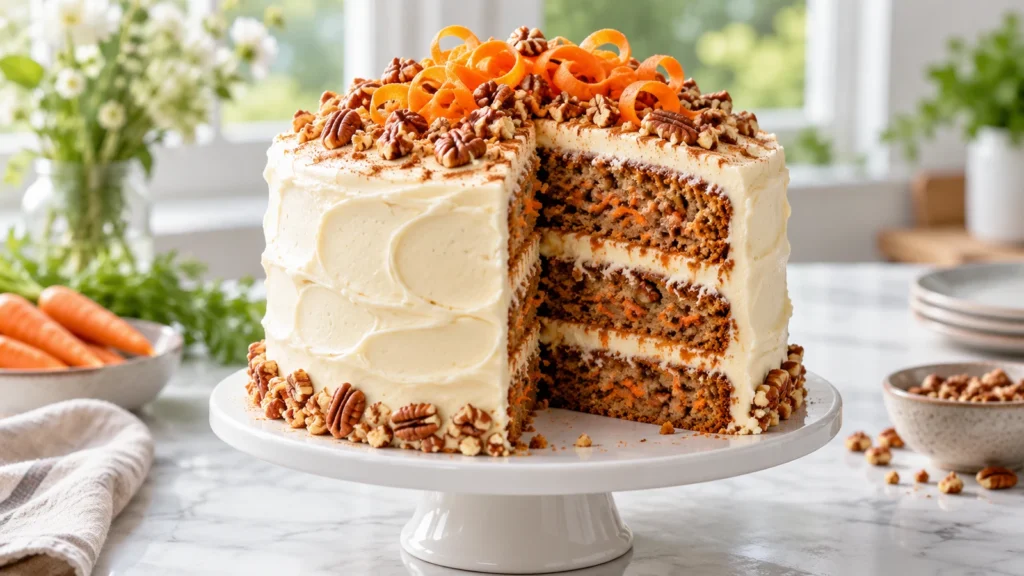
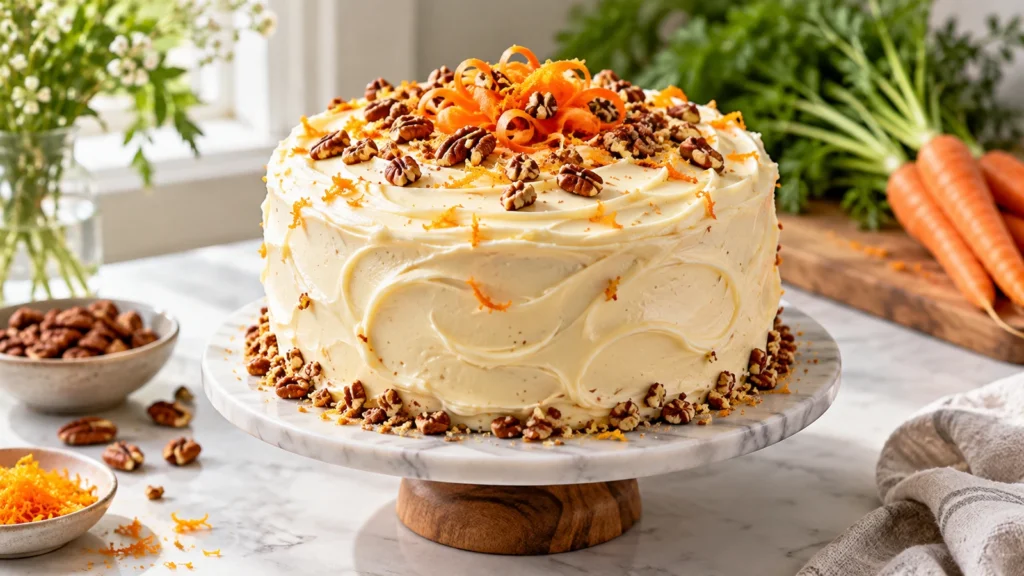
This carrot cake recipe with cream cheese frosting produces tender, warmly spiced layers filled with freshly grated carrots and finished with a smooth, stable frosting. Careful moisture control keeps the crumb soft without making it oily or dense.
For the most reliable results, weigh the flour, grate the carrots finely, and let the cake cool completely before assembly. The recipe makes one 9-inch two-layer cake, serving 12 to 16 people. Along the way, you will find practical guidance for adapting this carrot cake recipe with cream cheese frosting without losing its balanced texture.
Table of Contents
Why You’ll Love This Recipe
- Moist but not heavy: Applesauce and oil provide lasting moisture in balanced amounts.
- Clear doneness cues: Visual signs and an internal-temperature range remove the guesswork.
- Stable frosting: The mixing method helps prevent loose or lumpy cream cheese frosting.
- Flexible format: Bake it as layers, a sheet cake, or a Bundt cake.
- Make-ahead friendly: The layers can be baked in advance, while the assembled cake keeps well under refrigeration.
- Easy to customize: Optional nuts, raisins, coconut, and alternative pan shapes provide useful ways to suit the occasion.
Ingredients
- 2 cups (240 g) all-purpose flour, preferably weighed
- 2 teaspoons baking powder
- 1 teaspoon baking soda
- 2 teaspoons ground cinnamon
- 1/2 teaspoon ground ginger
- 1/4 teaspoon ground nutmeg
- 3/4 teaspoon fine salt
- 3/4 cup (150 g) granulated sugar
- 3/4 cup (150 g) packed light brown sugar
- 4 large eggs, at room temperature
- 3/4 cup (180 ml) neutral oil
- 1/2 cup (120 g) unsweetened applesauce
- 2 teaspoons vanilla extract
- 3 cups (300 g) peeled, finely grated carrots
- 3/4 cup (85 g) chopped walnuts or pecans, optional
- 1/2 cup (75 g) raisins, optional
- 16 ounces (454 g) full-fat block cream cheese, cool but pliable
- 1 cup (226 g) unsalted butter, softened
- 4 cups (480 g) confectioners’ sugar, sifted
- 2 teaspoons vanilla extract for the frosting
- Pinch of salt for the frosting
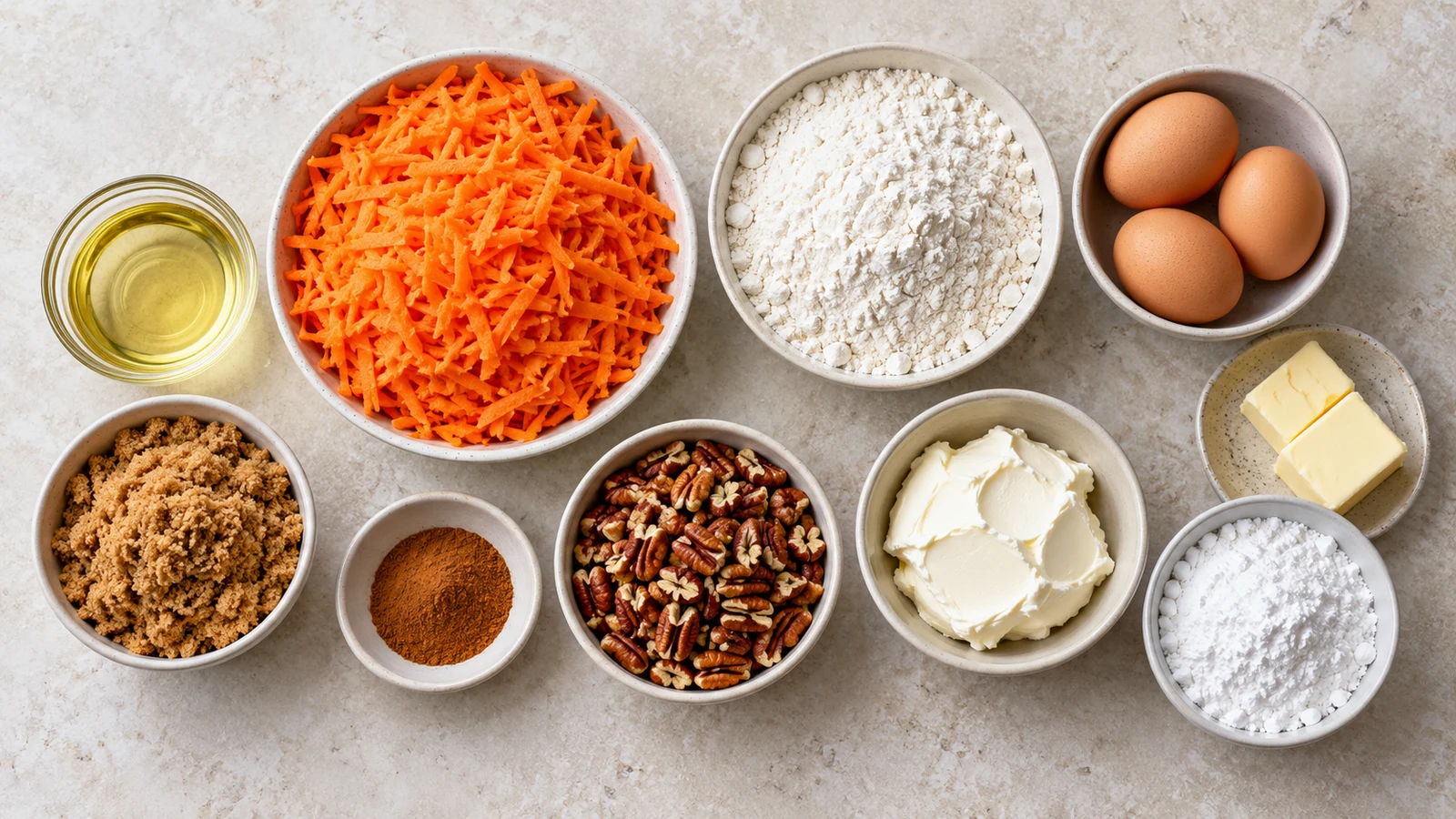
Understanding the Key Ingredients
Fresh carrots contribute more than flavor. Their moisture softens the crumb, while fine shreds disperse evenly and become tender during baking. Pre-shredded carrots are often dry and thick, so freshly grated carrots are the better choice for this carrot cake recipe with cream cheese frosting.
Oil stays liquid at room temperature and helps the cake remain soft after refrigeration. Applesauce supplies additional moisture without requiring more oil. The two sugars also have distinct roles: granulated sugar supports structure, while brown sugar brings mild caramel notes and helps retain moisture.
Baking powder and baking soda work together to lift a batter made substantial by carrots and optional additions. Cinnamon provides the dominant spice, while ginger and nutmeg add warmth without overpowering the cake. Check the dates on both leaveners if they have been open for several months.
Full-fat block cream cheese is important because it contains less free moisture than spreadable cream cheese. Butter provides body, confectioners’ sugar sweetens and stabilizes, and the pinch of salt keeps the frosting from tasting flat.
Equipment and Pan Choices
Use two light-colored 9-inch round cake pans, parchment paper, mixing bowls, a whisk, a flexible spatula, and an electric mixer. A kitchen scale and instant-read thermometer improve consistency. A box grater’s fine holes or a food processor fitted with a fine shredding disc will produce carrots that soften properly during baking.
Light-colored pans encourage steady, even baking. Dark pans absorb heat more aggressively and may brown the edges before the middle is ready. If dark pans are your only option, watch the edges closely and rely on the doneness cues rather than baking by time alone.
How to Make This Carrot Cake Recipe with Cream Cheese Frosting
- Prepare the pans: Heat the oven to 350°F (175°C). Grease two 9-inch round pans, line the bottoms with parchment, and lightly grease the paper.
- Combine the dry ingredients: Whisk the flour, baking powder, baking soda, cinnamon, ginger, nutmeg, and salt until evenly blended.
- Mix the wet ingredients: In a separate large bowl, whisk both sugars with the room-temperature eggs. Add the oil, applesauce, and vanilla, then whisk until smooth and emulsified.
- Finish the batter: Fold the dry mixture into the wet ingredients just until a few flour streaks remain. Fold in the carrots and any nuts or raisins. Do not beat or continue mixing once the flour disappears.
- Bake: Divide the batter evenly between the pans. Bake for 30 to 36 minutes, rotating once if your oven browns unevenly. The centers should spring back lightly, a tester should show a few moist crumbs, and the internal temperature should be about 205°F to 210°F (96°C to 99°C).
- Cool: Rest the cakes in their pans for 15 minutes. Turn them onto racks, remove the parchment, and cool completely for at least 90 minutes.
- Make the frosting: Beat the softened butter for 2 minutes. Add the sifted confectioners’ sugar gradually and beat until fluffy. Mix in vanilla and salt, then add the cool cream cheese in several pieces and beat briefly on low only until smooth.
- Assemble: Place one layer on a serving plate and spread about 1 cup of frosting over it. Add the second layer, then cover the top and sides with the remaining frosting. Chill for 30 minutes before slicing for the cleanest portions.
Expert Tips for Consistent Results
Prepare the Carrots Correctly
Grate the carrots shortly before mixing so they retain their natural moisture. Do not squeeze them; removing their liquid can leave the cake dry and crumbly. Thick, mature carrots may have a tough core, so trim it away before grating.
Measure the carrots after peeling and grating. Loose cups can vary, so the 300 g weight gives the most repeatable result. Fine shreds should be visible but should not resemble a wet puree. That balance helps this carrot cake recipe with cream cheese frosting bake into distinct, tender layers.
Control Ingredient Temperatures
Use room-temperature eggs so the batter emulsifies smoothly, but keep the cream cheese cooler than the butter. Block cream cheese makes a more stable frosting than spreadable tubs, which contain additional moisture. If the frosting becomes soft, refrigerate it for 20 to 30 minutes instead of adding excessive sugar.
Butter should yield to gentle pressure without looking greasy or partially melted. Cream cheese needs to be pliable enough to blend, but it should still feel cool. This temperature contrast helps the finished frosting remain smooth and sturdy.
Mix Gently and Accurately
Measure flour by weight whenever possible. Scooping directly from the bag compacts it and can create a dry, heavy cake. Once flour is added, gentle folding limits gluten development and preserves a tender crumb.
Scrape along the bottom and sides of the bowl as you fold. Hidden pockets of dry flour can remain beneath the heavier batter. Stop as soon as the ingredients are evenly combined, because extra mixing will not improve the texture.
Divide and Cool the Layers Evenly
For evenly sized layers, weigh the filled pans and adjust the batter before baking. Place both pans on the same oven rack when space permits, leaving room for air to circulate. Cool the layers completely before frosting, since residual warmth can soften butter and cream cheese.
Troubleshooting Common Problems
- Dense or oily cake: Check the oil measurement, avoid overmixing, and confirm that the leaveners are fresh.
- Dry or crumbly cake: Use 240 g of flour, retain the carrot moisture, and begin checking before the minimum baking time ends.
- Sunken center: Bake until the center is set, avoid opening the oven early, and verify the oven temperature with a thermometer.
- Runny frosting: Use full-fat block cream cheese and avoid overbeating. Chill it briefly before frosting.
- Lumpy frosting: Soften the butter fully, sift the sugar, and add cool cream cheese only after the butter mixture is smooth.
- Uneven layers: Level the oven rack, divide the batter by weight, and check that the pans are the same size and material.
- Carrot strands remain firm: Use the fine side of a grater and avoid thick packaged shreds.
- Cake sticks to the pan: Grease the pans, use parchment on the bottoms, and release the layers after the stated 15-minute rest.
Why Did My Cake Turn Out Gummy?
A gummy line or compressed middle often means the batter was underbaked, measured inaccurately, or cut while warm. Test the center rather than the edges and allow the layers to cool fully. Too much carrot or applesauce can also disrupt the intended flour-to-moisture balance.
Why Is the Frosting Too Sweet?
The confectioners’ sugar provides necessary structure as well as sweetness. Use the stated pinch of salt and full-fat cream cheese to balance it. Avoid reducing the sugar casually, because the frosting may become too loose to support the top layer.
Variations and Substitutions
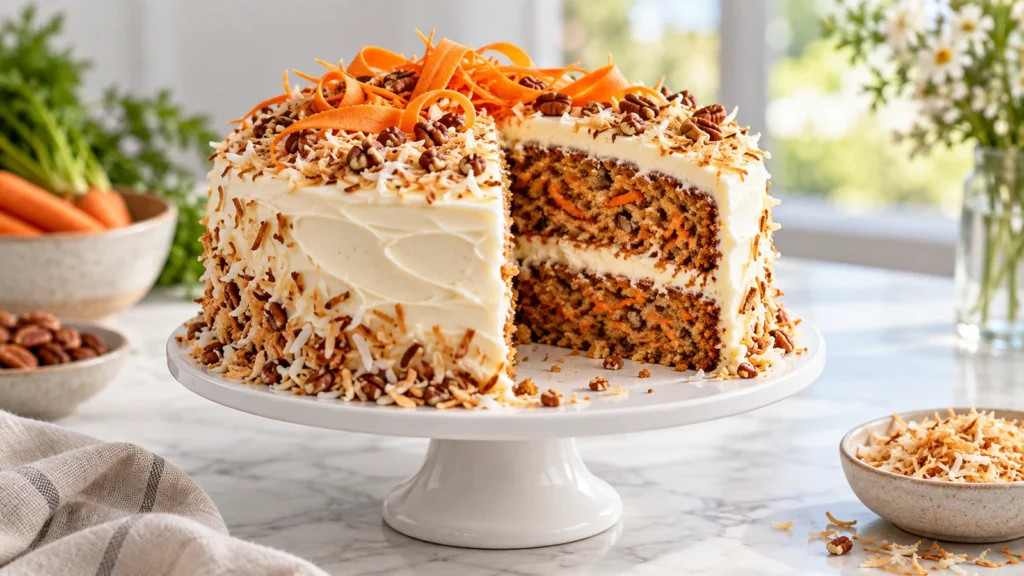
Coconut and Carrot Cake Recipe Variation
For a coconut and carrot cake recipe, fold 3/4 cup sweetened shredded coconut into the batter and reduce the optional raisins to 1/4 cup. Coconut adds chewiness and a mild tropical sweetness, so distribute it evenly while completing the final folds.
A coconut and carrot cake recipe works especially well with pecans, although the nuts remain optional. Keep the original spices and baking temperature unchanged. Check the center carefully because added coconut can make moist crumbs cling to the tester even after the batter has set.
Nut-Free, Dairy-Free, and Gluten-Free Options
To make the cake nut-free, omit the walnuts or pecans and confirm that every packaged ingredient is allergy-safe. For dairy-free frosting, use firm dairy-free cream cheese and plant-based butter; because brands vary in water content, chill the frosting as needed. A tested 1-to-1 gluten-free baking blend containing xanthan gum may replace the flour by weight.
Substituted frostings may not become as firm as the original. Chill the cake between assembly stages if the layers begin to slide. When serving anyone with an allergy, check labels for cross-contact warnings rather than assuming that a familiar product is safe.
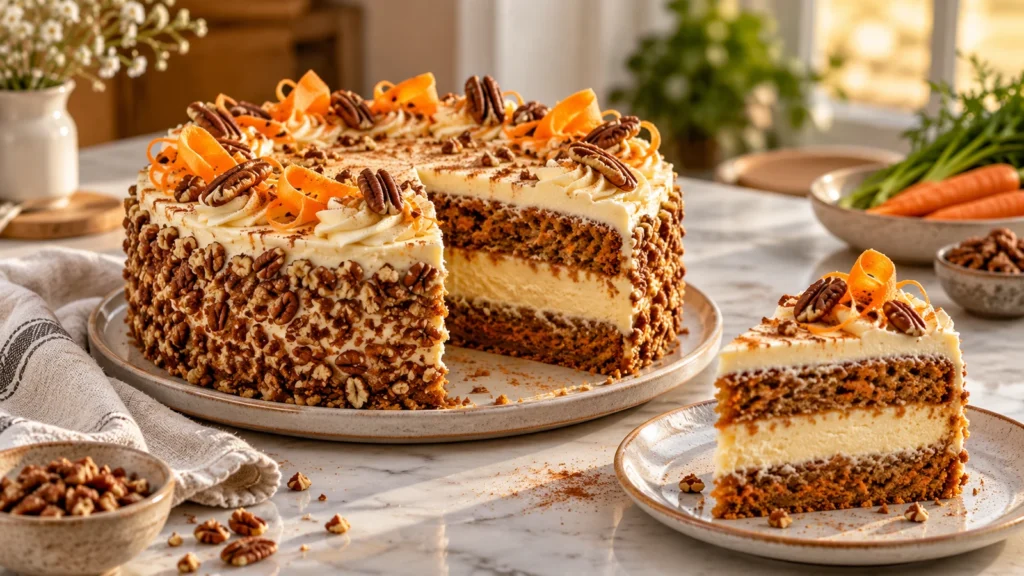
Carrot Cake Cheesecake Recipe Option
For a centerpiece with a creamy middle, try this carrot cake cheesecake recipe. It is a distinct dessert rather than a direct pan conversion, making it the better choice when you want contrasting carrot cake and cheesecake textures.
A carrot cake cheesecake recipe requires different baking and cooling techniques because cheesecake filling sets differently from cake batter. Follow the dedicated method instead of adding a cheesecake layer to this batter without adjusting the structure and timing.
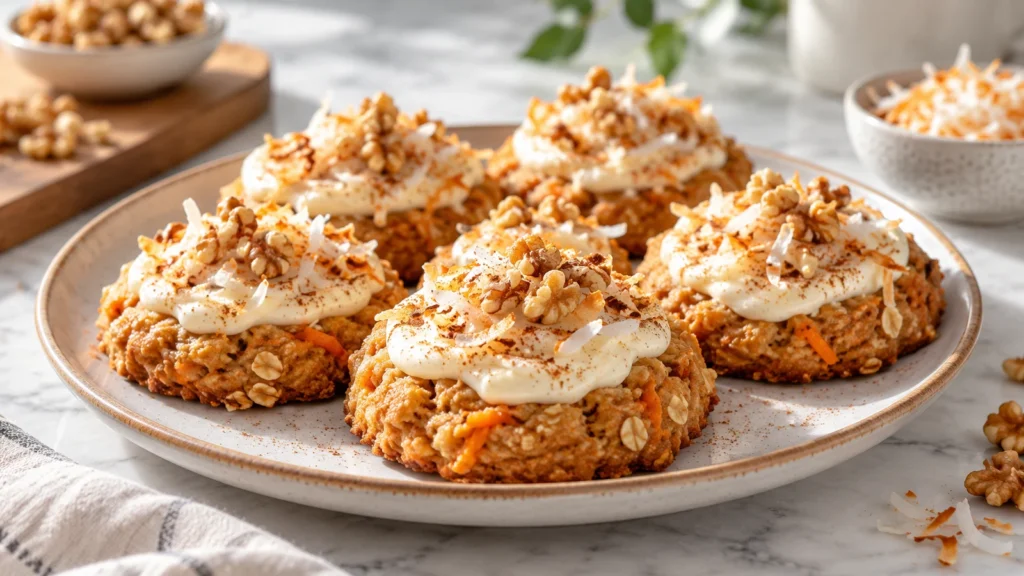
Carrot Cake Cookies Recipe Option
When you want smaller treats, this carrot cake cookies recipe offers the same familiar spice profile in a portable form. Cookies are convenient for parties, lunch boxes, and occasions when slicing a layer cake would be impractical.
A carrot cake cookies recipe also gives you individually portioned treats with a shorter serving setup. Use that format when portability matters, while choosing the layer cake when you want a formal centerpiece and a generous ratio of frosting to crumb.
Pan Conversions and High-Altitude Guidance
Sheet Cake and Bundt Pan Options
For a 9-by-13-inch pan, bake at 350°F (175°C) for about 35 to 42 minutes. For a carrot bundt cake recipe, grease and flour a 10- to 12-cup Bundt pan and bake for approximately 50 to 60 minutes. Consult this detailed carrot Bundt cake recipe for format-specific guidance.
A carrot bundt cake recipe places more batter in a deep, sculpted pan, so thorough greasing is essential. Work softened grease into every ridge, add flour, and tap out the excess. Let the finished cake settle as directed before attempting to release it.
Choose a carrot bundt cake recipe when you want an attractive molded cake with fewer assembly steps. Choose the original carrot cake recipe with cream cheese frosting when soft filling between two layers and full frosting coverage are priorities.
Adjusting for High Elevation
At higher elevations, cakes may rise rapidly and dry out unless the formula and temperature are adjusted. Begin with the elevation-based recommendations in King Arthur Baking’s high-altitude guide, making small adjustments rather than changing several variables at once.
Local humidity and exact elevation matter, so bakers can also consult Colorado State University’s high-altitude preparation guidance.
Record the adjustment, pan choice, baking time, and result each time you test. A short baking note makes it much easier to reproduce a successful carrot cake recipe with cream cheese frosting in your own kitchen.
Make-Ahead Plan
One to Two Days Before Serving
Bake the layers, cool them completely, and wrap them securely. Refrigerate for up to two days. Chilled layers are often easier to handle and produce fewer crumbs during assembly, but they must be protected from refrigerator odors and drying air.
The frosting can be prepared one day ahead and refrigerated in a covered container. Before assembling the carrot cake recipe with cream cheese frosting, let it soften briefly, then stir gently until spreadable. Do not whip it extensively after the cream cheese has been incorporated.
On the Day of Serving
Assemble the cake while the layers are cool. If they are slightly domed, place the flatter sides where they give the stack the best support. Chill the assembled cake for 30 minutes, then cover it so the exposed frosting does not dry out or absorb odors.
Take the cake from the refrigerator 20 to 30 minutes before serving. This short tempering time improves the texture of the crumb and frosting while keeping the cream cheese topping safely cool.
Serving Ideas
Serve slices cool but not refrigerator-cold. Let the cake stand at room temperature for 20 to 30 minutes so the crumb softens and the spices become more aromatic. A thin slice is satisfying because the frosting is rich; cut 12 generous portions or 16 smaller portions.
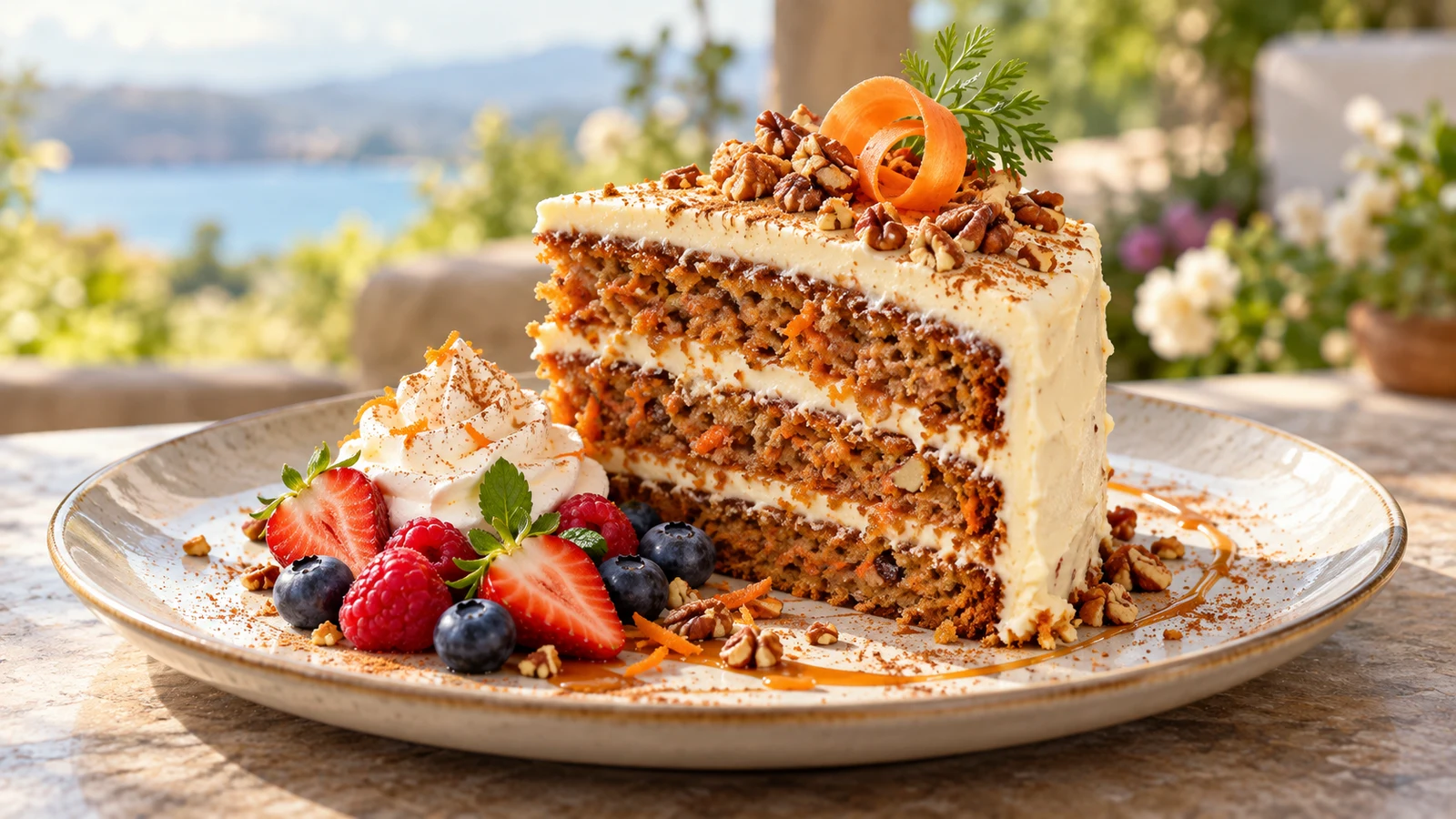
For neat wedges, chill the cake first and use a long, sharp knife. Wipe the blade between cuts so frosting and crumbs do not drag across the next portion. A plain white plate lets the warm orange crumb and creamy frosting stand out.
Pair this carrot cake recipe with cream cheese frosting with unsweetened coffee, black tea, or a lightly spiced tea. Fresh berries can add color and gentle acidity without competing with the cinnamon, ginger, and nutmeg.
For a dessert spread, offer smaller portions beside a carrot cake cookies recipe or a carrot cake cheesecake recipe. The shared spice profile makes the selection feel coordinated, while the different textures give guests meaningful variety.
How to Store and Reheat
Cover and refrigerate the frosted cake for up to four days. Follow the USDA’s leftover storage and food-safety guidance, and do not leave cream cheese-frosted cake at room temperature for extended periods. This cake does not need reheating; simply temper each serving briefly before eating.
Unfrosted layers can be wrapped tightly and frozen for up to three months. Freeze frosted slices until firm, then wrap them individually and place them in an airtight container for up to two months. Thaw overnight in the refrigerator while wrapped to reduce condensation.
Store cut cake with the exposed sides covered closely so the crumb stays moist. A cake carrier is useful, but a large covered container also works. Keep strongly scented foods away from the cake because cream cheese frosting can absorb surrounding aromas.
Do not microwave a frosted slice to soften it. Direct heat may melt the frosting before the crumb warms evenly. Instead, transfer only the portion you intend to eat from the refrigerator and allow it to stand briefly at room temperature.
Frequently Asked Questions
Should I Peel and Squeeze the Carrots?
Peeling gives the cake a smoother texture, but squeezing is unnecessary. The carrots’ moisture helps create a soft crumb, and finely grated pieces blend into the batter as they bake.
Can I Make This Carrot Cake Recipe with Cream Cheese Frosting Ahead?
Yes. Bake the layers up to two days ahead, wrap them after they cool, and refrigerate. The frosting can be prepared one day ahead; refrigerate it, then let it soften briefly and stir gently before using.
How Can I Tell When Carrot Cake Is Done?
The middle should spring back, the edges should just begin pulling from the pan, and a tester should have moist crumbs rather than wet batter. For added confidence, look for an internal temperature of 205°F to 210°F (96°C to 99°C).
Can I Use Pre-Shredded Carrots?
Freshly grated carrots are preferable because packaged shreds tend to be thicker and drier. If the pieces do not soften fully, the crumb may feel coarse and the carrots can remain distinct rather than integrating smoothly into the cake.
Can I Leave Out the Nuts and Raisins?
Yes. Both are optional, so omitting them does not require another change. The cake will retain its established moisture and spice balance without either addition.
Can I Turn This into a Carrot Bundt Cake Recipe?
Yes. Use a properly prepared 10- to 12-cup Bundt pan and the approximate baking guidance above. Because shape and material affect timing, use the visual and temperature tests rather than removing the cake solely because a timer has sounded.
What Makes a Coconut and Carrot Cake Recipe Different?
A coconut and carrot cake recipe includes shredded coconut, which contributes sweetness and a pleasantly chewy texture. In this variation, use 3/4 cup sweetened shredded coconut and reduce the optional raisins to 1/4 cup so the batter is not crowded with additions.
Is a Carrot Cake Cheesecake Recipe Made the Same Way?
No. A carrot cake cheesecake recipe combines components that set at different rates, so it needs its own assembly, baking, cooling, and chilling instructions. Follow the linked dedicated recipe for predictable results.
When Should I Choose a Carrot Cake Cookies Recipe?
A carrot cake cookies recipe is useful when you need portable, individually portioned treats. The layer cake is better for a celebration centerpiece, while cookies simplify serving at casual gatherings and events.
Can I Frost the Cake While the Layers Are Slightly Warm?
No. Even mild residual warmth can soften the butter and cream cheese, causing the frosting to slide or turn greasy. Cool the layers completely for at least 90 minutes before assembly.
Why Is My Cream Cheese Frosting Loose?
Spreadable cream cheese, warm ingredients, or prolonged beating can loosen the frosting. Use full-fat block cream cheese, add it after the butter mixture is smooth, and mix briefly on low. Refrigerate soft frosting for 20 to 30 minutes before using it.
What Is the Approximate Nutrition per Serving?
When divided into 16 portions, one frosted slice contains approximately 570 calories, with values varying according to optional nuts, raisins, ingredient brands, and the amount of frosting applied.
Printable Recipe Card
- Prep time: 30 minutes
- Bake time: 30 to 36 minutes
- Cooling and assembly: 2 hours
- Total time: About 3 hours
- Yield: One 9-inch layer cake; 12 to 16 servings
- Method: Oven-baked
- Nutrition: Approximately 570 calories per serving when cut into 16 slices
A Dependable Cake for Any Occasion
This dependable carrot cake recipe with cream cheese frosting balances sweet carrots, fragrant spices, a tender crumb, and tangy frosting. Give the layers enough time to cool and the finished cake will slice neatly while remaining wonderfully moist.
For another presentation, consider a carrot bundt cake recipe, a portable carrot cake cookies recipe, or a creamy carrot cake cheesecake recipe. The coconut and carrot cake recipe variation is another easy way to introduce a new texture while preserving the warmly spiced character of the original.
Reviews
Reader reviews are managed separately (outside this build).