Cake
Irresistible pineapple pound cake recipe: Foolproof Tips
Discover a moist, buttery pineapple pound cake recipe made from scratch with crushed pineapple, a luscious glaze, and foolproof baking tips.
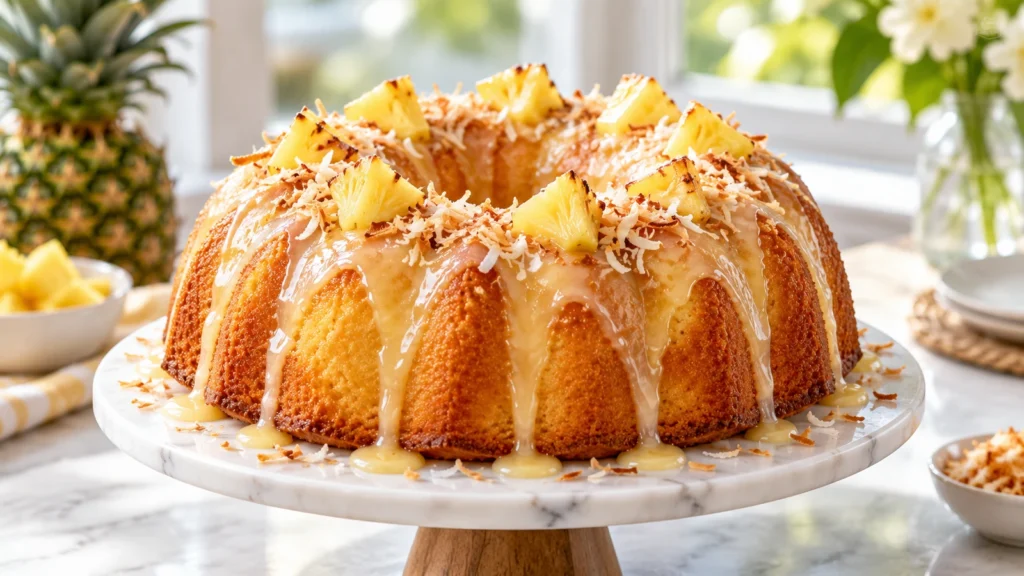
This pineapple pound cake recipe produces a buttery, golden cake with a moist crumb, bright fruit flavor, and a simple pineapple glaze. Carefully draining the crushed pineapple allows it to add tenderness without leaving the center gummy.
Use room-temperature ingredients, measure the flour by weight, and bake in a thoroughly greased 10- to 12-cup Bundt pan. These details help this pineapple pound cake recipe rise evenly, release cleanly, and remain delicious for days.
Table of Contents
Why You’ll Love This Pineapple Pound Cake Recipe
- Moist but sturdy: Crushed pineapple adds tenderness while the dense crumb slices neatly.
- Dependable: Weighed measurements and clear doneness cues remove the guesswork.
- Easy finish: The pineapple glaze needs only three ingredients.
- Make-ahead friendly: The flavor and texture remain excellent after resting overnight.
- Ideal for sharing: One cake yields 12–16 attractive slices for holidays, potlucks, and family desserts.
Ingredients
- 1 cup (226 g) unsalted butter, softened to 65–68°F (18–20°C)
- 2 cups (400 g) granulated sugar
- 4 large eggs, at room temperature
- 2 teaspoons vanilla extract
- 3 cups (360 g) all-purpose flour, spooned and leveled
- 1 teaspoon baking powder
- 1/2 teaspoon fine salt
- 1/2 cup (120 g) full-fat sour cream, at room temperature
- 1 can (20 ounces/567 g) crushed pineapple in juice
- For the glaze: 1 1/2 cups (180 g) confectioners’ sugar, 2–3 tablespoons reserved pineapple juice, and a pinch of salt
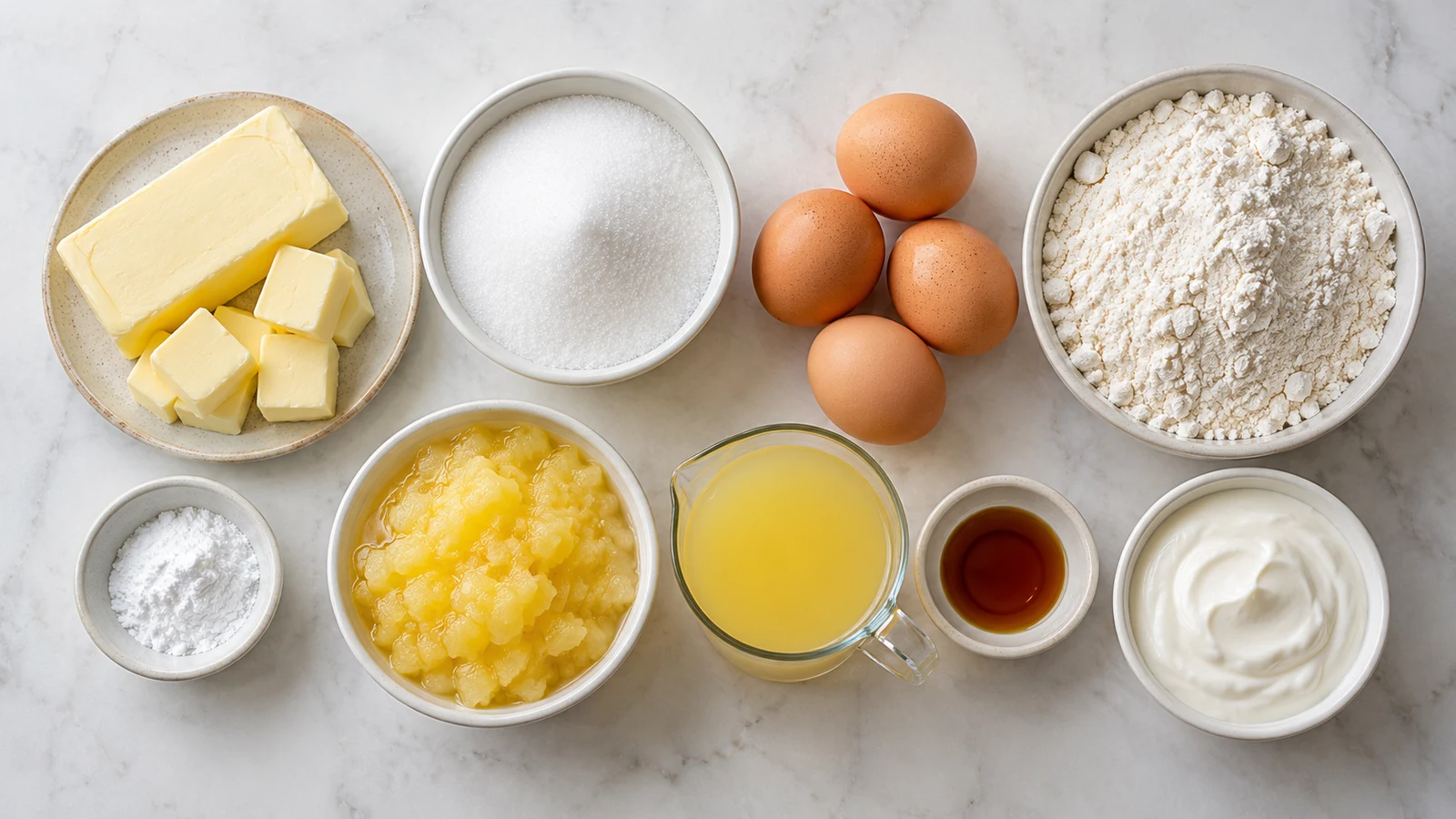
Canned crushed pineapple gives the most consistent moisture and texture. Fresh pineapple may be finely chopped and briefly cooked until softened, then cooled and drained, but its variable water content makes the result less predictable.
Why Ingredient Temperature Matters
Softened butter traps small air bubbles during creaming, while room-temperature eggs and sour cream blend into a stable emulsion. Cold ingredients can make the batter look curdled and bake unevenly. Set the eggs and sour cream out only long enough to lose their chill, following safe handling practices.
Sour cream supplies fat and acidity without making the batter runny. That is one reason the texture resembles a well-made sour cream pound cake recipe, although pineapple gives this cake a fruitier flavor and requires careful moisture control.
Equipment and Pan Selection
Use a 10- to 12-cup light-colored metal Bundt cake pan, a mixer, two bowls, a fine-mesh strainer, a flexible spatula, and an instant-read thermometer. Grease every ridge with softened shortening or baking spray containing flour, then dust lightly with flour and tap out the excess.
A one-piece 10-inch tube pan also works. Avoid a springform pan because the batter may leak. For another traditional bake with a fine, buttery crumb, try this classic Southern pound cake.
Preparing an Intricate Bundt Pan
Work the shortening or baking spray into narrow grooves, the center tube, and the upper edge. Bare patches are common causes of torn cake. Prepare the pan shortly before filling it so the coating does not slide down and collect in the bottom.
How to Make This Pineapple Pound Cake Recipe
- Prepare the oven and fruit. Heat the oven to 325°F (165°C). Drain the pineapple in a fine-mesh strainer for 10 minutes, pressing it only gently. Reserve 3 tablespoons of juice for the glaze, then weigh 225 g, or about 1 cup, of drained fruit.
- Combine the dry ingredients. Whisk the flour, baking powder, and salt until evenly blended.
- Cream the butter and sugar. Beat them on medium speed for 3–4 minutes, stopping once to scrape the bowl. The mixture should look pale and fluffy, but overbeating can add unstable air that contributes to sinking.
- Add the eggs. Beat in one egg at a time on medium-low speed, mixing only until each disappears. Scrape the bowl, then mix in the vanilla.
- Finish the batter. On low speed, add the flour mixture in three additions, alternating with the sour cream. Fold in the drained pineapple by hand. Stop as soon as no dry streaks remain; prolonged mixing develops gluten and can make the cake tough.
- Fill the pan. Spoon the batter evenly into the prepared pan, keeping it out of the center tube. Smooth the top and tap the pan gently on the counter twice to release large air pockets.
- Bake. Bake for 70–85 minutes. Begin checking at 68 minutes, shielding the top loosely with foil if it browns too quickly.
- Cool and release. Let the cake cool upright in its pan for exactly 15–20 minutes. Loosen the outer and center edges with a thin plastic knife, place a rack over the pan, and invert confidently. Cool completely before glazing.
Should Crushed Pineapple Be Drained?
Yes, but do not squeeze it completely dry. A gentle 10-minute drain leaves enough juice clinging to the fruit for a moist cake. Adding the full contents of the can introduces too much liquid, which can produce a heavy, gummy center or cause the structure to sink.
For consistent results, drain first and then measure the 225 g of fruit needed for this pineapple pound cake recipe. Pressing aggressively removes too much moisture, while skipping the draining period changes the balance between liquid, flour, and fat.
Baking Time and Doneness
The finished cake should be deeply golden, pull slightly from the pan, and spring back when pressed. A skewer inserted into the thickest part should show a few moist crumbs but no wet batter. For the most reliable check, the center should register 205–210°F (96–99°C).
Two 9-by-5-inch loaf pans generally need 55–70 minutes at 325°F (165°C); fill each no more than two-thirds full. A tube pan usually follows the Bundt timing. Pan color, oven calibration, and shape can change the baking time, so trust the visual and temperature cues rather than the clock alone.
How to Check Without Deflating the Cake
Keep the oven closed during the first 60 minutes. When checking, open the door gently, pull the rack out only as far as necessary, and test the thickest portion rather than a fruit pocket. If wet batter coats the tester, continue baking and check again after several minutes.
Pineapple Glaze
Whisk the confectioners’ sugar, 2 tablespoons reserved juice, and salt until smooth. Add more juice 1 teaspoon at a time until the glaze falls from the whisk in a thick ribbon. Spoon it over the completely cool cake; a warm cake will absorb the glaze instead of holding attractive drips.
If the glaze becomes thin, whisk in a little more confectioners’ sugar. If it is difficult to spoon, loosen it with reserved juice one teaspoon at a time. Allow the finished glaze to set before covering or slicing the cake.
Expert Tips for the Best Results
- Weigh the flour: The 360 g measurement prevents accidental overpacking, which can make this pineapple pound cake recipe dry and heavy.
- Drain, then weigh: Measure 225 g of pineapple after draining rather than estimating how much liquid left the can.
- Mix gradually: Alternating the dry ingredients with sour cream helps the batter remain smooth and evenly hydrated.
- Scrape strategically: Scrape the bowl after creaming and after adding the eggs so dense butter does not remain hidden near the bottom.
- Fold by hand: A spatula distributes the fruit without overworking the flour or breaking the pineapple into excess liquid.
- Position the pan centrally: Bake on the middle rack with space around the pan for even heat circulation.
- Use a thermometer carefully: Insert it into the thickest cake section without touching the metal pan.
- Respect the release window: Inverting before 15 minutes risks breakage, while a long rest encourages sticking.
- Handle eggs safely: Follow the FDA’s egg safety guidance, and do not taste raw batter.
Variations and Substitutions
Greek Yogurt and Cream Cheese Options
Replace the sour cream with full-fat plain Greek yogurt in equal measure. For a cream cheese variation, substitute 4 ounces (113 g) softened cream cheese for half the sour cream; the crumb will be tighter and richer. A cream cheese glaze also works, but the glazed cake must be refrigerated.
A classic sour cream pound cake recipe usually emphasizes vanilla and dairy richness. In this formula, the sour cream supports the pineapple rather than dominating it, so keep the stated amount when making the original version.
Dairy-Free Option
For dairy-free baking, use plant-based stick butter and thick dairy-free yogurt; check labels for allergens. Flavor and texture can vary by brand. This cake contains wheat and eggs, and the dairy-free swaps do not make it egg-free or gluten-free.
Coconut and Citrus Accents
Toasted coconut may be served on top after glazing. A small amount of finely grated citrus zest can add aroma without changing the pineapple quantity, but avoid adding extra juice to the batter. Additional liquid could weaken the cake’s structure.
If you enjoy fruit-forward pound cakes, compare this pineapple pound cake recipe with peach cobbler pound cake or a fragrant orange pound cake.
How This Cake Compares With Other Pound Cakes
A sour cream pound cake recipe gets much of its tenderness from cultured dairy. This cake uses the same useful ingredient but adds drained fruit, so it needs more deliberate moisture management. Do not increase the sour cream to compensate for pineapple that has been squeezed too dry.
Searches for 7up recipes pound cake generally refer to cakes flavored and aerated with lemon-lime soda. That technique is different from this fruit-based batter. Do not pour soda into this recipe because the added sugar and liquid would disrupt its tested proportions.
A chocolate pound cake recipe relies on cocoa or melted chocolate, ingredients that change fat and flour requirements. Simply adding cocoa to this batter could make it dry. For a chocolate variation, use a formula developed and tested specifically as a chocolate pound cake recipe.
An afroman lemon pound cake recipe is associated with a pronounced lemon profile, while this cake highlights pineapple and vanilla. If comparing an afroman lemon pound cake recipe with this one, follow each set of ingredient amounts separately rather than combining the batters.
Serving Ideas for Pineapple Pound Cake
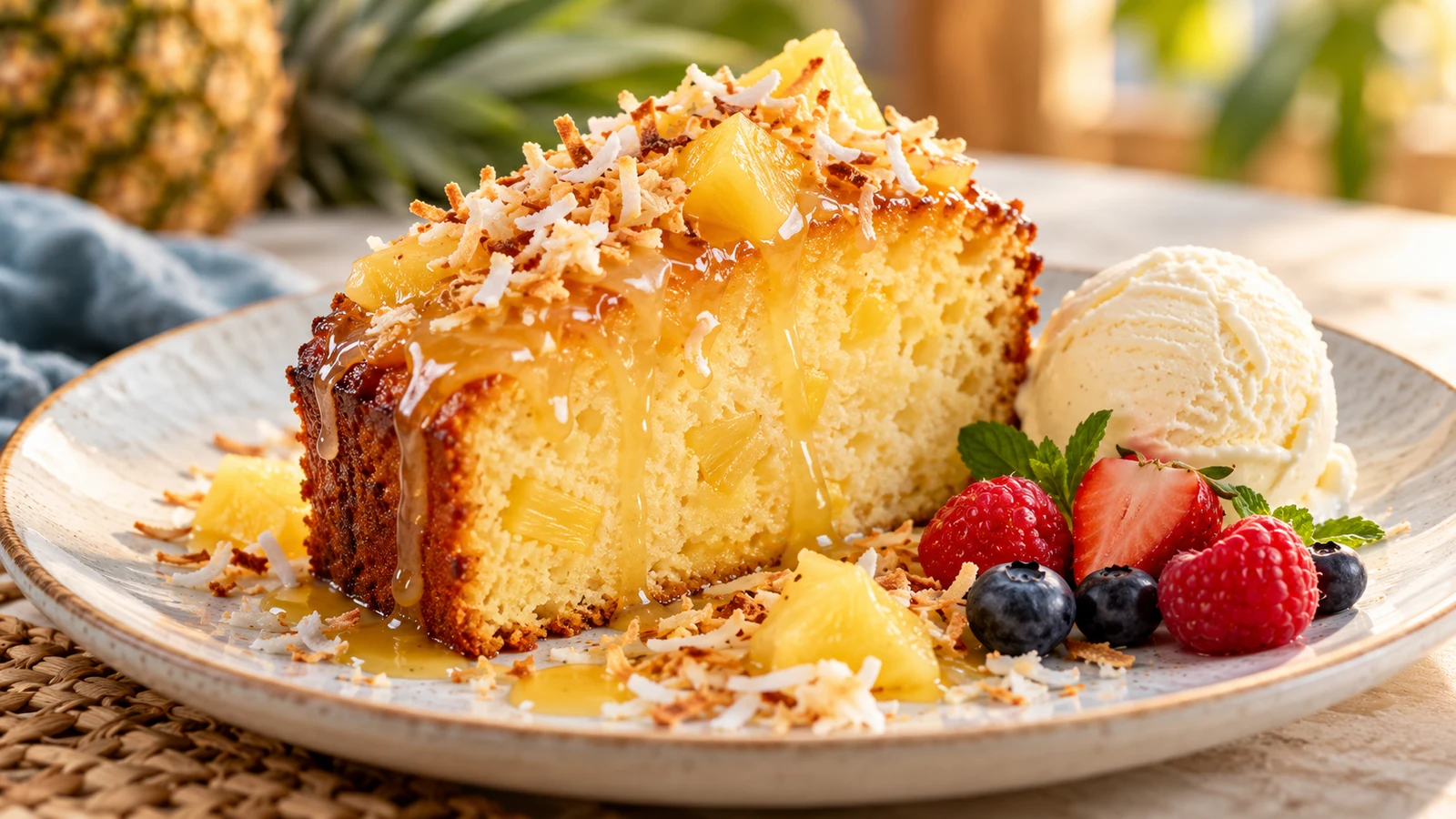
Serve the cake at room temperature with fresh berries, toasted coconut, or lightly whipped cream. For clean slices, let the glaze set for 20 minutes and wipe a serrated knife between cuts. The tropical crumb also pairs well with coffee or unsweetened iced tea.
For a simple plated dessert, place one slice beside berries and a spoonful of whipped cream. A small scoop of vanilla ice cream is especially good with a slightly warmed, unglazed slice. Keep portions modest because the cake is rich.
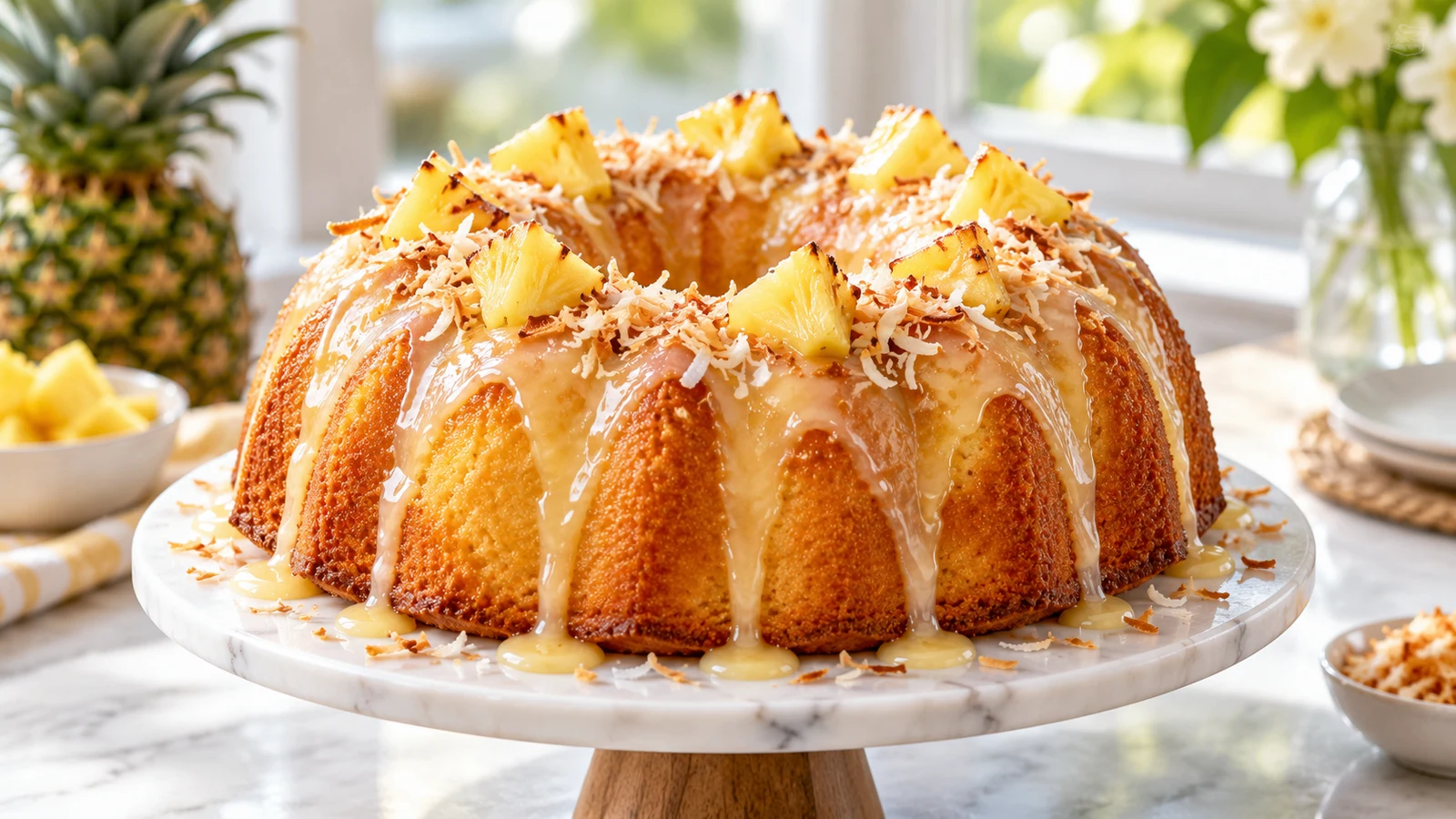
At a brunch or buffet, cut thinner slices and arrange them only shortly before serving so the exposed crumb stays moist. The decorative shape and pale glaze make this pineapple pound cake recipe suitable for spring gatherings, showers, and holiday tables.
Make-Ahead Instructions
Bake the cake one day before serving for a convenient dessert with a settled, even crumb. Cool it completely, leave it unglazed, and seal it in an airtight container at room temperature. Add the glaze several hours before serving and let it set before covering.
The pineapple can also be drained in advance. Refrigerate the drained fruit and reserved juice separately in covered containers, then bring the fruit to room temperature before mixing. Do not leave prepared pineapple or eggs sitting at room temperature for an extended period.
For longer planning, freeze the unglazed cake. Thaw it while wrapped, allow it to reach room temperature, and glaze only after surface condensation has disappeared. This method protects the decorative finish and makes the pineapple pound cake recipe practical for busy celebrations.
How to Store, Freeze, and Reheat
Keep the unglazed or sugar-glazed cake in an airtight container at room temperature for up to 3 days, or refrigerate it for up to 5 days. Refrigerate within 2 hours if you use cream cheese glaze. Bring chilled slices to room temperature or microwave each for 8–10 seconds.
To freeze, wrap the fully cooled cake or individual slices tightly in plastic and foil, then freeze for up to 3 months. Freeze it without glaze for the best finish and thaw overnight in the refrigerator while wrapped. See the USDA’s freezing and food safety guidance for general safe-storage practices.
Individual wrapping makes it easy to thaw only the number of servings needed. Once thawed, avoid repeated freezing and thawing because moisture loss can make the crumb less tender. Keep cut surfaces tightly covered during storage.
Troubleshooting This Pineapple Pound Cake Recipe
Why Is the Center Gummy?
The pineapple may have been too wet, the flour may have been undermeasured, or the cake may have left the oven too soon. Drain the fruit for 10 minutes, weigh it after draining, and confirm doneness in the thickest section.
Why Did the Cake Sink?
Common causes include overcreaming, opening the oven early, excess pineapple juice, expired baking powder, or underbaking. Keep the door closed for the first 60 minutes and use both visual cues and internal temperature to judge doneness.
Why Is the Cake Dry?
Too much flour or excess baking time can dry the crumb. Use 360 g of flour, begin checking at 68 minutes, and remove the cake when it reaches the stated doneness cues. Squeezing the pineapple completely dry can also remove useful moisture.
Why Did the Cake Stick to the Pan?
An uncoated groove, an unsuitable spray, or an overly long cooling period is usually responsible. Coat the pan thoroughly, especially around the center tube, and invert after 15–20 minutes. Loosen only the accessible edges so the patterned surface remains intact.
Why Does the Batter Look Curdled?
Cold eggs or eggs added too quickly can break the butter emulsion. Continue with the recipe if the separation is slight; alternating flour and sour cream often brings the batter together. Next time, use room-temperature ingredients and add each egg gradually.
Why Is the Outside Too Dark?
A dark pan or an oven that runs hot can brown the crust before the center finishes. Check oven accuracy with a separate thermometer and shield the top loosely with foil if it browns too quickly, as directed.
Frequently Asked Questions
Can I use pineapple packed in syrup?
Yes, but drain it well and expect a sweeter result. Pineapple packed in juice provides better control over sweetness and gives the glaze a brighter flavor.
Can I use fresh pineapple in this pineapple pound cake recipe?
Yes, although canned crushed pineapple is more predictable. Finely chop fresh pineapple, briefly cook it until softened, cool it completely, and drain it. Its variable water content means the final crumb may differ from the canned-fruit version.
Can I bake the batter in loaf pans?
Yes. Divide it between two 9-by-5-inch loaf pans, filling each no more than two-thirds full. Bake at 325°F (165°C) for approximately 55–70 minutes and use the same visual and temperature tests for doneness.
Can I turn this into a sour cream pound cake recipe?
The batter already contains sour cream, but omitting the pineapple would alter its moisture and volume. For a true sour cream pound cake recipe, use a tested formula designed without fruit rather than modifying these proportions.
Can I adapt the batter for 7up recipes pound cake?
No direct substitution is recommended. 7up recipes pound cake uses soda differently from the pineapple and sour cream in this batter. Adding soda here would introduce untested liquid, sweetness, acidity, and carbonation.
Can I add cocoa for a chocolate pound cake recipe?
Do not replace flour with cocoa without a tested ratio. Cocoa absorbs moisture and changes structure, so a dedicated chocolate pound cake recipe is more dependable than converting this pineapple batter.
Is this the same as an afroman lemon pound cake recipe?
No. An afroman lemon pound cake recipe emphasizes lemon flavor and follows its own method and proportions. This recipe is built around drained crushed pineapple, sour cream, vanilla, and pineapple glaze.
Can I make the glaze ahead?
It is best mixed shortly before use because it can crust during storage. If necessary, cover the bowl tightly, keep it at room temperature for a short period, and whisk again before spooning it over the fully cooled cake.
How should I handle and store the eggs?
Use clean, uncracked refrigerated eggs and return unused eggs promptly to the refrigerator. The USDA provides additional shell egg handling recommendations.
Printable Recipe Card
- Prep time: 25 minutes
- Bake time: 70–85 minutes
- Cooling time: 2 hours
- Yield: 12–16 slices
Equipment: 10- to 12-cup Bundt pan, mixer, strainer, bowls, cooling rack, and instant-read thermometer.
Ingredients: 1 cup butter; 2 cups sugar; 4 eggs; 2 teaspoons vanilla; 3 cups flour; 1 teaspoon baking powder; 1/2 teaspoon salt; 1/2 cup sour cream; 1 cup drained crushed pineapple. For the glaze, use 1 1/2 cups confectioners’ sugar, 2–3 tablespoons pineapple juice, and a pinch of salt.
Directions: Heat the oven to 325°F (165°C) and prepare the pan. Drain the pineapple. Whisk the dry ingredients. Cream the butter and sugar, add the eggs and vanilla, then alternate the dry mixture with sour cream. Fold in pineapple, bake for 70–85 minutes, cool in the pan for 15–20 minutes, invert, cool completely, and glaze.
Approximate nutrition per slice, based on 16 slices: 410 calories, 17 g fat, 61 g carbohydrate, 4 g protein, and 180 mg sodium. Values vary with brands and serving size.
A Reliable Cake for Any Occasion
With properly drained fruit, gentle mixing, and careful doneness checks, this pineapple pound cake recipe delivers a tender crumb and balanced pineapple flavor. Let the cake cool fully before glazing, then give the finish time to set for clean, attractive slices.
Whether served simply with coffee or dressed up with berries and whipped cream, the cake is easy to prepare ahead and generous enough for a gathering. Keep the tested quantities and moisture controls intact, and this pineapple pound cake recipe will reward you with consistent results.
Reviews
Reader reviews are managed separately (outside this build).