Soup
Easy Creamy Canned Tomato Soup Recipe in 30 Minutes
Try a creamy canned tomato soup recipe in just 30 minutes using simple pantry staples. Get cozy homemade flavor with an easy, fuss-free method now.
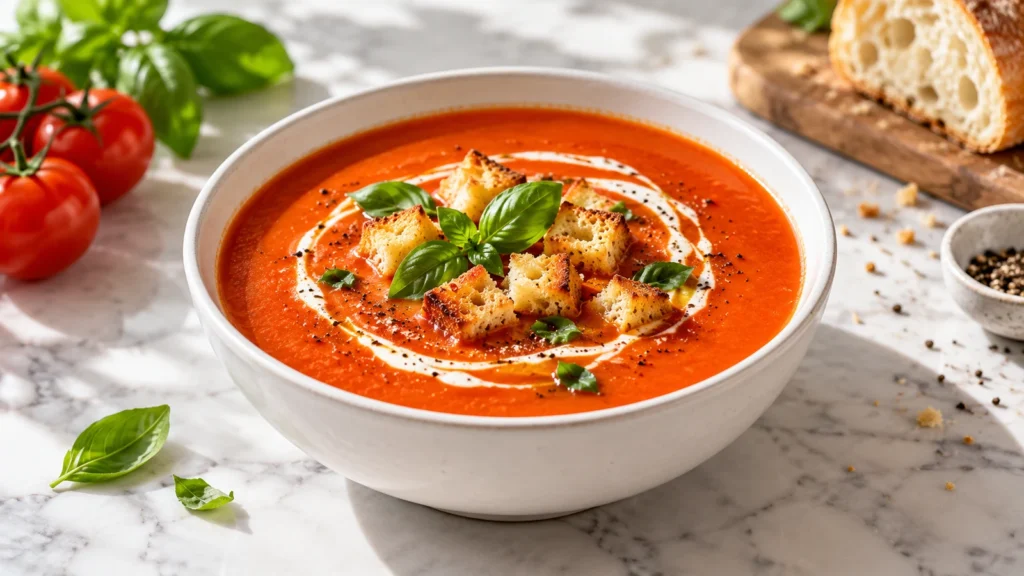
This canned tomato soup recipe turns pantry staples into a smooth, satisfying meal in just 30 minutes. Onion, garlic, basil, tomato paste, and cream create the balanced flavor of a longer-simmered creamy tomato soup recipe while canned whole tomatoes keep preparation simple.
The recipe makes about six cups, or four main-dish servings. You can blend it until silky, leave it rustic, or adapt it for vegan and dairy-free diets without complicated equipment. Unlike a seasonal fresh tomato soup recipe, it delivers dependable flavor throughout the year.
Table of Contents
Why You’ll Love This Canned Tomato Soup Recipe
- Fast: Preparation takes 10 minutes, and cooking takes about 20 minutes.
- Pantry-friendly: Canned whole tomatoes produce excellent flavor year-round.
- Flexible texture: Blend it completely, partially, or not at all.
- Balanced: Tomato paste adds depth, while cream softens tomato acidity.
- Make-ahead friendly: The flavor improves after a night in the refrigerator.
- Easy to adapt: Simple substitutions can make the soup dairy-free, vegan, smoky, spicy, or extra rich.
Ingredients
- 2 tablespoons (30 ml) olive oil
- 1 medium yellow onion, diced, about 1 cup (150 g)
- 3 garlic cloves, minced
- 2 tablespoons (33 g) tomato paste
- 2 cans whole peeled tomatoes with juice, 28 ounces each (794 g each)
- 2 cups (475 ml) low-sodium vegetable broth
- 1 teaspoon dried basil, or 1 tablespoon chopped fresh basil
- 1 teaspoon kosher salt, plus more as needed
- 1/4 teaspoon black pepper
- 1/2 teaspoon sugar, optional
- 1/2 cup (120 ml) heavy cream
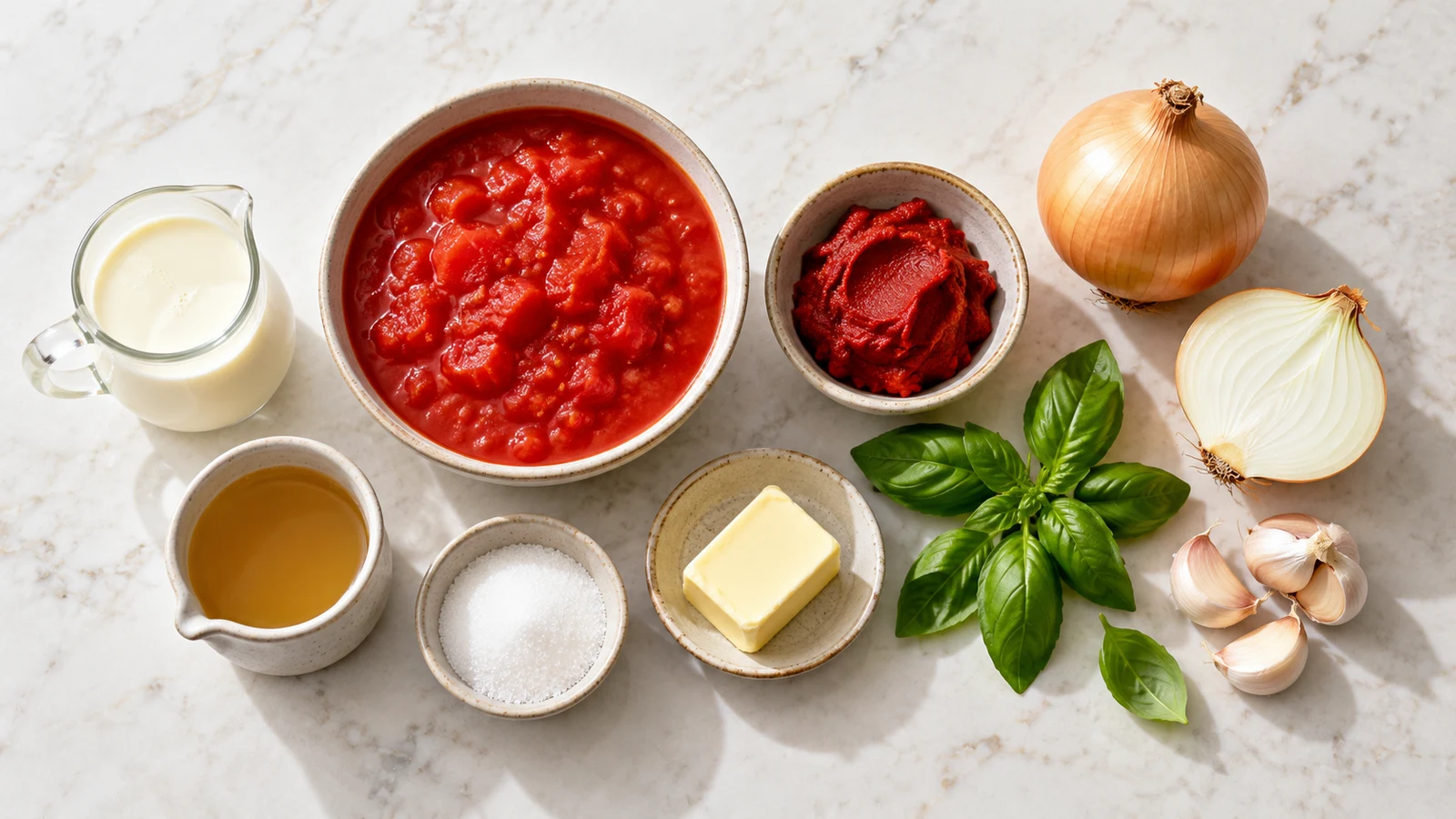
What Each Ingredient Does
Olive oil gently cooks the onion and carries its flavor throughout the soup. Yellow onion supplies sweetness without overpowering the tomatoes, while garlic adds a savory aroma. Cooking both carefully creates a mellow foundation instead of a harsh or bitter one.
Tomato paste concentrates tomato flavor and gives this canned tomato soup recipe greater depth. Whole peeled tomatoes provide both fruit and juice, while broth controls the consistency. Basil adds a familiar herbal note, and salt and pepper sharpen the other flavors.
Heavy cream rounds out acidity and supplies the velvety finish expected from a creamy tomato soup recipe. Sugar is optional because tomato brands differ in sweetness. Taste after adding the cream, then use sugar only when the soup still seems unusually sharp.
Equipment
Use a large saucepan or Dutch oven, a wooden spoon, and an immersion blender. If you do not own an immersion blender, use a countertop blender, potato masher, or food mill. When blending hot soup, work in small batches with the blender lid vented and covered loosely with a towel.
How to Make This Canned Tomato Soup Recipe
- Soften the aromatics: Heat the olive oil in a large saucepan over medium heat. Add the onion and cook for 5 to 6 minutes, stirring occasionally, until soft but not browned. Add the garlic and cook for 30 seconds.
- Cook the tomato paste: Stir in the tomato paste and cook for 1 to 2 minutes, until it darkens slightly. This removes its raw taste and builds savory depth.
- Simmer: Add the tomatoes and their juice, vegetable broth, basil, salt, and pepper. Break up the tomatoes with the spoon, bring to a gentle boil, then reduce the heat and simmer uncovered for 12 to 15 minutes.
- Blend: Remove the pan from the heat. Blend until smooth with an immersion blender, or blend only half for a rustic texture.
- Add the cream: Let the soup stop bubbling, then slowly stir in room-temperature heavy cream. Warm over low heat for 2 minutes without boiling. Taste before adding the optional sugar.
How to Know When the Soup Is Ready
The onion should be completely tender before the liquid enters the pan. During simmering, the tomatoes will soften, the broth will take on a deeper red color, and the raw aroma of tomato paste will disappear. The finished soup should coat a spoon lightly without resembling thick pasta sauce.
After blending, taste a cooled spoonful because very hot food can hide seasoning. A good batch should taste savory and tomato-forward, with enough cream to soften the edges rather than conceal the tomatoes.
Choosing the Best Canned Tomatoes
Whole peeled tomatoes packed in juice generally deliver the freshest canned flavor because they undergo less processing before packing. The National Center for Home Food Preservation provides additional information about whole tomatoes packed in tomato juice.
Choose tomatoes with a short ingredient list and no added herbs so you control the seasoning. Crushed tomatoes are a convenient alternative and create a slightly thicker result, although flavor and consistency vary among brands.
Tomatoes packed in juice are preferable when you want a clean, bright flavor. Products packed in puree can also work, but they may make the soup thicker and sweeter. If your canned tomatoes contain added salt, season cautiously before the final tasting.
Expert Tips for Better Tomato Soup
Build Flavor Before Simmering
Keep the heat at medium while cooking the onion. Browning can introduce caramelized flavor, but this quick soup tastes cleaner when the onion merely softens. Stir the garlic constantly during its brief cooking time so it becomes fragrant without scorching.
Do not skip cooking the tomato paste. Press it across the hot surface of the pan and stir until its color deepens slightly. This small step makes a canned tomato soup recipe taste less like warmed canned tomatoes and more like a deliberately layered homemade meal.
Balance Acidity Gradually
Add the cream first, taste, and then add sugar 1/4 teaspoon at a time. Too much sugar makes soup taste like sauce. A pinch of baking soda can reduce sharpness, but use no more than 1/8 teaspoon because it may foam and flatten the flavor.
Protect the Creamy Texture
Use room-temperature cream, remove the soup from high heat, and add the dairy slowly. Never let it boil afterward. These habits help this creamy tomato soup recipe remain smooth instead of becoming grainy or developing small flecks of separated dairy.
Control the Consistency
Simmer uncovered for several extra minutes to thicken the soup, or add broth 1/4 cup at a time to thin it. Remember that it thickens slightly as it cools, so stop reducing when it is a little looser than your ideal serving consistency.
Blend Safely and Effectively
Keep an immersion blender head fully submerged to reduce splashing. Tilt the pot slightly if necessary to create a deeper pool. With a countertop blender, never fill the jar to the top. Hot liquid expands and produces steam, so blend small batches at low speed.
For another approach to seasoning and richness, compare this creamy tomato soup recipe. It can help you decide whether you prefer a pronounced tomato flavor or a softer, dairy-forward finish.
Variations and Substitutions
Dairy-Free or Vegan Version
Replace heavy cream with unsweetened cashew cream, full-fat coconut milk, or a neutral plant-based cooking cream. Confirm that the broth contains no animal ingredients for a fully vegan tomato soup. Coconut milk is convenient but contributes a subtle coconut flavor.
Fresh Tomato Soup Recipe Conversion
For a fresh tomato soup recipe, replace the canned tomatoes with 3 1/2 pounds (1.6 kg) ripe tomatoes. Core and chop them, increase simmering time to 30 to 40 minutes, and add broth only as needed because fresh tomatoes release varying amounts of water.
A fresh tomato soup recipe is best during peak tomato season, when ripe fruit supplies plenty of sweetness and aroma. Home-preserved tomatoes require tested acidification and processing procedures; consult these tomato-canning safety guidelines.
Recipe for Tomato Soup With Tinned Tomatoes
A recipe for tomato soup with tinned tomatoes uses the same product called canned tomatoes in the United States. Choose whole peeled tomatoes in juice and follow the listed weights for consistent results. For measurements and ingredient options tailored to that terminology, see this tinned tomato soup guide.
Panera-Inspired Variation
For a sweeter, richer panera tomato soup recipe, add 1 teaspoon sugar, increase the cream to 3/4 cup (180 ml), and garnish with croutons. This Panera-style tomato soup variation offers more details.
The extra cream makes this panera tomato soup recipe rounder and more indulgent than the base version. Taste before adding any additional salt, especially when serving it with seasoned croutons or a salty sandwich.
Fire-Roasted, Spicy, or Herbed Options
Replace the whole peeled tomatoes with an equal quantity of fire-roasted tomatoes for a smoky variation. For gentle heat, add a pinch of crushed red pepper with the garlic. Fresh oregano or thyme can complement the basil, but use a restrained amount so the tomato remains central.
Lighter Creamy Tomato Soup Recipe
For a lighter creamy tomato soup recipe, use whole milk instead of heavy cream. Temper it by whisking a little warm soup into the milk before adding it to the pan. The result will be thinner, so reduce the soup slightly before incorporating the milk.
Serving Ideas
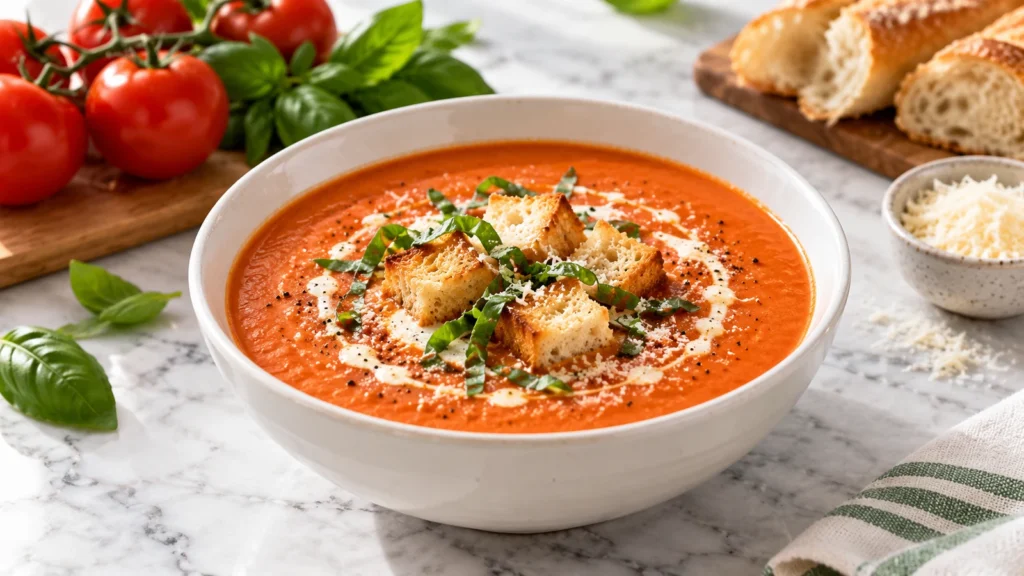
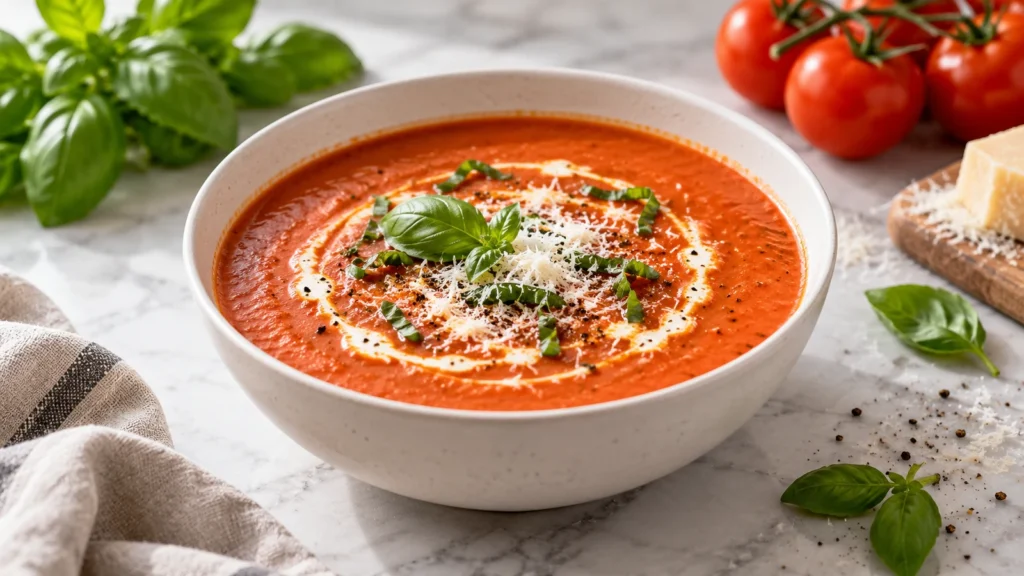
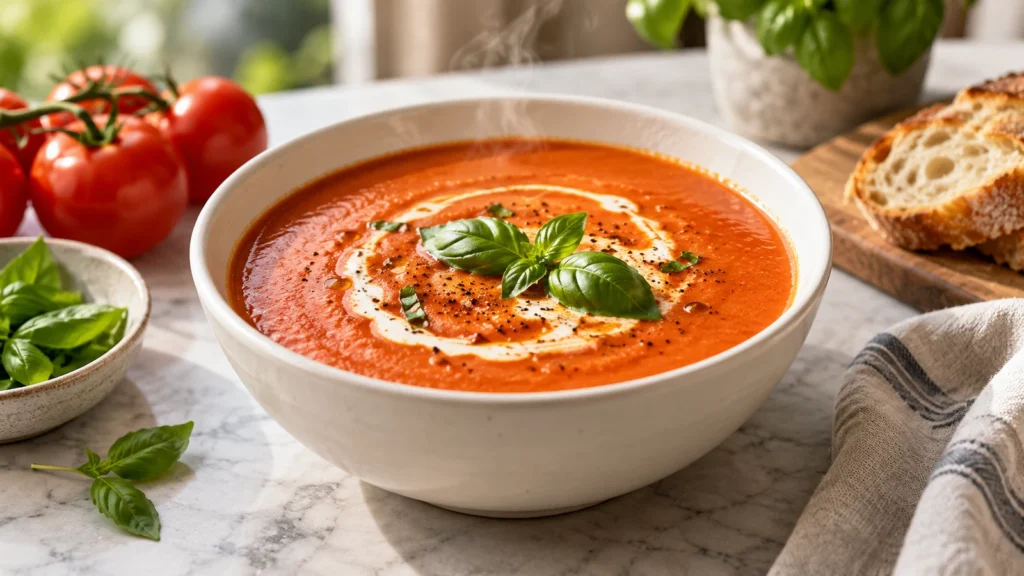
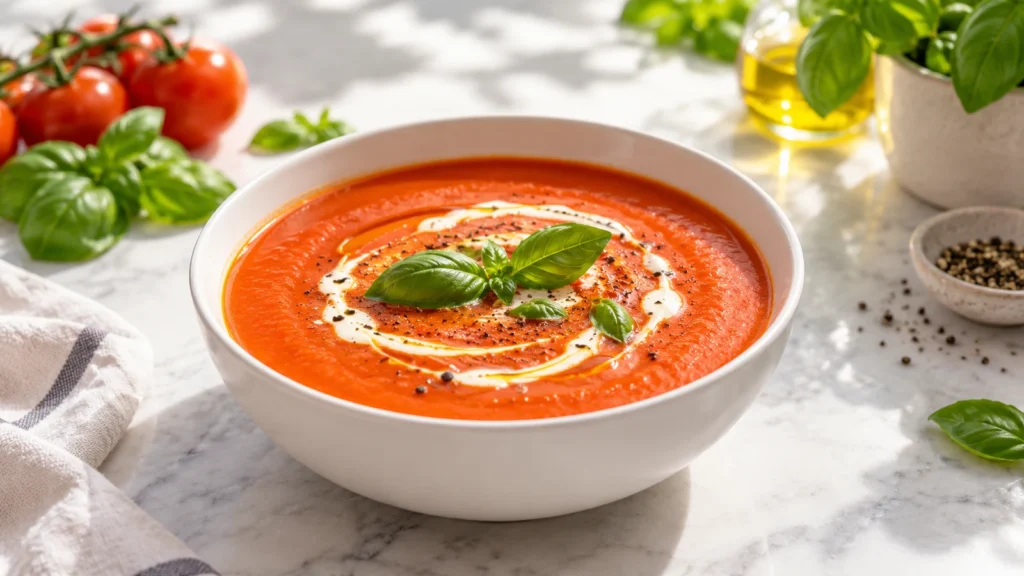
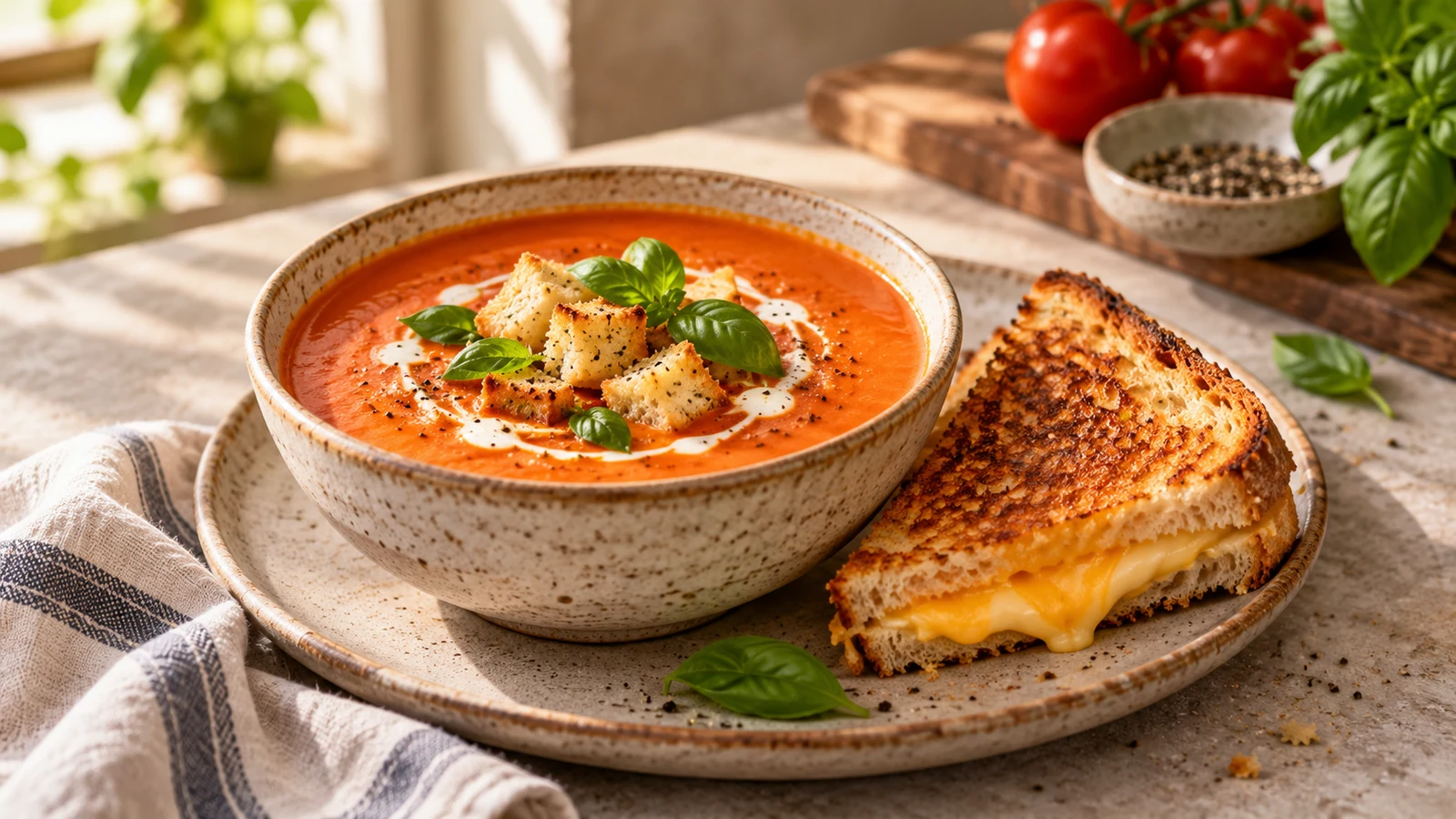
Serve about 1 1/2 cups per person as a main course or 1 cup as a starter. Pair it with grilled cheese, garlic bread, a green salad, or roasted vegetables. Basil, black pepper, croutons, or a small cream swirl make simple garnishes.
For a hearty lunch, add a sandwich filled with sharp cheddar, mozzarella, or roasted vegetables. The crisp bread contrasts with the silky soup. A side salad dressed with a tart vinaigrette keeps a rich creamy tomato soup recipe from feeling too heavy.
When serving the soup as a starter, choose a restrained garnish and smaller bowl. For a casual dinner, set out basil, croutons, pepper, and cream so everyone can finish their own portion. Warm bowls help the soup stay hot at the table.
Make-Ahead, Storage, Freezing, and Reheating
Making the Soup Ahead
This canned tomato soup recipe can be made two days ahead. Cool it promptly, transfer it to an airtight container, and refrigerate it. Keeping the cream separate until reheating gives the smoothest texture, although fully finished soup also stores well.
If you prepare the soup for guests, blend and refrigerate the tomato base in advance. Reheat it gently, add the cream, and make the final seasoning adjustments shortly before serving. Prepare crisp garnishes separately so they do not become soft.
Refrigerating Leftovers
Refrigerate the cooled soup in an airtight container for up to four days. Store garnishes separately. Divide a large batch among shallow containers so it cools efficiently, and return individual portions to the refrigerator rather than repeatedly warming the entire batch.
Freezing Tomato Soup
Freeze the soup without cream for the best consistency, leaving expansion space in the container, for up to three months. Follow this practical guidance for freezing soup safely. Thaw overnight in the refrigerator.
Freeze meal-size portions so you can thaw only what you need. Label each container with the date and note that the cream still needs to be added. After thawing, the tomato base may look slightly separated, but stirring or blending restores an even consistency.
Reheating Without Curdling
Reheat in a saucepan over medium-low heat, stirring frequently, until it reaches 165°F (74°C). Do not boil cream-based soup. If it separates slightly, whisk it vigorously or briefly use an immersion blender. Add a splash of broth if refrigeration has made it too thick.
Troubleshooting This Canned Tomato Soup Recipe
Why Is My Soup Too Acidic?
The tomatoes may be naturally sharp or may need longer cooking. Simmer the soup for several additional minutes, add the cream, and taste again. If necessary, stir in the optional sugar gradually. Avoid adding the full quantity before tasting because sweetness cannot easily be removed.
Why Is My Soup Too Thin?
Return it to low heat and simmer uncovered until excess water evaporates. Stir regularly so the bottom does not scorch. If you used a tomato product with a thinner juice, additional reduction may be necessary. The texture will also become slightly thicker after cooling.
Why Is My Soup Too Thick?
Add low-sodium vegetable broth 1/4 cup at a time, stirring after each addition. Warm the soup before judging its final consistency because chilled tomato soup can look considerably thicker than it will once hot.
Why Did the Cream Separate?
The soup was probably boiling or the cream was very cold. Remove the pan from the heat and blend briefly until smooth. Next time, bring the cream toward room temperature, let the soup stop bubbling, and incorporate it slowly over low heat.
Why Does It Taste Flat?
Flat soup usually needs either salt, acidity balance, or more concentrated tomato flavor. Taste a cooled spoonful, add salt in small pinches, and allow it to dissolve. If the flavor remains weak, simmer uncovered briefly rather than immediately adding sugar or cream.
Why Does It Taste Bitter?
Scorched garlic or tomato paste can cause bitterness. Keep the heat moderate and stir during both stages. If a batch tastes only mildly bitter, cream may soften it, but a strongly burned flavor cannot be fully corrected.
Frequently Asked Questions
Can I Make This Canned Tomato Soup Recipe Without a Blender?
Yes. Use crushed tomatoes for an even rustic texture, or break whole tomatoes into small pieces with a spoon or potato masher while they simmer. A food mill also creates a smooth result without an electric blender.
Can I Use Milk Instead of Heavy Cream?
Yes, but the soup will be thinner and more likely to curdle. Use whole milk, temper it with a little warm soup, and add it over low heat. These precautions help preserve the finish of a lighter creamy tomato soup recipe.
Can I Use Fire-Roasted Tomatoes?
Yes. Substitute them in equal quantities for a smokier soup, but taste before adding sugar because some brands are naturally sweeter. Their pronounced flavor also pairs well with black pepper and grilled cheese.
Can I Use Diced or Crushed Tomatoes?
Yes. Use the same total weight, including juice. Crushed tomatoes blend quickly and often make thicker soup. Diced tomatoes sometimes contain firming agents, so they may retain small pieces even after simmering and require more thorough blending.
Is a Recipe for Tomato Soup With Tinned Tomatoes Different?
No. A recipe for tomato soup with tinned tomatoes uses British terminology for the same shelf-stable tomato product. Check the drained and total package weights carefully, and include the packing juice because it contributes necessary liquid and flavor.
Can I Turn This Into a Fresh Tomato Soup Recipe?
Yes. Follow the fresh-tomato conversion above, using 3 1/2 pounds (1.6 kg) ripe tomatoes and simmering for 30 to 40 minutes. Because their water content varies, add broth only as needed when preparing a fresh tomato soup recipe.
How Is This Different From a Panera Tomato Soup Recipe?
The base soup is less sweet and uses less cream. A panera tomato soup recipe typically aims for a richer, sweeter restaurant-style profile. The variation above increases both sugar and cream while preserving the underlying tomato flavor.
Can I Double the Recipe?
Yes. Double every ingredient and use a pot large enough to leave safe room for stirring and blending. The soup may take longer to reach a simmer, but the active steps remain the same. Season carefully near the end rather than automatically doubling extra salt.
Can I Freeze the Finished Creamy Soup?
You can, but dairy may separate after thawing. Freezing the tomato base and adding cream during reheating produces a better texture. If the finished soup was frozen, thaw it in the refrigerator and reheat gently while whisking.
What Can I Add for More Protein?
Serve the soup with a protein-rich sandwich, or pair it with beans, lentils, eggs, or a substantial salad. Avoid stirring unlisted additions into the full pot unless you are comfortable changing its classic smooth texture and tomato-forward flavor.
30-Minute Tomato Soup Recipe Card
- Prep time: 10 minutes
- Cook time: 20 minutes
- Total time: 30 minutes
- Yield: 4 main-dish servings, about 6 cups
Ingredients: 2 tablespoons (30 ml) olive oil; 1 diced onion (150 g); 3 minced garlic cloves; 2 tablespoons (33 g) tomato paste; two 28-ounce (794 g) cans whole peeled tomatoes; 2 cups (475 ml) vegetable broth; 1 teaspoon dried basil; 1 teaspoon kosher salt; 1/4 teaspoon pepper; up to 1/2 teaspoon sugar; and 1/2 cup (120 ml) heavy cream.
- Cook onion in oil over medium heat for 5 to 6 minutes; add garlic and cook 30 seconds.
- Cook tomato paste for 1 to 2 minutes.
- Add tomatoes, broth, basil, salt, and pepper. Simmer for 12 to 15 minutes.
- Remove from heat and blend to the desired texture.
- Slowly stir in cream over low heat without boiling. Taste and add sugar only if needed.
Notes: Thin with extra broth or thicken by simmering uncovered. For dairy-free tomato soup, use unsweetened cashew cream or plant-based cooking cream.
Estimated nutrition per serving: 285 calories, 20 g fat, 24 g carbohydrate, 6 g protein, 6 g fiber, and 900 mg sodium. Values vary by product.
Storage: Refrigerate for up to four days or freeze without cream for up to three months. Reheat gently to 165°F (74°C).
A Dependable Homemade Tomato Soup
This canned tomato soup recipe proves that a flavorful homemade lunch or dinner can begin with dependable pantry ingredients and reach the table in half an hour. Careful cooking, gradual seasoning, and gentle handling of the cream produce a smooth, balanced bowl without unnecessary complexity.
Keep the base method handy for busy evenings, then adapt it into a creamy tomato soup recipe, fresh tomato soup recipe, or panera tomato soup recipe when the occasion calls for a different finish. Each version begins with the same useful principles: build flavor early, blend safely, and taste before making final adjustments.
There are no reviews yet. Be the first one to write one.
Reviews
Reader reviews are managed separately (outside this build).