Soup
creamy tomato basil soup recipe: Easy, Cozy, Irresistible
Discover this creamy tomato basil soup recipe with San Marzano tomatoes, fresh basil, cream and Parmesan for an easy, cozy, restaurant-style bowl.
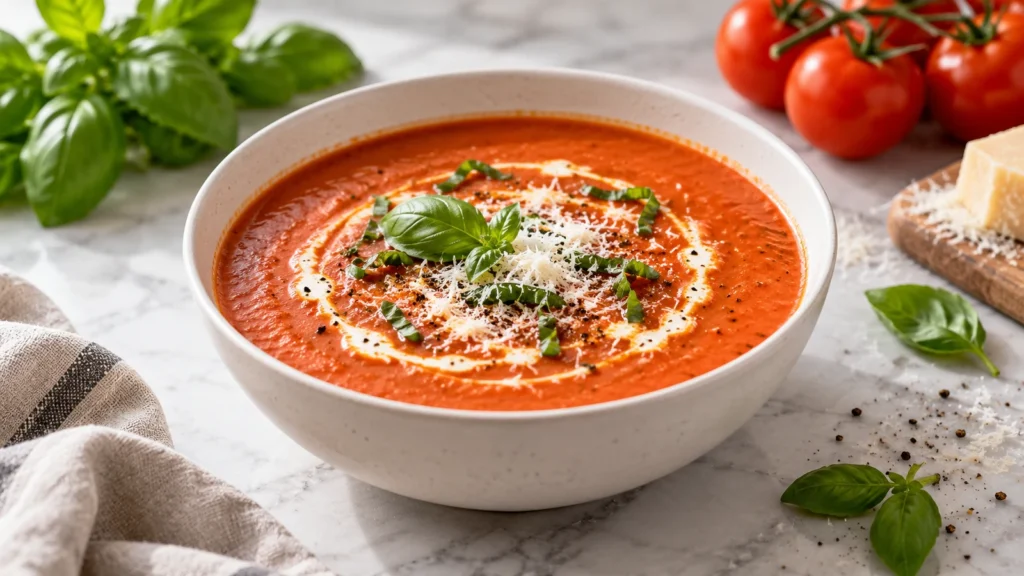
This creamy tomato basil soup recipe turns simple pantry ingredients into a smooth, cozy meal in about 45 minutes. San Marzano tomatoes, aromatic vegetables, fresh basil, Parmesan, and cream create a balanced soup that is rich without tasting heavy.
The recipe makes six servings and requires only a large pot plus an immersion blender or countertop blender. Pair it with grilled cheese, garlic bread, or a crisp salad for an easy lunch or weeknight dinner.
Unlike a basic creamy tomato soup recipe, this version layers flavor by cooking the tomato paste before simmering the tomatoes. Fresh basil is added after the pot leaves the heat, preserving its fragrant character and bright finish.
Table of Contents
Why You’ll Love This Creamy Tomato Basil Soup Recipe
- Full tomato flavor: Tinned whole tomatoes provide consistent sweetness and body year-round.
- Simple method: Everything cooks in one pot before blending.
- Flexible ingredients: Vegetarian, dairy-free, fresh-tomato, and roasted-tomato options are included.
- Easy to adjust: You can quickly correct soup that tastes acidic, bland, thin, or grainy.
- Make-ahead friendly: The tomato base stores and freezes well before the dairy is added.
This creamy tomato basil soup recipe is also easy to scale. Use a larger pot when doubling it, and allow extra time for the increased volume to reach a steady simmer.
Fresh Versus Tinned Tomatoes
Quality tinned tomatoes are the most reliable choice outside peak tomato season. Whole peeled San Marzano-style tomatoes usually have better flavor and fewer texture-altering additives than pre-crushed varieties. Cento, Bianco DiNapoli, and Mutti are dependable options, although any good whole peeled tomatoes packed in juice will work.
For a fresh tomato soup recipe, replace the two tins with 4 pounds (1.8 kg) ripe Roma or plum tomatoes. Core and quarter them, then roast at 425°F (220°C) for 30 to 40 minutes before adding them to the pot. Peeling is optional because thorough blending removes most noticeable texture.
The best tomatoes for a fresh tomato soup recipe should feel heavy, smell fragrant near the stem, and have deep, even color. Roma and plum varieties contain less water than many slicing tomatoes, so they create a fuller texture after roasting.
If pantry convenience is your priority, this recipe for tomato soup with tinned tomatoes offers more guidance on selecting and cooking canned tomatoes.
A recipe for tomato soup with tinned tomatoes is often more dependable during winter because canned tomatoes are packed when ripe. Taste the tomatoes before adding sugar, since natural sweetness and acidity vary among brands.
Ingredients
- 2 tablespoons olive oil
- 1 medium yellow onion, diced
- 1 medium carrot, peeled and diced
- 3 garlic cloves, minced
- 2 tablespoons tomato paste
- 2 cans (28 ounces/794 g each) whole peeled tomatoes, with juices
- 2 cups (480 ml) low-sodium vegetable or chicken stock
- 1 teaspoon dried oregano
- 1 teaspoon granulated sugar, optional
- 3/4 teaspoon kosher salt, plus more to taste
- 1/4 teaspoon black pepper
- 1/2 cup loosely packed fresh basil leaves, plus more for serving
- 3/4 cup (180 ml) heavy cream, at room temperature
- 1/3 cup (30 g) finely grated Parmesan, plus more for serving
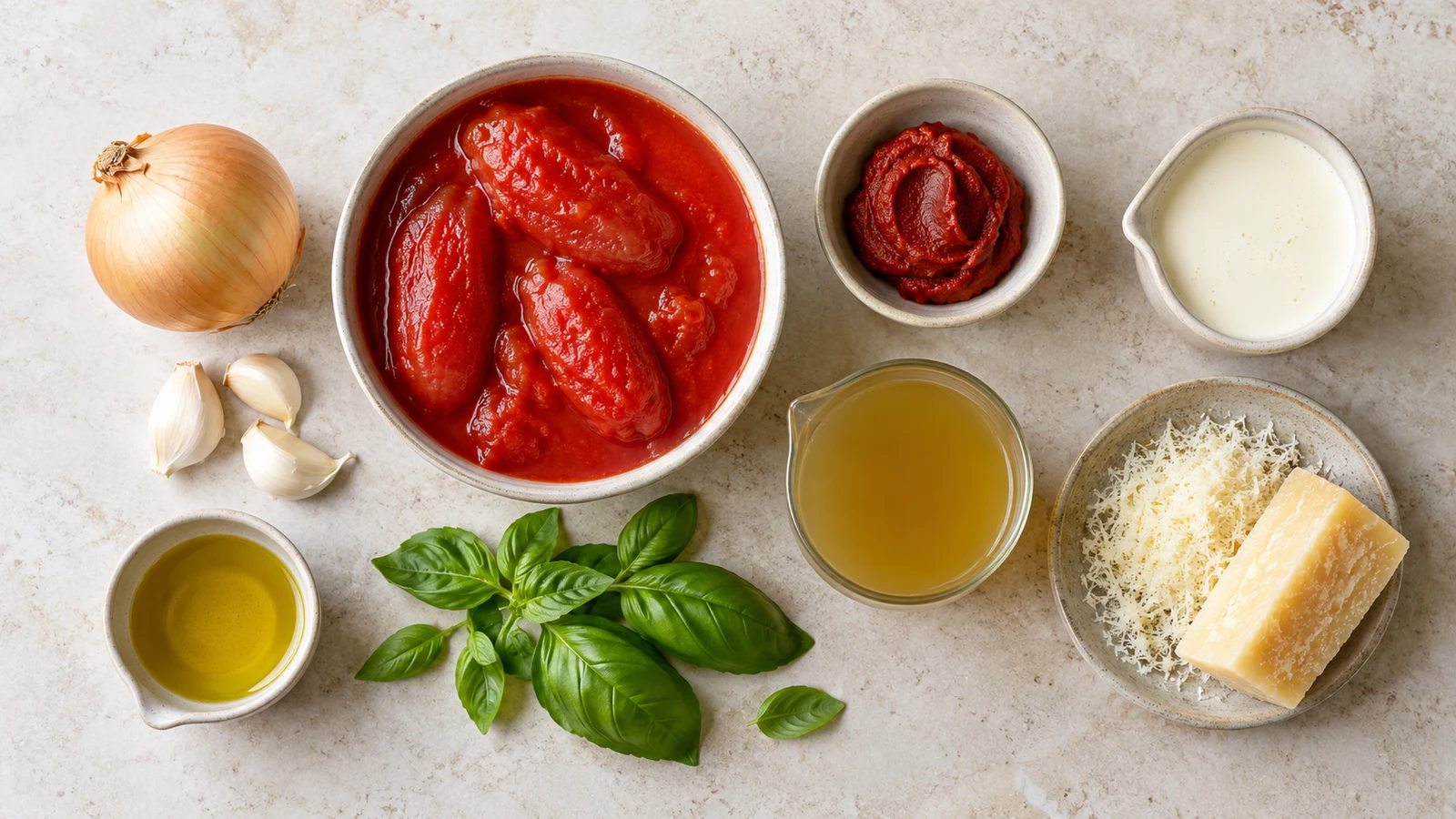
Vegetable stock keeps the soup vegetarian; check that the Parmesan uses vegetarian rennet if needed. For a dairy-free version, use unsweetened cashew cream or full-fat coconut milk and omit the Parmesan or replace it with nutritional yeast. Coconut milk adds a mild coconut note, while cashew cream tastes more neutral.
Why Each Key Ingredient Matters
Onion and carrot build natural sweetness, while garlic and oregano add savory depth. Tomato paste supplies concentrated flavor and helps this creamy tomato soup recipe taste as though it simmered much longer than it did.
Heavy cream softens acidity and produces a velvety finish. Parmesan contributes saltiness and umami, but it should be finely grated so it melts smoothly. Fresh basil is delicate, so adding it away from direct heat prevents its flavor from becoming dull.
How to Make This Creamy Tomato Basil Soup Recipe
- Soften the vegetables. Heat the olive oil in a large, heavy pot over medium heat. Add the onion and carrot and cook for 7 to 9 minutes, stirring occasionally, until soft but not browned.
- Build the flavor. Add the garlic and tomato paste. Cook for 1 to 2 minutes, stirring constantly, until the paste darkens slightly and smells sweet.
- Simmer. Add the tomatoes and their juices, crushing each tomato with a spoon. Stir in the stock, oregano, salt, pepper, and optional sugar. Bring to a gentle boil, reduce the heat, and simmer uncovered for 20 to 25 minutes.
- Add the basil. Remove the pot from the heat and stir in the basil. Let the soup cool for 5 minutes before blending.
- Blend safely. Use an immersion blender directly in the pot until smooth. For a countertop blender, work in small batches, fill the jug no more than halfway, remove or loosen the center vent, and cover it with a folded towel so steam can escape.
- Finish gently. Return the blended soup to low heat. Slowly stir a ladleful of warm soup into the room-temperature cream, then pour the mixture into the pot. Add the Parmesan and warm for 3 to 5 minutes without boiling.
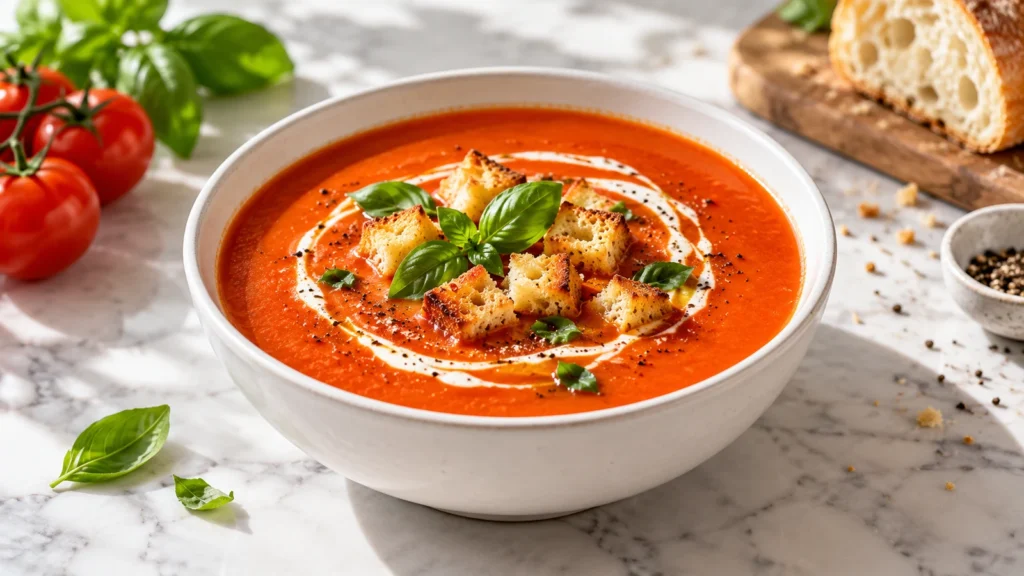
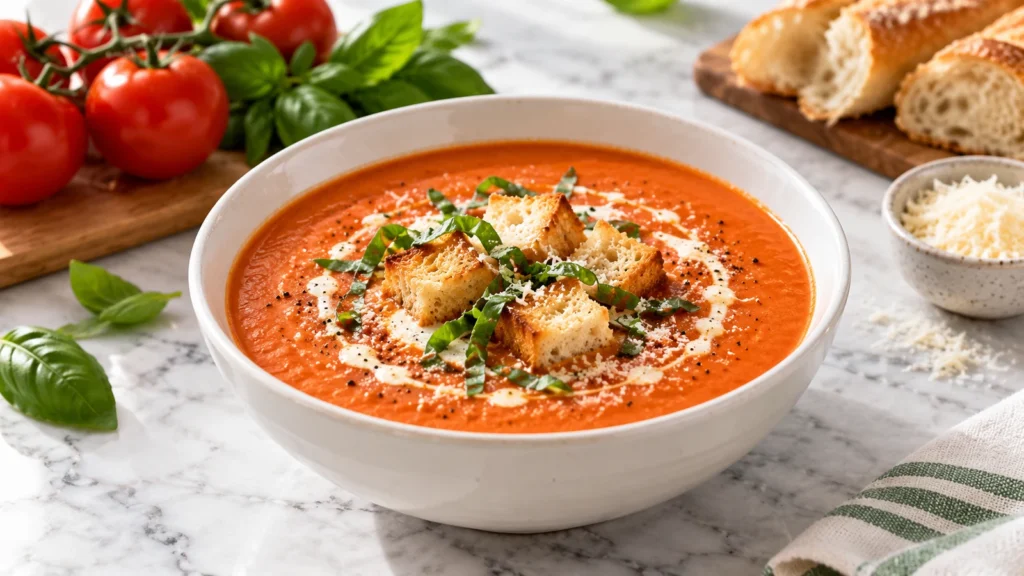
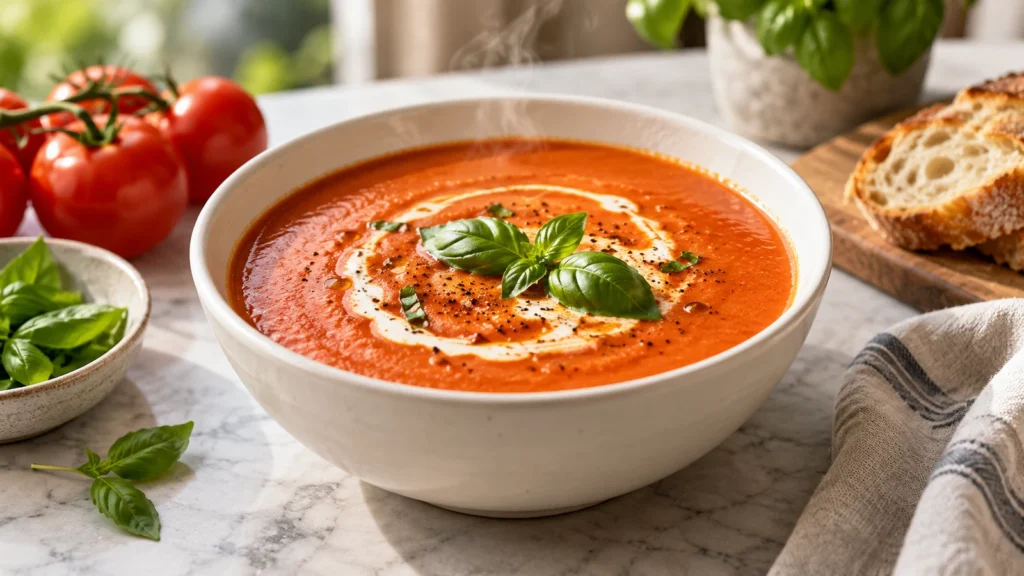
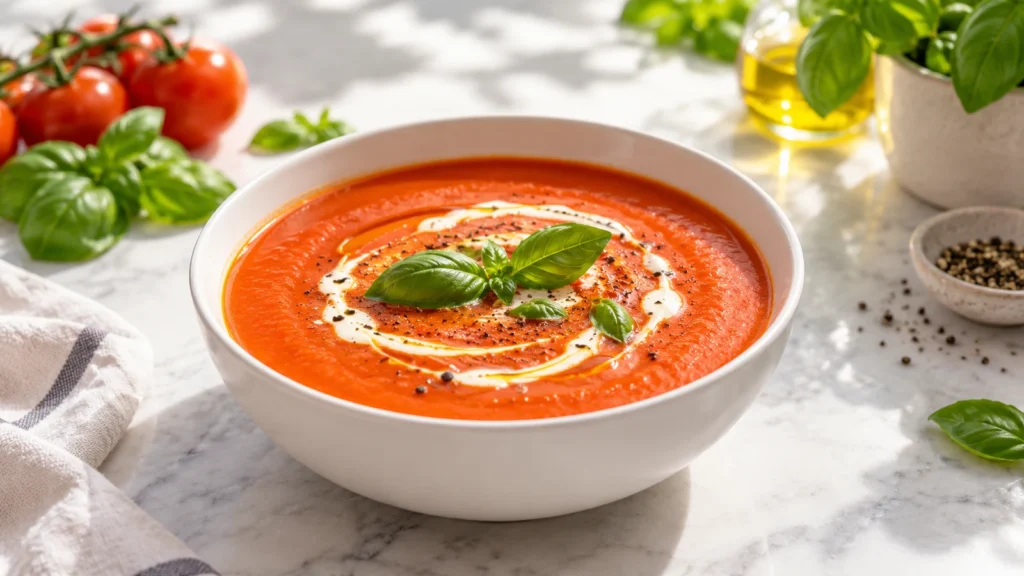
- Adjust and serve. Taste for salt, pepper, sweetness, and acidity. Ladle into warm bowls and garnish with basil, Parmesan, or a small swirl of cream.
This method follows the same practical idea found in other approachable versions, including this creamy tomato basil soup preparation: simmer the tomato base first, then add dairy for the final texture.
Expert Tips for the Best Results
- Prevent curdling: Use room-temperature cream, temper it with warm soup, and never let the finished soup boil. High-fat cream is more stable than milk.
- Fix excess acidity: Add sugar 1/4 teaspoon at a time. A little extra cream or a small pinch of baking soda can also help, but too much baking soda makes the soup taste flat.
- Thicken thin soup: Simmer it uncovered before adding cream, or blend in a few tablespoons of cooked white rice.
- Correct graininess: Blend longer and pass the soup through a fine-mesh sieve. Finely grate the Parmesan so it melts evenly.
- Wake up bland soup: Add salt gradually, followed by black pepper, basil, Parmesan, or a teaspoon of balsamic vinegar.
A standard blender produces the silkiest result, but an immersion blender is quicker and reduces cleanup. A food processor also works if the soup is cooled further and processed in batches.
Control Moisture Before Adding Dairy
For a concentrated creamy tomato basil soup recipe, simmer the tomato mixture uncovered until it lightly coats the back of a spoon. Reducing the base before adding cream preserves tomato flavor and avoids an overly loose consistency.
Season in Stages
Add only the stated salt at first, especially when using chicken stock or salty Parmesan. Taste the blended base, taste again after adding cream, and make the final adjustment just before serving. This keeps the creamy tomato soup recipe balanced rather than aggressively salty.
Preserve the Basil Flavor
Do not simmer fresh basil for the full cooking time. Extended heat weakens its fresh aroma and can make the leaves taste muddy. Stirring it in before blending distributes its flavor while retaining the bright character expected from a creamy tomato basil soup recipe.
Variations and Substitutions
For a roasted version, roast fresh tomatoes, onion, carrot, and unpeeled garlic at 425°F (220°C) until caramelized, then transfer them to the pot with stock. Roasting concentrates sweetness and is especially useful when fresh tomatoes are watery.
This roasting method transforms the dish into a deeper fresh tomato soup recipe with lightly caramelized edges. Keep all listed quantities the same, and include any flavorful juices released on the roasting pan.
For a Panera-style variation, increase the sugar to 1 tablespoon, use chicken stock if preferred, and add another 1/4 cup of cream. This Panera tomato soup recipe provides a closer restaurant-inspired version.
A panera tomato soup recipe is usually sweeter and richer than this balanced homemade version. Make the adjustments gradually so the cream and sugar complement the tomatoes without covering their flavor.
You can add red pepper flakes for heat, cooked white beans for protein, or roasted red peppers for sweetness. For a lighter creamy tomato soup recipe, replace half the cream with whole milk, temper it carefully, and keep the heat low.
Dairy-Free Variation
Use unsweetened cashew cream for the most neutral dairy-free result. Full-fat coconut milk also works, although its flavor will be more noticeable. Nutritional yeast can replace some of the savory character of Parmesan in this creamy tomato basil soup recipe.
Extra-Smooth Variation
After blending, press the soup through a fine-mesh sieve with the back of a ladle. This removes tomato seeds, small pieces of skin, and any fibrous basil. It adds a few minutes but gives a creamy tomato soup recipe an especially polished texture.
Spicy Tomato Basil Soup
Add a pinch of red pepper flakes with the garlic and tomato paste. Cooking the flakes briefly in oil distributes their flavor throughout the soup. Begin with a small amount, since heat becomes more noticeable as the tomato base reduces.
Troubleshooting This Creamy Tomato Basil Soup Recipe
Why Is My Soup Too Acidic?
Tomato variety is usually responsible. First add the optional sugar in small increments, tasting after each addition. Cream can soften sharpness, while a tiny pinch of baking soda neutralizes acidity. Add baking soda cautiously because too much can mute the flavor of a creamy tomato basil soup recipe.
Why Is My Soup Too Thin?
Return the blended soup to low heat and simmer it uncovered before adding dairy. Stir frequently to prevent scorching. If the cream is already incorporated, keep the heat gentle and reduce slowly without allowing the soup to boil.
Why Did the Cream Separate?
Cold dairy or excessive heat can cause separation. Remove the pot from the burner and blend briefly with an immersion blender. Next time, bring the cream to room temperature, temper it with warm soup, and use low heat to finish the creamy tomato soup recipe.
Why Does the Soup Taste Bland?
Add salt in small pinches until the tomato flavor becomes clear. If it is properly salted but still flat, try black pepper, Parmesan, fresh basil, or one teaspoon of balsamic vinegar. Avoid adding everything at once because acidity and salt can build quickly.
Why Is the Texture Grainy?
Graininess may come from insufficient blending, coarse Parmesan, or separated dairy. Blend longer, then strain if necessary. Use finely grated Parmesan and add it over low heat so it melts evenly into the creamy tomato basil soup recipe.
Serving Ideas
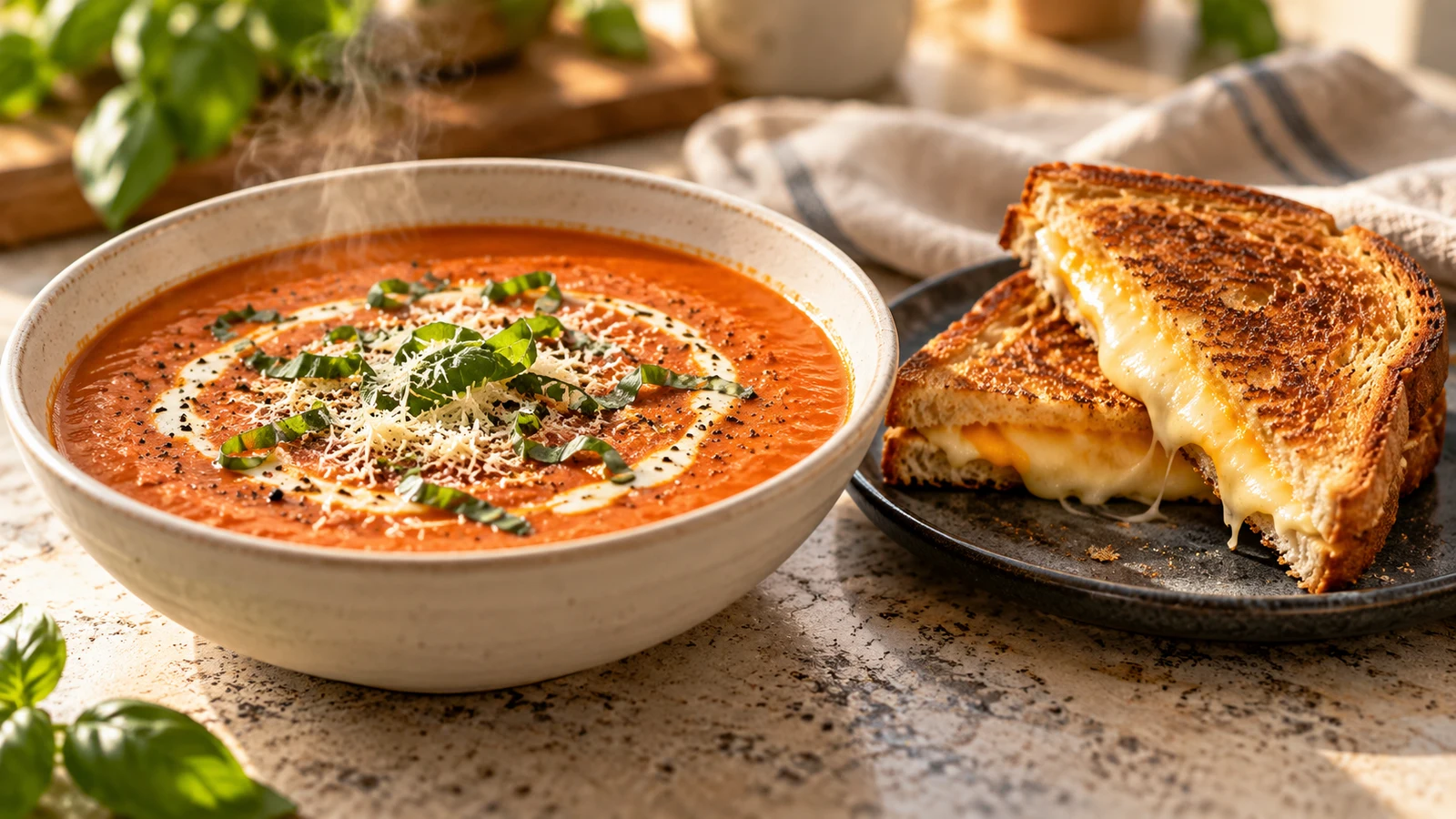
Serve the soup with grilled cheese, Parmesan toast, focaccia, or garlic croutons. A green salad or roasted broccoli makes the meal feel more complete. This quick tomato basil soup guide also highlights its natural fit with crisp, cheesy sandwiches.
For a relaxed family dinner, place basil, grated Parmesan, croutons, black pepper, and a small bowl of cream on the table. Everyone can personalize a bowl without changing the creamy tomato basil soup recipe itself.
For a lighter lunch, serve a smaller bowl with a lemony green salad. For a heartier meal, add a sandwich filled with mozzarella, sharp cheddar, or roasted vegetables. Crisp bread provides a useful contrast to the smooth soup.
Garnishes That Add Flavor and Texture
- Fresh basil: Tear the leaves just before serving to preserve their aroma.
- Parmesan: Add a light shower rather than a heavy layer so it does not overwhelm the tomatoes.
- Croutons: Choose crisp, bite-size pieces that remain crunchy for several minutes.
- Cream: A small swirl softens acidity and creates an attractive finish.
- Black pepper: Grind it over each bowl immediately before serving for the freshest flavor.
One serving contains approximately 300 calories, 22 grams of fat, 18 grams of carbohydrates, and 7 grams of protein; exact nutrition varies by stock, tomatoes, cream, and Parmesan. Tomatoes contribute vitamin C and lycopene, while cream and cheese increase saturated fat and sodium.
Make-Ahead, Storage, and Reheating
Cool leftovers promptly and refrigerate them in an airtight container for up to 4 days. For make-ahead cooking, prepare and blend the tomato base, refrigerate it, and add the cream, Parmesan, and fresh basil during reheating.
Making the base early is especially helpful when serving this creamy tomato basil soup recipe to guests. Complete the recipe through blending, cool it promptly, and refrigerate. Finish with basil, cream, and Parmesan shortly before the meal.
Reheat gently in a saucepan over low to medium-low heat, stirring frequently, until steaming and 165°F (74°C). Do not boil. You can also microwave individual portions at 50 percent power in 45-second intervals, stirring between each interval.
If a refrigerated creamy tomato soup recipe becomes thicker overnight, stir in a small splash of stock while reheating. Add only enough to restore the original consistency so the tomato flavor remains concentrated.
Freeze the soup for up to 3 months, preferably before adding dairy. Cream-based soup can still be frozen, but it may separate; thaw it overnight in the refrigerator, reheat slowly, and whisk or blend briefly to restore the texture. More serving inspiration is available in this tomato soup comfort-food overview.
How to Freeze Individual Portions
Divide the cooled tomato base among airtight freezer-safe containers, leaving a little room for expansion. Label each container with the date. Thaw only the portions you need, then add the appropriate share of cream, Parmesan, and basil during reheating.
How to Pack It for Lunch
Heat the soup until steaming, then transfer it to a preheated insulated food container. Pack croutons, basil, and Parmesan separately so they remain fresh. Refrigerated portions should remain chilled until they can be reheated safely.
Frequently Asked Questions
Do I need to peel fresh tomatoes?
No. A powerful blender usually makes the skins unnoticeable. For an exceptionally smooth soup, blanch and peel the tomatoes first or strain the blended soup through a fine-mesh sieve.
Can I use dried basil instead of fresh basil?
Yes, but the flavor will be less bright. Add 1 to 2 teaspoons dried basil with the oregano, then finish with parsley or a spoonful of pesto if available.
Is vegetable stock or chicken stock better?
Vegetable stock keeps the dish vegetarian and allows the tomato flavor to stand out. Chicken stock adds savory depth. Choose a low-sodium stock so you can control the final seasoning.
Can cream-based tomato soup be frozen?
Yes, although the texture may separate after thawing. Freezing the tomato base without cream gives the best result; add the dairy while reheating.
Can I make this creamy tomato basil soup recipe without a blender?
Yes, although the texture will be rustic. Crush the whole tomatoes thoroughly before simmering, dice the onion and carrot very finely, and mash the softened mixture with a potato masher. The flavor remains the same even when the soup is not completely smooth.
Can I turn this into a fresh tomato soup recipe?
Yes. Replace the two tins with 4 pounds (1.8 kg) of ripe Roma or plum tomatoes. Core and quarter them, roast at 425°F (220°C) for 30 to 40 minutes, and then follow the remaining method as written.
What is the best cream for a creamy tomato soup recipe?
Heavy cream is the most stable option and gives the smoothest finish. Half-and-half or whole milk can work, but they are more likely to separate. Temper lower-fat dairy carefully and keep the finished soup below a boil.
Can I use crushed tomatoes instead of whole tomatoes?
Yes. Use the same total weight, including the juices. Crushed tomatoes may contain ingredients that affect thickness, so inspect the consistency while simmering and add stock only as needed.
How is this different from a panera tomato soup recipe?
This version has a more balanced tomato flavor and less sweetness. A panera tomato soup recipe typically uses more sugar and cream for a richer restaurant-style result. The variation above explains how to adjust those elements without changing the main cooking method.
Can I double the recipe for tomato soup with tinned tomatoes?
Yes. Double each ingredient and use a large stockpot with enough room for safe blending. The vegetables may need a few extra minutes to soften, and the larger volume will take longer to reach a simmer.
How can I keep the soup warm for serving?
Keep it covered over the lowest possible heat and stir occasionally. Do not let it boil after adding dairy. If it thickens while waiting, stir in a small amount of warm stock before serving.
Can I prepare the creamy tomato basil soup recipe a day ahead?
Yes. For the freshest flavor and smoothest texture, prepare the tomato base one day ahead and refrigerate it. Reheat gently, then add the basil, tempered cream, and Parmesan shortly before serving.
Recipe Card
Prep time: 15 minutes
Cooking time: 35 minutes
Total time: 50 minutes
Yield: 6 servings
Method: Sauté the onion and carrot in olive oil, add garlic and tomato paste, then simmer with tomatoes, stock, and seasonings for 20 to 25 minutes. Add basil, blend until smooth, and gently stir in tempered cream and Parmesan without boiling.
Estimated nutrition per serving: 300 calories, 22 g fat, 18 g carbohydrates, 7 g protein, and 7 g sugar.
Notes: Use whole peeled tomatoes for consistent texture. Keep the soup below a boil after adding dairy, and freeze before adding cream whenever possible. For another straightforward approach, see this classic creamy tomato soup recipe.
A Reliable Soup for Any Season
With pantry tomatoes, fresh basil, and a careful low-heat finish, this creamy tomato basil soup recipe delivers a smooth texture and balanced flavor every time. Keep the base simple or adapt it with roasted vegetables, dairy-free cream, or a sweeter restaurant-style finish.
Whether you prefer a convenient recipe for tomato soup with tinned tomatoes or a summer fresh tomato soup recipe, the same principles apply: build flavor patiently, blend thoroughly, and add dairy gently. Those details turn ordinary ingredients into a dependable homemade meal.
There are no reviews yet. Be the first one to write one.
Reviews
Reader reviews are managed separately (outside this build).