Cake
Best Moist Gluten Free Vanilla Cake Recipe: Fluffy Layers
Bake a moist, fluffy gluten free vanilla cake recipe with weight-based tips, easy substitutions, frosting guidance, and reliable results. Bake it today!
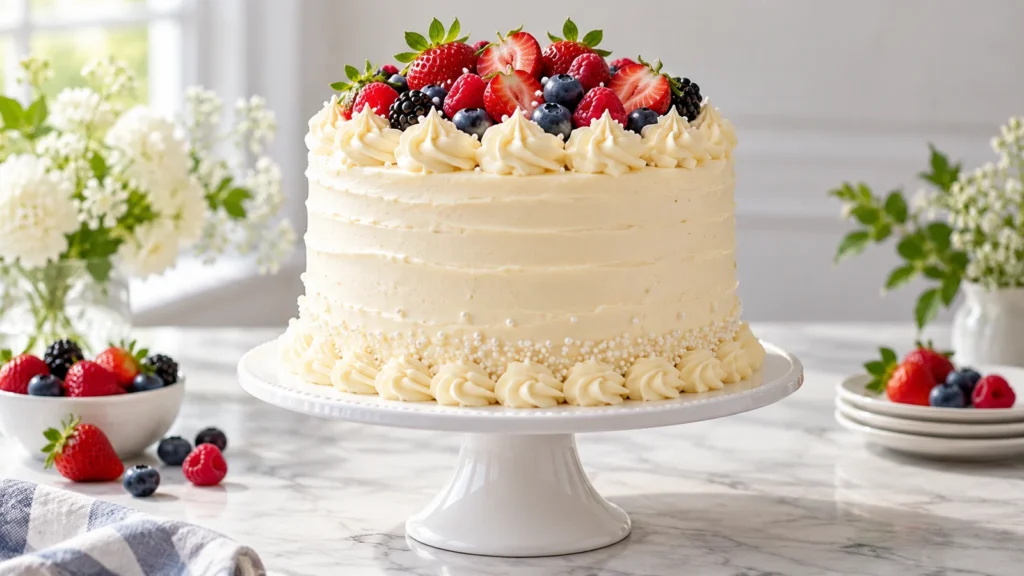
This gluten free vanilla cake recipe makes soft, fluffy layers with a moist crumb and a clear vanilla flavor. It is sturdy enough to stack and frost, yet tender enough for birthdays, celebrations, or a simple weekend dessert.
Weight-based flour measurement, room-temperature ingredients, and a short resting period keep the crumb smooth rather than gritty. This gluten free vanilla cake recipe also includes dependable visual cues, dairy-free options, pan conversions, and enough vanilla buttercream frosting for a fully decorated two-layer cake.
Table of Contents
Why You’ll Love This Gluten Free Vanilla Cake Recipe
- Soft and moist: Oil, butter, and buttermilk balance tenderness, flavor, and structure.
- Reliable layers: The batter rises evenly and remains sturdy enough for stacking.
- Practical: Weight measurements and visual doneness cues remove much of the guesswork.
- Flexible: Make it dairy-free or convert it into cupcakes or different pan sizes.
- Celebration-ready: The mild vanilla flavor pairs easily with fruit, jam, sprinkles, or classic buttercream.
Ingredients
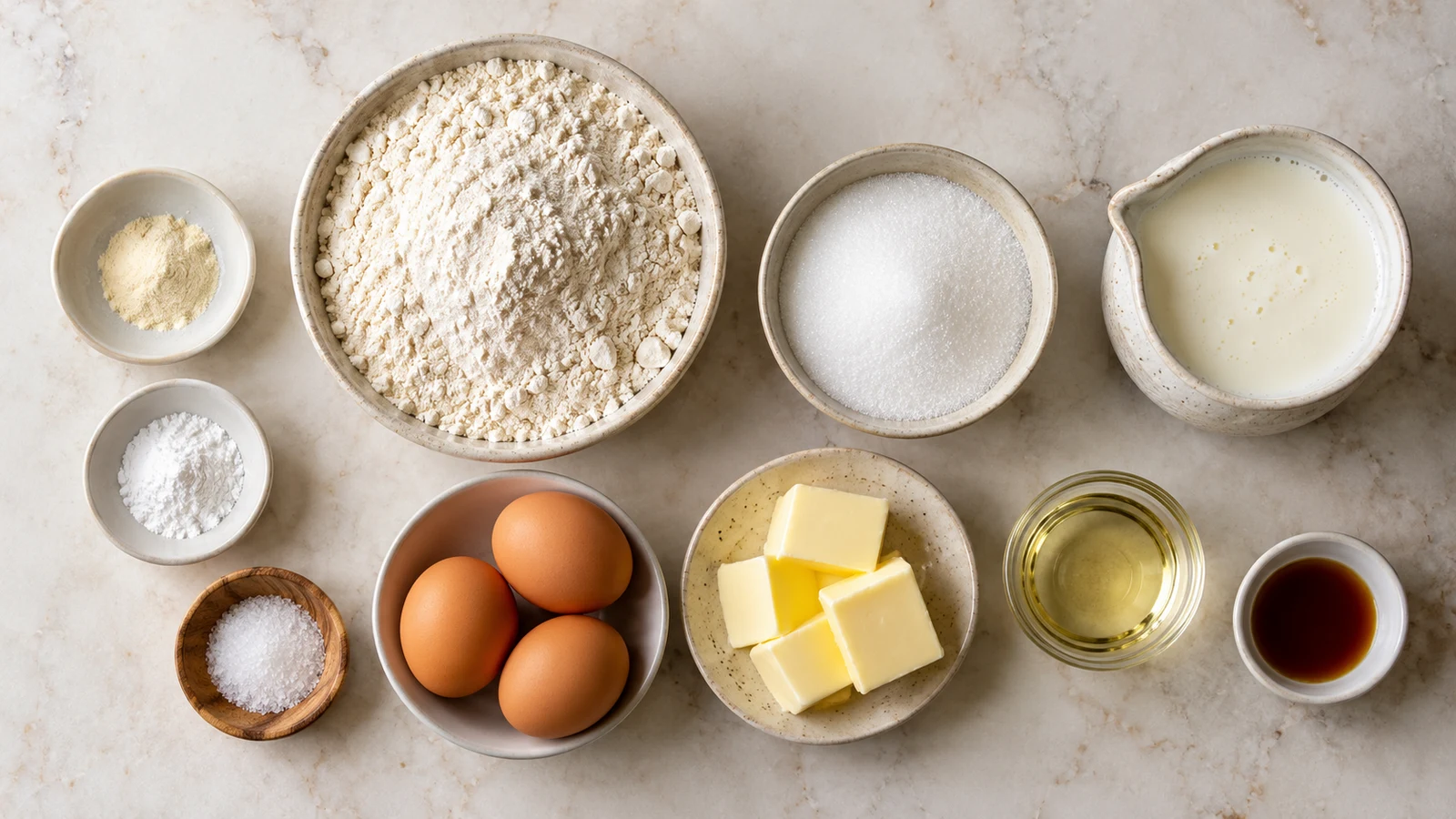
- 2 1/2 cups (350 g) gluten-free all-purpose flour blend
- 2 teaspoons baking powder
- 1/2 teaspoon baking soda
- 3/4 teaspoon fine salt
- 1/2 teaspoon xanthan gum, only if the flour blend does not contain it
- 1 3/4 cups (350 g) granulated sugar
- 1/2 cup (113 g) unsalted butter, softened
- 1/4 cup (60 ml) neutral oil
- 4 large eggs, at room temperature
- 1 tablespoon pure vanilla extract
- 1 cup (240 ml) buttermilk, at room temperature
- 1/2 cup (120 g) full-fat sour cream, at room temperature
- For the frosting: 1 1/2 cups (340 g) unsalted butter, softened
- 5 1/2 cups (660 g) powdered sugar, sifted
- 1 tablespoon pure vanilla extract
- 1/4 teaspoon fine salt
- 3 to 5 tablespoons (45 to 75 ml) heavy cream or milk
Why This Recipe Works
A gluten-free flour blend containing rice flour, starches, and a binder provides the most predictable structure. Flour brands vary, so weighing 350 g is more accurate than packing flour into cups; this ingredient weight chart is a useful measuring reference.
Butter supplies flavor, while oil helps the layers remain soft after refrigeration. Buttermilk and sour cream add moisture without making the batter too thin. If your blend already lists xanthan gum, do not add more; excess binder can produce a gummy texture. Learn more about how xanthan gum behaves in gluten-free baking.
The 10-minute rest is especially valuable in a gluten free vanilla cake recipe because rice flour needs time to absorb liquid. Hydrated batter bakes into a smoother crumb and is less likely to feel sandy. The rest should happen after mixing and before the batter goes into the pans.
Equipment and Pan Options
Use two light-colored 8-inch round pans, parchment paper, a mixer, a kitchen scale, and a cooling rack. Two 9-inch pans also work but make thinner layers that bake faster. A light metal pan gives more even results than dark metal or glass.
An instant-read thermometer is optional, but a flexible spatula and a scale are particularly helpful. The spatula reaches dry pockets at the bottom of the bowl, while the scale lets you divide the batter evenly so both layers finish baking at the same time.
How to Make This Gluten Free Vanilla Cake Recipe
- Prepare the oven and pans. Heat the oven to 350°F (175°C). Grease two 8-inch round pans, line the bottoms with parchment, and lightly grease the parchment.
- Mix the dry ingredients. Whisk the flour blend, baking powder, baking soda, salt, and xanthan gum, if needed, until evenly combined.
- Cream the fats and sugar. Beat the sugar and softened butter for 3 minutes, until pale and fluffy. Beat in the oil.
- Add eggs and vanilla. Add the eggs one at a time, mixing after each addition. Scrape the bowl, then mix in the vanilla. Room-temperature ingredients combine more smoothly and help prevent a dense or curdled batter.
- Finish the batter. Whisk the buttermilk and sour cream together. On low speed, alternate the dry mixture with the buttermilk mixture in three dry additions and two wet additions. Stop when no flour streaks remain. The batter should be thick, smooth, and slowly fall from a spatula.
- Rest and divide. Let the batter stand for 10 minutes so the flour can hydrate. Divide it equally between the pans, about 850 g per pan, and smooth the tops.
- Bake. Bake for 28 to 34 minutes. The cakes are ready when the centers spring back lightly, the edges just pull from the pans, and a tester has a few moist crumbs but no wet batter.
- Cool completely. Cool in the pans for 15 minutes, turn onto a rack, remove the parchment, and cool for at least 1 hour before frosting.
Vanilla Icing Recipe for Cake
This tested frosting quantity makes about 6 cups, enough to fill, crumb-coat, and finish two 8-inch layers. For more decorating guidance, see this vanilla icing recipe for cake.
- Beat 1 1/2 cups softened butter for 3 minutes, until smooth and pale.
- Add the powdered sugar gradually on low speed. Add the vanilla, salt, and 3 tablespoons cream, then beat for 2 minutes. Add more cream one teaspoon at a time until spreadable.
- Place one cooled layer on a plate and spread about 1 cup frosting over it. Add the second layer. Apply a thin crumb coat and chill for 20 minutes, then cover with the remaining frosting.
A smooth vanilla icing recipe for cake depends on properly softened butter and sifted powdered sugar. If the frosting feels stiff, add cream gradually. If it becomes too soft to hold its shape, let it stand in a cool room briefly before decorating.
Expert Tips for a Soft, Even Crumb
Measure the Flour by Weight
The most important precision step in this gluten free vanilla cake recipe is weighing the flour blend. Scooped flour can become compressed, adding more dry ingredients than intended. If cups are your only option, stir the flour, spoon it gently into the measuring cup, and level the top without packing it.
Bring Refrigerated Ingredients to Room Temperature
Butter, eggs, buttermilk, and sour cream blend more evenly when they are not cold. Set them out before mixing, but do not melt the butter. Properly softened butter should yield to gentle pressure while still holding its shape.
Mix Gently After Adding Flour
A dependable recipe for fluffy vanilla cake needs enough mixing to remove dry pockets but not prolonged beating after the flour enters the bowl. Scrape the base and sides with a spatula, then stop as soon as the batter looks uniform.
Use Visual Doneness Cues
Oven temperatures and flour blends vary, so the clock is a guide rather than the only test. In a well-baked gluten free vanilla cake recipe, the middle springs back, the edges barely release from the pan, and a tester shows moist crumbs without liquid batter.
Cool Before Decorating
Warm layers soften buttercream and trap steam. Let the layers cool for at least 1 hour, then level them only if necessary. A short chill after the crumb coat catches loose crumbs and makes the final layer of frosting easier to smooth.
Tips for the Best Results
- Choose a gluten-free all-purpose flour blend intended as a cup-for-cup baking replacement, not a single flour such as almond or coconut flour.
- For an especially reliable recipe for fluffy vanilla cake, avoid overmixing after adding the flour.
- Check the cake early because gluten-free layers can turn dry when overbaked.
- Use fresh baking powder and baking soda so the cake receives the lift it needs.
- Prevent gluten-free cross-contact by using clean bowls, utensils, pans, and work surfaces. Confirm every packaged ingredient is suitable for your needs; the FDA explains what a gluten-free food label means.
Variations and Substitutions
Dairy-Free Option
For a dairy-free vanilla cake, use plant-based butter sticks, unsweetened dairy-free yogurt, and dairy-free milk mixed with 1 tablespoon lemon juice. Use plant-based butter and dairy-free milk in the frosting. These substitutions remove dairy but do not make the cake egg-free.
Different Pan Sizes
For two 9-inch layers, begin checking at 24 minutes. For a 9-by-13-inch cake, bake for 32 to 40 minutes. For a cupcake conversion, fill 24 lined wells two-thirds full and bake for 17 to 21 minutes.
Keep the oven at the stated temperature for these standard conversions, and avoid filling a pan too deeply. A wider pan exposes more batter to heat, which is why the thinner 9-inch layers may finish sooner than the original 8-inch layers.
High-Altitude Adjustment
At high altitude, start with local altitude guidance because elevation and flour blends vary. As a starting point above 3,500 feet, reduce sugar by 1 tablespoon, add 1 tablespoon buttermilk, increase the oven to 365°F (185°C), and check several minutes early.
Simple Flavor Variations
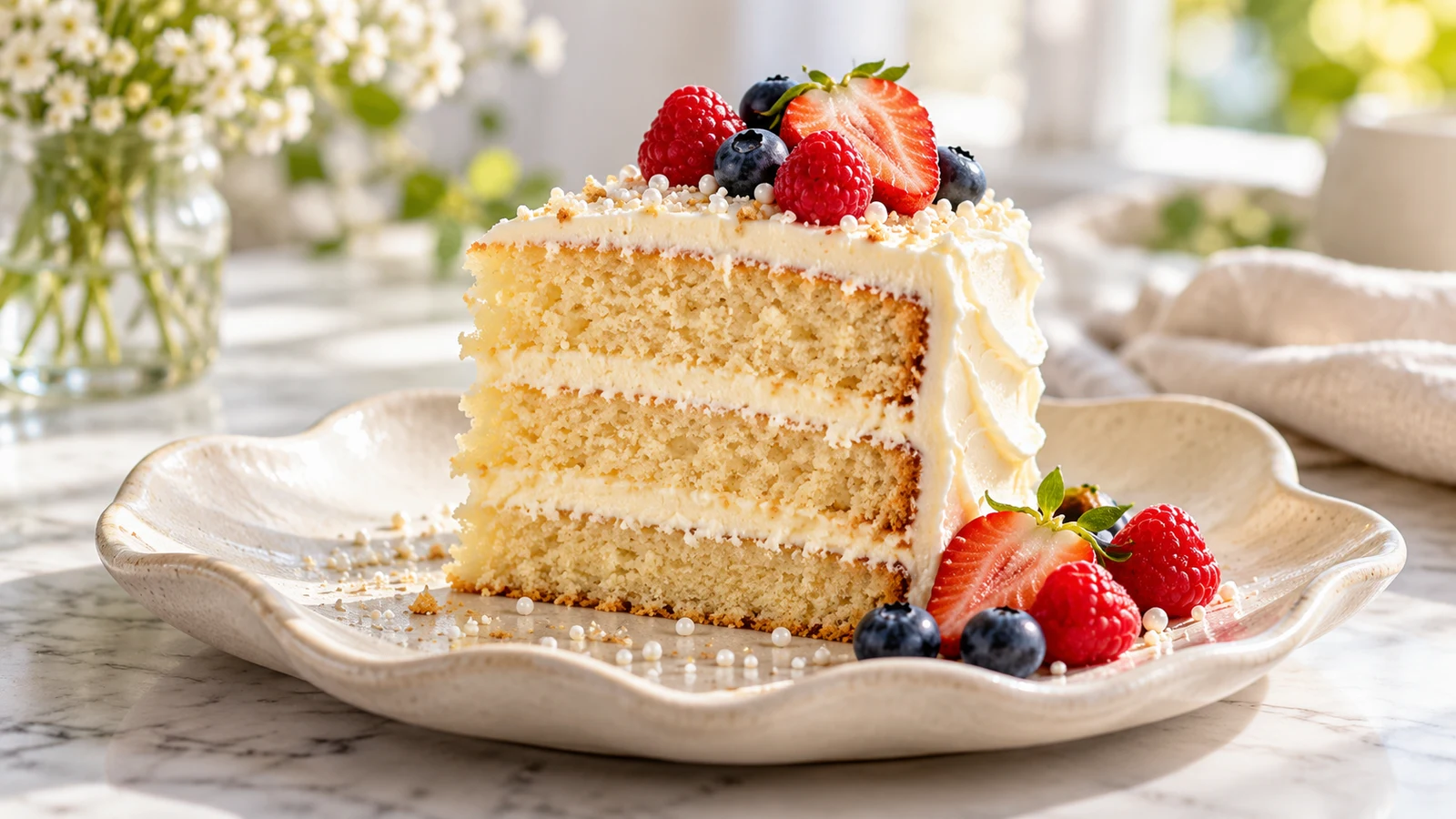
Serve the finished layers with berries, lemon curd, or jam to change the flavor without altering the dependable batter. A thin filling gives contrast while allowing the vanilla to remain noticeable. Keep any filling layer modest so the stacked cake does not slide.
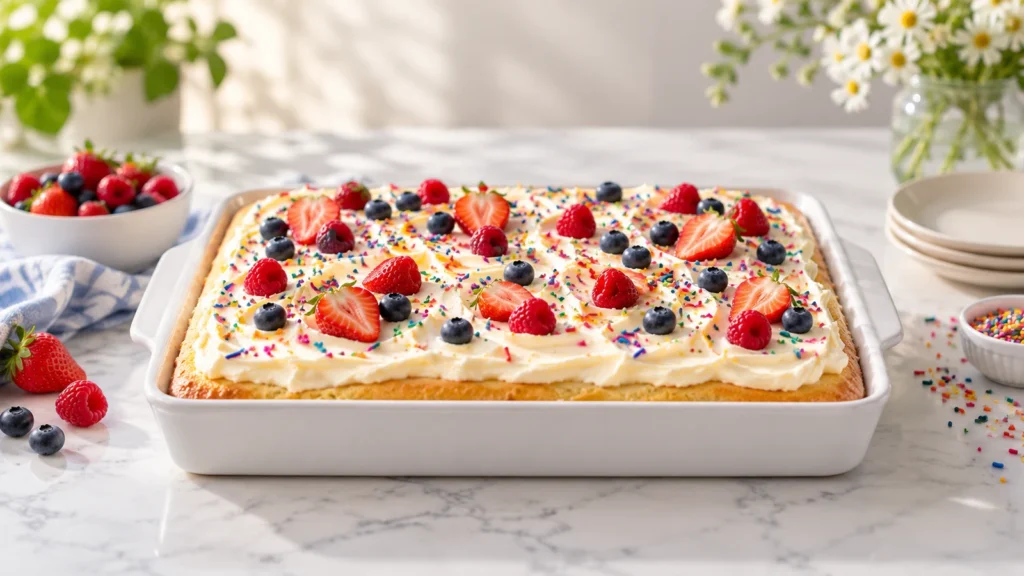
For a sprinkle finish, add sprinkles over the buttercream after frosting. This preserves the texture of the original gluten free vanilla cake recipe and avoids introducing extra dry ingredients into the batter.
Make-Ahead Guide
The easiest make-ahead plan is to bake the layers first and decorate later. Once completely cool, wrap each layer tightly so exposed surfaces do not dry out. Refrigerate for up to two days, then unwrap when you are ready to level, fill, and frost.
You can also prepare the vanilla icing recipe for cake in advance. Keep it covered in the refrigerator, bring it back toward room temperature, and beat it briefly until smooth and spreadable. Do not add extra liquid until you have rewhipped it because its consistency changes as it warms.
For an event, assemble this gluten free vanilla cake recipe the day before serving and refrigerate it covered. Allow the finished cake or individual slices to stand for 30 minutes before serving so the buttercream softens and the crumb tastes tender.
Troubleshooting This Gluten Free Vanilla Cake Recipe
- Gritty: The batter needed more hydration time, or the flour blend was coarse. Rest it for the full 10 minutes.
- Gummy: Too much xanthan gum, underbaking, or slicing while warm can cause a sticky crumb.
- Dry: Too much flour or excess baking time is usually responsible. Weigh the flour and check early.
- Dense: Cold ingredients, expired leavening, or overmixing may limit the rise.
- Sunken: Avoid opening the oven early, and bake until the center springs back rather than relying only on color.
- Uneven layers: Weigh about 850 g of batter into each pan and confirm that the oven rack is level.
- Frosting slides: The cake layers may still be warm, or the buttercream may be too soft. Cool the layers fully and chill the crumb-coated cake for 20 minutes.
Why Did the Batter Look Curdled?
Cold eggs or dairy can prevent the fat and liquid from combining smoothly. Add the eggs one at a time and scrape the bowl between additions. A slightly curdled appearance may improve when the dry ingredients are added, but room-temperature ingredients help prevent it.
Why Did the Cake Brown Too Quickly?
Dark pans absorb heat aggressively, and an oven running hot can deepen the edges before the center is ready. Use light metal pans when possible and verify oven accuracy. Judge doneness from the center rather than removing the layers based only on surface color.
Why Is the Frosting Full of Air Bubbles?
Beating at high speed can trap excess air. After the frosting becomes fluffy, mix it briefly on low speed. Pressing and smoothing it against the side of the bowl with a spatula can remove larger bubbles before you cover the cake.
Serving Ideas
Serve the cake at cool room temperature with berries, lemon curd, or a thin layer of jam beneath the frosting. For clean slices, chill the assembled cake briefly, then cut it with a warm, dry knife.
This recipe for fluffy vanilla cake suits birthdays, showers, anniversaries, and casual gatherings. Add fresh berries immediately before serving, especially if they have been washed, so moisture does not collect on the buttercream.
For smaller portions, cut the round cake into narrow wedges after marking the top. Wipe the knife between cuts so each serving shows clean layers. Coffee, black tea, or lightly tart fruit balances the sweet vanilla icing recipe for cake.
How to Store and Reheat
Keep the frosted cake covered at room temperature for up to 1 day or refrigerate it for up to 4 days. Let refrigerated slices stand for 30 minutes before serving; reheating is unnecessary and may melt the frosting.
Unfrosted layers can be made two days ahead, wrapped tightly, and refrigerated. To freeze, wrap each cooled layer in plastic and foil for up to 2 months. Thaw overnight in the refrigerator while wrapped, then bring to cool room temperature before decorating.
Individual frosted slices may be stored in snug covered containers to protect the cut surfaces. Keep strongly scented foods away from the cake in the refrigerator because buttercream can absorb odors. Do not leave the cake uncovered, since refrigeration can dry the crumb.
Related Recipe Variations
A vanilla mug cake recipe is a separate single-serving formula designed for microwave cooking; do not microwave this layer-cake batter in a mug. A vanilla pound cake recipe uses different ratios and a denser butter-based method. For that style, follow this tested vanilla pound cake recipe instead of adapting these layers.
Choose a vanilla mug cake recipe when you want one quick portion rather than a celebration cake. Choose a vanilla pound cake recipe when you prefer a close, rich crumb. This recipe for fluffy vanilla cake is the better choice when you need tender layers that can be filled, stacked, and decorated.
Frequently Asked Questions
Does the flour blend need xanthan gum?
Check the ingredient label. If xanthan gum or another binder is already included, omit the additional 1/2 teaspoon.
Can I make the batter ahead?
No. The leaveners begin working once the wet and dry ingredients meet. Bake the batter promptly after its 10-minute rest, then store the cooled layers instead.
Can I use almond flour or coconut flour in this gluten free vanilla cake recipe?
No. Those single-ingredient flours absorb liquid and provide structure differently from a gluten-free all-purpose blend. Use a cup-for-cup blend intended for baking and weigh the required 350 g for predictable results.
Can I turn this into a vanilla mug cake recipe?
No. A vanilla mug cake recipe requires ratios and microwave timing designed for a single portion. This batter is formulated for conventional oven baking in layer pans, a rectangular pan, or lined cupcake wells.
How is this different from a vanilla pound cake recipe?
A vanilla pound cake recipe normally has a denser, tighter crumb and emphasizes butter. This layer cake uses butter, oil, buttermilk, sour cream, and leaveners to create a lighter result suitable for stacking with frosting.
What makes this a recipe for fluffy vanilla cake?
Creaming the butter and sugar adds air, while fresh leaveners help the batter rise. Room-temperature ingredients, gentle final mixing, even batter division, and careful baking preserve that lift and produce tender layers.
Can I use this vanilla icing recipe for cake on cupcakes?
Yes. The vanilla icing recipe for cake is suitable for spreading or piping on the cupcake conversion. Its exact yield is intended to fill and cover the two-layer cake, so the amount may be generous when used only for cupcakes.
How do I know when the layers are fully cooled?
The surface and underside should no longer feel warm, and no steam should remain. Allow at least 1 hour on a cooling rack. Frosting a warm layer can melt the buttercream and cause the stacked cake to shift.
Can I reduce the sugar?
The listed sugar supports moisture, tenderness, browning, and structure as well as sweetness. A substantial reduction could change the crumb and baking behavior, so use the stated 350 g for the tested result.
What allergens does this cake contain?
The standard recipe contains milk and eggs. Flour-blend ingredients vary, and some products may be processed near other allergens, so verify every label when cooking for someone with allergies or celiac disease.
What is the approximate nutrition per serving?
Based on 16 frosted servings, each slice contains approximately 690 calories, 92 g carbohydrate, 5 g protein, 35 g fat, and 65 g sugar. Values are estimates and change with brands, substitutions, and frosting quantity.
Recipe Card
- Prep time: 30 minutes
- Bake time: 28 to 34 minutes
- Cooling and decorating: 1 hour 35 minutes
- Total time: About 2 hours 35 minutes
- Yield: One two-layer 8-inch cake, 16 servings
Ingredients: 350 g gluten-free all-purpose flour blend, 2 teaspoons baking powder, 1/2 teaspoon baking soda, 3/4 teaspoon salt, optional 1/2 teaspoon xanthan gum, 350 g sugar, 113 g butter, 60 ml oil, 4 eggs, 1 tablespoon vanilla, 240 ml buttermilk, and 120 g sour cream. For frosting, use 340 g butter, 660 g powdered sugar, 1 tablespoon vanilla, 1/4 teaspoon salt, and 3 to 5 tablespoons cream.
- Heat the oven to 350°F (175°C); grease and line two 8-inch pans.
- Whisk the dry ingredients. Cream the sugar and butter, then add oil, eggs, and vanilla.
- Alternate the dry mixture with the combined buttermilk and sour cream. Rest for 10 minutes.
- Divide between the pans and bake for 28 to 34 minutes. Cool completely.
- Beat the frosting ingredients until fluffy. Fill, crumb-coat, chill, and finish the cake.
A Dependable Cake for Any Celebration
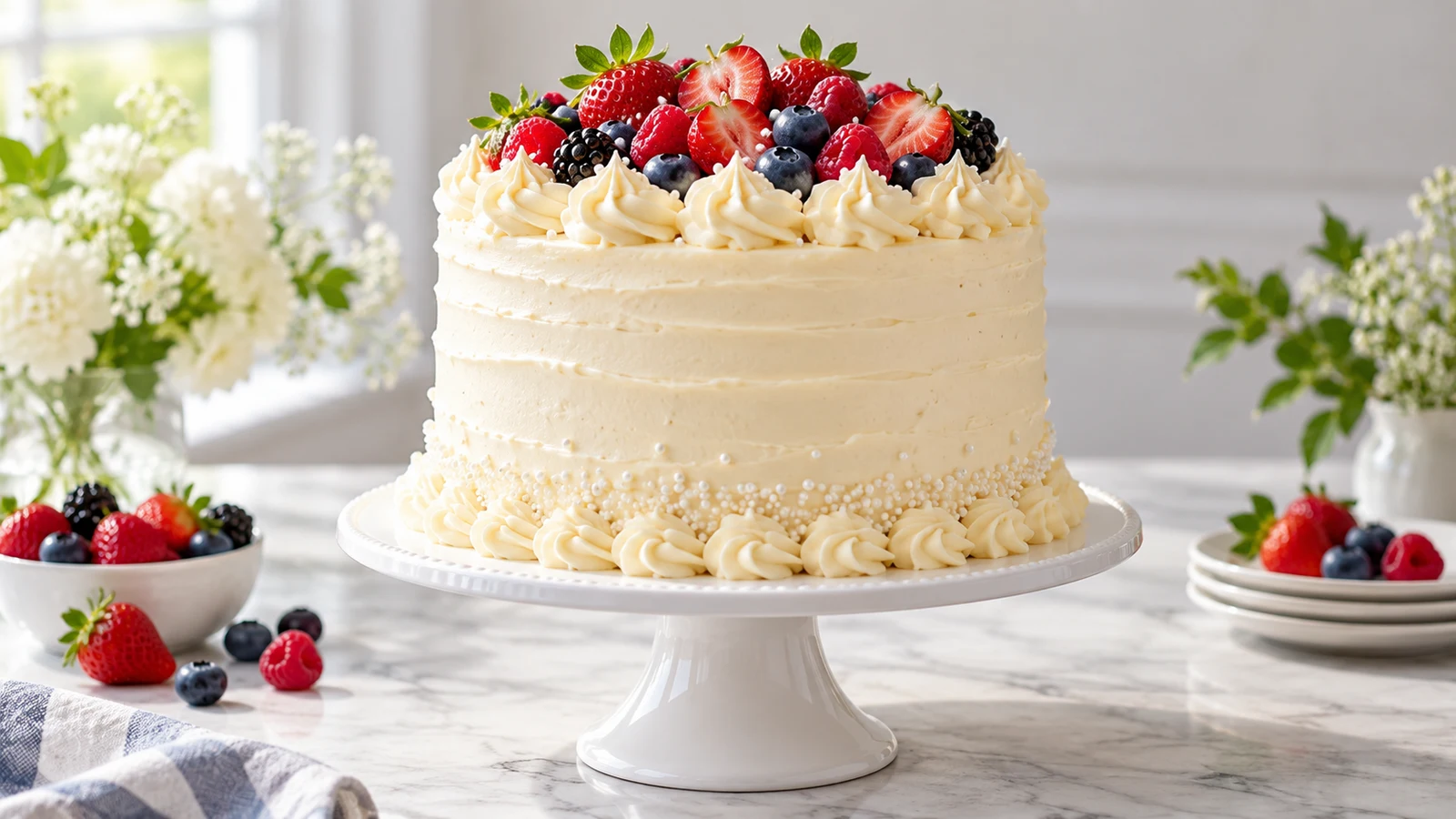
This gluten free vanilla cake recipe combines a moist, tender crumb with enough structure for neat layers. Careful measuring, gentle mixing, a full hydration rest, and complete cooling make it a dependable celebration cake that slices beautifully.
Use the vanilla icing recipe for cake for a classic finish, or add a restrained layer of fruit or jam. When you want a recipe for fluffy vanilla cake rather than the denser result of a vanilla pound cake recipe or the single portion of a vanilla mug cake recipe, these layers are ready for the occasion.
Reviews
Reader reviews are managed separately (outside this build).