Beef
Delicious Foolproof baked corned beef and cabbage recipe
Bake this baked corned beef and cabbage recipe for tender brisket, perfectly cooked root vegetables, clear timing, salt control, and doneness tips.
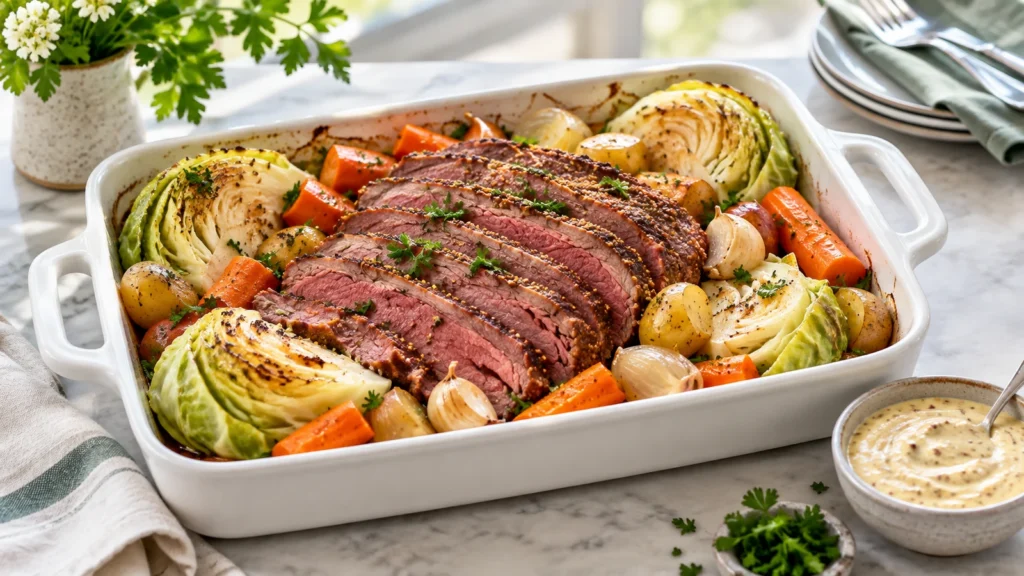
This baked corned beef and cabbage recipe produces fork-tender brisket, buttery potatoes, sweet carrots, and cabbage that keeps its shape. The oven’s steady heat makes timing easy and gives you more control than many corned beef recipes oven baked with every ingredient added at once.
Plan on about 4 hours for a 3-pound brisket, including resting. For a less salty result, rinse the beef before cooking and use water or unsalted broth in the roasting pan. This baked corned beef and cabbage recipe also staggers the vegetables, so each one finishes with the right texture. Jump to the printable recipe card.
If you have compared corned beef recipes oven baked at different temperatures, the gentle 325°F (163°C) method here offers a reliable balance of moisture and tenderness. It also leaves enough flexibility to adjust the cooking time for the brisket’s thickness.
Table of Contents
Why You’ll Love This Recipe
- The brisket cooks covered for moist, even results.
- Staggered timing prevents mushy vegetables.
- Temperature and tenderness cues take the guesswork out of doneness.
- The recipe includes salt-control options, substitutions, and make-ahead tips.
Ingredients
- 1 corned beef brisket, 3 to 4 pounds (1.4 to 1.8 kg), with spice packet
- 2 cups water, unsalted beef broth, or alcohol-free lager (475 ml)
- 1 tablespoon Dijon mustard
- 1 tablespoon brown sugar, optional
- 1 1/2 pounds baby potatoes (680 g), halved if large
- 4 medium carrots, cut into 2-inch pieces
- 1 medium yellow onion, cut into wedges
- 1 small green cabbage, cut into 6 wedges
- 2 tablespoons melted unsalted butter, optional
- Chopped parsley and black pepper, for serving
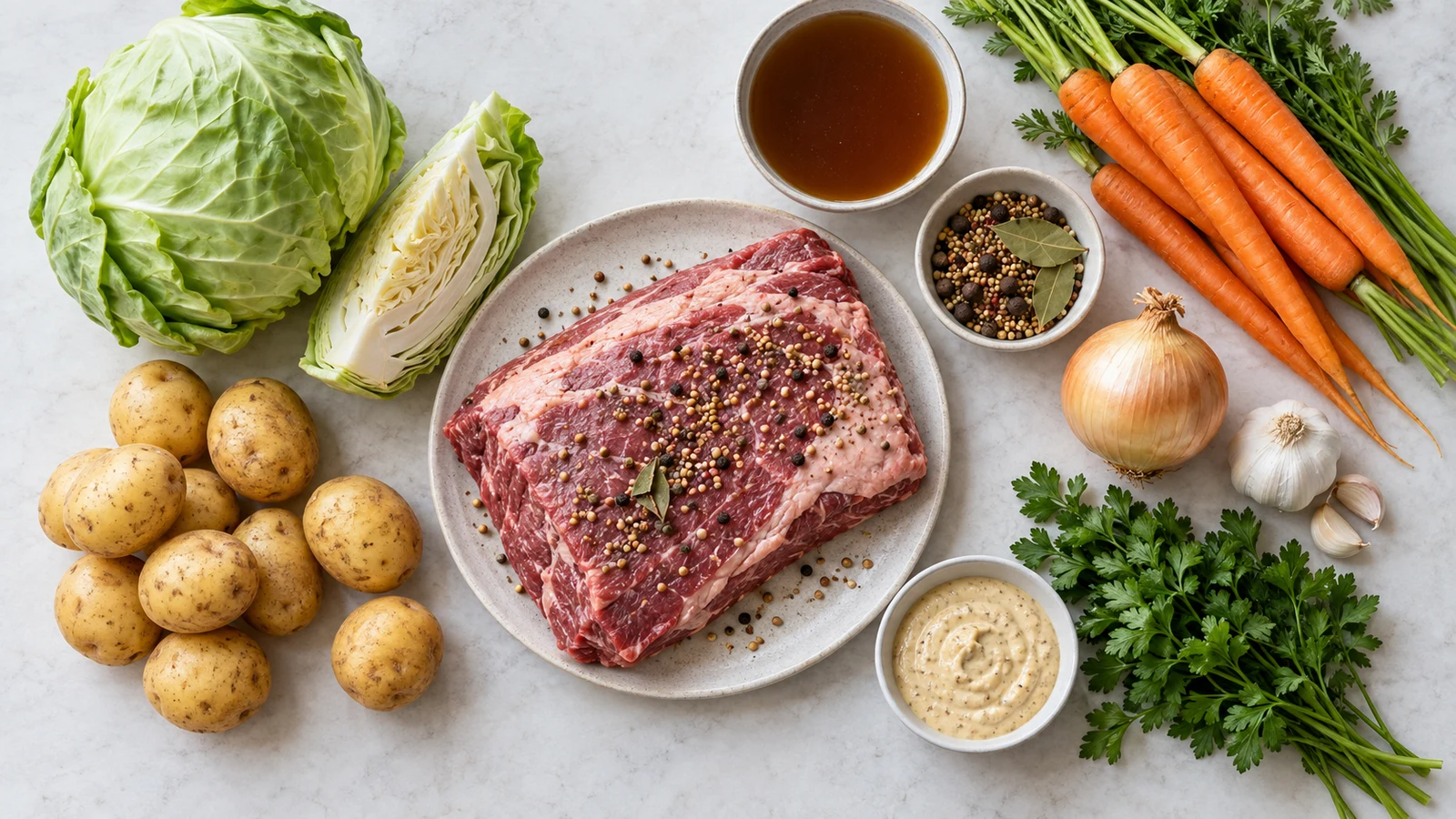
Salt-control note: Rinsing removes surface brine and is sufficient for most briskets. If you are sensitive to sodium, soak the meat in cold water for 2 to 8 hours in the refrigerator, changing the water once or twice. Do not add salt until you taste the finished dish. The USDA provides additional corned beef handling and cooking guidance.
Choosing Flat or Point-Cut Brisket
A flat cut is leaner, evenly shaped, and easiest to slice neatly. It is the best choice for a traditional platter or sandwiches. A point cut has more internal fat and a richer flavor, but its irregular shape can require extra cooking time.
Whichever cut you choose, look for even thickness and keep the fat cap attached during baking. Set the brisket fat-side up so the rendered fat bastes the surface. Either cut works in this baked corned beef and cabbage recipe, but begin checking an especially thin flat cut early.
How to Make This Baked Corned Beef and Cabbage Recipe
- Prepare the oven and beef: Heat the oven to 325°F (163°C). Rinse the brisket under cool water and pat it dry. Place it fat-side up in a roasting pan or Dutch oven.
- Season it: Spread Dijon over the top, sprinkle with brown sugar if using, and add the spice packet. Pour 2 cups of liquid around—not over—the meat. The liquid should reach roughly 1/4 to 1/3 of the way up the brisket.
- Cover and bake: Seal the pan tightly with a lid or foil. Bake for about 50 to 60 minutes per pound. Keeping it covered limits evaporation and helps convert tough connective tissue into gelatin.
- Add firm vegetables: When about 60 minutes remain, arrange the potatoes, carrots, and onion around the beef. Re-cover the pan and continue baking.
- Add cabbage: When 25 to 30 minutes remain, add the cabbage wedges. Spoon some cooking liquid over them, re-cover, and bake until tender.
- Check and rest: Test the thickest part of the brisket. Rest it on a board for 15 to 20 minutes before slicing thinly against the grain.
Cooking-Time Chart by Brisket Weight
- 2 pounds: About 1 hour 40 minutes to 2 hours
- 3 pounds: About 2 1/2 to 3 hours
- 4 pounds: About 3 hours 20 minutes to 4 hours
- 5 pounds: About 4 hours 10 minutes to 5 hours
These are estimates at 325°F (163°C), not guarantees. Thickness, cut, and oven accuracy affect the schedule, so start checking early and allow extra time. If the pan becomes dry, add 1/2 cup hot water.
Unlike some corned beef recipes oven baked by time alone, this method treats the schedule as a starting point. A compact, thick point cut may need longer than a flatter brisket of the same weight.
When to Add Potatoes, Carrots, and Cabbage
Add potatoes, carrots, and onion during the final 60 minutes. Add cabbage only during the final 25 to 30 minutes. If you prefer firmer cabbage, reduce its cooking time to 20 minutes; dense potato pieces may need up to 75 minutes.
Place the potatoes and carrots near the cooking liquid, where they can absorb flavor and soften evenly. Keep cabbage wedges intact through the core so their leaves do not separate. These details help a baked corned beef and cabbage recipe produce distinct vegetables instead of a soft mixture.
Internal Temperature, Resting, and Slicing
Corned beef can be safely cooked before it becomes pleasantly tender. For the texture expected from brisket, aim for 190 to 205°F (88 to 96°C), then confirm that a fork or thin knife slides into the thickest part with little resistance.
If the temperature is high but the meat remains tough, re-cover it and cook for another 20 to 30 minutes. Resting keeps more juice in the meat. Before slicing, identify the direction of the long muscle fibers and cut across them, not parallel to them.
The grain may change direction in a point cut. If necessary, divide the cooked brisket where the muscle direction changes and rotate the second piece before slicing. Thin, cross-grain slices make this baked corned beef and cabbage recipe easier to serve and chew.
Expert Tips for This Baked Corned Beef and Cabbage Recipe
- Use a snug pan so 2 cups of liquid creates steam without submerging the brisket.
- Keep the pan tightly covered for most of the cooking time. For a browned top, uncover it only for the final 10 to 15 minutes.
- Do not rely on cooking time alone; use both temperature and fork tenderness.
- Cut vegetables into similar sizes and avoid adding cabbage too early.
- For make-ahead serving, chill the brisket whole in some cooking liquid and slice it after reheating.
- Insert the thermometer from the side when the brisket is thin, aiming for the center of the thickest section.
- Let cold cooking liquid stand briefly so the fat rises, then skim it before using the liquid as a sauce.
Seal the Pan Carefully
A tight seal matters because the enclosed steam keeps the exposed portion of the brisket moist. If using foil, crimp it firmly around the entire rim. Check only when needed, since opening the pan repeatedly releases heat and extends the cooking time.
Use Tenderness as the Final Test
A thermometer confirms temperature, but it cannot measure how fully the connective tissue has softened. The best baked corned beef and cabbage recipe is ready when a thin knife or fork enters with little resistance. If it still feels firm, add cooking time rather than raising the oven temperature.
Variations and Substitutions
Replace water with unsalted beef broth for deeper flavor. Alcohol-free lager also works, while apple juice mixed with equal parts water gives gentle sweetness. If you do use beer, choose a mild lager rather than a bitter IPA.
No roasting pan is required. Use a Dutch oven, deep casserole covered tightly with foil, or a rimmed baking dish nested on a sheet pan. Turnips or parsnips can replace some carrots or potatoes.
Mustard and Seasoning Variations
Whole-grain mustard can replace Dijon for a more textured coating. You may omit the optional brown sugar for a fully savory finish. Keep the supplied spice packet, because its peppercorns and aromatic spices give the baked corned beef and cabbage recipe its familiar character.
Vegetable Substitutions
Use waxy baby potatoes when you want pieces that hold their shape. Turnips bring a gently peppery flavor, while parsnips add sweetness. Keep the total vegetable volume reasonable so the pan remains covered easily and steam can circulate.
Adapting the Flavor Without Changing the Method
Among corned beef recipes oven baked with broth, water, or mild lager, the main difference is the richness of the cooking liquid. Choose unsalted liquid because the cured beef already contributes plenty of seasoning. Taste the defatted juices before spooning them over the platter.
Oven, Slow Cooker, or Instant Pot?
The oven offers steady heat, easy vegetable timing, and optional surface browning. Corned beef brisket in a crock pot recipes are convenient for an all-day cook, but cabbage can become overly soft unless added near the end.
Many corned beef brisket in a crock pot recipes also produce more condensation and no browned top. They remain useful when oven space is limited, while this baked corned beef and cabbage recipe provides more direct control over when each vegetable enters the pan.
An instant pot corned beef and cabbage recipe is faster and useful when time is limited, although the vegetables usually need a separate pressure cycle. For more oven inspiration, browse these corned beef recipes oven baked.
Choose an instant pot corned beef and cabbage recipe when speed is the priority. Choose corned beef brisket in a crock pot recipes for hands-off cooking, or use the oven method when you value staggered vegetables and the option to brown the surface.
Sauces and Serving Ideas
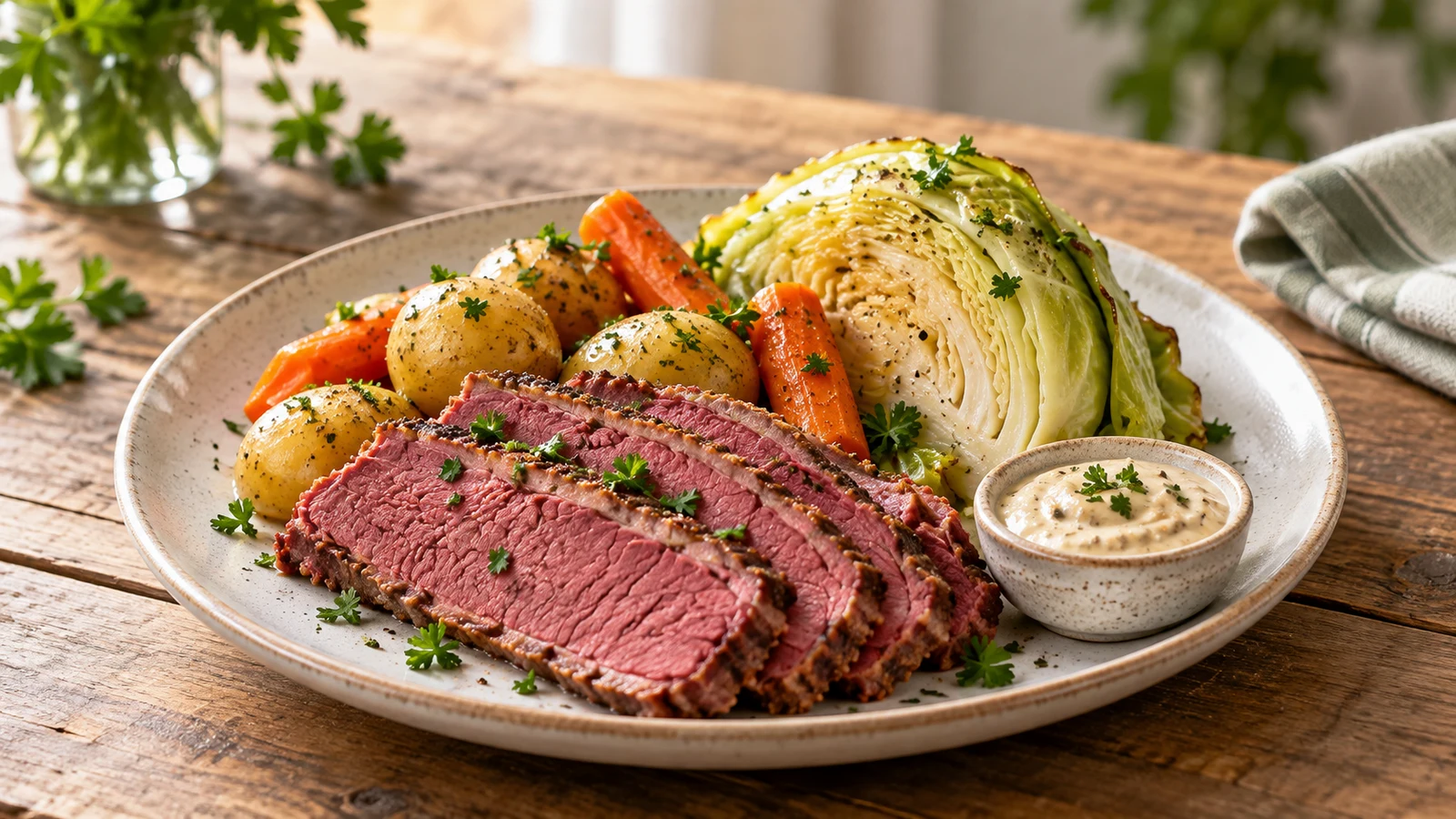
Serve the sliced beef with whole-grain mustard, horseradish cream, or a spoonful of reduced cooking juices. Brush the vegetables with melted butter and finish them with parsley and black pepper. A crisp green salad balances the rich brisket.
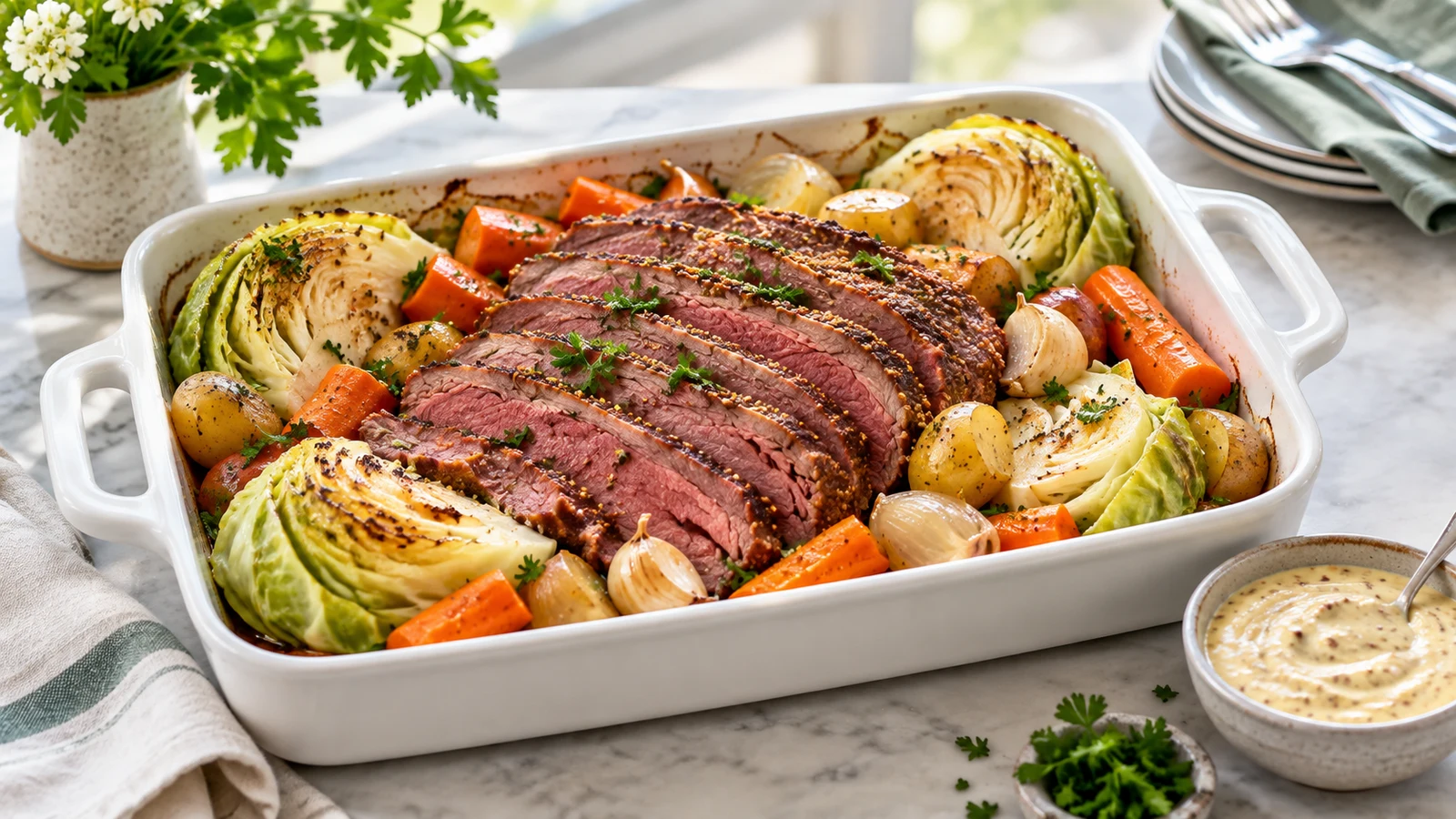
For a family-style presentation, arrange overlapping slices down the center of a warm platter and group each vegetable around them. Spoon on only enough defatted liquid to add shine and moisture. Pass extra mustard or horseradish cream separately so diners can adjust the intensity.
Rye bread is a practical addition when serving a crowd and makes it easy to turn extra slices into a corned beef sandwich recipe the following day. The beef also pairs well with a simple green salad whose acidity balances the rich meat and buttered vegetables.
Common Mistakes and Troubleshooting
- Meat tastes too salty: Soak the next brisket before cooking and use plain water rather than broth.
- Brisket is tough: It probably needs more covered cooking, even if it has reached a food-safe temperature.
- Meat is dry: Slice it thinly against the grain and moisten it with warm, defatted cooking liquid.
- Vegetables are mushy: Add them later and keep cabbage wedges large.
- Cooking liquid disappears: Tighten the foil seal and add hot water in 1/2-cup increments.
What If the Brisket Finishes Before the Vegetables?
Transfer the tender brisket to a board and cover it loosely while the vegetables finish in the covered pan. If they need more than the 15- to 20-minute resting period, return the sliced or whole beef to a little warm cooking liquid before serving.
What If the Cabbage Is Still Firm?
Re-cover the pan and cook it a little longer. Large wedges, tightly packed heads, and pieces sitting above the liquid can take extra time. Spoon hot cooking liquid over the wedges to encourage even steaming without breaking them apart.
What If the Top Will Not Brown?
Remove the cover only after the brisket is tender, then bake for the final 10 to 15 minutes as directed. Blotting excess surface moisture before applying the mustard can also help. Browning is optional and should never come at the expense of tenderness.
Make-Ahead Instructions
For the neatest slices, prepare the baked corned beef and cabbage recipe one day ahead. Cool the brisket with some cooking liquid, refrigerate it whole, and store the vegetables separately. Chilled brisket is firmer and easier to portion cleanly.
Before serving, place the brisket and a little reserved liquid in a covered baking dish. Reheat at 300°F (149°C) until it reaches 165°F (74°C). Warm the vegetables separately so the cabbage and potatoes do not overcook while the center of the meat heats.
You can also complete only the preparation in advance. Cut the carrots and onion, wash the potatoes, and keep them covered in the refrigerator. Cut the cabbage closer to cooking time for the freshest edges. Do not leave the raw brisket at room temperature while organizing the other ingredients.
How to Store, Freeze, and Reheat
Refrigerate leftovers within two hours in shallow, covered containers. Keep the beef with a little cooking liquid and store the vegetables separately when possible. Use refrigerated leftovers within 3 to 4 days, following USDA refrigeration safety guidance.
Freeze sliced beef with a small amount of liquid for up to 2 months; thaw it overnight in the refrigerator. Reheat covered at 300°F (149°C) until it reaches 165°F (74°C), or warm individual portions gently in the microwave. USDA information about shelf-stable foods also explains why cooked meat should not be treated as pantry-safe.
Freeze the beef in meal-size portions so you can thaw only what you need. Potatoes and cabbage may soften after freezing, so refrigerated leftovers usually give them a better texture. Label each container with the date to make the two-month freezer window easy to track.
Ideas for Leftover Corned Beef
Layer thinly sliced beef on rye bread with mustard, Swiss cheese, and sauerkraut, then griddle until crisp. For complete proportions and variations, use this corned beef sandwich recipe.
A dependable corned beef sandwich recipe is only one option. Dice leftover beef and potatoes for a skillet hash, or add warmed slices to a simple salad. Keep the seasoning light until you taste the leftovers because the cured meat remains salty.
When making a corned beef sandwich recipe, warm the meat gently with a spoonful of reserved liquid before assembling. This restores moisture without making the bread soggy. Slice across the grain as you would for the original platter.
Frequently Asked Questions
Should corned beef be rinsed before baking?
Yes. A thorough rinse removes excess brine and loose spices. Soaking is optional and is most helpful for salt-sensitive diners.
Does corned beef need to be covered in the oven?
Keep it covered for nearly the entire cooking time to retain moisture. Uncover only near the end if you want a lightly browned surface.
Why is my corned beef tough?
Brisket becomes tender only after enough time at a high internal temperature. Re-cover it with sufficient liquid and continue cooking until a fork enters easily.
How much corned beef should I buy per person?
Allow about 1/2 pound of uncooked brisket per person. Corned beef shrinks as fat and moisture render during cooking.
Can I make this baked corned beef and cabbage recipe without the spice packet?
Yes, although the finished flavor will be less aromatic. The cured brisket is already seasoned, so do not compensate by adding salt. Mustard, onion, black pepper, and the cooking liquid will still provide flavor.
How is this different from corned beef brisket in a crock pot recipes?
The oven method makes it easy to uncover the brisket briefly for browning and add vegetables on a precise schedule. Corned beef brisket in a crock pot recipes emphasize hands-off cooking, but they still benefit from adding cabbage near the end.
When should I choose an instant pot corned beef and cabbage recipe?
Use an instant pot corned beef and cabbage recipe when you need a faster method and do not mind cooking the vegetables in a separate pressure cycle. The oven is better suited to gradual cooking and optional surface browning.
Are all corned beef recipes oven baked at the same temperature?
No. Corned beef recipes oven baked at higher temperatures may finish sooner, but gentle covered cooking at 325°F (163°C) gives the connective tissue time to soften while limiting moisture loss.
Can I use leftovers in a corned beef sandwich recipe?
Yes. Chill the beef, slice it thinly against the grain, and reheat it gently if desired. A corned beef sandwich recipe is especially useful for flat-cut brisket because its even shape produces tidy slices.
Can I cook the vegetables in a separate pan?
Yes, but they will not absorb as much flavor from the brisket juices. If pan space is tight, cook them separately with unsalted broth, then spoon a little defatted cooking liquid over them before serving.
Can I double the recipe?
You can cook two briskets if the pan holds them without crowding and the cover seals tightly. Cooking time depends more on each brisket’s thickness than the combined weight. Use tenderness and internal temperature to judge each piece independently.
Printable Recipe Card
- Prep time: 20 minutes
- Cook time: 3 to 4 hours
- Rest time: 15 minutes
- Yield: 6 servings
Method: Heat the oven to 325°F (163°C). Rinse and dry a 3- to 4-pound brisket, place it fat-side up in a roasting pan, and season with mustard, optional brown sugar, and the spice packet. Add 2 cups liquid, cover tightly, and bake 50 to 60 minutes per pound. Add potatoes, carrots, and onion for the final hour and cabbage for the final 25 to 30 minutes. Cook until the center reaches 190 to 205°F (88 to 96°C) and is fork-tender. Rest 15 to 20 minutes, then slice against the grain.
Nutrition estimate per serving: 560 calories, 31 g protein, 34 g fat, 35 g carbohydrate, and approximately 1,700 mg sodium. Values vary substantially by brisket, soaking, serving size, and retained cooking liquid.
Notes: Do not add salt before serving. Process photos are inserted at the ingredient and serving markers above. Begin checking doneness early, since brisket shape matters as much as weight.
A Reliable Oven Dinner for Any Gathering
With controlled salt, staggered vegetables, and objective tenderness checks, this baked corned beef and cabbage recipe delivers clean slices and comforting flavor without guesswork. The covered oven method protects moisture, while the final tenderness test accounts for differences in brisket cut and thickness.
Whether you are comparing corned beef recipes oven baked, planning a future corned beef sandwich recipe, or deciding between corned beef brisket in a crock pot recipes and an instant pot corned beef and cabbage recipe, this oven version is a dependable choice for a complete, traditional meal.
Reviews
Reader reviews are managed separately (outside this build).