Beef
Cozy beef barley soup recipe: Rich, Hearty Flavor
Try this beef barley soup recipe with tender chuck, pearl barley, vegetables, and rich broth, plus practical stovetop and slow-cooker guidance.
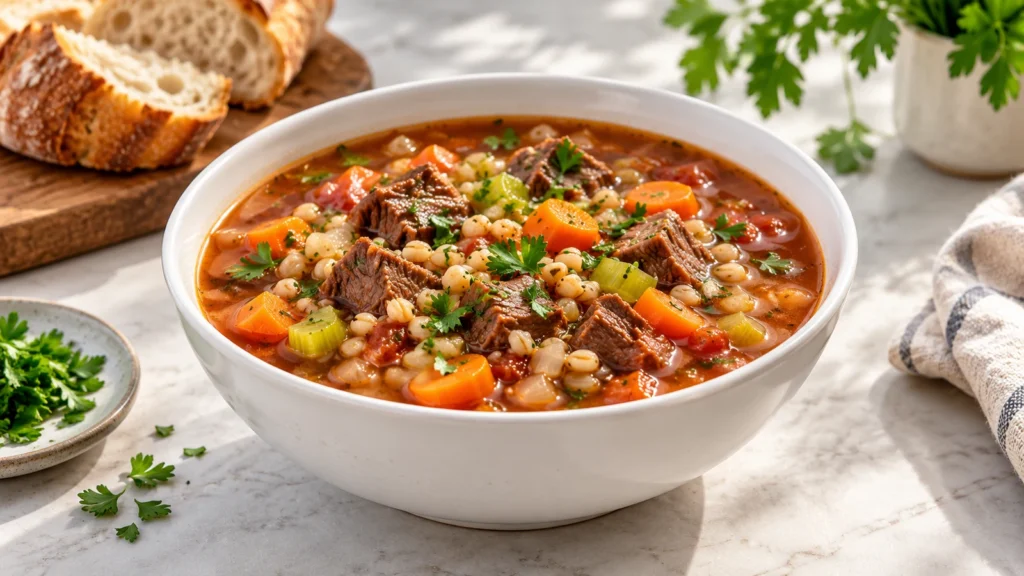
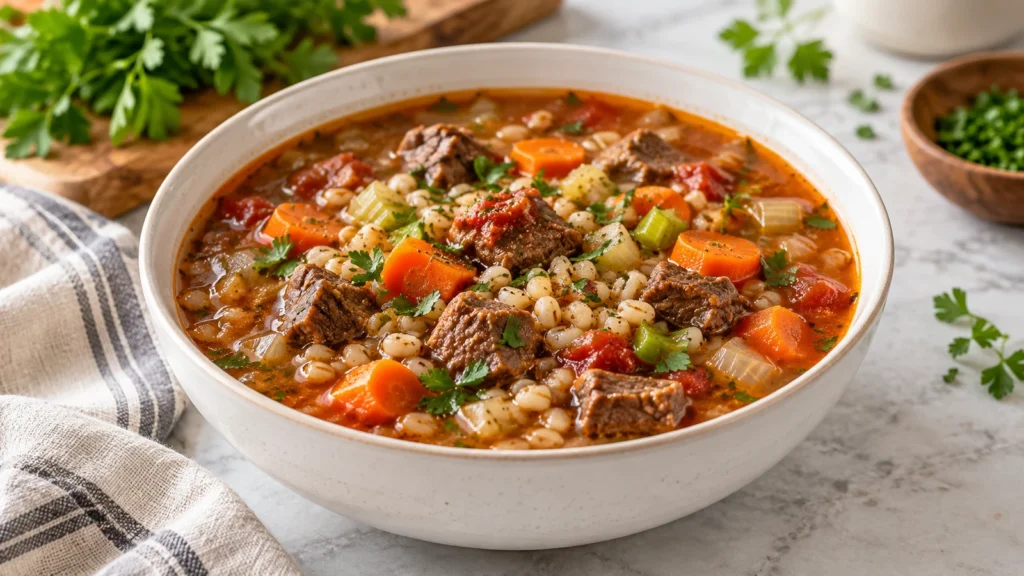
This beef barley soup recipe turns beef chuck, pearl barley, and everyday vegetables into a deeply savory, satisfying meal. Browning the beef and simmering it gently gives you tender meat, rich broth, and barley that stays pleasantly chewy.
This comforting beef and barley soup recipe is practical enough for a weekday and even better made ahead. The straightforward stovetop method builds layers of flavor without requiring unusual ingredients or complicated techniques. Jump to the recipe card for the complete quantities and timing.
Table of Contents
Why You’ll Love This Beef Barley Soup Recipe
- Rich flavor: Browning the beef and tomato paste creates a savory foundation without complicated ingredients.
- Hearty texture: Pearl barley adds a tender chew and naturally gives the broth more body.
- Flexible method: Prepare it on the stovetop or use the included slow-cooker directions.
- Make-ahead friendly: The flavor improves after resting, and the soup freezes well with one simple adjustment.
- Complete meal: Beef, barley, and vegetables make each bowl filling enough for lunch or dinner.
Ingredients
- 1 1/2 pounds (680 g) boneless beef chuck, cut into 3/4-inch cubes
- 1 teaspoon kosher salt, plus more as needed
- 1/2 teaspoon ground black pepper
- 2 tablespoons olive oil, divided
- 1 medium yellow onion, diced
- 3 medium carrots, sliced
- 2 celery ribs, sliced
- 3 garlic cloves, minced
- 2 tablespoons tomato paste
- 8 cups (1.9 L) low-sodium beef broth, plus more if needed
- 3/4 cup (150 g) pearl barley, rinsed and drained
- 1 teaspoon dried thyme
- 1 bay leaf
- 1 tablespoon Worcestershire sauce
- 2 tablespoons chopped fresh parsley, for garnish
- Rustic crusty bread, for serving
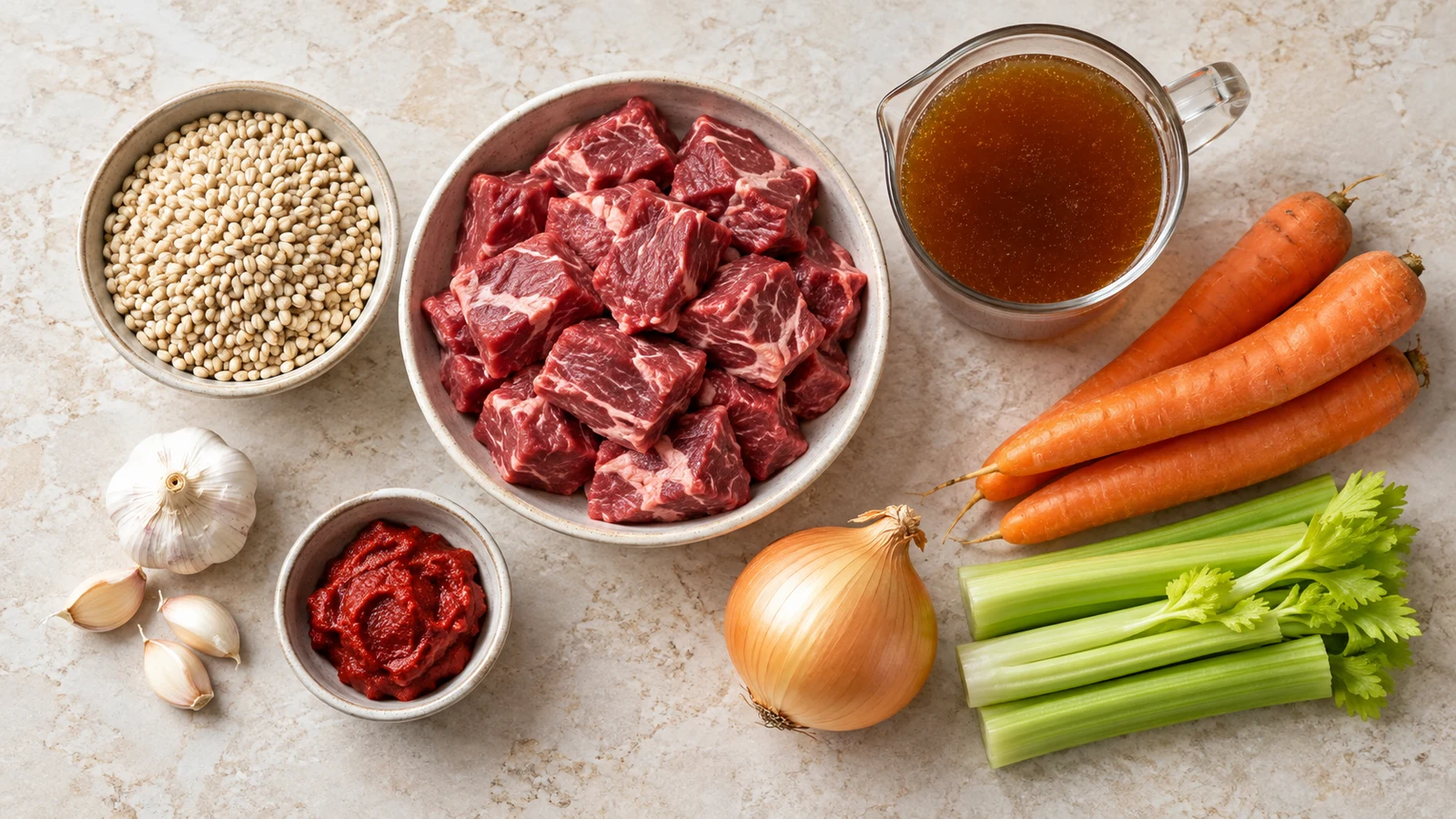
Choosing the Best Beef and Barley
Beef chuck is the best all-around choice because its connective tissue softens during a slow simmer, producing tender beef and a fuller-tasting broth. Brisket or boneless short ribs also work, while lean sirloin should be added later and cooked more briefly to avoid toughness. Follow standard safe food-handling practices when preparing raw beef.
Cut the chuck into evenly sized 3/4-inch cubes so the pieces become tender at approximately the same time. If the package contains large exterior pieces of hard fat, trim those away. Fine marbling within the meat can remain because it contributes flavor and moisture as this beef and barley soup recipe simmers.
Use pearl barley rather than hulled barley for predictable timing. Rinse it under cool water to remove surface dust, but do not precook it. Pearl barley becomes tender in approximately 35 to 45 minutes; hulled barley can require an hour or longer.
Pearl barley should be tender but still have a gentle chew. Because it releases starch and absorbs considerable liquid, the broth will become fuller as it cooks. That natural thickening is part of the appeal of a classic beef barley soup recipe.
How to Make This Beef Barley Soup Recipe
- Prepare the beef: Pat the cubes dry, then season with the salt and pepper. Dry beef browns more effectively and adds better flavor to the finished soup.
- Brown in batches: Heat 1 tablespoon oil in a large Dutch oven over medium-high heat. Brown half the beef for 5 to 7 minutes, turning occasionally. Transfer it to a plate and repeat with the remaining oil and beef.
- Sauté the vegetables: Reduce the heat to medium. Add the onion, carrots, and celery, then cook for 5 minutes. Stir in the garlic and tomato paste and cook for 1 minute, scraping up the browned bits.
- Simmer the beef: Return the beef and any juices to the pot. Add the broth, thyme, bay leaf, and Worcestershire sauce. Bring to a gentle boil, reduce the heat to low, cover partially, and simmer for 35 minutes.
- Add the barley: Stir in the rinsed pearl barley. Continue simmering partially covered for 35 to 45 minutes, stirring every 10 minutes, until the barley and beef are tender.
- Finish and serve: Remove the bay leaf. Adjust the salt, pepper, and consistency, then garnish with parsley and serve with crusty bread.
A heavy Dutch oven distributes heat evenly and helps prevent scorching. A 6-quart slow cooker is ideal for the alternative method below. For a more vegetable-forward version, try this beef barley vegetable soup.
How to Build a Richer Broth
The brown coating left on the bottom of the pot after searing is concentrated flavor. When the vegetables begin releasing moisture, use a wooden spoon to loosen those browned bits. Stirring the tomato paste into the vegetables for a full minute removes its raw edge and gives the beef barley soup recipe a deeper color.
Low-sodium broth offers better control over the final seasoning because the liquid becomes more concentrated during cooking. Wait until the beef and barley are tender before making the final salt adjustment. Worcestershire sauce supports the beef flavor, while parsley adds freshness just before serving.
Beef Barley Soup Crock Pot Recipe
For a beef barley soup crock pot recipe, brown the seasoned beef in a skillet first, then sauté the onion, carrots, celery, garlic, and tomato paste as directed. Transfer everything to a 6-quart slow cooker with the broth, thyme, bay leaf, Worcestershire sauce, and rinsed pearl barley.
Cook on low for 7 to 8 hours or on high for 4 to 5 hours, until the beef and barley are tender. Check the barley near the early end of the range to prevent it becoming mushy. For another hands-off dinner, see this slow-cooker beef and vegetable soup.
Keep the lid closed during cooking because lifting it releases heat and can extend the cooking time. If the finished beef barley soup crock pot recipe is thicker than desired, stir in warm broth a little at a time. Remove the bay leaf and adjust the seasoning immediately before serving.
Expert Tips for a Beef and Barley Soup Recipe
- Dry the beef thoroughly: Surface moisture creates steam and prevents a flavorful brown crust from forming.
- Use uncrowded batches: Leave space between the cubes so each piece makes direct contact with the hot pot.
- Keep every browned bit: The fond on the bottom of the Dutch oven dissolves into the broth and enriches the finished soup.
- Maintain a gentle simmer: Vigorous boiling can tighten the beef, break down the vegetables, and make the barley lose its pleasant texture.
- Give the beef a head start: Adding barley after the initial 35-minute simmer allows the meat and grain to finish together.
- Stir near the bottom: Once the barley is added, stir every 10 minutes to prevent grains from settling and sticking.
- Season at the end: The broth concentrates during cooking, so a final adjustment is more reliable than adding extra salt early.
For thicker broth, simmer uncovered for 10 minutes or mash a small spoonful of barley against the pot. For thinner soup, add warm broth 1/2 cup at a time. These small adjustments let you customize the beef barley soup recipe without changing its fundamental flavor.
If the soup tastes flat, add salt gradually. A small splash of Worcestershire sauce can deepen savory flavor, while a teaspoon of lemon juice can brighten an overly heavy broth. Add either carefully, taste, and stop as soon as the flavors seem balanced.
Variations and Substitutions
Barley and Grain Options
Quick barley can replace pearl barley, but add it only during the final 10 to 15 minutes and follow its package timing. Brown rice may be used for a gluten-free variation, although its cooking time and liquid needs differ. Confirm that the broth and Worcestershire sauce are gluten-free as well.
Hulled barley retains more of its outer layer and requires longer cooking than pearl barley. If you use it in this beef and barley soup recipe, plan for an hour or more and monitor both tenderness and liquid level. Add warm broth whenever the grains absorb enough liquid to make the soup too thick.
Meat and Vegetable Variations
Mushrooms, peas, green beans, or diced potatoes are easy additions. Add mushrooms with the onion, carrots, and celery so they have time to brown. Stir peas or green beans in near the end so they retain better color and texture. Potatoes can go into the broth when the beef begins simmering.
Ground beef can replace chuck for faster cooking; brown it, drain excess fat, and simmer the soup for about 30 minutes. Brisket and boneless short ribs suit the original slow method. For a barley-free classic, consider this old-fashioned vegetable beef soup.
Herb and Flavor Variations
Dried thyme is dependable because it withstands the long cooking time. Fresh parsley is best reserved for the finish. For a mushroom-forward variation, brown sliced mushrooms after the beef and before the other vegetables. Their savory character works naturally with the broth without overwhelming the beef barley soup recipe.
Serving Ideas for Beef Barley Soup
Serve the soup with rustic crusty bread, whole-grain rolls, or a crisp green salad. A balanced plate can combine this hearty soup with extra vegetables or fruit, following the general proportions in the Healthy Eating Plate guidance.
For a casual family meal, place the parsley and warm bread on the table so everyone can finish a bowl to taste. A simple salad with a bright dressing provides a refreshing contrast to the rich broth. Roasted vegetables also pair well when serving smaller portions of this beef and barley soup recipe.
Let the soup rest for 5 to 10 minutes before ladling. This short pause allows the temperature to settle and the broth to gain a little more body. Use wide, deep bowls that leave room for generous pieces of beef, vegetables, and barley.
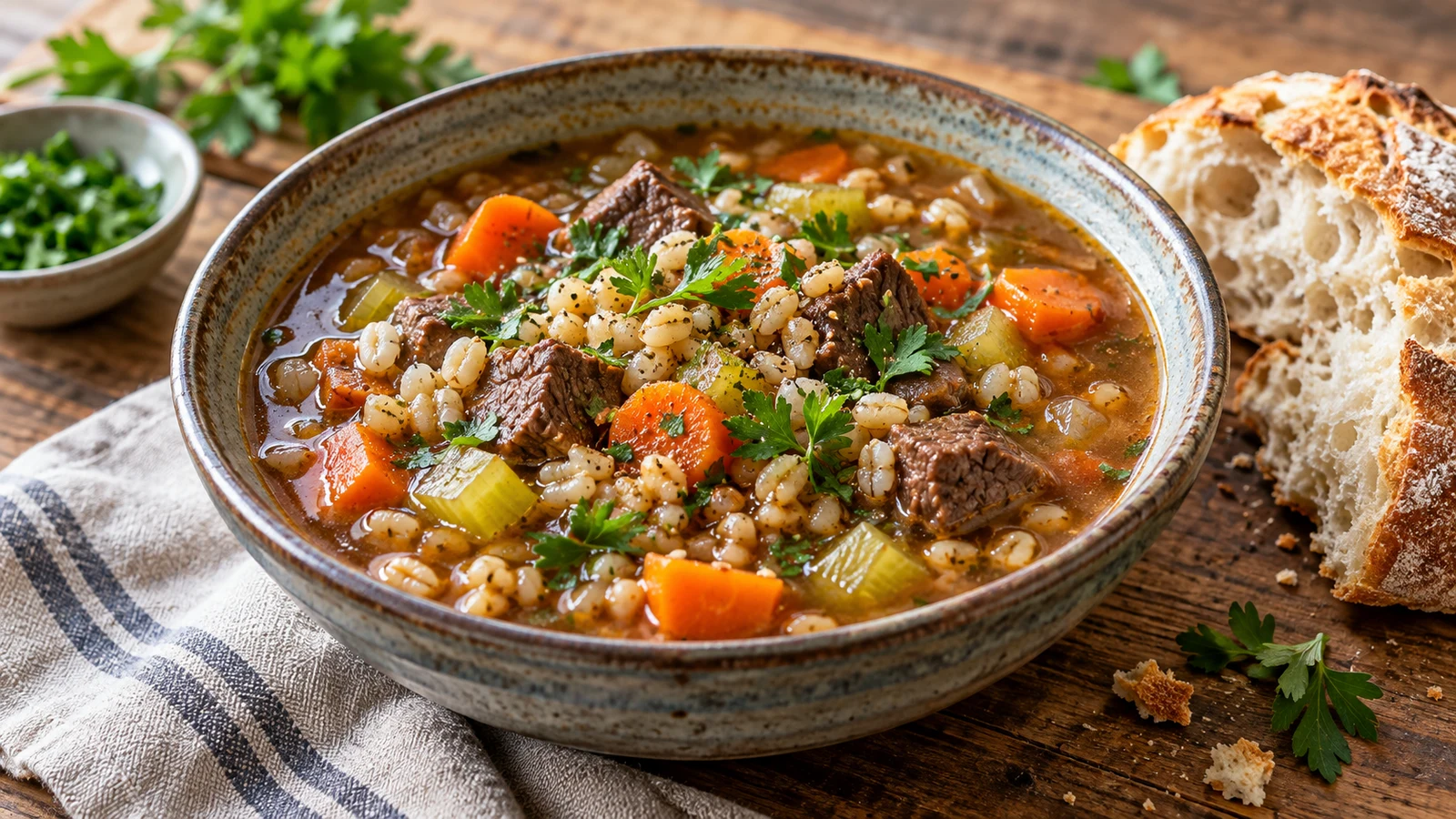
Make-Ahead, Storage, and Reheating
Making the Soup Ahead
This beef barley soup recipe is well suited to advance preparation because the broth becomes even more flavorful after a night in the refrigerator. If you plan to serve it later in the week, cook the barley separately and store it apart from the beef and vegetable base. Combine only the portions you intend to reheat.
If you prepare the entire soup together, expect it to thicken in the refrigerator. This is normal because cooked barley continues absorbing broth. Keep additional broth available and add it gradually during reheating until the original consistency returns.
Refrigerating Leftovers
Cool leftovers promptly and refrigerate them in shallow airtight containers for up to 4 days. The USDA’s leftover safety guidance recommends refrigerating perishable food within 2 hours.
Dividing the beef and barley soup recipe into meal-size containers helps it cool efficiently and makes lunch portions convenient. Label containers with the preparation date so there is no uncertainty about how long they have been refrigerated.
Freezing and Reheating
Freeze cooled soup for up to 3 months, ideally without the barley. Cooked barley can soften further after freezing and thawing, although the soup remains safe and flavorful. Leave a little room in each freezer container because liquids expand as they freeze.
Thaw the soup overnight in the refrigerator. Reheat gently on the stovetop until steaming throughout, stirring occasionally and adding broth as needed. Individual servings can be microwaved in short intervals and stirred between each one so the beef, vegetables, and broth heat evenly.
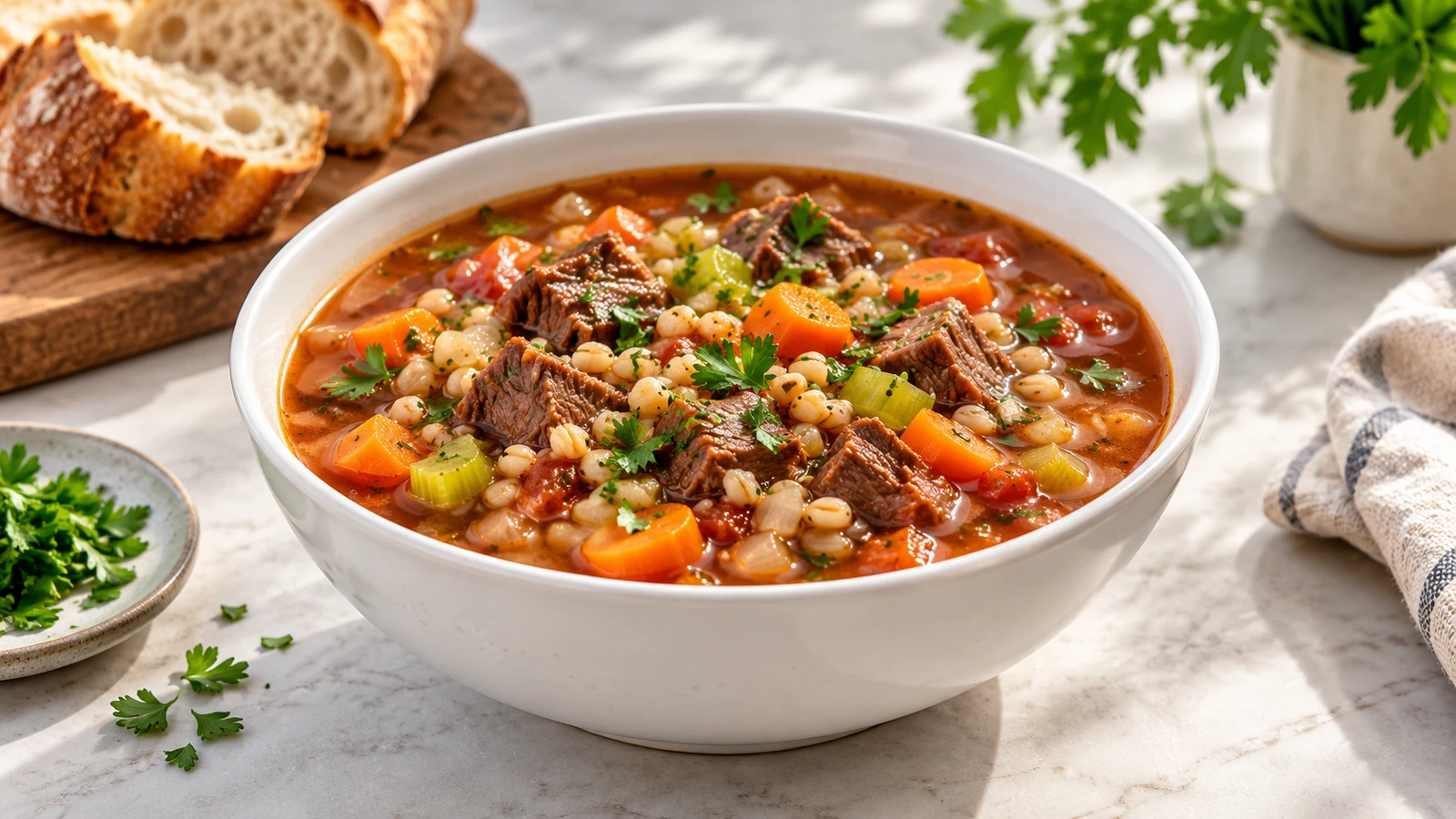
Troubleshooting This Beef Barley Soup Recipe
The Beef Is Still Tough
Tough beef usually needs more gentle cooking rather than higher heat. Keep the pot at a low simmer and check the meat every 10 to 15 minutes. Chuck becomes tender when its connective tissue has enough time to soften. Avoid a vigorous boil, which can make the exterior of the cubes feel firm.
The Barley Is Too Firm
Continue simmering the soup and check the barley at 5-minute intervals. If most of the broth has been absorbed, add enough warm broth to keep the ingredients submerged. Barley timing can vary slightly by brand, pot, and simmer intensity.
The Barley Is Mushy
Mushy barley is usually the result of overcooking or hard boiling. It cannot be made firm again, but adding a little broth can improve the consistency. Next time, begin checking at 35 minutes or store separately cooked barley when making the beef barley soup recipe ahead.
The Soup Is Too Thick or Thin
For soup that is too thick, stir in warm beef broth or water in 1/2-cup increments. If it is too thin, simmer uncovered for 10 minutes so excess liquid evaporates. You can also mash a small spoonful of barley against the side of the pot for gentle thickening.
The Broth Tastes Bland
First check the salt because low-sodium broth often requires a final adjustment. Add a small amount, stir, and taste again. A little more Worcestershire sauce can strengthen savory notes, while a teaspoon of lemon juice can bring balance if the beef and barley soup recipe tastes heavy.
Frequently Asked Questions
Should pearl barley be rinsed or precooked?
Rinse pearl barley thoroughly under cool running water, but do not precook it for this method. It cooks directly in the broth in 35 to 45 minutes and helps thicken the soup slightly.
Why is my beef tough?
The soup may have boiled too aggressively or may simply need more time. Keep it at a gentle simmer and continue cooking until a cube can be separated easily with a fork.
How do I prevent mushy barley?
Add it after the beef has simmered for 35 minutes, check it at the earliest suggested time, and avoid hard boiling. When preparing the beef barley soup recipe several days ahead, cook and store the barley separately.
Can I make the soup less thick?
Yes. Stir in warm beef broth or water in 1/2-cup increments until the desired soup consistency is reached, then taste and readjust the seasoning.
Can I make this beef and barley soup recipe ahead?
Yes. Prepare it up to 4 days ahead and refrigerate it promptly in airtight containers. For the best texture, keep separately cooked barley and the soup base in different containers, then combine them while reheating.
Does barley need to soak before cooking?
No. Pearl barley does not need soaking for this beef and barley soup recipe. Rinsing is sufficient, and the barley cooks directly in the broth after the beef has simmered for 35 minutes.
Can I use stew meat instead of chuck?
Yes, although packages labeled stew meat may contain cuts that soften at different rates. Choose evenly sized, well-marbled pieces when possible and rely on tenderness rather than the clock to determine when the beef is ready.
Can the beef barley soup crock pot recipe cook overnight?
The low setting requires 7 to 8 hours, so it may suit an overnight schedule if your slow cooker switches safely to a warm setting afterward. Avoid extending the cooking time because the barley may become overly soft and absorb too much broth.
Can I freeze a beef barley soup recipe with the barley included?
Yes, but the barley will be softer after thawing and may absorb additional broth. For the best texture, freeze the beef and vegetable base without barley, then add freshly cooked barley when reheating.
What is the best way to reheat this soup?
Warm it gently on the stovetop, stirring occasionally so the barley does not stick. Add broth or water as needed to restore the consistency. For a single portion, microwave in short intervals and stir between intervals until steaming throughout.
Recipe Card
Beef Barley Soup
- Prep time: 20 minutes
- Cook time: 1 hour 30 minutes
- Total time: 1 hour 50 minutes
- Yield: 6 servings
- Equipment: 6-quart Dutch oven, wooden spoon, cutting board, chef’s knife, measuring cups and spoons
- Nutrition per serving: Approximately 410 calories, 31 g protein, 35 g carbohydrates, 7 g fiber, 16 g fat, and 790 mg sodium
Method: Brown the seasoned beef in batches. Sauté the onion, carrots, celery, garlic, and tomato paste. Add broth and seasonings, then simmer for 35 minutes. Stir in rinsed pearl barley and simmer gently for another 35 to 45 minutes. Remove the bay leaf, adjust the consistency and seasoning, and garnish with parsley.
Notes: Nutrition is an estimate and varies with the broth, beef, and serving size. Use low-sodium broth so you can control the seasoning. Add quick barley only during the final 10 to 15 minutes.
A Comforting Soup to Make Again
This warming beef barley soup recipe delivers tender beef, wholesome barley, vegetables, and rich broth in every spoonful. Careful browning creates the savory foundation, while a gentle simmer gives the chuck enough time to become tender without sacrificing the texture of the vegetables.
Whether you choose the stovetop method or the beef barley soup crock pot recipe, checking the barley near the end and adjusting the broth will produce dependable results. Serve it fresh, prepare it ahead for an easier weeknight dinner, or freeze the barley-free base for a comforting future meal.
Reviews
Reader reviews are managed separately (outside this build).