Beef
corned beef brine recipe: Foolproof Homemade Cure
Discover a corned beef brine recipe with measured ingredients, a safe 5–7-day cure, pink salt #1 guidance, an uncured option, and tender results.
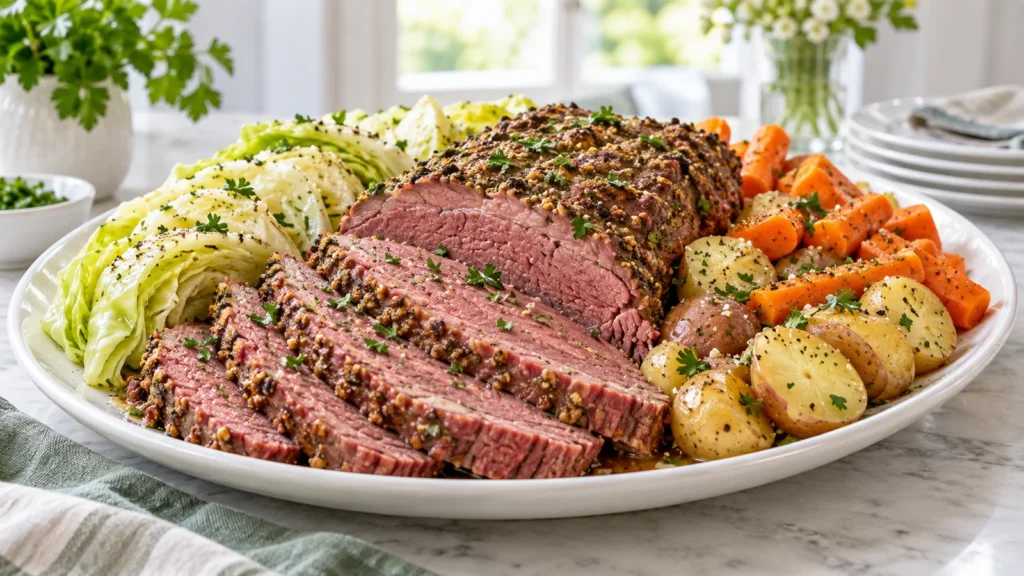
This corned beef brine recipe gives a 4–5 pound beef brisket a balanced, aromatic cure in 5–7 days. The batch makes about 1 gallon of brine, enough to keep one brisket fully submerged in a nonreactive container. Careful weighing, steady refrigeration, and gentle cooking produce tender slices with classic cured flavor.
Curing-salt safety note: Use only pink curing salt #1, also sold as Prague Powder #1, and weigh it accurately. It is not interchangeable with pink Himalayan salt, table salt, or curing salt #2. Always verify the approved amount on the product label before preparing this corned beef brine recipe.
Table of Contents
Why You’ll Love This Corned Beef Brine Recipe
- Weight-based brine measurements produce consistent results.
- A practical brine-to-meat ratio makes the recipe easy to scale.
- Whole spices add warmth without overpowering the beef.
- Instructions cover curing, desalting, cooking, slicing, and storage.
- You can choose a rosy cured brisket or an uncured gray version.
- The cured meat works with corned beef recipes oven baked, slow-cooker meals, pressure-cooker dinners, and sandwiches.
Ingredients
- 1 beef brisket, flat or point cut, 4–5 pounds (1.8–2.3 kg)
- 1 gallon (3.8 L) water, divided
- 10 ounces (283 g) kosher salt
- 5 ounces (142 g) packed light brown sugar
- 1 level tablespoon pink curing salt #1, about 15–18 g depending on the product; verify the manufacturer’s directions
- 2 tablespoons black peppercorns
- 2 tablespoons coriander seeds
- 1 tablespoon yellow mustard seeds
- 1 tablespoon allspice berries
- 2 teaspoons whole cloves
- 2 teaspoons red pepper flakes
- 2 bay leaves, crumbled
- 1 cinnamon stick
- 6 garlic cloves, lightly crushed
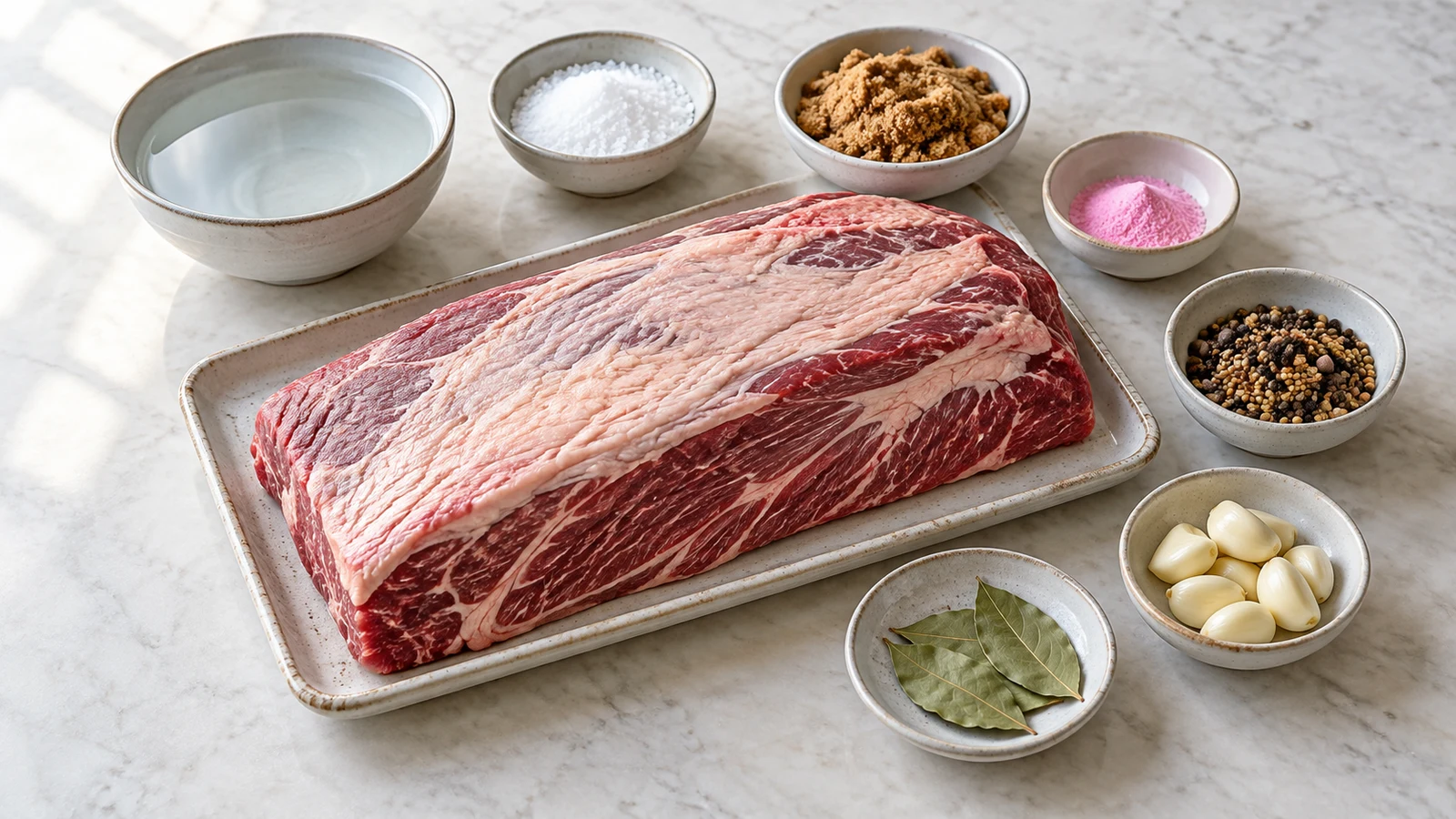
For scaling, use approximately 75 g kosher salt, 38 g brown sugar, and the curing-salt amount approved on its package per liter of water. Prepare enough liquid to surround the meat completely; a useful brine-to-meat ratio is roughly 2 parts brine to 1 part brisket by weight. Salt brands differ in crystal size, so weighing is safer than relying on cups. This 5–7-day brining example also illustrates the refrigerated curing schedule.
Why This Corned Beef Brine Recipe Works
Salt seasons the brisket and changes its texture, while sugar rounds out the brine without making the beef sweet. Pink curing salt #1 supplies sodium nitrite, which creates the familiar rosy color and cured flavor. Pepper, coriander, mustard, allspice, cloves, bay, cinnamon, and garlic build the classic pickling-spice profile.
A flat cut is leaner, evenly shaped, and easy to slice. A point cut contains more fat and connective tissue, giving it richer flavor but requiring patient cooking. Either works when kept cold and fully submerged throughout the cure. Choose the flat for neat sandwich slices and the point for especially succulent plated portions.
The two-stage mixing method matters. Heating only half the water dissolves the salt and releases flavor from the whole spices, while the remaining cold water helps the mixture cool faster. Adding curing salt only after chilling also makes this corned beef brine recipe straightforward to follow safely.
How to Make the Brine
- Combine 2 quarts (1.9 L) water, kosher salt, brown sugar, peppercorns, coriander, mustard seeds, allspice, cloves, red pepper flakes, bay leaves, cinnamon, and garlic in a large pot.
- Bring to a brief simmer, stirring until the salt and sugar dissolve. Remove the pot from the heat.
- Add the remaining 2 quarts (1.9 L) cold water. Chill the brine completely to 40°F (4°C) or below before it touches the beef. Never pour warm brine over raw brisket.
- Once cold, stir in the accurately measured pink curing salt #1 until dissolved. For another useful overview of seasoning and curing, see this homemade brine guide.
Do not add ice unless its measured volume replaces an equal amount of water. Unmeasured ice dilutes the salt, sugar, and curing salt. A reliable refrigerator thermometer is also valuable because the corned beef brine recipe depends on keeping the liquid between 34°F and 40°F throughout the cure.
How to Brine Beef Brisket
- Place the brisket in a food-safe plastic, glass, or stainless-steel container. Avoid reactive aluminum or copper.
- Pour in enough cold homemade corned beef brine to cover the meat. Set a clean plate, fermentation weight, or sealed bag filled with brine on top so no portion rises above the liquid.
- Cover and refrigerate at 34–40°F (1–4°C) for 5–7 days. Turn the brisket once daily with clean tongs, checking that it remains submerged.
- Discard the used brine after curing; do not reuse it as cooking liquid.
A snug container keeps the brisket covered without requiring an oversized batch. If the meat floats, fill a sealed food-safe bag with some of the prepared brine rather than plain water. If the bag leaks, it will not dilute the mixture. Label the container with the starting date and planned cooking date.
How to Rinse and Cook It
Remove the brisket, discard the brine, and rinse the meat thoroughly under cold water. For desalting corned beef when you prefer a milder result, soak it in fresh cold water for 30–60 minutes in the refrigerator, changing the water once. This step is particularly useful before adapting the meat to corned beef recipes oven baked.
- Slow cooker: Put the rinsed brisket fat-side up in the cooker, add water or unsalted broth to nearly cover, and cook on low for 8–10 hours. For more crock-pot guidance, use these corned beef brisket in a crock pot recipes.
- Oven: Place the brisket with 2 cups water in a covered roasting pan. Bake at 300°F (149°C) for 3–4 hours, following the same gentle approach used in these corned beef recipes oven baked.
- Instant Pot: Add the brisket and 4 cups water to a 6-quart pressure cooker. Cook at high pressure for 80–90 minutes, then allow a 20-minute natural release. Add cabbage, carrots, and potatoes afterward and pressure-cook for 4 minutes for an instant pot corned beef and cabbage recipe.
The brisket is safe before it becomes tender, so use texture as the main doneness cue: a fork or thin knife should slide into the thickest part with little resistance. The internal temperature often reaches 195–205°F (91–96°C) when the connective tissue is tender. Rest it for 15–20 minutes, identify the direction of the muscle fibers, and slice against the grain.
Expert Tips for the Best Results
- Weigh salt and curing salt with a reliable digital scale whenever possible.
- Confirm the label says curing salt #1 with 6.25% sodium nitrite; never substitute Himalayan salt.
- Keep the brisket refrigerated and submerged during the entire cure.
- Use a snug container so excessive brine is unnecessary.
- Turn the brisket daily so every surface receives even contact with the corned beef brine recipe.
- Do not rush cooking. Tough meat usually needs more time, not more heat.
- Cook vegetables after the beef is nearly tender so they retain their shape.
- Rest the brisket before carving to help the juices settle.
How to Slice Tender Corned Beef
Look at the raw brisket before cooking and note the direction of its long muscle fibers. The grain may become harder to see after cooking, especially on a point cut. Slice across those fibers with a sharp carving knife. Thin slices suit a corned beef sandwich recipe, while slightly thicker slices hold together better beside vegetables.
Choosing the Right Cooking Method
Use the slow cooker when you want unattended cooking and abundant moisture. Many corned beef brisket in a crock pot recipes are forgiving because low heat gradually softens connective tissue. Keep the lid closed during cooking so heat and steam do not escape.
Choose the oven for steady heat and easy doneness checks. Covered corned beef recipes oven baked retain moisture while offering enough room for aromatics and cooking liquid. A heavy pan with a close-fitting lid works best.
Pressure cooking is the fastest option. An instant pot corned beef and cabbage recipe cooks the beef first, then adds the vegetables briefly afterward. This sequence prevents tender cabbage and potatoes from turning mushy during the longer beef cycle.
Variations and Substitutions
For uncured gray corned beef, omit pink curing salt #1 and follow the remaining method. The finished meat will be gray-brown rather than rosy and will taste closer to spiced salt beef; keep it refrigerated throughout and cook promptly after the 5–7-day cure. A similar uncured approach appears in this naturally colored corned beef method.
Replace brown sugar with white sugar or maple sugar by weight. Juniper berries, fresh ginger, or cardamom can be added in small amounts. These changes adjust the background aroma without altering the essential salt balance of the corned beef brine recipe.
Milder Spice Variation
For a gentler flavor, reduce the red pepper flakes and cloves while leaving the salt, water, sugar, and curing salt unchanged. Do not reduce the measured curing ingredients merely because you prefer fewer spices. The brisket will remain savory and aromatic, but its flavor will be less assertive in a corned beef sandwich recipe.
Serving an Uncured Version
The gray color of uncured beef is normal when curing salt is omitted. Present it with mustard, potatoes, and cabbage, or use it anywhere you would serve the rosy version. Its appearance differs, but the same moist cooking methods used for corned beef brisket in a crock pot recipes remain suitable.
Make-Ahead and Storage Details
Prepare the liquid up to 2 days before adding the beef. Keep it covered and refrigerated at 40°F (4°C) or below, then confirm it is thoroughly cold before use. Once the brisket enters the corned beef brine recipe, begin counting the 5–7-day cure and turn the meat daily.
Refrigerate raw brisket only while actively curing, then cook it when the cure is complete. Do not save or repurpose used brine because it has contacted raw beef. If the brisket finishes curing a little before dinner day, cook it, cool it promptly, and refrigerate the cooked meat instead of extending the cure unnecessarily.
Store cooked corned beef in a shallow airtight container with a little cooking liquid for up to 4 days. Freeze tightly wrapped portions for up to 3 months and thaw them overnight in the refrigerator. Freeze slices in meal-size packets so you can defrost only what you need.
How to Reheat Without Drying It Out
Reheat covered slices with a splash of broth at 300°F (149°C) until hot, or warm them gently in a skillet. Avoid prolonged high heat, which can tighten the meat. Leftovers are excellent in hash, omelets, soups, or a corned beef sandwich recipe.
Troubleshooting This Corned Beef Brine Recipe
Why Is the Cooked Beef Too Salty?
Saltiness can increase when the brisket is small for the brine quantity, cures too long, or is cooked without a thorough rinse. Before cooking, soak the rinsed brisket in fresh cold water for 30–60 minutes and change the water once. If cooked beef remains salty, briefly simmer slices in fresh water.
Why Is the Brisket Still Tough?
Tough corned beef usually needs more cooking time. Return the unsliced meat to moist heat and continue until a fork enters with little resistance. Raising the heat aggressively can dry the exterior before the collagen softens. This principle applies equally to corned beef recipes oven baked and slow-cooked preparations.
Why Is the Center Less Pink?
An unusually thick or uneven brisket may cure less uniformly. Confirm that the meat stayed submerged, the curing salt was fully dissolved, and the brisket was turned daily. Never compensate after curing by sprinkling extra curing salt onto the meat.
What If the Brine Becomes Cloudy?
Some cloudiness can come from spices, garlic, sugar, or meat proteins. However, discard the batch if it develops an unpleasant odor, slime, unusual foaming, or signs that refrigeration failed. When food safety is uncertain, do not taste the brine or brisket to test it.
Why Did the Vegetables Turn Mushy?
Vegetables require much less cooking than brisket. Add them near the end when using corned beef brisket in a crock pot recipes. In an instant pot corned beef and cabbage recipe, remove or lift the cooked beef before pressure-cooking the vegetables for the specified 4 minutes.
Serving Ideas
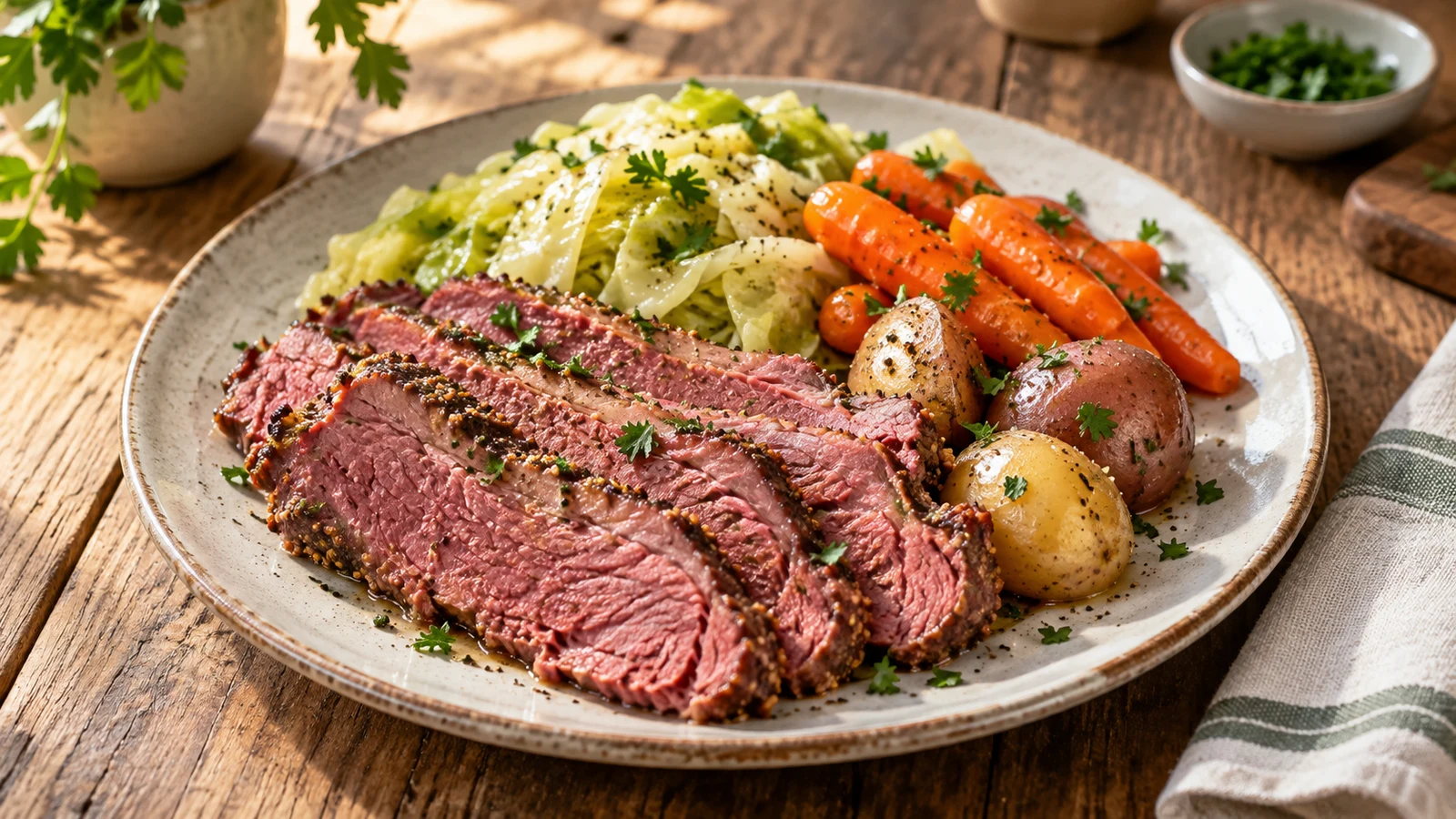
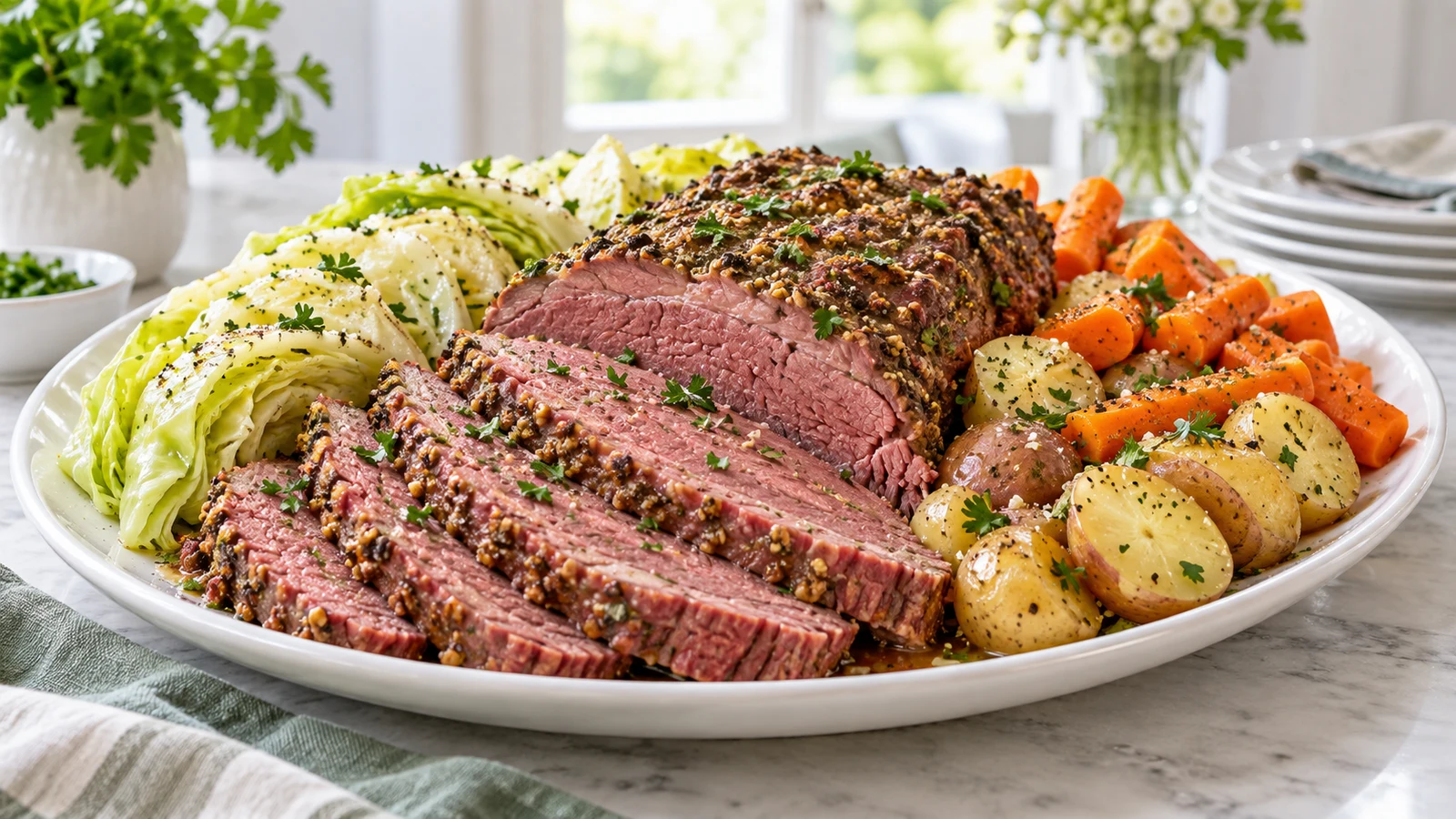
Serve warm slices with cabbage, carrots, potatoes, mustard, and a spoonful of cooking liquid. The mild vegetables balance the cured meat. For a brighter plate, add parsley or a crisp cabbage side without changing the brisket itself.
For lunch, layer thin slices onto bread with your preferred sandwich accompaniments. A dependable corned beef sandwich recipe is especially useful for chilled leftovers because slicing is easier once the meat firms in the refrigerator.
Diced leftovers can enrich breakfast hash, scrambled eggs, or an omelet. You can also add small pieces to soup near the end of cooking. If you prefer a formal dinner, corned beef recipes oven baked provide tidy slices that plate neatly with roasted or steamed vegetables.
For a relaxed family meal, use one of the linked corned beef brisket in a crock pot recipes and bring the tender brisket to the table with its vegetables. For a faster holiday dinner, an instant pot corned beef and cabbage recipe delivers the same familiar combination with less cooking time.
Frequently Asked Questions
Can I cure the brisket for longer than seven days?
A very thick brisket may need up to 10 days, but the salt level can intensify. Keep it continuously refrigerated, turn it daily, and soak it in cold water before cooking if needed. For the stated 4–5 pound brisket, the 5–7-day schedule in this corned beef brine recipe is the best starting point.
Why did my corned beef turn gray?
Gray meat usually means pink curing salt #1 was omitted, incorrectly measured, or unevenly distributed. It can be expected in the uncured version and does not by itself indicate failed cooking.
Can I inject the brine to shorten the cure?
Injection requires precise food-safety calculations and specialized handling. For a home recipe, the full refrigerated immersion cure is simpler and more dependable.
What equipment do I need?
Use a digital scale, large pot, whisk, food-safe nonreactive container, clean weight, refrigerator thermometer, tongs, and instant-read thermometer. A sharp slicing knife is helpful when preparing meat for a corned beef sandwich recipe.
Can I halve this corned beef brine recipe?
Yes, provided every brine ingredient is reduced proportionally and enough liquid remains to submerge the brisket. Use weights for accurate scaling, and follow the curing-salt manufacturer’s approved directions. A smaller liquid batch does not automatically shorten the 5–7-day curing period.
Can I reuse the cooking liquid?
The cooking liquid is different from the discarded raw-meat brine. You may use a small amount to keep cooked slices moist, but taste it first because it can be salty. Never reuse the original curing brine.
Which method is best for meal preparation?
Slow cooking is convenient when you can plan ahead, while pressure cooking saves time. An instant pot corned beef and cabbage recipe is useful for a same-day dinner after the cure is complete. Oven cooking gives you easy control over tenderness and liquid level.
Should I trim the fat before curing?
Trim only very thick or hard exterior fat, leaving a moderate layer to protect the brisket during cooking. Excessive trimming can make lean flat-cut meat less succulent. After cooking, diners can remove additional fat from individual slices if desired.
Can I use the cured beef for sandwiches?
Yes. Cool the cooked brisket completely, slice it thinly against the grain, and follow your favorite corned beef sandwich recipe. Chilled beef slices more cleanly than hot beef, so preparing it a day ahead can make assembly easier.
Printable Recipe Card
Recipe: Foolproof Homemade Corned Beef Brine
Prep time: 20 minutes
Cooling time: About 2 hours
Curing time: 5–7 days
Cooking time: 1 1/2–10 hours, depending on method
Yield: 8 servings
Equipment: Digital scale, stockpot, nonreactive container, weight, thermometer
Ingredient weights: Use a 4–5 pound (1.8–2.3 kg) brisket, 1 gallon (3.8 L) water, 10 ounces (283 g) kosher salt, 5 ounces (142 g) brown sugar, the label-approved amount of pink curing salt #1, and the spices listed above.
- Dissolve kosher salt and sugar with the spices in half the water over gentle heat.
- Add the remaining water and chill to 40°F (4°C) or below; stir in curing salt #1.
- Submerge the brisket under a clean weight and refrigerate for 5–7 days, turning daily.
- Rinse, optionally soak for 30–60 minutes, and discard the brine.
- Cook with moist heat until fork-tender, generally at an internal temperature of 195–205°F (91–96°C).
- Rest for 15–20 minutes and slice thinly against the grain.
Nutrition: Approximate per serving before side dishes: 420 calories, 32 g protein, 30 g fat, 4 g carbohydrate, and variable sodium. Sodium depends heavily on brisket size, soaking, and serving portion.
Notes: Follow the curing-salt package for its exact approved quantity. Maintain refrigeration, full submersion, and clean handling throughout the process.
Final Thoughts
With accurate measurements, steady refrigeration, and gentle cooking, this corned beef brine recipe turns an ordinary brisket into well-seasoned, tender corned beef. Give the cure enough time, adjust saltiness with a cold-water soak, and slice carefully for the best texture.
Once cured, the brisket can anchor corned beef recipes oven baked, complement corned beef brisket in a crock pot recipes, become an instant pot corned beef and cabbage recipe, or supply leftovers for a corned beef sandwich recipe. The same careful cure gives you several practical ways to serve one flavorful cut of beef.
Reviews
Reader reviews are managed separately (outside this build).