Beef
beef rib roast bone in recipe: Succulent, Foolproof
Master this beef rib roast bone in recipe with garlic-herb flavor, precise pull temperatures, resting tips, and savory au jus. Get tender results.
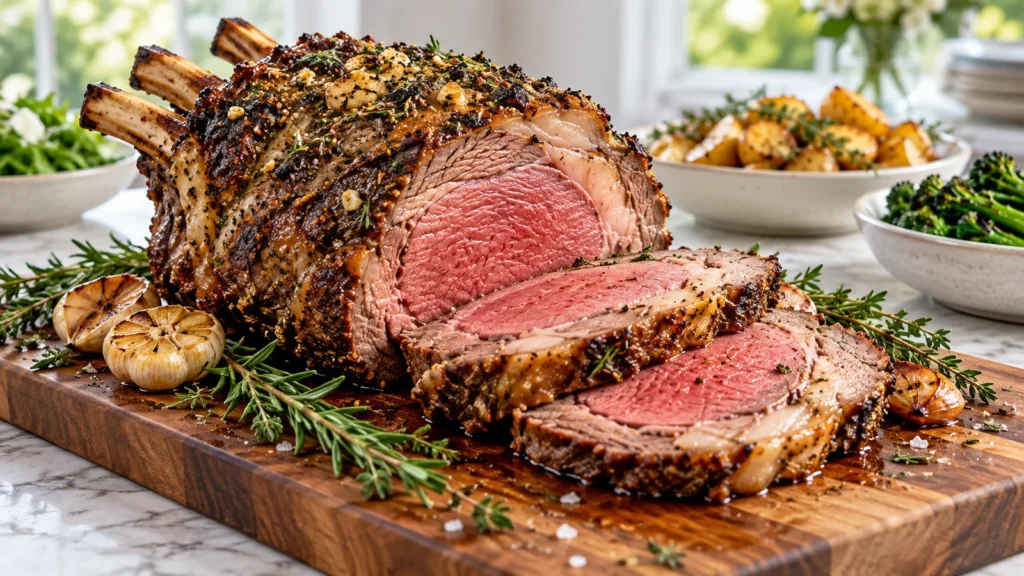
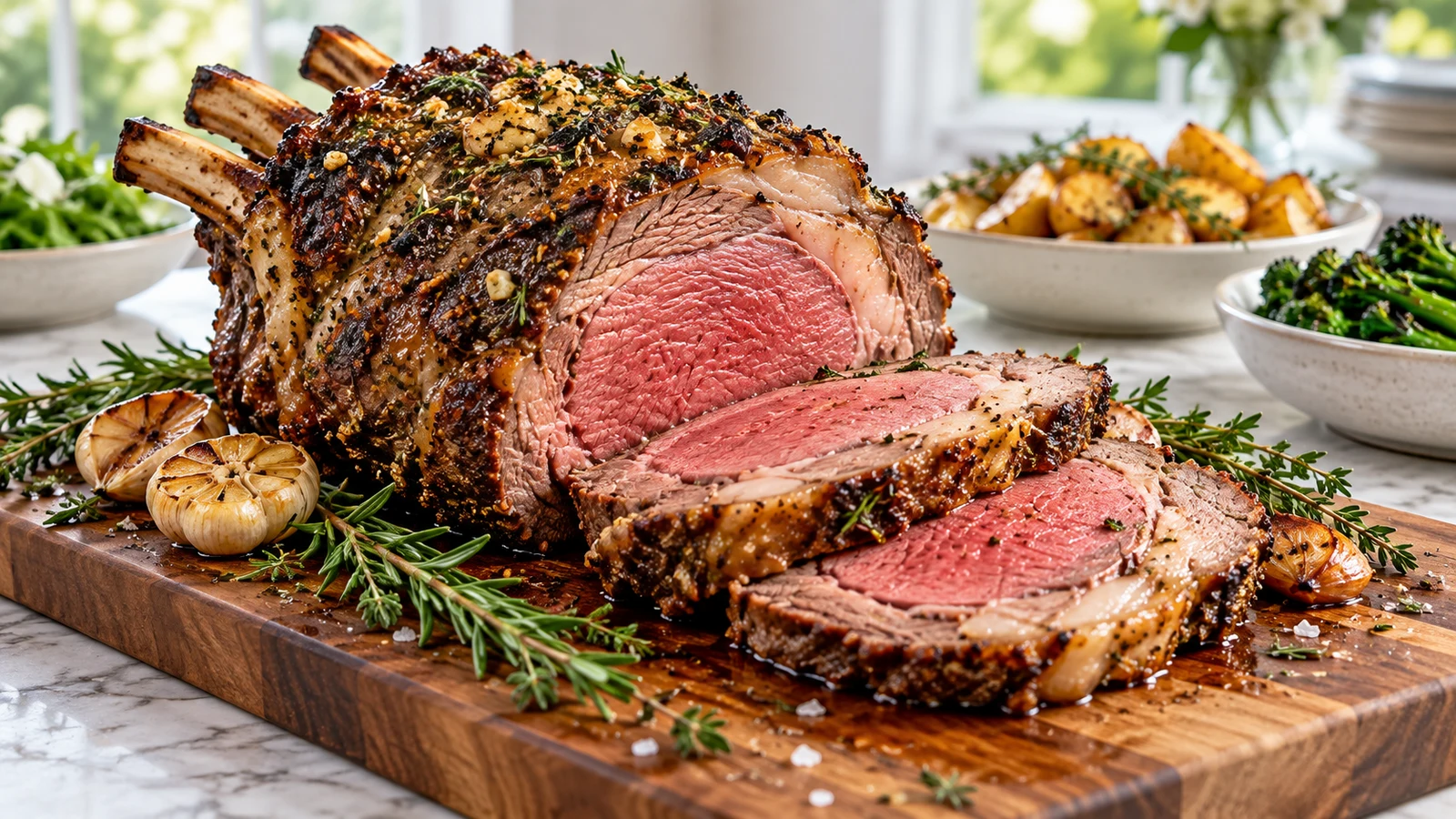
This beef rib roast bone in recipe delivers rosy, tender slices, a deeply browned garlic herb crust, and rich pan juices without complicated restaurant techniques. An overnight dry brine and temperature-based roasting make the results dependable for holidays, celebrations, and relaxed Sunday dinners.
The method includes guidance for buying, seasoning, roasting, resting, carving, and preparing au jus. Allow about three days for refrigerator thawing if your roast is frozen, plus one night for salting. Unlike a beef short ribs recipe, this centerpiece is gently roasted rather than braised.
Table of Contents
Why You’ll Love This Recipe
- Reliable doneness: Precise pull temperatures account for carryover cooking.
- Excellent flavor: Salt penetrates the beef overnight, while garlic and herbs create a savory crust.
- Flexible sizing: The method works for two- to four-rib roasts.
- Useful pan juices: The drippings become a quick, flavorful au jus.
- Even cooking: Low heat reduces the thick gray band that can form beneath the crust.
- Easy timing: The long rest provides a useful window for finishing side dishes.
Rib Roast, Prime Rib, and Short Ribs
A bone-in rib roast, standing rib roast, and prime rib generally describe the same cut from the beef rib primal. “Prime rib” does not guarantee USDA Prime grade; a roast may be graded Prime, Choice, or Select. Prime has the most marbling, while well-marbled Choice offers excellent flavor at a lower price.
Short ribs come from different areas and contain more connective tissue, so they generally need slow braising rather than this dry-roasting method. For those cuts, use a dedicated beef ribs recipe instead. A beef short ribs oven baked recipe also uses lower, moist cooking to soften collagen.
Do not apply the temperatures and timing in this beef rib roast bone in recipe to short ribs. Likewise, a boneless beef short ribs recipe cannot be used as a direct guide for a standing rib roast because the cuts differ in shape, fat, and tenderness.
Buying and Serving Guide
- 2 ribs: 4 to 5 pounds (1.8 to 2.3 kg), serving 4 to 6.
- 3 ribs: 6 to 7 pounds (2.7 to 3.2 kg), serving 6 to 8.
- 4 ribs: 8 to 10 pounds (3.6 to 4.5 kg), serving 8 to 10.
Plan on approximately 1 pound of uncooked bone-in roast per person, or one rib for every two diners. Select a roast with even marbling and a fat cap about 1/4 inch thick; ask the butcher to cut off and tie the bones back on if you want easier carving.
How to Choose the Best Roast
Look for fine white streaks of fat distributed through the eye of the meat. Marbling melts as the roast cooks and helps each slice taste rich and succulent. The roast should have a uniform shape, since a very narrow end may reach the target temperature before the thick center.
Bone-in and boneless rib roasts can both be excellent, but the bones provide a stable base and make an impressive presentation. This beef rib roast bone in recipe is written specifically for a roast with two to four ribs, so keep the bones attached or tied back in place during cooking.
Fresh or Frozen Beef
A frozen roast works well when it is thawed completely before seasoning. Place it on a tray in the refrigerator and allow about three days for a 6- to 7-pound roast. Never thaw it on the counter. Once thawed, pat away surface moisture before applying the salt.
Ingredients
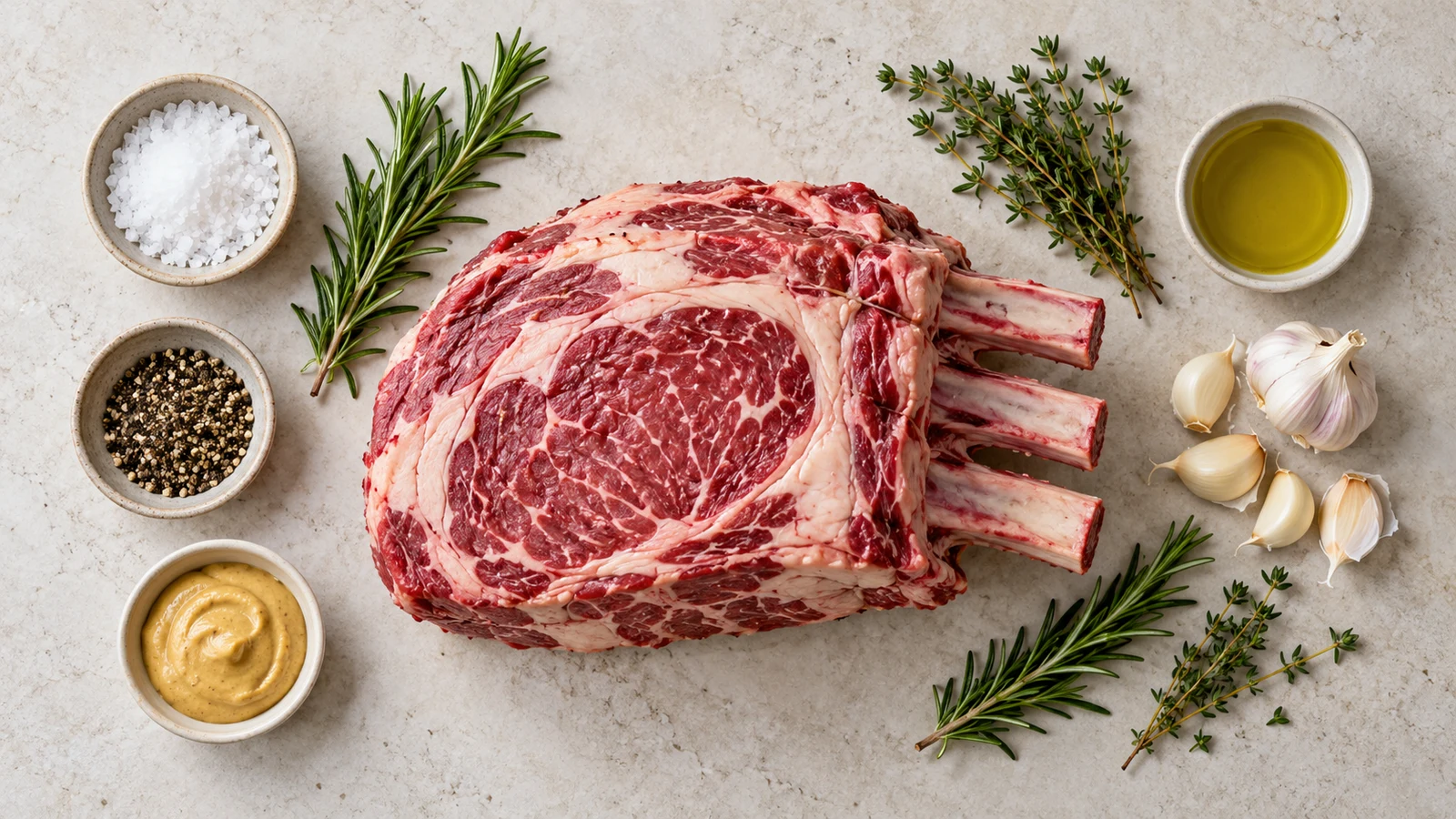
- 1 three-rib bone-in beef rib roast, 6 to 7 pounds (2.7 to 3.2 kg)
- 2 tablespoons Diamond Crystal kosher salt or 1 tablespoon plus 1 teaspoon Morton kosher salt
- 2 teaspoons coarsely ground black pepper
- 4 garlic cloves, finely grated
- 2 tablespoons chopped fresh rosemary
- 1 tablespoon fresh thyme leaves
- 2 tablespoons olive oil or softened unsalted butter
- 1 cup (240 ml) low-sodium beef stock
- 1/2 cup (120 ml) dry red wine or additional stock
- 1 teaspoon Worcestershire sauce
Equipment
Use a rimmed roasting pan with a rack, kitchen twine if the bones are detached, an instant-read thermometer, and preferably a leave-in probe thermometer. Place the probe through the side into the center of the thickest meat, avoiding bones and large pockets of fat. This temperature-based prime rib guide explains why internal temperature is more dependable than time alone.
A heavy roasting pan makes deglazing easier, although any sturdy oven-safe pan with a rim will contain the juices. Choose a carving board with a juice channel and a long, sharp slicing knife. These simple tools make the beef rib roast bone in recipe easier to monitor and serve neatly.
Overnight Seasoning
Pat the roast dry, season every surface with the measured salt, and refrigerate it uncovered on a rack for 12 to 24 hours. This overnight dry brine seasons below the surface and dries the exterior for better browning. The roast may be salted up to 48 hours ahead.
Keep the roast uncovered during dry-brining. The surface may look darker and drier the next day; that is expected and helps the crust form. Do not rinse away the salt. The measured amount is part of the seasoning balance for this beef rib roast bone in recipe.
How to Make This Beef Rib Roast Bone In Recipe
- Prepare the oven: Remove the roast from the refrigerator 60 minutes before cooking. Heat a conventional oven to 250°F (120°C), or a convection oven to 225°F (107°C).
- Add the crust: Mix pepper, garlic, rosemary, thyme, and oil. Rub the mixture over the meat and fat cap, avoiding loose pieces that could burn.
- Position the roast: Set it bone-side down and fat-cap up. The bones form a natural rack, while the fat bastes the surface.
- Roast gently: Cook until the center reaches your chosen pull temperature. In a conventional oven, allow roughly 25 to 35 minutes per pound; convection commonly takes 20 to 30 minutes per pound. Begin checking a two-rib roast 45 minutes earlier than the estimate because smaller roasts cook less predictably.
- Rest: Transfer the roast to a board and tent loosely with foil for 30 to 45 minutes. Increase the oven to 500°F (260°C).
- Brown the exterior: Return the rested roast to the oven for 6 to 10 minutes, until the crust is deeply browned. Watch closely, then carve without another long rest.
The two-stage method is the central advantage of this beef rib roast bone in recipe. Gentle heat cooks the center evenly, while the brief final blast develops color after the meat has rested. Opening the oven repeatedly can extend the cooking time, so rely on the probe and confirm only when the roast nears its target.
Doneness and Pull Temperatures
- Rare: Pull at 115 to 118°F (46 to 48°C); final temperature about 120 to 125°F (49 to 52°C).
- Medium-rare: Pull at 120 to 123°F (49 to 51°C); final temperature about 128 to 132°F (53 to 56°C).
- Medium: Pull at 128 to 132°F (53 to 56°C); final temperature about 135 to 140°F (57 to 60°C).
Large roasts can rise 5 to 10°F during resting because of carryover cooking. For food-safety guidance, the USDA recommends cooking whole beef roasts to 145°F (63°C) followed by at least a three-minute rest; consult its holiday roast safety recommendations when serving higher-risk guests.
How to Measure Temperature Accurately
Insert the probe from the side so its tip reaches the center of the thickest muscle. A probe touching bone may give a misleading reading, while one sitting in a fat pocket may not reflect the meat’s doneness. Check two nearby spots with an instant-read thermometer before ending the slow roast.
If diners prefer different levels of doneness, the end slices will naturally be more cooked than the center. Serve the pink middle to guests who prefer medium-rare and the outer portions to anyone wanting more doneness. Individual slices can also be warmed briefly in the pan juices.
Resting, Carving, and Au Jus
After the initial rest and final browning, cut away the twine. Follow the curve of the bones to remove them in one piece, then slice the roast across the grain into 1/2-inch portions. A sharp slicing knife prevents ragged edges.
For au jus, spoon excess fat from the roasting pan. Set the pan over medium heat, add wine, and scrape up the browned bits. Add stock and Worcestershire sauce, simmer for 5 to 8 minutes, then strain and season lightly. A classic standing rib roast technique offers additional preparation context.
Taste the au jus before adding salt because the drippings and Worcestershire sauce already contribute seasoning. If the flavor is too intense, dilute it with a small amount of unsalted stock or water. Keep it warm over low heat rather than boiling it down aggressively.
Expert Tips for a Bone-In Rib Roast
- Trust the thermometer: Treat minutes per pound as a planning estimate, not a doneness test.
- Verify the center: Check a second spot with an instant-read thermometer before removing the roast.
- Protect the garlic: Press the herb mixture onto the meat so loose garlic does not fall into the pan and scorch.
- Use the correct orientation: Keep the fat cap facing upward and the bones underneath throughout roasting.
- Rotate if needed: Turn the pan during the final high-heat stage if the crust browns unevenly.
- Preserve the rest: Tent loosely, because tight foil traps steam and softens the dry exterior.
- Season ahead: Make the herb mixture and dry-brine the beef one day ahead, but add garlic just before roasting.
For the most consistent beef rib roast bone in recipe, check your oven temperature with an oven thermometer. An oven that runs hot can push the center beyond the desired doneness before expected, while a cool oven may add considerable time.
Variations and Substitutions
Herb and Garlic Variations
Replace rosemary and thyme with sage, parsley, or a salt-free herb blend. Avocado oil may replace olive oil, and prepared horseradish can be stirred into softened butter for a sharper crust. These changes preserve the basic technique and measured salt in the beef rib roast bone in recipe.
Alcohol-Free Au Jus
Use additional low-sodium beef stock instead of wine. Deglaze carefully, scraping up the browned bits so their flavor enters the sauce. The result will be slightly less complex but still savory and well suited to the roast.
Adapting Other Rib Recipes
If you bought short ribs by mistake, switch to a beef short ribs recipe designed for braising. For meat without bones, choose a boneless beef short ribs recipe rather than altering the roast timing. A beef ribs recipe is also the better reference for individually cut ribs.
When you want deep oven-braised flavor, a beef short ribs oven baked recipe offers the right technique. The dry roasting and pull temperatures here are intended only for a tender rib roast.
Make-Ahead Timeline
Three Days Before Serving
If frozen, move the roast to the refrigerator on a rimmed tray. A large roast needs gradual, uninterrupted thawing. Check that the center is fully pliable before proceeding, since a partially frozen middle will make the cooking time unpredictable.
One or Two Days Before Serving
Dry-brine the beef for 12 to 24 hours, or up to 48 hours. Chop the rosemary and thyme, measure the other ingredients, and prepare any side dishes that reheat well. Wait to grate and apply the garlic until shortly before roasting.
On the Day
Count backward from the serving time using the estimated roasting range, then add the 30- to 45-minute rest and 6 to 10 minutes for browning. Build in extra time because a finished roast can rest longer more gracefully than an undercooked roast can be rushed.
Prepare the wine, stock, and Worcestershire sauce in a measuring jug before the roast finishes. During the rest, finish vegetables and heat serving dishes. Complete the final sear last so this beef rib roast bone in recipe reaches the table with a crisp, fragrant crust.
Serving Ideas and Menu Planning
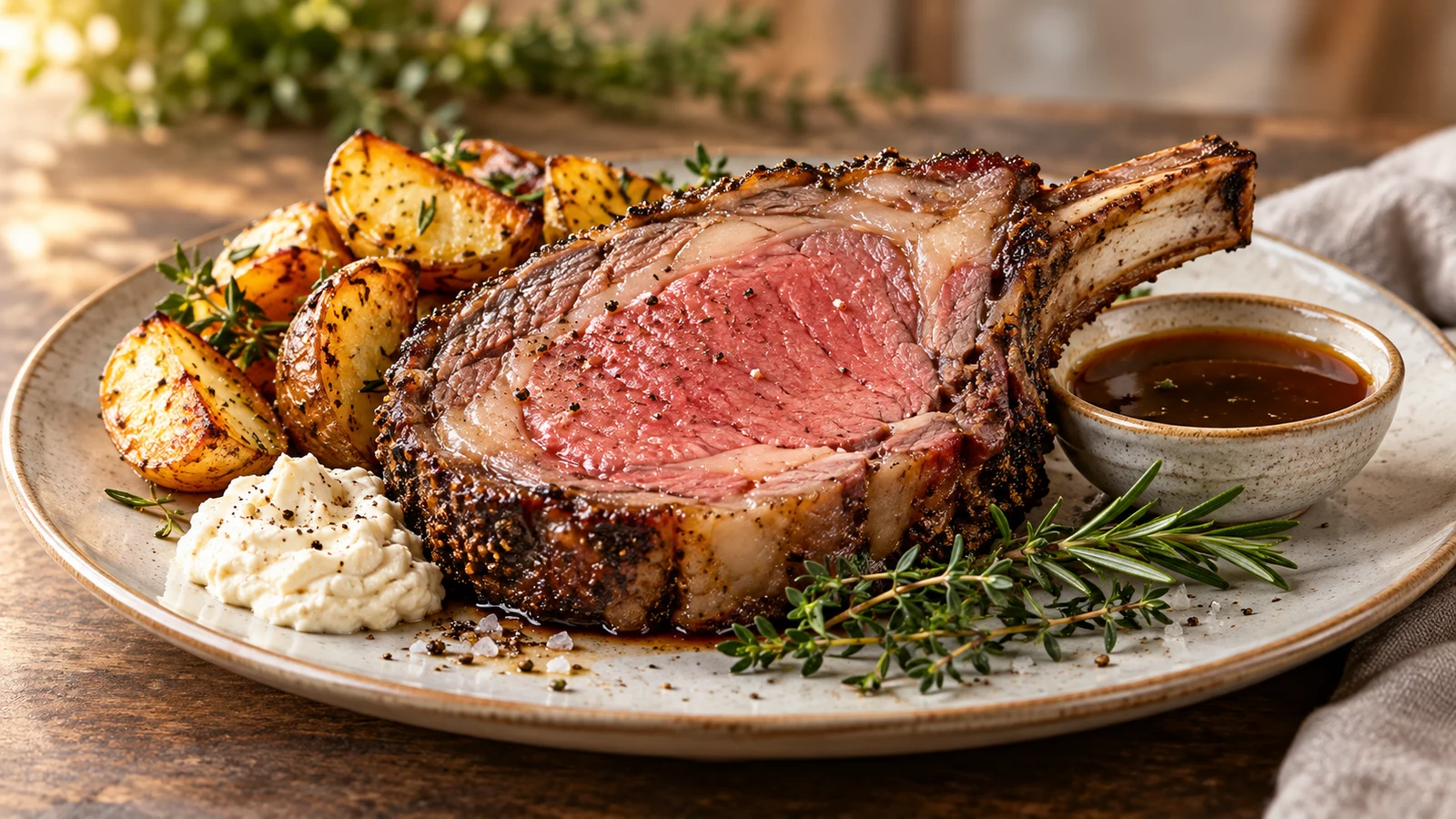
Serve the roast with mashed potatoes, Yorkshire pudding, roasted carrots, green beans, creamed spinach, or a crisp salad. The savory au jus is especially good with potatoes and bread. Horseradish cream provides a cool, sharp contrast to the richly marbled beef.
For a balanced plate, combine one creamy side, one green vegetable, and something crisp or acidic. A simple salad with a bright vinaigrette cuts through the richness. Warm dinner rolls are useful for catching the remaining au jus.
This beef rib roast bone in recipe works particularly well for a holiday meal because the resting period frees the oven for reheating side dishes. Carve at the table for a dramatic presentation, or slice in the kitchen and arrange the portions on a warmed platter.
Troubleshooting
- Roast finished early: Extend the loose-foil rest to 60 minutes, then perform the final browning immediately before serving.
- Center is underdone: Return slices or the roast to a 300°F (149°C) oven and check every 5 minutes.
- Crust is pale: Dry the surface thoroughly and ensure the oven is fully heated before the final sear.
- Drippings are scorched: Add 1/2 cup water to the pan during roasting, keeping it below the meat.
- Cooking seems slow: Verify the oven setting and probe position, then continue until the center reaches the target rather than increasing the heat abruptly.
- Meat is difficult to slice: Remove the bone section first and use long, smooth knife strokes across the grain.
Why Is the Roast Gray Near the Edges?
A narrow cooked edge is normal, but a wide gray band usually indicates roasting at a higher temperature or skipping the low-temperature stage. Following the gentle heat in this beef rib roast bone in recipe keeps more of each slice evenly pink.
What If the Au Jus Is Greasy?
Let the pan juices stand briefly, then spoon the clear fat from the surface before deglazing. If necessary, strain the finished liquid into a narrow container and remove additional fat from the top. Do not discard every drop, because a little fat carries flavor.
How to Store and Reheat
Refrigerate leftovers in a shallow airtight container within two hours and use within 3 to 4 days. Freeze tightly wrapped portions for up to 3 months. Thaw overnight in the refrigerator.
For moist slices, place beef in a covered baking dish with a few spoonfuls of au jus. Warm at 275°F (135°C) for 10 to 20 minutes, just until heated through. Avoid repeated reheating, which quickly turns the pink center gray and dry.
Storing a Larger Piece
If possible, refrigerate a larger unsliced section rather than cutting all the leftovers at once. Less exposed surface area helps the beef retain moisture. Store the au jus separately so it can be defatted easily and added during reheating.
Freezing Individual Portions
Wrap cooled slices tightly in portions suitable for one meal, then place them in a freezer-safe container. Freeze some au jus separately in small portions. Gentle reheating after an overnight refrigerator thaw gives better results than microwaving the beef from frozen.
Leftover Ideas
Use thin slices in French dip sandwiches, steak-and-egg breakfasts, tacos, hash, or creamy pasta. Bones can enrich beef stock. For a different slow-cooked meal, try a boneless beef short ribs recipe.
Cold beef also works in a hearty salad with crisp greens, roasted vegetables, and a sharp dressing. Add warmed slices only at the end when making pasta or hash. That approach prevents leftovers from overcooking while the other ingredients finish.
Frequently Asked Questions
Should a rib roast come to room temperature?
No large roast becomes room temperature in a safe, practical period. Sixty minutes out of the refrigerator removes some surface chill, but gentle roasting and thermometer placement matter more.
Do I need a roasting rack?
No. Positioning the roast bone-side down elevates the meat. Use a rack only if the bones were completely removed.
Can I cook the roast entirely at high heat?
You can, but the outer layers will become more done before the center reaches its target. Low-temperature roasting followed by a hot finish creates more evenly rosy slices.
Can I use a beef short ribs recipe for this roast?
No. A beef short ribs recipe is created for a tougher, collagen-rich cut that benefits from long braising. A rib roast is already tender and should be cooked by internal temperature, rested, and browned briefly.
Is a beef ribs recipe the same as this method?
No. A beef ribs recipe may cover back ribs, plate ribs, or short ribs, all of which have different proportions of meat, bone, and connective tissue. Confirm the cut on the package before selecting a cooking method.
Can I turn this into a boneless beef short ribs recipe?
No. A boneless beef short ribs recipe typically uses thick pieces from the chuck or plate and a moist, slow-cooking method. Removing the bones from a rib roast does not transform it into short ribs.
How does a beef short ribs oven baked recipe differ?
A beef short ribs oven baked recipe usually encloses the ribs with liquid so time and moisture can soften connective tissue. This roast remains uncovered and cooks gently only until the tender center reaches the desired doneness.
Can I season the roast two days ahead?
Yes. The roast may be salted up to 48 hours ahead and refrigerated uncovered. Apply the garlic, pepper, herbs, and oil shortly before cooking so the aromatics remain fresh and are less likely to scorch.
Should I cover the roast while it cooks?
No. Leaving it uncovered helps the exterior remain dry enough to brown. Foil is used only as a loose tent during the rest; wrapping tightly would trap steam and soften the surface.
How do I scale this beef rib roast bone in recipe?
Keep the same oven temperatures and pull temperatures for a two- or four-rib roast. Scale the seasoning sensibly for the roast’s size and use the timing range only for planning. The thermometer determines when the meat is ready.
How much nutrition is in one serving?
An estimated 8-ounce cooked serving provides about 650 calories, 48 grams protein, 50 grams fat, and 650 milligrams sodium. Actual values vary with grade, trimming, serving size, and how much au jus is used.
Recipe Card
Yield: 6 to 8 servings
Prep: 20 minutes, plus 12 to 24 hours dry-brining
Cook: About 2 1/2 to 4 hours
Rest: 30 to 45 minutes
Method: Salt a 6- to 7-pound three-rib roast overnight. Coat with garlic, herbs, pepper, and oil; roast bone-side down at 250°F (120°C) until the center reaches 120 to 123°F (49 to 51°C) for medium-rare. Rest for 30 to 45 minutes, brown at 500°F (260°C) for 6 to 10 minutes, and carve across the grain. Deglaze the pan with wine, stock, and Worcestershire sauce for au jus.
Related Beef Recipes
If you are comparing cuts, remember that a beef short ribs recipe relies on collagen-melting braising, unlike a rib roast. Choose a beef ribs recipe when you have individual ribs, or a boneless beef short ribs recipe when the package contains meaty boneless pieces.
Try this beef short ribs oven baked recipe when you want tender, slow-cooked ribs rather than carved roast beef. Each method suits its specific cut and produces a different style of meal.
A Dependable Holiday Centerpiece
With patient seasoning, accurate thermometer placement, and the right pull temperature, this beef rib roast bone in recipe comes out evenly cooked and easy to carve. Give it a full rest, finish it in a hot oven, and serve the rosy slices with warm au jus.
Save the beef short ribs recipe, beef ribs recipe, boneless beef short ribs recipe, and beef short ribs oven baked recipe for their intended cuts. When a standing rib roast is on the menu, this temperature-led approach provides the tender center, browned crust, and flexible timing a special meal deserves.
Reviews
Reader reviews are managed separately (outside this build).