Beef
Beef Chuck Short Ribs Recipe: Ultimate Fork-Tender Bliss
Try this beef chuck short ribs recipe for oven-braised, fork-tender beef, with practical tips on oven heat, timing, doneness, and jus. Get cooking.
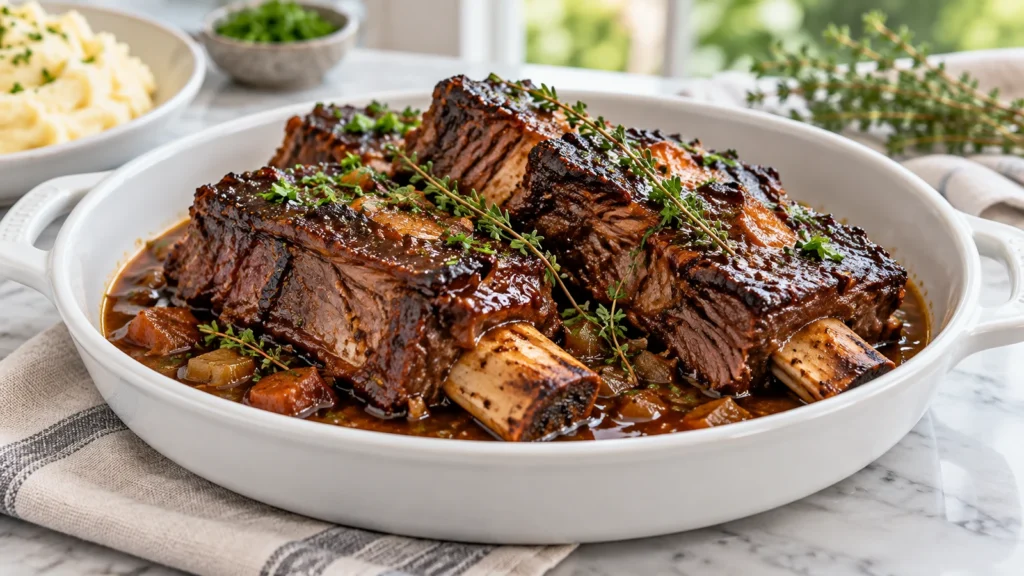
This beef chuck short ribs recipe braises at 325°F (163°C) for about 3 to 3 1/2 hours, producing deeply savory beef that yields easily to a fork. A thorough sear, the right amount of braising liquid, and gentle covered cooking are the keys to tender meat and a glossy sauce.
If you want a dependable beef short ribs recipe for a relaxed family dinner or special occasion, this method is forgiving and easy to prepare ahead. Most of the cooking is hands-off, while the low oven temperature gives the connective tissue enough time to soften without drying the meat.
Chuck short ribs come from the shoulder area and offer rich flavor with a good balance of meat, fat, and connective tissue. They are typically smaller than plate ribs, which come from the lower rib section and tend to have longer bones, thicker meat, and more fat. For additional cut details, see this guide to chuck short ribs.
Table of Contents
Why You’ll Love This Recipe
- Reliable tenderness: Low, moist heat gradually softens the connective tissue.
- Rich sauce: The braising liquid reduces into a flavorful accompaniment.
- Flexible cuts: The method works with bone-in or boneless chuck ribs.
- Make-ahead friendly: The flavor improves after chilling overnight.
- Practical technique: This beef ribs recipe uses one pot for browning, braising, and finishing the sauce.
Choosing Bone-In or Boneless Short Ribs
Bone-in ribs generally need 3 to 3 1/2 hours and develop a particularly full-bodied sauce. Boneless ribs often finish in 2 1/2 to 3 hours, depending on thickness. If you specifically prefer that cut, this boneless beef short ribs recipe offers more preparation guidance.
Buy about 1 to 1 1/4 pounds of bone-in ribs per person, or 8 to 10 ounces of boneless meat per person. Choose pieces of similar thickness so they finish together. Avoid packages containing one very thin piece alongside several thick pieces because the thin rib may become dry before the others are tender.
A boneless beef short ribs recipe is convenient when neat portions and easy serving matter most. Bone-in pieces contribute extra richness to the cooking liquid, but both cuts become tender when cooked slowly and checked by texture rather than by time alone.
Equipment
Use a 5- to 7-quart Dutch oven for four to five pounds of ribs. The meat should fit in one snug layer without overlapping. A deep 9-by-13-inch roasting pan can substitute; sear the meat in a skillet, transfer it to the pan, and cover the pan tightly with foil before baking.
Long tongs make it easier to brown every broad side without piercing the meat. A fine-mesh strainer is useful for a smooth sauce, while a wide spoon or fat separator helps remove excess fat before the final reduction.
Ingredients
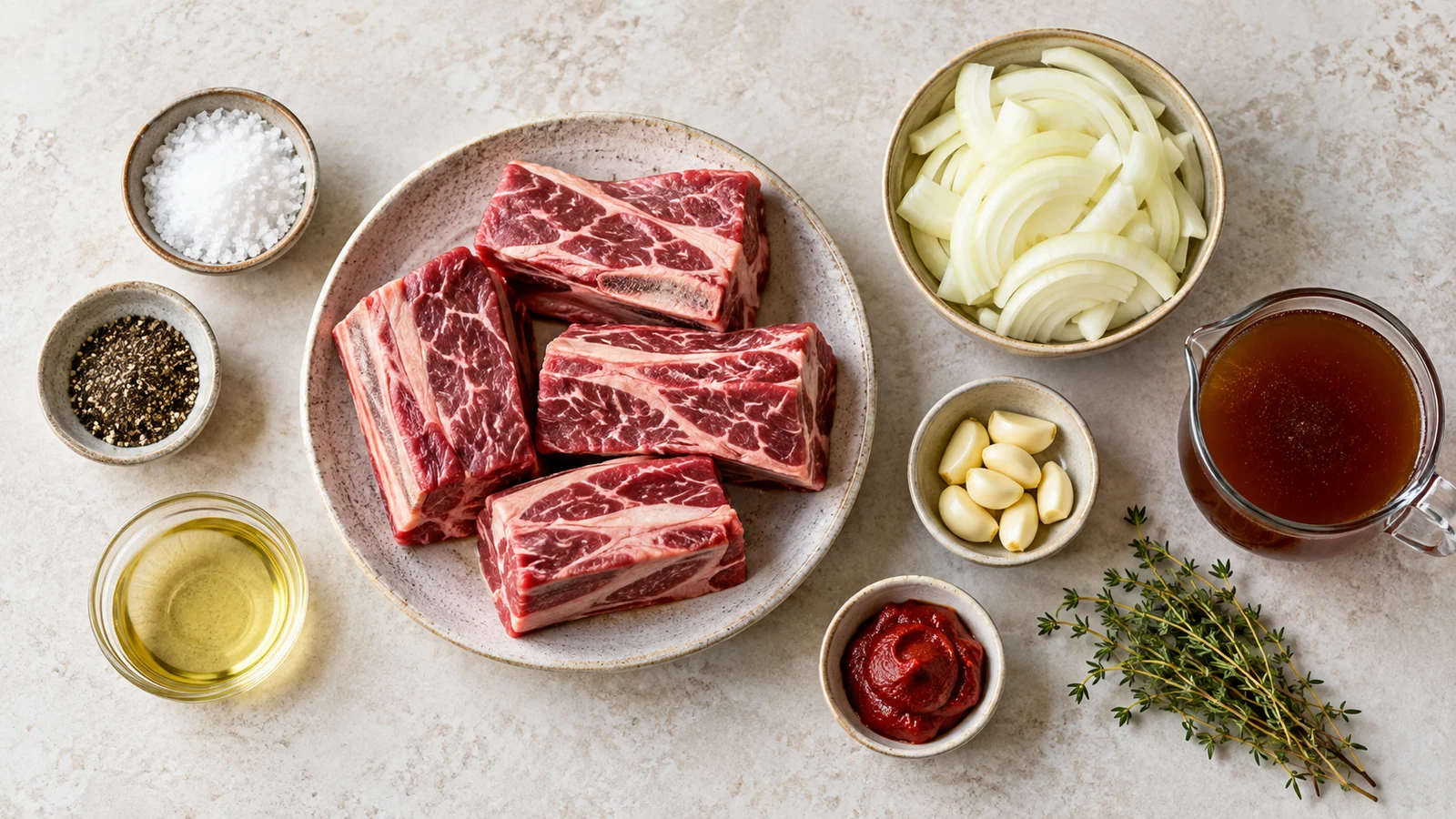
- 4 to 5 pounds (1.8 to 2.3 kg) bone-in beef chuck short ribs
- 2 teaspoons kosher salt, plus more to taste
- 1 teaspoon freshly ground black pepper
- 2 tablespoons neutral cooking oil
- 1 large yellow onion, diced
- 2 medium carrots, diced
- 2 celery stalks, diced
- 4 garlic cloves, minced
- 2 tablespoons tomato paste
- 2 cups dry red wine or additional low-sodium beef stock
- 2 cups low-sodium beef stock, plus more if needed
- 1 tablespoon Worcestershire sauce
- 4 fresh thyme sprigs
- 2 bay leaves
How to Make This Beef Chuck Short Ribs Recipe
- Prepare the oven and meat. Heat the oven to 325°F (163°C). Pat the ribs very dry, then season every side with salt and pepper. Dry surfaces brown more effectively.
- Sear in batches. Heat the oil in a Dutch oven over medium-high heat. Brown the ribs for 3 to 4 minutes per broad side, working in two or three batches. Transfer them to a plate; crowding the pot will steam the meat.
- Build the flavor base. Reduce the heat to medium. Cook the onion, carrots, and celery for 6 to 8 minutes. Add the garlic and tomato paste and cook for 1 minute.
- Deglaze. Pour in the wine and scrape up the browned bits. Simmer for 6 to 8 minutes, until reduced by roughly one-third. For an alcohol-free beef ribs recipe, use stock with 1 tablespoon balsamic vinegar instead.
- Add the ribs and liquid. Stir in the stock and Worcestershire sauce. Return the ribs to the pot with the thyme and bay leaves. The liquid should reach halfway to two-thirds up the sides of the meat, not cover it completely. Add stock if it is too shallow.
- Braise. Bring the liquid just to a simmer, cover tightly, and place the pot in the oven. Cook bone-in ribs for 3 to 3 1/2 hours or boneless ribs for 2 1/2 to 3 hours, turning them once midway through cooking.
- Check doneness. Insert a fork into the thickest piece and twist gently. The meat should offer almost no resistance and should pull away from the bone, but it should not be dry or stringy. A thermometer may read about 195°F to 205°F (91°C to 96°C); texture is the more useful test for braised ribs.
- Finish the sauce. Transfer the ribs to a covered platter. Strain the liquid if a smooth sauce is desired. Skim surface fat, then simmer uncovered for 10 to 20 minutes, until the sauce coats the back of a spoon. Season to taste and return the ribs to the sauce.
Expert Tips for a Better Beef Short Ribs Recipe
Dry the Surface Before Searing
Moisture prevents efficient browning, so blot every side with paper towels before seasoning. Let the pot become properly hot before adding the first batch. A dark brown crust creates the savory foundation that distinguishes a deeply flavored beef short ribs recipe from one that tastes merely boiled.
Brown in Small Batches
Leave a little space around each rib. If the pot becomes crowded, released moisture collects faster than it evaporates and the ribs steam. Allow the pot to regain heat between batches, adding only a small amount of extra oil if the surface looks dry.
Keep the Braise Gentle
A successful beef chuck short ribs recipe depends on steady, gentle heat. Vigorous boiling tightens the meat’s fibers and can make the exterior dry before the connective tissue fully softens. Check once during cooking; the liquid should move slightly but should not roll or bubble aggressively.
Judge Tenderness With a Fork
Cooking time is a guide because rib thickness, pot shape, oven calibration, and the age of the meat all affect the result. Test the thickest rib. When a fork slides in easily and twists with almost no resistance, the collagen has softened enough for serving.
Reduce the Sauce Separately
Remove the tender ribs before reducing the liquid. This prevents the meat from overcooking while you concentrate the sauce. Skim the fat first, then simmer in a wide pot for quicker evaporation. Stop when the sauce lightly coats a spoon because it will continue to thicken as it cools.
More Tips for the Best Results
- Keep the ribs in one layer. If the pot is too small, use two covered pans rather than stacking the meat.
- Maintain the liquid at halfway to two-thirds of the meat’s height. Too little can cause dry edges; too much dilutes the roasted flavor.
- Do not raise the temperature to rush the process. Tough ribs usually need more covered cooking time, not more heat.
- If the liquid boils vigorously in the oven, reduce the temperature to 300°F (149°C). A gentle simmer protects the meat.
- Turn the ribs carefully at the midpoint so the exposed surfaces spend some time in the braising liquid.
- For another oven approach, compare this beef short ribs oven baked recipe.
Variations and Substitutions
Slow Cooker Variation
For a slow cooker version, complete the searing and vegetable steps on the stovetop, then transfer everything to a 6-quart cooker. Cook on low for 7 to 8 hours or high for 4 to 5 hours, using only enough liquid to come about halfway up the ribs.
Alcohol-Free Variation
For an alcohol-free beef ribs recipe, replace the wine with additional low-sodium beef stock and include the stated tablespoon of balsamic vinegar. The vinegar contributes acidity, while reducing the stock after cooking gives the sauce body. Do not add extra vinegar at the beginning because its flavor will concentrate.
Boneless Variation
To turn the method into a boneless beef short ribs recipe, use the same ingredient quantities and begin checking the meat after 2 1/2 hours. Keep the pieces large enough to remain juicy, and arrange them in a single layer so each portion cooks at approximately the same rate.
Herb and Vegetable Substitutions
Mushrooms can replace the carrots, rosemary can replace thyme, and tamari can stand in for Worcestershire sauce. For a simpler beef short ribs recipe, omit the wine and use three cups of stock plus one tablespoon of balsamic vinegar. You can also consult this classic braised short ribs method for another flavor profile.
Oven-Baked Style
A beef short ribs oven baked recipe may emphasize a thicker coating or a less liquid-forward finish. This version remains a true braise, but you can uncover the tender ribs briefly while reducing the sauce on the stovetop. Watch closely so the exposed meat does not dry out.
Make-Ahead Instructions
This beef chuck short ribs recipe is especially well suited to advance preparation. Cook the dish completely, allow the ribs to cool in their sauce, and refrigerate them in a covered container. Keeping the meat with the liquid protects it from drying and allows the savory flavors to blend overnight.
The next day, lift off the solid layer of fat before reheating. Place the ribs and sauce in a covered Dutch oven and warm at 300°F (149°C) for 25 to 35 minutes, or heat gently on the stovetop. Avoid a hard boil because the already tender meat may begin to separate.
If preparing the ingredients rather than cooking the entire dish ahead, dice the onion, carrots, and celery up to one day in advance and refrigerate them in a covered container. Wait to mince the garlic and season the ribs until you are ready to cook.
Troubleshooting This Beef Ribs Recipe
The Ribs Are Still Tough
If the ribs remain chewy, cover them and continue braising in 20-minute intervals. Toughness near the expected finishing time usually means the connective tissue has not yet softened. Confirm that liquid remains halfway up the meat and that the pot is tightly covered.
The Meat Seems Dry
Dry edges may result from too little liquid, excessive heat, or a loose lid. Add a small amount of hot stock, cover securely, and continue at a gentle temperature. A beef short ribs oven baked recipe needs a good seal to prevent too much moisture from escaping during the long cooking period.
The Sauce Is Thin or Greasy
Remove the meat, skim the surface fat, and simmer the sauce uncovered for 10 to 20 minutes. A wide pan speeds evaporation. If the sauce is already strongly seasoned, reduce it carefully because concentrating the liquid also concentrates the salt.
The Sauce Is Too Salty
Add unsalted stock a little at a time, then simmer only until the desired consistency returns. Serve the ribs with an unsalted starch, such as mashed potatoes or polenta. Low-sodium stock provides the most control when making any beef short ribs recipe.
The Sauce Tastes Flat
First check the salt after reduction. If the seasoning is adequate, a small splash of balsamic vinegar can brighten the finished sauce. Add it gradually so it supports the beef rather than becoming the dominant flavor.
Serving Ideas
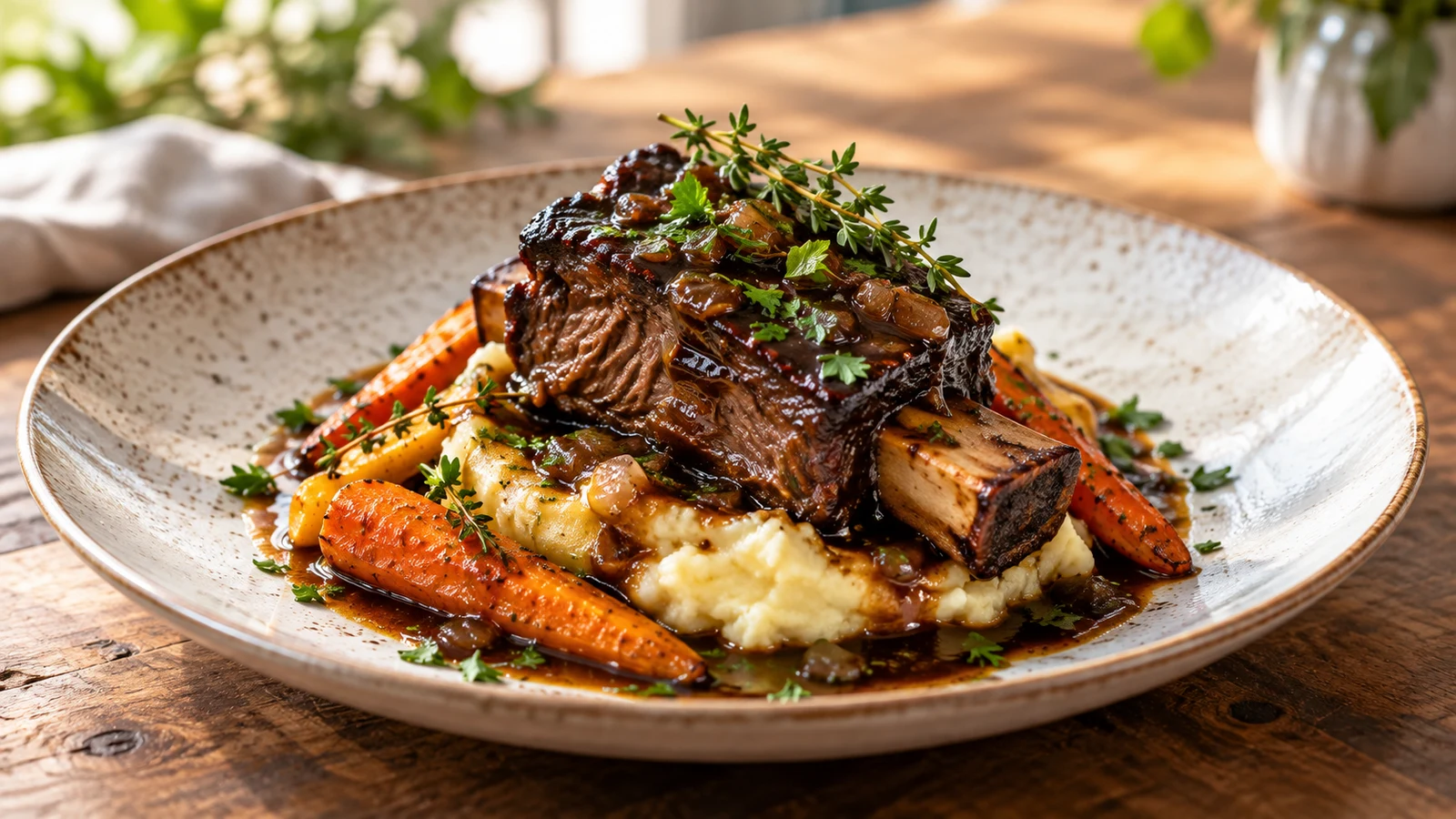
Serve the ribs over mashed potatoes, creamy polenta, buttered noodles, or cauliflower puree. Each option catches the braising sauce and turns this beef chuck short ribs recipe into a complete, comforting main course. One batch makes about six moderate servings.
Roasted carrots, green beans, Brussels sprouts, or a sharp green salad provide freshness against the rich meat. For a dinner-party plate, spoon the starch into a shallow bowl, place one rib on top, add sauce, and finish with a small amount of fresh thyme.
Warm crusty bread is helpful for collecting the remaining sauce. If serving several side dishes, offer smaller portions because bone-in ribs are rich. Keep extra sauce warm and serve it separately rather than flooding each plate.
How to Store and Reheat
Cool leftovers promptly and refrigerate them with their sauce in a covered container for up to four days. The chilled fat will solidify on top, making it easy to lift away before reheating. General guidance is available in the federal safe minimum temperature chart.
Freeze cooled ribs in their sauce for up to three months, leaving a little expansion space. Thaw overnight in the refrigerator. Reheat, covered, at 300°F (149°C) for 25 to 35 minutes or gently on the stovetop until the center reaches 165°F (74°C), consistent with the USDA safe temperature guidance.
For convenient portions, freeze individual ribs with enough sauce to cover the exposed meat. Label each container with the date. Reheat only the amount needed, since repeated cooling and reheating can reduce the quality of this beef ribs recipe.
Nutrition Context
Short ribs are rich in protein, iron, zinc, and vitamin B12, but they can also contain substantial fat and sodium. Trim only thick exterior fat before cooking because some marbling supports tenderness. Chilling and defatting the sauce, choosing low-sodium stock, and serving the beef with vegetables help create a more balanced plate.
Frequently Asked Questions
Why are my chuck short ribs still tough?
They probably need more time. Keep them covered with adequate liquid and braise for another 20 to 40 minutes, checking periodically for easy fork penetration. The meat can reach a safe temperature before its connective tissue has softened, so tenderness remains the essential test.
Can I use boneless ribs?
Yes. A boneless beef short ribs recipe follows the same method, but begin checking for tenderness after 2 1/2 hours because smaller pieces may cook faster. Choose evenly sized pieces and avoid cutting them too small before cooking.
Should short ribs be completely submerged?
No. For oven-braised short ribs, the liquid should reach halfway to two-thirds up the meat. The exposed portion develops roasted flavor while the covered pot retains moisture. Completely submerging the ribs can dilute the flavor and make the finished dish resemble a stew.
Can I make the dish ahead?
Yes. Refrigerate the cooked ribs in their sauce overnight, remove the hardened fat, and reheat gently the next day. The rest also allows the flavors to meld, making this beef chuck short ribs recipe a practical choice for entertaining.
What is the best oven temperature for a beef short ribs recipe?
Use 325°F (163°C) for the stated cooking time. If the liquid bubbles vigorously, reduce the oven to 300°F (149°C). The goal is gentle braising rather than rapid boiling, so an oven thermometer can be helpful if your oven tends to run hot.
Can I make this beef ribs recipe without red wine?
Yes. Replace the wine with additional low-sodium beef stock and use the stated tablespoon of balsamic vinegar. Reduce the liquid as directed so the finished sauce still has a concentrated flavor and spoon-coating consistency.
How do I know when a boneless beef short ribs recipe is done?
Begin testing after 2 1/2 hours. A fork should enter the thickest piece easily and twist with little resistance. Temperature can support the assessment, but tenderness is more important because pieces of different thickness may finish at slightly different times.
Can I prepare a beef short ribs oven baked recipe in a roasting pan?
Yes. Sear the ribs in a skillet, transfer them to a deep 9-by-13-inch roasting pan, and add the vegetables and braising liquid. Cover the pan tightly with foil before baking so steam and moisture remain inside.
Do I need to strain the sauce?
No. Straining produces a smooth, refined sauce, but leaving the softened vegetables in place creates a rustic finish. Both choices preserve the flavor. Whichever approach you use, remove the thyme stems and bay leaves before serving.
Why did the meat fall completely off the bone?
The ribs likely cooked a little beyond fork-tender. They are still suitable for serving, but begin checking earlier next time. Handle very tender ribs with a wide spoon or spatula so each portion stays intact when moved to the platter.
Beef Chuck Short Ribs Recipe Card
- Prep time: 25 minutes
- Cook time: 3 hours 30 minutes
- Total time: 3 hours 55 minutes
- Yield: 6 servings
- Oven temperature: 325°F (163°C)
- Pan: 5- to 7-quart Dutch oven
- Liquid depth: Halfway to two-thirds up the ribs
- Doneness: Fork-tender, pulling easily from the bone, usually around 195°F to 205°F (91°C to 96°C)
- Notes: Sear in batches, keep the pot tightly covered, and reduce the defatted sauce separately for the best consistency.
A Dependable Braised Beef Dinner
Patient braising transforms chuck short ribs into a comforting main course with tender meat and a deeply flavored sauce. This beef chuck short ribs recipe succeeds when you brown carefully, maintain gentle heat, and rely on fork tenderness instead of watching the clock alone.
Whether you follow the bone-in method, adapt it as a boneless beef short ribs recipe, or use the roasting-pan option for a beef short ribs oven baked recipe, keep the liquid level and covered cooking environment consistent. Finish the sauce separately, serve it with a side that catches every spoonful, and enjoy the rewards of an unhurried braise.
Reviews
Reader reviews are managed separately (outside this build).