Cake
Best Carrot Cake Cheesecake Recipe for Joyful Celebrations
Enjoy this carrot cake cheesecake recipe featuring moist spiced carrot cake, creamy cheesecake, and practical tips for flawless results every time.
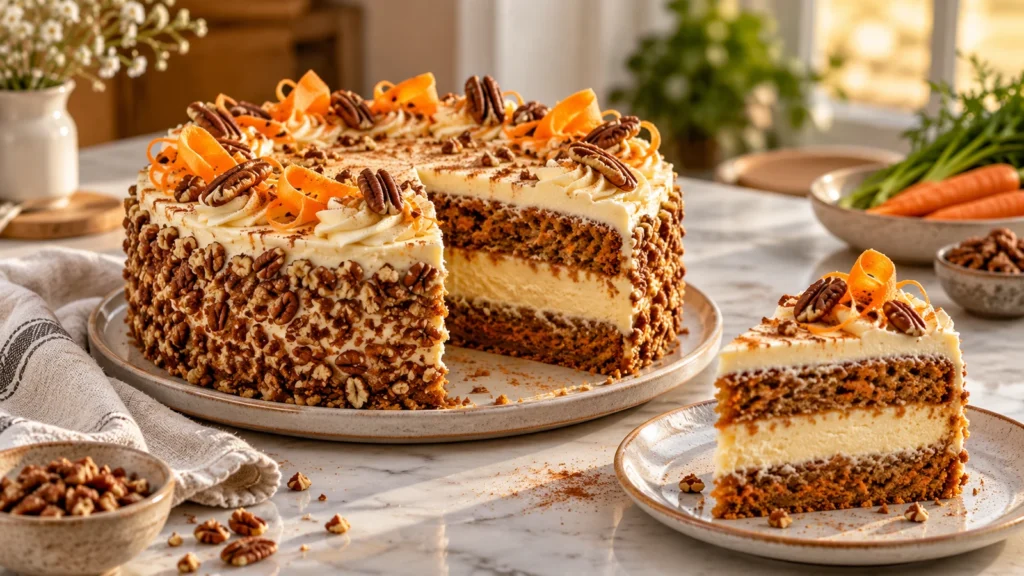
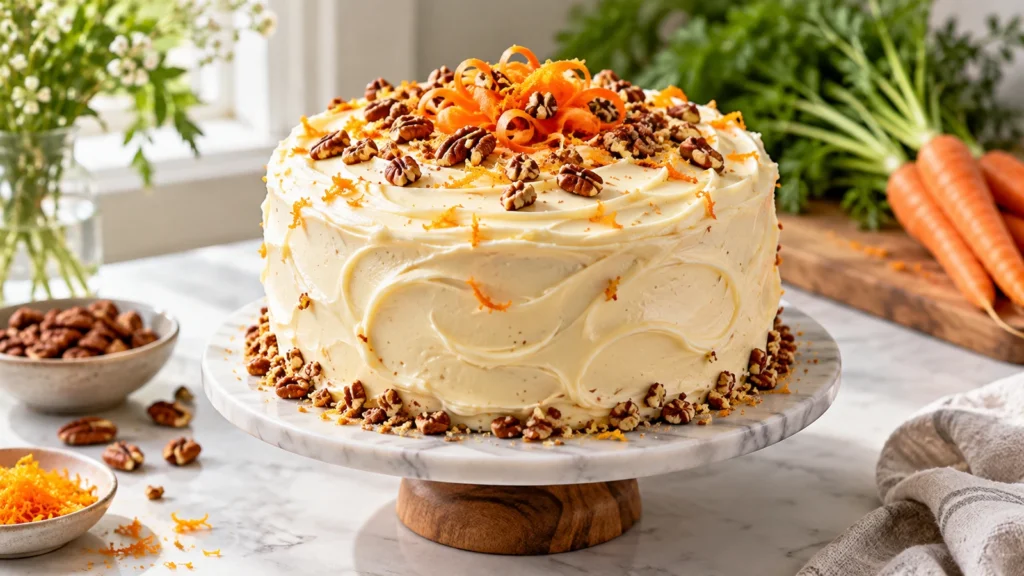
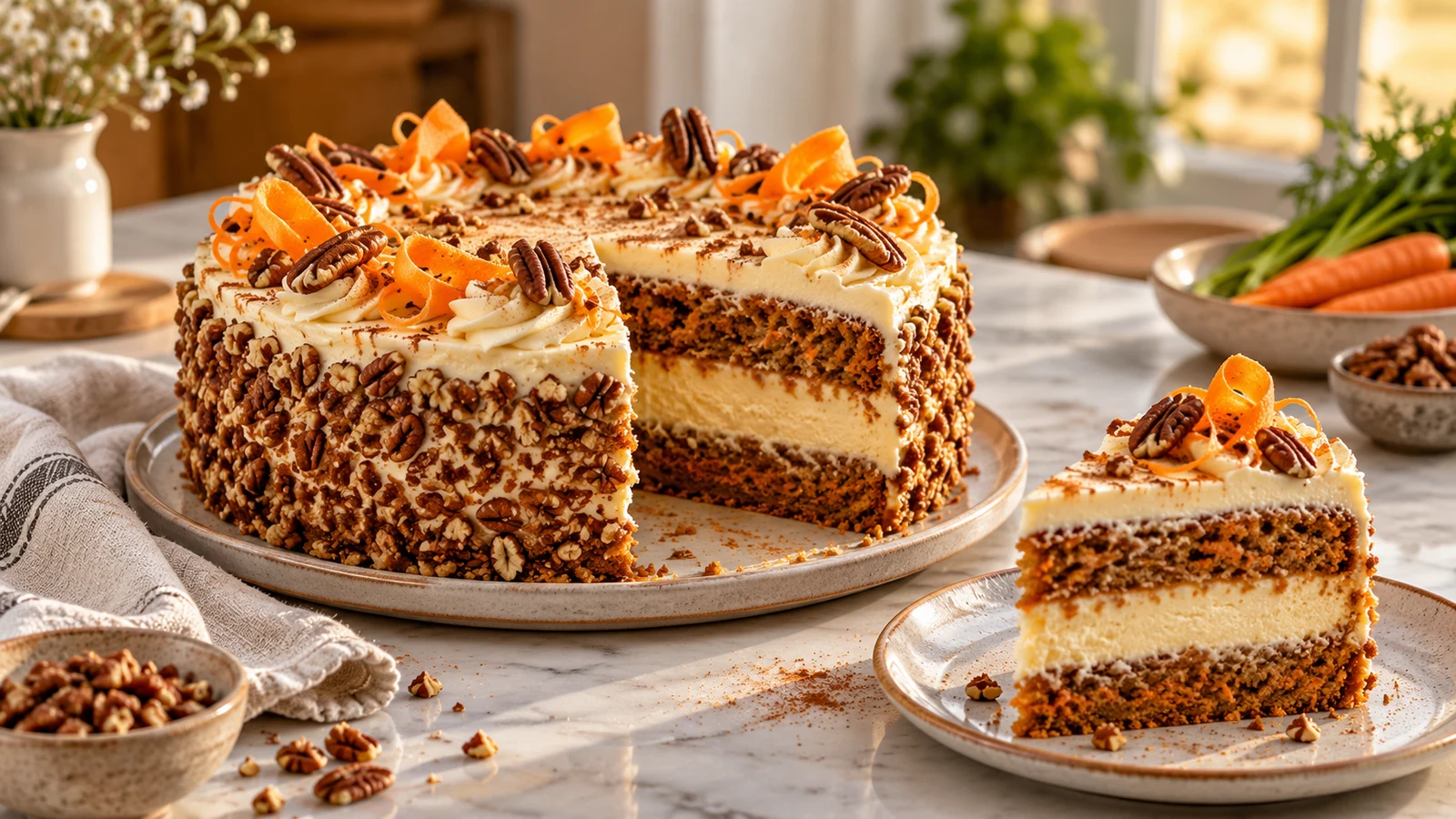
This carrot cake cheesecake recipe combines tender, warmly spiced carrot cake with a smooth vanilla cheesecake filling and tangy cream cheese frosting. It is an impressive make-ahead dessert for birthdays, Easter, Thanksgiving, and other joyful celebrations.
Careful layering keeps both batters distinct, while gentle baking and gradual cooling help prevent cracks and a sunken center. Chill the finished cake overnight for the cleanest slices and best flavor. Unlike a traditional carrot cake recipe with cream cheese frosting, every serving also includes a rich, creamy cheesecake layer.
Table of Contents
Why You’ll Love This Carrot Cake Cheesecake Recipe
- Two desserts in one: Moist carrot cake and creamy cheesecake complement each other beautifully.
- Reliable layers: Thick batters are added in spoonfuls without swirling or mixing.
- Make-ahead friendly: The cake improves after several hours in the refrigerator.
- Celebration ready: Cream cheese frosting and toasted nuts provide a simple, polished finish.
- Flexible finish: You can keep the decoration simple or borrow tropical flavors from a coconut and carrot cake recipe.
Ingredients
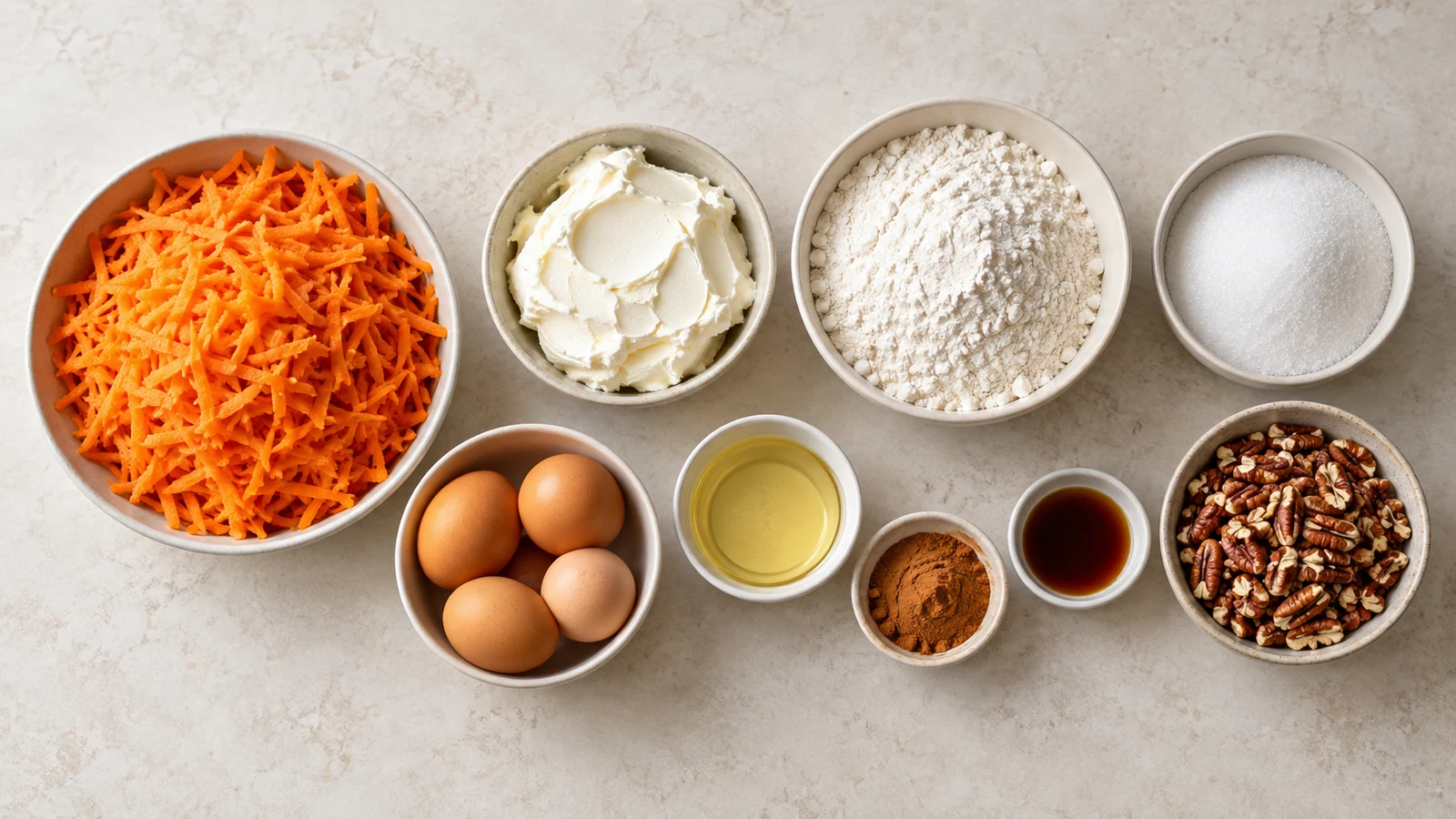
- For the cheesecake: 16 ounces (454 g) full-fat block cream cheese, softened; 1/2 cup (100 g) granulated sugar; 2 large eggs, room temperature; 1/3 cup (80 g) sour cream; 1 teaspoon vanilla extract; and 1 tablespoon all-purpose flour.
- For the carrot cake: 1 1/4 cups (156 g) all-purpose flour; 1 teaspoon cinnamon; 1/4 teaspoon nutmeg; 1/2 teaspoon baking powder; 1/2 teaspoon baking soda; 1/2 teaspoon fine salt; 1/2 cup (120 ml) neutral oil; 1/2 cup (100 g) light brown sugar; 1/4 cup (50 g) granulated sugar; 2 large eggs; 1 teaspoon vanilla; and 1 1/2 cups (150 g) finely grated carrots.
- Optional additions: 1/2 cup (55 g) chopped pecans or walnuts and up to 1/3 cup (50 g) raisins.
- For the frosting: 4 ounces (113 g) full-fat block cream cheese, softened but still cool; 2 tablespoons (28 g) unsalted butter, softened; 1 cup (120 g) confectioners’ sugar; 1/2 teaspoon vanilla; and a pinch of salt.
- Equipment: A 9-inch (23 cm) springform pan, parchment paper, heavy-duty foil, mixing bowls, an electric mixer, a box grater, and a roasting pan.
Choosing and Preparing the Ingredients
Finely grate peeled carrots on the small holes of a box grater, then loosely spoon them into the measuring cup without packing. Weighing 150 g is even more accurate. Do not squeeze out their moisture, which helps create a tender crumb. Pre-shredded carrots are usually too thick and dry for this carrot cake cheesecake recipe.
Use full-fat block cream cheese for both the filling and frosting. It contains less water than spreadable cream cheese, so it produces a firmer filling and a frosting that holds its shape. Set the filling cream cheese out early enough to soften, but keep the frosting cream cheese slightly cool.
Choose a neutral oil such as canola, vegetable, or grapeseed oil. Oil keeps the carrot portion soft even after refrigeration, an important advantage in a chilled dessert. Measure the flour by weight when possible. If using cups, spoon the flour into the cup and level it instead of scooping directly from the container.
How to Make This Carrot Cake Cheesecake Recipe
- Prepare the oven and pan. Heat the oven to 325°F (165°C). Grease the springform pan, line its base with parchment, and wrap the outside in two wide layers of heavy-duty foil. Make sure the foil extends above the bottom seam to prevent water from leaking into the pan.
- Mix the cheesecake filling. Beat the softened cream cheese and granulated sugar on low speed for 1 to 2 minutes, just until smooth. Mix in the flour, followed by the eggs one at a time. Blend in the sour cream and vanilla without whipping in excess air. Set aside.
- Combine the dry ingredients. In a medium bowl, whisk the flour, cinnamon, nutmeg, baking powder, baking soda, and salt until evenly distributed.
- Prepare the carrot cake batter. In a separate bowl, whisk the oil, brown sugar, granulated sugar, eggs, and vanilla. Fold in the dry ingredients just until a few flour streaks remain. Fold in the carrots and optional nuts or raisins without overmixing.
- Layer the batters. Spread about two-thirds of the carrot batter in the pan. Spoon the cheesecake mixture gently over it, leaving a 1/2-inch border near the edge. Drop small spoonfuls of the remaining carrot batter over the top. Do not swirl the layers, or their textures may become muddy and uneven.
- Bake in a water bath. Place the wrapped pan inside a roasting pan. Add enough hot water to reach about 1 inch up the side. Bake for 70 to 85 minutes. The outer 2 inches should look set, while the center should wobble slightly as one unit. An instant-read thermometer inserted into the cheesecake area should register about 150°F (66°C).
- Cool gradually. Turn off the oven, crack the door, and leave the cake inside for 30 minutes. Remove it from the water bath, discard the foil, and cool on a rack for about 1 hour. Refrigerate uncovered until cool, then cover and chill for at least 6 hours, preferably overnight.
- Frost and decorate. Beat the cream cheese and butter briefly until smooth. Add the confectioners’ sugar, vanilla, and salt, then mix on low until thick and creamy. Release the chilled cake from the pan, spread frosting over the top, and garnish with toasted nuts if desired.
Expert Tips for the Best Results
Control Ingredient Temperature
Bring the cheesecake dairy and eggs to room temperature for about 45 to 60 minutes so they blend smoothly. Cream cheese that is still cold can leave stubborn lumps. Avoid high-speed mixing once the eggs are added; excess air expands in the oven and can cause cracks or sinking.
Mix Each Batter Gently
Scrape the bowl between additions so no dense cream cheese remains at the bottom. For the carrot batter, stop folding as soon as the flour disappears. Overmixing develops gluten and can make the cake layer tough. These small details help a carrot cake cheesecake recipe produce tender cake alongside silky filling.
Build Distinct Layers
Add the cheesecake mixture slowly over the first carrot layer. Large, forceful pours may push the cake batter toward the sides. Place the final carrot batter in small spoonfuls across the surface so its weight is evenly distributed. The portions will settle naturally during baking, so swirling is unnecessary.
Judge Doneness by Movement
Do not wait for the center to become completely firm. When the pan is nudged, the middle should wobble gently as one section rather than ripple like liquid. Residual heat continues cooking the filling during the gradual cooling period. Baking until rigid can leave the cheesecake dry or grainy.
Cool Before Covering
Leave the cake uncovered until it is cold. Covering a warm cheesecake traps condensation, which can make the surface wet. Once chilled, cover it well so it does not absorb refrigerator odors. The overnight rest also allows the spices and tangy filling in this carrot cake cheesecake recipe to settle into a balanced flavor.
Cut Clean Slices
Release the pan only after the cake is thoroughly cold. Run a thin knife around the inside edge if it appears attached, then open the springform collar gently. For neat portions, dip a thin sharp knife in hot water, wipe it dry, and clean it between every cut.
For another portable carrot dessert, try this carrot cake cookies recipe. A classic carrot bundt cake recipe is a simpler option when you do not need a cheesecake layer.
Variations and Substitutions
Nut-Free and Different Nut Options
For a nut-free cake, omit the nuts and check every packaged ingredient for cross-contact warnings. If nuts are welcome, pecans offer a buttery flavor while walnuts add a slightly earthier contrast. Toast either kind before chopping to intensify its flavor, then cool completely before using.
Dairy Substitutions
Full-fat plain Greek yogurt can replace sour cream in equal measure. Neufchâtel may work, but the cheesecake will be softer; whipped or tub-style cream cheese is not recommended. These products contain more moisture and may prevent the filling or frosting from setting properly.
Pineapple, Raisin, and Coconut Variation
To add pineapple, thoroughly drain crushed pineapple and fold no more than 1/3 cup (75 g) into the carrot batter. Raisins can be added without soaking, although a 10-minute soak in warm water followed by thorough drying makes them plumper. For tropical flavor inspired by a coconut and carrot cake recipe, add 1/3 cup (28 g) unsweetened shredded coconut.
Keep the stated amount of carrot unchanged when adding coconut or pineapple. Too many moist additions can weigh down the cake batter. A coconut and carrot cake recipe variation is especially good with pecans, but the nuts remain optional.
Simple Carrot Cake Alternatives
If you want a straightforward carrot cake recipe with cream cheese frosting or enjoy naturally sweet vegetable cakes, this softly spiced sweet potato cake offers another celebration-worthy option. It is useful when you want warm spice without preparing a cheesecake filling or water bath.
For individual treats, the linked carrot cake cookies recipe is easy to portion for lunch boxes and casual gatherings. When a tall centerpiece is the goal, the linked carrot bundt cake recipe provides a familiar ring shape and simple presentation.
Make-Ahead Plan
This carrot cake cheesecake recipe is well suited to advance preparation because it needs at least 6 hours of chilling. For a stress-free celebration, bake it two days before serving. Let it cool as directed, cover it after it becomes cold, and keep it refrigerated.
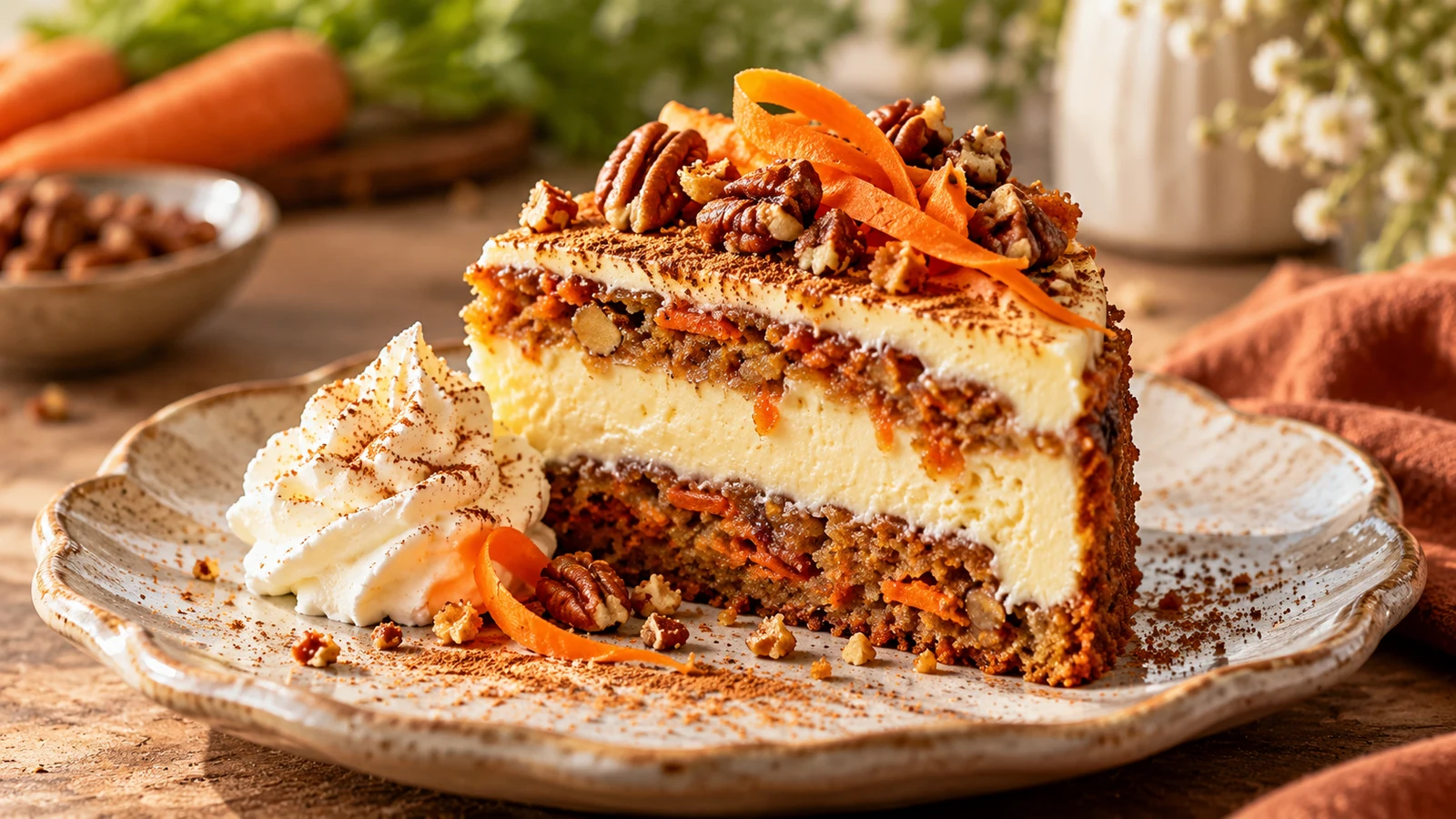
Prepare and apply the frosting one day ahead, then return the cake to the refrigerator in a covered container. Add toasted nuts shortly before serving if you want them to retain maximum crunch. Decorative carrot ribbons are also best added near serving time so they remain fresh.
You may grate the carrots several hours ahead. Refrigerate them in a tightly covered container and use them the same day so they do not dry out. The dry ingredients can also be whisked together a day ahead and stored at room temperature in an airtight container.
Do not prepare the complete batters in advance. The leaveners begin reacting after they meet the wet ingredients, while a mixed cheesecake filling can collect air or become uneven as it sits. Assemble the carrot cake cheesecake recipe immediately before baking for the most reliable layers.
How to Store and Freeze
Refrigerate the cake within two hours of serving. Keep it covered in the refrigerator for up to 4 days, following the USDA’s safe food-handling guidance. Cheesecake is best served cool, so reheating is unnecessary; let each slice stand at room temperature for 15 to 20 minutes.
To freeze, chill the unfrosted cake completely, wrap it in plastic and foil, and freeze for up to 2 months. Thaw it overnight in the refrigerator before frosting. The USDA provides additional freezing and food safety information.
Individual slices may also be frozen. Place cold slices on a lined tray until firm, then wrap each one securely and store them together in a freezer-safe container. Thaw only the number needed in the refrigerator, keeping the wrapping in place until the slices have defrosted.
For make-ahead preparation, bake the cake up to two days before serving and frost it one day ahead. If a power outage occurs, use the official refrigerated-food safety chart to determine whether the cheesecake remains safe.
Troubleshooting This Carrot Cake Cheesecake Recipe
Why Did the Cheesecake Crack?
A small surface crack is harmless and easily covered with frosting. Deep cracks usually indicate overbaking, excess air in the filling, or rapid cooling. Mix on low speed, use the slight-wobble test, and follow the gradual cooling process. Make sure the water bath contains hot water before the cake enters the oven.
Why Did the Center Sink?
If the center sinks dramatically, check that the leaveners are fresh and resist opening the oven during the first hour. An underbaked center may also collapse as it cools. Confirm doneness in the cheesecake area without repeatedly puncturing the cake.
Why Is the Carrot Layer Gummy?
A gummy carrot layer can result from packed carrots, too much pineapple, inaccurate flour measurement, overmixing, or cutting the cake before it is thoroughly chilled. Use finely grated carrots without compressing them in the cup. Fold only until combined and respect the minimum chilling time.
Why Is the Cheesecake Filling Lumpy?
Lumps usually mean the cream cheese was too cold before mixing. Allow the blocks to soften and beat them with the sugar until smooth before adding eggs. Once the eggs are incorporated, avoid prolonged beating. Straining is not necessary when the ingredients begin at the proper temperature.
Why Did Water Leak Into the Pan?
The foil may have torn or ended below the springform seam. Use two broad, intact sheets and press them around the outside without piercing them. If your foil is narrow, place the wrapped springform pan inside a slightly larger cake pan before setting it in the water bath.
Why Is the Frosting Runny?
The cream cheese may have been too warm, whipped too long, or taken from a tub. Chill the frosting for 20 to 30 minutes. If needed, mix in additional confectioners’ sugar 1 tablespoon at a time. Apply it only after the cake is completely cold.
Serving and Decorating Ideas
Serve this carrot cake cheesecake recipe cool rather than refrigerator-cold. A 15- to 20-minute rest softens the frosting and lets the cinnamon, nutmeg, vanilla, and tangy cream cheese flavors become more noticeable. Avoid leaving the whole cake at room temperature longer than needed.
For a simple finish, scatter toasted chopped pecans or walnuts around the outer edge. A light dusting of cinnamon adds color without extra sweetness. Thin carrot ribbons provide a festive look, while small piped frosting swirls can mark 12 even portions before slicing.
Fresh berries offer a bright, tart contrast to the rich filling. Unsweetened coffee, black tea, or lightly spiced tea also balances the sweetness. If the meal is substantial, cut modest slices; the combined cake and cheesecake layers make each portion satisfying.
For a carrot-themed dessert spread, offer small slices beside a batch made from a carrot cake cookies recipe. A carrot bundt cake recipe works well for guests who prefer a cake without cheesecake, while a coconut and carrot cake recipe variation adds a tropical choice.
Frequently Asked Questions
Can I Make This Carrot Cake Cheesecake Recipe Without a Springform Pan?
Yes. Use a deep 9-inch round cake pan lined with long crossed parchment strips that act as handles. Chill completely before carefully lifting the cake out; do not use a removable-bottom pan unless it seals securely.
Can I Skip the Water Bath?
You can place a pan of hot water on the rack below the cake, but the edges may bake faster and cracks are more likely. A properly foil-wrapped water bath supplies gentler, more even heat and gives this carrot cake cheesecake recipe its creamiest texture.
Can I Turn This Into a Carrot Cake Recipe With Cream Cheese Frosting Only?
This formula is balanced for combined cake and cheesecake layers, so omitting the filling would change the baking depth and timing. For a standard carrot cake recipe with cream cheese frosting, use a recipe developed specifically for that style rather than altering this one.
How Does It Differ From a Carrot Bundt Cake Recipe?
A carrot bundt cake recipe is baked as one continuous cake in a ring-shaped pan and generally needs no water bath. This dessert includes a custard-like cream cheese layer, must be refrigerated, and requires gradual cooling before it can be frosted and sliced.
Can I Use the Batter for a Carrot Cake Cookies Recipe?
No. A carrot cake cookies recipe needs a thicker dough that spreads predictably on a baking sheet. This batter contains enough liquid for a tender cake and would not hold a cookie shape. Use the linked cookie recipe for properly portioned handheld treats.
Can I Make a Coconut and Carrot Cake Recipe Variation?
Yes. Fold 1/3 cup (28 g) unsweetened shredded coconut into the carrot batter as directed. This creates a gentle coconut and carrot cake recipe flavor without overwhelming the cheesecake. Avoid sweetened coconut if you do not want to increase the sweetness.
Can I Use Pre-Shredded Carrots?
Freshly grated carrots are strongly recommended. Packaged shreds are thicker and drier, so they may stay firm instead of blending into the crumb. If they are the only option, chop them more finely, but expect a slightly coarser texture.
Can I Use a Different Pan Size?
A different diameter changes the depth of both batters and therefore the baking time. A smaller pan may overflow, while a larger one can produce thin layers that overbake quickly. For consistent results, use the specified deep 9-inch springform pan.
How Do I Know When the Cake Is Ready to Slice?
The center should feel cold and firm after at least 6 hours in the refrigerator. For the sharpest definition between layers, chill overnight. Cutting while warm may compress the carrot cake and cause the cheesecake filling to cling to the knife.
What Are the Recipe Timing, Yield, and Nutrition Details?
Allow 35 minutes for preparation, 70 to 85 minutes for baking, 90 minutes for gradual cooling, and at least 6 hours for chilling. The recipe yields 12 slices. One slice contains approximately 540 calories; actual nutrition varies with brands and optional additions.
A Celebration Dessert Worth Planning Ahead
With accurate measurements, gentle mixing, and an overnight chill, this carrot cake cheesecake recipe delivers distinct layers, a creamy center, and tidy celebration-ready slices. It offers the warm spice and tangy topping of a carrot cake recipe with cream cheese frosting in an especially rich format.
Follow the visual doneness cues, cool the cake gradually, and slice it with a warm, clean knife. Whether served plainly or finished with ideas from a coconut and carrot cake recipe, the result is a memorable dessert with tender carrots, smooth cheesecake, and balanced spice.
Reviews
Reader reviews are managed separately (outside this build).