Cake
Amazing german chocolate cake frosting recipe: Foolproof
Try this german chocolate cake frosting recipe with foolproof stovetop steps for rich coconut-pecan texture. Get timing, cooling, and storage tips.
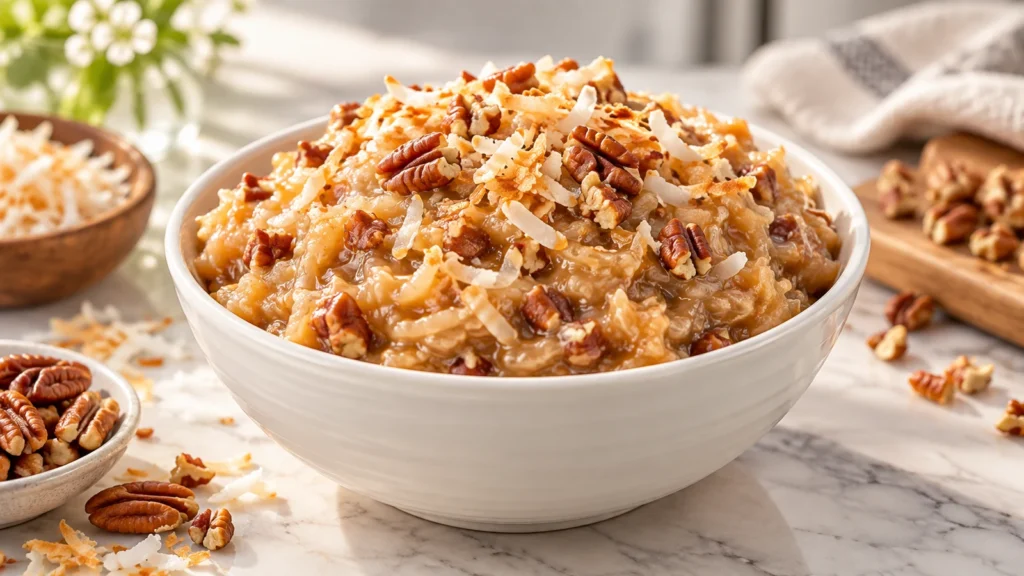
This german chocolate cake frosting recipe makes a rich, caramel-like coconut pecan frosting with a smooth custard base and dependable consistency. Precise stovetop timing and clear visual cues help you avoid scrambled yolks, runny frosting, and other common problems.
Despite its name, German chocolate cake did not originate in Germany. It was named after Samuel German, the baking-chocolate maker who developed Baker’s German’s Sweet Chocolate. This classic topping also complements several other cakes, making it useful well beyond one traditional dessert.
Table of Contents
Why You’ll Love This Recipe
- Foolproof method: Gentle heat keeps the egg yolks smooth.
- Classic texture: Shredded coconut and chopped pecans fill every spoonful.
- Reliable timing: The stovetop frosting cooks in about 10 minutes.
- Flexible yield: Coverage amounts are included for layer cakes, sheet cakes, Bundt cakes, and cupcakes.
- Make-ahead friendly: Prepare it several days before assembling your cake.
Ingredients
- 1 cup (240 ml) evaporated milk
- 1 cup (200 g) granulated sugar
- 3 large egg yolks, at room temperature
- 1/2 cup (113 g) unsalted butter, cut into pieces
- 1 teaspoon pure vanilla extract
- 1 1/3 cups (110 g) sweetened shredded coconut
- 1 cup (115 g) chopped pecans, lightly toasted if desired
- 1/8 teaspoon fine salt
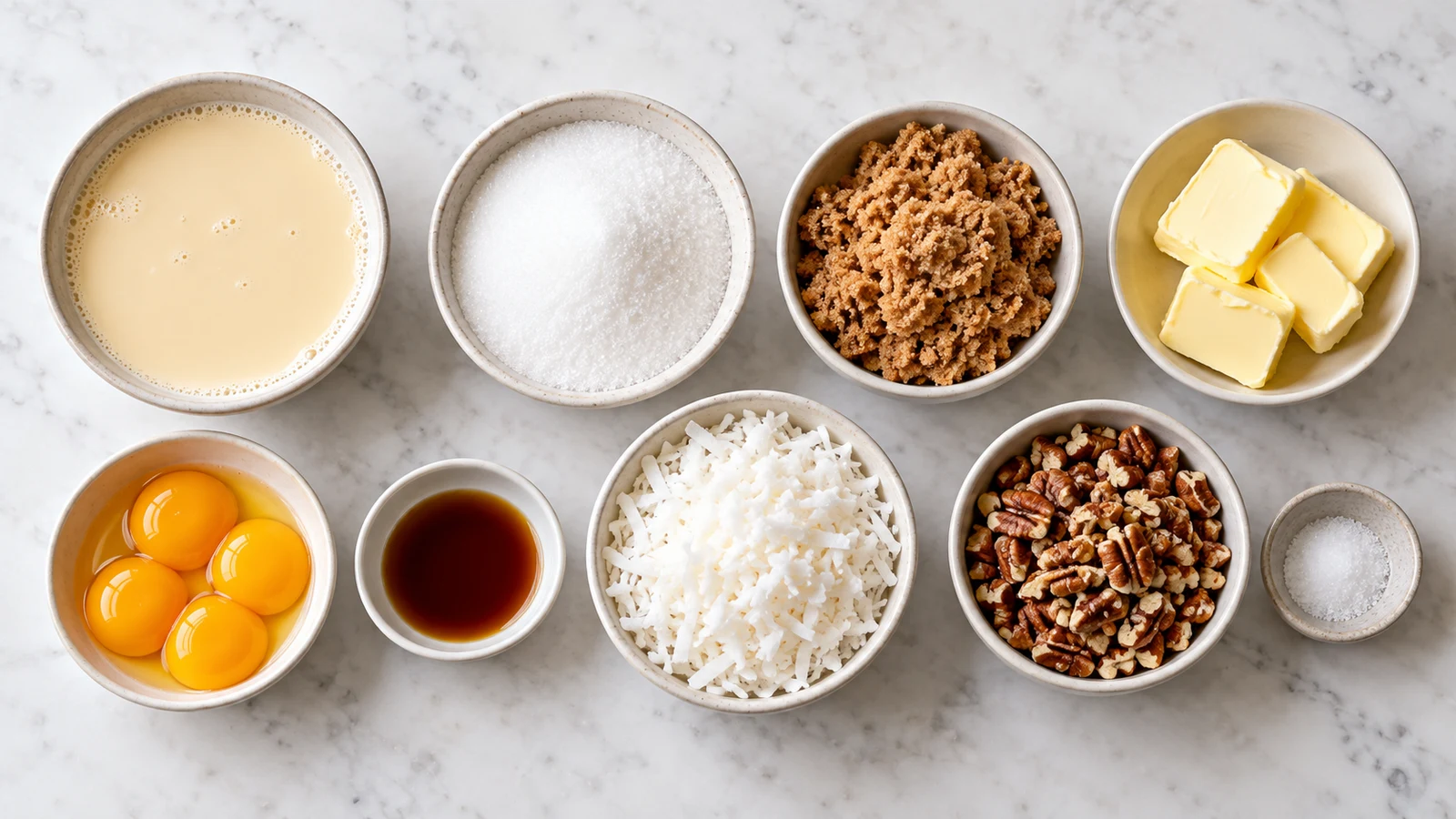
Tested substitutions: Salted butter works if you omit the added salt. Full-fat canned coconut milk can replace evaporated milk in equal measure, although it adds coconut flavor and may require one or two extra minutes of cooking. Unsweetened coconut also works, but the result is less sweet and slightly drier.
For a nut-free version, omit the pecans and add another 1/2 cup (40 g) shredded coconut or 1/2 cup (55 g) toasted sunflower seeds. Check every package label when serving someone with a serious allergy.
What Each Ingredient Does
Evaporated milk provides concentrated dairy solids without adding as much water as regular milk. That concentration helps the custard become rich and spreadable. Granulated sugar supplies sweetness and contributes to the caramel-like character, while egg yolks thicken and emulsify the mixture.
Butter gives the frosting body, flavor, and a glossy finish. Vanilla rounds out the cooked dairy notes, and salt keeps the sweetness balanced. Coconut supplies chewiness, while pecans add crunch and a lightly roasted flavor. Together, these ingredients give a german chocolate cake frosting recipe its recognizable contrast of creamy custard and textured mix-ins.
Required Equipment
- Medium heavy-bottomed saucepan
- Whisk and heat-resistant silicone spatula
- Instant-read thermometer, recommended
- Heatproof bowl or shallow dish
- Measuring cups or digital kitchen scale
A pale-colored or stainless-steel saucepan makes it easier to see whether anything is browning on the bottom. A silicone spatula is especially helpful because it reaches the curved corners of the pan, where egg and sugar can collect and overcook.
How to Make This German Chocolate Cake Frosting Recipe
- Combine the custard ingredients. In a cool saucepan, whisk the evaporated milk, sugar, egg yolks, and salt until completely blended. Add the butter.
- Cook gently. Set the pan over medium-low heat. Cook for 8 to 12 minutes, stirring constantly and scraping the bottom and corners, until the butter melts and the mixture thickens.
- Check for doneness. The custard should reach 170–175°F (77–79°C), coat the spatula, and leave a clear trail when you drag the spatula across the pan. Small bubbles may appear around the edge, but do not let it boil vigorously.
- Add the mix-ins. Remove the pan from the heat. Stir in the vanilla, shredded coconut, and chopped pecans until evenly distributed.
- Cool completely. Transfer the frosting to a shallow bowl. Let it cool uncovered for about 30 minutes, then cover and continue cooling until thick and spreadable, about 60 to 90 minutes total.
Temperature, Timing, and Texture Cues
Begin with a cool pan and whisk the yolks into the milk before applying heat. This disperses the yolks and helps prevent scrambled pieces. Keep the burner at medium-low, stir continuously, and remove the pan promptly once the frosting reaches temperature.
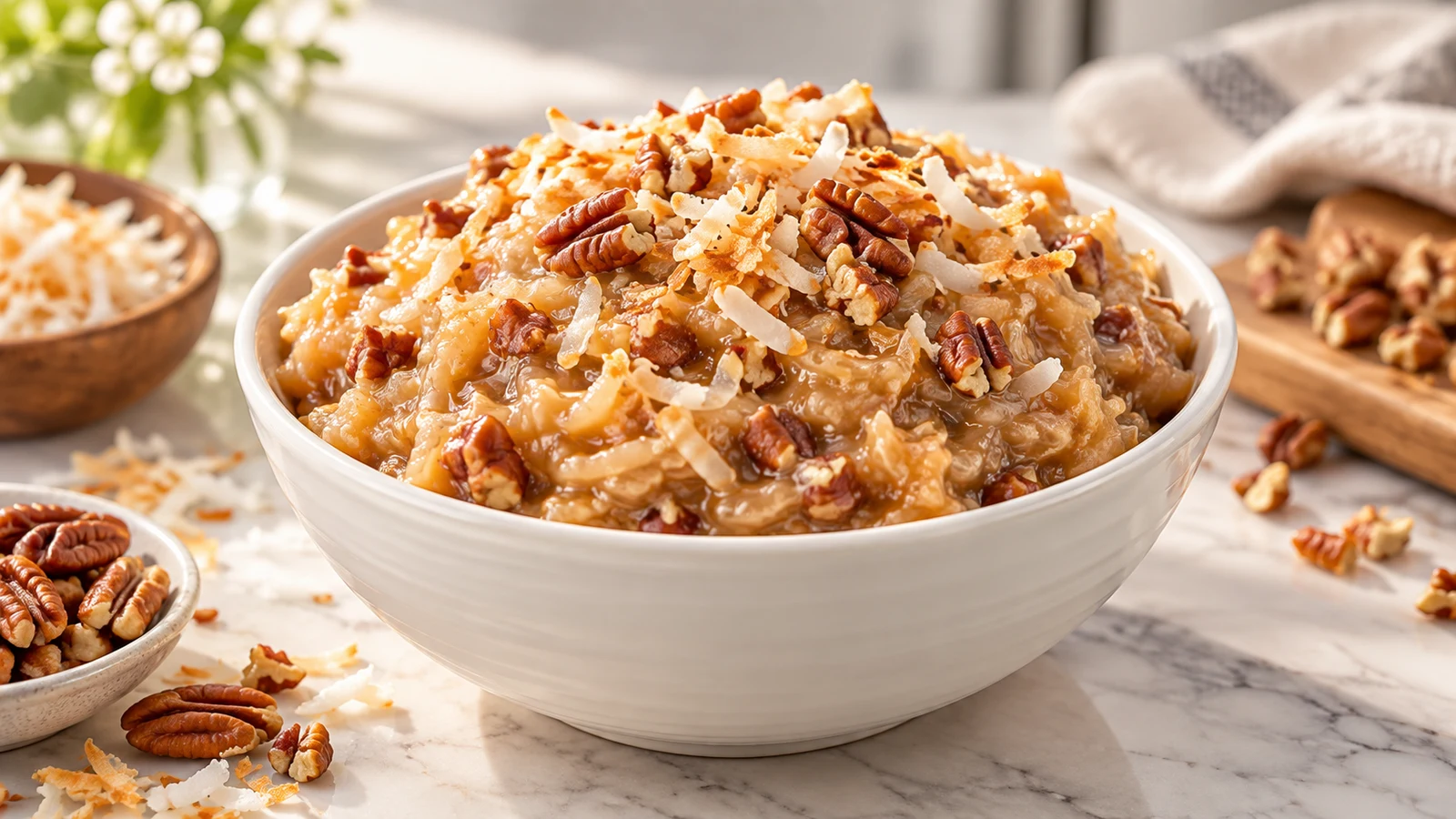
Properly cooked coconut pecan frosting looks glossy and noticeably thicker than when it started. It will still seem somewhat loose while hot because most of the final thickening happens during the cooling time. For another detailed perspective on this classic filling, see America’s Test Kitchen’s coconut-pecan filling method.
If you do not have a thermometer, rely on several cues together. The butter should be fully incorporated, the mixture should coat the spatula, and a stroke across the bottom should briefly expose the pan. Do not judge this german chocolate cake frosting recipe by its hot consistency alone; cooling creates much of its final body.
Expert Tips for a Dependable Custard
Measure Before Turning on the Heat
Have the coconut, pecans, and vanilla ready before cooking. Once the custard reaches its target temperature, it should come off the burner promptly. Searching for ingredients at that stage can lead to overcooking.
Keep the Heat Steady
Use medium-low heat even if the mixture seems slow to thicken. A gradual temperature rise gives the yolks time to thicken the liquid evenly. Turning up the burner can cook the egg against the bottom before the rest of the custard is ready.
Scrape Every Part of the Pan
Stir in slow, continuous sweeps, alternating between a whisk and a flexible spatula if needed. Pay attention to the bottom edge and corners. This technique makes the german chocolate cake frosting recipe smoother and reduces the risk of scorched milk or cooked egg fragments.
Cool in a Shallow Container
A shallow bowl exposes more surface area and allows the frosting to cool evenly. A deep container holds heat in the center, so the outside may feel ready while the middle remains warm and loose.
Tips for the Best Results
- Use a heavy saucepan to distribute heat evenly and reduce scorching.
- Toast the pecans at 350°F (175°C) for 6 to 8 minutes for deeper flavor; cool before chopping.
- Do not raise the heat to shorten the cooking time. High heat can curdle the yolks or make the mixture greasy.
- Cool the frosting fully before spreading it so it stays on the cake.
- For neat layers, place the cake on a level surface and spread the frosting from the center outward.
- Cut the butter into pieces so it melts at roughly the same rate throughout the pan.
- Use room-temperature yolks to help the ingredients combine smoothly at the start.
Cooling, Frosting, and Cake-Coverage Guide
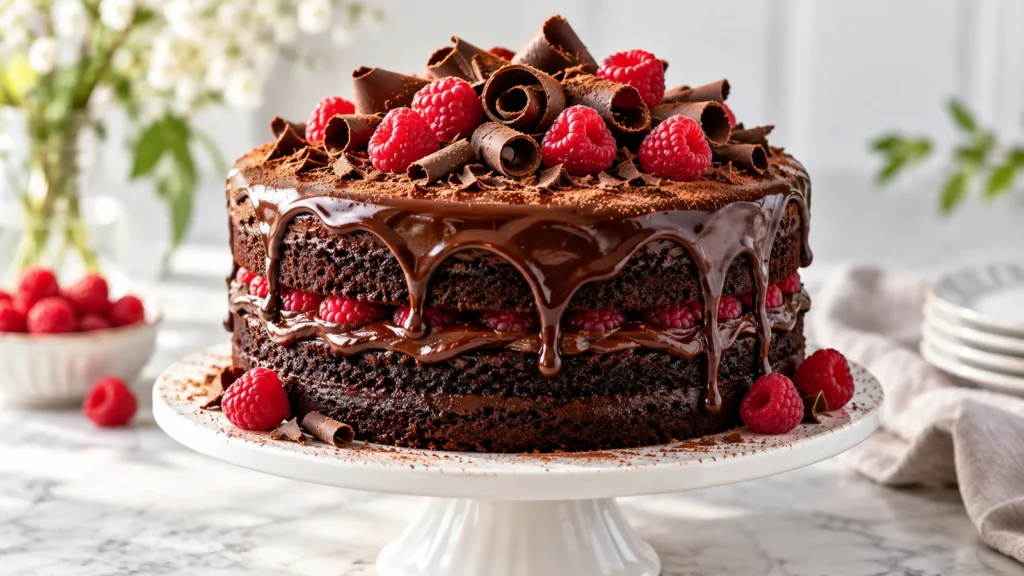
The frosting and cake must both be completely cool. Stir the frosting gently before using it, then spread it with an offset spatula. Traditional German chocolate cake often has frosting between the layers and on top while the chocolate sides remain visible; this approach is also illustrated in this German chocolate cake guide.
- Two 8- or 9-inch layers: One batch covers the center and top; make 1 1/2 batches for generous coverage or coated sides.
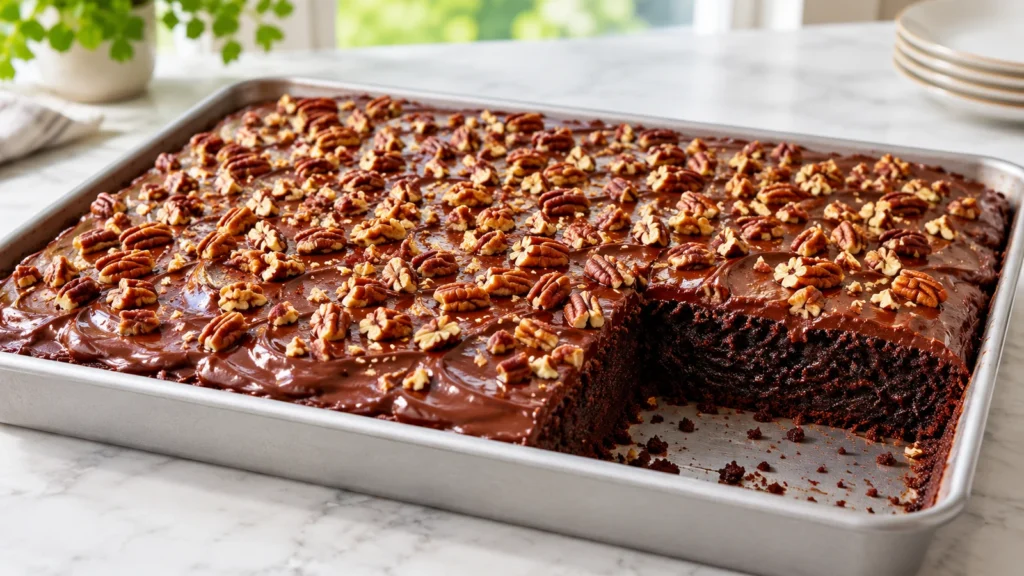
- 9-by-13-inch sheet cake: One batch provides a thick top layer.
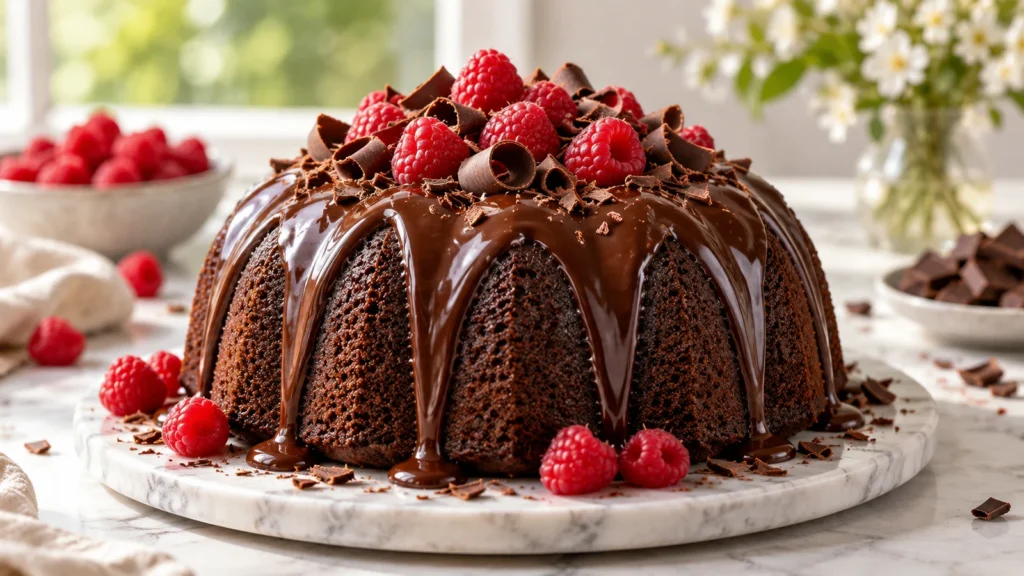
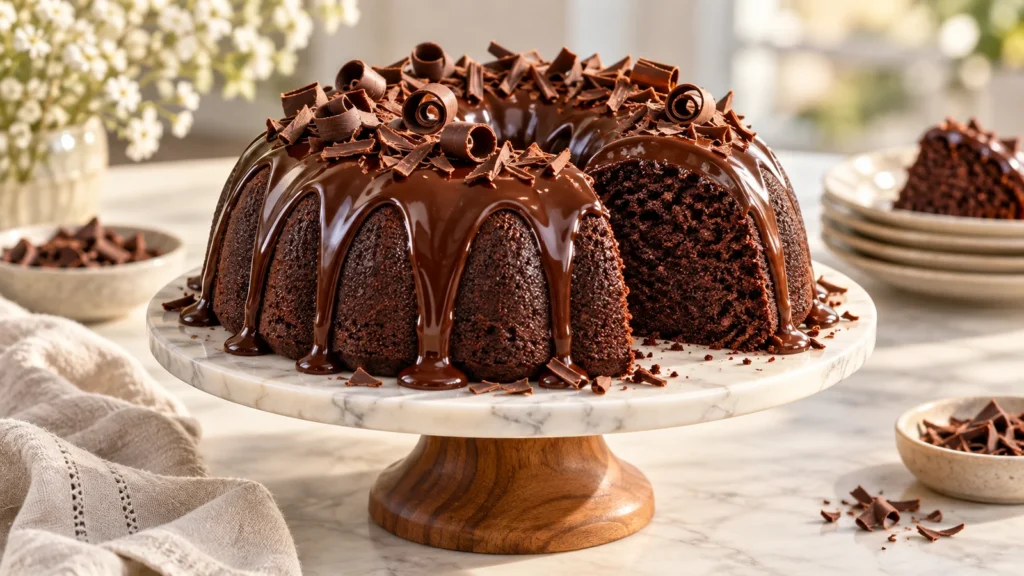
- 10- to 12-cup Bundt cake: Use 3/4 to 1 batch over the top.
- 24 cupcakes: One batch supplies about 2 tablespoons per cupcake.
For a layered baker’s german chocolate cake recipe, divide the frosting before assembly so the filling remains even from one layer to the next. Dollop it near the center, then push it outward without dragging crumbs through the custard.
When using a chocolate sheet cake recipe, spread the topping in broad strokes after the cake is fully cool. For a chocolate bundt cake recipe, spoon it along the crown and allow some of the textured frosting to settle naturally into the curves.
Troubleshooting This German Chocolate Cake Frosting Recipe
- Runny: If warm, allow the full cooling time. If cool but still thin, return it to low heat for 2 to 4 minutes, stirring constantly.
- Too thick: Stir in evaporated milk, 1 teaspoon at a time, until spreadable.
- Grainy: The sugar may not have dissolved or the custard may have overheated. Stir over low heat with 1 tablespoon evaporated milk; strain the base before adding coconut and pecans if necessary.
- Greasy: Vigorous boiling can separate the butter. Remove from the heat and whisk in 1 tablespoon cool evaporated milk.
- Egg pieces: Immediately strain the hot base through a fine-mesh sieve, then add the coconut and pecans.
Why Didn’t the Frosting Thicken?
The most common reasons are insufficient cooking or judging the texture while it is still hot. Confirm that the custard reached 170–175°F (77–79°C), then give it the full cooling period. A wide pan may cook faster, while a small pan or very low burner may need the longer end of the stated range.
Why Is the Frosting Sliding Off the Cake?
Warm cake layers soften the butter in the topping. Warm frosting is also too loose to stay in place. Let both components cool completely, then apply the german chocolate cake frosting recipe in moderate layers rather than piling all of it in one spot.
How Can I Fix Uneven Texture?
If the coconut and pecans settle while cooling, fold the frosting gently just before spreading. Avoid vigorous beating because it can make the mixture look oily. If the nuts were chopped into very different sizes, the larger pieces may create bumps but will not affect flavor.
Variations and Substitutions
Add 1 tablespoon dark rum after cooking, or replace 1/2 teaspoon vanilla with coconut extract. For a less-sweet frosting, use unsweetened coconut and reduce the sugar to 3/4 cup (150 g); the finished texture will be slightly softer.
This topping is also excellent on a chocolate bundt cake recipe, chocolate pound cake recipe, or chocolate sheet cake recipe. Readers seeking a baker’s german chocolate cake recipe can use this frosting with the traditional mild baking chocolate. For different dessert ideas, try these fudgy sweet potato brownies or this coconut and carrot cake.
Nut-Free Variation
Omit the pecans and use the stated additional coconut or toasted sunflower seeds. Sunflower seeds give the german chocolate cake frosting recipe more crunch, while extra coconut produces a softer, chewier result. Always verify labels when allergies are involved.
Deeper Toasted Flavor
Toast the pecans as directed and let them cool before stirring them into the custard. You may also lightly toast unsweetened coconut, watching it carefully because the fine strands brown quickly. Keep the ingredient quantities unchanged when you want the original consistency.
Pairing with Different Cake Styles
A dense chocolate pound cake recipe supports a generous layer of topping and slices cleanly once cool. A lighter chocolate sheet cake recipe offers more surface area in every serving, while a chocolate bundt cake recipe creates an attractive contrast between dark cake and golden coconut pecan frosting.
Make-Ahead and Storage Details
This german chocolate cake frosting recipe is especially convenient for advance preparation because its texture improves as it cools. Make it up to 4 days before serving, transfer it to an airtight container, and refrigerate it after the initial cooling period.
To prevent a skin from developing, keep the container tightly covered once the frosting is no longer hot. Before using it, let it stand at room temperature for 20 to 30 minutes. Stir slowly from the bottom upward to restore an even consistency without incorporating unnecessary air.
You may also bake cake layers ahead and store them separately from the frosting. Assemble a baker’s german chocolate cake recipe only after the layers are completely cool. Keeping the components separate makes the cake easier to handle and prevents a warm crumb from loosening the custard.
Refrigerating a Frosted Cake
Refrigerate a frosted cake for up to 4 days. Cover it well so the exposed cake does not dry out or absorb refrigerator odors. For the softest crumb and frosting, let individual slices lose some of their chill before serving.
Freezing the Frosting
Freeze cooled frosting in an airtight freezer-safe container for up to 2 months. Leave a little room for expansion, thaw it overnight in the refrigerator, and then bring it toward room temperature. Stir gently before using it on a chocolate pound cake recipe or another fully cooled cake.
Serving Ideas
Serve the frosted cake at cool room temperature for the softest texture. The toasted nuts and caramel notes pair especially well with coffee, cold milk, or lightly sweetened whipped cream. For additional cake-and-frosting inspiration, review this German chocolate cake and frosting overview.
For a classic presentation, leave the sides of the cake visible and let the textured topping define each layer. This works particularly well for a baker’s german chocolate cake recipe because the warm color of the frosting stands out against the mild chocolate crumb.
For casual gatherings, prepare a chocolate sheet cake recipe and cut it into squares after the topping has set. For a celebration, use a chocolate bundt cake recipe and add the frosting along the top. A chocolate pound cake recipe can be served in thick slices with a modest spoonful of frosting on each plate.
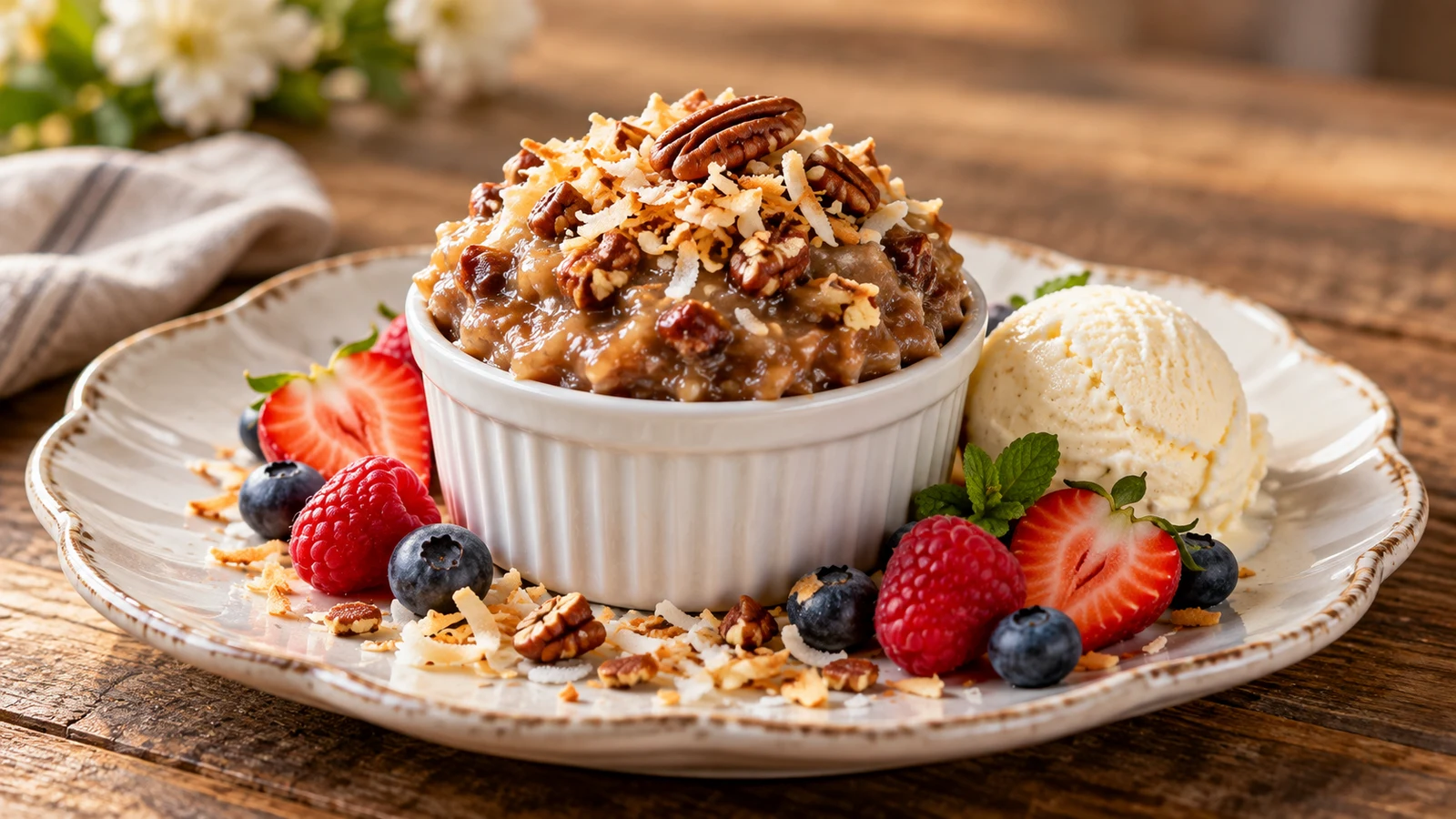
Fresh berries can add tartness without changing the frosting itself. Vanilla ice cream gives warm cake a pleasant temperature contrast, although the frosting should still be cooled before it is spread. Keep garnishes simple so the coconut and pecans remain the main texture.
How to Store and Reheat
Refrigerate homemade frosting within two hours of preparation. Store it in an airtight container for up to 4 days, or refrigerate a frosted cake for up to 4 days. Let chilled frosting stand at room temperature for 20 to 30 minutes and stir before spreading; reheating is usually unnecessary.
Freeze the cooled frosting in an airtight freezer-safe container for up to 2 months. Thaw it overnight in the refrigerator, bring it toward room temperature, and stir gently. Avoid microwaving, which can melt the butter and create a greasy texture.
If the chilled german chocolate cake frosting recipe feels very firm, give it more time at room temperature rather than applying direct heat. A gentle stir is usually enough to restore spreadability while preserving the emulsion.
Frequently Asked Questions
Can I Make This German Chocolate Cake Frosting Recipe Ahead?
Yes. Prepare it up to 4 days ahead, refrigerate it tightly covered, and soften it briefly at room temperature before frosting the cake. Stir gently so the coconut and pecans are evenly distributed.
Why Is German Chocolate Cake Called German?
It is named for Samuel German, who created a sweet baking chocolate for Baker’s Chocolate, rather than for the country of Germany.
Can I Use Regular Milk Instead of Evaporated Milk?
Evaporated milk is preferable because its concentrated milk solids create a richer, more stable custard. Whole milk can work, but cooking may take longer and the frosting may be softer.
Does a Baker’s German Chocolate Cake Recipe Require Frosted Sides?
No. A traditional-looking cake may have coconut pecan frosting between the layers and over the top while leaving the chocolate sides visible. You can make 1 1/2 batches if you prefer generous coverage or coated sides.
Can I Use This on a Chocolate Bundt Cake Recipe?
Yes. Use 3/4 to 1 batch for a 10- to 12-cup Bundt cake. Let the cake cool completely, then spoon the topping over the crown so it follows the shape without becoming a thin glaze.
Will It Work with a Chocolate Pound Cake Recipe?
Yes. The sturdy crumb of a chocolate pound cake recipe holds the textured topping well. Spread it over the cooled loaf or offer it by the spoonful with individual slices.
Is It Suitable for a Chocolate Sheet Cake Recipe?
Yes. One batch creates a thick top layer on a 9-by-13-inch cake. Make sure the cake is cool before spreading so the custard remains thick and the butter does not melt.
Can I Double the Recipe?
Yes, provided your saucepan is large enough to allow steady stirring without splashing. A larger quantity may take longer to reach the correct temperature. Use the same visual and temperature cues rather than relying only on the clock.
Should the Pecans Be Toasted?
Toasting is optional, but it deepens their flavor and improves their crunch. Toast them at 350°F (175°C) for 6 to 8 minutes, cool them, and then chop them before adding them to the frosting.
Can I Frost a Warm Cake?
No. A warm cake can melt the butter and make the topping slide. For clean results, cool both the cake and the german chocolate cake frosting recipe completely before assembly.
What Cake Can I Use Besides Chocolate Cake?
Try it on banana cake, vanilla cupcakes, or a warmly spiced carrot Bundt cake. The caramel, coconut, and pecan flavors also complement cakes made with warm spices.
Printable Recipe Card
Prep time: 10 minutes
Cook time: 8–12 minutes
Cooling time: 60–90 minutes
Yield: About 3 cups (approximately 720 g)
Serving size: 2 tablespoons (30 g), about 24 servings
Directions: Whisk 1 cup (240 ml) evaporated milk, 1 cup (200 g) sugar, 3 egg yolks, and 1/8 teaspoon salt in a cool saucepan. Add 1/2 cup (113 g) butter. Cook over medium-low heat for 8 to 12 minutes, stirring constantly, until 170–175°F (77–79°C) and thick enough to coat a spatula. Remove from the heat; stir in 1 teaspoon vanilla, 1 1/3 cups (110 g) shredded coconut, and 1 cup (115 g) chopped pecans. Cool for 60 to 90 minutes before spreading.
Estimated nutrition per serving: 175 calories, 16 g carbohydrates, 2 g protein, 12 g fat, 6 g saturated fat, 38 mg cholesterol, 35 mg sodium, 1 g fiber, and 14 g sugar. Values vary by brand and substitution.
Final Notes
With controlled heat, constant stirring, and patient cooling, this german chocolate cake frosting recipe develops the classic caramel-coconut texture without guesswork. Use the coverage guide to scale it for your favorite cake, then serve once the layers are cool and neatly set.
Whether you pair it with a baker’s german chocolate cake recipe, chocolate bundt cake recipe, chocolate pound cake recipe, or chocolate sheet cake recipe, the same essentials apply: cook gently, watch for the correct texture, and allow enough time for complete cooling.
Reviews
Reader reviews are managed separately (outside this build).