Cake
Vanilla Icing Recipe for Cake: Fluffy, Foolproof Finish
Make a simple, fluffy vanilla icing recipe for cake with mixer or no-mixer steps, clear consistency tips, and smooth results. Get the recipe today.
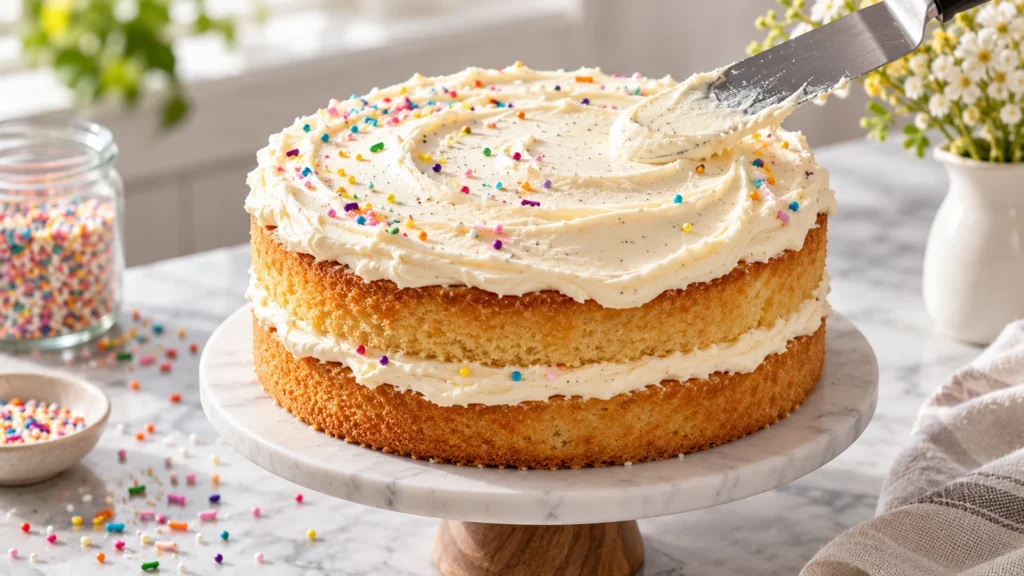
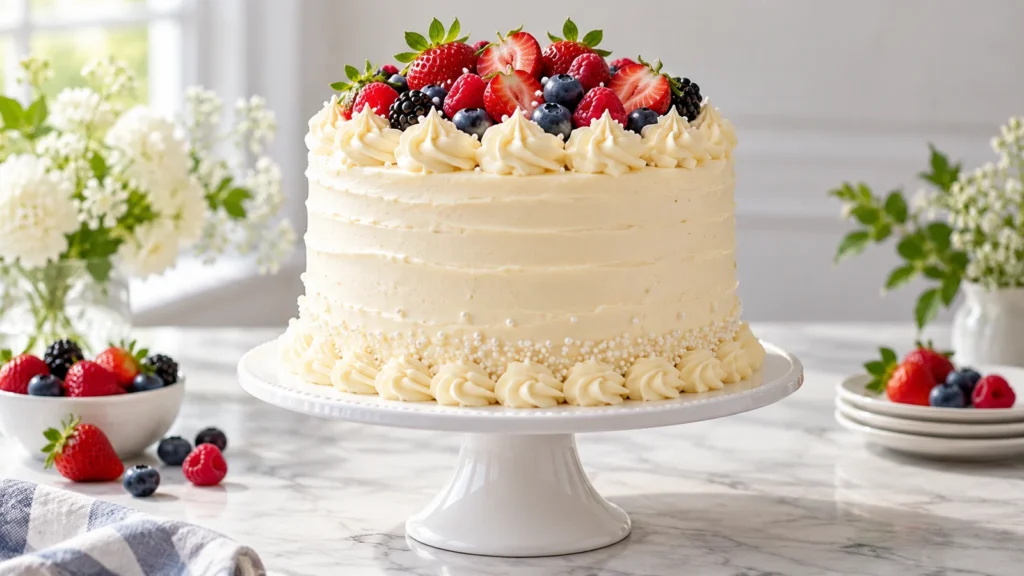
This vanilla icing recipe for cake creates a light, fluffy finish that spreads smoothly and holds simple piped swirls. It takes about 10 minutes, makes roughly 3 cups, and uses adjustable amounts of cream so you can frost cupcakes, layer cakes, or sheet cakes.
Although “icing” and “frosting” are often used interchangeably, this recipe is a vanilla buttercream frosting made with whipped butter and powdered sugar. A glaze is thinner, pourable, and usually contains no butter; classic powdered sugar icing is denser and less fluffy.
The balanced vanilla flavor suits nearly any celebration dessert. Pair this vanilla icing recipe for cake with a vanilla sheet cake recipe for parties, spread it over a recipe for fluffy vanilla cake, or prepare a smaller amount when making an individual treat.
Table of Contents
Why You’ll Love This Recipe
- Ready in about 10 minutes with five everyday ingredients.
- Easy to adjust for spreading, piping, or drizzling.
- Works with an electric mixer or a sturdy spoon and whisk.
- Can be flavored, colored, refrigerated, or frozen.
- Provides enough icing for cupcakes, a sheet cake, or a modestly filled layer cake.
Ingredients
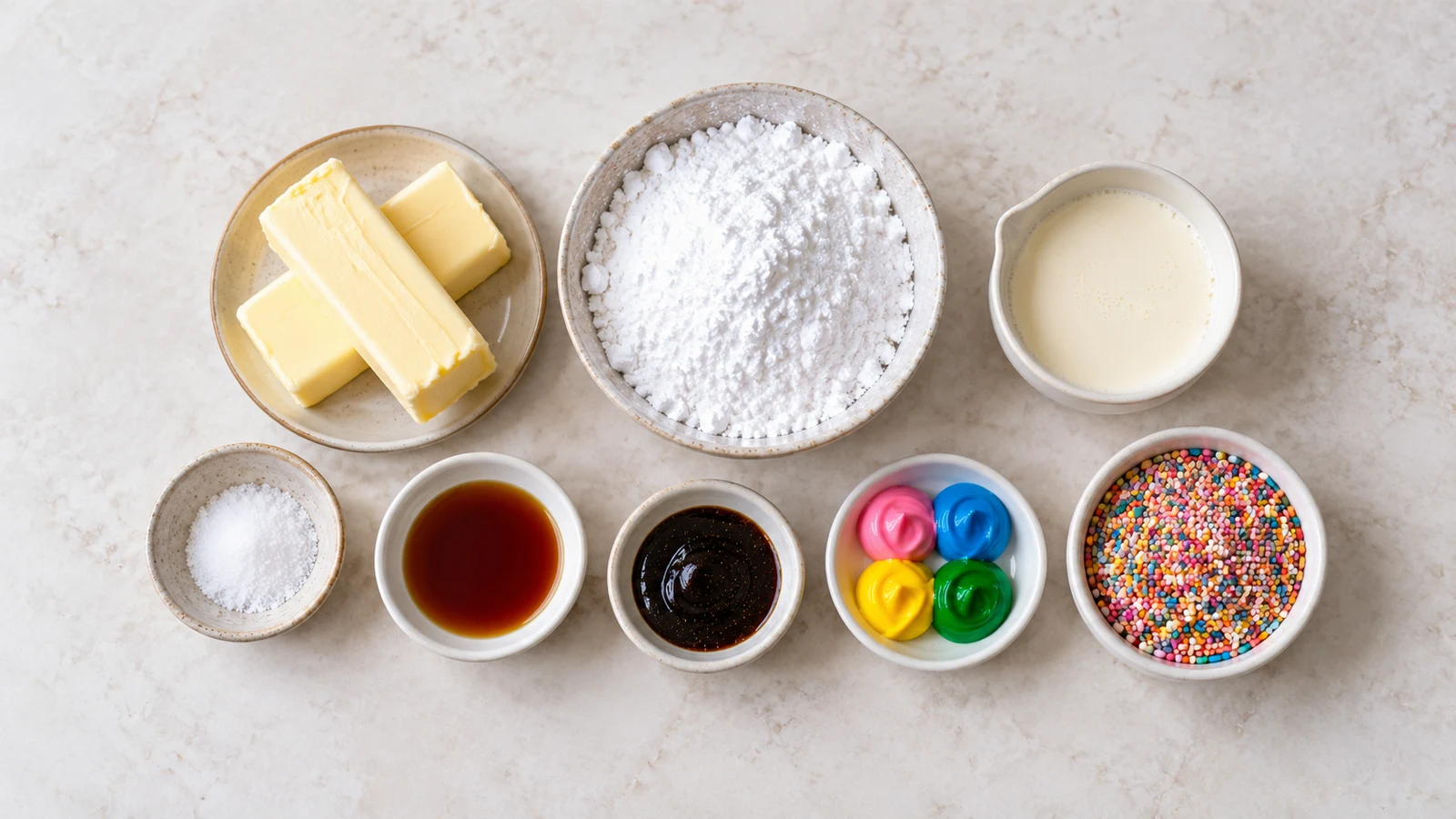
- 1 cup (226 g) unsalted butter: Let it soften to a cool room temperature, about 65–68°F (18–20°C). It should indent when pressed but should not look greasy or melted.
- 4 cups (480 g) powdered sugar: Spoon it into measuring cups and level it, or weigh it for the most reliable icing consistency.
- 2–4 tablespoons (30–60 ml) heavy cream or whole milk: Cream produces a richer, fluffier result, while milk makes a slightly lighter icing.
- 2 teaspoons (10 ml) pure vanilla extract: Clear vanilla may be used when a paler color matters.
- 1/4 teaspoon fine salt: This balances the sweetness.
Choosing Ingredients for Better Icing
Butter controls both flavor and structure. Properly softened butter traps tiny pockets of air as it is beaten, helping this vanilla icing recipe for cake become fluffy without relying on excessive whipping. If the butter is cold, the mixture may stay lumpy. If it is partly melted, the finished icing may sag.
Powdered sugar dissolves more readily than granulated sugar and includes starch that helps stabilize the frosting. Weighing it gives the most consistent result because a packed measuring cup can contain substantially more sugar than a lightly filled one.
Heavy cream adds richness and whips into a slightly airier texture. Whole milk is still a dependable option, particularly when the icing will be spread rather than piped. Vanilla extract contributes most of the flavor, so choose one you enjoy on its own.
Equipment
- Stand mixer with paddle attachment or electric hand mixer
- Large mixing bowl
- Fine-mesh sieve, if the powdered sugar is lumpy
- Rubber spatula and measuring spoons
No mixer is required, although mixing by hand takes more effort. Use very soft—but not melted—butter, beat it firmly with a wooden spoon, add sifted sugar in small portions, and finish with a whisk to lighten the icing.
How to Make Vanilla Icing for Cake
- Whip the butter. Beat the softened butter on medium speed for 2–3 minutes, scraping the bowl once or twice, until it looks pale and creamy.
- Add the sugar gradually. Turn the mixer to low and add the powdered sugar 1 cup at a time. Mix each addition until mostly incorporated before adding more to prevent a sugar cloud and reduce graininess.
- Add flavor and liquid. Mix in the vanilla, salt, and 2 tablespoons (30 ml) cream. Beat on medium speed for 1 minute.
- Whip until fluffy. Increase to medium-high and beat for 2 minutes. For fewer air bubbles, finish by mixing on the lowest speed for 1 minute, or press the icing against the bowl with a spatula.
- Adjust and use. Add more cream 1 teaspoon at a time until the icing suits your cake. For another useful approach to whipping and texture, see this five-minute vanilla frosting technique.
Pause to scrape the bottom and sides of the bowl whenever dry sugar remains visible. A thorough scrape prevents dense streaks and ensures that the vanilla and salt are evenly distributed throughout the vanilla icing recipe for cake.
Vanilla Icing Recipe for Cake Consistency Adjustments
For firm, pipeable icing, begin with only 2 tablespoons (30 ml) cream. For spreading, use about 3 tablespoons (45 ml). For a soft icing or thick drizzle, use 4–5 tablespoons (60–75 ml), adding the final amount slowly because a small quantity can make a noticeable difference.
Test piping consistency by lifting the beater: the peak should stand with a slight curl. Spreading icing should glide under an offset spatula without pulling crumbs. A drizzle should fall in a thick ribbon and settle gradually rather than disappearing immediately.
Room temperature affects the final texture. On a warm day, use the lower end of the liquid range and keep the bowl away from a sunny window. In a cool kitchen, allow the vanilla icing recipe for cake to sit briefly before deciding that it needs more cream.
Yield and Cake Coverage
This batch makes about 3 cups, enough for 24 lightly frosted cupcakes, 12 generously swirled cupcakes, a 9-by-13-inch cake, or the top and sides of one two-layer 8-inch cake with a modest filling. Make 1 1/2 batches for elaborate borders or generous layer filling, and double it for a three-layer 9-inch cake.
- 12 cupcakes: 1/2 batch for simple spreading; 1 batch for tall swirls
- 24 cupcakes: 1 batch for moderate coverage
- 8- or 9-inch single layer: 1/2 batch
- 8-inch two-layer cake: 1 batch
- 9-by-13-inch cake: 3/4–1 batch
A vanilla sheet cake recipe usually needs less icing than a tall layer cake because only the top is covered. Reserve a little extra if you plan to pipe a border, write a message, or add decorative rosettes.
Expert Tips for Smooth, Fluffy Icing
Begin With Cool, Pliable Butter
Press the butter gently before mixing. It should accept a shallow fingerprint while retaining its shape. This temperature helps the vanilla icing recipe for cake hold air and remain stable. Warm, shiny butter can produce loose or yellow-looking frosting.
Add Powdered Sugar in Stages
Sift visibly lumpy powdered sugar and add it slowly. Gradual additions are easier to incorporate and create less mess. Keep the mixer low while adding sugar, then increase the speed only after no dry patches remain.
Control the Amount of Air
Whipping creates a light texture, but prolonged high-speed mixing can leave large bubbles that show through a smooth finish. After the frosting becomes fluffy, mix it on low and press it against the bowl with a spatula. This vanilla frosting guide offers additional practical texture cues.
Prepare the Cake Before Decorating
Cool the cake completely before applying the vanilla icing recipe for cake; even a slightly warm surface can melt the butter. Brush away loose crumbs, spread on a thin crumb coat, chill the cake for 15–20 minutes, and then add the final layer.
Use the Right Tool for the Finish
An offset spatula is useful for spreading, while a straight scraper creates tidy sides. For rustic swirls, use the back of a spoon. When piping, fill the bag only halfway so it is easier to control and the warmth of your hands does not soften all the icing at once.
Variations and Substitutions
Dairy-Free Vanilla Icing
Replace the butter with firm plant-based butter sticks and use unsweetened oat or soy milk. Avoid tub-style spreads, which contain more water and may make the icing loose. Add the plant milk slowly because different brands vary in consistency.
Chocolate Variation
For chocolate icing, replace 1/2 cup (60 g) powdered sugar with 1/2 cup (43 g) sifted cocoa powder. Mix the cocoa with the sugar before adding it to the butter so it disperses evenly and does not form dry pockets.
Citrus and Other Flavors
For citrus, replace the vanilla with 1 tablespoon finely grated zest and use lemon or orange juice as part of the liquid. Almond, coconut, or maple extract may also be used sparingly, but potent extracts should be added a little at a time.
Colored Icing
Add gel food coloring a drop at a time after the frosting is mixed. Gel coloring provides strong color without substantially thinning the vanilla icing recipe for cake. Remember that the shade may deepen slightly as the icing rests.
This fluffy frosting complements a recipe for fluffy vanilla cake, while a slightly softer batch works well with a vanilla pound cake recipe. Use a half batch for a vanilla sheet cake recipe, depending on the pan size and desired thickness.
Pairing the Icing With Different Cakes
A tender recipe for fluffy vanilla cake benefits from icing that is soft enough to spread without compressing the crumb. Add cream cautiously, then use broad, gentle strokes rather than repeatedly working the same area.
For a vanilla pound cake recipe, loosen a small portion of the frosting so it can be spooned over the top as a thick ribbon. The dense cake can support a richer layer, while fresh berries add a pleasantly tart contrast.
A vanilla sheet cake recipe is convenient for birthdays and potlucks. Spread the icing directly in the pan once the cake is completely cool, making shallow swoops with a spoon. Sprinkles should be added before the surface begins to set.
For a quick dessert, prepare a quarter batch to accompany a vanilla mug cake recipe. Let the mug cake cool before adding a spoonful, since its small size retains enough heat to melt buttercream quickly.
Troubleshooting Common Icing Problems
Why Is My Icing Runny?
The butter may be too warm, or the liquid may have been added too quickly. Add powdered sugar 2 tablespoons at a time. If the sweetness and flavor are already balanced, chill the bowl for 10 minutes and mix again instead of adding much more sugar.
Why Is the Icing Too Stiff?
Mix in cream 1 teaspoon at a time. Let very cold icing warm slightly before adjusting it, because adding liquid while it is still firm can make it too soft after it reaches room temperature.
Why Does It Taste or Feel Grainy?
Continue mixing on low, then add 1 teaspoon cream. Powdered sugar can clump during storage, so sift it when lumps are visible. Properly softened butter also helps the vanilla icing recipe for cake become smooth.
How Can I Balance the Sweetness?
Add another pinch of salt or 1 teaspoon lemon juice. Do not add much liquid at once. Serving the icing with tart fruit or a cake that is not overly sweet can also make the complete dessert taste more balanced.
Why Does the Icing Look Yellow?
Use paler butter and clear vanilla when a white finish matters. A tiny dot of violet gel color can visually neutralize yellow, but too much will turn the frosting gray. Ivory icing is natural when using deeply colored butter and pure vanilla.
How Do I Remove Air Bubbles?
Mix on low for the final minute, then smooth the icing repeatedly against the bowl with a spatula. More guidance on buttercream structure is available in this vanilla buttercream tutorial.
Why Is the Frosting Sliding Off the Cake?
The cake or kitchen is probably too warm. Move the cake to a cool place and chill it briefly so the butter can firm. Apply the vanilla icing recipe for cake only to fully cooled layers, and avoid placing a freshly decorated cake in direct sunlight.
Serving and Decorating Ideas
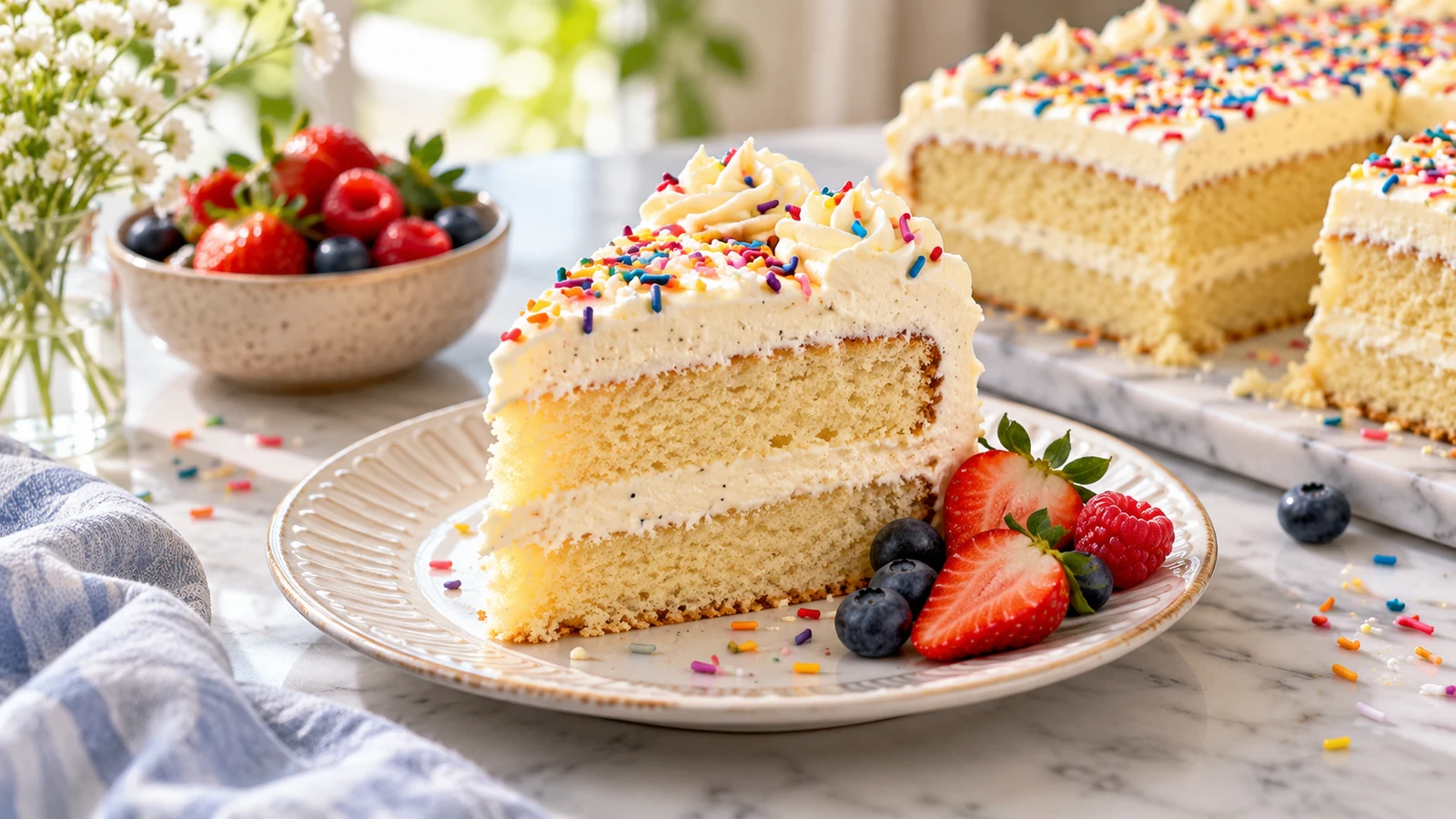
- Spread the icing in soft swoops and finish it with fresh berries.
- Pipe rosettes or stars onto cupcakes using a large open-star tip.
- Add sprinkles, chopped toasted nuts, or finely grated chocolate before the icing sets.
- Use a small amount between cake layers and reserve enough for the top and sides.
- Divide the batch and tint each portion for simple multicolored borders.
The neutral flavor makes this vanilla icing recipe for cake useful for many occasions. It can frame seasonal fruit, support candles and lightweight decorations, or provide a smooth base beneath sprinkles without overpowering the cake.
When serving a vanilla sheet cake recipe at a gathering, cut the cake with a clean, warm knife and wipe the blade between slices. For a vanilla pound cake recipe, offer the icing alongside the cake so guests can add as much as they prefer.
Make-Ahead and Storage Details
Refrigerating the Icing
Make the icing up to 3 days ahead and refrigerate it in an airtight container. Before using, let it stand at room temperature for 45–90 minutes, then mix on low until smooth. If necessary, add 1 teaspoon cream to restore its spreadable texture.
Keep the container tightly covered so the vanilla icing recipe for cake does not absorb refrigerator odors or develop a dry surface. Do not judge its consistency while it is cold; chilled buttercream is naturally firm.
Freezing and Thawing
Freeze the icing in an airtight freezer-safe container for up to 3 months. Thaw it overnight in the refrigerator, bring it to room temperature, and rewhip briefly. Scrape the bowl well to reincorporate any areas that softened at different rates.
Storing a Frosted Cake
A frosted cake can generally remain at cool room temperature for up to 2 days, but refrigerate it when the filling or cake itself requires chilling. Cover cut edges to reduce drying. Let a chilled buttercream cake lose some of its chill before serving for a softer texture and fuller flavor.
Transporting the Cake
Chill the decorated cake briefly before travel so the icing is firm to the touch. Place it on a level surface in a fitted box, keep it out of sunlight, and cool the vehicle first. Bring a small amount of spare icing for easy touch-ups.
Frequently Asked Questions
Can I make this vanilla icing recipe for cake without heavy cream?
Yes. Whole milk, half-and-half, or unsweetened plant milk works. Begin with less liquid because thinner milk changes the texture more quickly than cream. Add it by the teaspoon once the basic mixture comes together.
Can I use this icing for piping?
Yes. Use 2 tablespoons (30 ml) cream and check that a lifted beater leaves a peak. If the piped design slumps, add powdered sugar; if it cracks at the edges, add a few drops of cream.
Can I reduce the powdered sugar?
You can reduce it to about 3 1/2 cups (420 g), but the result will be softer and less stable. Salt and a small amount of lemon juice can reduce perceived sweetness without weakening the structure as much.
Is this suitable for a vanilla mug cake recipe?
Yes. Prepare a quarter batch to top a quick vanilla mug cake recipe. Cool the cake first, then add only as much icing as desired and refrigerate any remainder.
Does this work with a recipe for fluffy vanilla cake?
Yes. The airy buttercream and a recipe for fluffy vanilla cake make a classic pairing. Use a gentle hand while spreading so the delicate crumb stays intact, and apply a crumb coat before the final finish.
How much icing does a vanilla sheet cake recipe need?
A 9-by-13-inch vanilla sheet cake recipe needs about 3/4–1 batch, depending on the preferred thickness and whether you add borders. Start with less and reserve the remaining icing for decorations or touch-ups.
Can I use it on a vanilla pound cake recipe?
Yes. A vanilla pound cake recipe can be topped with a thin spread or a softer, thick drizzle. Add cream gradually until the icing falls from a spoon in a slow ribbon, without changing the base ingredients.
Can I make the icing by hand?
Yes, although it requires more effort. Beat very soft butter with a sturdy spoon, add sifted powdered sugar in small portions, and finish with a whisk. Add the liquid gradually so the mixture remains easy to control.
Can I double this vanilla icing recipe for cake?
Yes, provided the mixing bowl is large enough to hold the increased volume. Add the powdered sugar gradually and scrape the bowl thoroughly. A double batch is useful for a three-layer 9-inch cake or elaborate piping.
Why should the cake be completely cool?
Warm cake softens butter and can cause icing to slide, look greasy, or soak into the crumb. Cooling also makes the cake sturdier, which helps prevent crumbs from mixing into the final layer.
Can I add food coloring in advance?
Yes. Gel color can be mixed in before refrigeration, and the shade may deepen while it rests. Bring the icing back to room temperature and mix it gently before decorating to restore an even color and texture.
Printable Recipe Card
Fluffy Vanilla Cake Icing
Prep time: 10 minutes
Yield: About 3 cups; 24 lightly frosted cupcakes or one two-layer 8-inch cake
Ingredients: 1 cup (226 g) unsalted butter, 4 cups (480 g) powdered sugar, 2–4 tablespoons (30–60 ml) heavy cream, 2 teaspoons (10 ml) vanilla extract, and 1/4 teaspoon fine salt.
Instructions: Beat the butter for 2–3 minutes. Gradually mix in the sugar, then add vanilla, salt, and 2 tablespoons cream. Whip for 2 minutes, adjust with additional cream, and mix on low for 1 minute before frosting a completely cooled cake.
Estimated nutrition: About 210 calories per 2-tablespoon serving, with approximately 12 g fat, 26 g carbohydrate, and 25 g sugar. Values vary by ingredients and serving size.
A Dependable Finish for Homemade Cakes
With properly softened butter and gradual liquid adjustments, this vanilla icing recipe for cake can be spread, piped, or drizzled with dependable results. Match the consistency to your dessert and apply it only after the cake has cooled.
Whether you are preparing a vanilla mug cake recipe, vanilla pound cake recipe, recipe for fluffy vanilla cake, or vanilla sheet cake recipe, the same simple texture cues will help you achieve a smooth vanilla finish. Adjust slowly, taste as you work, and serve the finished cake at a comfortable room temperature.
Reviews
Reader reviews are managed separately (outside this build).