Chicken
Chicken Roasted Veg: Easy Meal Ideas
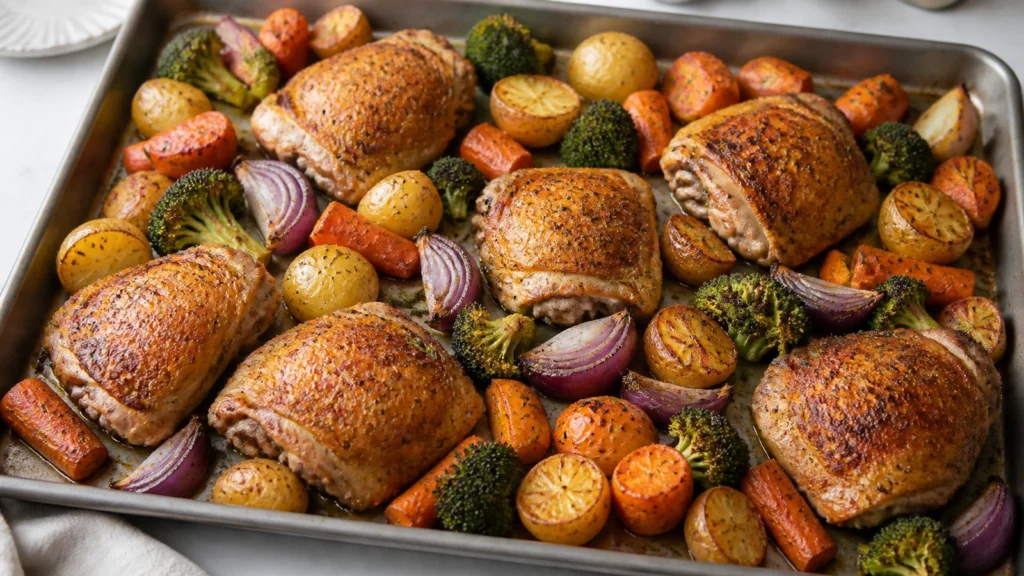
A chicken roasted veg traybake is the one-pan dinner most people fall back on: chicken and whatever vegetables are in the drawer, roasted hot on a single sheet until everything caramelizes.
The whole thing hinges on one detail. Chicken and vegetables do not cook at the same rate, so putting them in together at the same time is why so many versions come out with either dry chicken or half-raw carrots.
Below you will find the ingredient table, a vegetable timing guide, step-by-step directions, tips, variations, serving ideas, troubleshooting, storage guidance, and six common questions.
Table of Contents
Key Takeaways for This Chicken Roasted Veg Traybake
- Roast at 425°F (220°C); lower and the vegetables steam instead of browning.
- Bone-in chicken thighs give the most forgiving result.
- Add vegetables in two waves based on density, not all at once.
- Chicken is done at 165°F (74°C) measured at the thickest part.
- One layer only. A crowded pan is the difference between roasted and boiled.
- A good chicken roasted veg tray feeds four from one sheet pan.
Why Chicken Roasted Veg Works on One Pan
The appeal of a chicken roasted veg dinner is obvious: one pan, one oven, no pots to watch. The reason it often disappoints is less obvious.
Chicken thighs need roughly 35 to 40 minutes at 425°F. Broccoli needs 20. Potatoes need 45. Load them together and something is always wrong. Staging the vegetables by density fixes it completely, and costs you one extra trip to the oven.
Fat is the other half. Vegetables roasted dry go leathery, so everything needs a real coating of oil before it goes in.
Chicken Roasted Veg at a Glance
Here is what a chicken roasted veg tray looks like before you start.
| Detail | Value |
|---|---|
| Prep time | 15 minutes |
| Roast time | 40 to 45 minutes |
| Oven | 425°F (220°C) |
| Method | one sheet pan, staged |
| Chicken target | 165°F (74°C) |
| Yield | 4 servings |
Ingredients for Chicken Roasted Veg
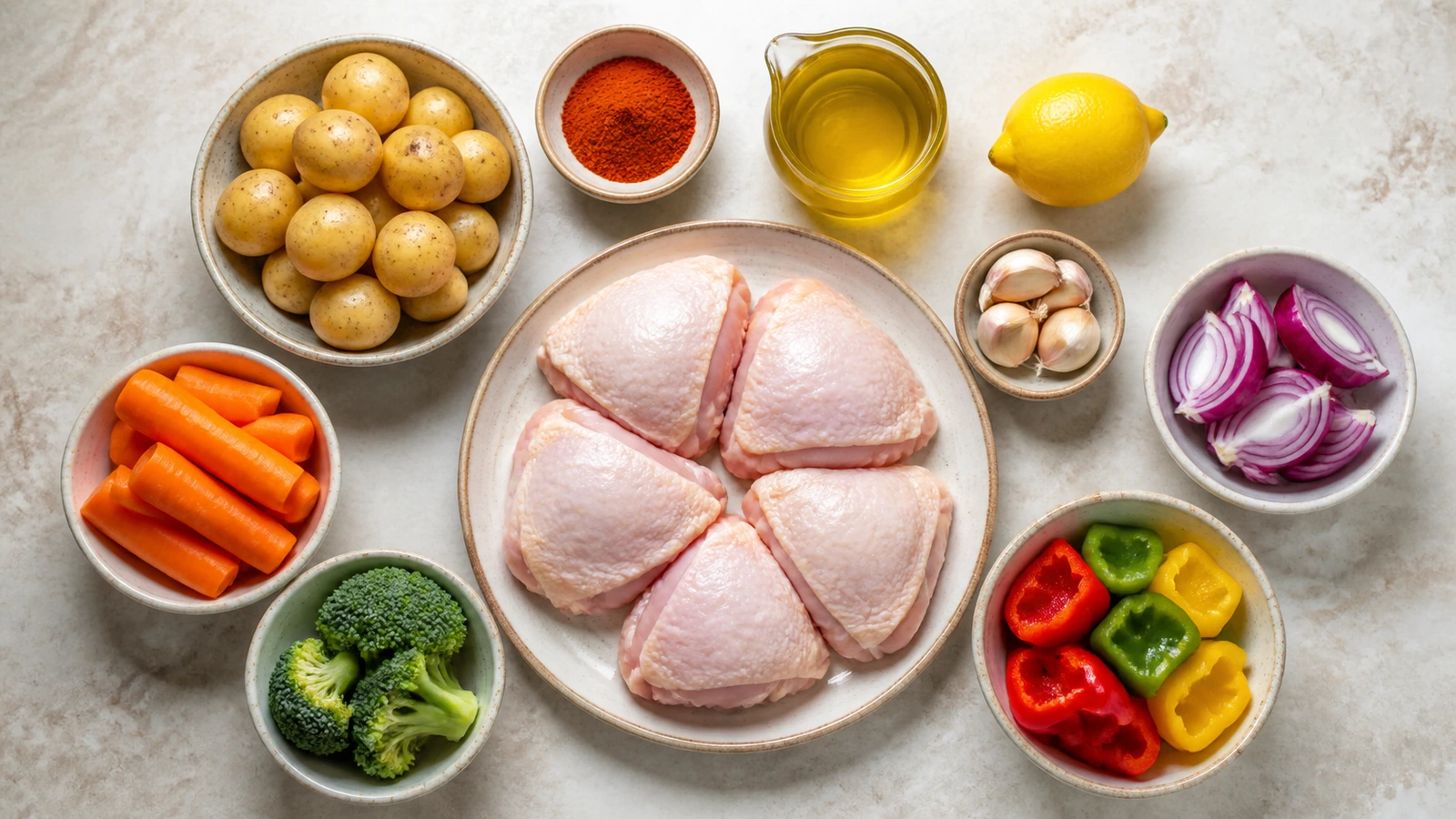
Everything in this chicken roasted veg tray is a standard supermarket item, and the vegetables are meant to be swapped for whatever you have.
| Ingredient | Amount | Why it matters |
|---|---|---|
| Chicken thighs, bone-in skin-on | 8 pieces | Forgiving; stays juicy across a long roast. |
| Baby potatoes, halved | 1.5 pounds | Go in first; they need the full time. |
| Carrots, thick batons | 4 medium | Dense; first wave. |
| Red onion, wedges | 2 | Sweetens and holds its shape. |
| Broccoli florets | 1 head | Second wave; 20 minutes is plenty. |
| Bell peppers, chunks | 2 | Second wave. |
| Olive oil | 5 tablespoons | Split between the two waves. |
| Garlic, whole cloves | 8 | Roast in their skins, sweet and mild. |
| Smoked paprika | 2 teaspoons | Color and depth on the chicken skin. |
| Dried oregano | 2 teaspoons | Classic with roasted vegetables. |
| Lemon | 1 | Zest into the rub, juice at the end. |
| Salt and black pepper | to taste | Season the chicken and vegetables separately. |
Choosing the Right Cut
Bone-in thighs are the best choice for a chicken roasted veg bake. They tolerate the 40 minutes the potatoes need without drying, and the skin crisps in the same time.
Breasts work but change the timing entirely: add them for only the last 25 minutes, or they will be chalky by the time the potatoes are done. Drumsticks behave like thighs and can be used interchangeably.
Why One Layer Matters
Roasting is dry heat. The moment pieces overlap, they trap steam between them and that surface never browns.
If everything will not fit in a single layer with a little space around each piece, use two pans. Two pans of properly roasted food beat one crowded tray every time.
How to Make Chicken Roasted Veg Step by Step
The method for this chicken roasted veg tray is staged, and the staging is the entire technique.
- Heat the oven to 425°F (220°C) with a rack in the middle.
- Pat the chicken thighs dry, then rub with 2 tablespoons oil, the paprika, oregano, lemon zest, salt, and pepper.
- Toss the potatoes, carrots, and onion with 3 tablespoons oil, salt, and pepper.
- Spread the dense vegetables on the sheet pan in one layer and nestle the chicken among them, skin up.
- Roast 25 minutes without opening the door.
- Add the broccoli, peppers, and garlic cloves to the gaps, turning them in the pan fat.
- Roast another 15 to 20 minutes, until the chicken reads 165°F and the potatoes pierce easily.
- If the skin is not crisp, give it 3 minutes under the broiler and watch it constantly.
- Rest 5 minutes, squeeze the lemon over everything, and serve straight from the pan.
How to Check Chicken for Doneness
Chicken is judged by temperature, not color. Thighs near bone can stay slightly pink and still be fully cooked.
Push the thermometer into the thickest part of a thigh without touching the bone and look for 165°F. Thighs are forgiving and stay juicy up to about 180°F, so err high rather than low.
Safe Chicken Handling
Keep the chicken refrigerated until it goes on the pan, use a separate board, and wash your hands after handling it raw. The USDA guidance on chicken and food safety covers safe temperatures and storage times.
Do not rinse raw chicken. It spreads bacteria around the sink rather than removing it. Refrigerate leftovers within two hours.
Vegetable Timing Guide
This is the table that makes a chicken roasted veg tray work. Add each vegetable with the time it actually needs.
| Vegetable | Cut | Roast time at 425°F | Wave |
|---|---|---|---|
| Baby potatoes | Halved | 40 to 45 min | First |
| Carrots | Thick batons | 40 min | First |
| Red onion | Wedges | 35 to 40 min | First |
| Butternut squash | 1 inch cubes | 35 min | First |
| Broccoli | Florets | 18 to 20 min | Second |
| Bell peppers | Large chunks | 20 min | Second |
| Zucchini | Thick rounds | 18 min | Second |
| Green beans | Whole | 15 min | Second |
| Cherry tomatoes | Whole | 12 min | Last 12 min |
| Asparagus | Trimmed | 10 min | Last 10 min |
Why the Oven Stays at 425
Lower ovens feel safer but produce worse results. At 375°F the vegetables release their water faster than it evaporates, and they end up simmering in it.
425°F drives that moisture off quickly enough for the sugars to caramelize. It also renders the chicken skin properly, which a moderate oven never quite manages.
Best Tips
A few habits separate a good chicken roasted veg tray from a soggy one.
- Dry the chicken. Skin that starts wet will not crisp, no matter how hot the oven.
- Cut for time, not for looks. Match the piece size to the roast time in the table.
- Do not line with foil for the first wave. Direct contact with the hot pan is where the browning comes from.
- Leave the door shut for 25 minutes. Every peek drops the oven by 25 degrees or more.
- Season the vegetables separately. Salting them in their own bowl is the only way to season evenly.
- Acid at the end. Lemon squeezed over hot roasted vegetables lifts the whole tray.
Easy Variations to Try
Once the basic chicken roasted veg method works, these are the directions worth taking it in.
- Mediterranean. Olives, red onion, and oregano, finished with parsley.
- Harissa. Two tablespoons of harissa in the chicken rub.
- Root vegetable. Parsnip, sweet potato, and carrot only, all first wave.
- Ranch seasoned. Use the rub from the baked ranch chicken guide.
- Thighs only. For the boneless version see roasted chicken thighs and veggies.
- Lemon and garlic. Double the garlic and add a whole sliced lemon to the pan.
What to Serve With It
A chicken roasted veg tray is close to a complete meal, so the sides should stay light.
- Crusty bread for the pan juices.
- A sharp green salad with mustard vinaigrette.
- Plain couscous or rice to stretch it further.
- Garlic yogurt or a tahini drizzle.
- Warm flatbread.
- Nothing at all; it is designed to stand alone.
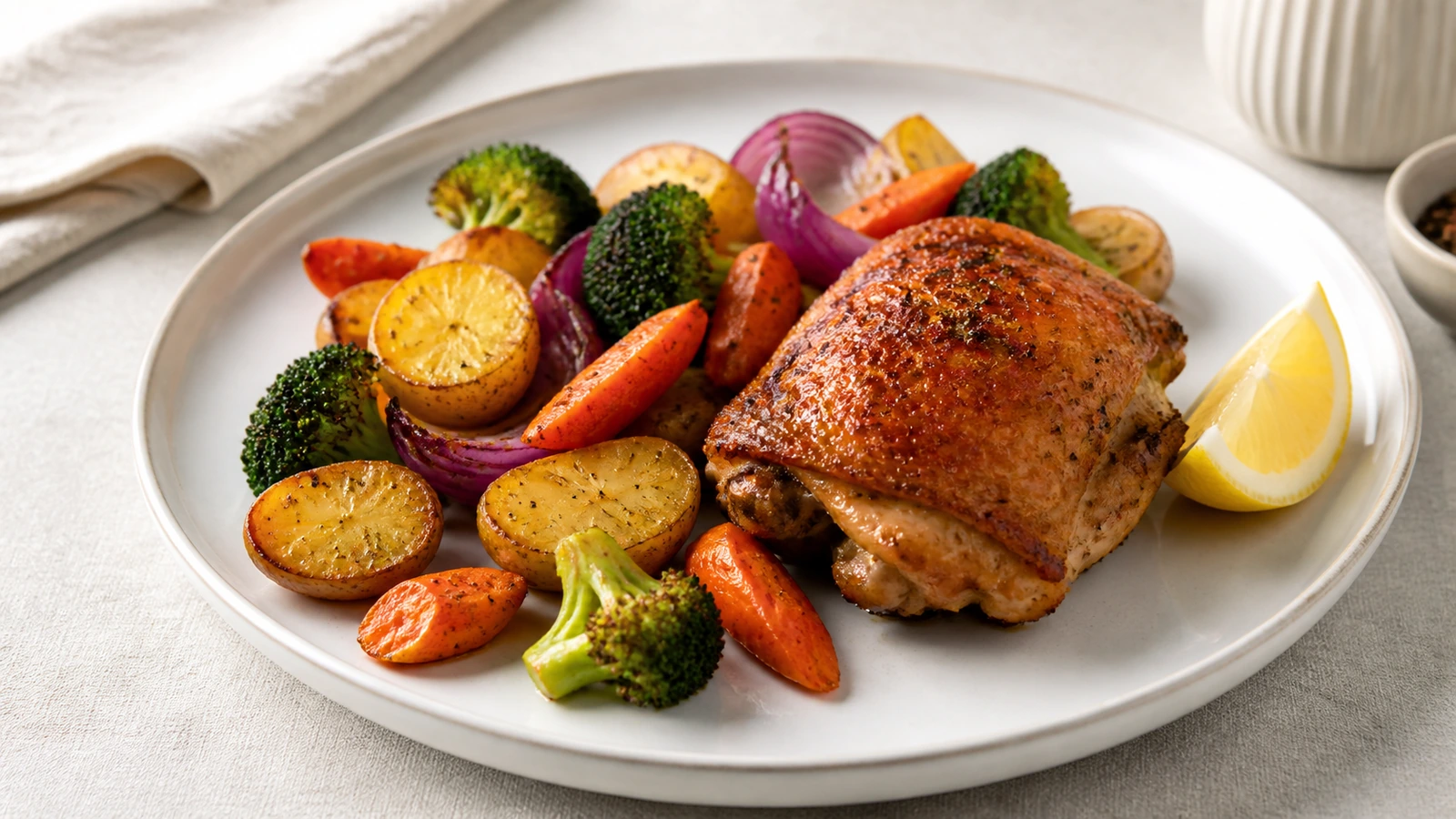
Build a Balanced Plate
Half the pan is vegetables already, which is most of the work done.
One thigh, a generous scoop of vegetables, and a starch on the side keeps the proportions sensible without adding another dish.
Troubleshooting Guide
Most problems with a chicken roasted veg bake trace back to pan crowding or oven temperature.
| Problem | Likely cause | Fix |
|---|---|---|
| Vegetables soggy | Pan crowded | Use two pans; leave space around each piece. |
| Skin not crisp | Chicken went on wet | Pat dry; finish 3 minutes under the broiler. |
| Potatoes still hard | Cut too large or added late | Halve them and put them in the first wave. |
| Broccoli burnt | Added with the first wave | Add it for the final 20 minutes only. |
| Chicken dry | Breast used on thigh timing | Add breasts for the last 25 minutes. |
| Everything pale | Oven too low | Roast at 425°F, not 375°F. |
If the Vegetables Steam Instead of Roast
Steaming means moisture had nowhere to go. Either the pan was too full or the pieces were touching.
Split across two trays and swap their shelf positions halfway. It feels like more work and takes the same time.
If the Chicken Finishes Before the Potatoes
Lift the chicken onto a plate and tent it with foil, then give the vegetables another 10 minutes on their own.
Resting chicken does it no harm at all, and the pieces will still be hot when the tray comes out.
How to Store and Reheat
Leftover chicken roasted veg keeps well, though the vegetables soften on reheating.
Refrigerator Storage
Airtight container at 40°F or below for up to four days. Keep the chicken and vegetables together; the juices help.
Reheat in a hot oven or air fryer rather than the microwave, which turns roasted vegetables limp.
Freezer and Make-Ahead Notes
The chicken freezes well for three months. Roasted potatoes and broccoli do not; they turn watery.
You can chop all the vegetables and make the rub a day ahead, which cuts the active prep to about five minutes.
Using the Leftovers
Shred the chicken and fold everything into a grain bowl, a wrap, or a frittata.
Blitzed with stock, the leftover vegetables also make a fast roasted vegetable soup.
Frequently Asked Questions
The questions below come up most often about this chicken roasted veg method.
Can I roast chicken and vegetables together?
Yes, but stage them. Dense vegetables go in with the chicken; quick ones like broccoli and peppers join for the last 20 minutes.
What temperature is best?
425°F (220°C). Lower temperatures let the vegetables steam in their own moisture instead of caramelizing.
Should I use thighs or breasts?
Thighs. They match the vegetables timing and stay juicy. Breasts need to be added for only the final 25 minutes.
Why are my vegetables soggy?
The pan was crowded. Overlapping pieces trap steam and never brown. Spread across two trays instead.
Do I need to line the pan?
Not for the first wave. Direct contact with hot metal is where browning comes from. Parchment makes cleanup easier but costs you color.
Can I make it ahead?
Chop the vegetables and mix the rub a day ahead. Roast fresh, since reheated roasted vegetables never quite return.
More Chicken Recipes to Try
If this chicken roasted veg tray worked for you, these are the natural next ones to cook. Every exact keyword links to its recipe page:
The hot oven and single layer that make this chicken roasted veg work are the same rules every roasted chicken dish depends on.
Final Thoughts on This Chicken Roasted Veg Tray
Three things decide this dish: roast at 425°F, keep everything in a single layer, and stage the vegetables by how long they actually need.
Get those right and a chicken roasted veg tray gives you a full dinner for four from one pan, with about fifteen minutes of real work.
There are no reviews yet. Be the first one to write one.
Reviews
Reader reviews are managed separately (outside this build).