
Chicken
Roasted Chicken Thighs and Veggies
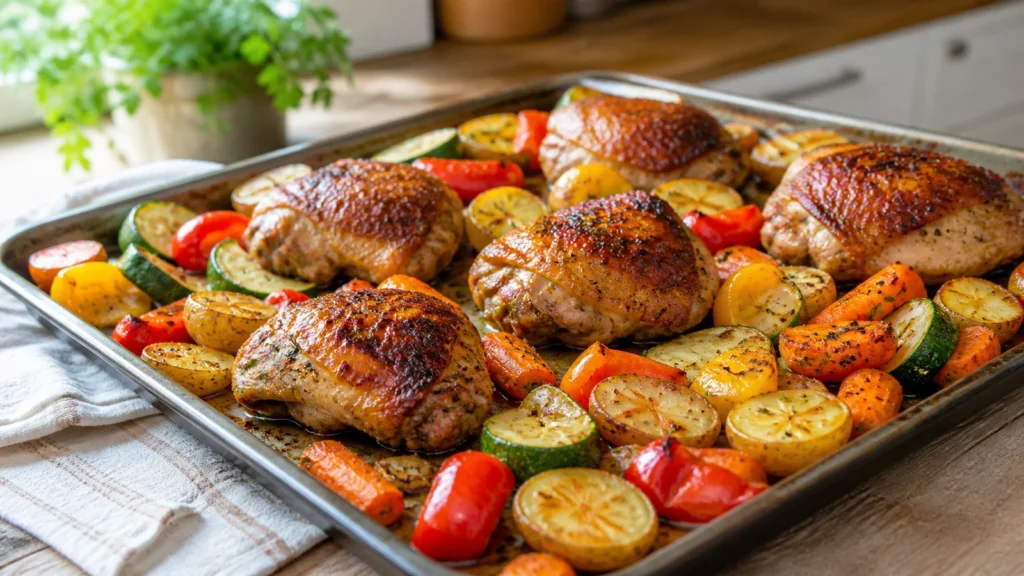
Roasted chicken thighs and veggies is the version of the sheet pan dinner that is hardest to get wrong, because thighs forgive almost everything an oven can do to them.
Breast meat has a narrow window between cooked and dry. Thighs have more fat and connective tissue, so they stay juicy from 165°F all the way past 180°F, which is exactly the range a tray of vegetables forces you into.
Below you will find the ingredient table, a bone-in versus boneless timing guide, step-by-step directions, tips, variations, serving ideas, troubleshooting, storage guidance, and six common questions.
Table of Contents
Key Takeaways for Roasted Chicken Thighs and Veggies
- Thighs tolerate the long roast a tray of vegetables needs.
- Bone-in skin-on thighs give the best result.
- Roast at 425°F (220°C) in a single layer.
- Chicken is safe at 165°F (74°C) but thighs are better at 175°F to 180°F.
- Skin side up the whole time, never covered.
- A tray of roasted chicken thighs and veggies feeds four from one pan.
Why Thighs Beat Breasts on a Sheet Pan
The problem with a one-pan chicken dinner is that vegetables take 35 to 45 minutes and chicken breast takes 20. Something has to lose.
Thighs remove the conflict. Their fat content keeps them moist well past the point breast would turn chalky, and the connective tissue actually improves with longer cooking. That is why roasted chicken thighs and veggies is the more reliable version of the dish.
Bone-in adds a second advantage: the bone slows heat transfer to the centre, which buys even more margin.
Roasted Chicken Thighs and Veggies at a Glance
Here is what a tray of roasted chicken thighs and veggies looks like before you start.
| Detail | Value |
|---|---|
| Prep time | 15 minutes |
| Roast time | 35 to 45 minutes |
| Oven | 425°F (220°C) |
| Method | one sheet pan, single layer |
| Chicken target | 175°F (79°C) for thighs |
| Yield | 4 servings |
Ingredients for Roasted Chicken Thighs and Veggies
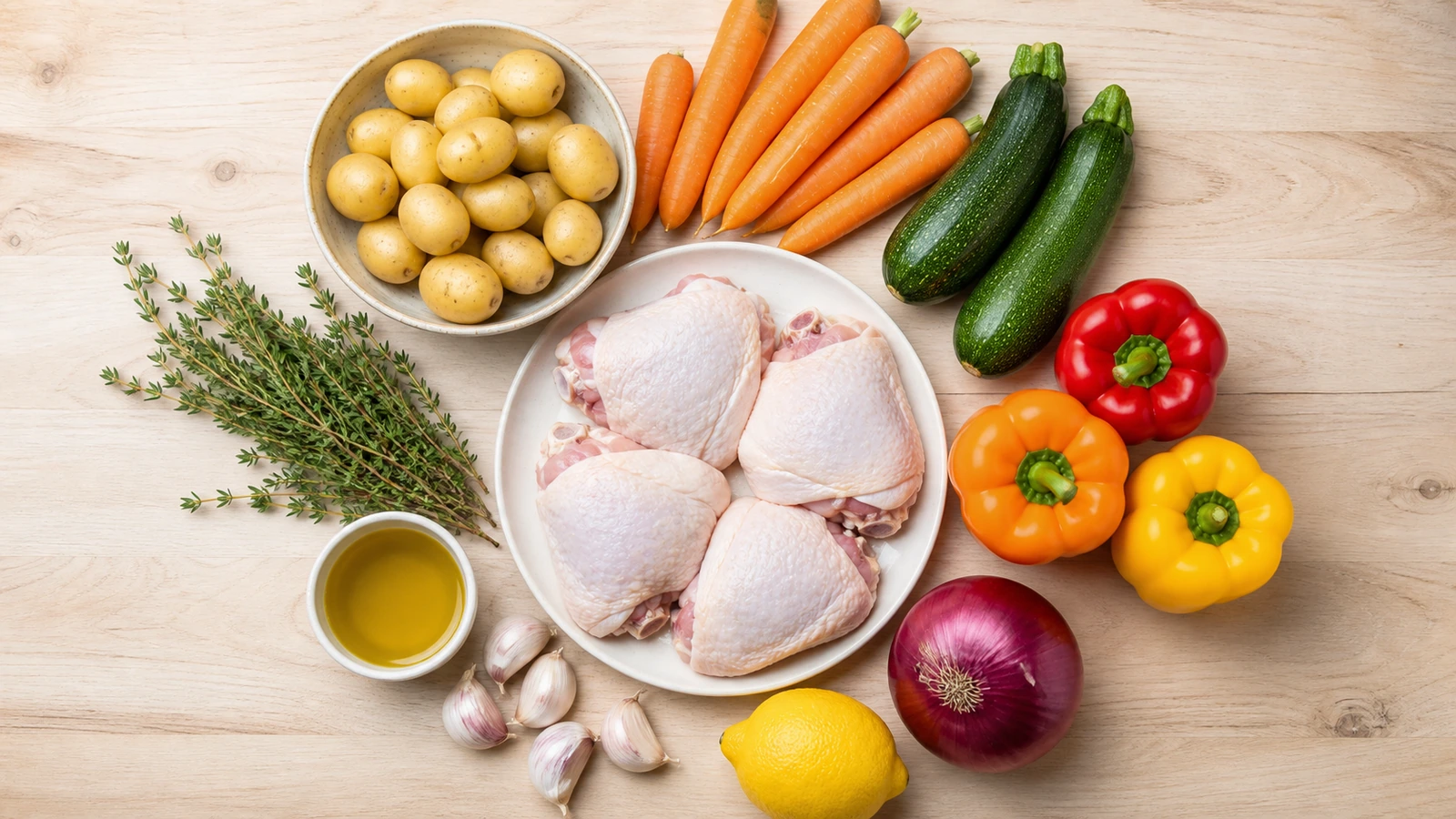
Everything in this roasted chicken thighs and veggies tray is a standard supermarket item.
| Ingredient | Amount | Why it matters |
|---|---|---|
| Chicken thighs, bone-in skin-on | 8 | The most forgiving cut for a long roast. |
| Baby potatoes, halved | 1.5 pounds | Dense; goes in from the start. |
| Carrots, thick batons | 4 | Same timing as the potatoes. |
| Red onion, wedges | 2 | Sweetens as it roasts. |
| Zucchini, thick rounds | 2 | Added later; turns to mush if early. |
| Bell pepper, chunks | 2 | Added later. |
| Olive oil | 5 tablespoons | Split between chicken and vegetables. |
| Garlic cloves, whole | 8 | Roast in their skins. |
| Dried thyme | 2 teaspoons | Classic with thigh meat. |
| Smoked paprika | 2 teaspoons | Color on the skin. |
| Lemon | 1 | Zest in the rub, juice at the end. |
| Salt and black pepper | to taste | Season chicken and vegetables separately. |
Bone-In or Boneless
Bone-in skin-on is the better choice. The skin renders and bastes the meat, and the bone protects the centre from the fierce heat the potatoes need.
Boneless thighs work but finish in about 25 minutes, so give the vegetables a 15 minute head start before the chicken goes on. Skinless loses the self-basting entirely and needs an extra tablespoon of oil.
Why 175 Rather Than 165
165°F is the safety threshold and applies to all poultry. It is not, however, the point at which thighs taste best.
Thigh meat is full of collagen, which only starts breaking down into gelatin around 170°F. Pulling at 175°F to 180°F gives noticeably more tender meat with no dryness, which is the opposite of how breast behaves.
How to Make Roasted Chicken Thighs and Veggies Step by Step
The method for roasted chicken thighs and veggies is staged, exactly like any sheet pan dinner.
- Heat the oven to 425°F (220°C) with a rack in the upper third.
- Pat the thighs completely dry and rub with 2 tablespoons oil, the thyme, paprika, lemon zest, salt, and pepper.
- Toss the potatoes, carrots, and onion with 3 tablespoons oil, salt, and pepper.
- Spread the dense vegetables on the pan in one layer and sit the thighs on top, skin up.
- Roast 25 minutes without opening the door.
- Add the zucchini, peppers, and garlic to the gaps and turn them in the pan fat.
- Roast another 15 to 20 minutes, until the thighs read 175°F and the skin is deep golden.
- Rest 5 minutes, squeeze the lemon over the tray, and serve from the pan.
How to Check Thighs for Doneness
Thigh meat stays slightly pink near the bone even when fully cooked, so color tells you nothing useful.
Push the thermometer into the thickest part without touching bone. Anywhere from 175°F to 185°F is ideal for thighs; there is no benefit to stopping at 165°F.
Safe Chicken Handling
Keep the chicken refrigerated until it goes on the pan, use a separate board, and wash your hands afterwards. The USDA guidance on chicken and food safety covers safe temperatures and storage times.
Do not rinse raw chicken; it spreads bacteria around the sink. Refrigerate leftovers within two hours.
Thigh Timing Guide
Timing for roasted chicken thighs and veggies depends on which thigh you bought.
| Cut | Oven | Time | Add vegetables |
|---|---|---|---|
| Bone-in skin-on | 425°F | 35 to 45 min | With the chicken |
| Bone-in skinless | 425°F | 35 to 40 min | With the chicken |
| Boneless skin-on | 425°F | 25 to 30 min | 15 min head start |
| Boneless skinless | 425°F | 22 to 25 min | 15 min head start |
| Bone-in, from cold | 425°F | 45 to 50 min | With the chicken |
| Drumsticks | 425°F | 40 min | With the chicken |
Why the Skin Goes Up and Stays Up
Skin crisps by rendering its fat into the pan and drying in hot air. Turned skin side down it sits in that fat and poaches instead.
Leave the thighs skin up for the entire roast and never cover the pan. Covering traps steam and undoes the crisping in about four minutes.
Best Tips
A few habits separate a good tray of roasted chicken thighs and veggies from a pale, greasy one.
- Dry the skin hard. Wet skin will not crisp at any temperature.
- Single layer, with gaps. Touching pieces steam each other.
- Upper third of the oven. Closer to the top element means better browning.
- Stage the soft vegetables. Zucchini and peppers only need the last 20 minutes.
- Do not cover the pan. Ever, at any stage.
- Rest 5 minutes. Thighs reabsorb their juices and carve cleanly.
Easy Variations to Try
Once the basic roasted chicken thighs and veggies tray works, these are the directions worth taking it in.
- Ranch seasoned. Use the rub from baked ranch chicken.
- Honey mustard. Brush the thighs in the last 10 minutes so it does not burn.
- Mediterranean. Olives, cherry tomatoes, and oregano; tomatoes in the last 12 minutes.
- Root vegetables only. Parsnip, sweet potato, and carrot, all from the start.
- Whole chicken pieces. Mixed thighs and drumsticks, same timing.
- Generic version. For any cut and any vegetable, see chicken roasted veg.
What to Serve With It
A tray of roasted chicken thighs and veggies is close to a whole dinner, so keep the sides simple.
- Crusty bread for the pan juices.
- A sharp green salad with mustard vinaigrette.
- Rice or couscous to stretch it to six.
- Garlic yogurt to cut the richness.
- Pickled onions or capers scattered over.
- Nothing else; it stands on its own.
Build a Balanced Plate
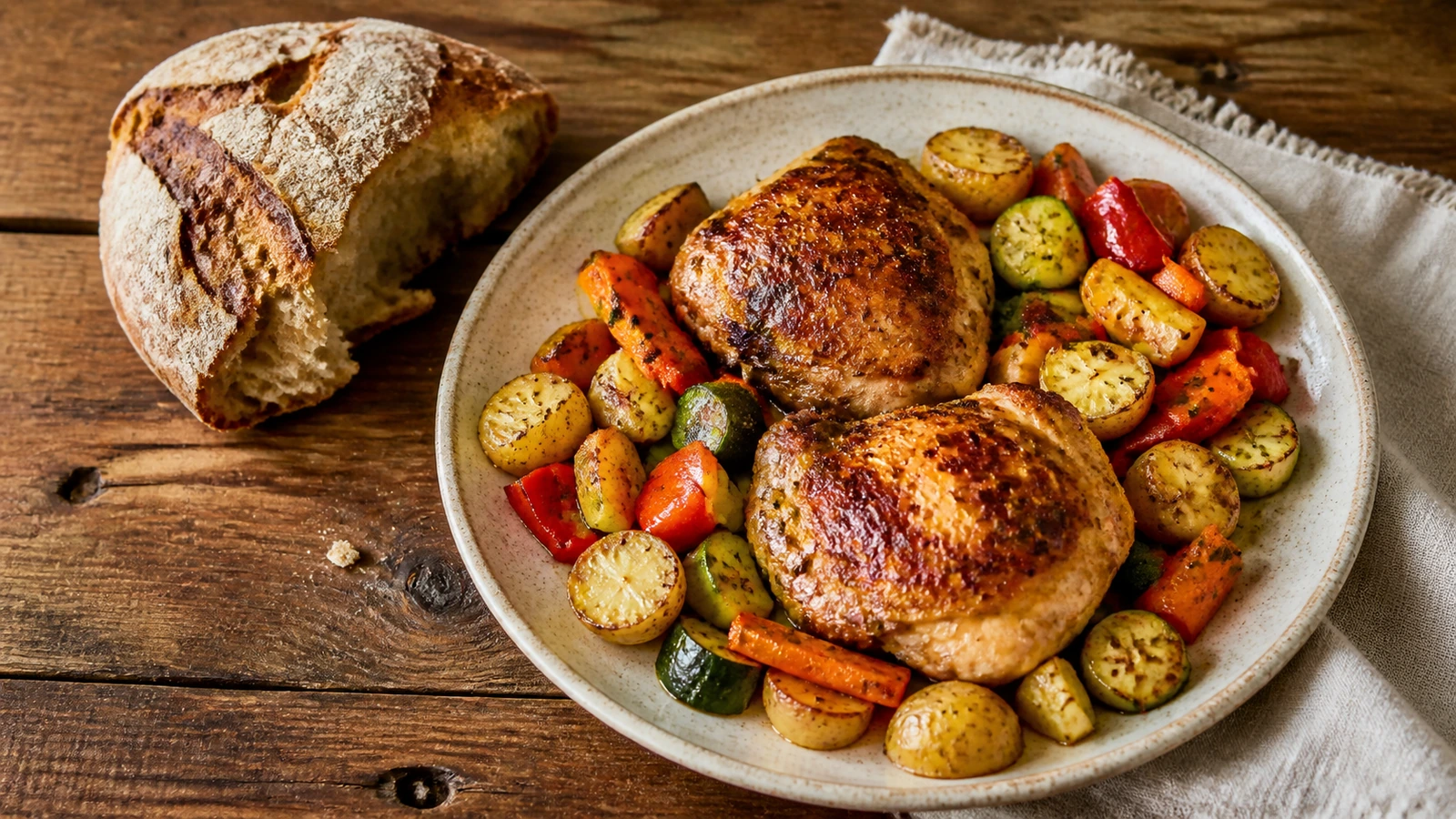
Half the tray is already vegetables, which does most of the work.
Two thighs, a generous scoop of vegetables, and something starchy on the side keeps the plate in proportion.
Troubleshooting Guide
Most problems with roasted chicken thighs and veggies come from a crowded pan or a covered one.
| Problem | Likely cause | Fix |
|---|---|---|
| Skin flabby | Pan covered, or skin was wet | Never cover; pat dry; broil 3 minutes. |
| Vegetables soggy | Pan crowded | Use two trays with space around each piece. |
| Potatoes hard | Cut too large | Halve baby potatoes; quarter larger ones. |
| Zucchini collapsed | Added at the start | Add it for the last 20 minutes only. |
| Chicken greasy | Skin never rendered | Higher shelf, hotter oven, longer roast. |
| Pan smoking | Fat burning on bare metal | Line with parchment for the second wave. |
If the Skin Will Not Crisp
Crisping needs three things: a dry surface, high heat, and open air. Missing any one of them gives soft skin.
Move the pan to the upper third, make sure nothing is covering it, and finish with three minutes under the broiler while watching constantly.
If the Vegetables Finish First
Scoop them into a warm bowl and let the chicken carry on. Vegetables hold their heat well and reheat on the plate.
Next time cut them slightly larger so they match the thighs rather than beating them.
How to Store and Reheat
Leftover roasted chicken thighs and veggies keeps well, though the skin never returns to its original crispness.
Refrigerator Storage
Airtight container at 40°F or below for up to four days.
Reheat at 400°F for 10 minutes or in an air fryer. Microwaving makes the skin rubbery and the vegetables watery.
Freezer and Make-Ahead Notes
The thighs freeze well for three months. Roasted potatoes and zucchini do not, so freeze the chicken alone.
You can chop the vegetables and rub the chicken a day ahead; the dry rub sitting overnight actually improves the skin.
Using the Leftovers
Pull the meat off the bones and use it in wraps, grain bowls, or a quick soup with the roasted vegetables.
The bones are worth simmering into a small batch of stock rather than throwing away.
Frequently Asked Questions
The questions below come up most often about roasted chicken thighs and veggies.
What temperature for roasted chicken thighs and veggies?
425°F (220°C). Hot enough to crisp the skin and caramelize the vegetables. Lower ovens let the vegetables steam in their own moisture.
How long do bone-in thighs take?
35 to 45 minutes at 425°F. Boneless thighs need only 22 to 30, so give the vegetables a head start if you use them.
Should I cook thighs to 165 or higher?
165°F is safe, but thighs taste better at 175°F to 180°F once the collagen has broken down. They do not dry out the way breast does.
Can I put all the vegetables in at once?
Only if they are all dense. Potatoes and carrots go in from the start; zucchini, peppers, and broccoli need the last 20 minutes.
Do I need to flip the chicken?
No. Skin side up for the whole roast. Flipping puts the skin in rendered fat and softens it.
Can I use frozen vegetables?
They release too much water and steam the tray. If you must, add them frozen for the final 15 minutes on a separate pan.
More Chicken Recipes to Try
If this tray of roasted chicken thighs and veggies worked for you, these are the natural next ones to cook. Every exact keyword links to its recipe page:
The single layer and hot oven behind this roasted chicken thighs and veggies tray are the same rules the others rely on.
Final Thoughts on Roasted Chicken Thighs and Veggies
Three things decide this dish: dry the skin, keep everything in one uncovered layer, and take the thighs past 175°F rather than stopping at 165°F.
Get those right and roasted chicken thighs and veggies gives you crisp skin, tender meat, and caramelized vegetables from one pan and fifteen minutes of work.
There are no reviews yet. Be the first one to write one.
Reviews
Reader reviews are managed separately (outside this build).