Potato
Japanese Sweet Potato Recipe (Sweet Roasted Satsumaimo)
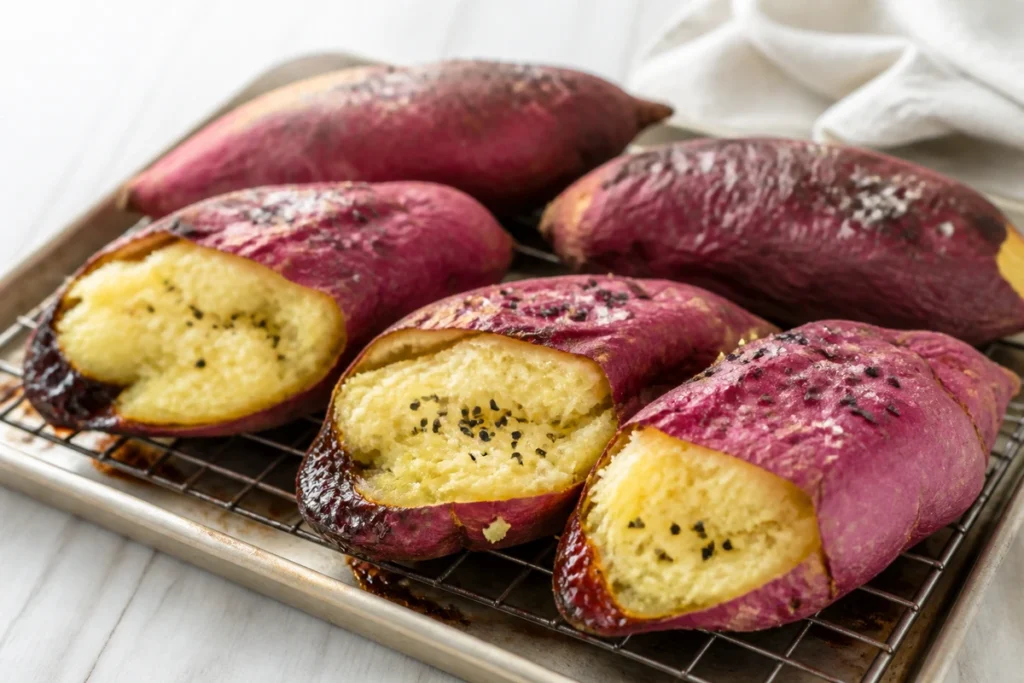
A japanese sweet potato recipe depends on one thing most people get wrong: the sweetness is not in the potato when you buy it. It is made in the oven.
Japanese sweet potatoes, satsumaimo, have purple skin and pale, dry, starchy flesh. That starch only turns sweet when an enzyme in the potato converts it to maltose, and that enzyme works slowly between about 150°F and 170°F. Rush the roast and you get a bland, dry potato; hold it low and slow and it turns to candy.
Below you will find the ingredient table, a temperature guide, the method, tips, variations, serving ideas, troubleshooting, storage notes and six common questions.
Table of Contents
Key Takeaways for This Japanese Sweet Potato Recipe
- The sweetness is created by slow roasting, not by the potato itself.
- Roast at 300°F for 80 to 90 minutes, not hot and fast.
- Do not wrap in foil; dry heat concentrates the sugars.
- Start the potatoes in a cold oven to lengthen the sweet zone.
- The skin should wrinkle and caramel should seep from the ends.
- This japanese sweet potato recipe serves four.
Why Slow Roasting Makes It Sweet
Satsumaimo is packed with starch and an enzyme called beta-amylase. That enzyme breaks starch into maltose, a sugar, but only within a narrow temperature band, roughly 150°F to 170°F. The longer the potato spends in that band, the more sugar it makes.
A hot oven rushes the centre through that band in minutes, so little sugar forms and the potato stays starchy. A low oven, or one the potato heats up with from cold, keeps it in the sweet zone for the better part of an hour.
That is the whole secret of a japanese sweet potato recipe, and it is why a street-vendor yaki-imo tastes like dessert while a microwaved one tastes like cardboard.
The Recipe at a Glance
Here is what a japanese sweet potato recipe looks like before you start.
| Detail | Value |
|---|---|
| Prep time | 5 minutes |
| Roast time | 80 to 90 minutes |
| Oven | 300°F (150°C) |
| Enzyme sweet zone | 150 to 170°F |
| Wrapping | none, bare potato |
| Yield | 4 servings |
Ingredients
A japanese sweet potato recipe is deliberately plain; the technique does the work.
| Ingredient | Amount | Why it matters |
|---|---|---|
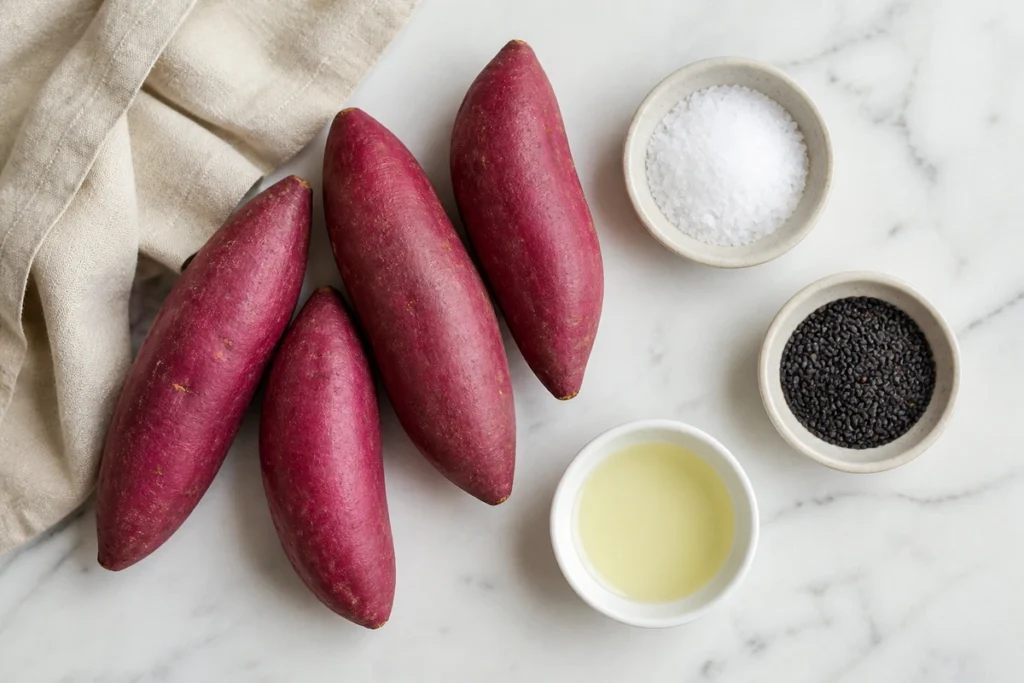
| Japanese sweet potatoes | 4 medium | Satsumaimo, purple skin, white flesh. |
| Sea salt | to finish | Sharpens the sweetness. |
| Butter | optional | For serving, not roasting. |
| Black sesame seeds | to garnish | Traditional finish. |
Choosing the Right Potato
Japanese sweet potatoes have a reddish-purple skin and cream-coloured flesh that is drier and starchier than the orange American type. Do not substitute the orange kind here; it is moister and less starchy and will not develop the same chestnut sweetness.
Look for firm potatoes with no soft spots. Medium ones, around six ounces, roast more evenly than large ones.
Why You Do Not Wrap It
Foil traps steam, and steam keeps the surface wet and the flesh boiled rather than roasted. A bare potato loses moisture as it cooks, which concentrates the sugars and gives you the sticky, caramelised ends that define a good yaki-imo.
Put a tray underneath to catch the caramel that seeps out. That syrup is the sign it worked.
How to Make It Step by Step
The method for a japanese sweet potato recipe is mostly waiting, and the cold start is the key move.
- Scrub the potatoes and dry them. Do not peel or wrap them.
- Prick each one a few times with a fork.
- Place them on a rack over a lined tray.
- Put them into a cold oven, then set it to 300°F.
- Roast 80 to 90 minutes, until very soft and caramel seeps from the ends.
- Test with a skewer; it should meet no resistance at all.
- Rest 5 minutes, then split lengthwise.
- Finish with a pinch of sea salt, and butter or sesame if you like.
The Cold Oven Start
Putting the potatoes into a cold oven and letting them heat up with it means the flesh passes slowly through the 150°F to 170°F sweet zone instead of racing through it.
It adds fifteen minutes or so and noticeably more sweetness. If your oven is already hot, drop the temperature to 275°F to stretch the same effect.
Food Safety Note
Roasted potatoes left at room temperature can develop bacteria if held too long, so refrigerate leftovers within two hours as the USDA guidance on leftovers and food safety sets out.
Never leave a foil-wrapped baked potato at room temperature, which is one reason this recipe skips the foil entirely.
These are the timings a japanese sweet potato recipe depends on.
Temperature Guide
These are the numbers behind a japanese sweet potato recipe.
| Stage | Target | What happens |
|---|---|---|
| Sweet zone | 150 to 170°F | Enzyme converts starch to maltose. |
| Oven | 300°F | Slow enough to linger in the zone. |
| Cold start | from room temp | Lengthens time in the zone. |
| Done | skewer-soft | No resistance at the centre. |
| Caramel | seeps from ends | Sugars concentrated. |
| Rest | 5 minutes | Flesh settles, easier to split. |
Why Not Microwave It
A microwave takes the potato from cold to boiling in a couple of minutes, far too fast for the enzyme to do any work. The result is starchy and bland, whatever the variety.
If you are short on time, thirty minutes in the microwave at fifty percent power gets closer, but nothing matches a slow roast.
Best Tips
Six habits that make a japanese sweet potato recipe taste like the ones from a Japanese street cart.
- Roast low and slow. 300°F, not 425°F.
- Start from a cold oven. More time in the sweet zone.
- Never wrap in foil. Dry heat concentrates the sugar.
- Use a rack. Air all around cooks it evenly.
- Wait for the caramel. Seeping syrup means it is ready.
- Finish with salt. It makes the sweetness taste sweeter.
Easy Variations to Try
Once you can roast one properly, these are worth trying.
- Daigaku imo. Cube and candy the roasted flesh in a light syrup with sesame.
- Korean style. Compare with the korean sweet potato recipe.
- Mashed. Whip the roasted flesh with a little butter and salt.
- Purple flesh. Try the purple sweet potato recipe for a different variety.
- Tempura. Slice thin and fry in a light batter.
- Cold, as a snack. Refrigerated yaki-imo is a traditional treat.
What to Serve With It
A japanese sweet potato recipe works as a snack, a side or a light dessert.
- Green tea, the classic pairing.
- Grilled fish, as a side.
- A bowl of miso soup.
- Pickled vegetables.
- Plain yogurt, for dessert.
- Toasted sesame and a little butter.
Serving It the Traditional Way
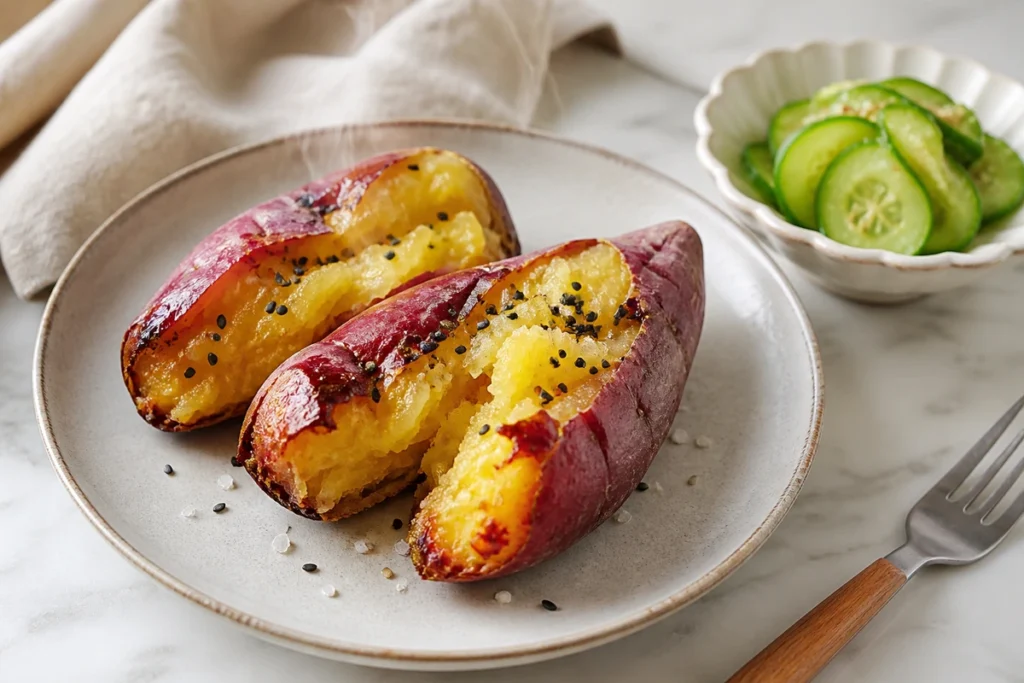
In Japan these are sold whole from carts in autumn and winter, split open and eaten from the skin with nothing added. That is the honest way to judge one.
If it needs butter or sugar to taste good, it was roasted too fast.
Once the base works, a japanese sweet potato recipe takes variations easily.
Troubleshooting Guide
Almost every problem with a japanese sweet potato recipe is temperature.
| Problem | Likely cause | Fix |
|---|---|---|
| Bland, not sweet | Roasted too hot or fast | 300°F, cold start, full 90 minutes. |
| Dry flesh | Wrapped, or overcooked | No foil; check at 80 minutes. |
| Still firm inside | Undercooked | Roast until a skewer meets no resistance. |
| No caramel | Oven too cool or too short | Give it the full time at 300°F. |
| Wet, boiled texture | Foil trapped steam | Roast bare on a rack. |
| Skin split badly | Not pricked | Prick before roasting. |
If It Is Not Sweet Enough
The single most common cause is a hot oven. The enzyme never got time to work, so the starch stayed starch.
There is no rescuing that potato, but next time drop to 275°F and start from cold. Sweetness is a function of time in the zone, nothing else.
If the Flesh Is Dry
Satsumaimo is naturally dry, but roasting past ninety minutes at too high a heat dries it further. A little butter brings it back on the plate.
Check for doneness at eighty minutes; once a skewer slides in freely, it is done.
How to Store and Reheat
Roasted satsumaimo keeps well and is genuinely good cold.
The problems below come up most often with a japanese sweet potato recipe.
Refrigerator Storage
Cool completely, then refrigerate at 40°F or below for up to four days.
Reheat at 300°F for fifteen minutes, or eat cold. The texture firms up in the fridge, which many people prefer.
Freezer and Make-Ahead Notes
Roast, cool and freeze whole or as mash for up to three months. The sweetness survives freezing well.
Thaw in the refrigerator and reheat gently, or blend frozen chunks straight into a smoothie.
Using the Leftovers
Cold roasted flesh mashes into pancakes, folds into muffins, or blends into a thick, naturally sweet soup.
It also makes an excellent filling for the candied daigaku imo variation.
Frequently Asked Questions
These come up most often about a japanese sweet potato recipe.
Stored well, a japanese sweet potato recipe keeps for several days.
Why is my Japanese sweet potato not sweet?
It was roasted too hot or too fast. The sweetness comes from an enzyme that works between 150 and 170°F, so it needs a slow roast to build up sugar.
What temperature should I roast it at?
300°F for 80 to 90 minutes, ideally starting from a cold oven. Low and slow is what develops the sweetness.
Can I use orange sweet potatoes instead?
You can, but the result is different. Orange sweet potatoes are moister and less starchy, so they do not develop the same dry, chestnut-like sweetness.
These are the questions readers ask most about a japanese sweet potato recipe.
Should I wrap it in foil?
No. Foil traps steam and boils the flesh. Roast it bare on a rack so the sugars concentrate and caramelise.
How do I know when it is done?
A skewer slides into the centre with no resistance and caramel seeps from the ends. That syrup is the sign it is ready.
Can I eat the skin?
Yes. The skin is thin and edible, and it crisps slightly during the long roast. Many people eat it straight from the skin.
More Sweet Potato Recipes to Try
If this japanese sweet potato recipe worked for you, these are worth cooking next:
- korean sweet potato recipe
- purple sweet potato recipe
- sweet potato souffle recipe
- sweet potato brownie recipe
- black folks sweet potato pie recipe
The low-and-slow rule behind this japanese sweet potato recipe applies to every dry-fleshed sweet potato variety.
Final Thoughts on This Japanese Sweet Potato Recipe
Roast it low, roast it bare, and start it from a cold oven. Everything about a good japanese sweet potato recipe comes down to giving the enzyme time to turn starch into sugar.
Get that right and you will not need to add a thing.
There are no reviews yet. Be the first one to write one.
Reviews
Reader reviews are managed separately (outside this build).