Potato
Korean Sweet Potato Recipe (Crispy Goguma Mattang)
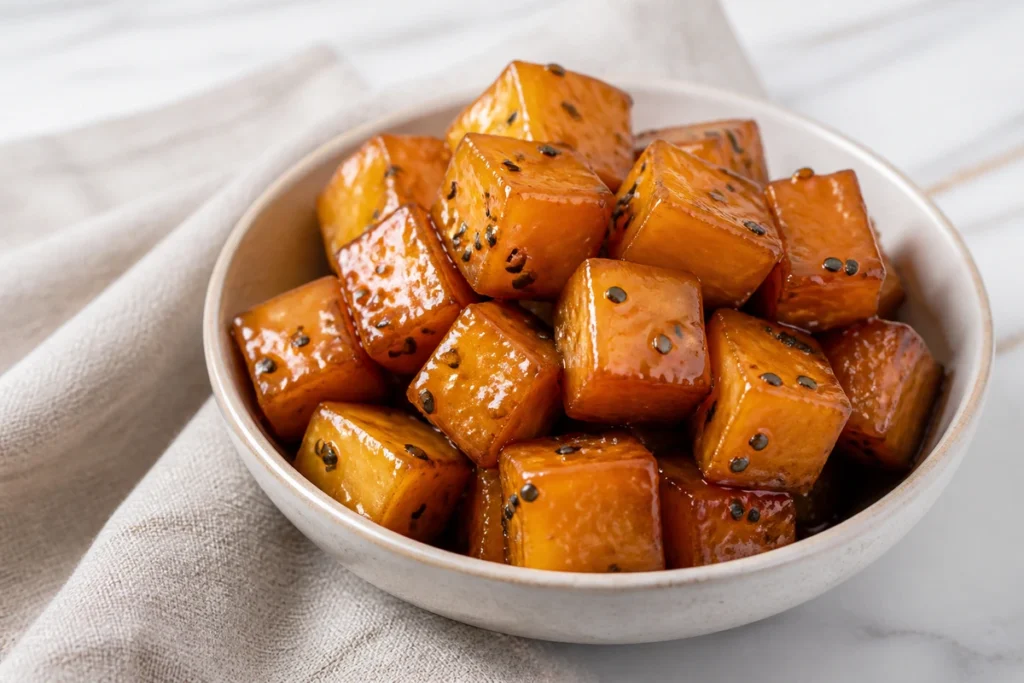
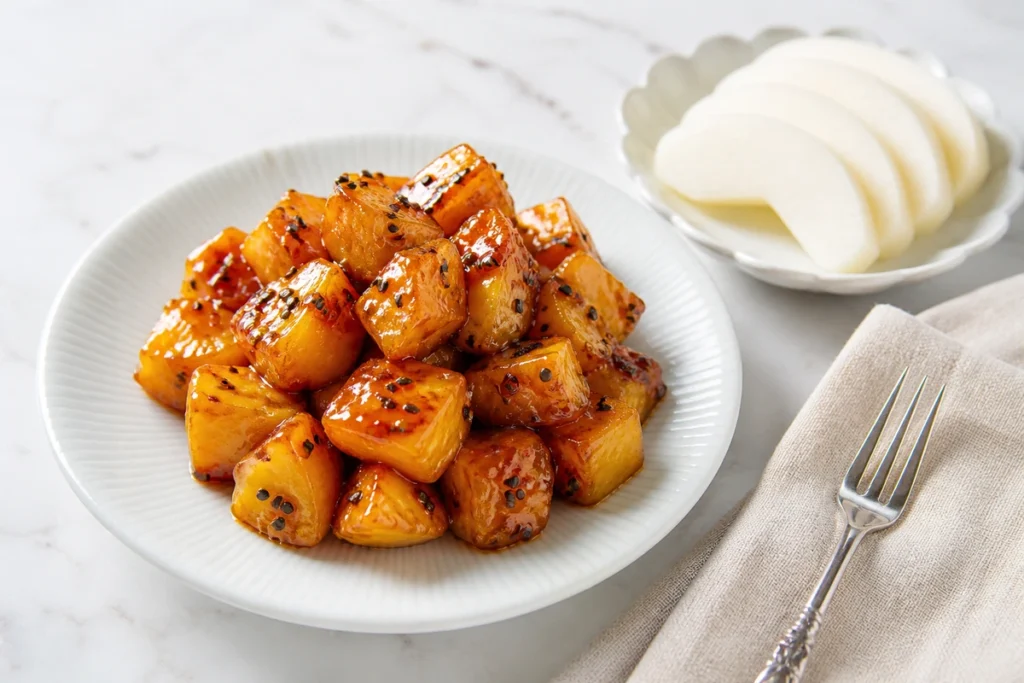
A korean sweet potato recipe most often means one of two things: gun-goguma, the roasted street-cart sweet potato, or goguma mattang, candied cubes with a hard, glassy sugar shell. This page covers the candied version, because the shell is where people go wrong.
That shell only turns crisp if the sugar syrup reaches the hard-crack stage, around 300°F. Pull it early and the coating stays sticky and soft, which is the single most common complaint. A thermometer, or knowing the visual cues, is what separates glassy mattang from a sticky mess.
Below you will find the ingredient table, a syrup guide, the method, tips, variations, serving ideas, troubleshooting, storage notes and six common questions.
Table of Contents
Key Takeaways for This Korean Sweet Potato Recipe
- Goguma mattang is candied sweet potato with a hard sugar shell.
- The syrup must reach about 300°F to set crisp, not sticky.
- Fry or roast the cubes first so they are tender inside.
- Work fast once the syrup is ready; it sets quickly.
- Drop coated cubes onto oiled parchment so they do not stick.
- This korean sweet potato recipe serves four.
Why the Shell Stays Sticky
Sugar syrup passes through stages as it heats. At lower temperatures it is soft and sticky; only at the hard-crack stage, around 300°F, does it set into a brittle, glassy shell once cooled. Most sticky mattang was pulled off the heat too early.
You do not need a thermometer if you know the signs: the syrup turns pale gold, the bubbles get smaller and slower, and a drop in cold water sets hard and snaps. But a thermometer takes the guesswork out.
The other half of a good korean sweet potato recipe is the potato itself, which must be cooked tender before it is coated, because the hot syrup barely cooks it further.
The Recipe at a Glance
Here is what a korean sweet potato recipe looks like before you start.
| Detail | Value |
|---|---|
| Prep time | 15 minutes |
| Cook the cubes | fry or roast until tender |
| Syrup target | about 300°F, hard-crack |
| Coating | work fast, sets quickly |
| Finish | black sesame |
| Yield | 4 servings |
Ingredients
A korean sweet potato recipe for mattang is short but the technique is precise.
| Ingredient | Amount | Why it matters |
|---|---|---|
| Korean sweet potatoes | 1½ pounds | Goguma, purple skin, pale flesh. |
| Neutral oil | for frying | Cooks the cubes tender. |
| Sugar | ½ cup | The shell. |
| Water | 2 tablespoons | Starts the syrup. |
| Corn syrup | 1 tablespoon | Stops the sugar crystallising. |
| Black sesame seeds | 1 tablespoon | Traditional finish. |
| Salt | a pinch | Balances the sweetness. |
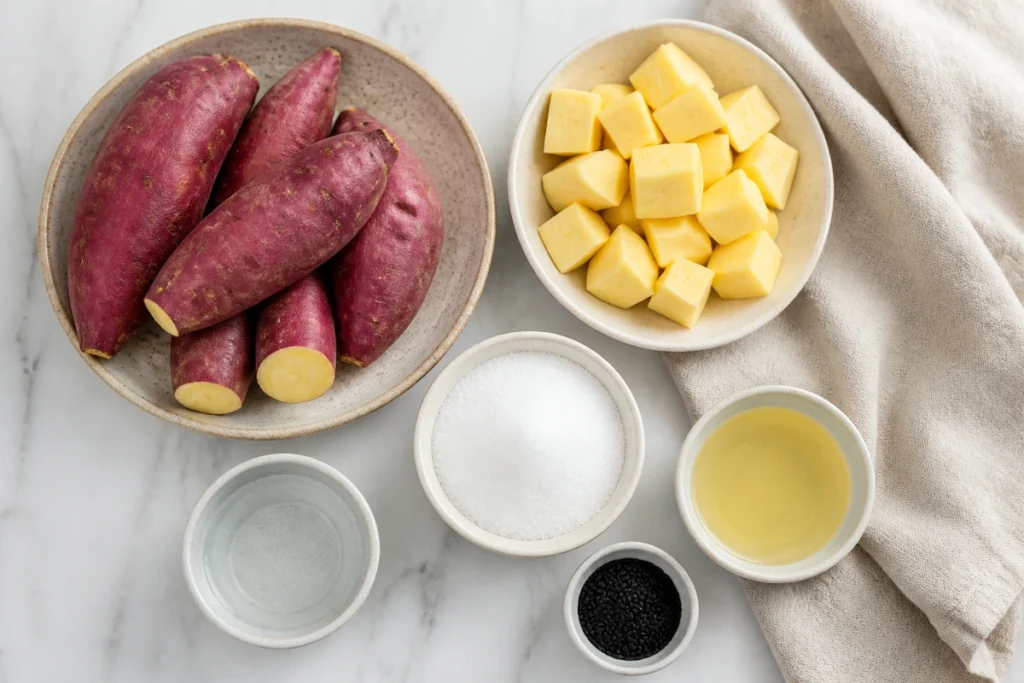
Korean Sweet Potatoes Are Dry and Starchy
Goguma have purple-red skin and pale yellow flesh, and they are dense, dry and chestnut-sweet, much like their Japanese cousins. That dry flesh holds its shape when cubed and fried, which is exactly what mattang needs.
The orange American sweet potato is too moist and soft here; it turns mushy under the syrup. Use goguma, or a Japanese satsumaimo, for the right texture.
Why a Little Corn Syrup
A spoon of corn syrup among the sugar stops the syrup crystallising into grainy lumps as it cooks. It keeps the shell smooth and glassy.
Without it, the syrup can seize into sugar crystals, especially if any stray grains get stirred in.
How to Make It Step by Step
Cook the potato first, then make the syrup, then move quickly.
- Peel the potatoes and cut into 1 inch cubes.
- Fry in oil at 340°F for 6 to 8 minutes until tender and lightly golden, or roast at 400°F for 25 minutes.
- Drain the cubes well on paper.
- In a clean pan, heat the sugar, water and corn syrup without stirring.
- Cook until pale gold and the bubbles slow, about 300°F.
- Take off the heat, add the drained cubes and toss to coat.
- Tip onto oiled parchment and separate the cubes quickly.
- Scatter with black sesame and cool until the shell hardens.
Do Not Stir the Syrup
Stirring sugar syrup encourages it to crystallise. Swirl the pan gently if you need to even it out, but do not put a spoon in.
Let it come up to colour on its own, watching for the pale gold that signals it is nearly there.
Food Safety and Hot Sugar
Sugar at 300°F causes serious burns, so keep children away and have a bowl of cold water nearby. For the cooked potatoes themselves, refrigerate leftovers within two hours as the USDA guidance on leftovers and food safety sets out.
Never touch the syrup to test it; drop a little into cold water instead.
These are the timings a korean sweet potato recipe depends on.
Syrup Guide
The syrup stage is the whole recipe for a korean sweet potato recipe.
| Stage | Temperature | Result on the cube |
|---|---|---|
| Thread | 230°F | Wet, sticky, will not set. |
| Soft ball | 240°F | Chewy, still sticky. |
| Hard ball | 260°F | Firm but tacky. |
| Soft crack | 280°F | Almost, slightly bendy. |
| Hard crack | 300°F | Glassy, crisp shell. |
| Caramel | 340°F | Amber, bitter if too far. |
Testing Without a Thermometer
Drop a little syrup into a glass of cold water. At hard-crack it forms hard, brittle threads that snap rather than bending. If it goes soft and bendy, it needs longer.
The colour is a guide too: pale gold is right, deep amber has gone too far toward caramel.
Best Tips
Six habits that make a korean sweet potato recipe set crisp.
- Cook the cubes tender first. The syrup will not cook them.
- Drain them well. Wet cubes make the syrup seize.
- Take the syrup to hard-crack. 300°F, or it stays sticky.
- Do not stir the syrup. Stirring crystallises it.
- Work fast. The syrup sets within a minute.
- Use oiled parchment. The cubes will not stick.
Easy Variations to Try
Goguma is versatile beyond mattang.
- Gun-goguma. Simply roast whole at 400°F for a soft, sweet street-cart style.
- Japanese daigaku imo. The japanese sweet potato recipe uses a lighter syrup.
- Honey butter. Toss roasted cubes in honey and butter instead of hard syrup.
- Cheese goguma. Mash and bake with a mozzarella centre.
- Purple. Try the purple sweet potato recipe for colour.
- Sweet potato latte. Blend roasted goguma with warm milk.
What to Serve With It
A korean sweet potato recipe like mattang is a snack or a sweet side.
- Hot barley tea.
- A bowl of plain rice, as a side.
- Roasted chicken.
- Fresh fruit.
- A cup of black coffee.
- On its own, as a snack.
Serving It Fresh
Mattang is at its best within an hour or two of making, while the shell is at its crispest. It softens as it sits, absorbing moisture from the air.
Make it close to when you want to eat it rather than far ahead.
Once the base works, a korean sweet potato recipe takes variations easily.
Troubleshooting Guide
Almost every problem with a korean sweet potato recipe is the syrup.
| Problem | Likely cause | Fix |
|---|---|---|
| Sticky, soft shell | Syrup not hot enough | Take it to 300°F. |
| Grainy syrup | Stirred, or no corn syrup | Do not stir; add corn syrup. |
| Bitter shell | Syrup went to caramel | Pull it at pale gold. |
| Mushy centre | Wrong potato, or overcooked | Use dry goguma; cook just tender. |
| Cubes stuck together | Not separated fast enough | Work quickly on oiled parchment. |
| Shell softened later | Left out too long | Eat within a couple of hours. |
If the Shell Is Sticky
A sticky shell means the syrup did not reach hard-crack. There is no fixing a batch already coated, but you can return the syrup to the heat before coating next time.
Take it to a proper 300°F and test a drop in cold water; it should snap.
If the Syrup Crystallised
Grainy syrup seized because it was stirred or lacked corn syrup. Add a splash of water and reheat gently to dissolve the crystals, then continue.
Next time, do not stir and include the spoon of corn syrup.
How to Store
Mattang is a fresh treat, but it does keep for a short time.
The problems below come up most often with a korean sweet potato recipe.
Refrigerator Storage
Store in an airtight container at room temperature for up to a day; the shell softens in the fridge, so cool storage is not ideal for the candied version.
Plain roasted goguma, by contrast, keeps four days refrigerated and reheats well.
Freezer and Make-Ahead Notes
The candied shell does not survive freezing; it turns sticky on thawing. Freeze plain roasted goguma instead, for up to three months.
Make the mattang shell fresh on the day you want it.
Prepping the Cubes Ahead
You can fry or roast the cubes a few hours ahead and keep them at room temperature, then make the syrup and coat them just before serving.
That splits the work without losing the crisp shell.
Frequently Asked Questions
These come up most often about a korean sweet potato recipe.
Stored well, a korean sweet potato recipe keeps for several days.
Why is my candied sweet potato sticky?
The syrup did not reach the hard-crack stage. It needs to hit about 300°F to set into a crisp, glassy shell instead of staying sticky.
What is goguma mattang?
It is a Korean snack of fried sweet potato cubes coated in a hard sugar syrup and sprinkled with sesame, crisp outside and soft inside.
Are Korean and Japanese sweet potatoes the same?
They are very similar: both have purple skin, pale dry flesh and a chestnut sweetness. The recipes differ more than the potatoes do.
These are the questions readers ask most about a korean sweet potato recipe.
Do I need a thermometer?
It helps, but you can test by dropping syrup into cold water. At hard-crack it forms brittle threads that snap.
Why did my syrup go grainy?
It crystallised, usually from stirring or from leaving out the corn syrup. Do not stir, and include a spoon of corn syrup.
Can I roast instead of fry the cubes?
Yes. Roast at 400°F for about 25 minutes until tender. Frying is more traditional but roasting is lighter.
More Sweet Potato Recipes to Try
If this korean sweet potato recipe worked for you, these are worth cooking next:
- japanese sweet potato recipe
- purple sweet potato recipe
- chicken and sweet potato recipes
- sweet potato pancake recipe
- sweet potato brownie recipe
The hard-crack rule behind this korean sweet potato recipe is the key to any candied coating.
Final Thoughts on This Korean Sweet Potato Recipe
Cook the cubes tender, take the syrup to a proper hard-crack, do not stir it, and move fast once it is ready.
Those four moves are the difference between glassy, crisp goguma mattang and a sticky korean sweet potato recipe that never sets.
There are no reviews yet. Be the first one to write one.
Reviews
Reader reviews are managed separately (outside this build).