Potato
Sweet Potato Pancake Recipe (Cooked Through, Never Raw)
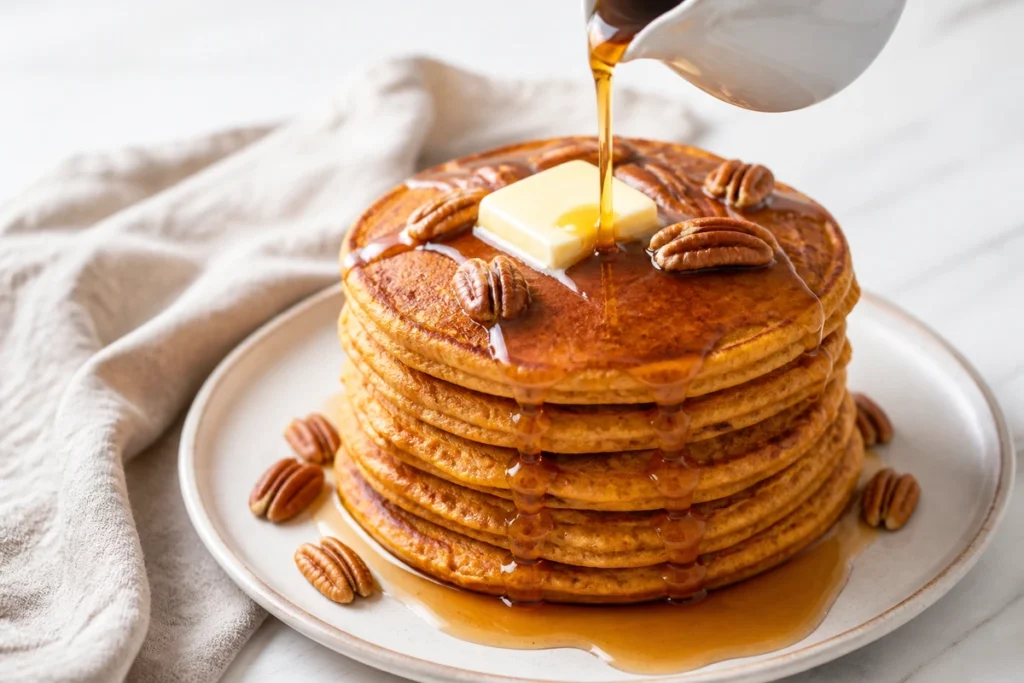
A sweet potato pancake recipe runs into a problem plain pancakes never do: the puree makes a thick, heavy batter that cooks slowly, so the outside browns long before the middle is set. Crank the heat to fix the raw centre and you burn the surface instead.
The answer is lower heat and more patience. A sweet potato pancake needs a cooler pan and a longer, gentler cook than a regular one, plus a slightly thinner spread so the heat can reach the middle. Once you accept that, they are foolproof.
Below you will find the ingredient table, a heat guide, the method, tips, variations, serving ideas, troubleshooting, storage notes and six common questions.
Table of Contents
Key Takeaways for This Sweet Potato Pancake Recipe
- The puree thickens the batter, so it cooks slower than plain pancakes.
- Use medium-low heat, not medium-high, or the middle stays raw.
- Spread the batter thinner so the heat reaches the centre.
- Roast the potato so the batter is not watery.
- Wait for bubbles that stay open before flipping.
- This sweet potato pancake recipe makes about 12.
Why They Cook Differently
Sweet potato puree is dense and full of moisture, which makes the batter thick and slow to heat through. On the heat you would use for plain pancakes, the surface hits the pan and browns in a couple of minutes while the centre is still cool and wet.
You cannot solve that with more heat; that just burns the outside faster. The fix is the opposite: a cooler pan gives the middle time to cook before the surface is done, and a thinner spread shortens the distance the heat has to travel.
Every problem people have with a sweet potato pancake recipe comes back to that one adjustment, heat down and batter thinner.
The Recipe at a Glance
Here is what a sweet potato pancake recipe looks like before you start.
| Detail | Value |
|---|---|
| Prep time | 15 minutes |
| Sweet potato | roasted, not boiled |
| Heat | medium-low |
| Cook per side | 3 to 4 minutes |
| Spread | slightly thinner than usual |
| Yield | about 12 pancakes |
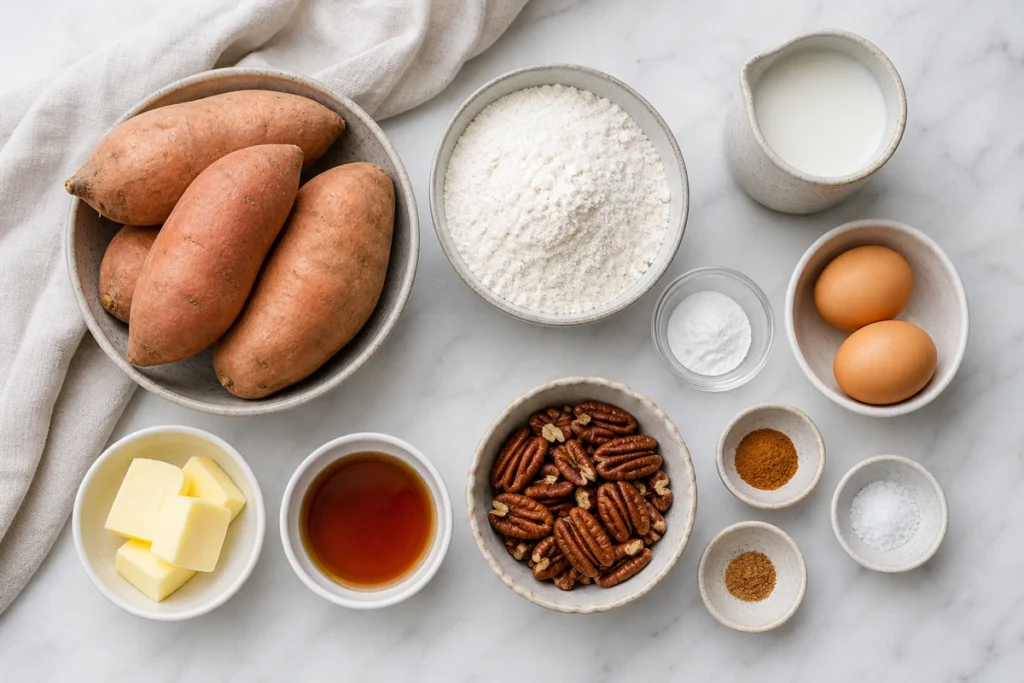
Ingredients
A sweet potato pancake recipe is a spiced breakfast pancake.
| Ingredient | Amount | Why it matters |
|---|---|---|
| Sweet potato puree | 1 cup | Roasted, for a thick but not watery batter. |
| Flour | 1½ cups | Structure. |
| Baking powder | 2 teaspoons | Lift against the heavy puree. |
| Milk | 1¼ cups | Loosens the batter. |
| Eggs | 2 | Bind and lift. |
| Sugar | 2 tablespoons | Light sweetness. |
| Cinnamon | 1 teaspoon | Warm spice. |
| Nutmeg | ¼ teaspoon | Depth. |
| Butter | for the pan | Flavour and browning. |
| Salt | ½ teaspoon | Balance. |
Roast, Do Not Boil, the Potato
Boiled puree is watery and makes a thin, weak batter that spreads too far and cooks unevenly. Roasted puree is thick, so you can loosen it to the right consistency with milk you control.
Roast a whole potato, scoop and mash, and measure a level cup.
Getting the Consistency Right
The batter should be thick but still pourable, dropping slowly off the spoon. Too thick and the centre never cooks; too thin and the pancakes spread and tear.
Add the milk gradually and stop when it just pours. You may not need all of it, depending on your puree.
How to Make It Step by Step
A sweet potato pancake recipe is a standard pancake batter cooked with more patience.
- Whisk the flour, baking powder, sugar, spices and salt.
- In another bowl beat the puree, eggs and most of the milk.
- Combine the two, adding milk until the batter just pours.
- Heat a pan or griddle over medium-low and butter it lightly.
- Spread each pancake slightly thinner than you would a plain one.
- Cook 3 to 4 minutes until bubbles form and stay open.
- Flip once and cook 3 minutes more until set through.
- Keep warm in a low oven while you cook the rest.
Wait for Bubbles That Stay Open
With a plain pancake you flip when bubbles appear. With this thicker batter, wait until the bubbles form and stay open rather than closing back over, which tells you the underside is properly set.
Flipping too early is the main cause of raw, gummy centres.
Do Not Press Them Down
Pressing a pancake with the spatula squeezes out the air the baking powder made and gives you a dense, flat result.
Let them cook undisturbed. The only job of the spatula is the single flip.
These are the timings a sweet potato pancake recipe depends on.
Heat Guide
Heat control is the whole skill of a sweet potato pancake recipe.
| Setting | Result | Why |
|---|---|---|
| Medium-high | Burnt outside, raw centre | Too fast for the thick batter. |
| Medium | Browns before the middle sets | Still a little hot. |
| Medium-low | Even cooking through | The sweet spot. |
| Low | Pale, greasy | Too slow; absorbs butter. |
| Thinner spread | Cooks through faster | Shorter distance for heat. |
| Thick spread | Raw middle | Heat cannot reach the centre. |
Test One First
Cook one pancake before committing the batch. It tells you whether your heat and consistency are right and lets you adjust before you have a dozen going.
The first pancake is always the test; do not judge the batch by it.
Best Tips
Six habits that make a sweet potato pancake recipe cook through evenly.
- Roast the potato. A thick puree gives a controllable batter.
- Cook on medium-low. High heat burns the outside.
- Spread thinner. The heat has less far to travel.
- Wait for open bubbles. Then flip once.
- Do not press. It squeezes out the lift.
- Test one first. Adjust before the batch.
Easy Variations to Try
The batter takes flavours well.
- Pecan. Fold chopped pecans into the batter.
- Purple. Use the purple sweet potato recipe puree for colour.
- Savoury. Drop the sugar and spice, add scallion and cook as fritters.
- Cake for dessert. Try the sweet potato cake recipe.
- Spiced. Add ginger and a pinch of clove.
- Oat. Swap half the flour for oat flour.
What to Serve With It
A sweet potato pancake recipe is a hearty, warming breakfast.
- Maple syrup.
- Toasted pecans.
- A spoon of Greek yogurt.
- Sauteed apples.
- A dusting of cinnamon sugar.
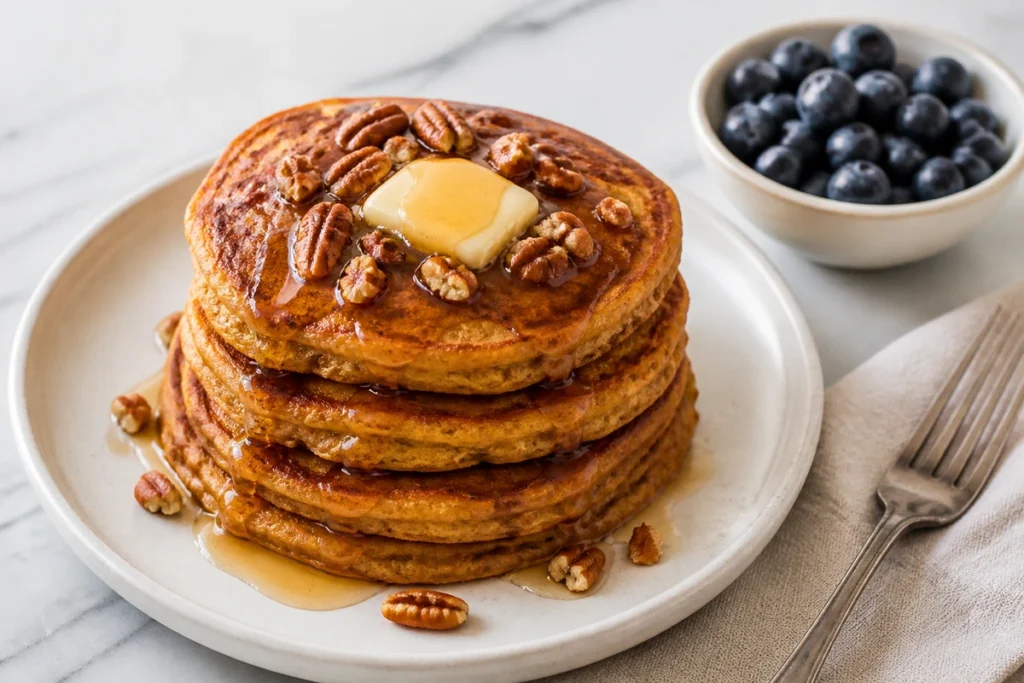
- Fresh berries.
Keeping a Batch Warm
These are best cooked slowly, so hold the finished ones in a 200°F oven on a rack while you work through the batter.
A rack rather than a plate keeps the undersides from going soft with trapped steam.
Once the base works, a sweet potato pancake recipe takes variations easily.
Troubleshooting Guide
Almost every problem with a sweet potato pancake recipe is heat or batter thickness.
| Problem | Likely cause | Fix |
|---|---|---|
| Burnt outside, raw middle | Heat too high | Drop to medium-low. |
| Gummy centre | Flipped too early, or too thick | Wait for open bubbles; spread thinner. |
| Dense and flat | Pressed down, or overmixed | Do not press; mix gently. |
| Spread too far | Batter too thin | Add a little flour. |
| Pale and greasy | Heat too low | Nudge it up slightly. |
| Torn when flipped | Flipped before set | Wait until the edges look dry. |
If the Centre Is Raw
A raw middle means the heat was too high or the pancake too thick. The outside cooked before the centre had a chance.
Lower the heat and spread the next ones thinner. You can also finish uncertain pancakes in a warm oven for a few minutes.
If They Are Dense
Density comes from overmixing or from pressing the pancakes with the spatula, both of which lose the air.
Mix just until combined and never press. Let the baking powder do its work.
How to Store and Reheat
Sweet potato pancakes keep and reheat better than plain ones.
The problems below come up most often with a sweet potato pancake recipe.
Refrigerator Storage
Cool and refrigerate at 40°F or below for up to three days, following the USDA guidance on leftovers and food safety.
Reheat in a toaster or a dry pan rather than a microwave, which makes them rubbery.
Freezer and Make-Ahead Notes
Freeze cooled pancakes in a stack with parchment between them for up to three months.
Reheat straight from frozen in a toaster; they crisp up well and make a fast breakfast.
Batch Cooking for the Week
Because they hold up, these are a good weekend batch-cook for weekday breakfasts.
Make the puree and even the dry mix ahead to speed the process.
Frequently Asked Questions
These come up most often about a sweet potato pancake recipe.
Stored well, a sweet potato pancake recipe keeps for several days.
Why is the middle of my pancake raw?
The heat was too high, so the outside cooked first. Sweet potato batter is thick and needs medium-low heat and a thinner spread.
What heat should I use?
Medium-low. Higher heat burns the surface before the dense batter cooks through.
Should I roast or boil the sweet potato?
Roast it. Boiled puree is watery and makes a weak, thin batter. Roasted puree is thick and you control the consistency with milk.
These are the questions readers ask most about a sweet potato pancake recipe.
When do I flip them?
When the bubbles form and stay open rather than closing over. That tells you the underside is set.
Why are they dense?
Overmixing or pressing them with the spatula. Both push out the air. Mix gently and never press.
Can I freeze them?
Yes. Freeze in a stack with parchment between and reheat from frozen in a toaster.
More Sweet Potato Recipes to Try
If this sweet potato pancake recipe worked for you, these are worth making next:
- sweet potato cake recipe
- sweet potato brownie recipe
- purple sweet potato recipe
- japanese sweet potato recipe
- sweet potato souffle recipe
The lower-heat rule behind this sweet potato pancake recipe applies to any thick, puree-based batter.
Final Thoughts on This Sweet Potato Pancake Recipe
Roast the potato, cook on medium-low, spread the batter thinner, and wait for open bubbles before you flip.
Those four moves turn a sweet potato pancake recipe from a burnt-outside, raw-middle frustration into a stack that cooks through every time.
There are no reviews yet. Be the first one to write one.
Reviews
Reader reviews are managed separately (outside this build).