
Soup
Easy, Savory meatloaf recipe using french onion soup
Try this meatloaf recipe using french onion soup for an easy, juicy weeknight dinner with rich onion flavor, tested ratios, and quick cooking tips.
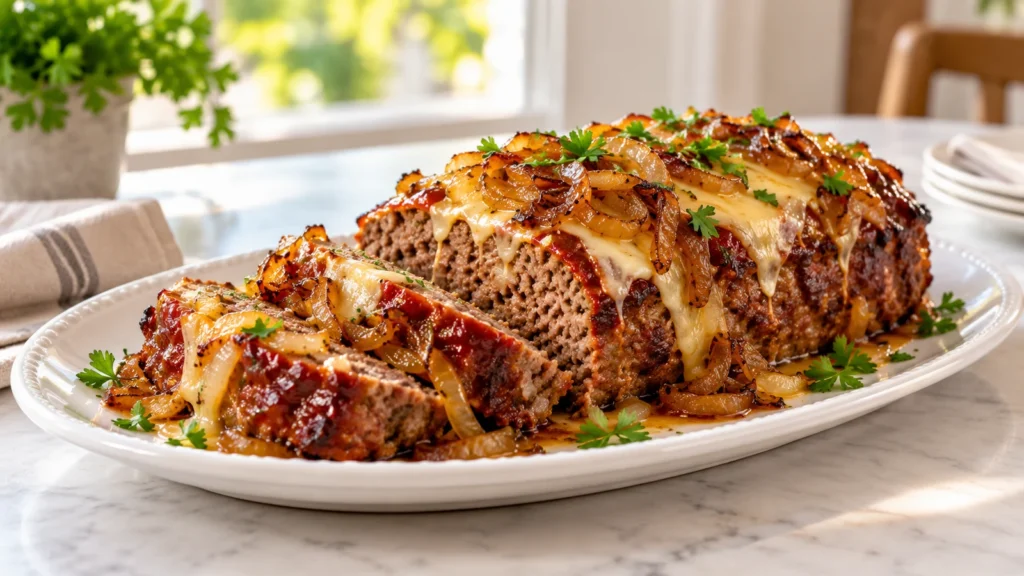
This meatloaf recipe using french onion soup delivers a moist, savory dinner with deep onion flavor and very little prep. Condensed soup seasons the beef while adding enough moisture to keep every slice tender.
The tested balance of 2 pounds of beef, one can of soup, eggs, and breadcrumbs creates a loaf that holds together without becoming dense. A tangy meatloaf glaze finishes it with familiar home-style flavor.
Because the soup supplies onions, broth, and seasoning in one ingredient, this meatloaf recipe using french onion soup is especially practical for busy evenings. The mixture takes about 15 minutes to assemble, and the loaf can be shaped on a baking sheet or baked in a loaf pan.
Table of Contents
Why You’ll Love This Recipe
- Juicy and flavorful: Onion-rich soup adds moisture and seasoning throughout the loaf.
- Easy preparation: Everything comes together in about 15 minutes.
- Reliable texture: The ingredient ratios produce neat slices without making the meatloaf tough.
- Flexible: Choose a ketchup glaze, a cheese topping, or simple pantry substitutions.
- Family-friendly: The familiar sweet-savory glaze balances the rich onion flavor without overpowering it.
- Good for leftovers: Chilled slices hold together well for sandwiches and quick reheated meals.
Ingredients
- 2 pounds (907 g) 85% to 90% lean ground beef
- 1 can (10.5 ounces/298 g) condensed French onion soup, divided
- 2 large eggs, lightly beaten
- 1 cup (60 g) plain breadcrumbs
- 1 tablespoon Worcestershire sauce
- 1 teaspoon garlic powder
- 1/2 teaspoon black pepper
- 1/2 teaspoon kosher salt, optional
- 1/3 cup ketchup
- 1 tablespoon packed brown sugar
- 1 teaspoon Dijon mustard
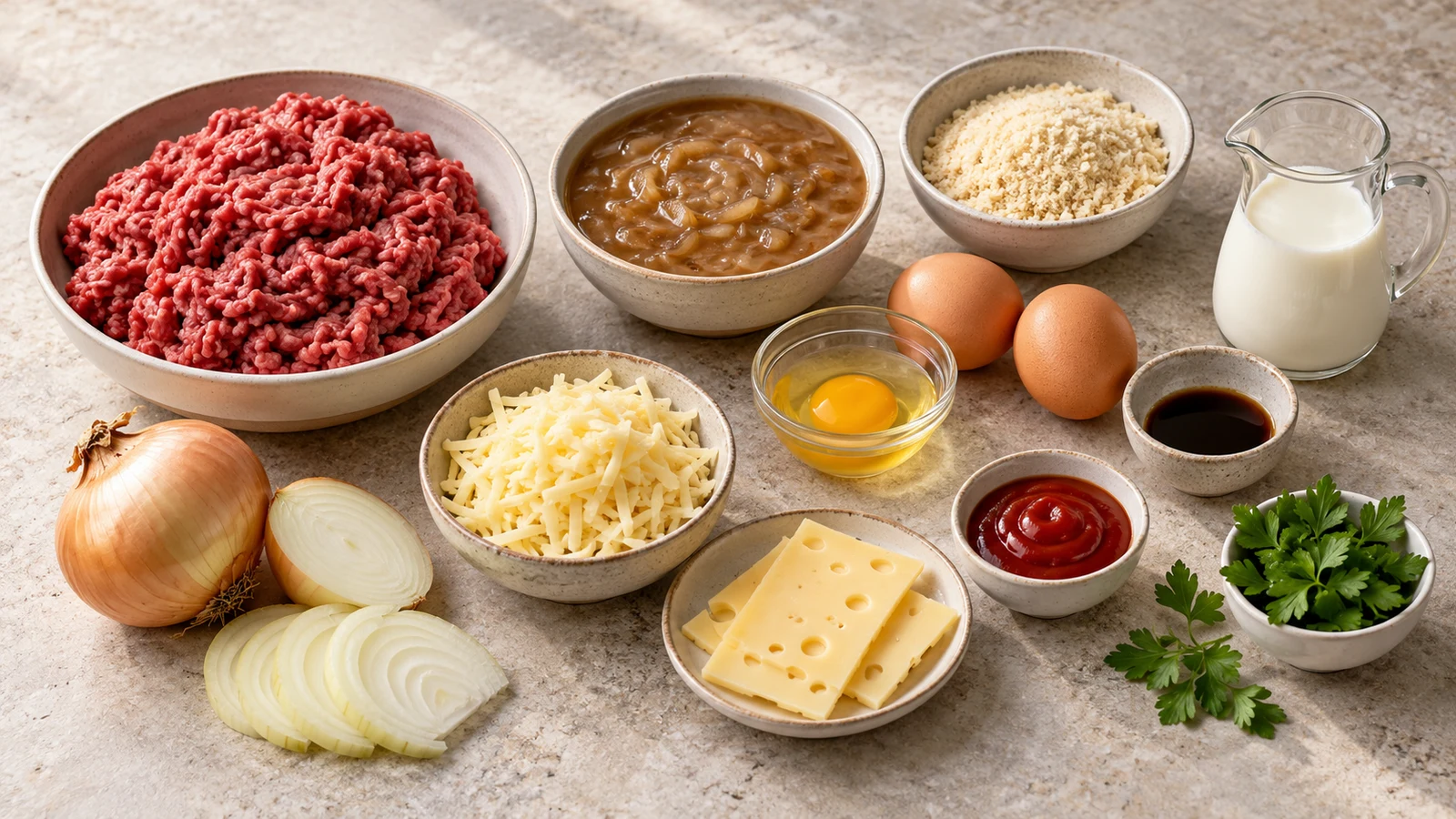
What Each Ingredient Does
Ground beef provides the structure and rich flavor. Beef that is 85% to 90% lean has enough fat to remain tender without releasing an excessive amount of grease. Extra-lean beef may work, but it is less forgiving if the loaf stays in the oven too long.
Eggs and breadcrumbs bind the loaf. Letting the crumbs absorb the soup before adding the beef distributes moisture evenly and reduces the temptation to overmix. Worcestershire sauce, garlic powder, and black pepper deepen the savory flavor already present in the condensed soup.
The ketchup, brown sugar, Dijon mustard, and reserved soup form a balanced glaze. Ketchup brings acidity, brown sugar softens the tang, and mustard adds gentle sharpness. Reserving part of the soup carries the onion flavor from the center of the loaf to its glossy surface.
Condensed Soup, Prepared Soup, or Dry Mix?
Condensed French onion soup is concentrated but still contains liquid, onions, and broth. Use one undiluted 10.5-ounce can for this recipe; do not add the water suggested for serving it as soup. Reserve about 1/4 cup for the glaze and add the remainder to the beef mixture.
Prepared or ready-to-serve soup contains considerably more water. If using it, measure 3/4 cup, simmer it until reduced to 1/2 cup, cool it, and use it all in the meat mixture. Skip the reserved soup in the glaze and increase the ketchup to 1/2 cup.
Dry onion soup mix is concentrated seasoning rather than canned soup. Substitute one 1-ounce packet plus 1/2 cup low-sodium beef broth. Omit the added salt because the mix is usually salty. These adjustments prevent a watery, overly seasoned, or dry loaf.
The same distinction matters when reading a crock pot french onion soup recipe or a french onion soup rice recipe. Condensed, prepared, and dry products contribute different amounts of liquid and salt, so they should not be exchanged measure for measure without an adjustment.
How to Make a meatloaf recipe using french onion soup
- Prepare the oven: Heat the oven to 350°F (175°C). Line a rimmed baking sheet with parchment or lightly grease a 9-by-5-inch loaf pan.
- Combine the binders: In a large bowl, stir together the eggs, breadcrumbs, Worcestershire sauce, garlic powder, pepper, optional salt, and all but 1/4 cup of the condensed soup. Let the mixture stand for 3 minutes so the crumbs absorb the liquid.
- Add the beef: Crumble the lean ground beef over the mixture. Fold gently with clean hands or a fork just until evenly combined; compacting or overmixing makes meatloaf dense.
- Shape the loaf: Form a free-standing loaf about 9 inches long and 4 inches wide on the baking sheet. Alternatively, place it loosely in the loaf pan without pressing it firmly into the corners.
- Make the glaze: Mix the reserved soup, ketchup, brown sugar, and Dijon. Spread half over the loaf.
- Bake: Cook for 45 minutes, spread on the remaining glaze, and bake for another 15 to 25 minutes.
- Check and rest: Insert an instant-read thermometer into the center without touching the pan. Remove the loaf when the meatloaf internal temperature reaches 160°F (71°C), then rest it for 10 minutes before slicing.
Cooking Time and Doneness
A two-pound loaf generally needs 60 to 70 minutes at 350°F (175°C), but its thickness and the pan material affect timing. Color alone cannot confirm doneness, as explained in the USDA guidance on the color of cooked ground beef.
For safe serving, measure the center with a food thermometer and cook ground beef to 160°F (71°C). The USDA’s ground beef safety guidance provides additional handling and storage information.
Begin checking near the early end of the time range, especially when using a dark metal pan or shaping a wide, shallow loaf. Insert the thermometer from the side toward the center if the glaze makes the top difficult to pierce cleanly.
Expert Tips for Tender, Neat Slices
- Choose the right beef: Use 85% to 90% lean beef. Extra-lean beef can turn dry, while fattier meat may leave the loaf greasy.
- Hydrate the crumbs: The 3-minute pause gives the breadcrumbs time to absorb liquid before the beef is added.
- Keep mixing gentle: Fold only until no large streaks of binder remain. Squeezing or kneading the mixture creates a firm texture.
- Shape evenly: A loaf with consistent thickness cooks more uniformly than one with a tall center and thin ends.
- Glaze twice: The first layer adheres during baking, while the second produces a fresher, glossy finish.
- Use a thermometer: Accurate temperature prevents both undercooking and the dryness caused by unnecessary extra baking.
- Rest before cutting: Ten minutes lets the hot juices settle and gives the binders time to firm.
These small details make a meatloaf recipe using french onion soup dependable rather than merely convenient. For another established soup-based approach, see Campbell’s meatloaf recipe technique.
Choosing a Baking Pan
A free-form loaf on a rimmed sheet exposes more surface area to the oven, encouraging browning and allowing rendered fat to drain. Keep the loaf about 9 inches long and 4 inches wide so the stated cooking range remains useful.
A 9-by-5-inch loaf pan produces straight sides and uniform slices. Place it on a rimmed baking sheet in case the juices bubble over, and avoid packing the mixture tightly into the corners. An oven-safe skillet or shallow baking dish also works when a loaf pan is unavailable.
Variations and Substitutions
French Onion and Gruyère Meatloaf
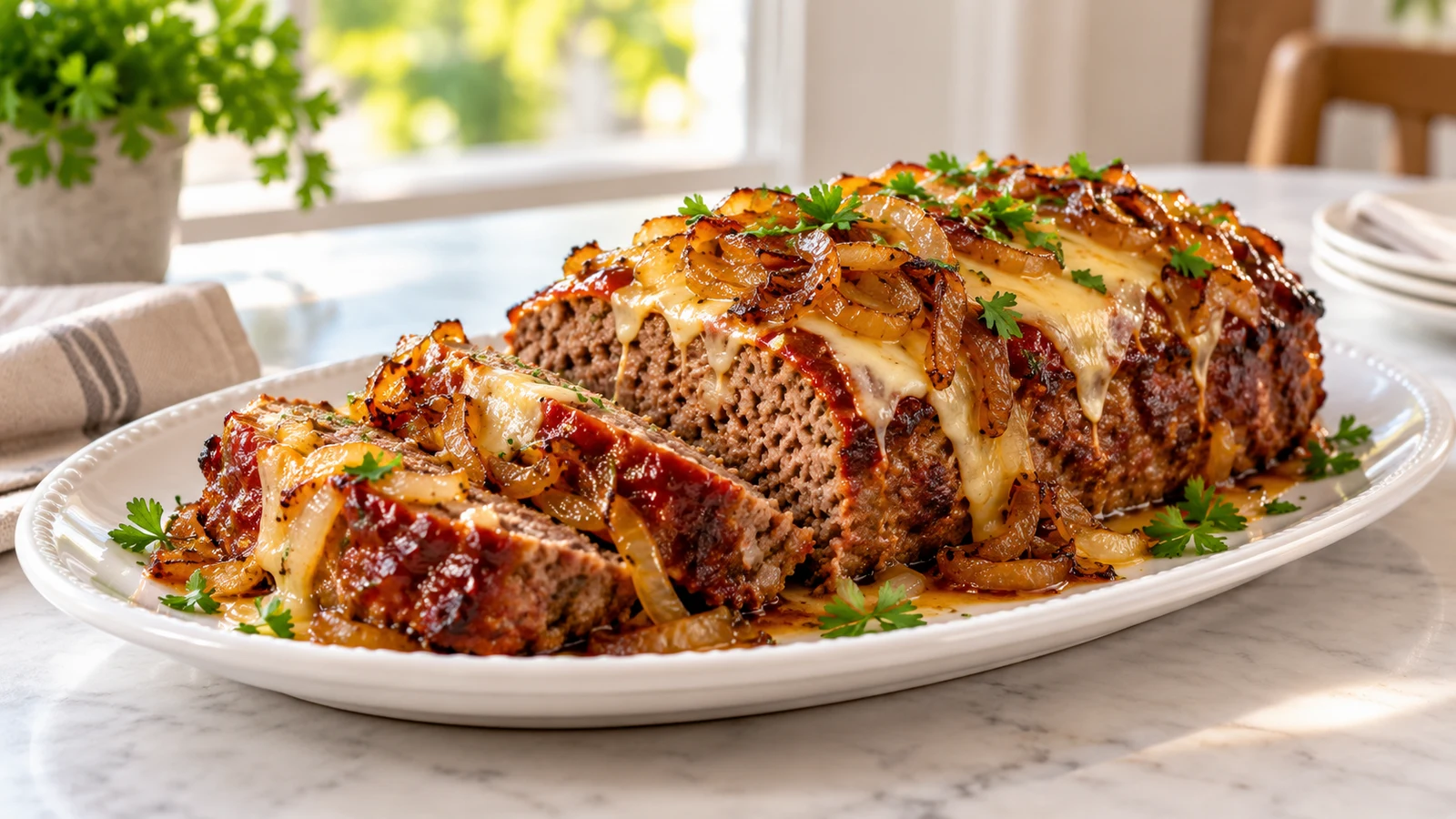
For a French bistro-style variation, sauté two thinly sliced onions in 1 tablespoon butter over medium-low heat for 25 to 30 minutes, until deeply golden. Fold half of the caramelized onions into the meat and place the rest on top during the final 10 minutes with 3/4 cup shredded Gruyère cheese.
This topping borrows its inspiration from a french onion soup with gruyere cheese recipe, but the base quantities, temperature, and doneness standard stay unchanged. Swiss, provolone, or mozzarella can replace Gruyère cheese.
Dairy-Free and Gluten-Free Options
For a dairy-free loaf, use olive oil for the optional caramelized onions and omit the cheese or choose a dairy-free melting cheese. The original ketchup-glazed meatloaf contains no added cheese, but packaged ingredients should still be checked for individual dietary needs.
For gluten-free meatloaf, use certified gluten-free breadcrumbs, Worcestershire sauce, and soup or soup mix. Product formulas vary, so check every label. You can also replace breadcrumbs with 3/4 cup certified gluten-free quick oats.
Classic or Cheese-Topped Finish
Prefer a classic finish? Keep the ketchup-glazed version as written. For a cheese-topped loaf, omit the glaze, spread 1/3 cup condensed soup over the top, and add 3/4 cup cheese during the last 10 minutes.
A french onion soup with gruyere cheese recipe traditionally relies on a browned cheese cap. On meatloaf, adding cheese only near the end gives it time to melt without becoming hard or excessively dark.
Ground Turkey Variation
Ground turkey can replace the beef, but choose turkey with some fat and verify its safe temperature separately. Its softer texture makes gentle shaping especially important. Chilling the shaped loaf for 20 minutes can help it remain stable before baking.
Make-Ahead Instructions
To prepare this meatloaf recipe using french onion soup in advance, assemble and shape the uncooked loaf up to one day ahead. Cover it well and refrigerate it promptly. Keep the glaze in a separate covered container so the top does not become wet during storage.
When ready to cook, uncover the loaf, add the first layer of glaze, and transfer it directly from the refrigerator to the heated oven. Add a few minutes to the baking time and rely on the center temperature rather than the clock.
You can also measure the dry seasonings and combine the glaze one day ahead. Keep the glaze refrigerated, then stir it before spreading. Do not leave raw ground beef at room temperature while organizing side dishes or heating the oven.
Troubleshooting Common Problems
Why Is My Meatloaf Dry?
Dryness usually comes from very lean beef, excess breadcrumbs, or overcooking. Use 85% to 90% lean beef, measure the crumbs accurately, and remove the loaf when its center reaches 160°F (71°C). Resting preserves more juice inside each slice.
Why Is the Texture Dense?
Overmixing and packing are the most common causes. Crumble the beef over the hydrated binder, fold it gently, and stop as soon as the ingredients look evenly distributed. Shape the loaf without compressing it.
Why Is There Too Much Grease?
Very fatty beef releases more grease than the breadcrumbs can manage. Choose leaner beef and bake the loaf free-form so the rendered fat can move away from the meat. If using a loaf pan, carefully drain excess fat before slicing.
Why Does the Loaf Crumble?
Include both eggs, allow the crumbs to hydrate for 3 minutes, and use the full binding quantities. A loaf sliced immediately after baking is also more likely to break. Give it the complete 10-minute rest.
Why Is the Mixture Too Wet?
This often happens when ready-to-serve soup is used as though it were condensed soup. Follow the reduction directions for prepared soup, or use the undiluted 10.5-ounce can specified for this meatloaf recipe using french onion soup.
Why Does It Taste Too Salty?
Soup and Worcestershire sauce already contain salt, and brands differ. Treat the additional 1/2 teaspoon kosher salt as optional. Omit it when using dry onion soup mix or a particularly salty condensed soup.
Serving Ideas
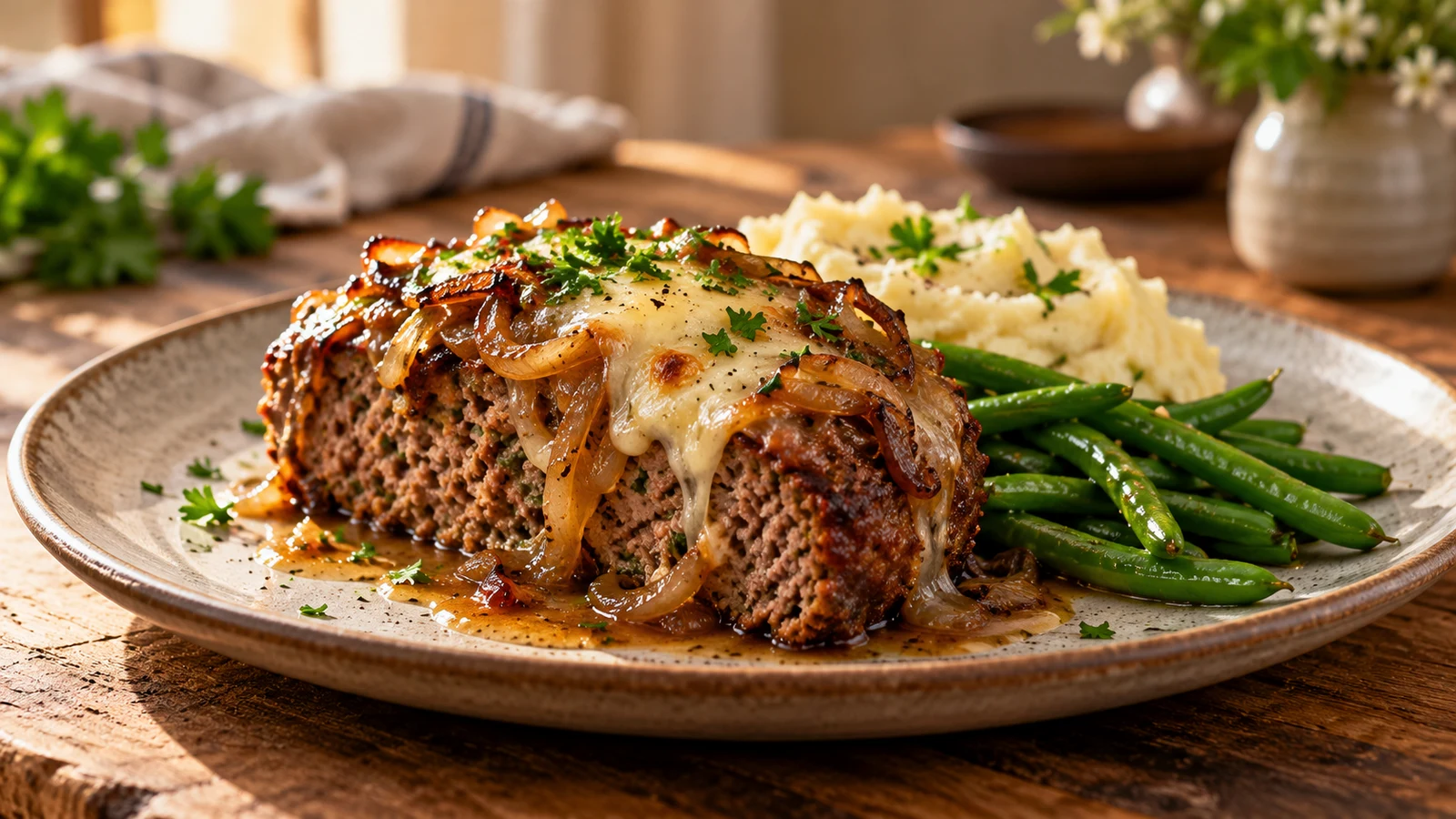
Serve thick slices with easy creamy mashed potatoes for a classic comfort-food plate. Green beans, peas, steamed broccoli, or a crisp salad add freshness and color.
For a hands-off side, pair the meatloaf with roasted potatoes and carrots. Their caramelized edges complement the savory onion glaze without competing with it.
A french onion soup rice recipe can also inspire a simple rice side for diners who prefer grains to potatoes. Keep the side moderately seasoned because the meatloaf and glaze already provide concentrated savory flavor.
For a lighter plate, serve smaller slices beside roasted vegetables or dressed greens. Leftovers make excellent toasted sandwiches, patty melts, or crumbled fillings for baked potatoes.
How to Store, Freeze, and Reheat
Cool leftovers promptly and refrigerate them in an airtight container for up to four days. Store individual slices with a little space between them, or separate stacked slices with parchment so they remain intact.
Reheat covered slices at 325°F (165°C) with a spoonful of broth for 15 to 20 minutes. For a faster option, microwave individual slices at 50% power until hot. Lower power helps the meat warm more evenly without making the edges rubbery.
To freeze, wrap the cooled whole loaf or individual slices tightly and place them in a freezer-safe container for up to three months. Label the container with the date, then thaw the meatloaf overnight in the refrigerator before reheating.
Freezing individual portions makes this meatloaf recipe using french onion soup especially useful for planned lunches. Reheat only what you need, and keep the remaining portions frozen rather than thawing and warming the entire loaf repeatedly.
Frequently Asked Questions
Can I make this meatloaf recipe using french onion soup with only 1 pound of beef?
Yes. Halve every ingredient, shape a smaller loaf, and begin checking it after 35 minutes. Confirm that the center reaches 160°F (71°C). You can find more simple meals using one pound of ground beef when you need additional dinner options.
Should I cover meatloaf while it bakes?
No. Leaving it uncovered helps the surface brown and the glaze set. If the top darkens too quickly, loosely cover it with foil near the end.
Can I use ground turkey?
Yes, but choose turkey with some fat and verify its safe temperature separately. The texture will be softer, so chilling the shaped loaf for 20 minutes can make it easier to handle.
Why does the meatloaf need to rest?
A 10-minute rest allows the juices to redistribute and the binders to firm, producing moister, cleaner slices. Transfer the loaf carefully, then leave it undisturbed before cutting with a sharp knife.
Can I use a crock pot french onion soup recipe as the soup ingredient?
A finished crock pot french onion soup recipe is usually too diluted to replace condensed soup directly. If it has a ready-to-serve consistency, measure 3/4 cup, reduce it to 1/2 cup, cool it, and follow the prepared-soup adjustment described above.
Is a french onion soup chicken recipe seasoning blend interchangeable?
Not automatically. A french onion soup chicken recipe may use dry mix, condensed soup, or prepared soup in different proportions. Identify the exact product first, then use the matching substitution guidance so the meatloaf does not become wet or salty.
Can I serve this with a french onion soup rice recipe?
Yes. A french onion soup rice recipe makes a savory side, especially when balanced with a green vegetable or crisp salad. Since both dishes can contain concentrated soup, taste before adding extra salt to the rest of the meal.
Can I add the topping from a french onion soup with gruyere cheese recipe?
Yes. To echo a french onion soup with gruyere cheese recipe, add caramelized onions and 3/4 cup shredded Gruyère during the final 10 minutes. Use the variation instructions above and keep the original cooking temperature and safe final temperature.
Can I omit the glaze?
Yes. The loaf will still cook properly without the ketchup glaze. Use the cheese-topped option, spread 1/3 cup condensed soup over the surface, or leave the top plain and monitor the internal temperature as usual.
Can I prepare mini meatloaves?
Yes, divide the mixture evenly and shape portions of similar size so they cook at the same rate. They will finish sooner than a full loaf, so check their centers early and remove them when they reach 160°F (71°C).
Related French Onion Recipes
- A crock pot french onion soup recipe offers slow-cooked flavor with minimal attention.
- A french onion soup chicken recipe pairs poultry with rich onion gravy.
- A french onion soup rice recipe turns pantry ingredients into an easy side dish.
- A french onion soup with gruyere cheese recipe delivers the classic broiled, bubbly topping.
If you enjoy the onion-forward character of this dinner, a crock pot french onion soup recipe is a natural cold-weather follow-up. For another main course, a french onion soup chicken recipe uses the same savory flavor profile with poultry.
A french onion soup rice recipe is useful when you want an easy side, while a french onion soup with gruyere cheese recipe showcases the traditional combination of deeply flavored onions, bread, and melted cheese.
Recipe Card
Description: This meatloaf recipe using french onion soup combines seasoned beef, tender breadcrumbs, and a tangy onion-ketchup glaze for dependable weeknight comfort food.
Preparation time: 15 minutes
Cooking time: 60 to 70 minutes
Resting time: 10 minutes
Yield: 8 servings
Equipment: Large bowl, measuring cups and spoons, rimmed baking sheet or 9-by-5-inch loaf pan, small bowl, and instant-read thermometer.
Ingredients: 2 pounds 85% to 90% lean ground beef; one 10.5-ounce can condensed French onion soup, divided; 2 eggs; 1 cup plain breadcrumbs; 1 tablespoon Worcestershire sauce; 1 teaspoon garlic powder; 1/2 teaspoon each black pepper and optional kosher salt; 1/3 cup ketchup; 1 tablespoon brown sugar; and 1 teaspoon Dijon mustard.
- Heat the oven to 350°F (175°C) and prepare a rimmed sheet or loaf pan.
- Mix the eggs, crumbs, seasonings, and all but 1/4 cup soup; rest for 3 minutes.
- Gently fold in the beef, shape the loaf, and combine the remaining ingredients for the glaze.
- Glaze the loaf and bake for 45 minutes. Add the remaining glaze and bake 15 to 25 minutes longer.
- Confirm a center temperature of 160°F (71°C), then rest for 10 minutes.
Estimated nutrition per serving: 385 calories, 27 g protein, 20 g fat, 22 g carbohydrates, and 780 mg sodium. Values vary by beef, soup, breadcrumbs, and glaze brands.
Notes: Use the soup undiluted, mix gently, and rely on temperature rather than color or cooking time alone. Reduce or omit added salt when using highly seasoned soup.
A Reliable French Onion Meatloaf Dinner
With its straightforward method, balanced ratios, and flexible toppings, this meatloaf recipe using french onion soup is an approachable dinner that slices neatly and reheats beautifully. Careful mixing, accurate temperature checks, and a short rest are the keys to its tender texture.
Serve it with potatoes, vegetables, salad, or rice, then save any extra slices for easy lunches. Whether you keep the classic glaze or add caramelized onions and Gruyère, the result is practical comfort food with satisfying onion flavor.
There are no reviews yet. Be the first one to write one.
Reviews
Reader reviews are managed separately (outside this build).