Cake
Old Bay Seasoning Crab Cake Recipe: Foolproof & Delicious
Make this old bay seasoning crab cake recipe with lump crab, minimal filler, and pan-fried or baked options. Enjoy golden, tender cakes every time.
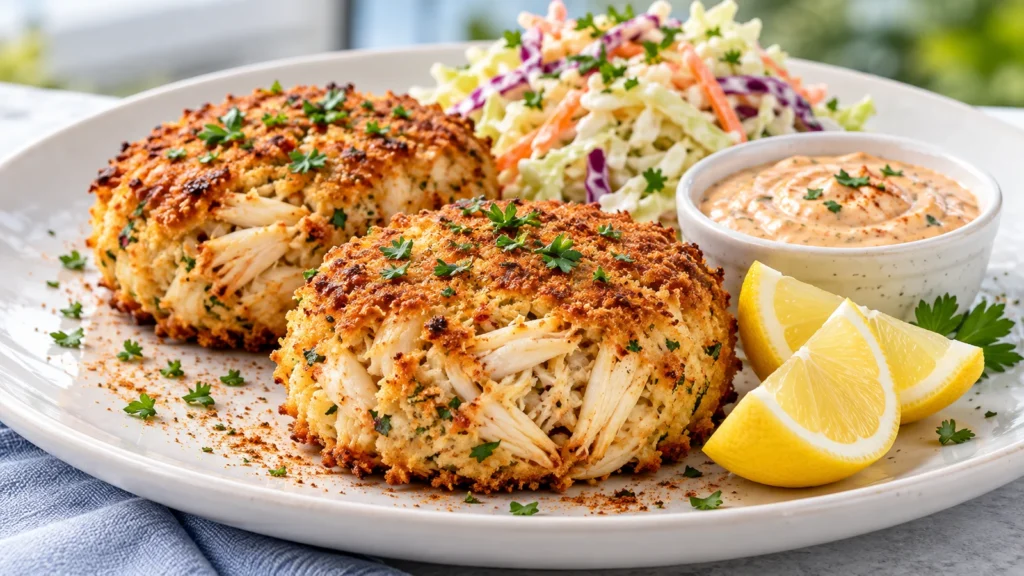
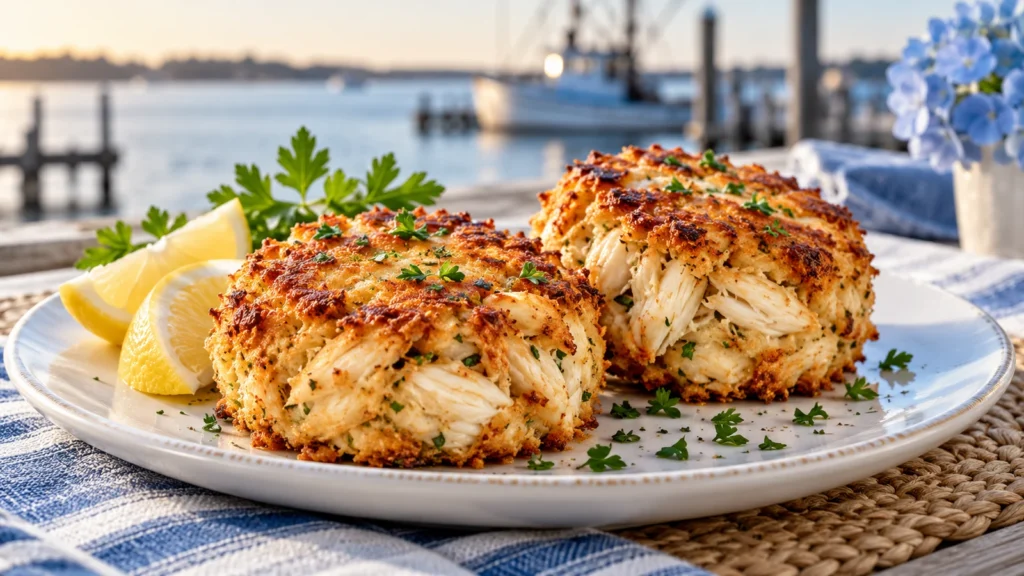
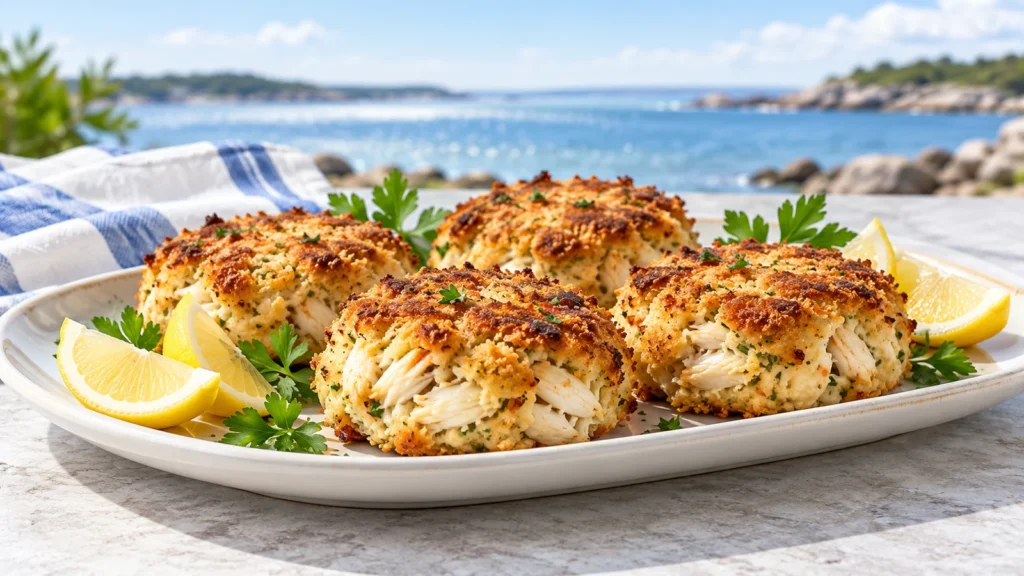
This old bay seasoning crab cake recipe delivers tender, well-seasoned crab cakes with crisp golden edges and very little filler. The mixture is gently folded and chilled before cooking, helping the patties hold together without hiding the sweet crab flavor.
This old bay crab cake recipe includes skillet and oven directions, practical troubleshooting, serving suggestions, and a quick sauce. It is designed for home cooks who want dependable results while preserving the delicate texture of lump crabmeat. Jump to the recipe card.
Table of Contents
Why You’ll Love This Recipe
- Crab-forward: Minimal filler keeps lump crabmeat at the center of every bite.
- Reliable: Exact chilling time and measured patties prevent fragile, uneven cakes.
- Flexible: Pan-fry the cakes, bake them, or finish them briefly under the broiler.
- Make-ahead friendly: Shape and refrigerate the patties before cooking.
- Easy to serve: Lemon, remoulade, vegetables, and simple salads all complement the cakes.
The appeal of this old bay seasoning crab cake recipe is balance. Mayonnaise and egg provide enough structure, panko absorbs excess moisture, and lemon brightens the rich crab without overwhelming it. Old Bay adds familiar savory warmth while allowing the seafood to remain the main flavor.
Ingredients
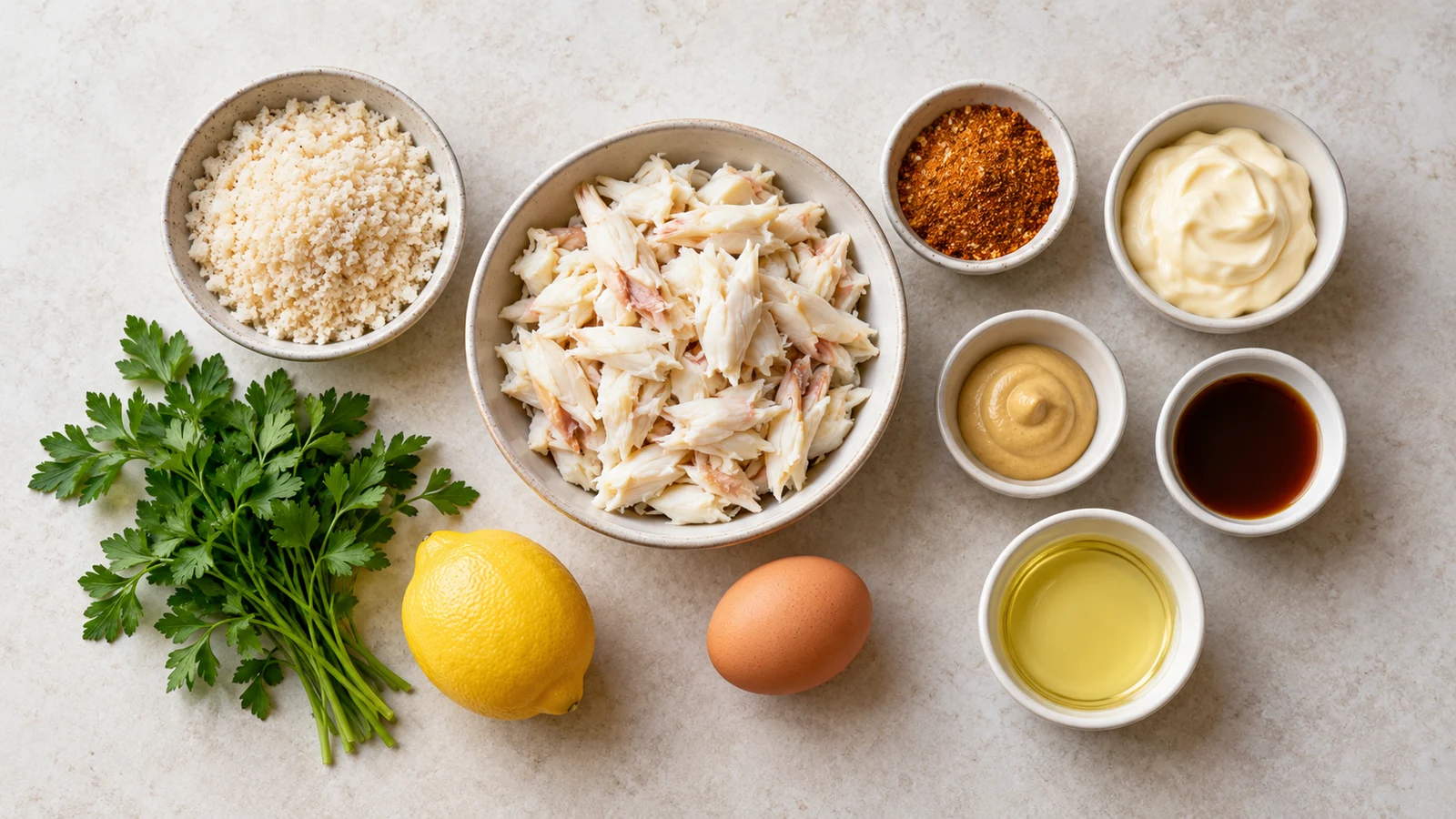
- 1 pound (454 g) lump crabmeat, fresh, refrigerated pasteurized, or well-drained canned
- 1 large egg
- 1/4 cup mayonnaise
- 1 teaspoon Dijon or yellow mustard
- 1 teaspoon Worcestershire sauce
- 1 1/2 teaspoons Old Bay seasoning, plus more for serving
- 1 teaspoon finely grated lemon zest
- 1 tablespoon fresh lemon juice
- 2 tablespoons finely chopped parsley, plus more for garnish
- 1/2 cup panko breadcrumbs or finely crumbled soft white bread
- 2 tablespoons neutral oil for frying, or 2 tablespoons melted butter for baking
- Lemon wedges, for serving
- For quick remoulade: 1/2 cup mayonnaise, 1 tablespoon Dijon mustard, 1 tablespoon lemon juice, 1 teaspoon hot sauce, 1 teaspoon pickle relish, and 1/2 teaspoon Old Bay seasoning
How to Choose and Prepare the Crab
Choosing crab: Lump crabmeat provides large, delicate pieces and a sweeter presentation associated with Maryland crab cakes. Claw meat is darker, softer, and more strongly flavored; it is also economical and works well when mixed half-and-half with lump crab.
Spread the meat on a rimmed plate and gently feel through it with clean fingertips. Remove translucent cartilage or hard shell fragments without shredding the lumps. Drain away packing liquid before measuring the remaining ingredients, since excess moisture can make an old bay crab cake recipe difficult to shape.
Fresh, refrigerated pasteurized, and canned crab can all work. The best choice smells clean and mild rather than sharply fishy. Keep it cold until mixing and handle it gently so the finished cakes contain visible pieces instead of a uniform seafood paste.
What Old Bay Adds
Old Bay supplies celery salt, paprika, and warming spices in one balanced blend. Its salt and spice affect the whole mixture, so taste the optional sauce before adding any extra seasoning. For details about the blend, see the official Old Bay brand guide.
In an old bay seasoning crab cake recipe, the seasoning should support the crab rather than dominate it. The measured amount gives every patty consistent flavor, while a light dusting at serving adds aroma and color without changing the tender interior.
How to Make This Old Bay Seasoning Crab Cake Recipe
- Make the binder: In a large bowl, whisk the egg, mayonnaise, mustard, Worcestershire sauce, Old Bay, lemon zest, lemon juice, and parsley until smooth.
- Fold gently: Add the crabmeat and panko. Using a flexible spatula, fold from the bottom 6–8 times, just until evenly moistened. Do not stir vigorously or crush the crab lumps.
- Adjust if needed: The mixture should hold when lightly squeezed. If it looks wet or slumps immediately, fold in additional panko 1 tablespoon at a time, using no more than 1/4 cup extra. Too much breadcrumb makes crab cakes dry and bready.
- Chill: Cover and refrigerate for 30–60 minutes. This hydrates the crumbs and firms the fat and binder, making the cakes easier to shape and turn.
- Shape: Divide the mixture into six portions of about 1/2 cup or 3 ounces (85 g) each. Form patties approximately 3 inches wide and 1 inch thick. Press only firmly enough to hold them together.
- Pan-fry: Heat the neutral oil in a large nonstick or well-seasoned skillet over medium heat. Cook without crowding for 4–5 minutes per side, turning once with a thin spatula, until deep golden and hot in the center.
- Or bake: Heat the oven to 425°F (220°C). Arrange the patties on a parchment-lined baking sheet and brush with melted butter. Bake for 12–15 minutes, carefully turn, and bake for another 5–7 minutes. For more color, broil 6 inches from the heat for 1–2 minutes while watching constantly. See this detailed recipe for crab cakes in the oven for more baked-method guidance.
- Check and serve: The cakes are ready when browned, firm around the edges, steaming in the center, and at least 145°F (63°C) internally. The USDA lists 145°F for fish and shellfish on its safe temperature chart. Garnish with parsley, lemon wedges, and a light dusting of Old Bay.
Expert Tips for an Old Bay Crab Cake Recipe
- Drain the crab thoroughly. Excess liquid weakens the binder. Pat especially wet crab gently with paper towels.
- Keep the lumps intact. Overmixing creates a dense texture and removes the appealing pieces of crab.
- Mix the binder first. Distributing the seasonings before adding crab prevents aggressive stirring later.
- Do not skip chilling. Warm, freshly mixed patties are more likely to spread or break.
- Measure equal portions. Uniform patties cook at a similar rate and are easier to turn.
- Turn only once. Let a full crust form before sliding a thin spatula underneath.
- Avoid excessive filler. Add extra crumbs only when the mixture truly cannot hold its shape.
Use a light touch when shaping this old bay seasoning crab cake recipe. Compressing each portion too firmly may improve its appearance before cooking, but it can produce a dense interior. Gently cup the edges and flatten the top just enough to create an even patty.
For skillet cooking, allow the oil and pan to heat before adding the cakes. The mixture should sizzle gently on contact. If the oil smokes, reduce the heat; if there is no sizzle, wait briefly so the patties do not absorb excess oil while the crust develops.
Pan-Fried or Baked Crab Cakes
Pan-frying creates the deepest, most even crust and takes less cooking time. Baking is helpful when you want to cook all six patties together with less hands-on attention. Both methods preserve the ingredients and proportions of this old bay crab cake recipe.
If baking is your priority, the linked recipe for crab cakes in the oven provides focused guidance for arranging, turning, and browning the patties. Leave space between them so hot air reaches the edges, and use the brief broiler finish only when additional color is needed.
Whichever method you choose, avoid repeatedly moving the cakes. A stable patty develops when the first side cooks undisturbed. Insert a thermometer sideways toward the center so you can check doneness without breaking the top crust.
Variations and Substitutions
Gluten-Free and Bread Options
For gluten-free crab cakes, use certified gluten-free panko and verify the Worcestershire sauce label. Finely crushed buttery crackers can replace panko, while soft white bread produces a particularly tender interior. These substitutions change the texture slightly but retain the seafood-forward character of the old bay seasoning crab cake recipe.
Mayonnaise and Herb Variations
Greek yogurt may replace up to half the mayonnaise, although the cakes will be slightly less rich. For a brighter version, add 1 tablespoon minced chives or 1 teaspoon prepared horseradish. Keep additions finely chopped so large pieces do not interrupt the binder.
Using Claw Crabmeat
Claw meat can replace lump crab entirely for a stronger seafood flavor, but its finer texture may need 1–2 tablespoons less breadcrumb. A half-lump, half-claw old bay crab cake recipe offers a useful balance of attractive pieces, robust flavor, and lower cost.
Sauce Variations
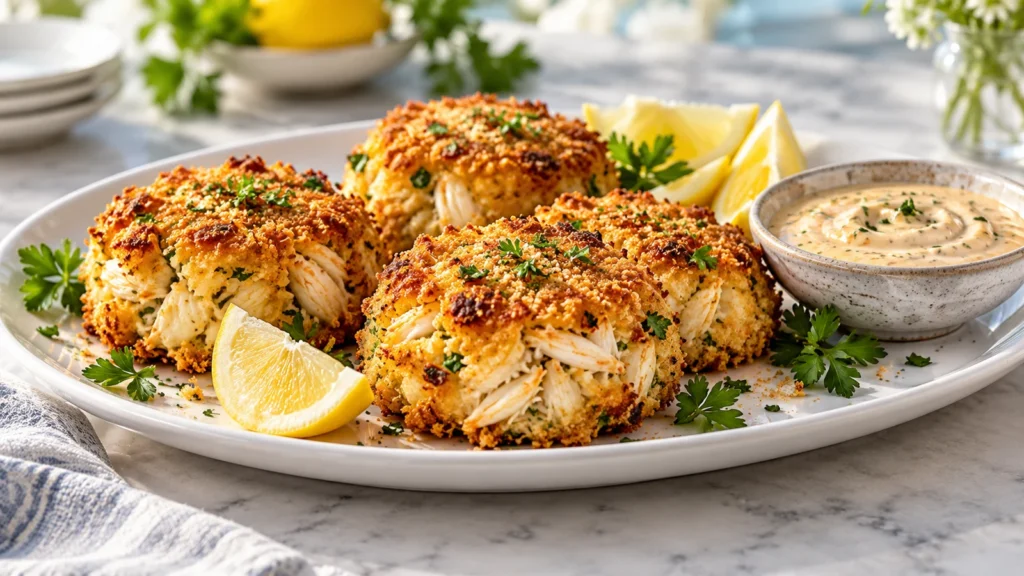
Stir the remoulade ingredients together and chill until serving. For tartar sauce, omit the mustard, hot sauce, and Old Bay, then add 2 tablespoons relish and 1 teaspoon minced capers. This crab cake sauce recipe offers additional serving options.
A good crab cake sauce recipe should complement rather than cover the seafood. Serve sauce beside the cakes so each person can add a small amount. Plain mayonnaise sharpened with lemon is another simple choice when you prefer a milder accompaniment.
Troubleshooting This Old Bay Seasoning Crab Cake Recipe
Why Are My Crab Cakes Falling Apart?
Crab cakes usually fall apart because the crab was too wet, the mixture lacked enough binder, the patties were not chilled, or they were flipped before a crust formed. If a test patty breaks, return the mixture to the bowl, fold in 1 tablespoon panko, and chill it for another 15 minutes.
Very large crab lumps can also leave gaps in a fragile patty. Do not shred them, but make sure the binder reaches throughout the mixture. Support the whole cake with a thin, wide spatula when turning it.
Why Are My Crab Cakes Dry?
Dryness commonly comes from too many breadcrumbs, forceful mixing, or cooking beyond the point when the center is hot. Add extra panko only after the squeeze test shows that it is necessary. Keep the patties 1 inch thick and begin checking them within the stated cooking time.
Why Did the Exterior Brown Too Quickly?
The skillet was probably too hot. Reduce the heat so the center warms before the crust becomes overly dark. In the oven, use the broiler only after baking and watch continuously because the buttered surface can change from golden to scorched quickly.
Why Does the Mixture Feel Too Soft?
First confirm that the crab was thoroughly drained, then complete the full 30-minute minimum chill. The panko continues absorbing moisture during that rest. If the chilled mixture still slumps, add panko in the small increments specified in the method rather than pouring in a large amount.
Serving Ideas
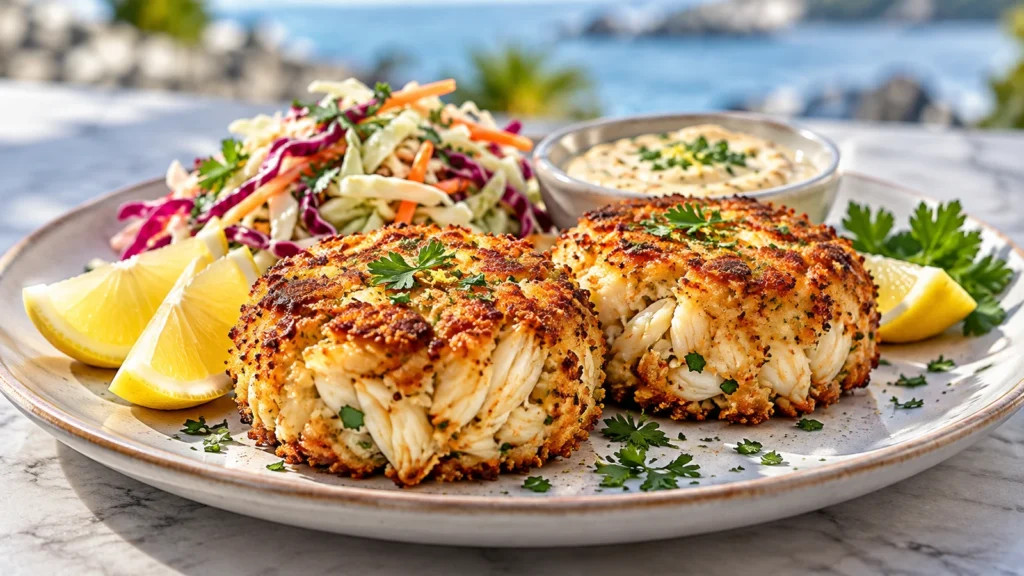
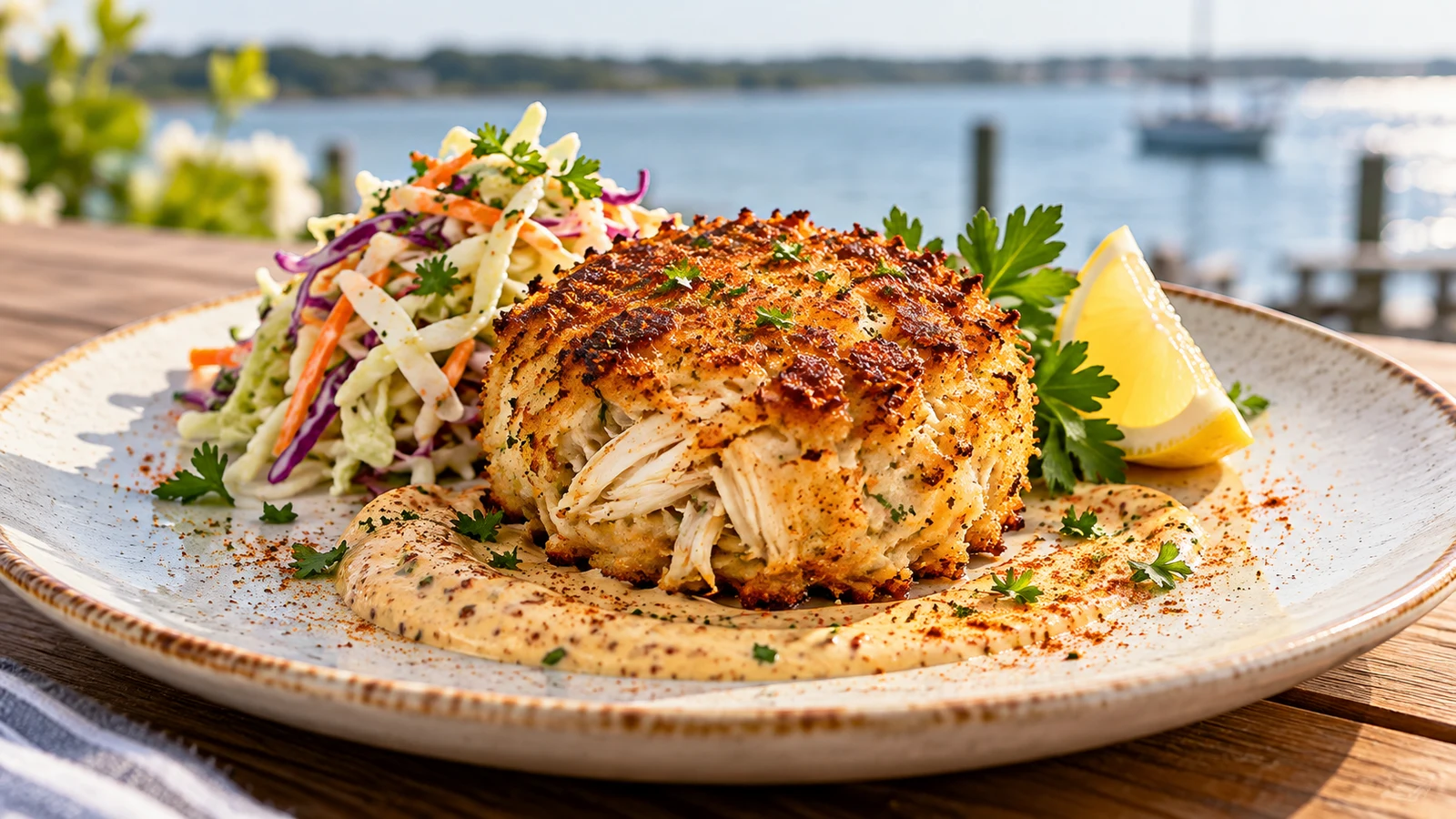
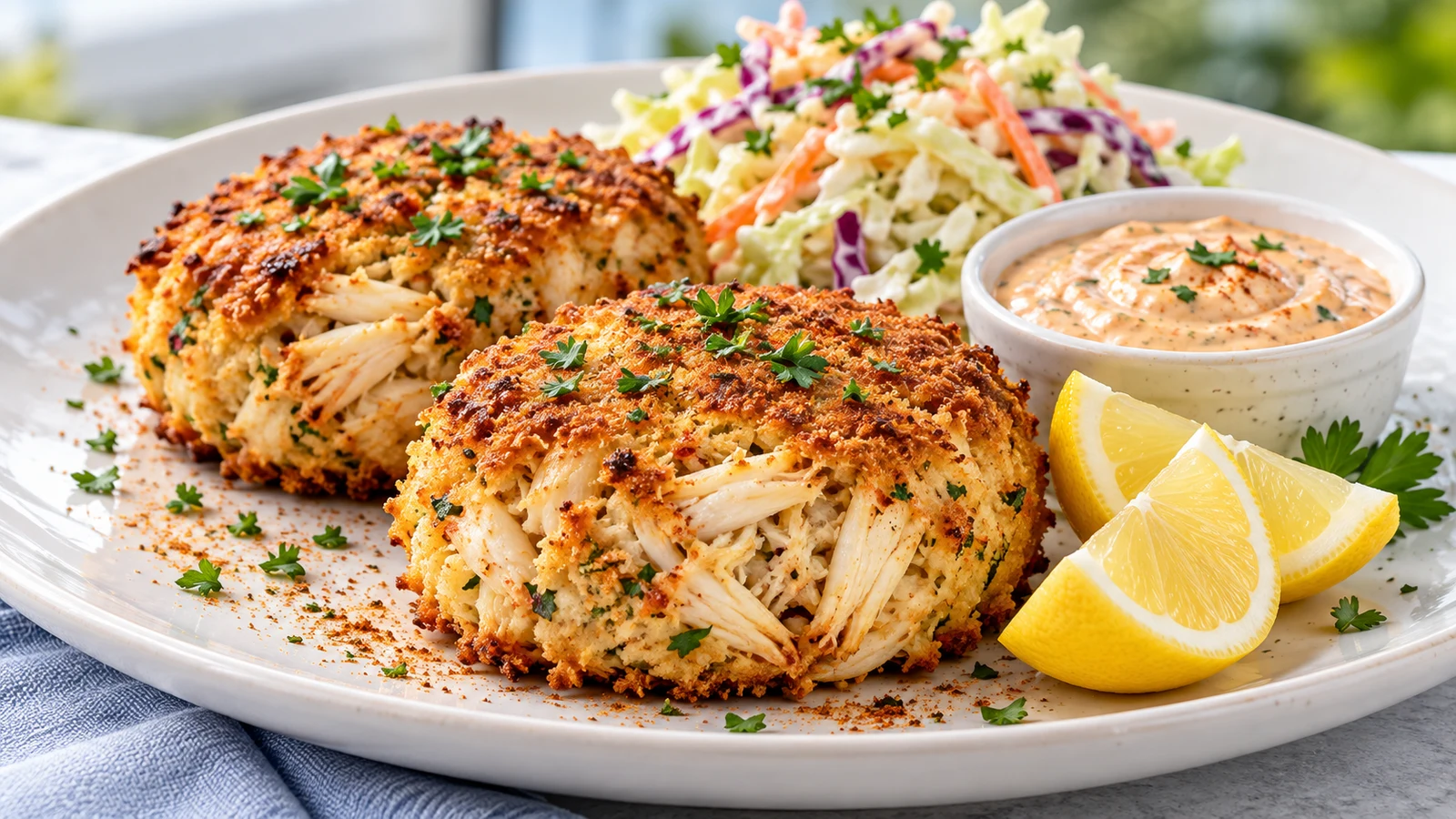
Serve the cakes with lemon wedges and remoulade for a classic presentation. Coleslaw brings cool crunch, roasted potatoes make the meal more substantial, and green beans or a simple salad provide a fresh contrast. Keep side dishes lightly seasoned so the old bay crab cake recipe remains the centerpiece.
For a casual meal, place one cake on a soft roll with lettuce and a spoonful of sauce. For an appetizer, serve smaller portions of the finished cakes with the crab cake sauce recipe on the side. Do not alter cooking solely by appearance; every portion should still reach the stated internal temperature.
A brunch plate can pair a crab cake with dressed greens and roasted potatoes. For dinner, serve two cakes per person when using the stated yield of about three servings. Fresh parsley and lemon add color without competing with the seasoning.
What Dessert Goes With Crab Cakes?
A lightly spiced carrot cake makes a comfortable finish after this savory seafood meal. The related recipe icing for carrot cake is tangy and sweet, providing contrast after the warm spices in the crab cakes. Prepare dessert separately to avoid cross-contamination with seafood.
If you are building a complete menu, make the recipe icing for carrot cake ahead and refrigerate it as directed in that separate recipe. This leaves the final minutes free for cooking the crab cakes, which have their best texture when served immediately.
Make-Ahead Instructions
You can mix and shape the uncooked patties up to 24 hours before cooking. Place them in a covered container with parchment between layers and keep them refrigerated. The extended rest helps them hold together, making this old bay seasoning crab cake recipe convenient for entertaining.
Prepare the remoulade separately and refrigerate it until needed. Keep raw patties and ready-to-eat sauce in separate covered containers, and use clean utensils for each. Cut lemon wedges and chop garnish shortly before serving for the freshest appearance.
If you plan to follow the recipe for crab cakes in the oven, arrange the chilled patties on the prepared baking sheet close to cooking time. Brush them with the specified melted butter immediately before they go into the heated oven.
How to Store and Reheat
For advance preparation, shape uncooked patties, place them in a covered container with parchment between layers, and refrigerate for up to 24 hours. Keep crab properly chilled and follow the FDA’s seafood selection and storage guidance.
Refrigerate cooked crab cakes in an airtight container for up to 3 days. Reheat them on a lightly buttered baking sheet at 350°F (175°C) for 10–15 minutes, loosely covered with foil for the first half of the time to preserve moisture. Remove the foil for the final few minutes to restore the crust.
To freeze, arrange cooked and fully cooled cakes on a tray until firm, then wrap individually and place in a freezer-safe container for up to 2 months. Thaw overnight in the refrigerator before reheating. Freezing raw patties is possible, but cooked cakes generally retain their shape more reliably.
Avoid reheating the old bay crab cake recipe repeatedly, since each cycle can dry the crab and soften the crust. Reheat only the number of cakes you intend to serve, and keep the chilled sauce separate from the hot baking sheet.
Frequently Asked Questions
Can I use canned crabmeat in this old bay seasoning crab cake recipe?
Yes. Choose a good-quality lump product, drain it thoroughly, and check carefully for shell. Because canned crab varies in moisture, add the breadcrumbs gradually and use the squeeze test before shaping. Chilling remains essential even when the canned meat seems relatively dry.
Is fresh crab better than pasteurized crab?
Fresh-picked crab can have a delicate texture and flavor, but refrigerated pasteurized lump crab is convenient and consistent. Either works well if it smells clean and mild, remains cold, and is properly drained.
How do I know when crab cakes are done?
Look for a well-browned exterior, firm edges, and a steaming-hot center. An instant-read thermometer inserted sideways into the middle should register at least 145°F (63°C). Color alone cannot confirm that the center has reached the proper temperature.
Can I prepare an old bay crab cake recipe in advance?
Yes. Shape the patties up to 24 hours ahead and refrigerate them covered. The resting time can improve cohesion, but avoid holding the raw mixture longer because seafood is perishable. Cooked cakes can also be refrigerated and reheated according to the storage directions.
Is pan-frying better than a recipe for crab cakes in the oven?
Neither method is universally better. Pan-frying produces a pronounced crust quickly, while a recipe for crab cakes in the oven cooks a full batch with less active attention. Choose according to your preferred texture, equipment, and serving schedule.
What is the best crab cake sauce recipe for these cakes?
The included remoulade is creamy, tangy, and gently spicy. If you prefer a simpler crab cake sauce recipe, use the tartar variation or lemon-brightened mayonnaise. Place it on the side so the crisp surface remains visible and each diner controls the amount.
Can I double the old bay seasoning crab cake recipe?
Yes. Double every ingredient in the same proportion and mix gently in a bowl large enough to avoid crushing the crab. Shape equal 3-ounce patties and cook them in batches without crowding the skillet or baking sheet.
Can I make smaller crab cakes for appetizers?
Yes, but smaller portions may cook more quickly than the six standard cakes. Watch the crust closely and verify that the centers reach at least 145°F (63°C). Handle small patties carefully because their edges can be more delicate.
Can I reduce the Old Bay?
You may use less if you are sensitive to salt or spice, although this changes the intended seasoning balance. Avoid compensating with extra liquid ingredients because doing so can weaken the binder. A light garnish can be offered separately at the table.
Can I serve carrot cake afterward?
Yes. Carrot cake is a separate dessert and does not affect the seafood method. Use the recipe icing for carrot cake from the related recipe when planning the menu, and store the dessert and raw crab separately during preparation.
Recipe Card
Yield: 6 crab cakes (about 3 servings)
Preparation time: 20 minutes
Chilling time: 30–60 minutes
Cooking time: 10–22 minutes
Equipment: Large bowl, whisk, flexible spatula, 1/2-cup measure, skillet or rimmed baking sheet, thin spatula, and instant-read thermometer.
Method summary: Whisk the binder ingredients, gently fold in crab and panko, chill for 30–60 minutes, and form six 3-ounce patties. Pan-fry in oil for 4–5 minutes per side, or brush with butter and bake at 425°F (220°C) for 17–22 minutes total. Cook to at least 145°F (63°C), then serve with lemon and sauce.
Approximate nutrition: One crab cake without sauce provides about 220 calories, 18 grams protein, 13 grams fat, 7 grams carbohydrate, and 650 milligrams sodium. Values vary by crab, mayonnaise, seasoning, and cooking method.
Related recipes: Explore the detailed recipe for crab cakes in the oven when baking is your preferred method, or choose the crab cake sauce recipe for more accompaniments. Planning dessert too? The recipe icing for carrot cake belongs in the related-recipes collection and is separate from the seafood preparation.
Final Notes for Reliable Crab Cakes
Serve this old bay seasoning crab cake recipe while the edges are crisp and the centers are moist, with fresh lemon and just enough sauce to complement the sweet crab. Thorough draining, gentle folding, measured portions, and a proper chill are the four details that make the method dependable.
Whether you pan-fry the old bay crab cake recipe or use the baked option, wait for the surface to set before turning and confirm the center temperature before serving. Those simple checks protect the delicate texture while producing a golden, confidently cooked result for weeknight dinners or special occasions.
Reviews
Reader reviews are managed separately (outside this build).