Cake
Luscious Red Velvet Bundt Cake Recipe That Never Fails
Bake a moist, reliable red velvet bundt cake recipe with cream cheese frosting, easy steps, and foolproof tips. Discover perfect results each time.
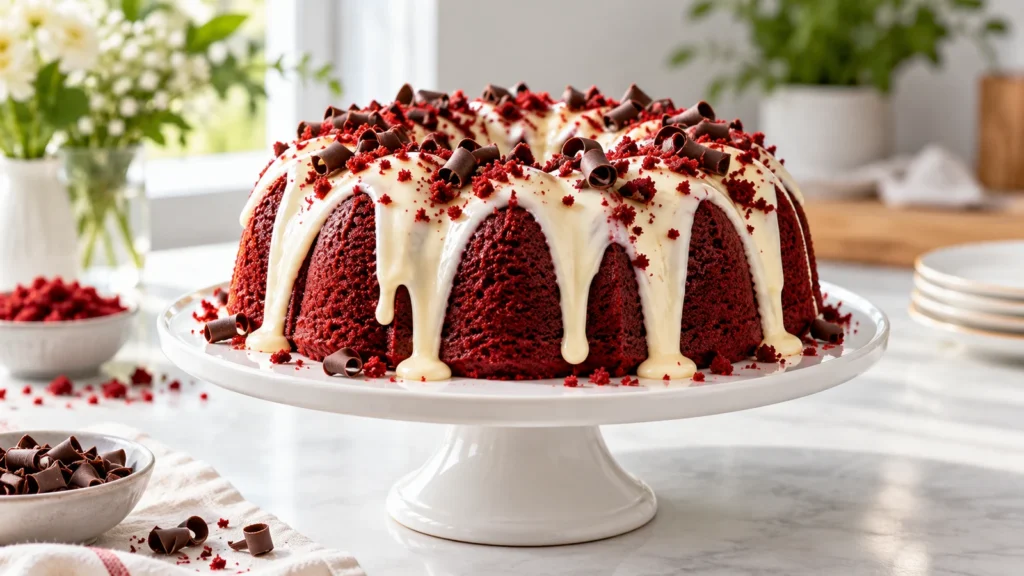
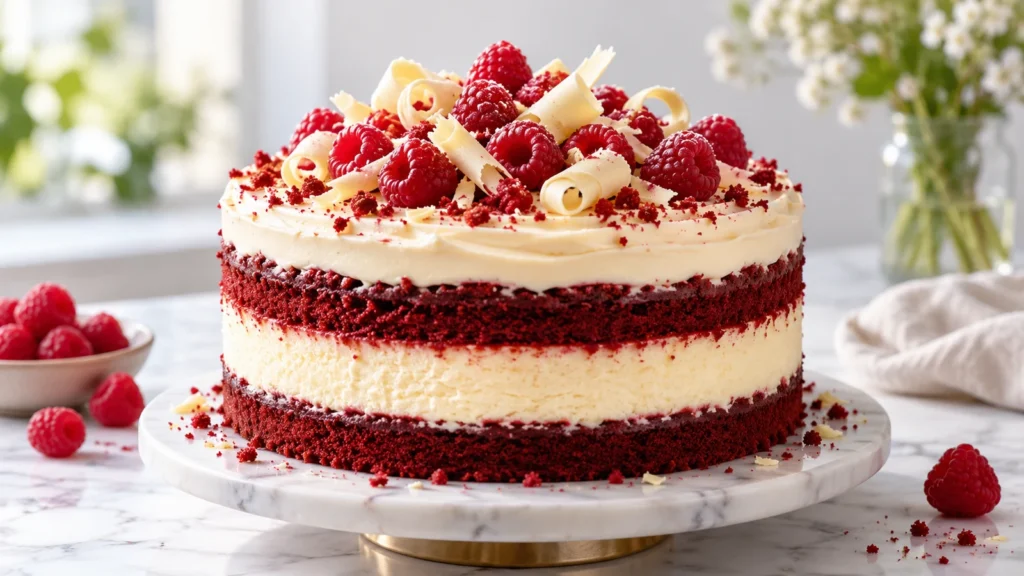
This red velvet bundt cake recipe produces a plush, moist crumb, a deep ruby color, and a smooth cream cheese glaze without complicated decorating. Careful pan preparation, weight measurements, and dependable doneness cues help the cake release cleanly every time.
The recipe is designed for a 10- to 12-cup Bundt pan and serves 12. Buttermilk and a small amount of cocoa create classic red velvet flavor, while oil and butter keep the cake tender for days. This red velvet bundt cake recipe is equally suitable for a holiday centerpiece, birthday dessert, or make-ahead weekend treat.
Table of Contents
Why You’ll Love This Red Velvet Bundt Cake Recipe
- Reliable release: A thorough pan-greasing technique protects every ridge and curve.
- Moist texture: Oil, butter, and buttermilk prevent a dry, crumbly cake.
- Clear doneness cues: Temperature, appearance, and a skewer test remove guesswork.
- Make-ahead friendly: The unfrosted cake freezes beautifully.
- Easy finish: The pourable glaze highlights the Bundt shape without piping.
Unlike a layer cake, this red velvet bundt cake recipe does not require leveling, stacking, or precise decorating. The shaped pan creates an attractive design, and the glaze naturally settles into the ridges. The combination of cocoa, vanilla, vinegar, and buttermilk delivers the mild chocolate flavor and gentle tang associated with traditional red velvet.
Ingredients
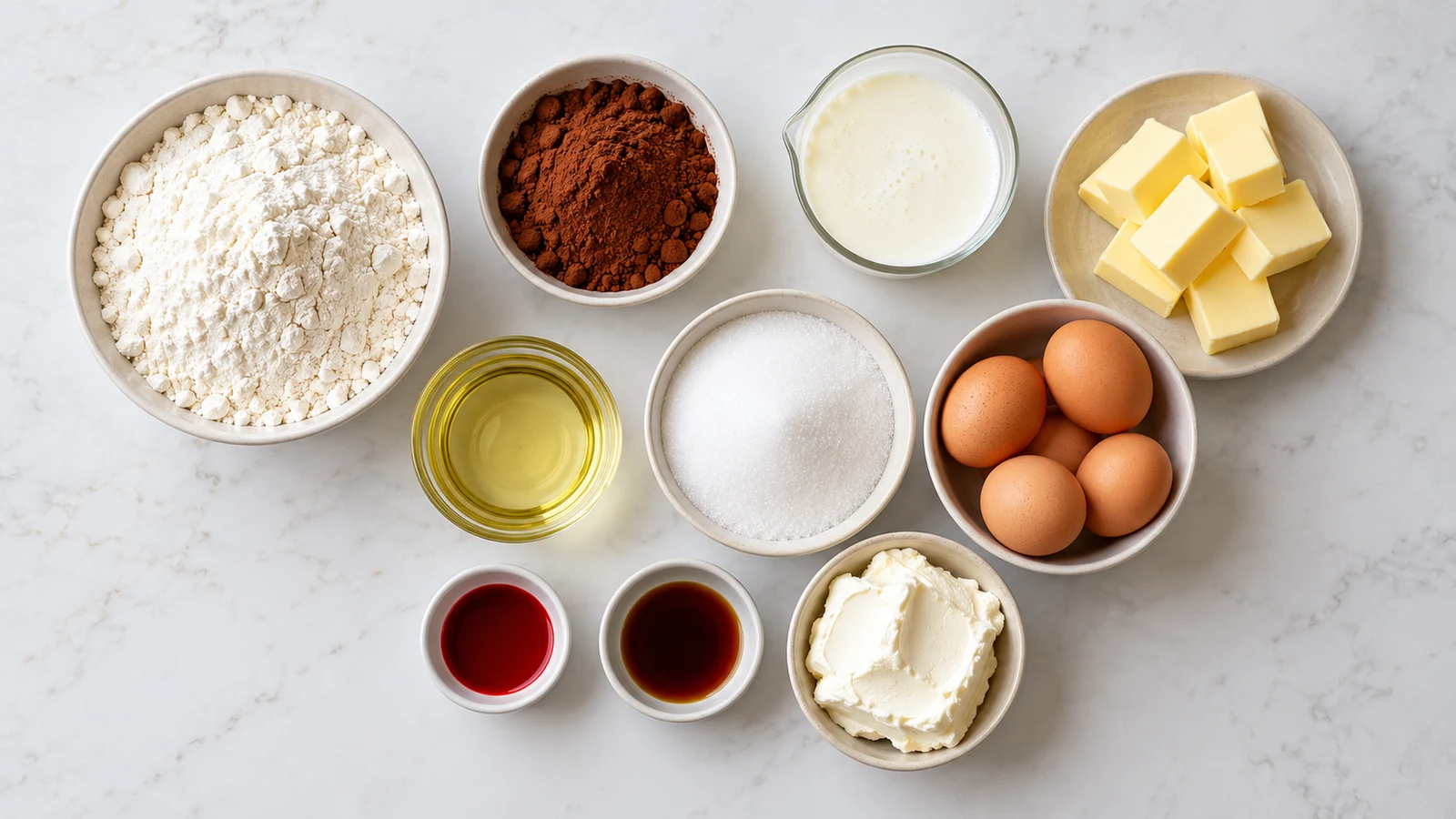
- 2 3/4 cups cake flour, spooned and leveled (330 g)
- 1/4 cup natural unsweetened cocoa powder (22 g)
- 1 teaspoon baking soda
- 3/4 teaspoon fine salt
- 1/2 cup unsalted butter, softened (113 g)
- 1 3/4 cups granulated sugar (350 g)
- 1/2 cup neutral vegetable oil (120 ml)
- 3 large eggs, at room temperature
- 1 tablespoon vanilla extract
- 1 tablespoon white vinegar
- 1 cup cultured buttermilk, at room temperature (240 ml)
- 1 to 2 tablespoons red liquid food coloring, or 1 to 2 teaspoons concentrated red gel coloring
- 2 tablespoons vegetable shortening and 2 tablespoons flour, for coating the pan
- 8 ounces full-fat block cream cheese, softened (226 g)
- 1 cup confectioners’ sugar, sifted (120 g)
- 1 teaspoon vanilla extract
- 2 to 4 tablespoons milk or heavy cream (30 to 60 ml)
- Pinch of salt
How the Key Ingredients Work
Cake flour gives this red velvet bundt cake recipe a finer, softer crumb than all-purpose flour. Natural cocoa contributes flavor without making the cake taste heavily chocolatey. Because natural cocoa is acidic, it also suits the baking soda, buttermilk, and vinegar already in the batter.
Butter supplies flavor, while neutral oil helps the crumb remain tender after refrigeration. Room-temperature eggs bind the fat and liquid into a stable batter. Cultured buttermilk supplies moisture and acidity, and its thicker body supports the cake’s structure without making the batter watery.
Full-fat block cream cheese is important for the glaze. Spreadable cream cheese sold in tubs contains more moisture and can make a red velvet cake frosting recipe too loose. Sifting the confectioners’ sugar prevents small lumps and makes it easier to judge the final consistency.
Equipment and Bundt-Pan Preparation
Use a light-colored, 10- to 12-cup Bundt pan; a 12-cup pan gives the batter more headroom. A digital scale, mixer, flexible spatula, cooling rack, and long wooden skewer are useful. If you do not have a stand mixer, use a handheld mixer and a large bowl.
Brush softened shortening into every crevice, including the center tube, and dust evenly with flour. Tap out the excess immediately before adding the batter. The detailed Bundt cake baking guide offers additional guidance on filling and handling shaped pans.
Inspect the prepared pan under bright light before filling it. Any shiny metal spot is an area where this red velvet bundt cake recipe could stick. Use a pastry brush to reach narrow grooves, but avoid leaving thick clumps of shortening and flour that could create pale patches on the crust.
How to Make This Red Velvet Bundt Cake Recipe
- Heat the oven: Position a rack in the center and preheat to 350°F (175°C). Prepare the Bundt pan as directed above.
- Combine the dry ingredients: Whisk the cake flour, cocoa powder, baking soda, and salt for about 30 seconds. This distributes the cocoa and leavening evenly, helping prevent pale streaks and dull color.
- Cream the base: Beat the butter and sugar on medium speed for 3 minutes, until noticeably lighter. Add the oil and beat for 30 seconds.
- Add the eggs: Beat in the eggs one at a time, mixing only until each disappears. Blend in the vanilla, vinegar, and coloring. Gel provides a stronger shade with less added liquid; natural beet-based coloring gives a softer burgundy tone and may fade during baking.
- Finish the batter: On low speed, add the flour mixture in three additions, alternating with the buttermilk in two additions. Begin and end with flour. Fold briefly by hand until no dry pockets remain; prolonged mixing can create tunneling and a tough crumb.
- Fill the pan: Spoon the thick batter evenly around the pan. Smooth the top, then tap the pan gently on a folded towel two or three times to release large air pockets.
- Bake: Bake for 45 to 55 minutes. The cake is ready when it springs back lightly, begins pulling from the edges, and a long skewer inserted into the thickest section has a few moist crumbs but no wet batter. Its center should register about 205°F to 210°F (96°C to 99°C). General principles in this cake-baking guide can help with mixing and doneness.
- Cool and unmold: Cool upright in the pan for exactly 15 minutes. Loosen only the upper edge with a thin plastic spatula if needed, place a rack over the pan, and invert in one confident motion. Lift the pan straight up, then cool the cake completely for about 2 hours before glazing.
- Make the frosting: Beat the cream cheese until smooth. Mix in the confectioners’ sugar, vanilla, salt, and 2 tablespoons milk. Add more milk 1 teaspoon at a time until the glaze falls in thick ribbons. Spoon it over the cool cake.
Expert Tips for the Best Results
Measure Flour Accurately
For the most consistent red velvet bundt cake recipe, weigh the cake flour at 330 g. If using cups, loosen the flour, spoon it into the cup, and level without packing. Too much flour absorbs excess moisture and can produce a heavy cake that seems dry by the second day.
Control the Batter Temperature
Use room-temperature ingredients so the batter emulsifies smoothly. Scrape the bowl between additions, but stop mixing as soon as the flour is incorporated. Overmixing causes tunnels, while overbaking creates dryness. If cold ingredients make the batter look curdled, continue with the recipe instead of beating aggressively.
Choose the Correct Cocoa
Do not substitute Dutch-process cocoa unless the recipe is reformulated; natural cocoa works with the baking soda and vinegar. Dutch-process cocoa has a different acidity and can affect both rise and color. For another cocoa-forward dessert, try this rich chocolate pound cake.
Watch the Cake, Not Just the Clock
Begin checking this red velvet bundt cake recipe at 45 minutes because pan color, oven calibration, and shape affect baking speed. A clean skewer can indicate slight overbaking; a few moist crumbs are ideal. Avoid opening the oven during the first 35 minutes, when a sudden temperature change could weaken the rising structure.
Time the Release Carefully
Never leave the cake in the pan until cold. Fifteen minutes lets the structure firm without allowing the sugars to glue themselves to the pan. If the release resists, cover the inverted pan with a warm, damp towel for 5 minutes before lifting again.
Adjust the Glaze Gradually
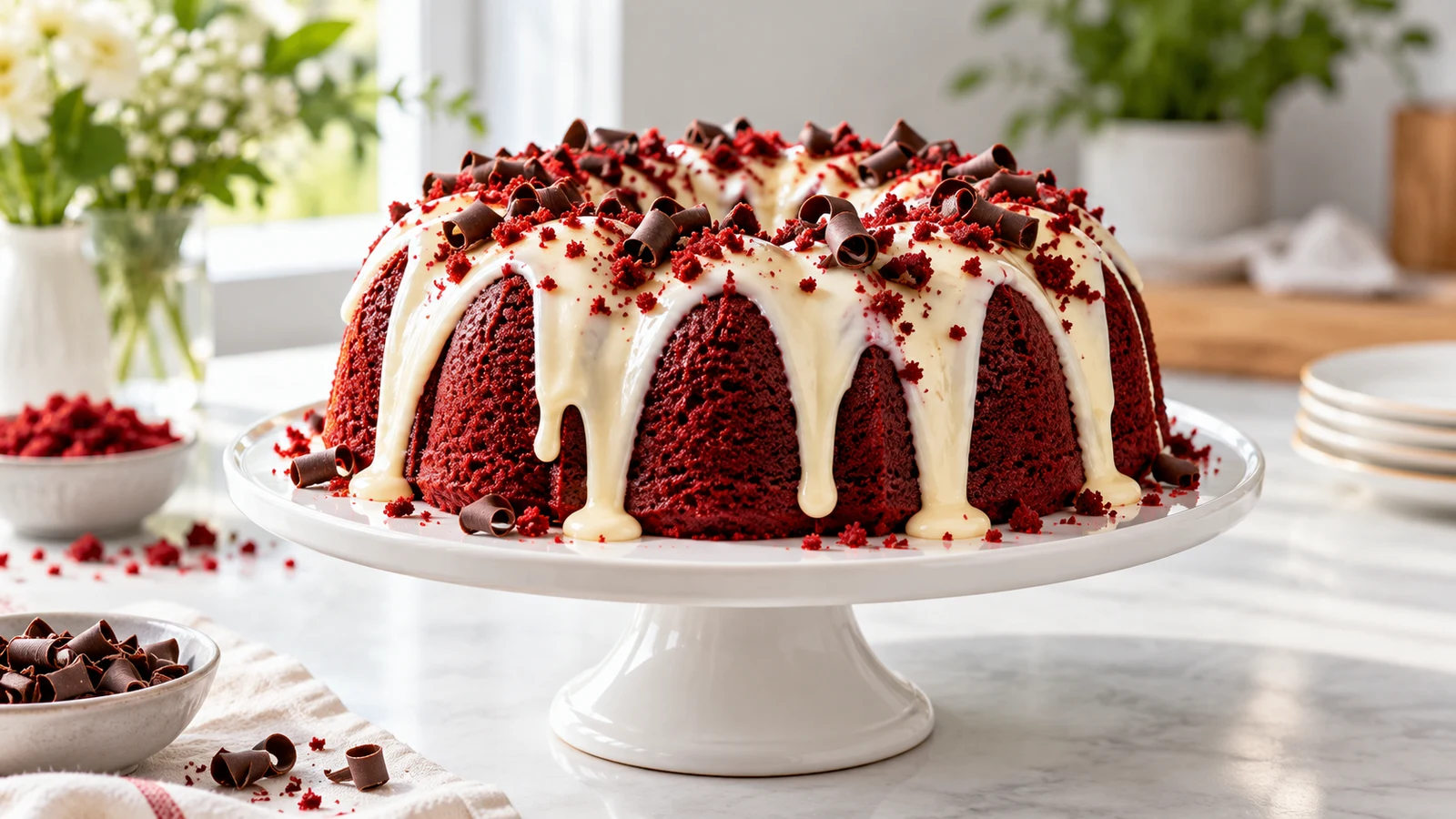
For frosting consistency, add sifted sugar if the glaze is too thin or milk by the teaspoon if it is too thick. A successful red velvet cake frosting recipe should flow slowly from a spoon while remaining opaque. Apply it only to a fully cooled cake, or it will melt and turn translucent.
Variations and Substitutions
Blue Velvet Variation
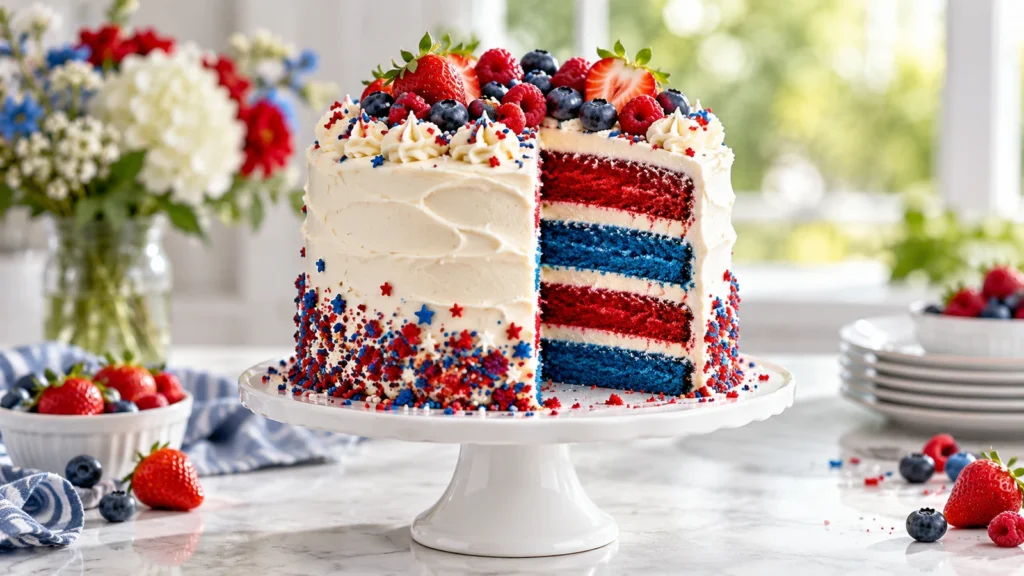
For a blue red velvet cake recipe, replace the red coloring with concentrated royal-blue gel and add a tiny dot of violet gel to counter green undertones. The cocoa will make the finished color navy rather than bright blue. Add the coloring gradually because concentrated gel becomes stronger quickly.
A blue red velvet cake recipe retains the same cocoa and buttermilk flavor as the red version; only the visual presentation changes. Blue coloring does not alter the baking temperature, pan size, or doneness cues. White cream cheese glaze creates a striking contrast with the dark blue crumb.
Cheesecake-Filled Variation
To make a cheesecake and red velvet cake recipe, beat 8 ounces softened cream cheese with 1/3 cup sugar, one egg, and 1 teaspoon vanilla. Layer half the batter in the pan, spoon the filling through the center without touching the sides, cover with remaining batter, and allow up to 8 additional baking minutes.
Keep the filling centered when preparing a cheesecake and red velvet cake recipe. If it touches the pan, it can stick during unmolding and interrupt the cake’s outer design. Check doneness through a cake-only section because a skewer inserted into the cheesecake ribbon may appear moist even when the surrounding cake is ready.
Gluten-Free Variation
For a gluten free red velvet cake recipe, replace the cake flour by weight with 330 g of a cup-for-cup gluten-free baking blend containing xanthan gum. Let the mixed batter rest for 15 minutes before baking. This pause lets the starches hydrate and helps reduce a gritty texture.
Choose a blend designed as a direct flour replacement for the most predictable gluten free red velvet cake recipe. Do not add extra xanthan gum if the blend already contains it. Confirm that the cocoa, coloring, confectioners’ sugar, and other packaged ingredients meet your dietary requirements when serving someone with a medical gluten restriction.
Dairy-Free and Alternative Frosting Options
For dairy-free cake, use plant-based butter and unsweetened soy milk mixed with 1 tablespoon vinegar; finish with dairy-free cream cheese. These substitutions change the flavor slightly, but the mixing order and baking cues remain the same.
The cream cheese glaze is the simplest red velvet cake frosting recipe, but a vanilla glaze also works. Keep any replacement glaze thick enough to cling to the ridges instead of collecting around the base. For a different citrus-soda Bundt variation, see this 7UP pound cake.
Troubleshooting This Red Velvet Bundt Cake Recipe
Why Is the Cake Dense or Gummy?
A dense center often comes from underbaking, excess flour, cold ingredients, or overmixing after the flour is added. Verify the oven temperature and test the thickest part of the cake. The skewer should show moist crumbs, not a line of glossy batter.
Why Are There Large Holes or Tunnels?
Large tunnels usually mean the batter was beaten too long after adding flour or large air pockets remained in the pan. Mix on low, finish gently by hand, and tap the filled pan only two or three times. Excessive tapping can remove air that the cake needs for a light texture.
Why Did the Color Turn Brown?
Cocoa naturally deepens the crumb, while too little coloring produces burgundy rather than vivid red. Concentrated gel generally gives this red velvet bundt cake recipe the strongest shade without adding much liquid. Overbaking and dark pans can also brown the exterior more heavily.
Why Did the Cake Sink?
A sunken center can result from opening the oven too soon, inaccurate leavening, or removing the cake before its structure is set. Measure the baking soda carefully and avoid testing before 45 minutes. Make sure the oven is fully preheated before the pan goes in.
Why Did the Glaze Become Runny?
The cake may have been warm, the cream cheese may have come from a tub, or too much milk may have been added. Chill a loose glaze briefly or mix in additional sifted confectioners’ sugar. For dependable coverage, add liquid to the red velvet cake frosting recipe one teaspoon at a time.
Serving Ideas
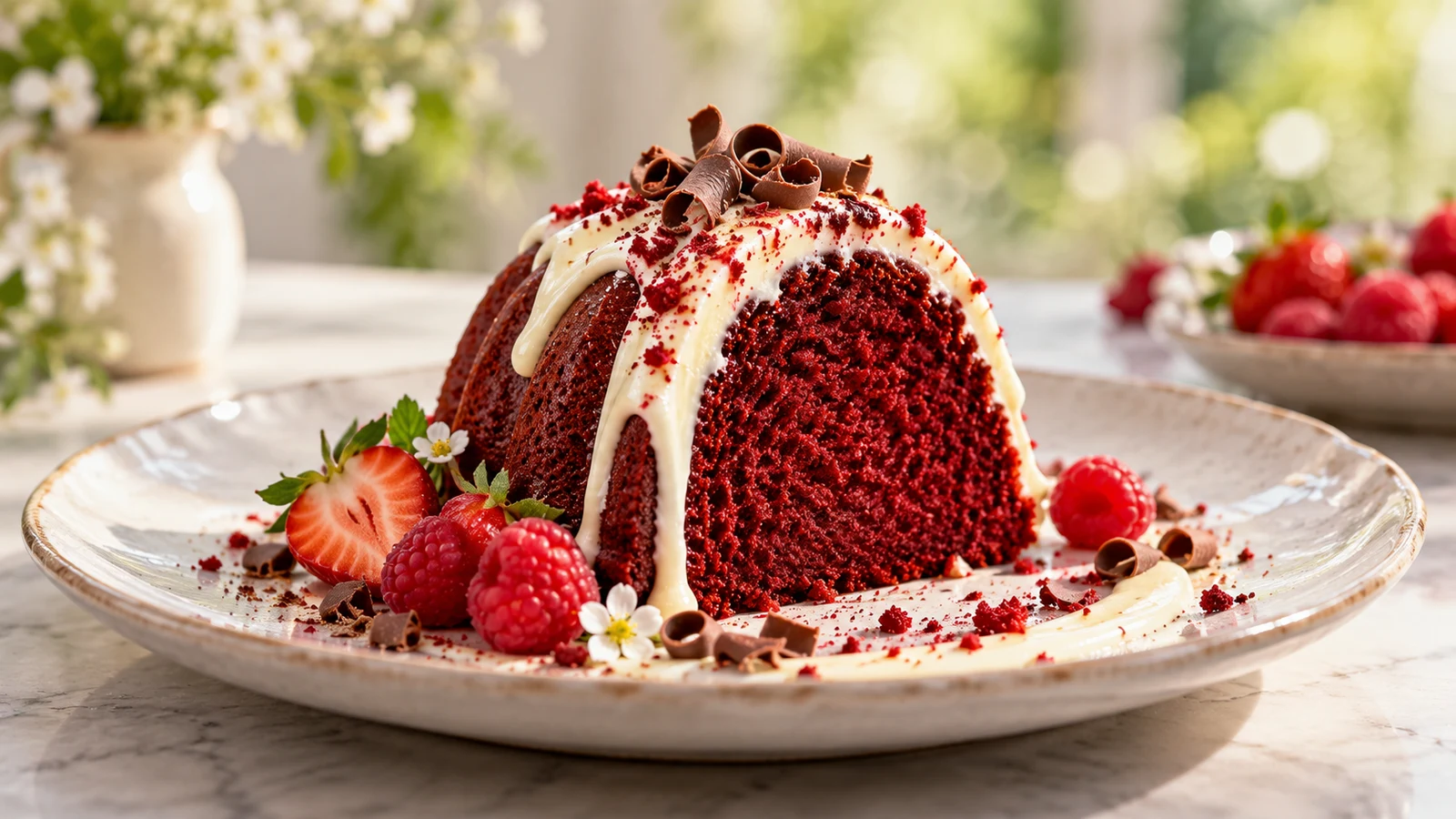
Cut the cake with a thin serrated knife and serve at cool room temperature. Fresh raspberries or strawberries add brightness, while toasted pecans provide crunch. For a fruit-filled Southern-style dessert table, pair it with peach cobbler pound cake.
For a holiday presentation, arrange berries around the base and scatter a small amount of red cake crumb over the white glaze. At a birthday gathering, add candles only after the glaze has set. This red velvet bundt cake recipe also pairs well with coffee, black tea, or cold milk.
Serve modest slices after a rich meal because the cream cheese glaze adds satisfying richness. For a dessert buffet, cut thinner pieces so guests can sample more than one cake. Let refrigerated slices lose their chill before serving so the butter softens and the crumb tastes moist.
Make-Ahead, Storage, and Freezing
Preparing One Day Ahead
Bake and cool the cake one day before serving, then wrap it tightly and glaze the next day. Keeping the unglazed cake at cool room temperature protects its texture and prevents refrigerator odors from entering the crumb. Do not wrap it until completely cool, because trapped steam can make the exterior sticky.
Refrigerating the Glazed Cake
Because the glaze contains cream cheese, refrigerate the covered cake for up to 5 days. Let individual slices stand at room temperature for 20 to 30 minutes before serving; reheating is unnecessary and can melt the frosting. This cake storage guide explains how refrigeration affects freshness.
Freezing the Cake
Freeze the unglazed cake or individual slices in two layers of plastic wrap plus foil for up to 3 months. Thaw overnight in the refrigerator, unwrap, bring to room temperature, and glaze. Freezing individual portions of this red velvet bundt cake recipe makes it easy to serve only what you need.
Transporting the Cake
Chill the glazed cake briefly so the topping firms, then place it in a covered carrier with a nonslip mat underneath. Keep the carrier level and away from direct sunlight. If the trip is long or the weather is warm, transport the cake in a cooler because of the cream cheese glaze.
Frequently Asked Questions
What Is the Difference Between Red Velvet and Chocolate Cake?
Red velvet uses much less cocoa and has a tangy flavor from buttermilk and vinegar. Chocolate cake is driven primarily by cocoa or melted chocolate and usually has a more intense chocolate taste. The mild cocoa allows the vanilla and cream cheese flavors in this red velvet bundt cake recipe to remain distinct.
Can I Make Buttermilk at Home?
Yes. Put 1 tablespoon white vinegar or lemon juice in a measuring cup, add whole milk to reach 1 cup, stir, and rest for 5 minutes. Cultured buttermilk gives a fuller flavor and thicker texture, but the substitute works well.
Can I Bake the Batter Without a Bundt Pan?
Divide it between two greased 9-inch round pans and begin checking at 28 minutes, or use a 9-by-13-inch pan and begin checking at 32 minutes. Fill any pan no more than two-thirds full and rely on the stated doneness cues.
Why Did My Cake Stick or Break?
Missed crevices, cooking spray that pooled, an underbaked center, or the wrong cooling time are common causes. Coat every detail with shortening and flour, bake fully, cool for 15 minutes, and invert decisively.
Can I Reduce the Food Coloring?
Yes. The color will be softer, but the flavor and texture remain intact. Without added coloring, cocoa gives the cake a muted reddish-brown appearance. Do not replace a large amount of liquid coloring with extra water, since changing the batter’s liquid balance can affect the crumb.
Can I Use This as a Blue Red Velvet Cake Recipe?
Yes. Follow the blue red velvet cake recipe variation by using concentrated royal-blue gel plus a very small amount of violet. Natural cocoa prevents a brilliant sky-blue color, so expect a deeper navy crumb with the same classic velvet flavor.
Can I Turn It Into a Cheesecake and Red Velvet Cake Recipe?
Yes. Use the centered cream cheese filling described above and keep it away from the pan’s edges. A cheesecake and red velvet cake recipe may require up to 8 additional baking minutes, so use the visual, skewer, and temperature tests instead of relying only on time.
Will the Gluten Free Red Velvet Cake Recipe Freeze Well?
Yes. Cool the gluten free red velvet cake recipe completely, wrap it securely, and freeze it unglazed for up to 3 months. Thaw it overnight in the refrigerator while wrapped, then bring it to room temperature and add the glaze before serving.
Can I Make the Red Velvet Cake Frosting Recipe in Advance?
Yes. Prepare the red velvet cake frosting recipe up to 2 days ahead and refrigerate it in a covered container. Let it soften briefly, then beat until smooth. Adjust it with milk by the teaspoon if refrigeration makes it too thick to pour.
How Do I Know When the Glaze Is the Right Consistency?
Lift the spoon and watch how the glaze falls. It should form a thick ribbon that remains visible for a moment before settling. Test a spoonful on the cake’s least visible side; if it runs straight to the plate, thicken it before glazing the rest.
Complete Recipe Card
- Prep time: 25 minutes
- Cook time: 45 to 55 minutes
- Cooling time: 2 hours 15 minutes
- Total time: About 3 hours 30 minutes
- Yield: 12 slices
- Pan: 10- to 12-cup Bundt pan
- Oven: 350°F (175°C)
Method: Prepare the pan with shortening and flour. Whisk the dry ingredients. Cream butter and sugar, add oil, eggs, vanilla, vinegar, and coloring, then alternate the dry mixture with buttermilk. Bake, cool in the pan for 15 minutes, unmold, cool completely, and glaze.
Estimated nutrition per slice: 510 calories, 27 g fat, 62 g carbohydrate, 5 g protein, 390 mg sodium, and 40 g sugar. Values vary with brands, coloring, and the amount of glaze used.
Notes: Weigh the flour when possible, do not overmix, and begin checking early because dark pans bake faster. The moist red velvet Bundt cake must be completely cool before frosting or wrapping.
Final Thoughts
With careful pan preparation and a short, timed cooling period, this red velvet bundt cake recipe keeps its sculpted shape and releases without drama. The tangy glaze, tender crumb, and subtle cocoa flavor make every slice balanced, colorful, and easy to serve.
Once you understand the preparation and doneness cues, the same method can guide a blue red velvet cake recipe, cheesecake and red velvet cake recipe, or gluten free red velvet cake recipe. Finish your chosen version with the red velvet cake frosting recipe for a polished dessert that requires no elaborate decorating.
Reviews
Reader reviews are managed separately (outside this build).