Potato
Sweet Potato Cake Recipe (Moist, Never Dense)
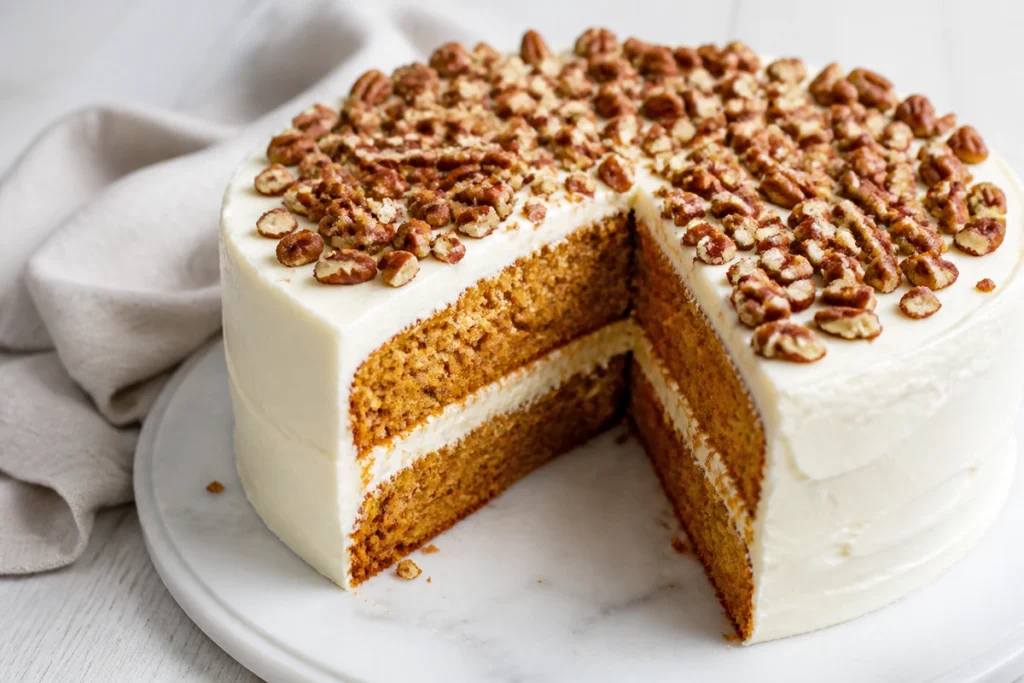
A sweet potato cake recipe lives or dies on the balance between moisture and lift. Sweet potato puree is heavy and wet, and it will pull a cake down into a dense, damp brick unless the leavening is set up to fight it.
The puree adds wonderful moisture and a soft crumb, but it also weighs the batter down, so you need slightly more raising agent than a plain cake and a light hand with the mixing. Get that balance right and the cake is moist and tender; get it wrong and it sinks in the middle.
Below you will find the ingredient table, a leavening guide, the method, tips, variations, serving ideas, troubleshooting, storage notes and six common questions.
Table of Contents
Key Takeaways for This Sweet Potato Cake Recipe
- Sweet potato puree is heavy; the leavening has to lift it.
- Roast the potato so the puree is not watery.
- Do not overmix, or the crumb turns dense and gummy.
- Use both baking powder and a little soda for reliable rise.
- Cool fully before frosting or the icing slides off.
- This sweet potato cake recipe serves twelve.
Why Sweet Potato Cakes Sink
Sweet potato puree is dense and holds a lot of water. That extra weight and moisture is what makes the crumb so tender, but it also drags the centre down if the cake has not set enough structure to hold it up.
The two things that hold a cake up are gluten structure and gas from the leavening. You do not want much gluten, because that makes the cake tough, so the work falls to the raising agents. A sweet potato cake recipe therefore needs a touch more leavening than a plain sponge, and a batter mixed just enough to combine.
Roasting rather than boiling the potato keeps the puree thick, which also helps the batter hold its shape as it bakes.
The Recipe at a Glance
Here is what a sweet potato cake recipe looks like before you start.
| Detail | Value |
|---|---|
| Prep time | 20 minutes |
| Sweet potato | roasted, not boiled |
| Bake time | 30 to 35 minutes |
| Oven | 350°F (177°C) |
| Tins | two 8 inch rounds |
| Yield | 12 servings |
Ingredients
A sweet potato cake recipe is a spiced layer cake at heart.
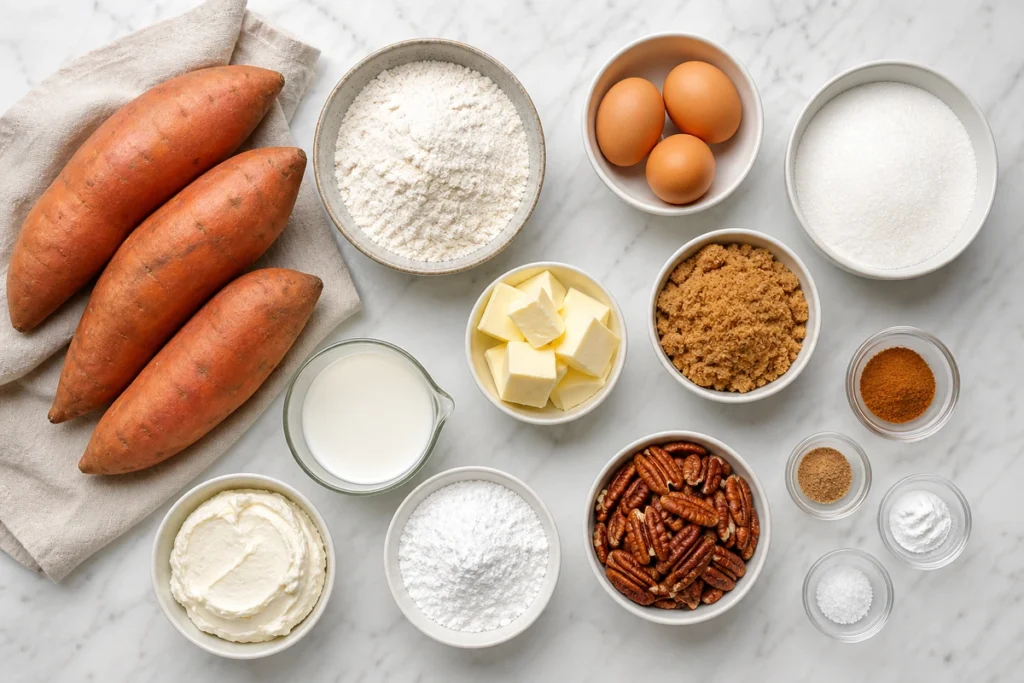
| Ingredient | Amount | Why it matters |
|---|---|---|
| Sweet potato puree | 1½ cups | Roasted, for moisture and body. |
| Flour | 2¼ cups | Structure. |
| Baking powder | 2 teaspoons | The main lift. |
| Baking soda | ½ teaspoon | Extra rise against the heavy puree. |
| Sugar | 1½ cups | Sweetness and tenderness. |
| Eggs | 3 | Bind and lift. |
| Oil | ¾ cup | Keeps it moist. |
| Cinnamon | 2 teaspoons | The base spice. |
| Nutmeg | ½ teaspoon | Warmth. |
| Vanilla | 2 teaspoons | Rounds the spice. |
| Salt | ½ teaspoon | Balance. |
Why Oil, Not Butter
Oil stays liquid at room temperature, so it keeps the crumb moist and soft even after the cake cools. Butter sets firm and can make an already-dense cake feel heavy.
If you want butter flavour, brown a little and add it alongside the oil, but keep oil as the main fat.
Roast the Potato for a Thick Puree
A thick, dry puree is what you want. Roast the sweet potato whole, scoop and mash. Boiled puree is watery and will make the batter too loose to rise.
Measure the puree after mashing, not before, since roasting concentrates it.
How to Make It Step by Step
A sweet potato cake recipe follows the standard oil-cake method, with care not to overmix.
- Heat the oven to 350°F and line two 8 inch tins.
- Whisk the flour, baking powder, soda, spices and salt.
- In another bowl beat the sugar, eggs and oil until smooth.
- Beat in the sweet potato puree and vanilla.
- Fold the dry ingredients in until just combined, no more.
- Divide between the tins and level.
- Bake 30 to 35 minutes until a skewer comes out clean.
- Cool in the tins 10 minutes, then turn out and cool completely.
Fold, Do Not Beat
Once the flour goes in, fold gently and stop the moment it disappears. Beating develops gluten, and gluten plus a heavy puree gives you a tough, sunken cake.
A few streaks of flour are better than an overmixed batter; they vanish in the oven.
Test Before You Trust the Clock
Because the puree is wet, bake time varies with how thick your puree was. Start checking at thirty minutes with a skewer in the centre.
Unlike the brownies, here a clean skewer is the right signal; this is a cake, not a fudgy bake.
These are the timings a sweet potato cake recipe depends on.
Leavening Guide
The rise is the tricky part of a sweet potato cake recipe.
| Element | Role | Note |
|---|---|---|
| Baking powder | Main lift | 2 teaspoons for this weight. |
| Baking soda | Extra rise | Reacts with the puree acidity. |
| Eggs | Structure and lift | Three, well beaten. |
| Oil | Tenderness | Keeps the crumb soft. |
| Thick puree | Holds shape | Roasted, not boiled. |
| Gentle mixing | Protects rise | Overmixing sinks it. |
Do Not Overdo the Soda
It is tempting to add more baking soda for extra lift, but too much leaves a soapy, metallic taste and can turn the crumb an odd colour.
Half a teaspoon alongside the baking powder is the right balance for this amount of puree.
Best Tips
Six habits that keep a sweet potato cake recipe light rather than dense.
- Roast the potato. A thick puree rises; a watery one sinks.
- Use oil. It keeps the crumb moist.
- Do not overmix. Fold until just combined.
- Get the leavening right. Powder plus a little soda.
- Cool fully before frosting. Warm cake melts icing.
- Check early. Wet puree means variable bake times.
Easy Variations to Try
The spiced crumb takes many finishes.
- Cream cheese frosting. The classic pairing.
- Bundt. Bake in a bundt tin for 45 minutes and glaze.
- Brownie instead. For a fudgy bake see the sweet potato brownie recipe.
- Purple. Use the purple sweet potato recipe puree for colour.
- Nutty. Fold in chopped pecans or walnuts.
- Sheet cake. Bake in a 9×13 for an easy crowd cake.
What to Serve With It
A sweet potato cake recipe is a comforting dessert that suits autumn and winter.
- Cream cheese frosting.
- A dusting of icing sugar.
- Spiced whipped cream.
- Black coffee.
- Candied pecans.
- A scoop of vanilla ice cream.
Frosting It Properly
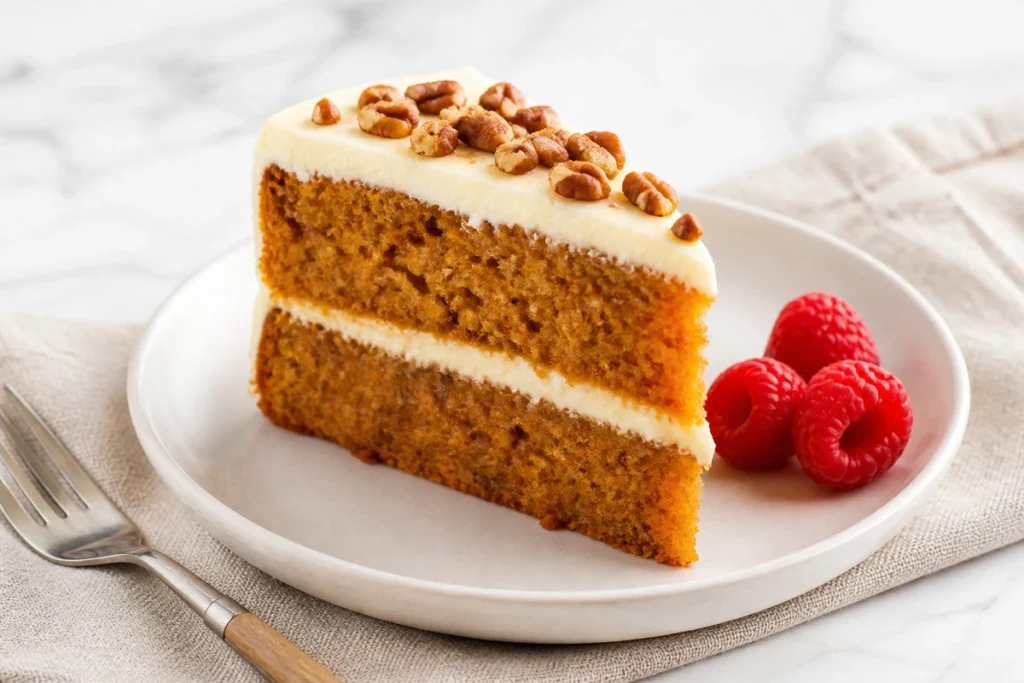
Cream cheese frosting is the natural match, but it only works on a fully cooled cake. Frost a warm one and the icing slides straight off.
Chill the frosted cake for twenty minutes to set it before slicing.
Once the base works, a sweet potato cake recipe takes variations easily.
Troubleshooting Guide
Most problems with a sweet potato cake recipe come down to the puree or the mixing.
| Problem | Likely cause | Fix |
|---|---|---|
| Sank in the middle | Watery puree, or overmixed | Roast the potato; fold gently. |
| Dense, gummy | Overmixed, or underbaked | Mix less; bake until a skewer is clean. |
| Did not rise | Old leavening | Check the powder and soda are fresh. |
| Soapy taste | Too much baking soda | Use only ½ teaspoon. |
| Dry crumb | Overbaked, or too little oil | Check early; keep the oil at ¾ cup. |
| Frosting slid off | Cake still warm | Cool completely first. |
If It Sank in the Middle
A sunken centre means the structure could not hold the wet puree, usually from a watery puree or an overmixed batter.
Fill the dip with frosting and no one will know. Next time, roast the potato and fold gently.
If It Is Too Dense
Density comes from overmixing or from underbaking, both of which leave the crumb heavy.
Mix only until the flour disappears, and bake until a skewer in the centre comes out clean.
How to Store
The oil and puree keep this cake moist for days.
The problems below come up most often with a sweet potato cake recipe.
Refrigerator Storage
An unfrosted cake keeps two days at room temperature. Once frosted with cream cheese, refrigerate it at 40°F or below and eat within four days, following the USDA guidance on leftovers and food safety.
Bring refrigerated slices back to room temperature before serving so the crumb softens again.
Freezer and Make-Ahead Notes
Freeze unfrosted layers, well wrapped, for up to three months.
Thaw at room temperature and frost on the day. The crumb freezes better unfrosted than iced.
Making the Puree Ahead
Roast and mash the sweet potato up to three days early and refrigerate it. It is the longest step, so getting it out of the way makes baking day quick.
Bring the puree to room temperature before mixing.
Frequently Asked Questions
These come up most often about a sweet potato cake recipe.
Stored well, a sweet potato cake recipe keeps for several days.
Why did my sweet potato cake sink?
The puree was too watery or the batter was overmixed, so the structure could not hold the weight. Roast the potato and fold gently.
Should I roast or boil the sweet potato?
Roast it. A thick, dry puree rises; a watery boiled one weighs the batter down and sinks.
Can I taste the sweet potato?
Only faintly. It reads as moisture and a gentle sweetness under the cinnamon and nutmeg, much like carrot in a carrot cake.
These are the questions readers ask most about a sweet potato cake recipe.
What frosting goes with it?
Cream cheese frosting is the classic. Apply it only to a fully cooled cake, or it will slide off.
Why is it dense?
Overmixing or underbaking. Fold the batter only until combined, and bake until a skewer comes out clean.
Can I make it as a sheet cake?
Yes. Bake in a 9×13 tin for about 35 minutes. It is the easiest format for feeding a crowd.
More Sweet Potato Recipes to Try
If this sweet potato cake recipe worked for you, these are worth baking next:
- sweet potato brownie recipe
- sweet potato pancake recipe
- black folks sweet potato pie recipe
- sweet potato souffle recipe
- japanese sweet potato recipe
The roast-for-a-thick-puree rule behind this sweet potato cake recipe applies to every sweet potato bake.
Final Thoughts on This Sweet Potato Cake Recipe
Roast the potato for a thick puree, get the leavening right, fold gently, and cool fully before frosting.
Those four moves are what keep a sweet potato cake recipe light and tender instead of a dense, sunken loaf.
There are no reviews yet. Be the first one to write one.
Reviews
Reader reviews are managed separately (outside this build).