Beef
Recipes for Crock Pot Beef Stew: Easy Ideas
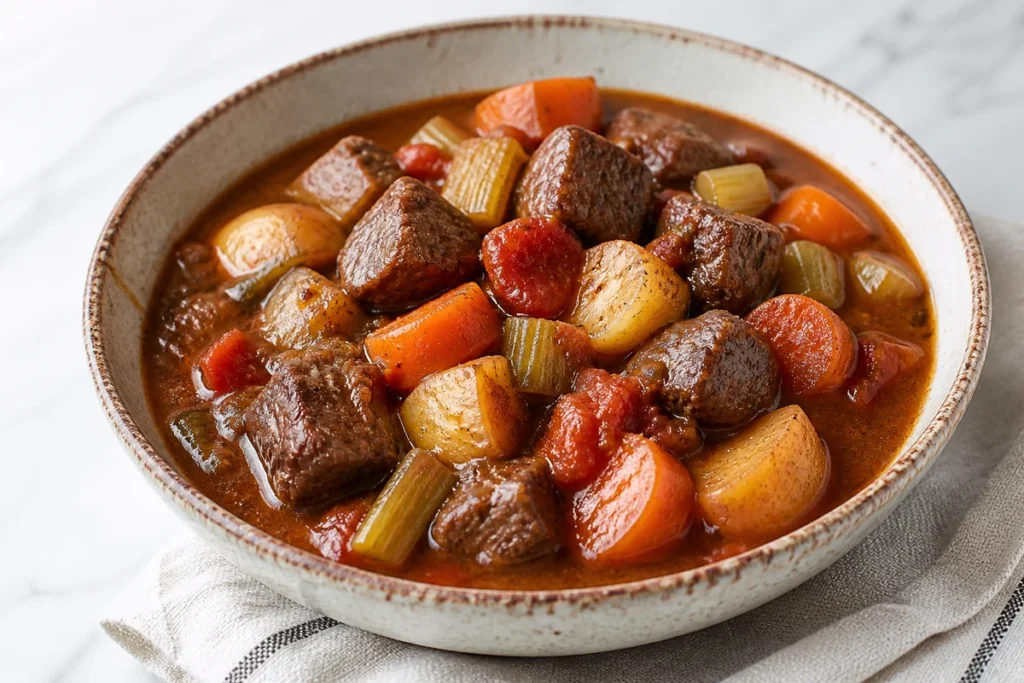
The best recipes for crock pot beef stew all respect one fact about the appliance: a slow cooker is a sealed, gentle box that never boils hard and never lets steam escape. That single difference reshapes everything — how much liquid you pour in, when the vegetables go in, and how you thicken the gravy at the end. Get those three right and the crock pot rewards you with fork-tender beef and a broth that tastes like it simmered all day, because it did.
This guide walks recipes for crock pot beef stew from the cut of meat to the last stir of slurry, with timing for both the low and high settings. If you would rather cook the same dish another way, the Dutch oven, Instant Pot, and stove top versions are linked below.
Table of Contents
Why the crock pot changes everything
On the stove, water boils off and the broth reduces and thickens on its own. A slow cooker does the opposite. The lid traps every drop of steam and drips it back into the pot, so the liquid you start with is roughly the liquid you finish with, only thinner. That is why so many recipes for crock pot beef stew come out watery: they were written for a pot that evaporates. Once you cook for the crock pot instead of against it, the whole dish falls into place.
The crock pot also cannot brown anything. Its gentle heat is perfect for melting tough beef into tenderness, but it will never build the deep, roasted flavor that a hot pan does. So the flavor has to come from a quick sear before the beef ever reaches the pot.
What you need for crock pot beef stew
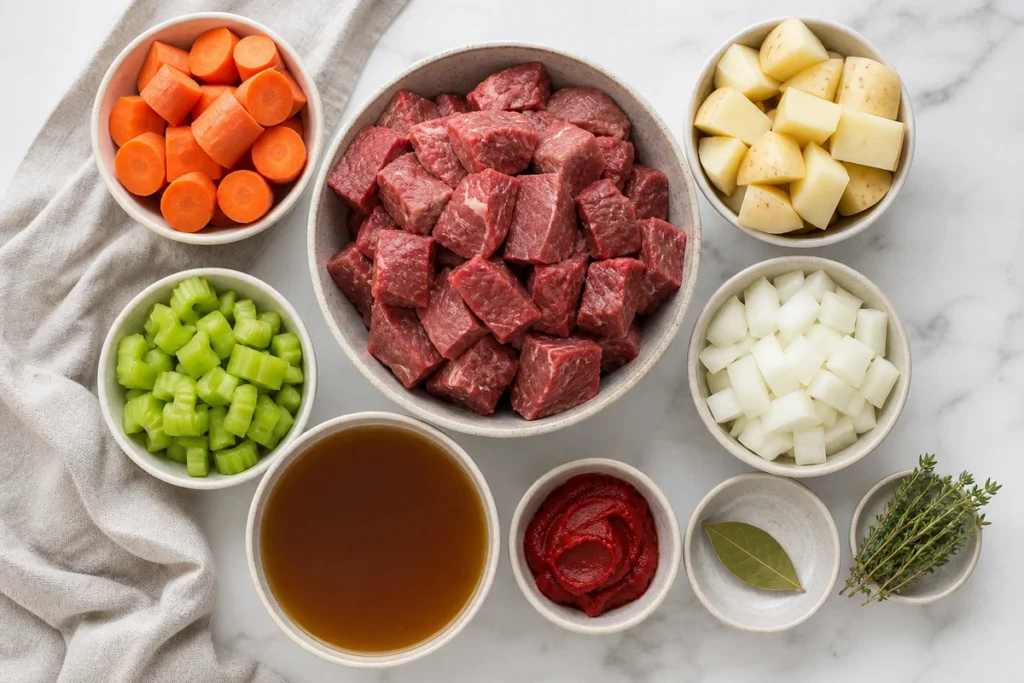
A short, honest ingredient list beats a crowded one. Every recipe for stew beef in crock pot rests on good beef, a handful of sturdy vegetables, and just enough liquid to come partway up the pot.
The beef: chuck earns its keep
Use beef chuck, cut into two-inch cubes. Chuck is marbled with collagen that melts into gelatin over long, low heat, giving both tender meat and body in the broth. Pre-cut “stew meat” is often a mix of lean scraps that stay dry, so buy a chuck roast and cube it yourself when you can. Lean cuts like round will turn stringy in the crock pot no matter how long they cook.
The vegetables and when they go in
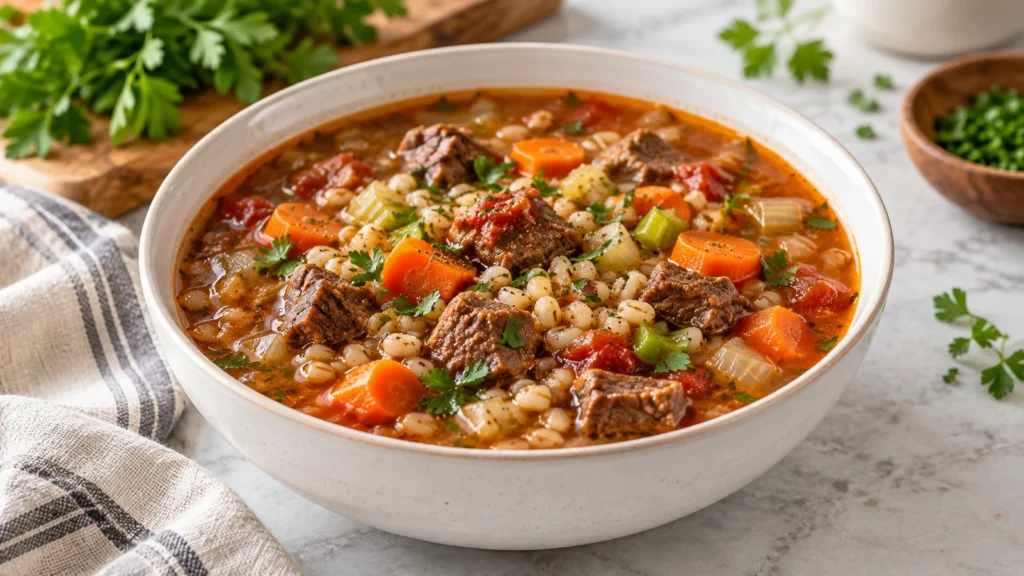
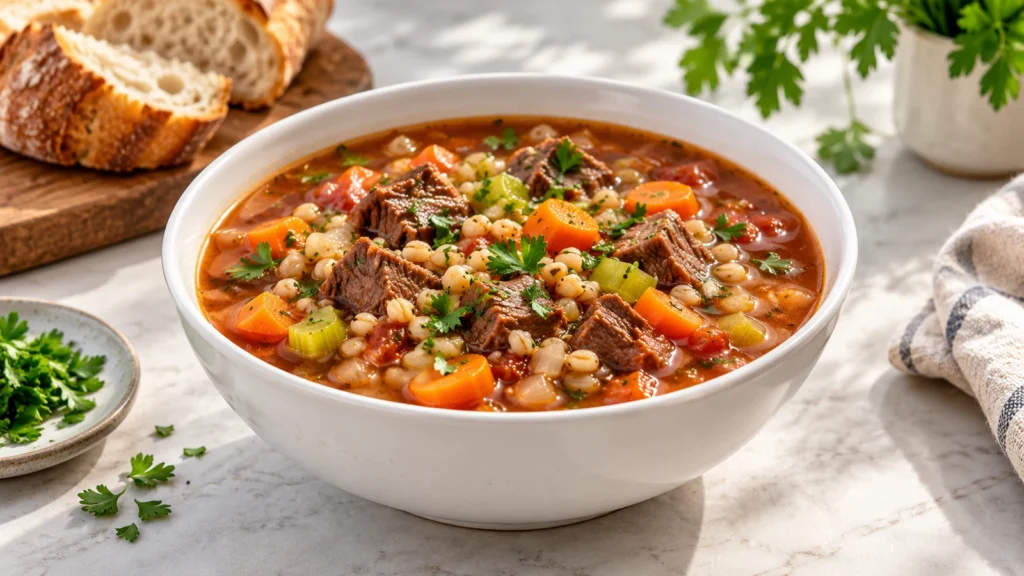
Potatoes, carrots, onion, and celery are the backbone. Cut them into large, even chunks — anything small dissolves over eight hours. Root vegetables go on the bottom, closest to the heating element, because they take the longest to soften. Delicate additions like peas or green beans belong in the last half hour so they keep their color and bite.
| Vegetable | Cut | When it goes in |
|---|---|---|
| Potatoes | 2-inch chunks | Start, on the bottom |
| Carrots | Thick coins | Start, on the bottom |
| Onion | Large wedges | Start |
| Celery | 2-inch pieces | Start |
| Peas or green beans | Whole | Last 30 minutes |
The liquid: less than you think
This is where most crock pot stew beef recipes go wrong. Because nothing evaporates, you need only enough broth to come about two-thirds of the way up the ingredients — not to cover them. The vegetables and beef release their own moisture as they cook, and the level rises. Start with roughly three to four cups of beef broth for a full pot and resist the urge to add more.
Building flavor before the pot
Tomato paste, a splash of Worcestershire, garlic, bay leaf, and thyme give the broth its depth. Stir the tomato paste into the pan while you sear so it caramelizes slightly; raw tomato paste tastes flat and tinny. A tablespoon of Dijon or a spoon of balsamic added at the end brightens the whole pot.
How to make crock pot beef stew step by step
The method is short, and only the first step needs a stove. Everything after that is hands-off.
Step 1 — Brown the beef first
Pat the cubes very dry and season with salt and pepper. Sear them hard in a hot, oiled pan in batches, giving each piece room so it browns instead of steaming. This crust is the single biggest flavor upgrade in any recipe for crock pot beef stew, and it takes ten minutes.
Step 2 — Deglaze and layer
Pour a cup of the broth into the empty pan and scrape up every browned bit stuck to the bottom — that fond is pure flavor. Layer the root vegetables in the crock pot, set the seared beef on top, then pour the deglazing liquid and the rest of the broth over everything.
Step 3 — Set it and leave the lid alone
Add the bay leaf and thyme, cover, and set the temperature. Then walk away. Every time you lift the lid, the crock pot loses heat and adds twenty to thirty minutes to the cook. Trust it.
Step 4 — Thicken at the end
In the last thirty minutes, stir in a slurry of cornstarch and cold water, then leave the lid off so the gravy can tighten. This late thickening is what separates a glossy stew from a thin one, and it is the step most crock pot beef stew recipes slow cooker cooks skip.
Low or high: which setting to use
Both settings reach the same gentle simmer; low just takes longer to get there. For beef, slower is better, but either works when you plan the timing.
The eight-hour low method
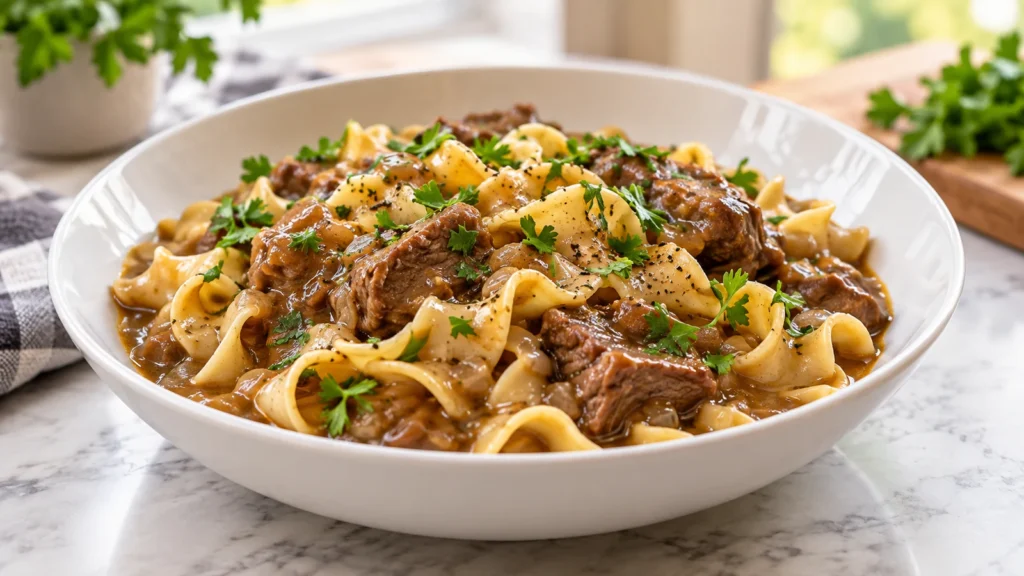
Low for eight to nine hours is the gold standard. The extra time gives the collagen in the chuck the longest window to melt, and the beef pulls apart at the touch of a fork. This is the setting to use when you leave for the day.
The four-hour high method
High for four to five hours gets dinner on the table sooner and still produces tender beef, though the meat is a touch firmer than the low method. If you are home and watching the clock, high is a fine choice.
Three mistakes that ruin crock pot beef stew
Nearly every disappointing pot traces back to one of these three habits.
Adding too much liquid
The most common fault. Covering the ingredients with broth guarantees a thin, soupy result because none of it boils away. Fill to two-thirds and thicken at the end instead.
Lifting the lid to peek
A slow cooker builds a steady pocket of heat under the lid. Opening it lets that heat escape and stalls the cook. Resist checking until the last half hour, when you add the slurry.
Dumping everything in raw
Skipping the sear saves ten minutes and costs the dish its backbone. Raw beef dropped straight in cooks through but stays pale and flat. The brown crust is not optional if you want depth.
Getting a thick, glossy gravy
A proper stew coats the spoon. Here are the two reliable ways to get there.
Cornstarch slurry or flour
A cornstarch slurry — equal parts cornstarch and cold water — stirred in at the end gives a clear, glossy gravy fast. Flour works too if you toss the beef in it before searing, which thickens the broth slowly as it cooks. Cornstarch is the more forgiving choice for the crock pot.
The mashed-potato trick
For a naturally thick pot, mash a few of the cooked potatoes against the side and stir them back in. The starch thickens the broth with no slurry at all — a favorite move in old-fashioned recipes for crock pot beef stew.
Flavor variations to try
Once the base method is second nature, small changes keep the pot interesting.
Herbs and aromatics
Rosemary and a strip of orange peel give a fragrant, rustic pot. Smoked paprika and a pinch of cumin push it warmer and earthier. A parmesan rind dropped in with the broth melts into savory richness.
A richer, deeper broth
For extra body, add a tablespoon of soy sauce and a spoon of tomato paste — both bring savory depth without changing the flavor into something else. A handful of dried mushrooms, soaked and chopped, deepens the broth even further.
What to serve with crock pot beef stew
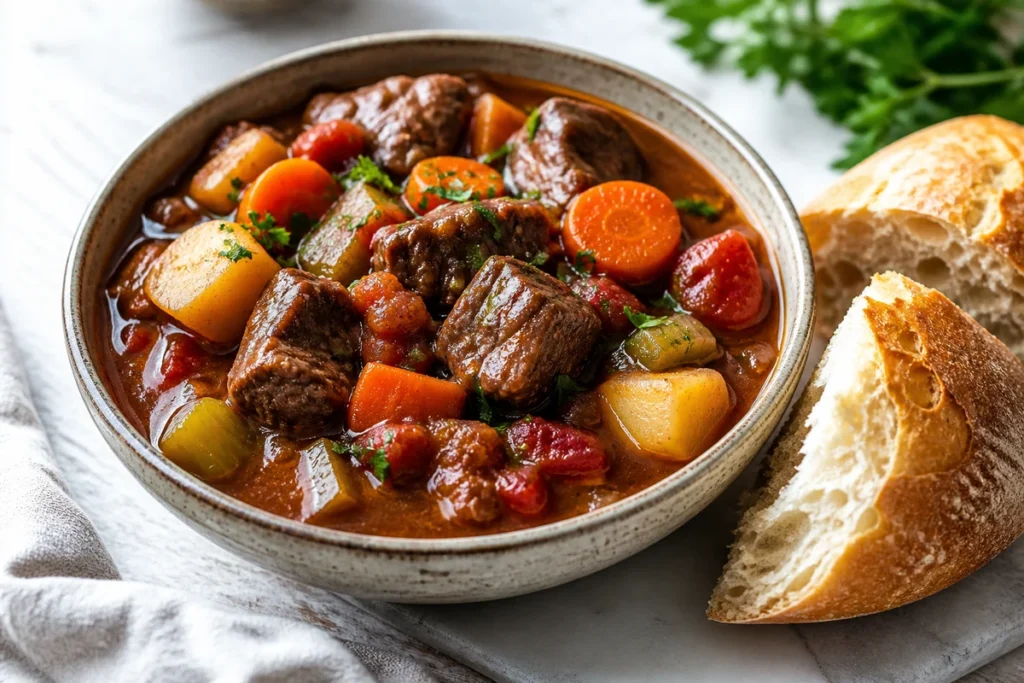
The stew is a full meal, but a starch to catch the gravy makes it a feast. Crusty bread, buttered egg noodles, fluffy rice, or a scoop of mashed potatoes all belong here. A simple green salad on the side keeps the plate from feeling heavy.
Storing and reheating
Beef stew is one of those dishes that tastes even better the next day, once the flavors settle.
Refrigerator and freezer
Cool the stew and refrigerate within two hours in an airtight container, where it keeps three to four days. It also freezes beautifully for up to three months; potatoes soften a little on thawing but the flavor holds. For safe cooling and storage times, the USDA guidance on leftovers is worth a quick read.
Reheating without overcooking
Warm leftovers gently on the stove over low heat, adding a splash of broth to loosen the gravy. Avoid a hard boil, which can toughen the beef you worked to tenderize. The microwave works for single bowls in short bursts.
Other beef stew methods to try
The crock pot is one road to a great pot of stew. If you want to compare, the Dutch oven method builds the deepest roasted flavor, the Instant Pot method gets you there in about an hour, the stove top method keeps everything in one pot, and the Mexican beef stew takes the dish in a chile-warmed direction.
Frequently asked questions
The questions that come up most often about crock pot stew beef recipes.
Can I put raw beef straight in the crock pot?
You can, and it will cook through safely, but it will taste flat. Searing the beef first is the difference between a good pot and a great one, so give it the ten minutes.
Why is my crock pot beef stew watery?
Almost always too much liquid at the start. Because a slow cooker does not evaporate, fill only to two-thirds and thicken with a slurry at the end. That fixes a thin pot every time.
Can I cook it overnight?
Yes. The low setting for eight to nine hours suits an overnight or all-day cook perfectly, which is the whole appeal of a recipe for stew beef in crock pot — it works while you do not.
Do I really have to brown the beef?
For the best flavor, yes. If you are truly short on time you can skip it, but browning is the highest-value ten minutes in the whole method.
Final thoughts
The best recipes for crock pot beef stew come down to three habits: sear the beef, go light on the liquid, and thicken at the end. Respect the sealed, gentle nature of the pot and it will hand you tender beef and a rich, glossy gravy with almost no active work. Set it in the morning, leave the lid alone, and dinner takes care of itself.
There are no reviews yet. Be the first one to write one.
Reviews
Reader reviews are managed separately (outside this build).