Beef
Beef Stew Recipe Stove Top: Simple Method
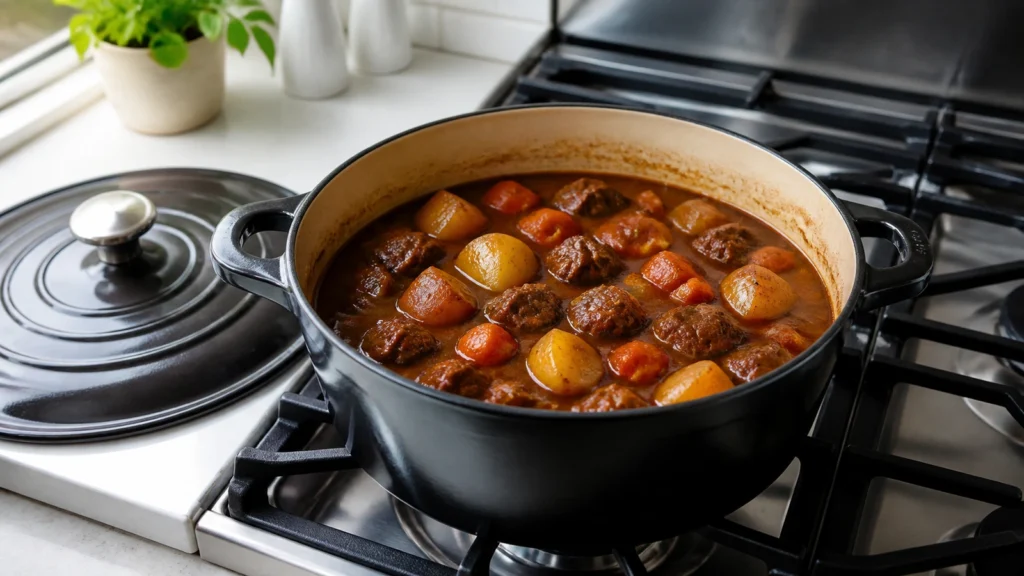
A beef stew recipe stove top method needs no oven and no special equipment, just one heavy pot and an eye on the heat. It is how most home cooks actually make stew.
The one thing it asks of you is attention. Heat comes only from below, so the base can catch if the pot sits too hot or goes too long without a stir.
You will find the ingredients, step-by-step directions, a timing chart, tips, variations, serving ideas, troubleshooting, storage guidance, and six common questions.
Table of Contents
The short version of this beef stew recipe stove top is below.
Getting a beef stew recipe stove top right is mostly about timing.
Key Takeaways for This Beef Stew Recipe Stove Top Method
- Use halal-certified beef chuck in 2-inch cubes.
- Sear in batches, then keep the pot at the barest simmer.
- Use a heavy pot; thin pans scorch on the base.
- Stir every 30 minutes and cook 2½ to 3 hours.
- All liquid is alcohol-free: halal broth and tomato, never wine.
Here is what a beef stew recipe stove top looks like at a glance.
This beef stew recipe stove top scales up without changing the method.
Why the Stove Top Method Works
Chuck becomes tender when its collagen melts, which happens between roughly 190°F and 205°F over several hours. A pot held at a bare simmer sits exactly in that band.
The difference from an oven braise is where the heat comes from. On the stove it arrives only through the base, so the liquid convects upward and the bottom is always the hottest point. That is why a heavy pot and a low flame matter more here than anywhere else.
Handled properly it produces the same result as the oven, with the advantage that you can taste and adjust throughout.
Everything in this beef stew recipe stove top is a standard supermarket item.
Stove Top Beef Stew at a Glance
| Detail | Value |
|---|---|
| Prep time | 25 minutes |
| Searing and building | 25 minutes |
| Simmering | 2½ to 3 hours |
| Method | sear, then covered simmer |
| Target | bare simmer, 195°F to 205°F |
| Yield | 6 servings |
The method for this beef stew recipe stove top is straightforward from start to finish.
Ingredients for Stove Top Beef Stew
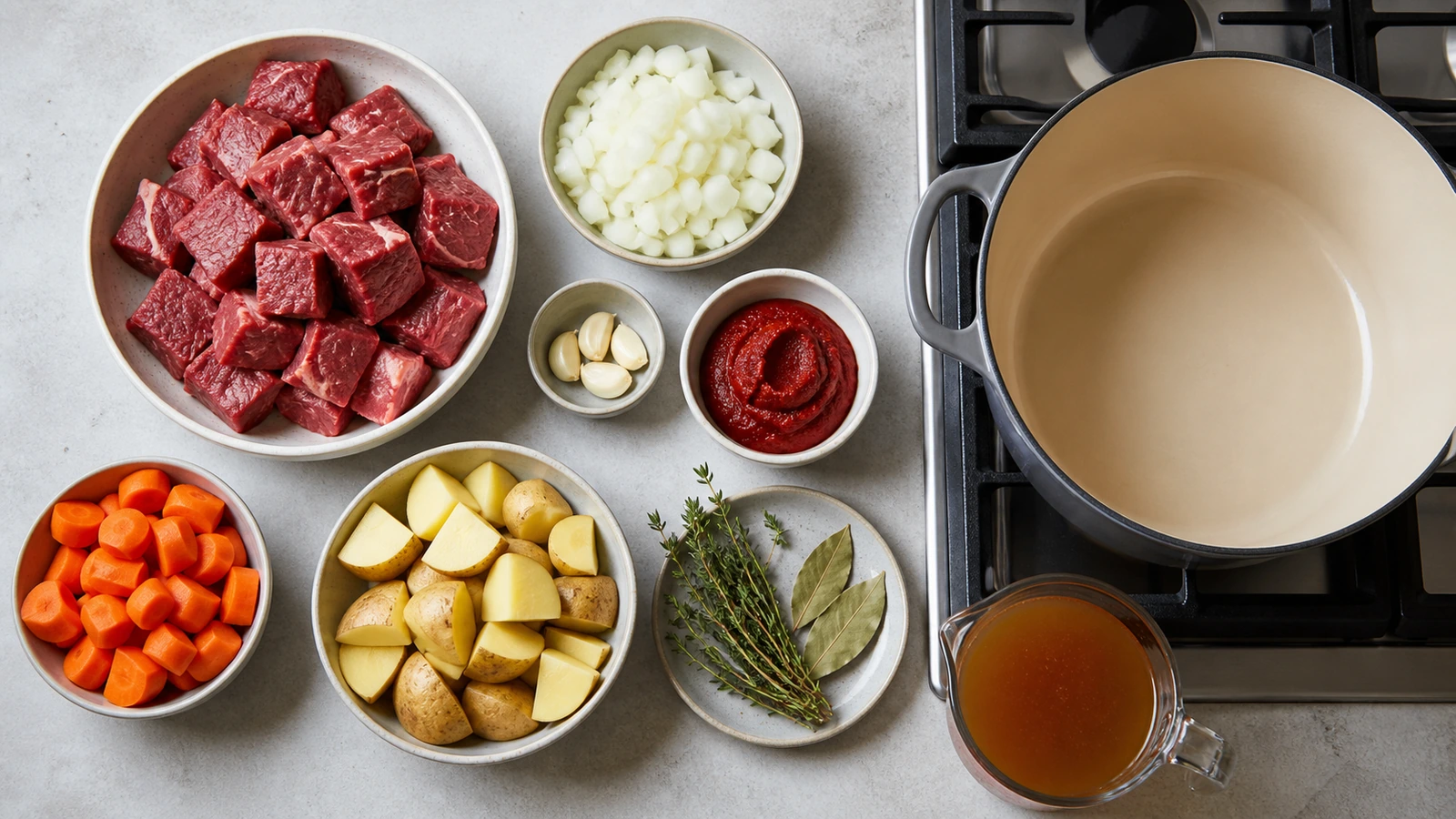
Buy halal-certified chuck in one piece and cube it yourself for even cooking.
| Ingredient | Amount | Why it matters |
|---|---|---|
| Beef chuck roast | 3 pounds, in 2-inch cubes | Collagen melts over a long simmer. |
| Kosher salt | 2 teaspoons | Season before searing. |
| Black pepper | 1 teaspoon | Warmth. |
| All-purpose flour | ¼ cup | Light coating; thickens the sauce. |
| Neutral oil | 3 tablespoons | For searing. |
| Yellow onions, diced | 2 | Sweetness and body. |
| Garlic, minced | 5 cloves | Depth. |
| Tomato paste | 3 tablespoons | Savory depth; cook it out. |
| Halal-certified beef broth | 5 cups | More than the oven method; it evaporates. |
| Bay leaves | 2 | Background note. |
| Fresh thyme | 5 sprigs | Earthy lift. |
| Carrots, thick-cut | 4 | Added in the last hour. |
| Yukon gold potatoes | 1½ pounds, quartered | Waxy; hold their shape. |
| Fresh parsley | 3 tablespoons | Freshens a rich stew. |
A few habits separate a good beef stew recipe stove top from a disappointing one.
Choosing the Right Pot
A heavy-based pot is not optional on the stove. Thin stainless creates hot spots directly over the burner and the stew catches there long before the beef is tender.
Enamelled cast iron is ideal. A thick-bottomed stockpot works. Anything you can feel flexing under the handle does not.
Once the basic beef stew recipe stove top works, these are the directions worth taking it in.
Finding a Bare Simmer
You want a bubble breaking the surface every second or two, not a steady rolling motion. On most stoves that is the lowest setting that keeps any movement at all.
If your smallest burner still runs too hot, set the pot slightly off-centre or use a heat diffuser.
A beef stew recipe stove top is worth pairing with sides that balance it.
How to Make Stove Top Beef Stew Step by Step
- Pat the beef dry, season with the salt and pepper, and toss in the flour.
- Heat the oil in a heavy pot over medium-high and sear the beef in three batches. Set aside.
- Lower the heat, add the onions, and cook 6 minutes until soft.
- Add the garlic and tomato paste and cook 2 minutes until the paste darkens.
- Pour in the broth and scrape the base completely clean.
- Return the beef with its juices, add the bay leaves and thyme.
- Bring to a bare simmer, cover, and cook 1½ hours, stirring every 30 minutes.
- Add the carrots and potatoes and simmer 1 to 1½ hours more until tender.
- Uncover for the last 20 minutes if the sauce needs thickening, then finish with parsley.
Most problems with a beef stew recipe stove top are easy to diagnose and fix.
How to Tell When the Beef Is Done
A fork should slide into a cube and twist with no resistance. Temperature targets do not apply to a braise; texture is the only test.
Tough beef needs more time, never more heat. Raising the flame tightens the fibres and makes it worse.
Leftover beef stew recipe stove top keeps well when stored properly.
Safe Beef Handling and Cooling
Keep raw beef refrigerated until you cube it and use a separate board. Cool leftovers in shallow containers within two hours rather than leaving the pot on the stove overnight. The USDA guidance on beef safety covers safe temperatures and storage.
A large covered pot of stew can stay in the unsafe range for hours if left to cool on its own.
The questions below come up most often about this beef stew recipe stove top.
Beef Stew Timing Guide
| Stage | Time | What to look for |
|---|---|---|
| Searing | 15 minutes | Deep brown crust, three batches. |
| Aromatics and paste | 8 minutes | Paste darkens to brick red. |
| First simmer | 1½ hours | Beef starting to yield. |
| With vegetables | 1 to 1½ hours | Fork slides in freely. |
| Uncovered reduction | Final 20 minutes | Only if the sauce is thin. |
Why Stove Top Needs More Liquid
A stove-top pot loses steam every time you lift the lid to stir, and the seal is looser than in an oven. Over three hours that adds up.
Five cups of broth allows for it. Top up with a little hot broth if the level drops below the meat.
Best Tips for Stove Top Beef Stew
- Use the heaviest pot you own.
- Sear in three batches; crowding steams the meat.
- Stir every 30 minutes, scraping the base each time.
- Keep the flame low enough that bubbles are occasional.
- Add vegetables in the final hour only.
- Uncover at the end to reduce rather than adding thickener.
Easy Variations
- Mushroom: brown mushrooms after the beef and add them at the end.
- Root vegetable: add parsnip and turnip with the carrots.
- Herb-heavy: add rosemary and a strip of orange zest.
- Smoky: add smoked paprika with the tomato paste.
- Peas: stir frozen peas in during the last five minutes.
- No potatoes: leave them out and serve over mash.
What to Serve with It
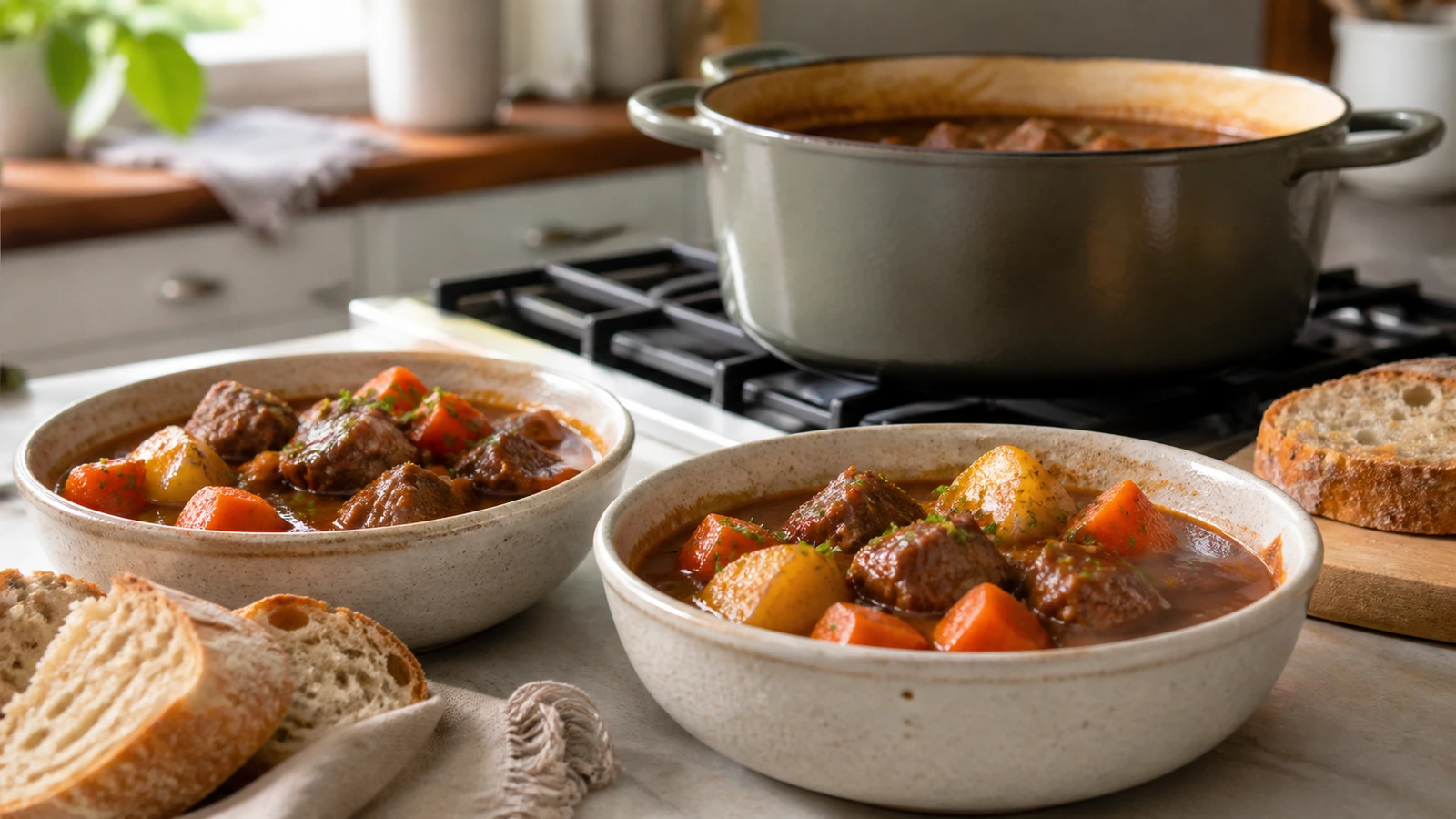
- Crusty bread for the gravy.
- Buttered egg noodles.
- Mashed potatoes if you leave them out of the pot.
- Steamed green beans.
- A sharp green salad.
- Rice, which soaks up the sauce.
Build a Balanced Plate
Protein, starch, and fat are covered by the stew itself, so the plate only needs something green and fresh.
A cup and a half with a salad and bread is a comfortable portion.
Stove Top Beef Stew Troubleshooting Guide
| Problem | Likely cause | Fix |
|---|---|---|
| Base scorched | Heat too high or thin pot | Move to a heavier pot; do not scrape the burnt layer in. |
| Beef tough | Not cooked long enough | Simmer another 45 minutes. |
| Liquid boiled away | Simmer too vigorous | Lower the flame; top up with hot broth. |
| Sauce thin | Lid kept on throughout | Uncover for the last 20 minutes. |
| Vegetables mushy | Added at the start | Add them in the final hour. |
| Flat flavor | No sear, or fond left behind | Sear properly and deglaze the base. |
If the Base Catches
Stop stirring immediately and pour the stew into a clean pot without scraping the bottom. The burnt layer stays behind.
Scraping it in spreads the bitterness through everything and cannot be undone.
If the Liquid Runs Low
Top up with hot broth, never cold water, which drops the temperature and stalls the braise.
The meat should stay roughly covered throughout. If it is poking out, add more.
How to Store and Reheat
Stew improves overnight as the gelatin sets and the flavors settle.
Refrigerator Storage
Shallow containers at 40°F or below for up to four days.
Reheat gently with a splash of broth; it thickens considerably when cold.
Freezer and Make-Ahead Notes
Freezes for three months. Leave the potatoes out if freezing, since they go grainy.
Thaw overnight in the refrigerator and reheat slowly.
Using the Leftovers
Leftover stew makes a good pie filling under puff pastry, or a topping for baked potatoes.
Shredded into its gravy it also works over rice or noodles.
Frequently Asked Questions
Do I need a dutch oven?
Any heavy-based pot works. What matters is thickness at the base, not the brand.
How often should I stir?
Every 30 minutes, scraping the base gently each time.
Why did my stew burn on the bottom?
The heat was too high or the pot too thin. Use a heavier pot and the lowest simmer.
Do I need wine?
No. A proper sear with tomato paste and halal beef broth gives all the depth needed.
Can I leave it simmering unattended?
Not for hours. Stove top needs a stir every half hour, which is why the oven method is more forgiving.
How do I thicken it?
Uncover for the last 20 minutes. Reduction thickens and concentrates flavor at the same time.
More Beef Recipes to Try
These cover the same stew by other methods, plus other slow-cooked beef cuts. Every exact keyword links to its recipe page:
- beef stew recipe dutch oven
- beef stew recipe instant pot
- mexican beef stew recipe
- beef shank recipe
- what to do with chuck roast
This beef stew recipe stove top method needs no oven at all, which makes it the most practical of the three.
Final Thoughts
A beef stew recipe stove top method comes down to a heavy pot, a genuinely low flame, and a stir every half hour.
Get those right and you need no oven, no pressure cooker, and no wine to end up with beef that falls apart under a fork, in the straightforward Perfect Recipes style.
There are no reviews yet. Be the first one to write one.
Reviews
Reader reviews are managed separately (outside this build).