Beef
Delicious beef stir fry recipes: Ultimate 30-Minute Meal
Discover beef stir fry recipes with tender beef, crisp vegetables, savory homemade sauce, and noodles or rice for an easy, customizable 30-minute meal.
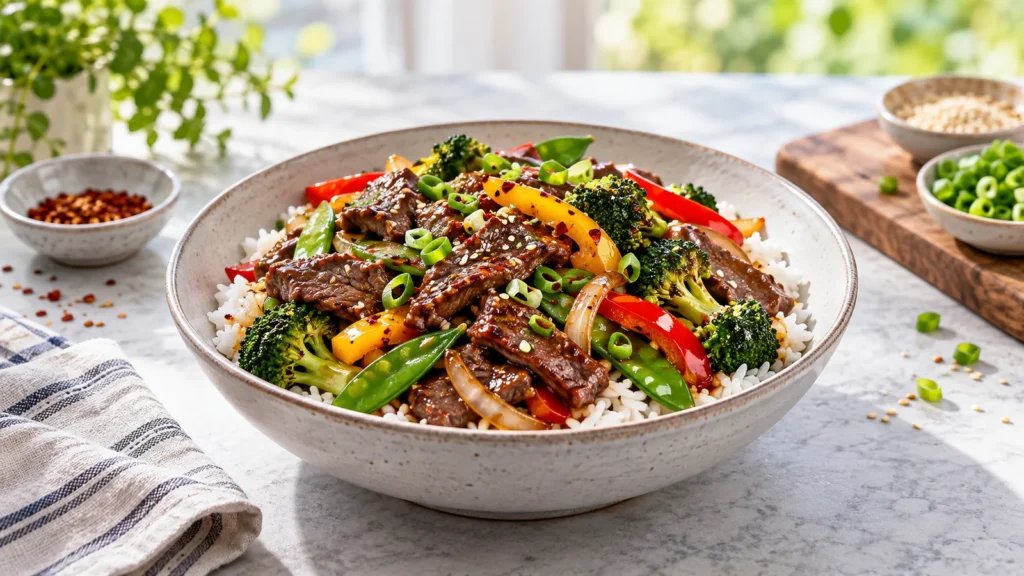
Beef stir fry recipes make weeknight cooking easy: thin slices of tender beef, crisp vegetables, and a glossy homemade sauce come together in about 30 minutes. This version gives you reliable ratios, clear doneness cues, and plenty of ways to adapt dinner to what you have.
The best beef stir fry recipes depend on preparation more than complicated techniques. Serve this dish over rice, toss it with noodles, or keep it lighter with cauliflower rice. Having the beef, vegetables, aromatics, and sauce ready before the pan gets hot is the key to fast, even cooking.
Table of Contents
Why You’ll Love This Recipe
- Fast: The complete meal takes about 30 minutes.
- Flexible: Change the vegetables, protein, spice level, or serving base.
- Reliable: Batch searing prevents steamed meat, while an exact sauce ratio produces a glossy coating.
- Make-ahead friendly: Slice the beef, cut the vegetables, and mix the sauce in advance.
- Easy to customize: Unlike rigid beef stir fry recipes, this method works with many seasonal vegetables and pantry staples.
Best Beef Cuts for Stir-Fry
Flank steak has bold flavor and stays tender when sliced thinly against the grain. Sirloin is slightly more forgiving and naturally tender, while skirt steak offers excellent flavor but requires careful trimming and very thin slicing.
Economical cuts such as chuck steak can also work. Remove tough connective tissue, slice the meat about 1/8 inch (3 mm) thick, and use the optional velveting step below. That preparation helps beef stir fry recipes succeed even when a naturally firm cut is used. For another quick beef dinner, try this easy beef and broccoli recipe.
How to Slice Beef Against the Grain
Look closely at the raw steak and identify the long lines running through it. Those lines are muscle fibers. Position the knife perpendicular to them so each cut shortens the fibers rather than following their length. Use a sharp knife and smooth strokes to avoid tearing or compressing the meat.
If the grain changes direction across a large steak, divide the steak into smaller sections first. Turn each section separately before slicing. Uniform pieces cook at the same rate, which prevents some slices from drying out while thicker pieces remain undercooked.
Ingredients
- 1 pound (454 g) flank steak or sirloin
- 1 tablespoon reduced-sodium soy sauce
- 1 teaspoon cornstarch
- 2 tablespoons neutral oil, divided
- 1 red bell pepper, sliced
- 1 medium carrot, thinly sliced
- 2 cups (180 g) broccoli florets
- 3 scallions, cut into 1-inch pieces
- 2 garlic cloves, minced
- 1 teaspoon grated fresh ginger
- 1/2 cup (120 ml) reduced-sodium beef broth
- 3 tablespoons reduced-sodium soy sauce
- 1 tablespoon oyster sauce
- 1 tablespoon rice vinegar
- 2 teaspoons brown sugar or honey
- 2 teaspoons cornstarch
- 1 teaspoon toasted sesame oil
- Cooked rice, noodles, or cauliflower rice, for serving
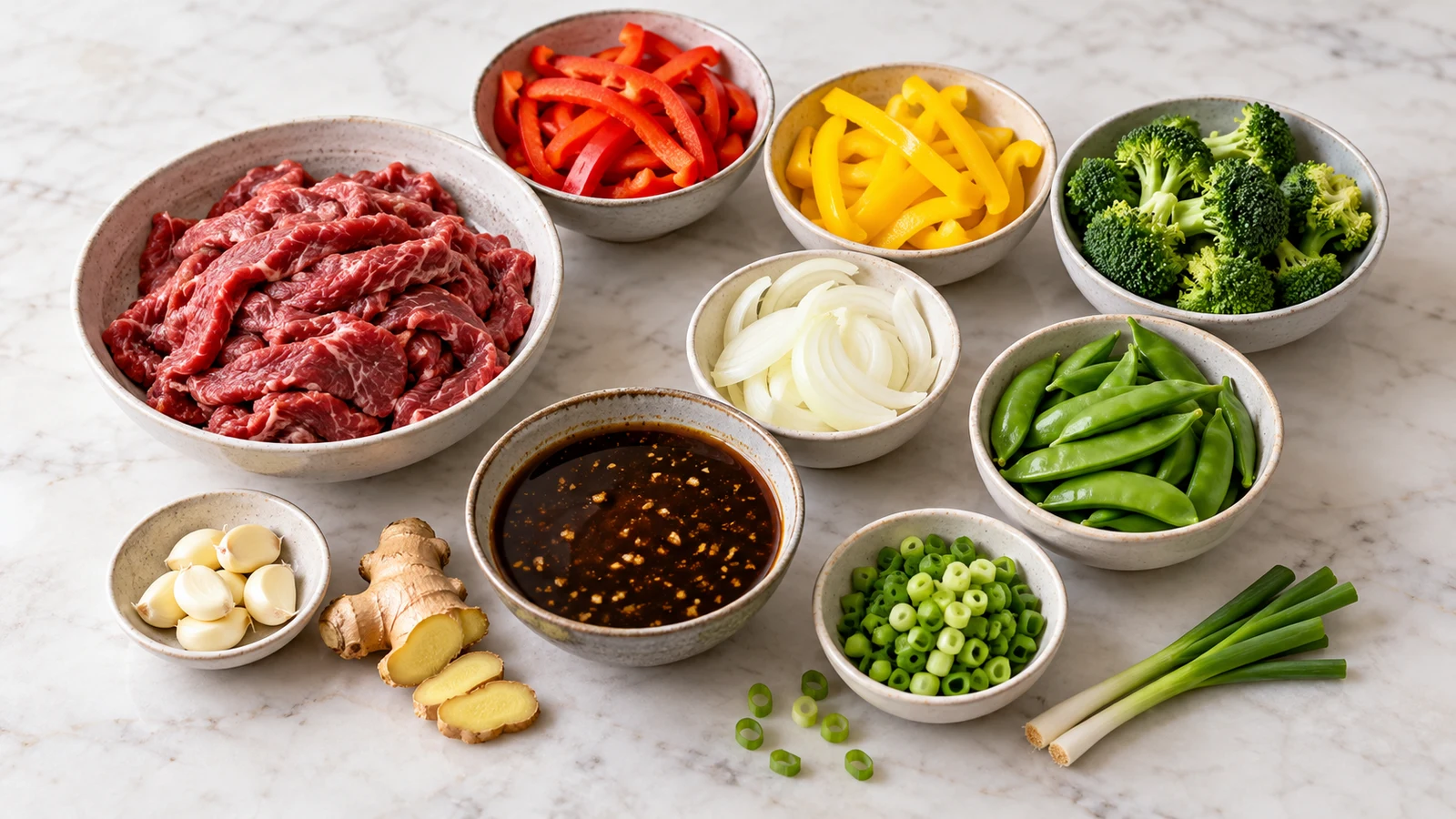
Homemade Beef Stir Fry Sauce Recipe
This beef stir fry sauce recipe uses a dependable ratio of 1/2 cup broth, 3 tablespoons soy sauce, 1 tablespoon oyster sauce, 1 tablespoon rice vinegar, 2 teaspoons sweetener, 2 teaspoons cornstarch, and 1 teaspoon sesame oil. Whisk the cornstarch into the cold liquids before cooking so it disperses without clumping.
The broth provides enough liquid to coat the meat and vegetables, while soy sauce and oyster sauce bring savory depth. Vinegar balances the sweetness, and sesame oil adds aroma. Cornstarch thickens the mixture only after it reaches a simmer, so the sauce may still look thin when first poured into the pan.
For lower sodium, use unsalted broth and low-sodium soy sauce. For gluten-free sauce, choose certified gluten-free tamari and gluten-free oyster sauce. For an alcohol-free version, use rice vinegar rather than rice wine; for oyster-free cooking, substitute vegetarian mushroom sauce. These swaps preserve the balance of the beef stir fry sauce recipe without changing the cooking method.
The general searing method follows established beef stir-fry basics. Keep the sauce beside the stove and whisk it once more immediately before adding it because cornstarch settles quickly.
Preparation and Optional Tenderizing
Chill the beef for 20 minutes so it firms up, then identify the visible muscle fibers and cut across them, not parallel to them. Keep each slice near 1/8 inch (3 mm) thick. Cutting against the grain shortens the fibers and makes every bite easier to chew.
For simple velveting, toss the sliced beef with 1 tablespoon soy sauce and 1 teaspoon cornstarch, then rest it for 10 minutes. This light coating reduces moisture loss and encourages browning, making it useful for many beef stir fry recipes.
If using a particularly firm economical cut, first mix in 1/4 teaspoon baking soda, rest for 15 minutes, rinse well, pat completely dry, and then add the soy sauce and cornstarch. Do not skip rinsing or drying. Residual baking soda can affect flavor, while surface water can stop the beef from searing.
How to Make Beef Stir Fry Recipes at Home
- Mix the sauce: Whisk the broth, 3 tablespoons soy sauce, oyster sauce, vinegar, sugar, 2 teaspoons cornstarch, and sesame oil until smooth.
- Heat the pan: Place a wok or large stainless-steel or cast-iron skillet over high heat for 2 to 3 minutes. It is ready when a drop of water evaporates almost immediately.
- Sear in batches: Add 1 tablespoon oil, followed by half the beef in one uncrowded layer. Cook for 45 to 60 seconds without moving it, toss, and cook for another 30 to 60 seconds. Transfer when browned outside with a faint pink center; repeat with the remaining beef.
- Cook firm vegetables first: Add the remaining oil, carrot, and broccoli. Stir-fry for 2 minutes, then add 2 tablespoons water and cook for 1 minute.
- Add quick-cooking vegetables: Add the bell pepper and scallions and cook for 1 to 2 minutes. The vegetables should look brightly colored and feel crisp-tender.
- Finish: Add the garlic and ginger for 30 seconds. Whisk the sauce again, pour it into the pan, and simmer for 30 to 60 seconds. Return the beef and toss just until the sauce is glossy and coats everything.
Expert Tips for Beef Stir Fry Recipes
- Use a wide cooking surface: A 12-inch skillet gives moisture room to evaporate and helps the beef brown instead of steam.
- Dry the beef thoroughly: Blot it before adding the soy sauce and cornstarch. Excess surface moisture is one of the most common reasons beef stir fry recipes turn watery.
- Choose a neutral oil: Use an oil suited to high heat so it does not overwhelm the garlic, ginger, and sesame flavors.
- Let the pan recover: Allow it to become hot again between beef batches. Adding the second batch to a cooler pan weakens the sear.
- Cut vegetables consistently: Similar-size pieces finish together. Slice carrots thinly and keep broccoli florets relatively small.
- Stir with purpose: Give the beef brief undisturbed contact with the pan, but move the vegetables frequently so their edges cook without burning.
- Add aromatics late: Garlic and ginger need only 30 seconds. Cooking them earlier can make them bitter before the firm vegetables soften.
- Finish promptly: Remove the pan from the heat as soon as the beef stir fry sauce recipe becomes glossy and coats the ingredients.
Beef Stir Fry Recipe with Noodles
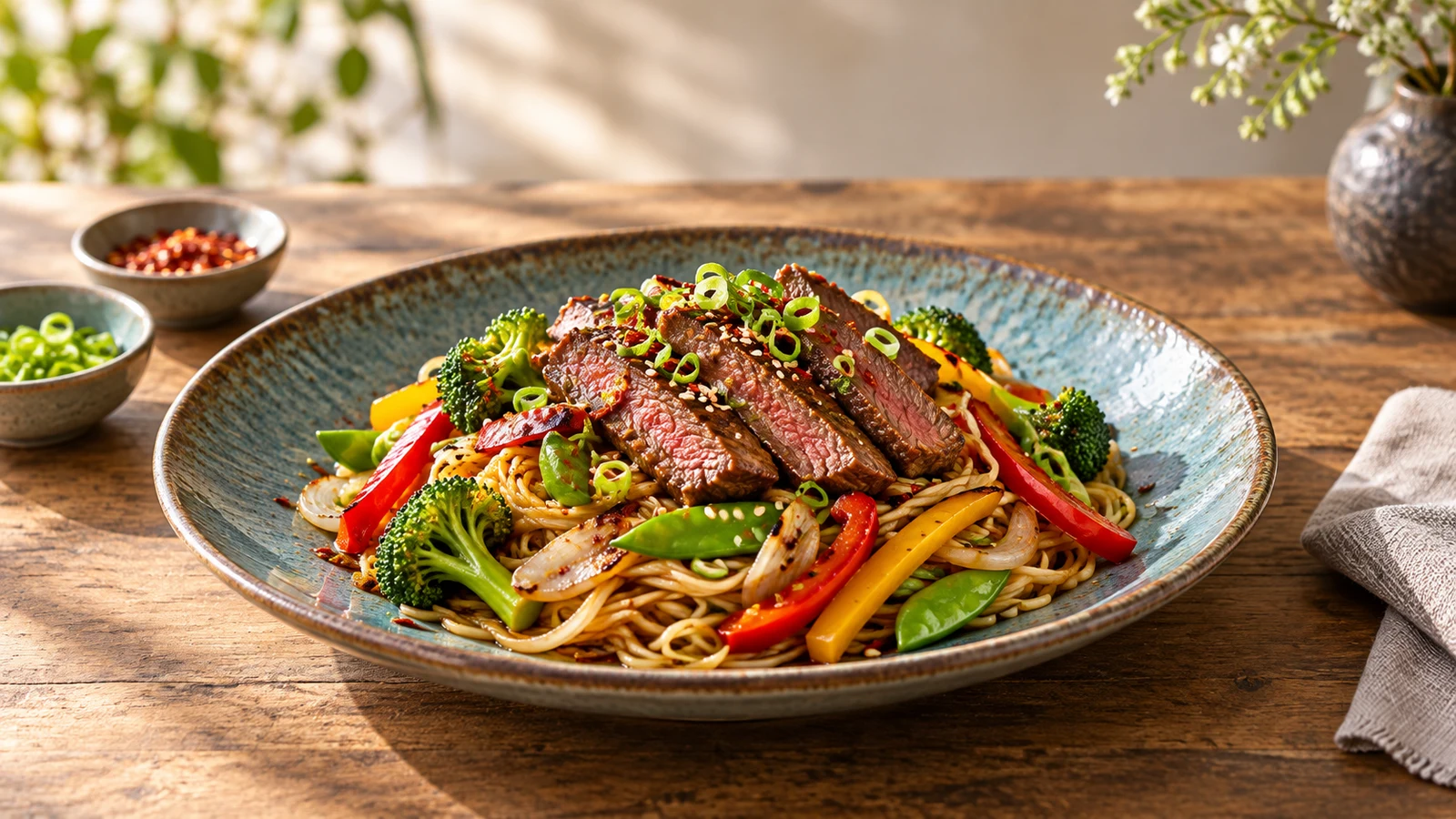
For a tested beef stir fry recipe with noodles, cook 8 ounces (227 g) lo mein noodles or spaghetti until one minute shy of tender. Drain well, then add the noodles during final assembly with an extra 1/4 cup (60 ml) broth. Toss over high heat for 1 to 2 minutes until the noodles absorb the sauce without becoming soft.
Drain the noodles thoroughly because clinging water can dilute the sauce. If they must wait briefly, loosen them gently before adding them to the skillet. The extra broth in this beef stir fry recipe with noodles gives the noodles moisture to absorb while keeping the finished coating glossy.
Keep the vegetables crisp and the beef slightly underdone before final assembly. Both continue cooking as the noodles are tossed through the hot sauce. Serve immediately, since a beef stir fry recipe with noodles will continue absorbing liquid as it stands.
Serving Ideas
Spoon the stir-fry over steamed jasmine rice, brown rice, or noodles. Cauliflower rice, shredded cabbage, and zucchini noodles are practical low-carb choices. If rice is your favorite base, explore these easy beef and rice ideas.
Simple Sides and Garnishes
Fresh cucumber slices, lightly dressed cabbage, or steamed greens add a cool or mild contrast to the savory sauce. For a larger meal, serve smaller portions alongside a clear soup or simple vegetable dish rather than another heavily sauced entrée.
Scallion greens can add fresh color at the table. Toasted sesame seeds and red pepper flakes also complement the dish, but use them sparingly so the ginger, garlic, and beef remain prominent. When serving a beef stir fry recipe with noodles, portion it as soon as tossing is complete.
Variations and Substitutions
Vegetable Variations
Replace broccoli or peppers with snap peas, mushrooms, baby corn, cabbage, or green beans, adding firm vegetables before tender ones. Avoid putting every vegetable into the pan simultaneously. The staged method used in successful beef stir fry recipes protects both texture and color.
Mushrooms release moisture, so cook them in an uncrowded pan until their liquid evaporates. Thin cabbage cooks quickly and should go in near the end. Frozen vegetables can work in a pinch, but thaw and drain them well before cooking to reduce excess water.
Protein and Flavor Substitutions
Chicken, pork, or pressed tofu can replace beef, although cooking times will vary. Ground beef also works well; this Mongolian ground beef recipe offers another economical approach.
For heat, add 1 to 2 teaspoons chili-garlic sauce, sliced fresh chiles, or crushed red pepper. A black-pepper-forward sauce is another option; this bell pepper and black pepper stir-fry reference illustrates that flavor direction.
For a brighter variation, add extra rice vinegar to individual portions rather than changing the pan sauce. For a sweeter profile, choose honey as the listed sweetener. These small adjustments customize the beef stir fry sauce recipe while maintaining its essential liquid-to-cornstarch ratio.
Make-Ahead Guide
Slice the beef and vegetables up to 24 hours ahead and refrigerate them in separate covered containers. Keeping the components separate prevents vegetable moisture from reaching the beef and lets you add each ingredient at the correct time.
The beef stir fry sauce recipe can also be mixed up to 24 hours ahead. Store it covered in the refrigerator, then whisk thoroughly before use because the cornstarch will settle at the bottom. Add cornstarch to the beef no more than 30 minutes before cooking.
Cook rice ahead if desired, cool it promptly, and refrigerate it separately. For a beef stir fry recipe with noodles, the best texture comes from cooking the noodles shortly before final assembly. If they are prepared early, they may stick together or absorb too much sauce.
You can wash and cut the vegetables after shopping, but keep the garlic and ginger separate from them. Aromatics are added later and can become harsh if they spend too long in the hot pan. Labeling the containers by cooking order makes assembly especially quick.
Troubleshooting Common Problems
Most problems with beef stir fry recipes come from excess moisture, insufficient heat, or cooking the ingredients for too long. These fixes address the cause without changing the recipe’s ingredient amounts.
- Tough beef: Slice more thinly against the grain and shorten the final cooking time. Return it only after the sauce thickens.
- Steamed meat: Dry the slices, preheat the pan fully, and cook smaller batches. Leave visible space between the pieces.
- Watery sauce: Drain wet vegetables, whisk the beef stir fry sauce recipe again, and let it reach a full bubble before returning the beef.
- Sauce that is too thick: Remove the pan from the heat promptly. The coating continues to thicken as it cools.
- Limp vegetables: Add vegetables in order of firmness and stop cooking when they are bright and crisp-tender.
- Clumped cornstarch: Mix it into cold liquid and re-whisk immediately before pouring. Do not sprinkle dry cornstarch directly into the hot pan.
- Burned garlic or ginger: Add the aromatics after the vegetables have nearly finished and cook them for only 30 seconds.
- Bland flavor: Make sure the sauce has not been diluted by wet vegetables or poorly drained noodles. Toss thoroughly so every ingredient receives an even coating.
How to Store and Reheat
Refrigerate leftovers in a shallow airtight container within two hours and use within 3 to 4 days. The federal safe-temperature guidance lists 145°F (63°C), followed by a three-minute rest, for whole cuts of beef.
Reheat beef stir fry recipes in a lightly oiled skillet over medium-high heat for 2 to 4 minutes, adding a splash of broth if needed. Heat only until the food is hot to avoid toughening the thin beef or making the vegetables overly soft.
A microwave also works in 30-second intervals, but the vegetables will soften. Stir between intervals to distribute heat. If rice or noodles were stored separately, reheat them separately and combine everything immediately before serving.
Freeze cooled portions for up to 2 months and thaw overnight before reheating. The sauce and beef freeze well, although the vegetables will be softer after thawing. For the best texture, freeze without rice or noodles and prepare a fresh serving base later.
Frequently Asked Questions
Can I prepare the ingredients ahead?
Yes. Slice the beef and vegetables and mix the sauce up to 24 hours ahead, keeping each component in a separate covered container in the refrigerator. Add cornstarch to the beef no more than 30 minutes before cooking.
Do I need a wok?
No. A 12-inch stainless-steel or cast-iron skillet provides ample surface area and retains heat well. Avoid overcrowding regardless of the pan. A nonstick skillet can cook the dish, but it may not produce the same deep sear.
How do I know when the beef is done?
The slices should be browned at the edges and no longer raw-looking when the dish is assembled. Because they are thin, they finish quickly in the simmering sauce. Avoid repeatedly cutting the slices, which releases juices and extends the cooking time.
What vegetables work best?
Use a combination of firm and quick-cooking vegetables. Carrots, broccoli, and green beans go in first; peppers, mushrooms, snap peas, and scallions follow. Cut everything before heating the pan so the cooking sequence stays quick.
Why do beef stir fry recipes cook in batches?
Small batches preserve the pan’s heat and leave enough space for moisture to evaporate. When too much cold beef enters at once, the temperature drops and released liquid surrounds the meat. Batch cooking creates browned edges while keeping the centers tender.
Can I double this beef stir fry sauce recipe?
Yes, but a double batch of sauce should accompany a larger quantity of meat and vegetables rather than being added to the original amount. Too much liquid can turn stir-frying into simmering. Cook an enlarged recipe in batches so the pan remains hot.
Can I make the beef stir fry sauce recipe without oyster sauce?
Yes. Use vegetarian mushroom sauce as the substitute. It supplies savory flavor and body while keeping the remaining quantities unchanged. Check the product label if you also need the finished dish to be gluten-free.
Which noodles are best for a beef stir fry recipe with noodles?
Lo mein noodles provide a classic chewy texture, while spaghetti is an accessible alternative. Cook either one minute shy of tender and drain it well. That slight undercooking helps a beef stir fry recipe with noodles stay pleasantly firm after the final toss.
How can I prevent noodles from soaking up all the sauce?
Add the specified extra 1/4 cup (60 ml) broth, keep the noodles slightly underdone, and serve promptly. Do not leave them sitting in the hot skillet. Stored noodle leftovers will absorb more liquid, so add a small splash of broth during reheating.
Can I use frozen vegetables?
Yes, although fresh vegetables usually stay crisper. Thaw frozen vegetables completely, drain them, and blot away surface moisture. Add them according to firmness and cook only until heated through so they do not become mushy.
Why does my sauce lose its gloss?
Overcooking can make a cornstarch-thickened sauce excessively tight or dull. Let it bubble only until it coats the ingredients, then remove the pan from the heat. Repeated reheating can also reduce its fresh, glossy appearance.
Printable Recipe Card
Equipment: Wok or 12-inch heavy skillet, sharp knife, cutting board, mixing bowl, whisk
Prep time: 15 minutes
Cook time: 15 minutes
Total time: 30 minutes
Yield: 4 servings
Nutrition: Approximately 360 calories, 30 g protein, 18 g carbohydrate, 18 g fat, and 780 mg sodium per serving, excluding rice or noodles. Values vary by ingredients.
Ingredients: 1 pound flank steak; 1 tablespoon soy sauce; 1 teaspoon cornstarch; 2 tablespoons oil; 1 bell pepper; 1 carrot; 2 cups broccoli; 3 scallions; 2 garlic cloves; 1 teaspoon ginger. For the sauce: 1/2 cup beef broth, 3 tablespoons soy sauce, 1 tablespoon oyster sauce, 1 tablespoon rice vinegar, 2 teaspoons brown sugar, 2 teaspoons cornstarch, and 1 teaspoon sesame oil.
- Slice the beef 1/8 inch thick against the grain; toss with 1 tablespoon soy sauce and 1 teaspoon cornstarch.
- Whisk all sauce ingredients together.
- Sear the beef in two batches in a very hot oiled pan, about 2 minutes per batch; transfer to a plate.
- Stir-fry the carrot and broccoli for 3 minutes. Add the pepper and scallions for 2 minutes, then cook the garlic and ginger for 30 seconds.
- Add the sauce and simmer until glossy, 30 to 60 seconds. Return the beef, toss briefly, and serve immediately.
A Reliable Weeknight Stir-Fry
With a hot pan, thinly sliced beef, and the right sauce ratio, beef stir fry recipes become an easy formula rather than a rigid dish. Keep the cooking order consistent, change the vegetables or serving base, and enjoy a balanced dinner in about 30 minutes.
Once you understand batch searing, staged vegetables, and the correct point for adding sauce, the same approach can be adapted confidently. Whether you serve rice or make a beef stir fry recipe with noodles, prompt serving preserves the tender beef, crisp vegetables, and glossy finish.
Reviews
Reader reviews are managed separately (outside this build).