Beef
Ultimate beef stir fry sauce recipe for Savory Beef
Try this beef stir fry sauce recipe with soy sauce, ginger, garlic and cornstarch for tender beef and crisp vegetables, served over rice or noodles.
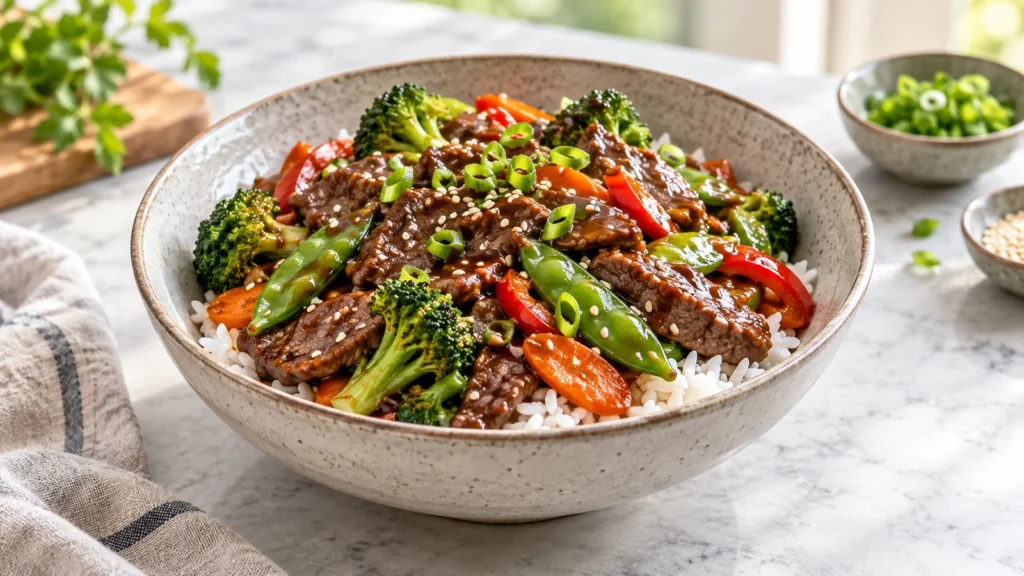
This beef stir fry sauce recipe gives you a glossy, savory sauce you can prepare ahead and use with beef, vegetables, rice, or noodles. The balanced mixture thickens quickly in the pan and makes enough for one generous four-serving stir-fry.
Unlike many beef stir fry recipes, this version explains exactly when to sear the meat, cook each vegetable, and add the sauce. Those small details help you achieve tender beef, crisp vegetables, and an evenly coated finish instead of a watery pan.
Quick facts: The sauce yields about 1 cup (240 ml), while the complete meal takes approximately 35 minutes. A wok is helpful, but a large 12-inch skillet works equally well.
Table of Contents
Why You’ll Love This Beef Stir Fry Sauce Recipe
- The sauce can be mixed up to four days ahead.
- Precise measurements produce a reliable sweet-savory balance.
- High-heat batch-searing keeps the beef tender rather than steamed.
- Vegetables, noodles, and dietary substitutions are easy to customize.
- The method is adaptable enough to become a beef stir fry recipe with noodles without changing the core cooking technique.
- It uses familiar ingredients while delivering the glossy texture associated with excellent beef stir fry recipes.
Ingredients
For the sauce:
- 1/2 cup (120 ml) low-sodium beef broth
- 1/3 cup (80 ml) low-sodium soy sauce
- 2 tablespoons packed brown sugar
- 1 tablespoon rice vinegar
- 2 teaspoons toasted sesame oil
- 2 teaspoons minced fresh ginger
- 2 garlic cloves, minced
- 1 tablespoon cornstarch
- 1/4 teaspoon crushed red pepper, optional
For the stir-fry:
- 1 1/4 pounds (567 g) flank steak, sirloin, or skirt steak
- 2 tablespoons neutral high-heat oil, divided
- 3 cups broccoli florets
- 1 red bell pepper, thinly sliced
- 1 medium carrot, thinly sliced
- 3 green onions, cut into 1-inch pieces
- Cooked rice, for serving
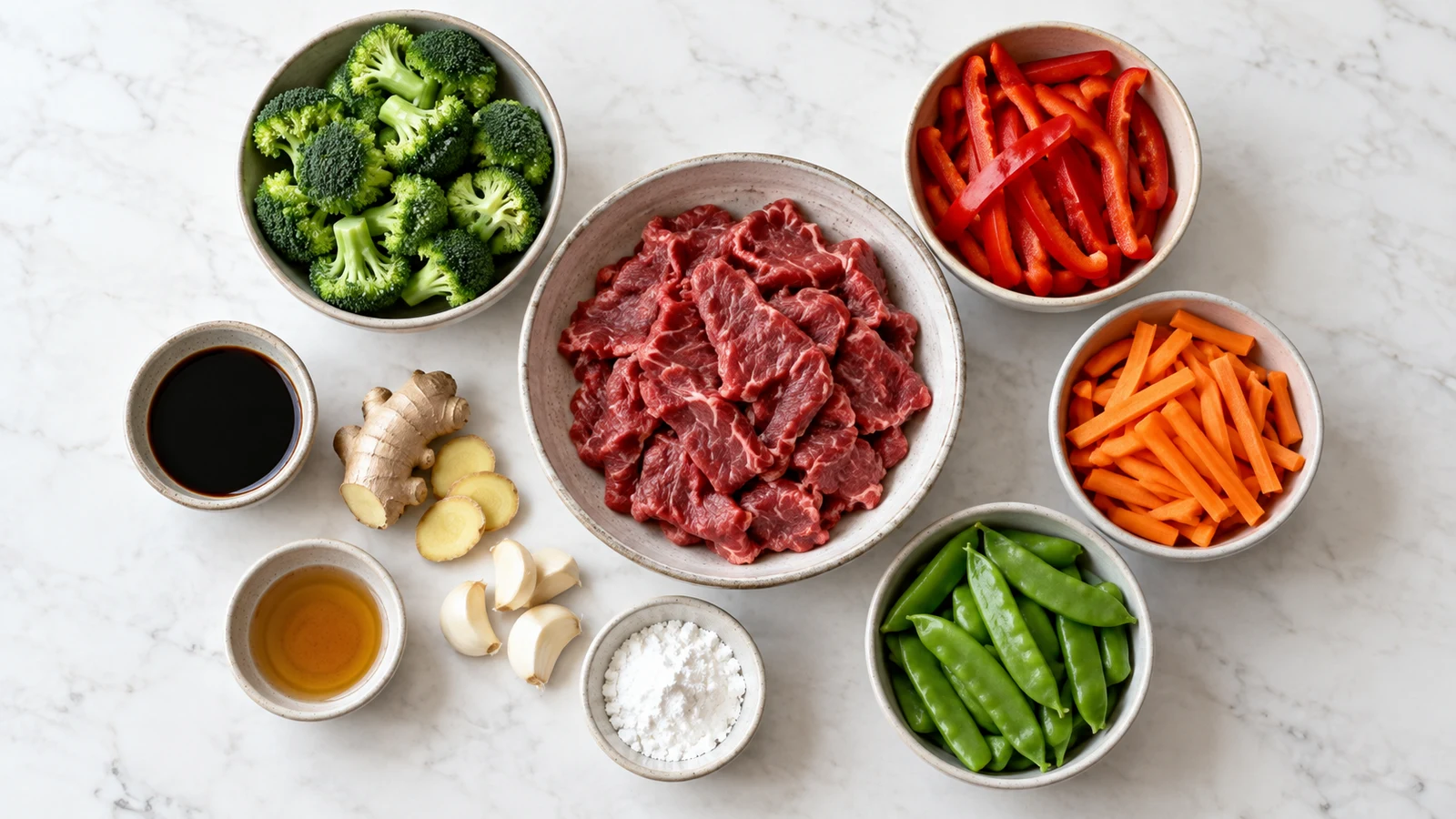
How the Sauce Ingredients Work
The broth provides volume without making the finished sauce overwhelmingly salty. Soy sauce supplies the main savory flavor, while brown sugar rounds out the salt and encourages a glossy finish. Rice vinegar adds enough acidity to keep this beef stir fry sauce recipe lively rather than heavy.
Toasted sesame oil is a concentrated finishing flavor, so the measured amount is intentionally modest. Fresh ginger and garlic bring warmth and aroma. Cornstarch thickens the liquid only after it reaches a simmer, which is why the sauce may appear thin when first mixed.
Crushed red pepper is optional and adds gentle heat without changing the structure of the sauce. If serving diners with different preferences, omit it from the pan and offer extra at the table. This keeps the base suitable for family-friendly beef stir fry recipes.
How to Make This Beef Stir Fry Sauce Recipe
- Slice the beef: Chill the steak for 20 minutes to firm it slightly. Identify the direction of the muscle fibers, then cut across the grain into strips about 1/4 inch thick. Flank steak has bold flavor, sirloin is especially tender, and skirt steak cooks quickly but must be sliced carefully.
- Velvet if desired: For optional beef velveting, toss the strips with 1 teaspoon cornstarch, 1 teaspoon oil, and 1 tablespoon water. Rest for 15 minutes. This light coating helps thinly sliced beef retain moisture during high-heat cooking.
- Mix the sauce: Whisk the broth, soy sauce, brown sugar, vinegar, sesame oil, ginger, garlic, cornstarch, and red pepper until completely smooth. The basic stir-fry sauce ratio is roughly two parts savory liquid to one part broth, with smaller amounts of sweetener, acid, and aromatics.
- Heat the pan: Place a wok or large skillet over high heat for 2 minutes. Add 1 tablespoon oil and heat until shimmering. Keep the ingredients nearby because cooking moves quickly.
- Sear in batches: Add half the beef in a single layer and leave it undisturbed for 45 seconds. Stir-fry for another 60 to 90 seconds, then transfer it to a plate. Repeat with the remaining beef. This batch-searing technique prevents crowding and steaming.
- Cook the vegetables: Add the remaining oil, followed by the carrot and broccoli. Cook for 2 minutes, add 2 tablespoons water, and cover for 1 minute. Add the bell pepper and green onions last, then cook for 1 to 2 minutes. This vegetable cooking order gives firm produce a head start while preserving the pepper’s texture.
- Add the sauce: Whisk the mixture again because cornstarch settles. Return the beef to the pan, pour in the sauce, and toss continuously for 1 to 2 minutes, until bubbling and glossy. Add sauce only after the beef and vegetables are nearly cooked; adding it early can cause burning or overcooking.
- Check doneness: Serve immediately over rice. For food-safety guidance, consult the USDA safe minimum internal temperature chart.
Expert Tips for Better Beef Stir Fry Recipes
Prepare everything before heating the pan
Stir-frying moves too quickly to pause for chopping or measuring. Slice the beef and vegetables, mix the beef stir fry sauce recipe, and place a clean serving plate nearby before turning on the heat. This preparation prevents one ingredient from overcooking while you search for the next.
Dry the beef thoroughly
Excess surface moisture turns into steam and interferes with browning. Pat the sliced beef dry before optional velveting. If the beef releases liquid in the pan, allow that liquid to evaporate before expecting the edges to brown.
Use a broad cooking surface
A wok’s sloped sides make tossing convenient, but a broad, heavy skillet often maintains heat better on a home stove. Avoid a small pan or oversized batches. Successful beef stir fry recipes depend on enough contact between the meat and the hot surface.
Cut ingredients consistently
Uniform pieces cook at approximately the same speed. Keep the beef strips about 1/4 inch thick, cut broccoli into similarly sized florets, and slice the carrot thinly. Larger broccoli pieces may remain hard after the smaller vegetables are ready.
Whisk immediately before pouring
Cornstarch begins settling soon after the sauce is mixed. A final whisk distributes it evenly and helps the beef stir fry sauce recipe thicken without translucent lumps. Pour the sauce around the hot surface of the pan, then toss everything continuously.
Stop cooking once the sauce coats the food
The sauce needs only 1 to 2 minutes after it begins bubbling. Continued cooking can make it overly thick and can push already-seared beef past its tender stage. Remove the pan from the heat when the sauce clings lightly to the ingredients.
Variations and Substitutions
Beef Stir Fry Recipe with Noodles
For a beef stir fry recipe with noodles, prepare 8 ounces (227 g) of lo mein, udon, or rice noodles. Increase the broth to 3/4 cup and the soy sauce to 1/2 cup so there is enough liquid to coat the noodles. Toss the cooked, drained noodles into the pan with the beef and sauce.
Cook noodles only until tender according to their package directions, then drain them well. Overcooked or wet noodles can dilute the sauce and become soft during tossing. A beef stir fry recipe with noodles is best served immediately because noodles continue absorbing liquid as they stand.
Gluten-Free and Lower-Sodium Options
Use certified gluten-free tamari and gluten-free broth for a gluten-free meal. Coconut aminos can serve as a soy sauce substitute, although it is sweeter, so reduce the brown sugar to 1 teaspoon. For a lower-sodium version, use unsalted broth and reduced-sodium tamari or soy sauce.
Vegetable Variations
Mushrooms, snap peas, baby corn, zucchini, or bok choy can replace part of the vegetables. Add dense vegetables earlier and tender or watery vegetables later. These flexible choices make the same technique useful for many beef stir fry recipes without altering the sauce.
Mushrooms should have room to brown, while zucchini needs only brief cooking. Bok choy stems can go in before the leaves. Frozen vegetables are convenient, but thawing and drying them first reduces the chance of a watery beef stir fry sauce recipe.
Different Beef Cuts
Flank steak provides pronounced beef flavor, sirloin is naturally tender, and skirt steak cooks exceptionally quickly. Whichever cut you choose, slicing thinly across the grain matters more than choosing the most expensive option. This principle applies across most beef stir fry recipes.
Adjusting Heat and Sweetness
For more spice, increase the crushed red pepper gradually or serve extra on the side. To make the sauce less sweet, reduce the brown sugar slightly rather than adding more salty soy sauce. Taste preferences vary, but the liquid and cornstarch proportions should remain balanced.
If you prefer hands-off beef dishes, see this crock-pot beef and broccoli or slow-cooker beef sirloin tip roast.
Serving Ideas
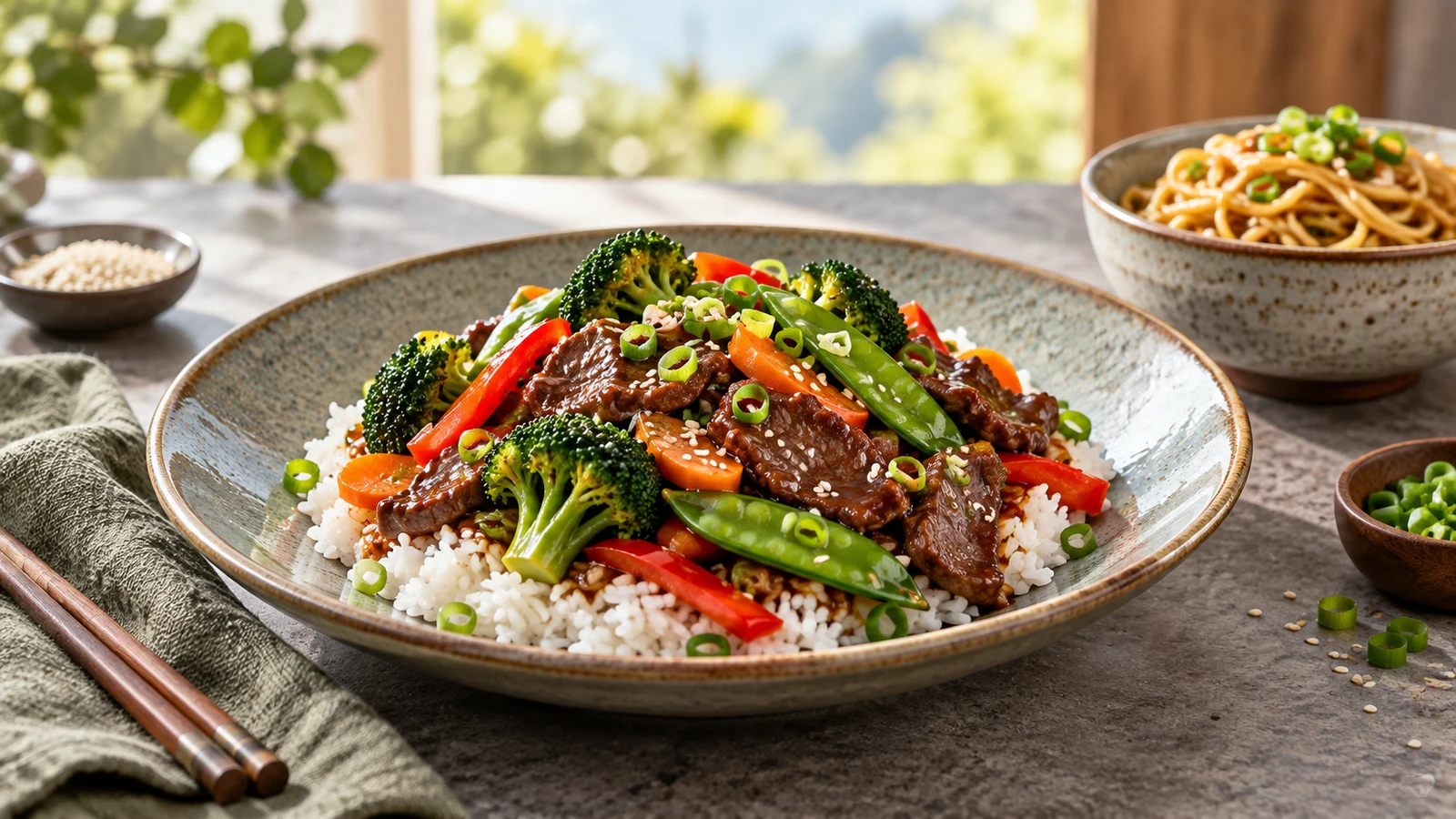
Serve the stir-fry with steamed jasmine rice, brown rice, or cauliflower rice. Jasmine rice offers a soft texture that absorbs the sauce, while brown rice brings a nuttier flavor. Cauliflower rice is a lighter base that still catches the glossy coating.
For a casual dinner, place rice, beef, vegetables, and extra green onions in separate serving dishes. Diners can build their own bowls and control the amount of sauce. This approach is especially useful when adapting beef stir fry recipes for different appetites.
A beef stir fry recipe with noodles needs little beside it, but a crisp cucumber salad or lightly cooked greens can offer a refreshing contrast. Keep side dishes simple so they do not compete with the ginger, garlic, sesame, and soy flavors.
For another streamlined dinner using a familiar combination of beef and vegetables, try this easy beef and broccoli recipe.
Make-Ahead Instructions
Mix the standalone beef stir fry sauce recipe up to four days ahead and refrigerate it in a sealed jar. The cornstarch will settle, so shake the jar vigorously or whisk the sauce until smooth before using it.
You can slice the beef one day ahead and refrigerate it in a covered container. Prepare the vegetables separately so moisture from one component does not affect another. Keep the green onions apart from the broccoli and carrot because they cook at different times.
For efficient weeknight cooking, prepare the sauce, cut the beef, and wash the vegetables in advance. Slice the bell pepper and carrot ahead, but cut broccoli close to cooking when possible. Once everything is ready, the active cooking portion of this beef stir fry sauce recipe is brief.
Do not combine raw beef with the sauce for several days of storage. The cornstarch mixture is designed to thicken in the hot pan, and prolonged soaking changes the surface texture of the beef. Store raw meat safely and separately from produce.
How to Store and Reheat
Refrigerate unused standalone sauce in an airtight jar for up to four days, whisking before use. The sauce yield is about 1 cup: use the full batch for 1 to 1 1/2 pounds of beef and 4 cups of vegetables. Double every ingredient for two batches; do not double the cornstarch if you prefer a lighter consistency.
Cool cooked stir-fry promptly and refrigerate it in a shallow airtight container for up to three days. The USDA explains why perishable food should not remain in the 40°F to 140°F danger zone for more than two hours.
Freeze cooled stir-fry for up to two months, although crisp vegetables will soften after thawing. Divide it into meal-size portions before freezing so you can thaw only what you need. Rice or noodles are best stored separately when texture is a priority.
Reheat gently in a skillet over medium heat with 1 to 2 tablespoons broth until steaming throughout. Stir only as needed so the vegetables retain their shape. A microwave also works, but short intervals and occasional stirring promote more even heating.
A beef stir fry recipe with noodles may absorb much of its sauce during refrigeration. Add a small splash of broth while reheating and loosen the noodles gently. Avoid adding a large amount at once, which can make the finished dish watery.
Follow the FDA’s broader safe food-handling practices when preparing and storing the meal.
Troubleshooting This Beef Stir Fry Sauce Recipe
Why is the sauce too thin?
First, make sure the sauce has reached a steady bubble, since cornstarch needs heat to thicken. Simmer it for another minute while tossing. If it remains thin, add a slurry made with 1 teaspoon each cornstarch and cold water, then cook briefly.
Why is the sauce too thick?
Stir in broth one tablespoon at a time until the coating loosens. A sauce can become too thick if it simmers too long or if extra cornstarch was used during velveting. Remove the pan from the heat promptly once the desired consistency is reached.
Why does the stir-fry taste too salty?
Add unsalted broth a little at a time and balance the flavor with a small splash of rice vinegar. Serving the dish with plain rice can also soften the overall saltiness. Avoid adding extra sugar first, since that may make the sauce both salty and overly sweet.
Why is there liquid in the bottom of the pan?
A crowded pan, wet beef, or watery vegetables can lower the temperature and release steam. Cook the beef in batches and dry all ingredients well. Frozen produce should be thawed and drained before it is used in this beef stir fry sauce recipe.
Why did the sauce form lumps?
Cornstarch lumps usually occur when the sauce was not whisked just before pouring or when extra dry cornstarch was added directly to hot liquid. Always mix additional cornstarch with cold water first, then drizzle the slurry into the bubbling sauce while stirring.
Why is my beef tough?
The usual causes are slicing with the grain, using thick pieces, overcrowding the pan, or cooking too long. Cut chilled beef thinly across the grain and sear it briefly in separate batches. Return it only when the vegetables are nearly done.
Frequently Asked Questions
Can I make only the beef stir fry sauce recipe?
Yes. Whisk it together, refrigerate it in a sealed jar, and use it within four days. Shake or whisk thoroughly before pouring because the cornstarch settles at the bottom. Use the full batch with 1 to 1 1/2 pounds of beef and 4 cups of vegetables.
Can I double the sauce?
Yes. Double every sauce ingredient for two full batches. If you prefer a lighter consistency, do not double the cornstarch. Store the extra sauce separately rather than pouring more than needed into one pan, since excessive liquid can interfere with the stir-fried texture.
Can I use the sauce with chicken or tofu?
Yes. The same quantity coats approximately 1 1/4 pounds of chicken or a 14-ounce block of pressed tofu with vegetables. Cook either protein safely before adding the sauce. Tofu should be pressed and browned first so it holds its shape.
What is the best pan for beef stir fry recipes?
A carbon-steel wok is excellent when your stove can heat it effectively. On many home ranges, a large heavy skillet provides more direct contact and retains heat well. Whichever pan you use, leave enough room for the beef to sear instead of steam.
Can I prepare a beef stir fry recipe with noodles ahead?
You can prepare its individual components ahead, but combine them shortly before serving. Cooked noodles absorb sauce as they rest and may become soft. For leftovers, refrigerate promptly and add a little broth when reheating to loosen the coating.
Which noodles work best?
Lo mein, udon, and rice noodles all work, but their textures differ. Lo mein is pleasantly chewy, udon is thick and soft, and rice noodles offer a lighter bite. Follow the package directions and avoid overcooking them before they enter the pan.
Can I use frozen vegetables?
Yes, although fresh vegetables generally stay crisper. Thaw frozen vegetables and dry them thoroughly before cooking. Add them in an order based on density, just as you would with fresh produce, and avoid crowding the pan.
How can I make the beef stir fry sauce recipe spicier?
Increase the crushed red pepper gradually, or add extra at the table. Keeping the base moderately seasoned is helpful when feeding a group. Spice can always be added, but it is difficult to remove once the sauce is in the pan.
What nutrition does one serving provide?
One of four servings, without rice or noodles, provides approximately 390 calories, 33 grams protein, 18 grams carbohydrate, 20 grams fat, and 1,050 milligrams sodium. Values vary by beef cut and product brands.
Recipe Card
Description: A versatile beef stir fry sauce recipe paired with tender seared beef and crisp vegetables for a fast, savory dinner.
- Prep time: 20 minutes
- Cook time: 15 minutes
- Total time: 35 minutes
- Servings: 4
- Sauce yield: About 1 cup (240 ml)
Ingredients: Combine the listed sauce ingredients and prepare the beef, oil, broccoli, bell pepper, carrot, and green onions as directed above.
Instructions: Slice and optionally velvet the beef. Whisk the sauce, sear the beef in batches, cook the vegetables from firmest to most delicate, return the beef, and toss with the sauce for 1 to 2 minutes.
Nutrition per serving: Approximately 390 calories, 33 g protein, 18 g carbohydrates, 20 g fat, and 1,050 mg sodium, excluding rice or noodles.
A Reliable Stir-Fry for Busy Evenings
With prepared sauce, properly sliced beef, and a hot uncrowded pan, this dependable beef stir fry sauce recipe comes together quickly while keeping every component flavorful and well textured. The same method can support many beef stir fry recipes simply by changing the vegetables or serving base.
Serve it over rice for the original meal, or use the adjusted liquid amounts for a beef stir fry recipe with noodles. Once the ingredients are arranged beside the stove, the final cooking is fast, practical, and easy to repeat.
Reviews
Reader reviews are managed separately (outside this build).