Beef
Easy beef stir fry recipe with noodles: Savory Perfection
Try this tasty beef stir fry recipe with noodles for tender beef, crisp veggies, and savory homemade sauce—a quick, flavorful easy weeknight dinner.
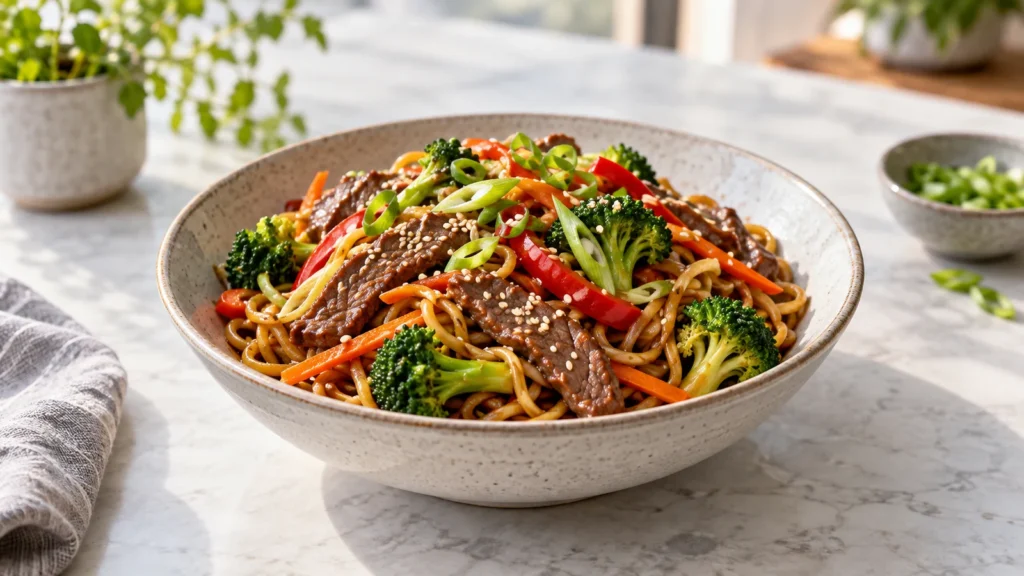
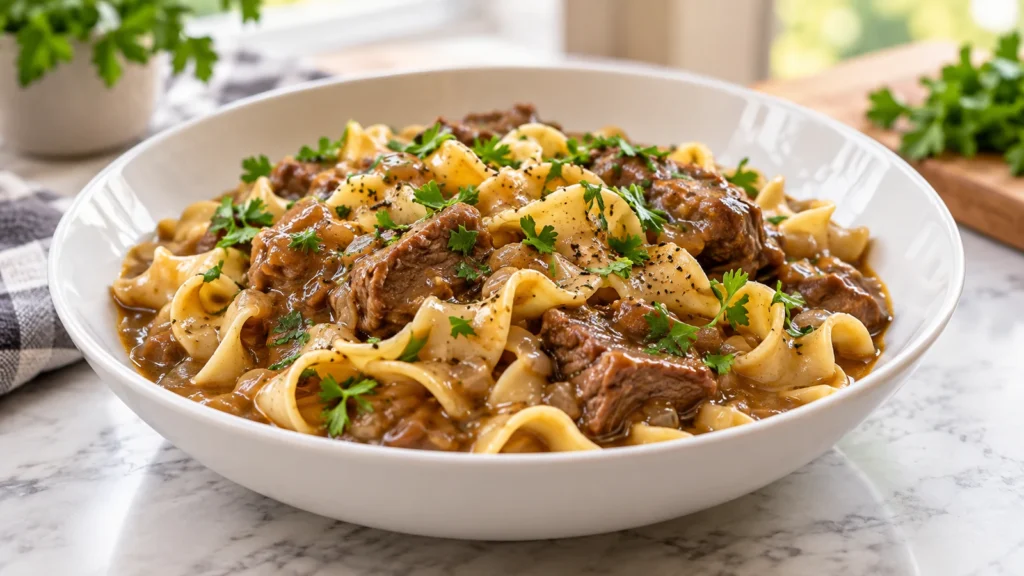
This beef stir fry recipe with noodles puts tender flank steak, crisp vegetables, and springy egg noodles on the table in about 35 minutes. A savory homemade sauce coats everything without making the noodles heavy or soggy.
Among quick beef stir fry recipes, this one stands out for its reliable batch-searing method and flexible ingredients. Follow the visual cues below, and you can get excellent results in either a wok or a large skillet.
The key to a successful beef stir fry recipe with noodles is preparation. Slice the ingredients, mix the sauce, and cook the noodles before heating the pan. Once stir-frying begins, each stage takes only a few minutes.
Table of Contents
Why You’ll Love This Recipe
- Fast: It needs only 20 minutes of preparation and 15 minutes of cooking.
- Flavorful: Soy sauce, oyster sauce, garlic, and sesame oil create a balanced savory glaze.
- Flexible: Change the noodles, vegetables, spice level, or sauce ingredients easily.
- Weeknight-friendly: The sauce and vegetables can be prepared ahead.
- Reliable: Unlike some beef stir fry recipes, this method cooks the meat in batches so it browns instead of steaming.
Ingredients
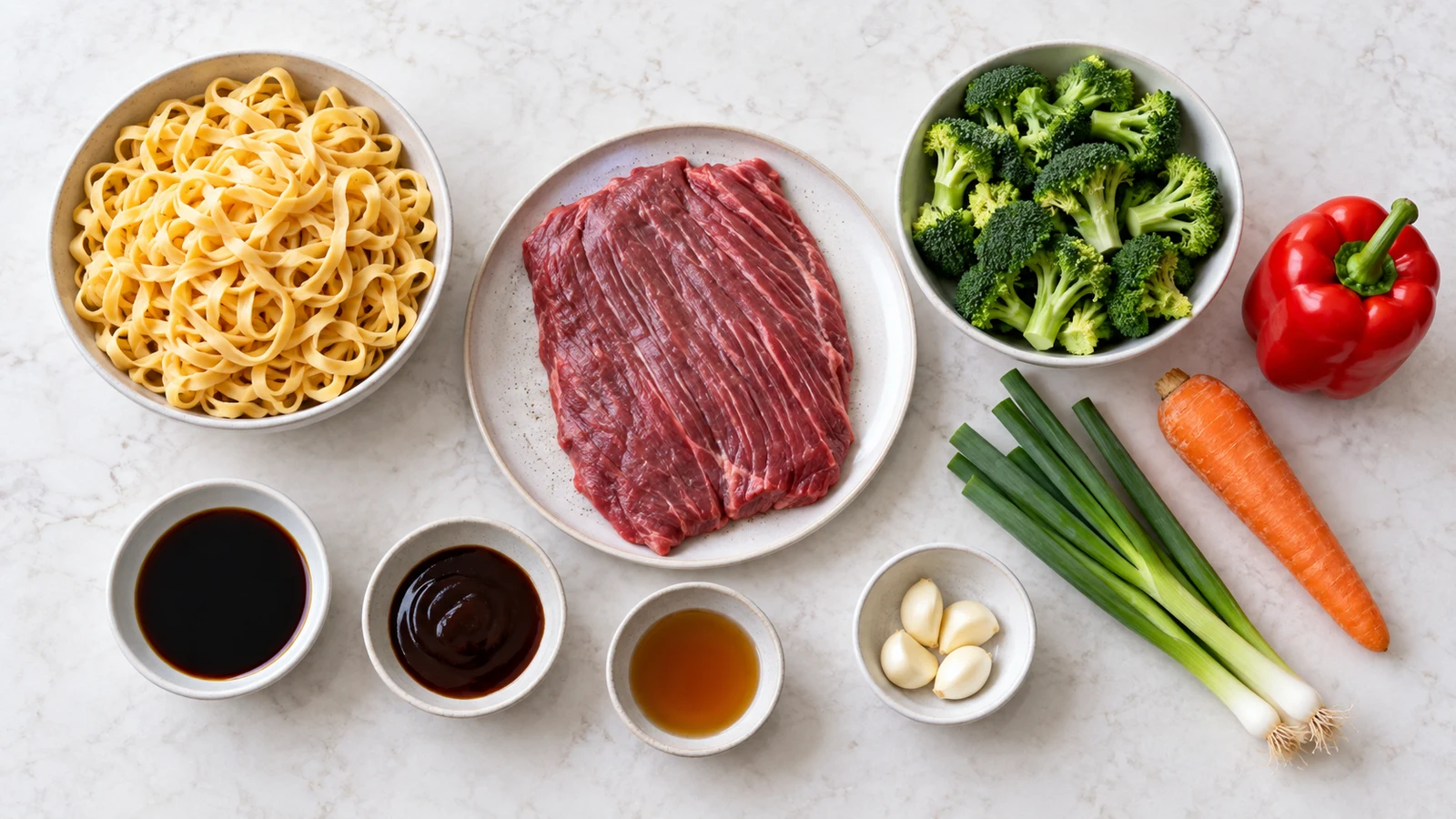
- 1 pound (454 g) flank steak
- 8 ounces (227 g) dried egg noodles
- 2 cups small broccoli florets
- 1 red bell pepper, thinly sliced
- 1 medium carrot, cut into thin matchsticks
- 4 green onions, sliced, white and green parts separated
- 3 garlic cloves, minced
- 2 tablespoons neutral high-heat oil, divided
- 1 teaspoon sesame seeds, for garnish
- Optional for velveting: 1 teaspoon cornstarch, 1 teaspoon soy sauce, and 1 teaspoon neutral oil
- For serving: cucumber salad or steamed edamame
Choosing and Preparing the Beef
Flank steak is well suited to a beef stir fry recipe with noodles because it has a pronounced beef flavor and cooks quickly when thinly sliced. Look for a steak with an even thickness and trim away any tough surface membrane before cutting it.
Always identify the direction of the muscle fibers before slicing. Cut across those visible lines, not parallel to them. A sharp knife makes clean, thin strips, while chilling the steak for 20 minutes keeps it firm enough to handle safely.
Velveting is optional, but it is especially useful for lean beef. The light coating of cornstarch, soy sauce, and oil reduces moisture loss and gives the finished strips a silky surface. This small step helps homemade beef stir fry recipes achieve the tenderness associated with restaurant cooking.
Homemade Stir-Fry Sauce
- 1/3 cup low-sodium soy sauce
- 3 tablespoons oyster sauce
- 1/2 cup low-sodium beef broth or water
- 1 tablespoon brown sugar or honey
- 2 teaspoons rice vinegar
- 1 teaspoon toasted sesame oil
- 2 teaspoons cornstarch
- 1/4 teaspoon black pepper
Whisk the sauce ingredients until no cornstarch lumps remain. This simple beef stir fry sauce recipe becomes glossy after 60 to 90 seconds of simmering. For a closer look at balancing savory, sweet, and tangy flavors, see this homemade beef stir-fry sauce guide.
A balanced beef stir fry sauce recipe should taste slightly stronger in the bowl than it will in the finished dish. The noodles, vegetables, and beef soften its intensity once everything is tossed together.
For an oyster-sauce alternative, use hoisin sauce for a sweeter result or a vegetarian mushroom stir-fry sauce for similar depth. Use tamari or certified gluten-free soy sauce plus gluten-free oyster sauce when needed; for lower sodium, choose reduced-sodium products and replace half the broth with water.
Stir the mixture again immediately before pouring it into the pan because cornstarch settles quickly. Do not add extra cornstarch directly to hot liquid, as it can form stubborn lumps instead of thickening the beef stir fry sauce recipe evenly.
How to Make Beef Stir Fry Recipe with Noodles
- Slice the steak: Chill the beef for 20 minutes to firm it slightly. Find the long muscle fibers, turn the meat so they run across your cutting board, and slice across them into strips about 1/4 inch thick. Cutting against the grain shortens the fibers and makes each bite easier to chew.
- Velvet if desired: Toss the sliced beef with the optional cornstarch, soy sauce, and oil. Let it stand for 15 minutes while you prepare the remaining ingredients. This light coating helps the surface stay moist during high-heat searing.
- Mix the sauce: Whisk all sauce ingredients in a bowl, stirring from the bottom because cornstarch settles. Keep the mixture beside the stove.
- Cook the noodles: Boil egg noodles according to the package directions, stopping about one minute before fully tender. Drain thoroughly and toss with a few drops of neutral oil. Do not rinse unless the package directs you to do so.
- Heat the pan: Place a wok or 12-inch skillet over high heat until a drop of water evaporates almost immediately. Add 1 tablespoon oil and swirl carefully.
- Sear in batches: Add half the beef in one layer. Leave it undisturbed for 45 to 60 seconds, then stir-fry for another minute. Transfer it to a plate while it remains slightly pink inside, and repeat with the remaining beef.
- Cook the vegetables: Add the remaining tablespoon of oil. Stir-fry broccoli and carrot for 2 minutes, then add bell pepper and the white parts of the green onions. Cook for 1 to 2 minutes, until brightly colored and crisp-tender. Add garlic and stir for 20 seconds.
- Combine: Return the beef and its juices to the pan. Whisk and pour in the sauce, then add the noodles. Toss gently for 60 to 90 seconds, just until the sauce bubbles, thickens, and clings to the ingredients.
- Finish: Remove the pan from the heat. Garnish with sesame seeds and green onion tops, then serve immediately.
A wok heats quickly and makes tossing easier, but a wide stainless-steel or cast-iron skillet provides ample searing area. A related beef stir-fry preparation offers another useful example of organizing ingredients before high-heat cooking.
Expert Tips for Beef Stir Fry Recipe with Noodles
- Dry the ingredients: Pat beef dry and drain noodles well. Excess water causes steaming and dilutes the sauce.
- Do not crowd the pan: Batch searing keeps the temperature high. Properly seared beef has browned edges but remains slightly pink before its final toss.
- Prepare everything first: High-heat cooking moves rapidly, so measure the sauce and cut every ingredient before heating the wok.
- Protect the noodles: Undercook them slightly and toss with tongs or two spatulas. Vigorous stirring can break soft noodles.
- Control vegetable moisture: Use dry vegetables, avoid covering the pan, and cook in batches if your skillet is smaller than 12 inches.
- Fix thin sauce: Simmer for another minute. If it remains watery, add 1 teaspoon cornstarch mixed with 1 tablespoon cold water.
- Use high-heat oil: Neutral oils tolerate the hot cooking surface better than butter or toasted sesame oil. Sesame oil belongs in the sauce, where its aroma remains noticeable.
- Let the beef sear: Moving the strips immediately prevents browning. Allow the first side to make full contact with the hot pan before tossing.
Keep the cooked beef on a plate beside the stove rather than leaving it in the wok while the vegetables cook. Returning it only for the final toss prevents a beef stir fry recipe with noodles from becoming chewy.
For another noodle technique and comparison, review this stir-fry made with rice noodles. Rice noodles usually require soaking or brief boiling, so follow their package directions and avoid overcooking.
Variations and Substitutions
Change the Noodles
Replace egg noodles with lo mein, ramen, udon, or rice noodles. Fresh noodles generally need less cooking than dried varieties. For any beef stir fry recipe with noodles, stop cooking the noodles while they still have a little resistance because they soften again in the sauce.
Rice noodles can make the dish gluten-free when every sauce ingredient is also certified gluten-free. Thick udon creates a softer, more substantial bowl, while ramen or lo mein produces a lighter, springier texture.
Use Different Vegetables
Broccoli, snap peas, mushrooms, baby corn, bok choy, zucchini, or green beans all work. Keep the overall quantity manageable so the pan stays hot. Add dense vegetables first, watery vegetables next, and delicate leafy greens during the final minute.
Frozen vegetables are convenient in many beef stir fry recipes, but thaw and dry them before cooking. Adding them while icy lowers the pan temperature and releases water that can thin the sauce.
Try Another Cut of Beef
Sirloin, skirt steak, or flat iron steak can replace flank steak. Slice every cut thinly against the grain. Skirt steak has a particularly obvious grain, while sirloin may need slightly more careful trimming.
Adjust the Flavor
For extra heat, add 1 to 2 teaspoons chili crisp, sambal oelek, or sriracha to the sauce. A milder beef stir fry sauce recipe can omit the added spice and use honey instead of brown sugar for a rounder sweetness.
You can also browse these easy beef stir fry recipes for more combinations. Use the same principle for any variation: preserve the balance among savory sauce, tender meat, crisp vegetables, and properly cooked noodles.
A Thai-inspired version can include Thai basil, lime, and sliced chilies. This Thai beef noodle stir-fry variation provides additional flavor inspiration.
Serving Ideas for Beef Stir Fry Recipe with Noodles
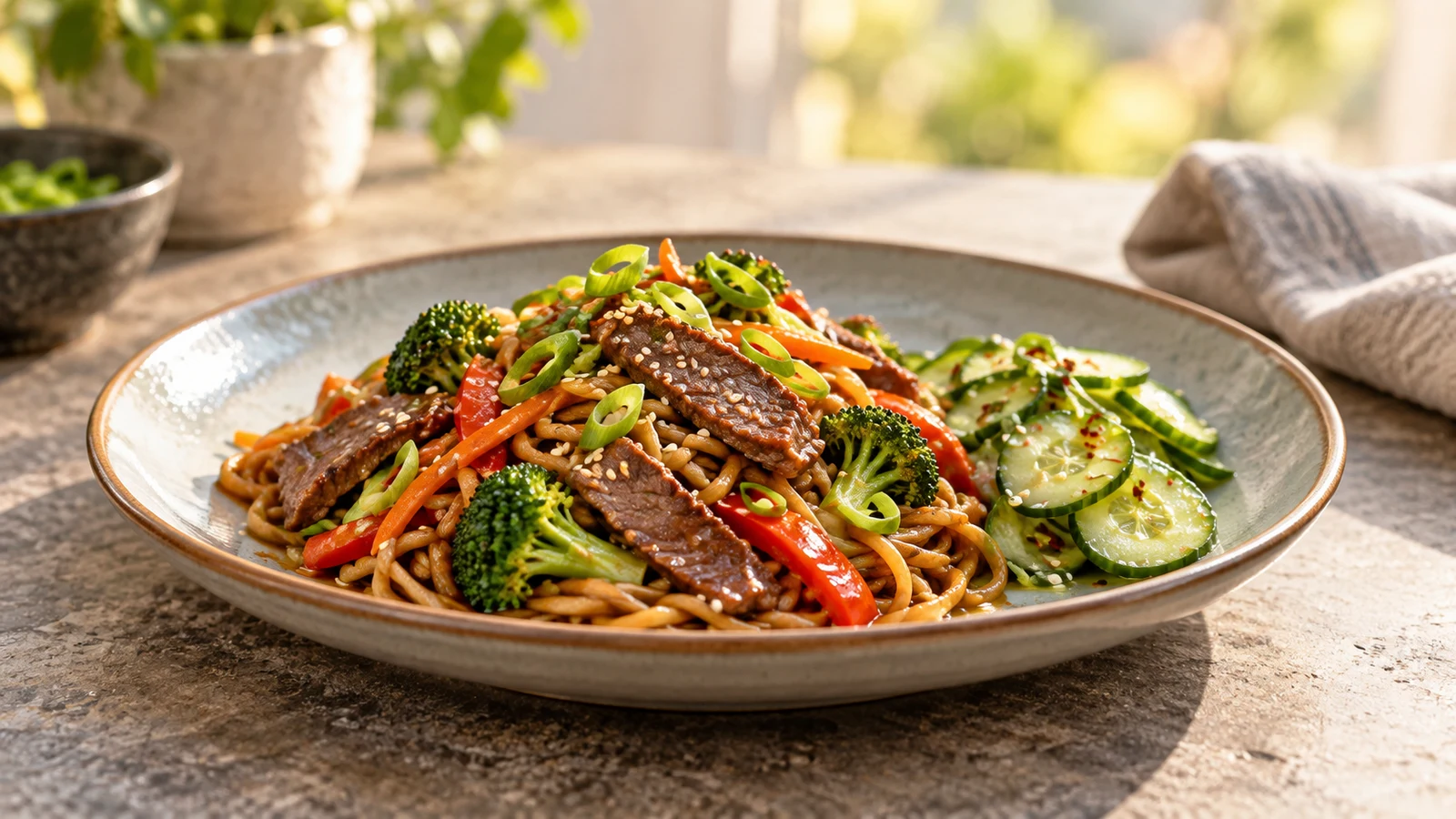
Serve the noodles hot with cucumber salad for cooling crunch or steamed edamame for an easy green side. Since the main dish already contains beef, noodles, and vegetables, a fresh or simply steamed side provides the best contrast.
Offer chili crisp, sliced green onions, sesame seeds, or lime wedges at the table so everyone can adjust a serving. Avoid pouring extra soy sauce over the entire pan before tasting because the finished beef stir fry sauce recipe already contains a substantial savory base.
For a larger meal, add lettuce cups, a light cabbage slaw, or clear broth soup. If you enjoy the classic steak-and-broccoli pairing, try this easy beef and broccoli dinner next.
Make-Ahead, Storage, and Reheating
Prepare the Components Ahead
For make-ahead preparation, slice and velvet the beef, mix the sauce, and cut the vegetables up to one day ahead. Refrigerate each component separately in airtight containers. Keeping everything separate protects the vegetables’ texture and makes this beef stir fry recipe with noodles quick to assemble.
Whisk the refrigerated sauce before using it. Cornstarch will settle at the bottom, and the sesame oil may appear slightly cloudy when cold. Both are normal and disappear as the beef stir fry sauce recipe heats.
Cook the noodles shortly before stir-frying for the best texture. If they must be prepared several hours ahead, drain them thoroughly, toss with a few drops of neutral oil, and refrigerate them covered.
Store Leftovers Safely
Cool leftovers promptly and refrigerate them in an airtight container for up to three days. Divide a large batch into shallow containers so it cools evenly. Store garnishes separately when possible because green onions and sesame seeds retain a fresher texture that way.
Reheat Without Drying the Beef
Reheat in a lightly oiled skillet over medium heat for 3 to 5 minutes, adding 1 or 2 tablespoons of water to loosen the sauce. Turn the ingredients gently and stop as soon as everything is hot.
A microwave also works: cover loosely and heat in 45-second intervals, stirring between each. Short intervals help prevent the beef from becoming tough and the noodles from overheating.
Freezing the finished dish is not recommended because vegetables soften and egg noodles may break. However, cooked beef and sauce can be frozen without the noodles for up to two months. Thaw them in the refrigerator, prepare fresh noodles and vegetables, and combine everything in a hot pan.
Troubleshooting Common Stir-Fry Problems
Why Is the Beef Tough?
Tough beef usually results from slicing with the grain, cutting strips too thickly, or cooking them too long. Slice across the grain, sear briefly in batches, and remove the meat while the centers retain a little pink. It will finish cooking when returned to the sauce.
Why Is the Stir-Fry Watery?
A crowded or insufficiently heated pan is the usual cause. Dry the beef and vegetables, drain the noodles thoroughly, and let the sauce reach a brief simmer. If liquid collects in the pan, keep tossing over high heat until excess moisture evaporates.
Why Is the Sauce Too Thick?
Cornstarch continues thickening as the sauce bubbles. If your beef stir fry sauce recipe becomes pasty, add water or broth 1 tablespoon at a time and toss until the glaze moves freely around the noodles.
Why Are the Noodles Mushy?
They were probably boiled until fully tender before entering the wok. For a better beef stir fry recipe with noodles, stop boiling about one minute early, drain well, and limit the final tossing time to 60 to 90 seconds.
Why Did the Garlic Burn?
Garlic burns rapidly over stir-fry heat. Add it only after the vegetables are nearly crisp-tender, stir for 20 seconds, and follow promptly with the beef, sauce, and noodles.
Frequently Asked Questions
How do I know when the beef is done?
The strips should be browned outside and no longer visibly raw after the final toss. Because thin slices cook quickly, remove them from the first sear while their centers retain a little pink; they finish cooking in the bubbling sauce.
Can I make this beef stir fry recipe with noodles without a wok?
Yes. Use the widest heavy skillet you have, preheat it thoroughly, and cook in small batches. A skillet’s broad base can produce particularly good browning. Keep every prepared ingredient within reach because the cooking stages move quickly.
What noodles are best?
Medium egg noodles provide a springy, sturdy texture, while lo mein offers a similar result. Udon is thicker and softer. Rice noodles are a good gluten-free option when certified gluten-free sauces are also used.
Can I double this recipe?
Yes, but doubling beef stir fry recipes requires extra batches. Cook the meat and vegetables in several small portions, transfer each cooked batch to a plate, and combine everything only after the sauce begins to thicken. Overloading one pan will steam the ingredients.
Can I reduce the sodium?
Choose low-sodium soy sauce and broth, and replace half the broth with water as directed. Do not simply reduce every liquid ingredient, since the cornstarch needs enough moisture to form an even glaze.
Can I make the sauce in advance?
Yes. Mix the beef stir fry sauce recipe up to one day ahead and refrigerate it in a covered container. Whisk thoroughly before use because the cornstarch settles during storage.
How can I keep the vegetables crisp?
Cut the vegetables into evenly sized pieces, dry them, and add them according to density. Broccoli and carrot need more time than bell pepper, while leafy greens should enter the pan last. Do not cover the pan, since trapped steam softens them.
Is this dish spicy?
No. The base recipe is savory rather than hot. Add chili crisp, sambal oelek, or sriracha only if desired. Serving heat on the side makes the meal suitable for people with different spice preferences.
Can I use chicken or tofu instead?
Those substitutions create a different dish, but the general method works. Cook the chosen protein safely and adjust its cooking time as needed. Firm tofu should be pressed and browned before the vegetables are added.
Recipe Details
- Prep time: 20 minutes
- Cook time: 15 minutes
- Total time: 35 minutes
- Yield: 4 servings
- Equipment: Wok or 12-inch skillet, large pot, colander, cutting board, sharp knife, mixing bowl, whisk, and tongs
- Estimated nutrition: About 540 calories, 35 g protein, 58 g carbohydrate, 19 g fat, and 1,150 mg sodium per serving; values vary by brands and substitutions.
- Scaling: Halve all ingredients for two servings. When doubling, cook the beef and vegetables in additional batches rather than overcrowding the pan.
- Storage: Refrigerate for up to three days; freeze the beef and sauce without noodles for up to two months.
A Fast, Flexible Dinner
This beef stir fry recipe with noodles delivers the contrast that makes a great stir-fry satisfying: browned tender beef, crisp vegetables, resilient noodles, and just enough glossy sauce. With all ingredients prepared before cooking, it is a manageable and adaptable dinner for busy evenings.
Once you master the sequence, you can use the same preparation and batch-searing principles for many beef stir fry recipes. Keep the pan hot, protect the texture of the noodles, and give the sauce enough time to bubble into a light glaze before serving.
Reviews
Reader reviews are managed separately (outside this build).