Salmon
smoked salmon brine recipe: Foolproof Savory Results
Get precise wet-brine ratios, timing, pellicle and hot-smoking tips in this smoked salmon brine recipe, plus a smoked salmon dry brine recipe too.
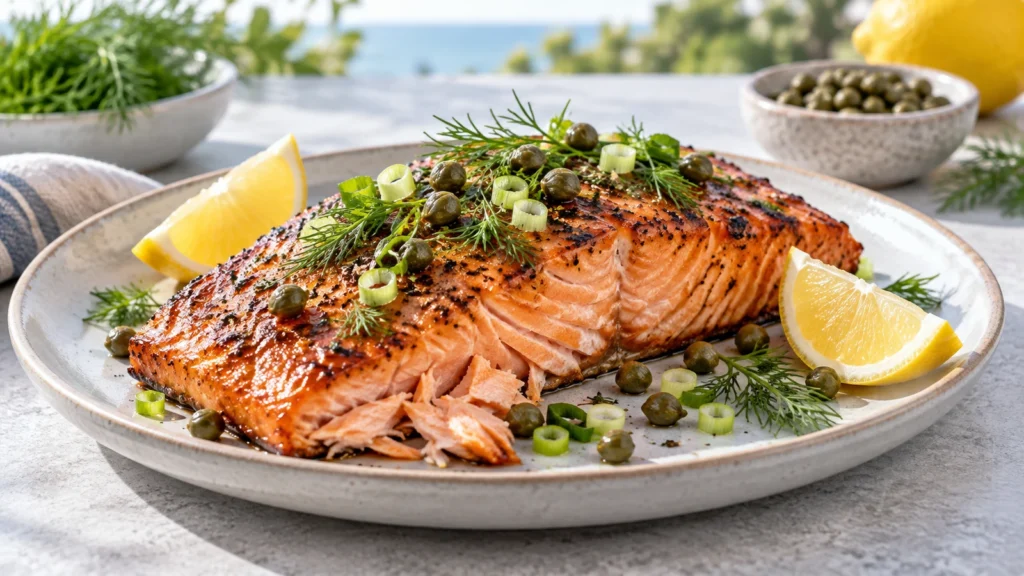
This smoked salmon brine recipe produces moist, savory fish with balanced sweetness, gentle smoke, and a glossy maple finish. Careful brining, a properly formed pellicle, and low smoker heat make the results reliable without leaving the salmon excessively salty or dry.
Plan on 4 to 8 hours for brining, 2 to 4 hours for air-drying, and roughly 1 1/2 to 3 hours for smoking. Most of that time is hands-off, so this smoked salmon brine recipe is easy to start the day before serving.
Table of Contents
Why You’ll Love This Smoked Salmon Brine Recipe
- Scalable brine proportions work for small portions or whole salmon sides.
- Specific timing prevents over-brining.
- Instructions cover pellet, electric, charcoal, and conventional grills.
- The gentle smoking method keeps the fish tender and limits albumin leakage.
- Maple, lemon, garlic, and pepper complement the salmon without masking it.
Unlike recipes that rely on time alone, this smoked salmon brine recipe accounts for fillet thickness, salt brand, surface drying, and internal temperature. Those details make it easier to repeat the same tender result with different salmon varieties and smokers.
Wet Brine Versus Dry Brine
A wet brine for smoked salmon dissolves salt and sugar in water, helping season the fish evenly while protecting its moist texture. It is especially forgiving for thick fillets. A dry cure creates a firmer texture and more concentrated flavor but requires closer attention to measurements and timing.
For a useful smoked salmon dry brine recipe alternative, combine 1/2 cup Diamond Crystal kosher salt or 1/3 cup Morton kosher salt with 1 cup packed brown sugar. Coat a 2-pound fillet, refrigerate for 4 to 6 hours, rinse thoroughly, and continue with pellicle formation. Do not leave thin portions in the cure as long as the thick center.
Choose this wet smoked salmon brine recipe when you prefer succulent flakes and gentle seasoning. Choose the smoked salmon dry brine recipe when you want a denser texture that slices neatly for bagels, appetizers, or snack boards.
Choosing Salmon and Equipment
Choose a fresh, evenly thick, skin-on salmon fillet with firm flesh and a clean aroma. King salmon is rich and forgiving, while sockeye is leaner and cooks faster. Skinless salmon also works, but it should be placed on a lightly oiled mesh mat to reduce sticking.
Thaw frozen salmon overnight on a tray in the refrigerator, never at room temperature. FDA guidance on selecting and handling seafood safely offers additional precautions for keeping fish properly chilled.
You will need a nonreactive container, measuring cups, paper towels, a wire rack, a rimmed pan, an instant-read thermometer, and a smoker or covered grill. Alder gives traditional mild smoke; apple and cherry add subtle sweetness.
How Fillet Shape Affects the Result
An evenly thick center makes this smoked salmon brine recipe easier to time. If the tail end is very thin, fold it underneath itself or separate it and begin checking it early. Do not base brining or smoking time on weight alone; the thickest point controls how quickly seasoning and heat reach the center.
Leave the skin attached whenever possible. It supports the flesh, helps prevent sticking, and creates a small buffer from direct heat. Remove pin bones with clean tweezers before brining so the finished salmon can be sliced without interruption.
Scalable Brine Ratio and Timing
For each 1 pound of salmon, use 2 cups cold water, 3 tablespoons Diamond Crystal kosher salt or 2 tablespoons Morton kosher salt, and 3 tablespoons packed brown sugar. Diamond Crystal has larger, lighter flakes, so equal-volume substitutions can make the brine too salty. Weighing 30 grams of either brand per 2 cups of water is the most consistent option.
- Up to 1 inch thick: Brine for 4 hours.
- 1 to 1 1/2 inches thick: Brine for 6 hours.
- 1 1/2 to 2 inches thick: Brine for 8 hours.
- Individual portions: Begin checking after 3 hours.
Keep the fish fully submerged and refrigerated at 40°F (4°C) or colder. Never reuse salmon brine, and discard it immediately after removing the fish.
To scale the smoked salmon brine recipe, keep the ratio unchanged and mix only enough liquid to cover the fish. A snug container requires less brine than a wide pan. If the fillet floats, place a small clean plate over it rather than increasing the salt concentration.
Ingredients
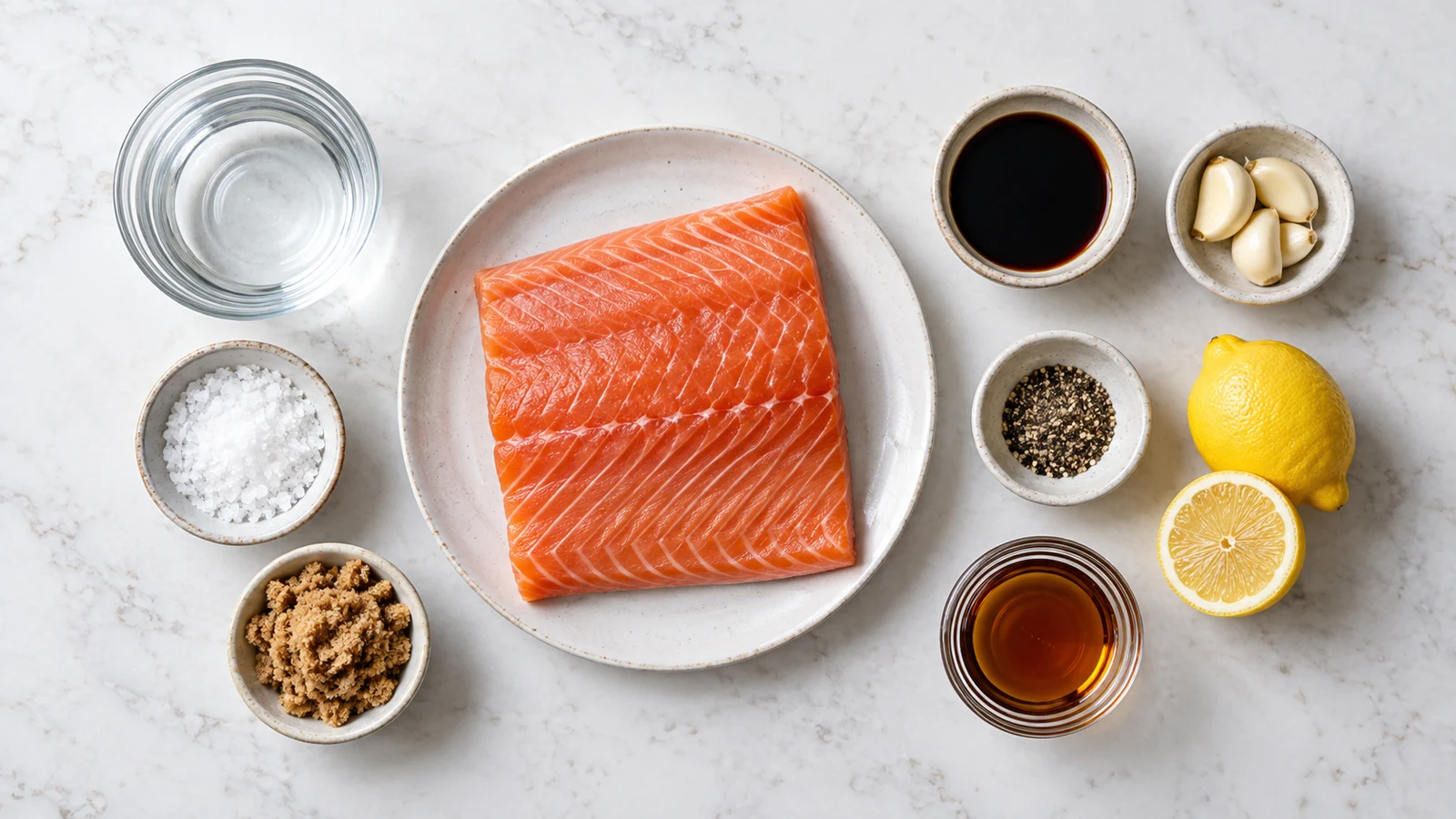
- 2 pounds (907 g) skin-on salmon fillet, pin bones removed
- 4 cups (946 ml) cold water
- 6 tablespoons (60 g) Diamond Crystal kosher salt or 1/4 cup (60 g) Morton kosher salt
- 6 tablespoons packed brown sugar
- 1/4 cup low-sodium soy sauce
- 3 garlic cloves, lightly crushed
- 1 teaspoon coarsely ground black pepper
- 1/4 teaspoon cayenne pepper, optional
- 1 lemon, divided
- 3 tablespoons maple syrup
- Dill, capers, and sliced scallions, for serving
How to Make This Smoked Salmon Brine Recipe
- Prepare the brine: Stir 1 cup of the water, salt, and brown sugar until dissolved. Add the remaining cold water, soy sauce, garlic, pepper, cayenne, and two lemon-peel strips. Chill completely before adding fish.
- Brine the salmon: Submerge the fillet, cover, and refrigerate according to its thickest point. Keep the container cold throughout the process.
- Rinse and dry: Remove the salmon, discard the brine, and rinse the surface briefly under cold water. Pat it very dry. If a tiny cooked test piece tastes too salty, soak the raw fillet in fresh cold water for 20 to 30 minutes, then dry it again.
- Form the pellicle: Set the salmon skin-side down on a rack over a pan. Refrigerate uncovered for 2 to 4 hours. It is ready when the surface looks slightly shiny and feels tacky rather than wet; this salmon pellicle helps smoke adhere evenly.
- Preheat: Heat the smoker to 180°F (82°C). Clean and lightly oil the grate. Add alder, apple, or cherry wood without producing heavy, bitter smoke.
- Smoke gently: Place the salmon skin-side down and smoke for 60 minutes. Mix the maple syrup with 1 tablespoon lemon juice, then brush a thin layer over the fish.
- Finish cooking: Continue smoking for 30 to 120 minutes, depending on thickness, until the center is moist, separates in large flakes, and reaches the desired internal temperature. Brush once more with glaze during the final 20 minutes.
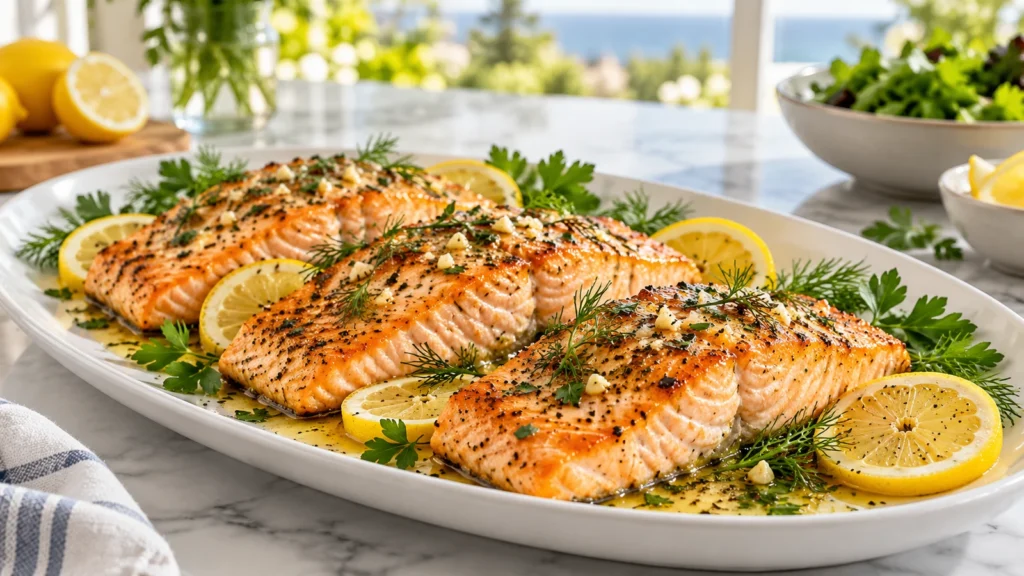
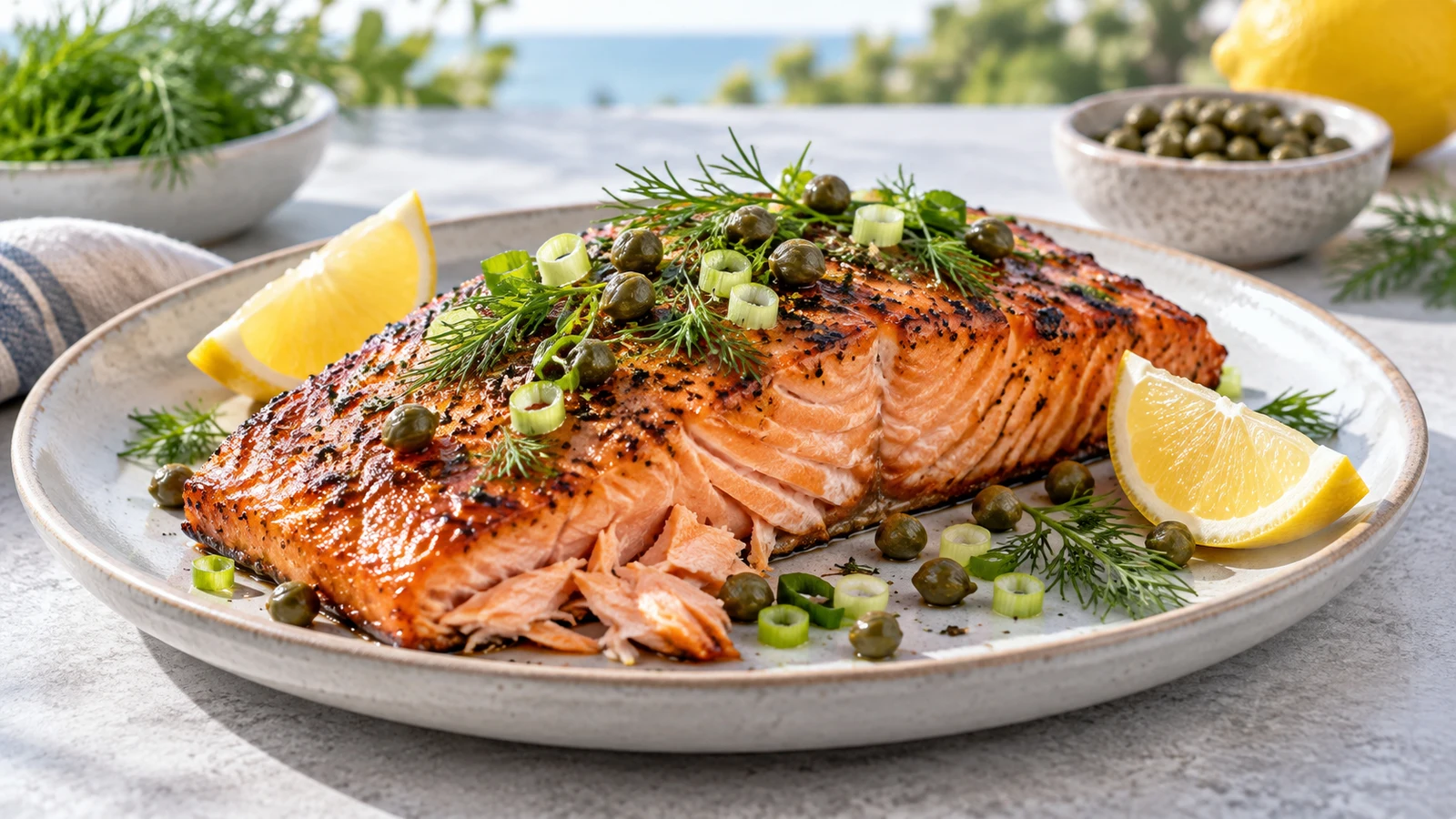
- Rest: Transfer the salmon to a clean platter and rest for 10 minutes before serving. Garnish with dill, capers, scallions, and lemon wedges.
Expert Tips for This Smoked Salmon Brine Recipe
- Keep the smoker temperature between 175°F and 200°F (79°C and 93°C). High heat squeezes out white albumin and dries the edges.
- For a moist texture, remove the fish around 140°F (60°C); carryover heat will continue cooking it. For conservative safety guidance, follow the USDA smoking recommendations and cook fish to 145°F (63°C), as explained in its smoking food safely guidance.
- Use an instant-read thermometer in the thickest section without touching the grate.
- Avoid constant heavy smoke. Thin, pale smoke gives cleaner flavor than dense white clouds.
- Leave space around the fillet and oil the grate or mesh mat to prevent sticking.
Cool the Brine Completely
Warm liquid can raise the salmon above a safe refrigerated temperature and begin changing its texture. After dissolving the salt and sugar, add the remaining cold water and refrigerate the mixture if necessary. This smoked salmon brine recipe should feel thoroughly cold before the fish goes in.
Do Not Skip the Pellicle
The pellicle is a thin, tacky surface created by uncovered refrigeration. It helps smoke and glaze cling evenly instead of collecting in wet patches. Whether you use the wet method or a smoked salmon dry brine recipe, allow enough drying time before the salmon enters the smoker.
Control Heat at Grate Level
Built-in smoker gauges may measure temperature well above the food. A grate-level probe reveals the heat the salmon actually receives. Open the vent and reduce the fire if the temperature climbs; steady heat gives this smoked salmon brine recipe its tender texture.
Glaze in Thin Layers
A heavy coating can run off, soften the pellicle, or scorch at the edges. Brush on a light layer after the first hour, then add the second layer near the end. The goal is a glossy surface with balanced maple flavor, not a thick sugary crust.
Smoker Methods and Doneness Guide
In a pellet smoker, use the smoke setting or 180°F (82°C), then increase to 200°F (93°C) if progress stalls. In an electric smoker, preheat fully and keep the vent partly open so moisture can escape. With charcoal, arrange a small two-zone fire and add one wood chunk at a time. On a gas grill, light one burner on low, place a foil packet of wood chips over it, and cook the salmon on the unlit side.
- 1-inch fillet: About 1 to 1 1/2 hours.
- 1 1/2-inch fillet: About 1 1/2 to 2 1/2 hours.
- 2-inch fillet: About 2 1/2 to 3 hours.
Time is only a guide; temperature and texture determine doneness. For more background on traditional salmon smoking and preservation practices, see the Alaska Department of Fish and Game overview.
Wind, outdoor temperature, smoker recovery, and fillet thickness can change the cooking time. Begin checking early and insert the thermometer from the side into the thickest section. Properly cooked salmon should separate into moist flakes without appearing chalky.
Smoked Salmon Brine Recipe Variations
Honey and Orange
Replace maple syrup with honey and use orange peel instead of lemon peel. The brine quantities, temperatures, and timing remain unchanged. This variation gives the smoked salmon brine recipe a round citrus aroma that works well with cherry wood.
Pepper and Coriander
Replace the black pepper with crushed coriander, or use half of each. Keep the total quantity at 1 teaspoon so the spices complement rather than overwhelm the fish. Alder or apple smoke pairs well with this gently aromatic version.
Gluten-Free Option
Tamari can replace soy sauce for a gluten-free version; check its label and reduce the added salt slightly if it is not low-sodium. Do not change the liquid level. The salmon must remain submerged while this smoked salmon brine recipe seasons it.
Dry-Brined Variation
For a firmer result, follow the smoked salmon dry brine recipe proportions given above. Spread the cure evenly over every surface, refrigerate for 4 to 6 hours, and rinse thoroughly. Continue with the same pellicle, smoking, glazing, temperature, and resting instructions.
A smoked salmon dry brine recipe is particularly useful when refrigerator space is limited because it does not require a large container of liquid. Set the coated fish in a rimmed dish to contain the moisture drawn from the salmon.
Using Skinless Salmon
Skinless salmon needs careful support and may finish 10 to 20 minutes sooner. Place it on a lightly oiled mesh mat, avoid moving it while hot, and lift it with a wide spatula. All ingredients and brining times in the smoked salmon brine recipe stay the same.
Make-Ahead Plan
The brine can be mixed up to 3 days ahead and stored covered in the refrigerator. For next-day serving, brine the salmon in the evening, rinse it, and refrigerate it uncovered overnight. An overnight pellicle is acceptable as long as the fish stays properly chilled.
You can also complete the smoked salmon brine recipe a day before a brunch or party. Cool the salmon promptly, cover it, and refrigerate it whole. Slice or flake it shortly before serving so the cut surfaces remain moist.
If preparing a smoked salmon dry brine recipe ahead, do not extend the curing period overnight unless the fillet thickness and schedule keep it within the stated 4-to-6-hour range. Rinse at the correct time, dry the fish, and continue uncovered in the refrigerator.
Troubleshooting Common Problems
Why Is the Salmon Too Salty?
The usual causes are excess brining time, an incorrect volume substitution between salt brands, or a container that allowed concentrated salt to settle against the fish. Shorten the next brine time and weigh the salt. Before smoking, rescue over-brined fish with a 20-to-30-minute cold-water soak.
Why Is the Texture Dry?
The smoker was probably too hot, the fillet was lean or thin, or the salmon cooked beyond its target temperature. Keep this smoked salmon brine recipe between 175°F and 200°F (79°C and 93°C), monitor the thinnest area, and rely on internal temperature rather than the clock.
What Causes White Albumin?
Albumin is a harmless protein that becomes visible as the fish cooks. Excessive heat and rapid temperature changes force more of it to the surface. Maintain steady low heat, let the smoker preheat fully, and avoid repeatedly opening the lid.
Why Is the Smoke Flavor Bitter?
Dense white smoke, damp wood, poor airflow, or too much wood can create bitterness. Use dry alder, apple, or cherry wood and keep the vent partly open. The smoke should look thin and pale throughout the smoked salmon brine recipe.
Why Did the Fish Stick?
The grate may have been cold, dirty, or insufficiently oiled. Preheat and clean it, lightly oil the surface, and place the salmon skin-side down. For delicate or skinless fish, use a lightly oiled mesh mat and allow the salmon to firm before moving it.
Why Is the Surface Patchy?
A wet surface prevents smoke and glaze from adhering evenly. Pat the salmon thoroughly dry and refrigerate it uncovered until every area feels tacky. The same pellicle test applies when making a smoked salmon dry brine recipe.
Serving Ideas
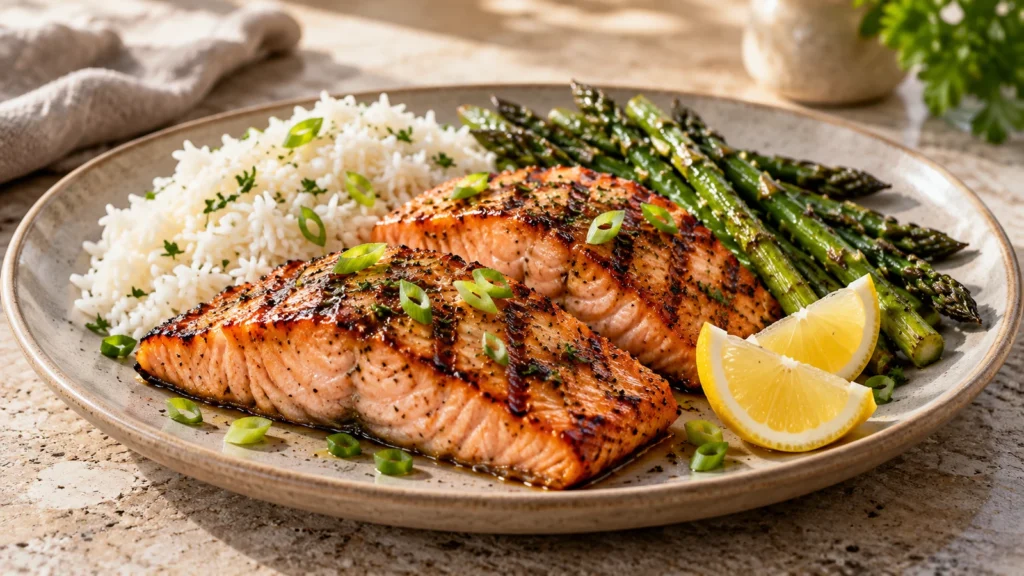
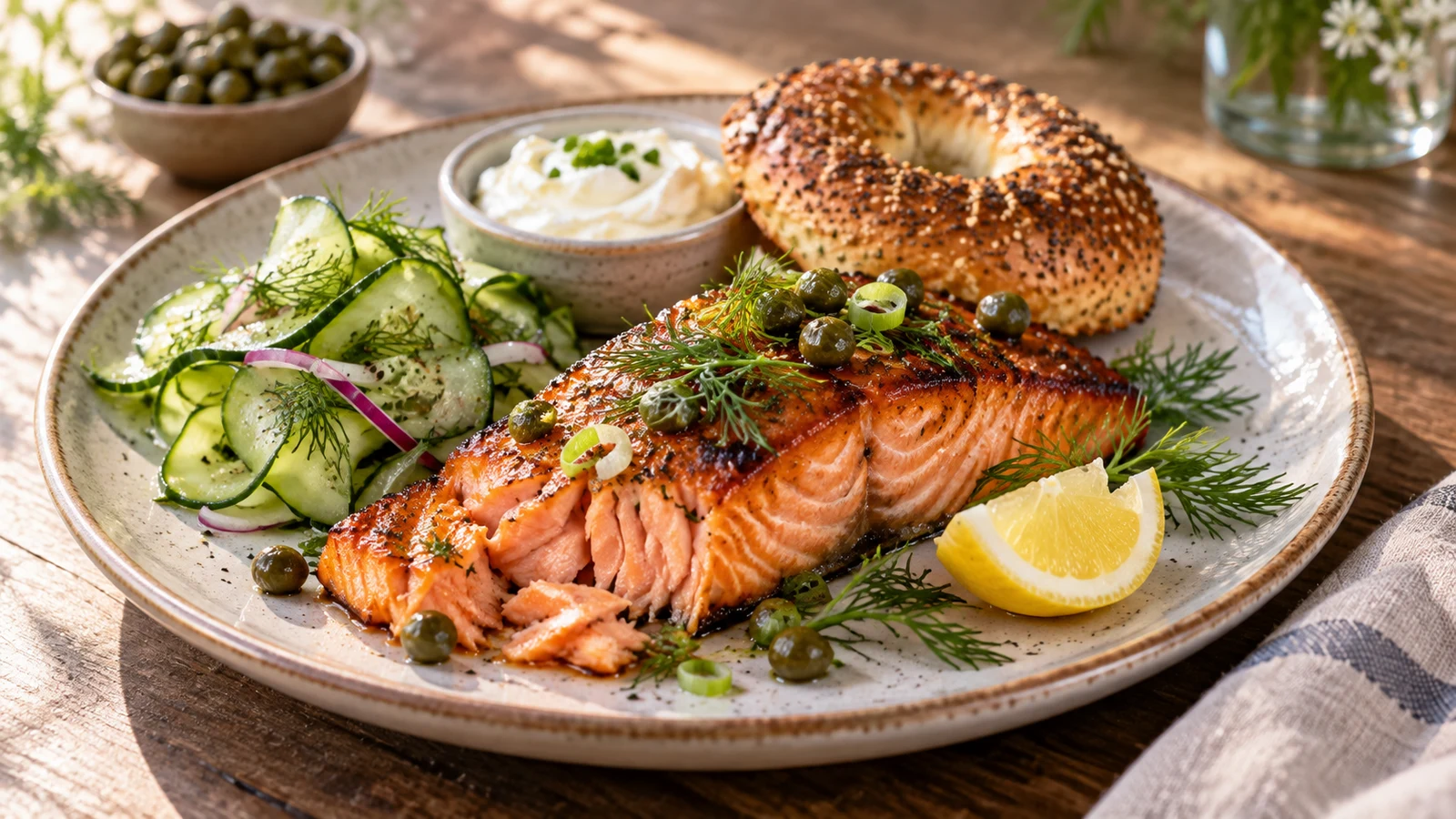
Serve the salmon warm with asparagus, rice, cucumber salad, or roasted Yukon Gold potatoes. For a crisper side, try these crispy roasted potatoes. Add lemon wedges and fresh dill to balance the rich fish.
For brunch, chill the finished smoked salmon brine recipe and arrange thin slices with toasted bagels, cream cheese, capers, cucumber, scallions, and lemon. For appetizers, place small flakes on cucumber rounds or crackers with a spoonful of herbed cream cheese.
Leftover salmon can be folded gently into scrambled eggs, pasta, grain bowls, or a green salad. Add it near the end so it warms without drying. The same smoker can also prepare this smoked chicken breast for guests who prefer poultry.
How to Store and Reheat
Cool the salmon promptly, then refrigerate it in a shallow airtight container for up to 3 days. Do not leave it at room temperature for extended periods. Store garnishes separately so the salmon surface stays clean and the herbs remain fresh.
For longer storage, wrap portions tightly, place them in a freezer-safe bag, and freeze for up to 2 months. Removing excess air helps prevent freezer burn. Thaw overnight in the refrigerator and do not thaw the fish on the counter.
Smoked salmon is excellent cold or at room temperature. To reheat it, cover loosely and warm in a 275°F (135°C) oven for 10 to 15 minutes, stopping as soon as the center is warm. Avoid microwaving at high power, which can make the fish dry and strongly aromatic.
For convenient meals, divide the cooled smoked salmon brine recipe into serving-size portions before freezing. A piece of parchment between portions makes it easy to remove only what you need without repeatedly thawing the entire fillet.
Frequently Asked Questions
Can I Make the Smoked Salmon Brine Recipe Ahead of Time?
Yes. Prepare the brine up to 3 days ahead and refrigerate it in a covered container. It must be completely cold before the salmon is added. The cooked fish can also be refrigerated for up to 3 days.
Can I Use a Smoked Salmon Dry Brine Recipe Instead?
Yes. Use the smoked salmon dry brine recipe proportions above, cure for 4 to 6 hours, rinse well, and form the pellicle before smoking. Expect a slightly firmer, more concentrated result.
What Is the Best Ratio for a Smoked Salmon Brine Recipe?
Use 2 cups water and 30 grams each of kosher salt and brown sugar per pound of salmon. Scaling by weight and measuring the salt in grams prevents brand-related differences.
Do I Have to Rinse Salmon After Brining?
Yes. A brief rinse removes concentrated seasoning from the exterior and helps prevent an overly salty crust. Pat the fish completely dry afterward so it can form a proper pellicle.
Can I Leave Salmon in the Brine Overnight?
Not with the timing specified here. Leaving thinner salmon overnight can make it too salty and change its texture. Follow the thickness guide, remove the fish on time, and let it complete the make-ahead process uncovered in the refrigerator.
Can I Double This Smoked Salmon Brine Recipe?
Yes. Double every brine ingredient and use a container that keeps all pieces submerged without crowding. Brining time is determined by thickness, not total weight, so it does not double.
Can I Use Table Salt?
Table salt has finer crystals and cannot be substituted tablespoon for tablespoon without making the brine too strong. For consistent results, use the listed kosher salt or measure 30 grams of salt per 2 cups of water.
Does a Smoked Salmon Dry Brine Recipe Need a Pellicle?
Yes. After rinsing the cure away, pat the salmon dry and refrigerate it uncovered until tacky. A smoked salmon dry brine recipe still needs this step for even smoke adhesion and a glossy finished surface.
Can I Make This Without a Dedicated Smoker?
Yes. Use a charcoal grill with a small two-zone fire or a gas grill with one burner on low. Add wood on the heated side and place the salmon over indirect heat while maintaining the stated temperature range.
How Do I Know When Smoked Salmon Is Done?
The center should be moist, separate into large flakes, and reach the desired internal temperature. Remove it around 140°F (60°C) for a moist texture, accounting for carryover heat, or follow conservative safety guidance and cook it to 145°F (63°C).
Is Smoked Salmon Nutritious?
Salmon provides protein and omega-3 fats, but brined fish can be high in sodium. A 4-ounce serving is practical, and low-sodium soy sauce helps control the total.
Printable Recipe Card
Yield: 6 servings. Prep: 20 minutes. Brining and drying: 6 to 12 hours. Smoking: 1 1/2 to 3 hours. Smoker temperature: 180°F to 200°F (82°C to 93°C).
Method: Mix the brine ingredients, refrigerate the salmon in the cold brine according to thickness, rinse, dry, and refrigerate uncovered until tacky. Smoke skin-side down, glaze with maple and lemon, and cook until flaky and safely done. Rest for 10 minutes before serving.
Approximate nutrition per serving: 280 calories, 30 grams protein, 13 grams fat, 9 grams carbohydrate, and 850 milligrams sodium. Values vary with the salmon, salt absorption, and serving size.
Final Notes
With accurate salt measurements, patient air-drying, and steady low heat, this smoked salmon brine recipe develops clean smoky flavor and a tender, sliceable texture. Serve it warm for dinner or chill it for an easy make-ahead breakfast or appetizer.
If you prefer a firmer cure, the smoked salmon dry brine recipe offers an equally practical alternative using the same pellicle and smoking method. Whichever version you choose, measure carefully, keep the salmon cold, and use internal temperature as the final guide.
Reviews
Reader reviews are managed separately (outside this build).