Salmon
Easy Salmon Marinade Recipe: Brilliant Grilling
Try this salmon marinade recipe with honey, lemon, garlic and Dijon. Marinate 15–30 minutes, then grill, bake or air-fry for tender fillets today.
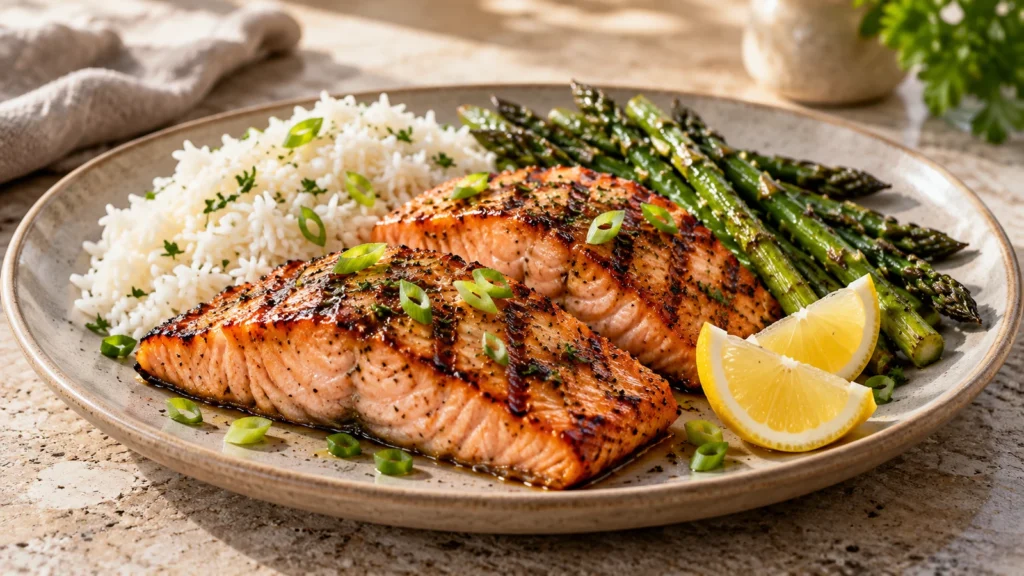
This salmon marinade recipe gives fillets a savory-sweet glaze, bright lemon flavor, and tender texture with only 10 minutes of preparation. If you need a salmon marinade recipe easy enough for a weeknight but flavorful enough for grilling, this balanced mixture delivers.
Jump to the recipe card. The key is a short 15–30-minute marinating window, which seasons the fish without letting the acidic lemon juice soften its surface too much. The same salmon marinade recipe works in the oven, air fryer, or on an outdoor grill, so you can choose the method that suits your schedule.
Table of Contents
Why You’ll Love This Salmon Marinade Recipe
- Quick: The marinade takes minutes to mix, and the salmon does not need hours to absorb its flavor.
- Versatile: Cook the fillets on the grill, in the oven, or in an air fryer.
- Balanced: Soy sauce supplies savory depth, honey encourages browning, and lemon and Dijon add brightness.
- Weeknight-friendly: Rice and roasted asparagus turn the salmon into a simple complete meal.
- Easy to adjust: The variations include a salmon marinade recipe without soy sauce as well as maple, herb, spicy, and gluten-free options.
Ingredients
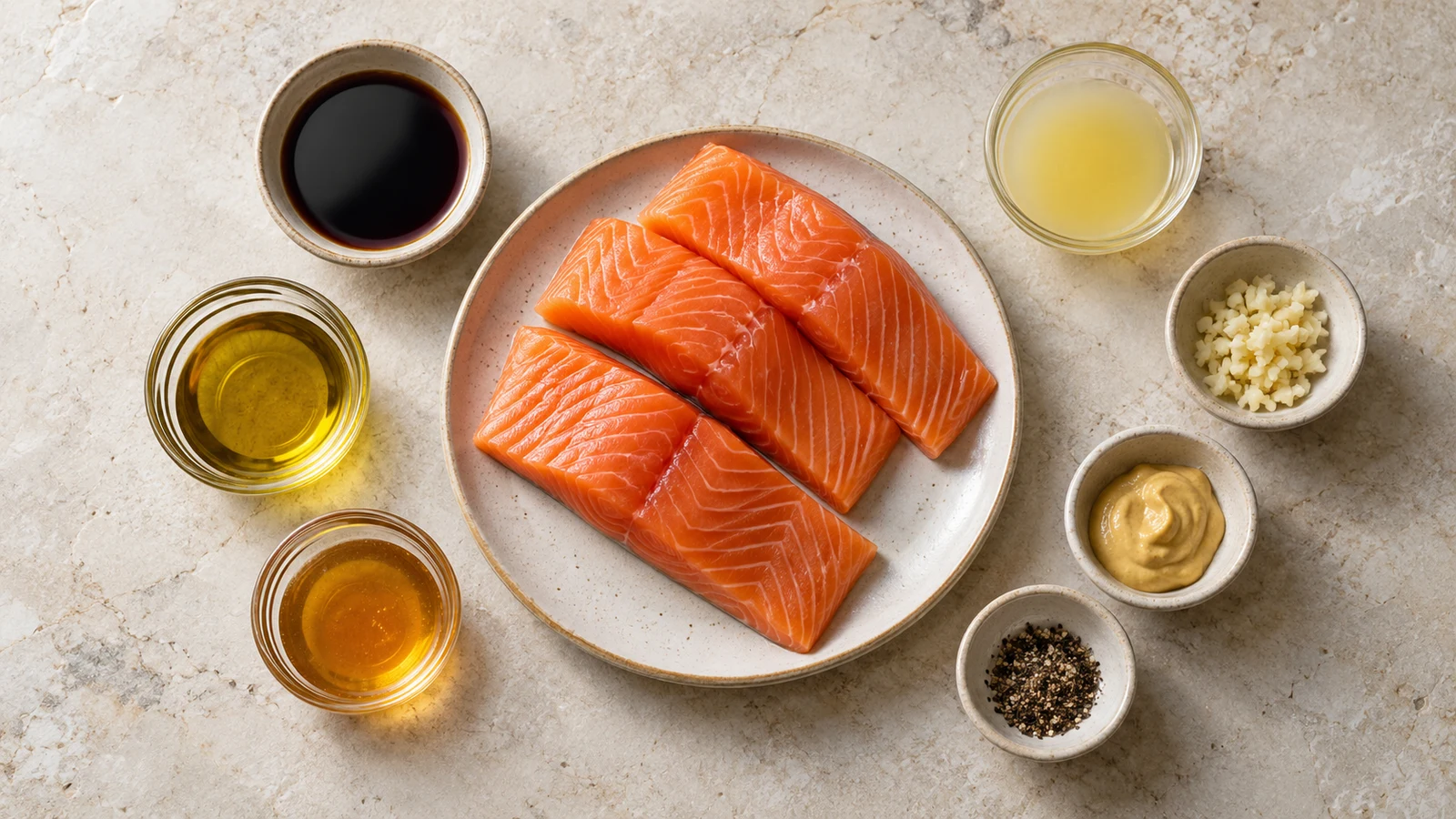
- 4 salmon fillets, about 6 ounces (170 g) each and 1 inch thick
- 3 tablespoons low-sodium soy sauce
- 2 tablespoons olive oil, plus more for the grill grates
- 1 tablespoon honey
- 1 tablespoon fresh lemon juice
- 2 garlic cloves, finely minced
- 1 teaspoon Dijon mustard
- 1/4 teaspoon freshly ground black pepper
- 2 sliced green onions, for garnish
- Lemon wedges, for serving
Why the Marinade Works
Oil helps distribute flavor and protects the surface of the fish, while honey balances the salty soy sauce and promotes caramelization. Dijon helps the ingredients blend, garlic adds aromatic depth, and lemon cuts through salmon’s richness. Each ingredient has a clear purpose, which keeps this salmon marinade recipe easy to prepare without sacrificing complexity.
The brief marinating time matters. Lemon juice begins changing the proteins on contact; after much longer than 30 minutes, the exterior can become soft or mushy while the center gains little additional flavor.
Low-sodium soy sauce gives you better control over seasoning than regular soy sauce. Salmon naturally tastes rich, so the modest amount of honey and fresh lemon creates contrast without masking the fish. Patting the fillets dry first also prevents surface moisture from diluting the salmon marinade recipe.
Choosing and Preparing the Salmon
Center-cut fillets of similar thickness cook most evenly. Fresh and properly thawed frozen salmon both work well, and either skin-on or skinless pieces can be used. Skin-on fillets are especially convenient for the salmon marinade recipe for grilling because the skin helps protect the flesh from direct heat.
If the salmon is frozen, thaw it overnight in the refrigerator. Blot all sides with paper towels, then run a fingertip gently over the flesh to locate pin bones. Remove any bones with clean tweezers before adding the fish to the marinade.
Avoid rinsing the fillets, which can spread droplets around the sink and leaves the surface unnecessarily wet. Instead, trim away any loose, very thin flaps that could overcook. Keeping the pieces close to the stated 6-ounce size makes the listed cooking ranges more reliable.
How to Make This Salmon Marinade Recipe
- Mix the marinade: Whisk the soy sauce, olive oil, honey, lemon juice, garlic, Dijon, and pepper in a shallow nonreactive dish.
- Prepare the fish: Pat the salmon dry. Check for pin bones, then place the fillets in the marinade and turn them gently to coat.
- Marinate briefly: Cover and refrigerate for 15–30 minutes. Use 15–20 minutes for thin fillets and up to 30 minutes for pieces at least 1 inch thick.
- Prepare for cooking: Remove the salmon and let excess marinade drip off. Discard the used liquid unless you boil it vigorously before using it as a sauce.
- Cook: Choose the grilling, baking, or air-fryer instructions below, adjusting slightly for the thickness of the fillets.
Use a glass, ceramic, or other nonreactive dish because the mixture contains lemon juice. A shallow dish gives the fillets broad contact with the liquid without requiring more ingredients. Turn the fish gently so it stays intact.
Grilling
This salmon marinade recipe for grilling works best over clean, well-oiled grates. Preheat the grill to medium-high, about 400–425°F (204–218°C), then scrape and oil the grates to reduce sticking.
- Place skin-on salmon skin-side down, close the lid, and grill for 4–6 minutes. The skin provides a useful protective layer.
- Turn carefully with a thin spatula and cook for another 2–4 minutes. For skinless salmon, oil both the fish and grates well and avoid moving the fillets until they release easily.
- Watch for flare-ups because the honey can burn. If the exterior darkens too quickly, move the fish to a cooler section of the grill.
Set up a cooler area before cooking so you have somewhere to move the fillets if the glaze browns quickly. Keep the lid closed as much as practical to retain steady heat. This approach makes the salmon marinade recipe for grilling easier to manage, especially on a grill with uneven hot spots.
For another smoky preparation, try this cedar plank salmon recipe.
Baking
Heat the oven to 400°F (204°C). Arrange the salmon skin-side down in a lightly oiled baking dish and bake for 10–14 minutes, depending on thickness. For a sweeter oven variation, see this brown sugar baked salmon.
Space the fillets apart so hot air can circulate around them. If some pieces are thinner, check those first rather than waiting for every fillet to finish at the same time. Baking is a particularly hands-off way to keep this salmon marinade recipe easy on a busy evening.
Air Frying
Preheat the air fryer to 390°F (199°C). Lightly oil the basket, add the fillets without crowding, and cook for 7–10 minutes. Begin checking thin or skinless pieces early because circulating heat can dry their edges quickly.
Cook in batches if the basket cannot hold all four fillets with space around them. Excess marinade may smoke or scorch on the basket, so allow it to drip from the fish before cooking. Air-fryer models vary, making thickness and doneness more useful guides than the clock alone.
Expert Tips for the Best Salmon Marinade Recipe
- Use thickness as your guide: A 3/4-inch fillet cooks faster than a center-cut piece measuring 1 1/4 inches.
- Prevent sticking: Dry the fish before marinating, preheat the cooking surface, oil it, and wait until the salmon releases naturally before turning.
- Control burning: Shake off excess marinade so the honey does not drip heavily onto flames or scorch in the pan.
- Check doneness: Insert an instant-read thermometer into the thickest portion. For conservative food-safety guidance, consult the FDA’s recommendations for selecting and serving seafood safely.
- Allow for carryover cooking: The internal temperature can rise a few degrees while the salmon rests, so remove it shortly before it reaches your preferred final temperature.
- Whisk thoroughly: Dijon helps combine the oil and watery ingredients, but the mixture can separate while standing. Whisk it again immediately before adding the salmon.
- Use a thin spatula: Slide it fully beneath the fillet before turning so the delicate flesh does not split.
- Rest briefly: Let the cooked fish stand for 3–5 minutes before serving. This gives the juices time to settle while you finish the side dishes.
Look for flesh that has turned opaque around the edges while remaining moist in the thickest part. The natural white protein that sometimes appears on cooked salmon is harmless, but a large amount can indicate that the fish cooked too aggressively or for too long.
Variations and Substitutions
Salmon Marinade Recipe Without Soy Sauce
For a salmon marinade recipe without soy sauce, replace the low-sodium soy sauce with 3 tablespoons coconut aminos and add 1/8 teaspoon fine salt. Coconut aminos are generally sweeter and less salty, so reduce the honey to 2 teaspoons, taste the unused marinade, and add another small pinch of salt only if needed.
This salmon marinade recipe without soy sauce retains the sweet, tangy, and savory balance of the original, although coconut aminos give it a slightly different flavor. Check product labels if you are making the substitution for a dietary need.
More Flavor Options
- Maple: Replace the honey with an equal amount of pure maple syrup.
- Herb: Add 1 tablespoon chopped dill or parsley and 1 teaspoon lemon zest.
- Spicy: Stir in 1/4 teaspoon red pepper flakes or 1 teaspoon sriracha.
- Gluten-free: Use certified gluten-free tamari instead of regular soy sauce.
Keep the original marinating time when using these variations. Lemon remains acidic, whether you choose maple, herbs, or extra heat. When trying a variation, taste only marinade that has not contacted raw fish and remember that its flavor will become more concentrated as the salmon browns.
Make-Ahead Planning
You can whisk the salmon marinade recipe up to 3 days before cooking and refrigerate it in a sealed container. The olive oil may become cloudy or firm in the cold; let the mixture sit briefly at room temperature and whisk it again before use.
Do not store raw salmon in the marinade overnight. For the best texture, keep the prepared marinade and fish in separate containers, then combine them only 15–30 minutes before cooking. This small step preserves the convenience of a salmon marinade recipe easy enough for meal prep without damaging the fish.
You may also portion the salmon, remove pin bones, and prepare the side dishes earlier in the day. Keep the fish covered and refrigerated until marinating time. If grilling, clean the grates and gather a thin spatula before heating the grill.
Serving Ideas
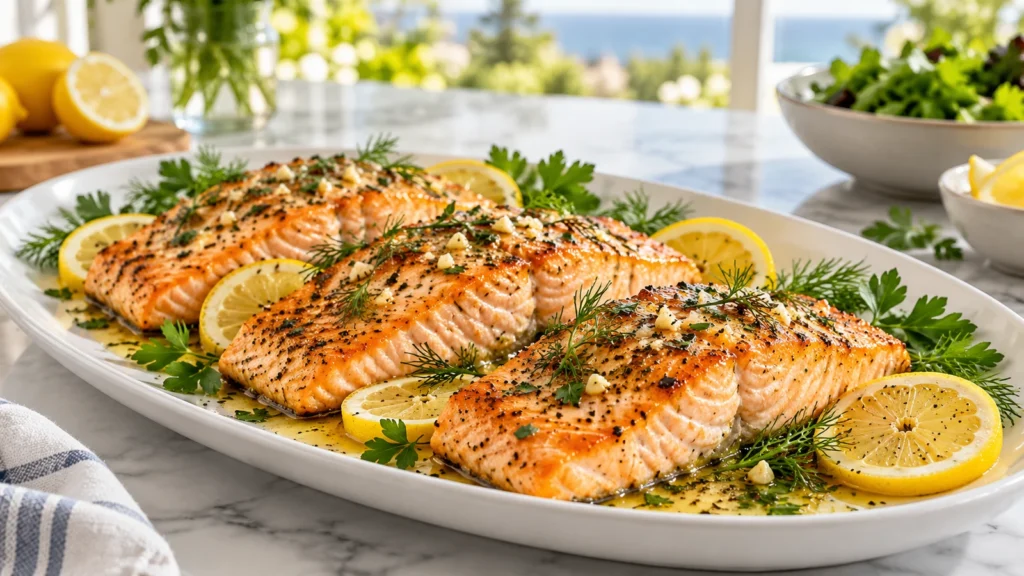
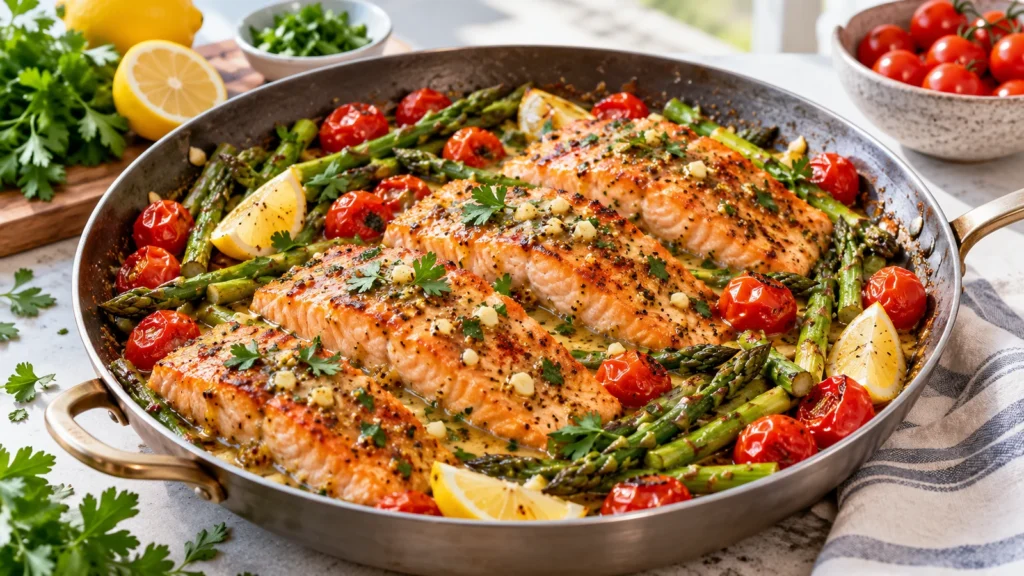
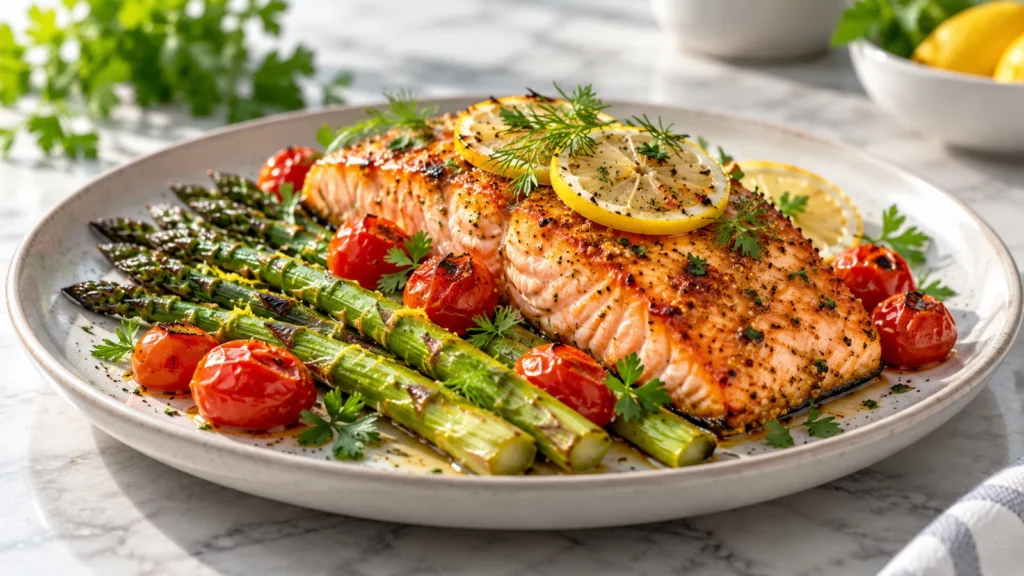
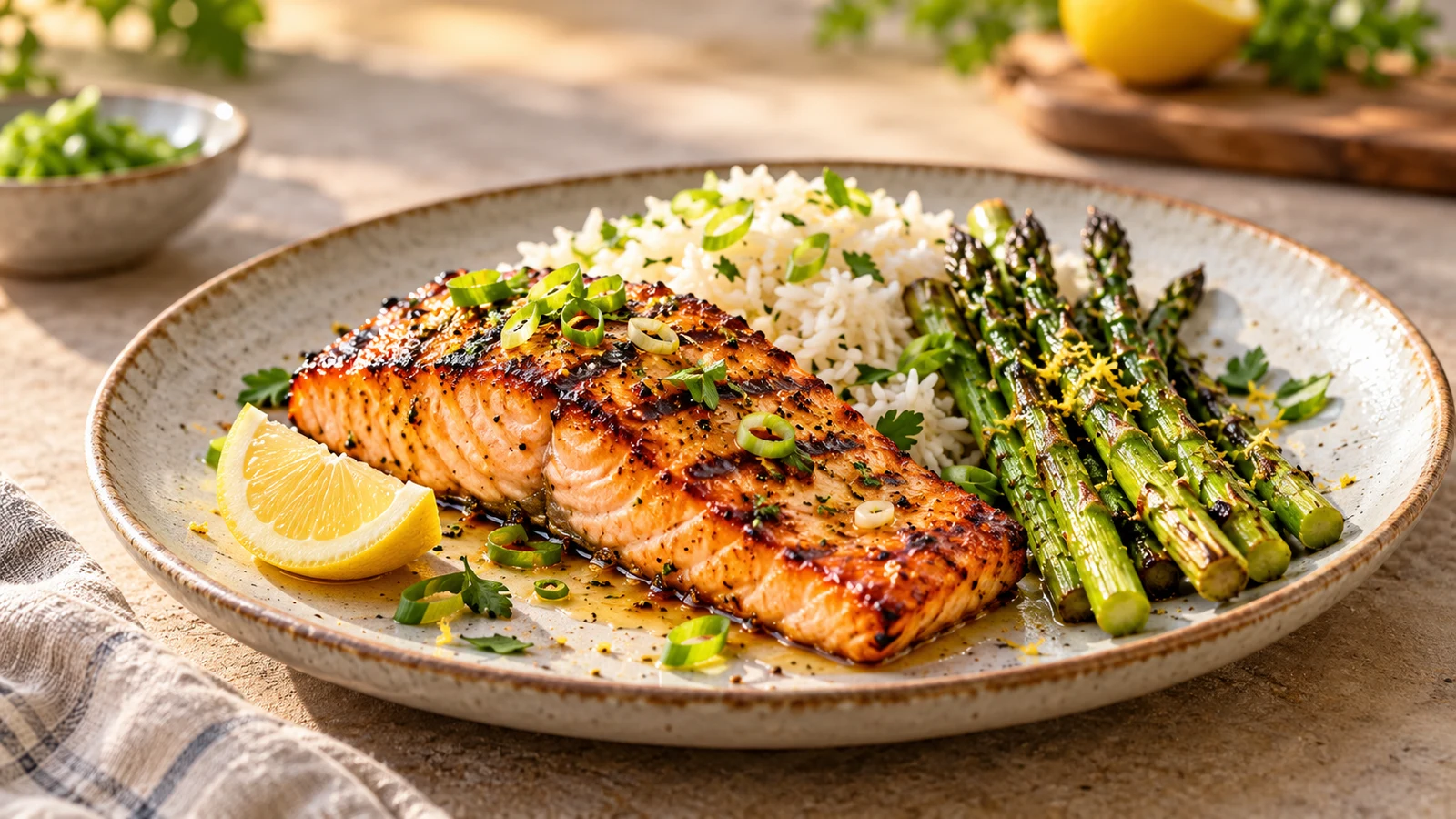
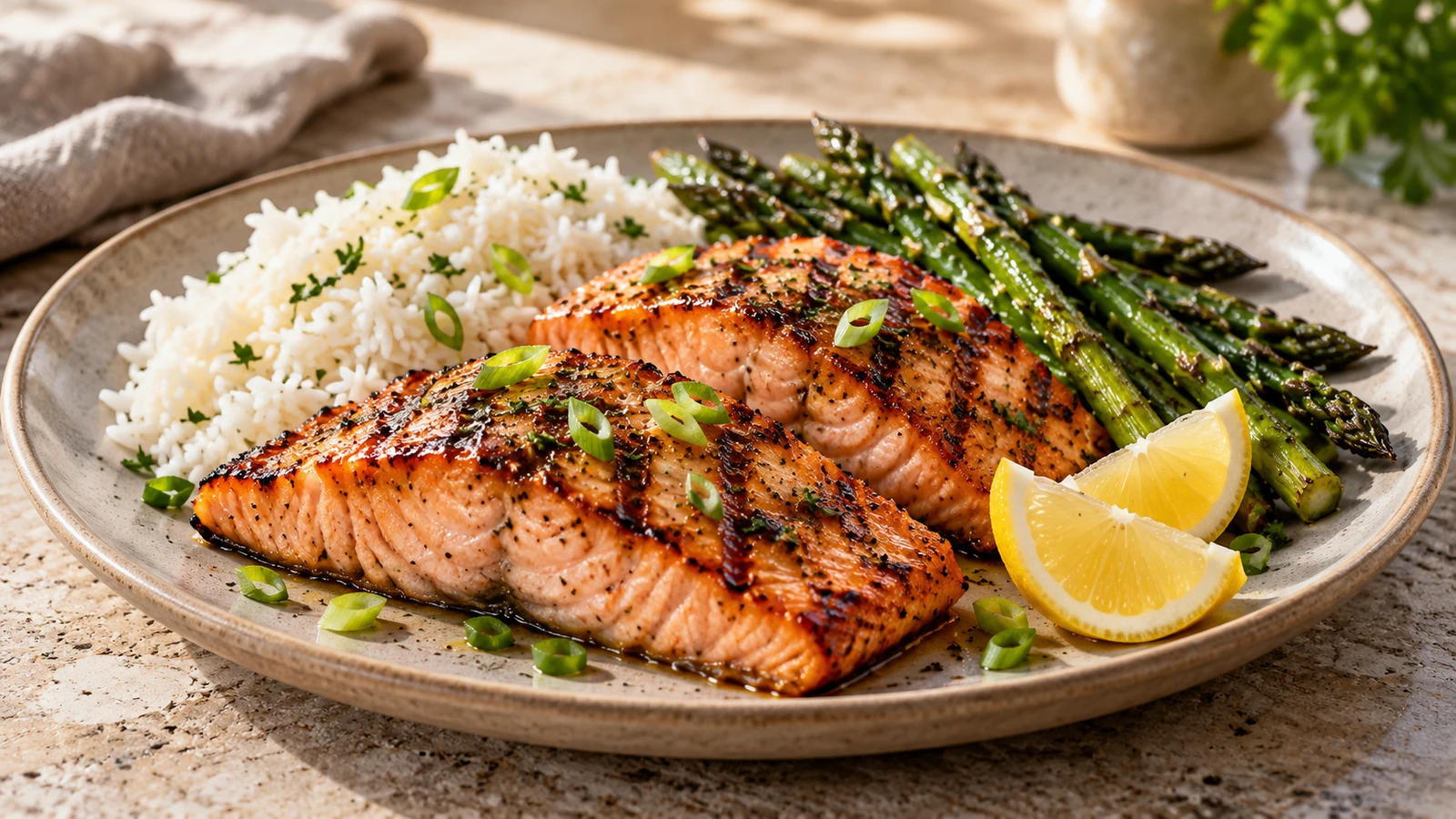
Garnish the cooked salmon with sliced green onion and serve it with lemon wedges, steamed rice, and roasted asparagus. This salmon and asparagus dinner offers more guidance for pairing the two.
Salmon also provides protein and long-chain omega-3 fatty acids; this review of salmon’s nutritional composition explains how amounts can vary among salmon types.
For a lighter plate, pair the salmon with a crisp green salad, steamed vegetables, or cauliflower rice. Roasted potatoes, quinoa, or noodles are satisfying choices when you want a heartier meal. Spoon any separate, unused marinade over rice only after simmering it into a sauce.
A cool cucumber salad provides contrast to the warm, glazed fish. For the salmon marinade recipe for grilling, corn, zucchini, or asparagus can cook beside the fillets. Begin vegetables that require more time before adding the salmon.
Leftover salmon is also good chilled over salad or flaked into a grain bowl. Add fresh lemon just before serving to restore brightness rather than soaking the cooked fish in more acidic liquid.
How to Store and Reheat
Make ahead: Whisk the unused marinade up to 3 days ahead and refrigerate it in a sealed container. Do not add the salmon until 15–30 minutes before cooking.
Refrigerate: Cool cooked salmon promptly, transfer it to an airtight container, and refrigerate for up to 3 days. General fish-consumption guidance, including advice for pregnant people and children, is available in the FDA’s advice about eating fish.
Freeze: Freeze cooked salmon in a tightly wrapped, freezer-safe container for up to 2 months. Thaw it overnight in the refrigerator. For the best texture, freeze salmon after cooking rather than leaving raw fish in this acidic marinade.
Reheat: Cover the salmon loosely and warm it in a 275°F (135°C) oven for 10–15 minutes, or until heated through. Low heat limits moisture loss. A microwave also works in 30-second intervals at 50 percent power.
Store side dishes separately when possible because they may need different reheating times. Avoid repeatedly reheating the entire batch; warm only the amount you intend to eat. A splash of water in the baking dish can create gentle steam, while a fresh lemon wedge restores the bright finish.
Common Mistakes and Troubleshooting
- Mushy fish: The salmon marinated too long. Keep it refrigerated and stop at 30 minutes.
- Bland salmon: The fillet may be unusually thick or the marinade may not have coated it evenly. Turn it once while marinating and finish with lemon and a small pinch of salt.
- Dry salmon: Begin checking early and use a thermometer instead of relying only on time.
- Salty salmon: Use low-sodium soy sauce, measure accurately, and do not season the fish with extra salt before cooking.
- Burned exterior: Remove excess marinade and lower the heat if the honey browns before the center is ready.
- Fish sticks to the grill: The grates may not be hot or well oiled, or the salmon may have been turned too soon. Let it cook undisturbed until it releases more easily.
- Uneven cooking: Fillets of different thicknesses finish at different times. Remove thinner pieces first and continue cooking the thicker ones.
- Marinade separates: This is normal after standing. Whisk it thoroughly before coating the fish.
If the salmon marinade recipe for grilling starts to darken before the center is ready, transfer the fish to indirect heat and close the lid. In the oven or air fryer, reduce the heat slightly and continue checking frequently. The goal is controlled caramelization, not a heavily charred coating.
Frequently Asked Questions
How long should salmon marinate?
Marinate it for 15–30 minutes in the refrigerator. Thin fillets need less time, and exceeding 30 minutes can give the surface a mushy texture because the salmon marinade recipe contains lemon juice.
Can I make a salmon marinade recipe without soy sauce?
Yes. Use 3 tablespoons coconut aminos, reduce the honey to 2 teaspoons, and begin with 1/8 teaspoon salt. Adjust only after tasting marinade that has not touched raw fish.
Can I reuse salmon marinade?
Do not brush raw, used marinade directly onto cooked fish. Discard it, or bring it to a vigorous boil in a saucepan before using it; making a separate clean portion for serving is simpler.
Should I remove salmon skin before marinating?
No. Skin-on fillets hold together well and resist sticking during grilling. The marinade primarily flavors the exposed flesh, while the skin acts as a barrier against direct heat.
Can I marinate frozen salmon?
Thaw the salmon completely in the refrigerator first. Frozen fish releases water as it thaws, which can dilute the salmon marinade recipe and lead to uneven seasoning. Pat the thawed fillets dry before marinating.
Can I leave salmon in this marinade overnight?
No. The lemon juice will continue affecting the surface and can make it unpleasantly soft. Prepare the marinade ahead, store it separately, and add the salmon only 15–30 minutes before cooking.
What makes this salmon marinade recipe easy for beginners?
The ingredients are simply whisked together, the short marinating time requires little planning, and three cooking methods are included. An instant-read thermometer and fillets of similar thickness make doneness easier to judge.
Does the salmon marinade recipe for grilling work for skinless fillets?
Yes. Oil the clean grates and the fish well, then leave each fillet undisturbed until it releases naturally. Turn it with a thin spatula and move it to cooler heat if the honey begins browning too quickly.
Can I double the marinade?
Yes. Double every marinade ingredient in the same proportion. Reserve any portion intended as a serving sauce before it touches raw salmon, and marinate the fish in a shallow nonreactive container.
How can I tell when salmon is done without breaking it apart?
Check the thickest section with an instant-read thermometer instead of repeatedly cutting into the fish. The flesh should also appear opaque around the edges and separate into moist flakes with gentle pressure.
Can I use this marinade on a whole side of salmon?
The flavor profile works, but a large side will cook differently from four 6-ounce fillets. Keep the same 15–30-minute marinating limit and determine cooking time according to the thickness and your chosen method.
Why does white material appear on cooked salmon?
The white substance is a natural protein that becomes visible during cooking. It is safe to eat. Cooking at controlled heat and avoiding overcooking can reduce how much appears on the surface.
Recipe Card
Equipment: Small whisk, shallow nonreactive dish, tongs, thin spatula, and instant-read thermometer
Yield: 4 servings
Preparation time: 10 minutes
Marinating time: 15–30 minutes
Cooking time: 6–14 minutes
Temperature: Grill at 400–425°F (204–218°C), bake at 400°F (204°C), or air-fry at 390°F (199°C)
Method: Whisk together 3 tablespoons low-sodium soy sauce, 2 tablespoons olive oil, 1 tablespoon honey, 1 tablespoon lemon juice, 2 minced garlic cloves, 1 teaspoon Dijon, and 1/4 teaspoon pepper. Marinate four 6-ounce salmon fillets under refrigeration for 15–30 minutes, discard the used marinade, and cook by your preferred method until done to your liking.
Estimated nutrition per serving: 360 calories, 34 g protein, 21 g fat, 7 g carbohydrates, 6 g sugar, and 590 mg sodium. Values vary with the salmon and brands used.
A Dependable Salmon Dinner
With quick preparation, flexible cooking methods, and balanced savory-sweet flavor, this salmon marinade recipe makes dependable salmon possible on busy evenings. Serve it promptly with rice, roasted asparagus, green onion, and fresh lemon.
Once you understand the short marinating window and choose a cooking method based on fillet thickness, the process is straightforward. Keep the salmon marinade recipe easy by preparing the mixture ahead, using a thermometer, and letting the cooked fish rest briefly before serving.
Reviews
Reader reviews are managed separately (outside this build).