Salmon
Best cedar plank salmon recipe with Irresistible Glaze
Try this cedar plank salmon recipe with an easy brown sugar glaze, smoky flavor, juicy texture, plank prep, doneness guidance, plus an oven option.
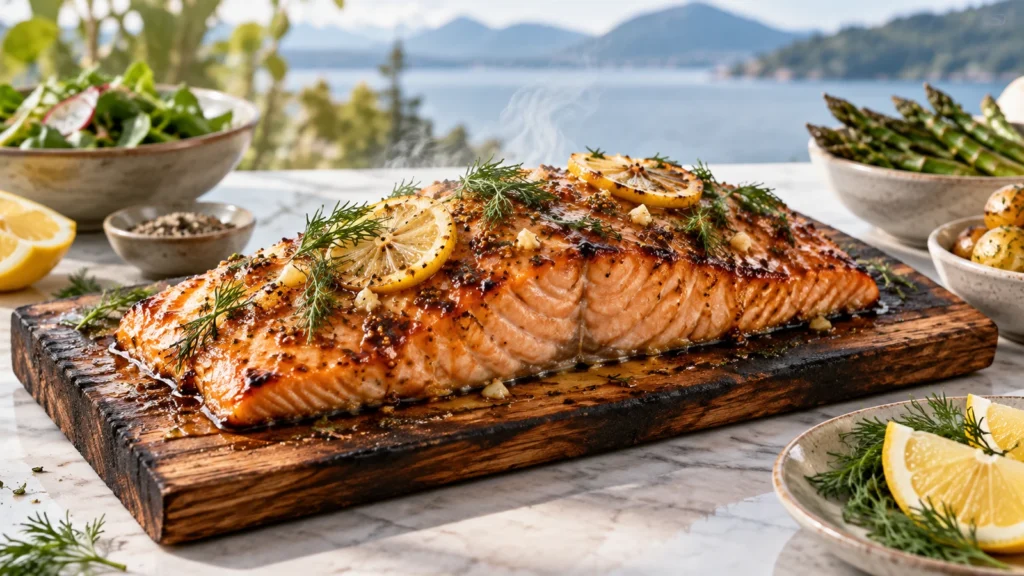
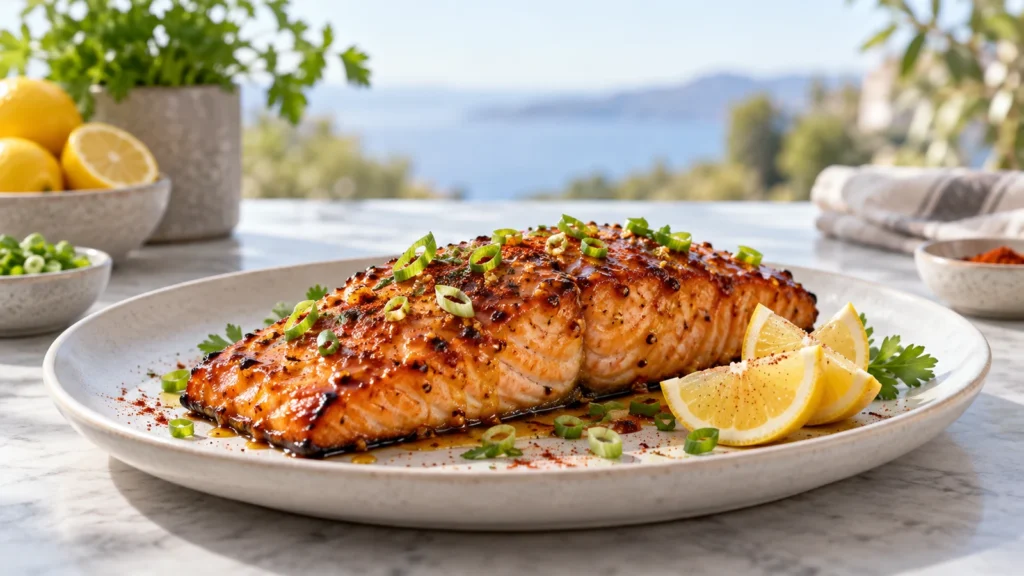
This cedar plank salmon recipe gives you tender, smoky fish finished with a sweet-savory glaze that caramelizes beautifully. The plank protects the salmon from direct flames while adding a subtle wood-fired aroma. It is an impressive main course for a summer cookout, yet the preparation is simple enough for a relaxed family dinner.
Careful heat control makes this method approachable for any home cook. Whether you choose the cedar plank salmon recipe grill method or the cedar plank salmon recipe oven adaptation, the key is to cook gently and check the thickest part with a thermometer. The guide below covers plank safety, setup, doneness, troubleshooting, storage, and serving ideas.
Table of Contents
Why You’ll Love This Cedar Plank Salmon Recipe
- Moist and flavorful: Indirect heat cooks the salmon gently while the damp cedar adds a delicate smoky aroma.
- Easy entertaining: Serve the fish directly from the plank on a heatproof platter for a memorable presentation.
- Flexible: Use a gas grill, pellet grill, ceramic cooker, or oven without changing the ingredients.
- Balanced glaze: Brown sugar, mustard, soy sauce, and lemon create sweetness, tang, and savory depth.
- Simple cleanup: The plank acts as a cooking surface and keeps the delicate fillet away from the grill grates.
Recipe Overview
- Plank soaking time: 1 to 2 hours
- Active preparation: 15 minutes
- Cooking time: 15 to 25 minutes
- Total time: About 1 hour 40 minutes, including minimum soaking
- Yield: 4 servings
Most of the total time is hands-off while the plank soaks. Once the grill or oven is hot, the cedar plank salmon recipe comes together quickly, so prepare side dishes and serving plates before the fish begins cooking.
Choosing and Preparing a Cedar Plank
Buy a food-safe, untreated Western red cedar plank sold specifically for cooking. Never use lumber-yard cedar, which may contain chemicals, preservatives, glue, or residues that are unsuitable for food. Choose a plank large enough to support the entire fillet without the thin tail hanging over an edge.
Submerge the plank in water for at least 1 hour, preferably 2 hours, weighing it down so every surface stays wet. Soaking delays burning but does not make wood fireproof. The plank should smolder lightly rather than burn with open flames. A roasting pan or clean sink works well for soaking a long plank.
Prepare a two-zone grill with a hotter side and an indirect side. Keep a spray bottle of water nearby for the plank’s edges, and close the lid promptly to limit oxygen if a flare-up occurs. Guidance on temperature control for cedar-plank salmon further explains why internal temperature matters more than color alone.
Should You Add Flavor to the Soaking Water?
Plain water is dependable and lets the cedar aroma remain clean. Wine, apple juice, or citrus slices may perfume the wet plank, but they do not penetrate the salmon as effectively as the glaze. For the most consistent cedar plank salmon recipe, save flavorful ingredients for the surface of the fish.
Ingredients
- 1 food-safe untreated cedar grilling plank, approximately 6 by 15 inches (15 by 38 cm)
- 1 1/2 pounds (680 g) center-cut salmon fillet, preferably skin-on
- 1 tablespoon (15 ml) olive oil
- 3/4 teaspoon kosher salt
- 1/4 teaspoon black pepper
- 3 tablespoons (38 g) packed light brown sugar
- 1 tablespoon (15 g) Dijon mustard
- 1 tablespoon (15 ml) reduced-sodium soy sauce
- 1 tablespoon (15 ml) fresh lemon juice
- 1 teaspoon finely grated lemon zest
- 1 garlic clove, finely grated
- 1/2 teaspoon smoked paprika
- 2 tablespoons chopped fresh parsley or dill
- Lemon wedges, for serving
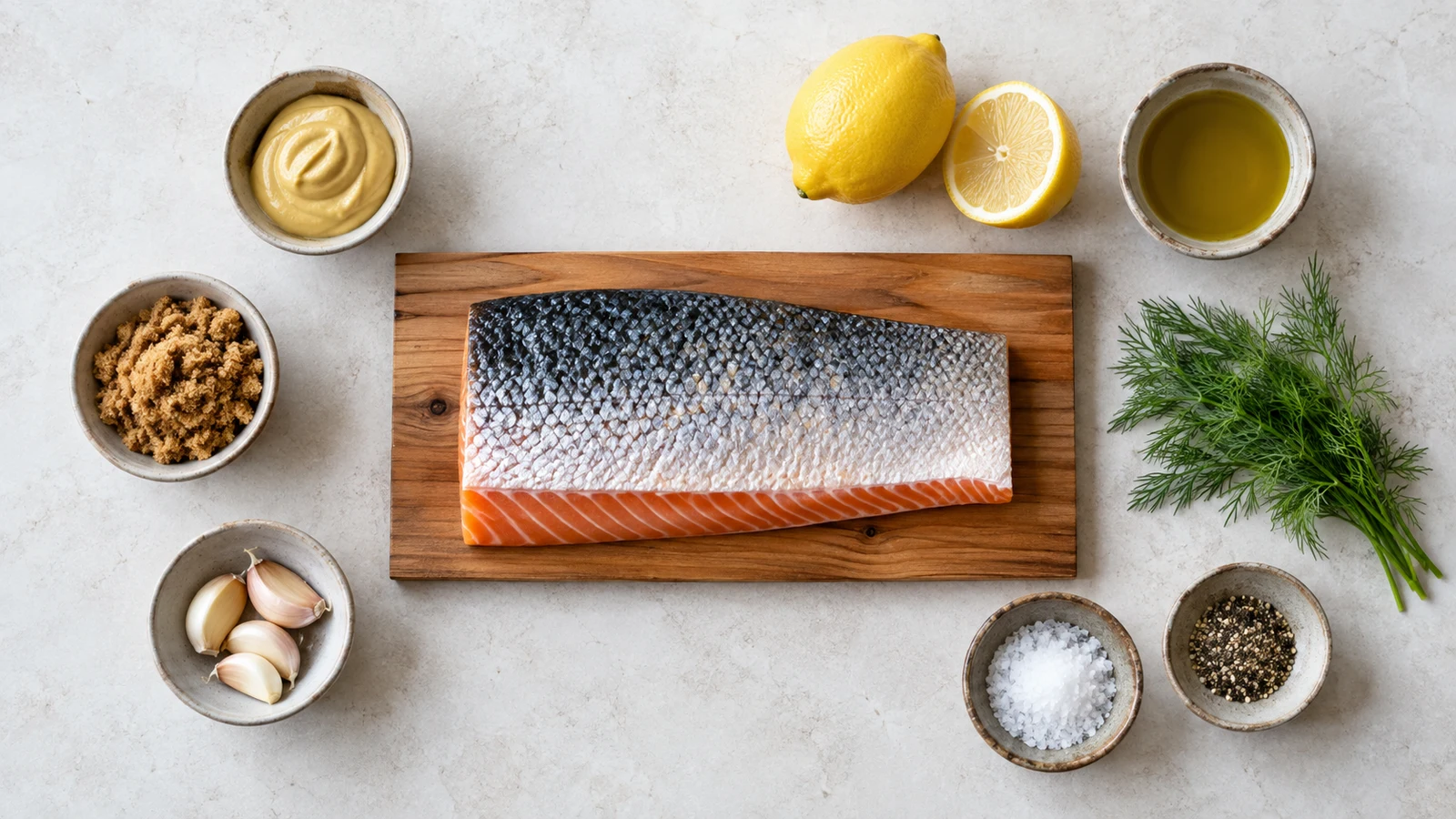
Cedar Plank Salmon Recipe Brown Sugar Glaze
Whisk the brown sugar, Dijon, soy sauce, lemon juice, zest, garlic, and smoked paprika until evenly combined. Brown sugar promotes caramelization, while mustard helps the glaze cling to the fish. Prepare it up to two days ahead and refrigerate it in a covered container.
The cedar plank salmon recipe brown sugar glaze should look smooth and spoonable. If the sugar has not dissolved completely, let the mixture stand for five minutes and whisk again. This brief rest helps the ingredients combine without changing the specified quantities.
Apply the glaze in two thin layers instead of one heavy coating. A thick layer can scorch or slide off before the salmon is cooked. For another sweet-savory approach, try this brown sugar baked salmon.
How to Make Cedar Plank Salmon Recipe Grill Style
- Soak the plank: Fully submerge it in water for 1 to 2 hours. Remove it, drain briefly, and pat the cooking surface lightly.
- Prepare the grill: Heat a gas or charcoal grill to 375–400°F (190–205°C). Create direct and indirect zones, leaving one section without active flame or coals beneath it.
- Season the salmon: Check for pin bones and pat the fillet dry. Rub it with olive oil, salt, and pepper. Place it skin-side down on the plank; skinless salmon also works but benefits from a thin coat of oil beneath it.
- Preheat the plank: Set the empty plank over direct heat for 2 to 3 minutes, just until it begins to crackle and lightly smoke. Turn it over, move it to the indirect zone, and immediately add the salmon.
- Glaze and cook: Brush half the glaze over the salmon. Close the lid and cook for 10 minutes, keeping the grill near 375–400°F (190–205°C).
- Finish gently: Brush on the remaining glaze. Continue cooking for 5 to 15 minutes, depending on thickness, until the center reaches your preferred temperature.
- Rest: Transfer the plank to a heatproof surface. Rest the salmon for 5 minutes, then garnish with herbs and lemon.
During the cedar plank salmon recipe grill process, wisps of clean-smelling smoke are normal. Thick, dark smoke or visible flames signal excessive heat. Shift the plank farther into the indirect zone and close the lid so the salmon continues cooking in steady, enclosed heat.
Gas Grill Setup
Preheat all burners, then turn off the burner directly beneath the plank and leave an adjacent burner on to maintain 375–400°F (190–205°C). This setup gives the cedar plank salmon recipe grill method enough heat to create smoke without exposing the wood to a constant flame.
Charcoal Grill Setup
Bank the hot coals on one side and place the plank on the opposite side. Position the lid vent above the salmon so heat and aromatic smoke travel across the fish before escaping. Adjust the vents as needed to hold the stated temperature range.
Cedar Plank Salmon Recipe Oven Adaptation
Soak the plank as directed and confirm that its packaging permits oven use. Heat the oven to 400°F (205°C), place the planked salmon on a rimmed baking sheet, and bake for 15 to 22 minutes. Do not pre-char the plank indoors, and never place it under the broiler or directly on an oven element.
The cedar plank salmon recipe oven method produces less smoke flavor but offers steady heat and simple temperature control. Some cedar aroma still develops as the warm plank releases moisture beneath the fish. Keep the rimmed baking sheet under the plank throughout cooking to make handling safer.
If your kitchen is sensitive to smoke, use the exhaust fan and check that the plank remains damp around its edges. If you prefer a plank-free meal, this moist mayonnaise baked salmon is another forgiving method.
Temperature and Timing Guide
- Gas grill, 375–400°F (190–205°C): 15–25 minutes.
- Traeger or pellet grill, 375°F (190°C): 20–30 minutes.
- Big Green Egg, indirect setup at 375°F (190°C): 18–25 minutes.
- Oven, 400°F (205°C): 15–22 minutes.
- Fillet 3/4 inch (2 cm) thick: Begin checking after 12–14 minutes.
- Fillet 1 to 1 1/2 inches (2.5–4 cm) thick: Begin checking after 17–20 minutes.
Wild salmon is usually leaner and may finish several minutes sooner than farmed salmon of equal thickness. Skin-on fish is easier to lift from the plank and receives extra protection from heat, although skinless fillets cook successfully when the plank is lightly oiled.
These times are useful estimates, not a substitute for checking temperature. Every cedar plank salmon recipe cooks a little differently because fillet thickness, starting temperature, wind, grill recovery, and plank moisture affect the pace.
Doneness Guide
Insert an instant-read thermometer into the thickest section from the side. For a moist result, many cooks remove salmon around 130–135°F (54–57°C); its temperature may rise another 3–5°F while resting. For conservative food-safety guidance, cook fin fish to 145°F (63°C), as also reflected in this cedar-plank salmon preparation guide.
The flesh should flake under gentle pressure but remain moist in the center. Check early because thickness and grill temperature affect cooking more than weight does. Avoid repeatedly breaking open the fillet, which releases juices and makes the finished presentation less attractive.
Expert Tips for the Best Cedar Plank Salmon Recipe
- Start with even thickness: A center-cut fillet cooks more uniformly than a piece with a very thin tail.
- Remove pin bones: Run clean fingertips over the flesh and pull any bones out with clean tweezers before seasoning.
- Dry the surface: Patting the salmon dry helps the oil, seasoning, and glaze adhere evenly.
- Keep heat indirect: Leave the plank over indirect heat after its brief preheating period.
- Use a thermometer: Do not wait for white albumin to appear before checking the center.
- Limit lid opening: Open the grill only when glazing or checking temperature so heat remains stable.
- Glaze in layers: Thin applications are less likely to scorch than one heavy coating.
- Rest before serving: Five minutes allows the temperature to settle and helps the flesh retain moisture.
- Handle the plank safely: Use sturdy grill gloves and transfer it to a large heatproof platter, never a plastic tray.
- Inspect after cooking: Discard a deeply charred plank after it cools; damaged wood can be brittle, unsanitary, and unpredictable during reheating.
For especially even cooking, let the salmon sit at room temperature only while you heat the grill and mix the glaze. Do not leave raw fish unrefrigerated for an extended period. A cool fillet is safe and works well; it may simply need the longer end of the timing range.
Variations and Substitutions
Gluten-Free Variation
Replace soy sauce with tamari for a gluten-free version, checking the label to confirm that the tamari meets your needs. Coconut aminos also work, although they produce a sweeter, less salty glaze. No other technique in the cedar plank salmon recipe needs to change.
Maple and Citrus Variation
Maple syrup can replace brown sugar, though the glaze will be thinner and may run toward the plank. Orange juice and zest can stand in for lemon for a softer citrus note. Keep the same cooking temperatures and rely on the internal temperature for doneness.
Herb and Spice Options
Chopped rosemary can replace dill or parsley. For gentle heat, add 1/4 teaspoon cayenne or 1 teaspoon sriracha. These additions complement the cedar plank salmon recipe brown sugar profile without covering the salmon’s natural richness.
Individual Portions
Individual salmon portions work too; begin checking them several minutes earlier because their exposed edges cook faster. Arrange the pieces with a little space between them so hot air can circulate. More technique and seasoning inspiration is available in this grilled plank salmon reference.
Make-Ahead Preparation
Mix the glaze up to two days ahead and refrigerate it in a covered container. Whisk it again before use because the ingredients may settle. You can also inspect the salmon for pin bones and chop the herbs earlier in the day, keeping both covered and refrigerated.
Begin soaking the plank 1 to 2 hours before cooking. Do not assemble the entire cedar plank salmon recipe hours in advance. Season and glaze the fish no more than 30 minutes before cooking because salt and acidic lemon juice can gradually change its texture.
If entertaining, arrange the side dishes first and preheat the grill shortly before guests are ready to eat. Salmon is best served soon after its five-minute rest, so completing cold salads and setting the table in advance makes the final cooking period calm and predictable.
Troubleshooting Common Problems
Why Is the Cedar Plank Burning?
Move it farther from the flame, close the lid, and mist only the burning edge with water. Do not soak the fish. A small amount of smoldering is desirable, but open flames can create harsh smoke and scorch the cedar plank salmon recipe brown sugar glaze.
Why Is the Salmon Sticking?
Use skin-on salmon or lightly oil the plank before adding a skinless fillet. After cooking, slide a thin spatula between the flesh and skin if you want to leave the skin behind. Do not force the fish away from the plank while it is still delicate and hot.
Why Did the Fish Turn Out Dry?
Check sooner, particularly with wild salmon, and account for carryover cooking. Measure at the thickest part from the side rather than touching the hot plank with the thermometer tip. A very thin fillet can finish before the suggested minimum time.
Why Did the Glaze Scorch?
Reduce the heat, move the plank fully into the indirect zone, and apply thinner layers. The cedar plank salmon recipe brown sugar glaze caramelizes quickly when exposed to direct flames, so save the second coating until after the first 10 minutes of cooking.
Why Is There No Cedar Aroma?
For the grill method, briefly warm the plank over direct heat before moving it to the cool zone, but do not ignite it. Keep the lid closed so the fragrant smoke circulates around the salmon. The oven version will naturally have a milder cedar character.
Why Is White Albumin Appearing?
The harmless white protein appears when salmon cooks, especially when heat is high or the fish cooks beyond its ideal point. A little is normal. Maintain steady indirect heat and check temperature early to reduce it rather than scraping the surface during cooking.
Serving Ideas
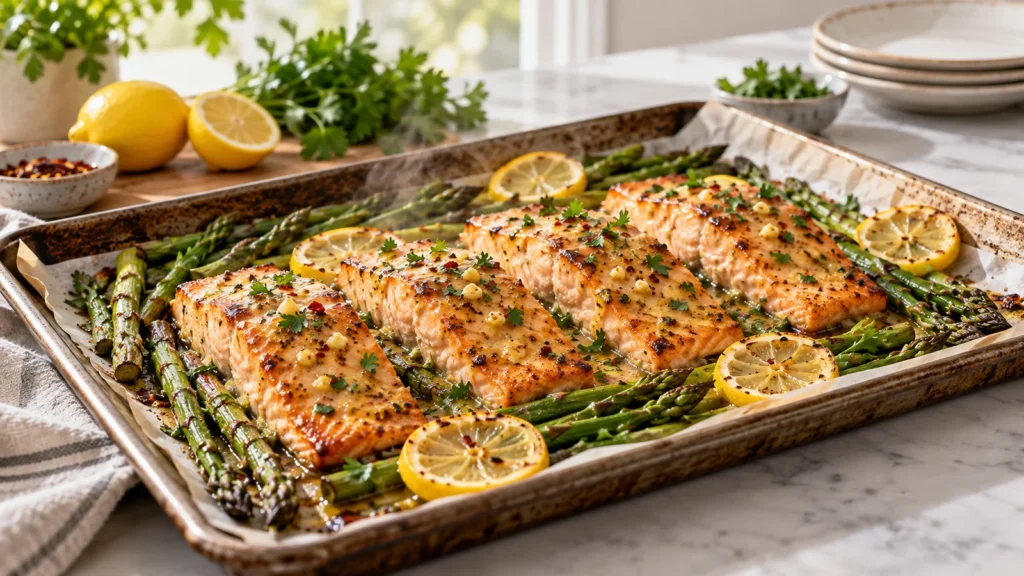
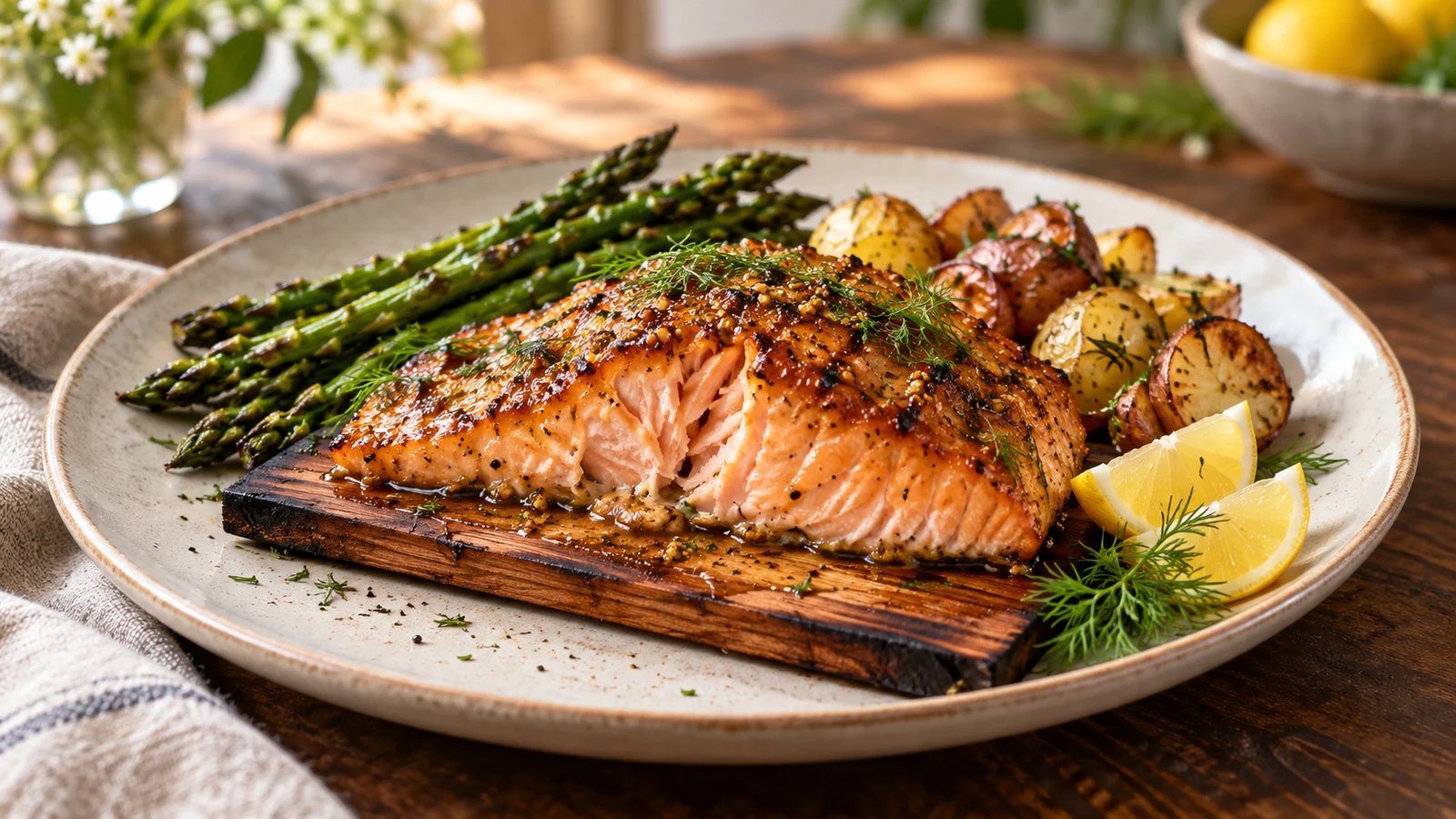
Serve the salmon with rice, roasted baby potatoes, grilled corn, cucumber salad, or lemony greens. For a complete sheet-pan-inspired pairing, use the vegetables from this salmon with baked asparagus.
The sweet glaze also pairs well with crisp, lightly acidic sides. Try a cabbage slaw, tomato salad, steamed green beans, or leafy salad dressed with lemon. These fresh accompaniments balance the richness without competing with the smoky flavor.
For an outdoor meal, bring the finished plank to the table on a heatproof platter and portion the fish there. Warn guests that the wood remains hot. Lemon wedges and the reserved fresh herbs add brightness without changing the carefully balanced cedar plank salmon recipe brown sugar glaze.
How to Store and Reheat
Refrigerate cooked salmon within two hours in an airtight container for up to three days. Remove it from the plank first; the plank is not a storage tray. Divide large leftovers into shallow portions so they cool promptly and remain easy to reheat.
Freeze tightly wrapped portions for up to two months, then thaw overnight in the refrigerator. Freezing may soften the texture slightly, so thawed leftovers are especially useful in salmon cakes, grain bowls, salads, or sandwiches.
Reheat covered in a 275°F (135°C) oven for 10 to 15 minutes, until warmed through, or use short microwave intervals at 50 percent power. A splash of water or lemon juice helps retain moisture. Gentle reheating protects the texture better than returning leftovers to a hot grill.
Leftovers from the cedar plank salmon recipe are also excellent cold. Flake them over greens, fold them into cooked pasta, or serve them with cucumber and rice. Discard cooked salmon that has remained at room temperature for more than two hours.
Frequently Asked Questions
Do I Have to Soak the Cedar Plank?
Yes. Soak it for at least 1 hour and preferably 2 hours so it smolders gradually rather than catching fire quickly. Keep it completely submerged with a heavy, water-safe object, then drain it briefly before beginning the cedar plank salmon recipe.
Can I Reuse the Plank?
Only a nearly intact, lightly toasted plank could be cleaned and reused, but single use is safest and gives the most predictable flavor. Never reuse a cracked, heavily charred, or food-soaked plank. Let used wood cool completely before discarding it safely.
Can I Prepare the Salmon Ahead?
Make the glaze up to two days ahead. Season and glaze the fish no more than 30 minutes before cooking because salt and acidic lemon juice can alter its texture. Keep the salmon refrigerated until the grill or oven is nearly ready.
Can I Make the Cedar Plank Salmon Recipe Grill Method Without Skin?
Yes. Lightly oil the plank before adding a skinless fillet, and use a broad spatula when transferring portions. Skin provides extra protection and simplifies serving, but it is not required for successful cooking.
Can I Use the Cedar Plank Salmon Recipe Oven Method in Any Oven?
Use only a food-safe plank whose packaging explicitly permits oven cooking. Place it on a rimmed baking sheet at 400°F (205°C), keep it away from heating elements, and never use the broiler. Follow any additional safety directions supplied by the plank manufacturer.
Does the Cedar Plank Salmon Recipe Brown Sugar Glaze Taste Very Sweet?
The sweetness is balanced by Dijon mustard, reduced-sodium soy sauce, lemon juice, garlic, and smoked paprika. Two thin layers give the fish a glossy finish without overwhelming its flavor. Lemon wedges at serving add further brightness.
Can I Cook Individual Fillets Instead of One Large Piece?
Yes. Arrange portions on the soaked plank without crowding and begin checking them several minutes earlier. Small pieces have more exposed edges, so they can cook faster than a 1 1/2-pound center-cut fillet.
What Nutrition Does One Serving Provide?
One serving provides approximately 390 calories, 36 g protein, 22 g fat, 11 g carbohydrate, and 620 mg sodium. Values vary with the salmon and amount of glaze consumed.
Complete Recipe Card
- Yield: 4 servings
- Equipment: Food-safe cedar plank, grill or oven, rimmed baking sheet for oven use, brush, and instant-read thermometer
- Ingredients: 1 1/2 pounds (680 g) salmon, 1 tablespoon (15 ml) olive oil, 3/4 teaspoon salt, 1/4 teaspoon pepper, 3 tablespoons (38 g) brown sugar, 1 tablespoon (15 g) Dijon, 1 tablespoon (15 ml) soy sauce, 1 tablespoon (15 ml) lemon juice, 1 teaspoon zest, 1 garlic clove, and 1/2 teaspoon smoked paprika
- Temperature: Grill at 375–400°F (190–205°C) or bake at 400°F (205°C)
- Timing: Soak 1–2 hours; prepare 15 minutes; cook 15–25 minutes; rest 5 minutes
- Method: Season the salmon, place it skin-side down on the prepared plank, brush with glaze, cook over indirect heat, and rest before serving.
- Approximate nutrition: 390 calories, 36 g protein, 22 g fat, and 11 g carbohydrate per serving
With a properly soaked plank, controlled indirect heat, and an accurate temperature check, this cedar plank salmon recipe stays juicy while developing a fragrant wood-fired finish and glossy glaze. Choose the grill for deeper smoke or the oven for steady indoor cooking, then serve the salmon promptly with simple seasonal sides.
Reviews
Reader reviews are managed separately (outside this build).