Salmon
Easy mayonnaise baked salmon recipe: Flaky Perfection
Try this mayonnaise baked salmon recipe for moist, flaky fillets with lemon, garlic, Parmesan and dill—oven-ready in just 10–14 minutes for dinner.
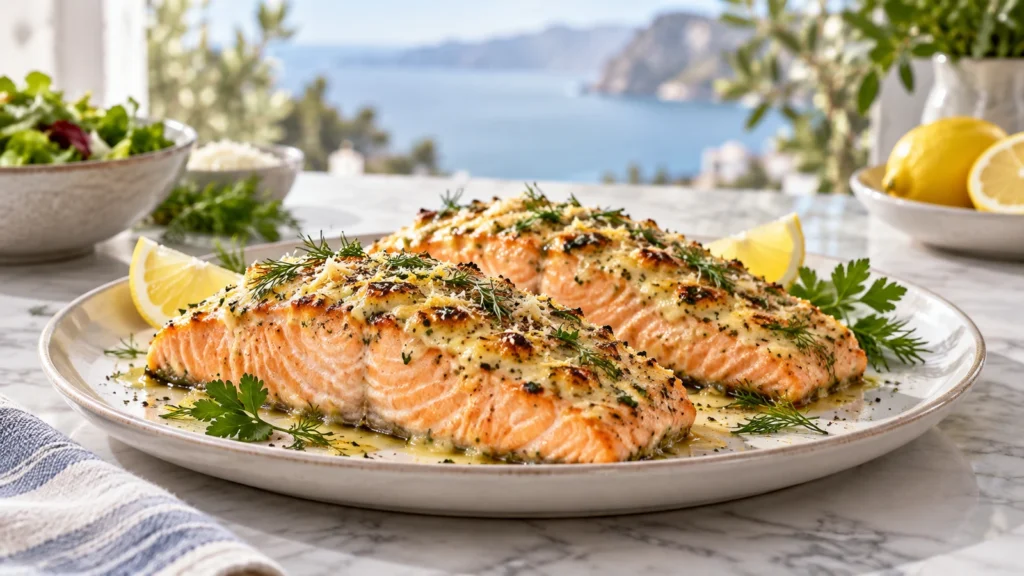
This mayonnaise baked salmon recipe delivers tender, flaky fish beneath a savory lemon-garlic topping. It is an easy weeknight dinner that takes about 25 minutes from start to finish, yet it feels polished enough for guests.
Quick answer: Coat 1-inch-thick salmon fillets with seasoned mayonnaise, then bake at 400°F (204°C) for 10–14 minutes. Begin checking early if you are using thin fillets or lean wild sockeye, and use an instant-read thermometer for the most reliable results.
The appeal of this mayonnaise baked salmon recipe is its dependable balance of speed, moisture, and flavor. The creamy layer protects the top of each fillet while lemon, Dijon, garlic, Parmesan, and dill keep the finished dish bright rather than heavy.
Table of Contents
Why You’ll Love This Mayonnaise Baked Salmon Recipe
- Moist and flaky: The mayonnaise topping limits surface moisture loss while the salmon cooks.
- Fast: Preparation takes about 10 minutes, and most fillets bake in 10–14 minutes.
- Flavorful: Lemon, garlic, Parmesan, Dijon, and dill balance richness with freshness.
- Flexible: The method works with skin-on or skinless fillets and scales easily.
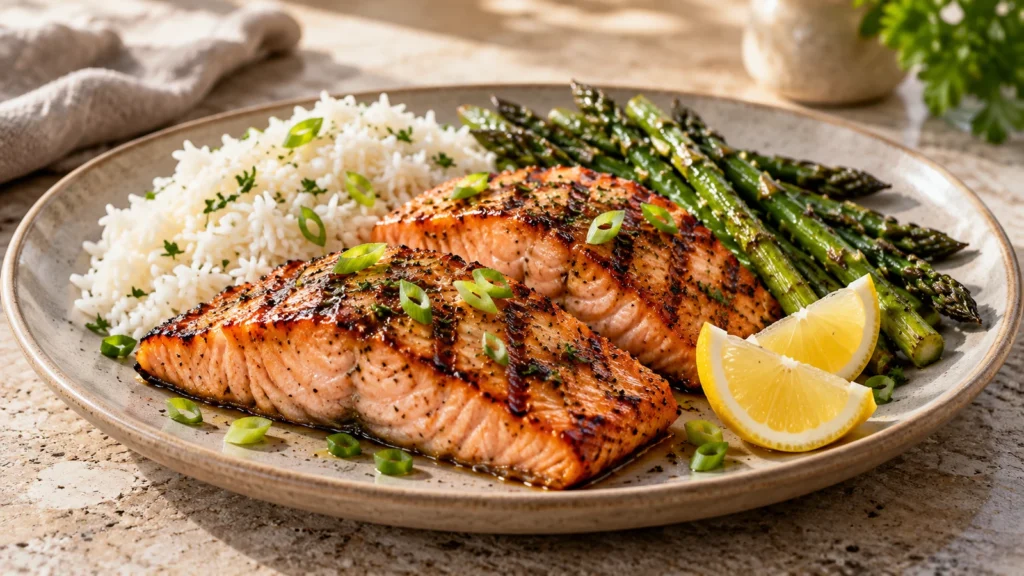
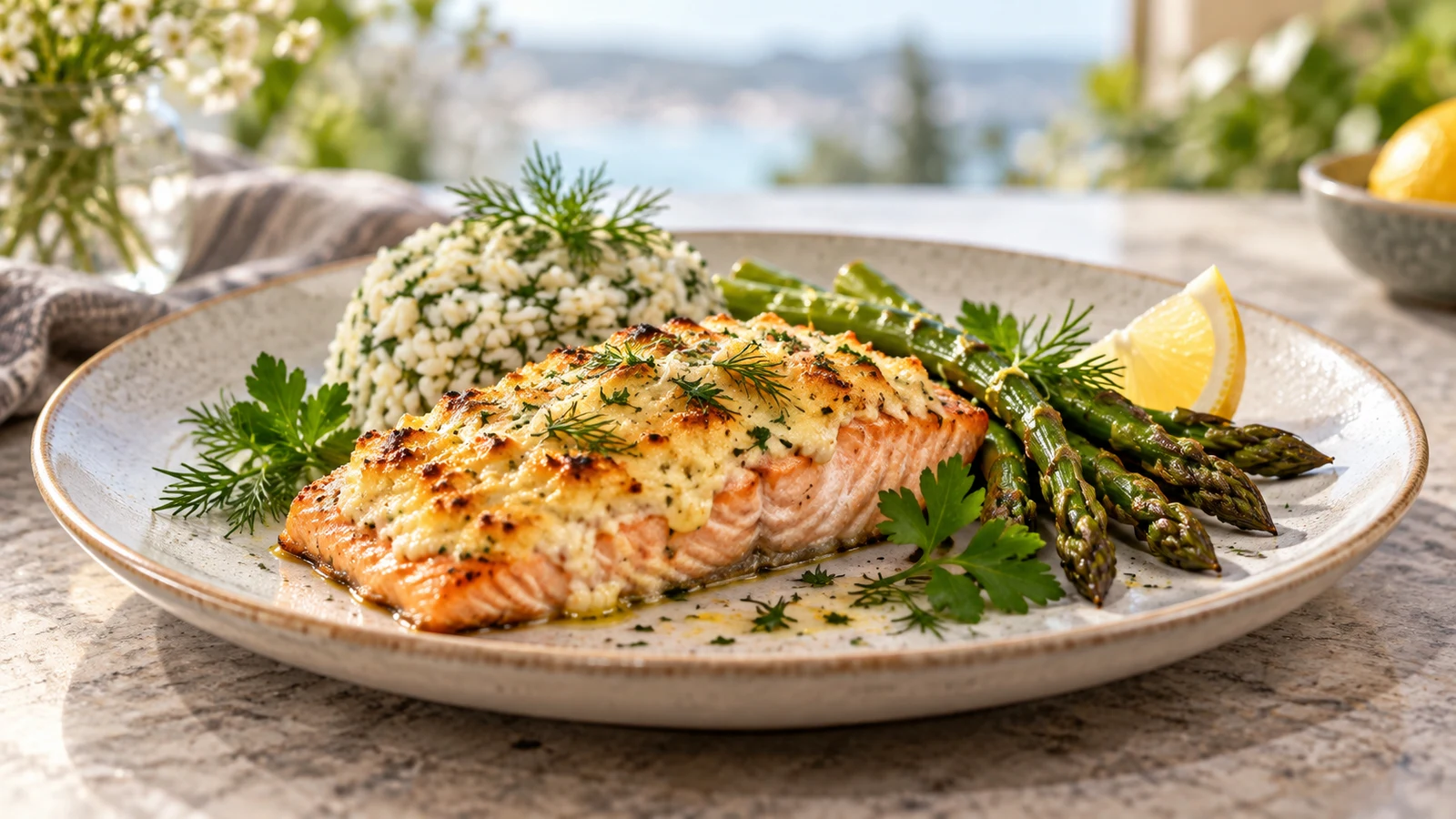
- Easy to pair: Serve it with roasted asparagus and herbed rice for a complete meal.
Unlike recipes that require marinating, this mayonnaise baked salmon recipe can be assembled immediately before dinner. It is also forgiving enough for newer cooks because the topping slows surface drying while the center finishes cooking.
Ingredients
- 4 salmon fillets, 5–6 ounces (142–170 g) each, preferably similar in thickness
- 1/3 cup mayonnaise
- 2 tablespoons finely grated Parmesan cheese
- 1 teaspoon Dijon mustard
- 1 teaspoon fresh lemon juice
- 1 teaspoon finely grated lemon zest
- 1 garlic clove, finely grated or minced
- 1 tablespoon chopped fresh dill, plus more for serving
- 1/2 teaspoon kosher salt
- 1/4 teaspoon black pepper
- Chopped fresh parsley and lemon wedges, for serving
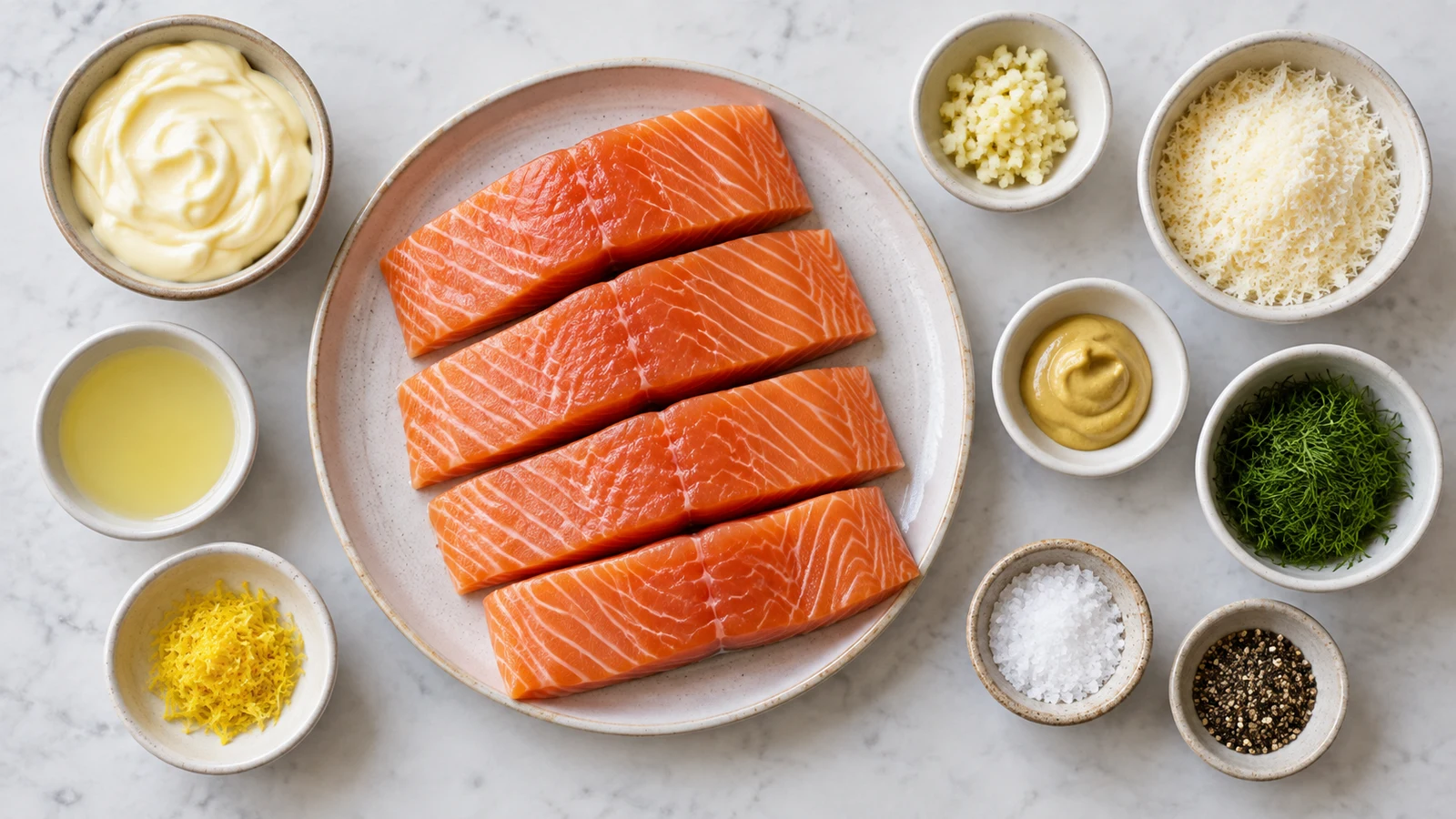
Use regular full-fat mayonnaise for the most stable coating. Reduced-fat mayonnaise may release more water during baking. Freshly grated Parmesan blends into the topping more smoothly than coarse pre-shredded cheese.
Skin-on fillets are convenient because the skin helps protect the underside from direct heat; place them skin-side down. Skinless salmon also works, but lightly grease the pan so the delicate fish releases cleanly.
How to Make This Mayonnaise Baked Salmon Recipe
- Prepare the oven and pan. Heat the oven to 400°F (204°C). Line a rimmed baking sheet with parchment paper or lightly greased foil. Pat the salmon thoroughly dry, especially on top.
- Make the topping. Stir together the mayonnaise, Parmesan, Dijon, lemon juice, lemon zest, garlic, dill, half the salt, and black pepper. The mixture should be thick and spreadable rather than runny.
- Season the fish. Arrange the fillets with space between them, placing skin-on salmon skin-side down. Sprinkle the remaining salt evenly over the fish.
- Coat the salmon. Spread about 1 1/2 tablespoons of topping over each fillet. Keep the coating on the upper surface instead of pushing it down the sides, where it can slide onto the pan.
- Bake. Bake for 10–14 minutes, adjusting for thickness and salmon type. Start checking at 8 minutes for thin sockeye fillets. The center should separate into moist flakes under gentle pressure.
- Broil if desired. For a lightly browned finish, move the pan about 6 inches from the broiler and broil for 30–90 seconds. Watch continuously because mayonnaise and Parmesan brown quickly.
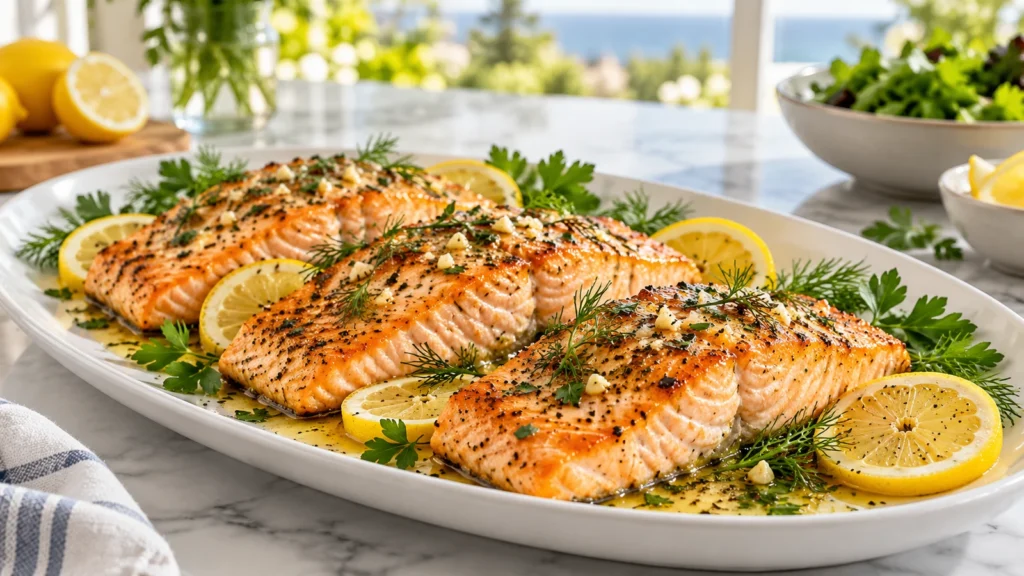
- Rest and serve. Let the salmon rest for 2–3 minutes, then garnish with dill, parsley, and lemon wedges.
For the neatest presentation, spread the topping with the back of a spoon and leave a narrow border around each fillet. That small detail helps the coating remain on top throughout baking and gives this mayonnaise baked salmon recipe a clean, lightly browned finish.
Baking Times and Doneness
- 1/2-inch fillets: 7–9 minutes at 400°F (204°C).
- 3/4-inch fillets: 9–11 minutes.
- 1-inch fillets: 10–14 minutes.
- 1 1/4-inch fillets: 14–17 minutes.
- Large 2-pound side: approximately 18–24 minutes, depending on its thickest point.
- Wild sockeye: begin checking 2–3 minutes sooner because its lean flesh can dry out faster. For more specific guidance, see this baked sockeye salmon recipe.
Cooking time is determined more accurately by thickness than by weight. Salmon is ready when the center is slightly translucent, flakes with gentle pressure, and reaches your preferred temperature. The FDA recommends cooking seafood to 145°F (63°C); consult its seafood safety guidance, particularly when serving higher-risk diners.
Remove the fish promptly once it is done because carryover heat will continue cooking it during the short rest. A thin instant-read thermometer, inserted sideways into the thickest portion, is more dependable than color alone.
A baked sockeye salmon recipe usually needs closer timing than one made with fattier Atlantic salmon. Sockeye portions are often thinner and leaner, so check them early and avoid waiting for the entire center to look dry or opaque before removing the pan.
Expert Tips for Reliable Results
- Dry the salmon well. Surface moisture can dilute the mayonnaise and cause the coating to slide.
- Keep the topping thick. Measure the lemon juice and avoid adding wet herbs. Excess liquid can produce a watery or greasy surface.
- Use evenly sized portions. If thickness varies, remove thin fillets first while thicker pieces finish.
- Do not overcoat. A thin, even layer stays in place and complements the salmon without overwhelming it.
- Expect some albumin. The harmless white protein that appears on salmon is more noticeable when fish cooks too rapidly or too long. Gentle handling and prompt removal reduce it.
- Choose thoughtfully. NOAA offers helpful information about selecting sustainable seafood.
Measure Thickness at the Thickest Point
The thickest area controls the baking time in a mayonnaise baked salmon recipe. If a fillet has a very thin tail, fold that end underneath to create a more even shape. This reduces the chance that one end becomes dry before the center is ready.
Use a Cool Topping
Keep the mayonnaise mixture refrigerated until the salmon is prepared. A cool, thick topping is easier to spread and less likely to run. Do not leave the coated raw fish sitting on the counter while the oven heats.
Choose the Right Pan
A light-colored metal baking sheet encourages even cooking without aggressively browning the underside. A glass or ceramic dish may heat more slowly, while a very dark pan can cook the bottom faster. Regardless of the pan, leave space around each fillet so hot air can circulate.
Broil Only After the Fish Is Nearly Done
The broiler is for color, not for completing most of the cooking. Bake the salmon first, then broil briefly if needed. This approach gives the mayonnaise baked salmon recipe a golden surface without leaving the center undercooked or scorching the Parmesan.
Variations and Substitutions
For an asian baked salmon recipe variation, replace Parmesan and dill with 2 teaspoons soy sauce, 1 teaspoon grated ginger, and sliced scallions. Reduce the added salt because soy sauce contributes sodium.
That asian baked salmon recipe variation works especially well with steamed rice, crisp cucumbers, and lightly cooked green vegetables. Keep the mayonnaise quantity unchanged so the topping remains thick enough to protect the fish.
For egg-free cooking, use a thick egg-free mayonnaise. For a dairy-free version, omit Parmesan and add 1 tablespoon finely ground toasted breadcrumbs or nutritional yeast. These swaps alter the flavor slightly but retain a spreadable coating.
The same creamy concept also appears in this sushi bake recipe salmon variation, which turns salmon and rice into a scoopable casserole. Readers comparing the phrase baked salmon recipe jamie oliver should note that it is included only for search comparison and does not imply affiliation or endorsement.
Fresh Herb Variation
Replace the dill with an equal amount of chopped parsley, chives, or a combination of both. Herbs should be finely chopped and patted dry so they blend smoothly into the mayonnaise. This simple adjustment changes the aroma without changing the cooking method.
Brighter Lemon Variation
Increase the impression of lemon by adding more zest at serving time rather than increasing the juice in the topping. Extra liquid can make the coating loose, while zest supplies concentrated citrus fragrance without changing its consistency.
Mild Mustard Variation
Use a smooth, mild Dijon if cooking for diners who prefer gentler flavors. Avoid adding a large amount of sweet or coarse mustard because it can alter the texture and overpower the salmon.
Air Fryer Method
To use an air fryer, place coated fillets in a lightly greased basket with space around each piece. Cook at 390°F (199°C) for approximately 7–11 minutes, checking early for thin portions. Avoid parchment that blocks too much airflow.
How This Recipe Differs From Other Salmon Favorites
A sushi bake recipe salmon dish combines seasoned rice, salmon, and creamy toppings in a casserole intended for scooping. This recipe instead cooks individual fillets, making it better suited to a plated dinner with vegetables or grains.
A baked sockeye salmon recipe focuses on the needs of a lean wild species and often uses shorter cooking times. You can still use sockeye here, but careful temperature checks are particularly important.
An asian baked salmon recipe commonly draws flavor from soy sauce, ginger, sesame, or scallions. The base recipe uses Parmesan, Dijon, lemon, and dill, although the suggested variation makes it easy to move toward those savory flavors.
Readers searching for baked salmon recipe jamie oliver may be comparing herb combinations, oven methods, or simple salmon dinners. This mayonnaise-based method is an independent recipe with its own ingredients, quantities, and instructions.
Serving Ideas for a Complete Meal
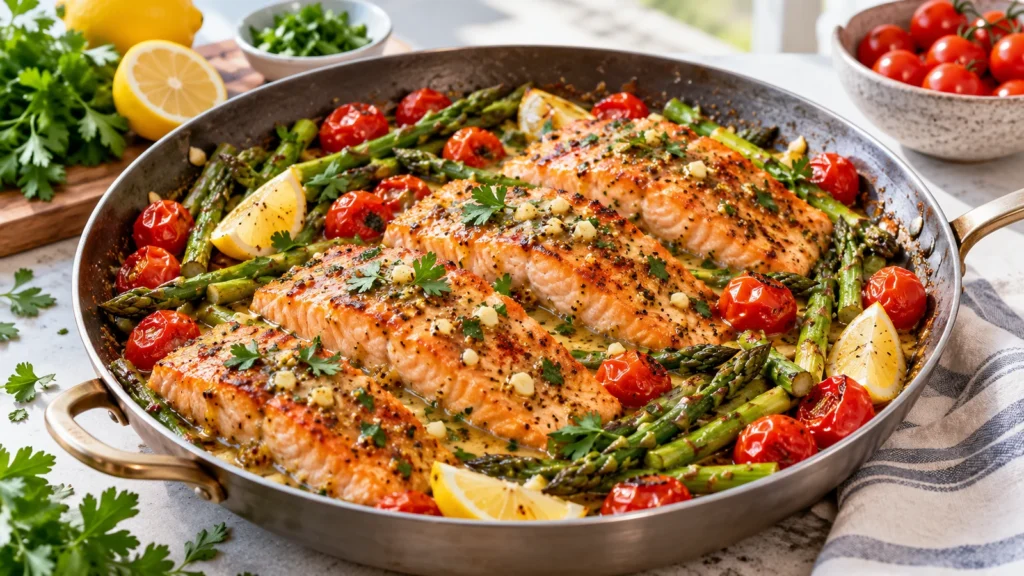
Roasted asparagus and herbed rice make an especially balanced plate. Other good sides include steamed green beans, roasted baby potatoes, couscous, quinoa, or a crisp cucumber salad.
Salmon supplies omega-3 fats as well as protein; the National Institutes of Health provides an accessible overview of omega-3 fatty acids. Exact nutrition varies with the salmon species, portion size, and mayonnaise used.
For a Quick Weeknight Dinner
Serve the mayonnaise baked salmon recipe with microwaveable brown rice and steamed green beans. Prepare the topping while the oven heats, then cook the vegetables during the salmon’s short baking time.
For a Lighter Plate
Pair each fillet with a crisp salad made from cucumber, leafy greens, radishes, or cabbage. A simple lemon dressing echoes the topping, but keep the salad sharply dressed so it balances the creamy fish.
For Guests
Choose uniformly thick center-cut fillets and arrange them on warm plates with roasted asparagus and herbed rice. Add fresh dill, parsley, and lemon wedges just before serving. The garnish gives the mayonnaise baked salmon recipe a fresh, polished appearance.
For the Asian-Inspired Variation
Serve the asian baked salmon recipe with steamed jasmine rice, snap peas, bok choy, or a cucumber salad. Scallions added after baking provide color and fresh flavor without becoming wilted in the oven.
Make-Ahead Instructions
You may mix the topping up to 24 hours ahead and refrigerate it separately. For the best texture and food safety, do not coat raw salmon until shortly before baking.
You can also wash, dry, and chop the serving herbs in advance. Refrigerate them in a covered container lined with a dry paper towel. Cut lemon wedges ahead and keep them chilled in a separate airtight container.
For efficient entertaining, portion the salmon and prepare the lined baking sheet earlier in the day. Keep the fish refrigerated, then pat it dry, season it, and apply the topping while the oven preheats. This preserves the texture that makes the mayonnaise baked salmon recipe successful.
How to Store and Reheat
Cool leftovers promptly and refrigerate them in a shallow airtight container for up to 3 days. Do not leave cooked salmon at room temperature for more than 2 hours, or more than 1 hour in temperatures above 90°F (32°C). Freeze individual portions for up to 2 months, although the topping may separate slightly after thawing.
Reheat salmon gently in a covered baking dish at 275°F (135°C) for 10–15 minutes, or until hot in the center. Add a teaspoon of water beside the fish before covering to create a little steam. Microwave at 50% power in 30-second intervals when speed matters; full power tends to toughen the edges.
Refrigerating Leftovers
Store portions in a single layer when possible so the topping stays intact. If stacking is unavoidable, separate the pieces with parchment. Refrigeration firms the mayonnaise coating, so gentle reheating is important for restoring a pleasant texture.
Freezing and Thawing
Wrap cooled portions individually before placing them in a freezer-safe container. Thaw frozen salmon overnight in the refrigerator rather than at room temperature. The flavor remains good, although the topping from this mayonnaise baked salmon recipe may look less smooth after freezing.
Using Cold Leftovers
Cold leftover salmon can be flaked over salad, folded into a grain bowl, or served with cucumber and greens. Remove the skin first if desired, and handle the fish gently so it stays in attractive pieces.
Troubleshooting This Mayonnaise Baked Salmon Recipe
- The topping slid off: The fish was probably damp, or the coating was spread down the sides. Pat it dry and cover only the top.
- The topping looks watery: Too much lemon juice, frozen fish that was not fully thawed, or reduced-fat mayonnaise may be responsible.
- The surface looks greasy: Use a thinner layer, avoid excessive cheese, and do not overbake.
- The salmon is dry: Begin checking sooner, particularly with sockeye or thin tail pieces.
Why Is the Salmon Cooking Unevenly?
Uneven thickness is usually responsible. Fold a narrow tail section underneath or place thinner fillets toward the cooler area of the pan. If necessary, remove finished portions first and return the thicker pieces to the oven.
Why Is the Topping Not Browning?
The salmon may be cooked before the surface develops much color, which is perfectly acceptable. If you want a golden top, use the brief broiling step. Keep the pan about 6 inches from the heat and watch continuously.
Why Is White Protein Appearing?
The white material is albumin, a harmless protein pushed from the fish during cooking. It often becomes more visible when salmon cooks too long or too rapidly. Accurate timing and prompt removal help reduce it, but a small amount does not mean the recipe failed.
Why Did My Sockeye Turn Dry?
A baked sockeye salmon recipe needs an early doneness check because sockeye is lean and portions can be thin. Begin checking at 8 minutes, especially near the tail, and remove each piece as soon as it reaches the desired doneness.
Frequently Asked Questions
Can I use frozen salmon in this mayonnaise baked salmon recipe?
Yes, but thaw it completely in the refrigerator and blot it very dry before adding the topping. Moisture released by partially frozen fish can make the coating runny.
Does the skin need to be removed?
No. Bake skin-on salmon with the skin facing down, then lift the flesh away from the skin when serving. For skinless fillets, grease or line the pan to prevent sticking.
Can I scale the recipe?
Yes. Allow one 5–6-ounce fillet per person and about 1 1/2 tablespoons topping per fillet. For a larger batch, use two pans rather than crowding one, rotating them halfway through if both oven racks are needed.
Can I make a whole side of salmon?
Yes. Spread the topping evenly over a 2-pound side and bake for approximately 18–24 minutes, depending on its thickest point. Check multiple areas because the tail may finish before the center. Let the salmon rest before dividing it into portions.
Can I use this method for a baked sockeye salmon recipe?
Yes. The creamy topping helps protect lean sockeye, but it cannot prevent overcooking. Start checking 2–3 minutes earlier than you would for a thicker, fattier fillet and rely on thickness and temperature rather than the clock alone.
How is this different from a sushi bake recipe salmon casserole?
A sushi bake recipe salmon casserole layers or combines salmon with seasoned rice and is served by scooping portions. This dish keeps the fillets whole and uses mayonnaise as a protective, flavorful topping, so it is served as a traditional plated entrée.
Can I turn it into an asian baked salmon recipe?
Yes. Use the soy sauce, ginger, and scallion variation described above, and reduce the added salt. The mayonnaise still provides the same protective layer while the seasonings shift the flavor profile.
Is this the same as baked salmon recipe jamie oliver?
No. The phrase baked salmon recipe jamie oliver refers to recipes or searches associated with that chef. This is an independent mayonnaise baked salmon recipe with a specific lemon-garlic Parmesan topping and its own tested method.
Can I prepare the coated salmon the night before?
For the best result, refrigerate the topping separately and apply it shortly before baking. Salting and coating the raw fish too early can draw moisture to the surface and make the topping less stable.
What can I use instead of Parmesan?
For a dairy-free version, omit the cheese and add 1 tablespoon finely ground toasted breadcrumbs or nutritional yeast. The flavor changes, but the mixture remains spreadable. Do not add extra liquid to compensate for the missing cheese.
What is the approximate nutrition per serving?
One serving is approximately 430 calories, with 34 g protein, 31 g fat, 2 g carbohydrate, and 580 mg sodium. These figures are estimates and vary by salmon species, mayonnaise brand, and exact portion.
A Dependable Salmon Dinner
This mayonnaise baked salmon recipe combines a protective creamy coating with careful timing for consistently moist, flaky results. Keep an instant-read thermometer nearby, adjust the baking time to the fillet thickness, and serve the fish while it is warm and freshly garnished.
Whether you follow the original version, adapt it as an asian baked salmon recipe, or apply the timing advice to a baked sockeye salmon recipe, the key principles remain the same: dry the fish well, use a thin coating, and check doneness early.
For other ways to serve salmon, explore the linked sushi bake recipe salmon guide or the baked salmon recipe jamie oliver comparison. For a fast plated meal, however, this mayonnaise baked salmon recipe offers an especially practical combination of simple preparation, fresh flavor, and dependable moisture.
Reviews
Reader reviews are managed separately (outside this build).