Salmon
baked asparagus salmon recipe: Easy, Foolproof Dinner
Try this baked asparagus salmon recipe for a quick, light one-pan dinner with bright lemon-garlic flavor and foolproof doneness in just 25 minutes.
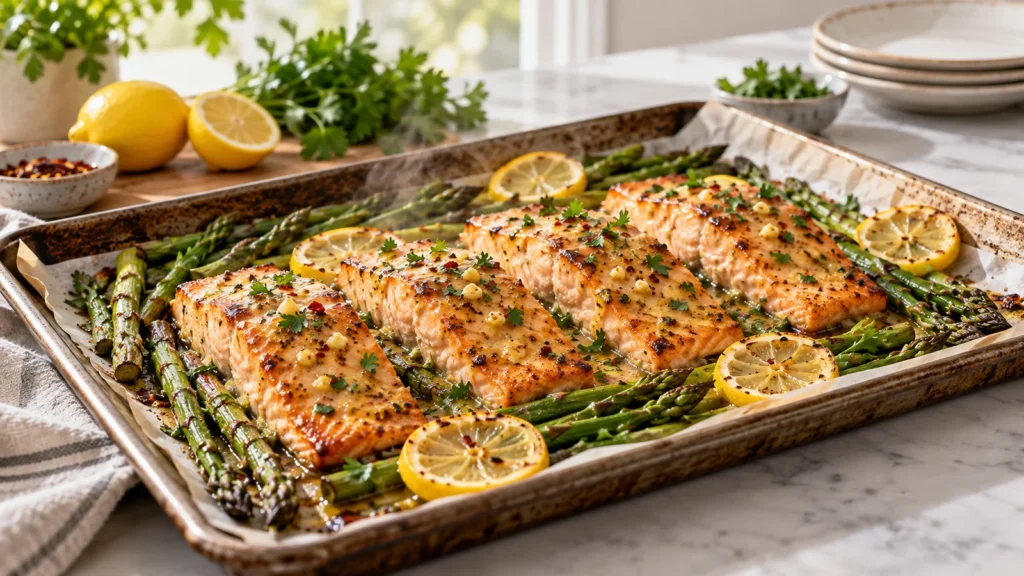
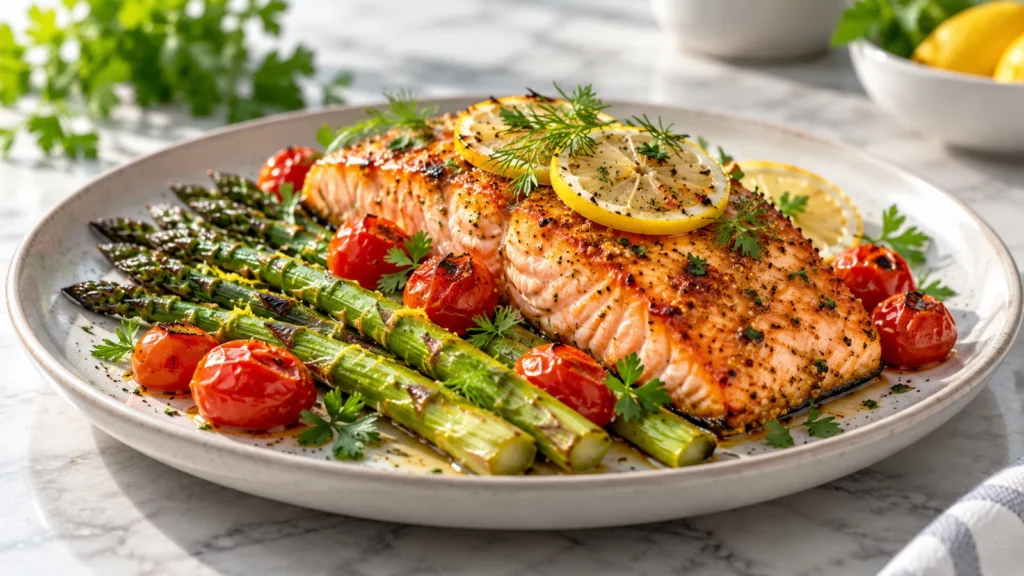
This baked asparagus salmon recipe delivers tender fish, crisp-tender vegetables, and bright lemon-garlic flavor on one pan. It is an easy, balanced dinner that takes about 30 minutes from refrigerator to table.
The key to a reliable baked asparagus salmon recipe is matching the cooking time to the salmon’s thickness and the asparagus size. The guidance below covers fresh or frozen fillets, lean sockeye, thicker Atlantic salmon, doneness cues, scaling, storage, and simple fixes for common problems.
Table of Contents
Recipe at a Glance
- Prep time: 10 minutes
- Cook time: 10–16 minutes
- Oven temperature: 425°F (220°C)
- Servings: 4
- Method: One-pan baking with an optional brief broil
Why You’ll Love This Recipe
- Everything cooks on one sheet pan for easy cleanup.
- Lemon, garlic, and herbs add plenty of flavor without a complicated marinade.
- The timing can be adjusted for different salmon and asparagus sizes.
- It provides protein and vegetables in one naturally gluten-free meal.
- The baked asparagus salmon recipe is simple enough for a weeknight but attractive enough for guests.
Ingredients
- 4 salmon fillets, about 6 ounces (170 g) each and 1 inch thick
- 1 pound (454 g) asparagus, woody ends trimmed
- 3 tablespoons extra-virgin olive oil, divided
- 3 garlic cloves, finely minced
- 1 medium lemon
- 1 teaspoon Dijon mustard
- 1 teaspoon kosher salt, divided
- 1/2 teaspoon black pepper, divided
- 1/2 teaspoon smoked paprika
- 1 tablespoon chopped fresh parsley or dill
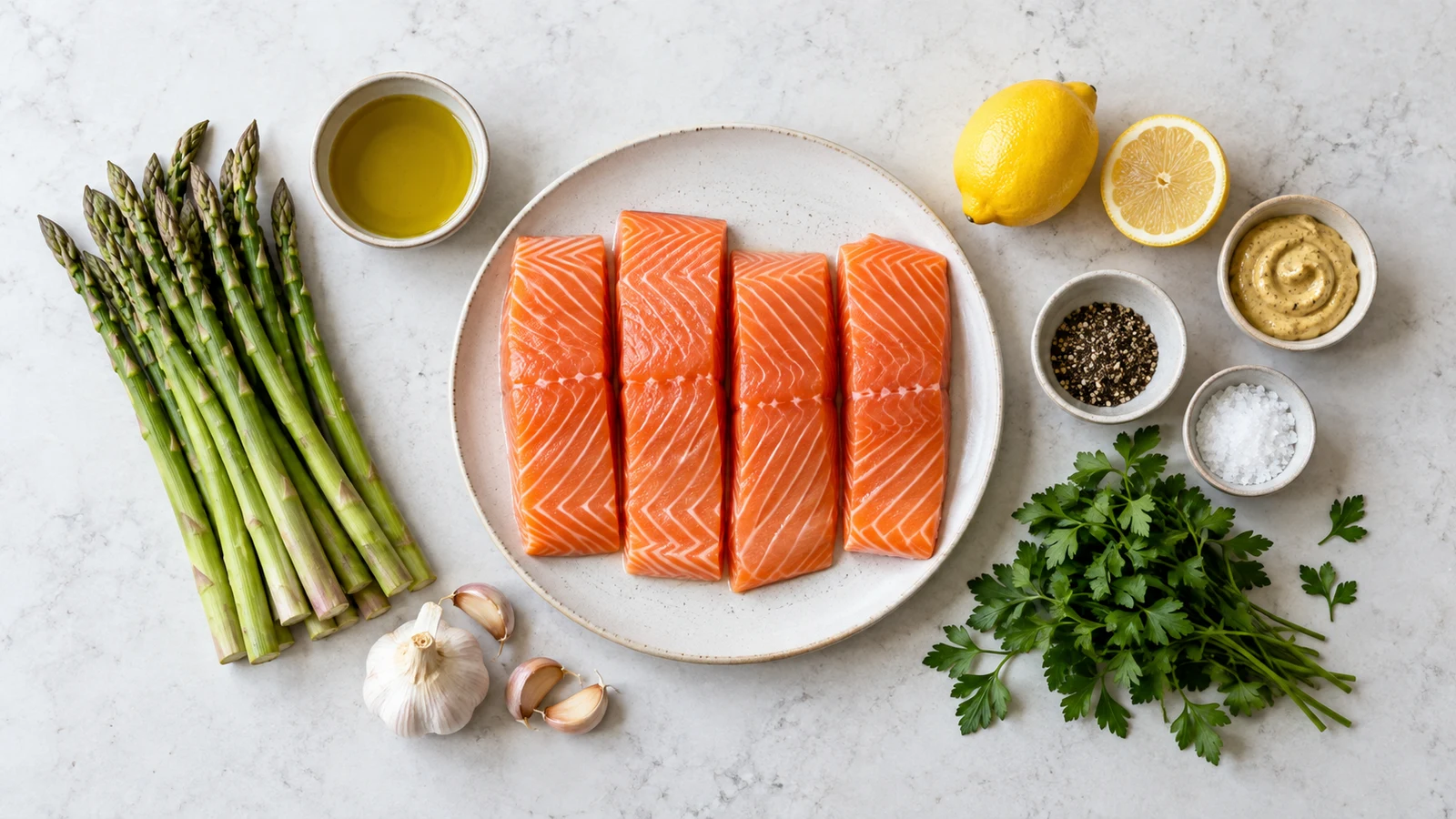
Substitution notes: Use green beans or thin broccoli florets instead of asparagus, allowing extra cooking time when needed. Avocado oil can replace olive oil, and lime can replace lemon. For dairy-free richness, the recipe needs no changes; for a buttery finish, add one tablespoon of melted unsalted butter to the seasoning mixture.
Equipment
- Large rimmed sheet pan
- Parchment paper or aluminum foil
- Small bowl and pastry brush or spoon
- Instant-read food thermometer
How to Make This Baked Asparagus Salmon Recipe
- Heat the oven: Set a rack in the center and preheat to 425°F (220°C). Line a large rimmed sheet pan with parchment or lightly oiled foil.
- Prepare the asparagus: Arrange the trimmed spears on the pan. Toss with 1 1/2 tablespoons olive oil, 1/4 teaspoon salt, and 1/4 teaspoon pepper, then spread them into one layer.
- Season the salmon: Pat the fillets dry. Mix the remaining olive oil, garlic, Dijon, 1 teaspoon lemon zest, 1 tablespoon lemon juice, paprika, remaining salt, and remaining pepper.
- Arrange the pan: Make spaces among the asparagus and place the salmon skin-side down. Leave at least 1 inch between fillets so hot air can circulate. Brush the lemon-garlic mixture over the tops and sides.
- Bake: Cook for 10–14 minutes, checking early if the fillets are thin or lean. Rotate the pan once if the oven has a noticeable hot spot.
- Check doneness: Test the thickest part with an instant-read thermometer. The flesh should turn opaque around the edges and separate into moist flakes with gentle pressure.
- Finish and serve: Rest for 3 minutes, scatter with herbs, and add lemon wedges. For extra browning, broil only 1–2 minutes while watching continuously; keep parchment within its manufacturer’s temperature limit and never leave the pan unattended.
Baking-Time Guide
- Thin fillets, about 1/2 inch: Begin checking at 7–8 minutes.
- Average fillets, about 1 inch: Allow approximately 10–14 minutes.
- Thick fillets, 1 1/4–1 1/2 inches: Allow approximately 14–18 minutes.
- Frozen fillets: Add roughly 5–10 minutes, depending on thickness, and season after the surface begins to thaw.
Cooking time is more reliable when based on thickness rather than weight. Start checking at the low end because carryover heat continues cooking the center during the short rest. This approach makes the baked asparagus salmon recipe adaptable to portions that are not perfectly uniform.
Doneness and Internal Temperature
A thermometer offers the clearest safety check. Insert it sideways into the thickest section without touching the pan; the USDA lists 145°F (63°C) as the safe minimum for fish on its safe temperature chart.
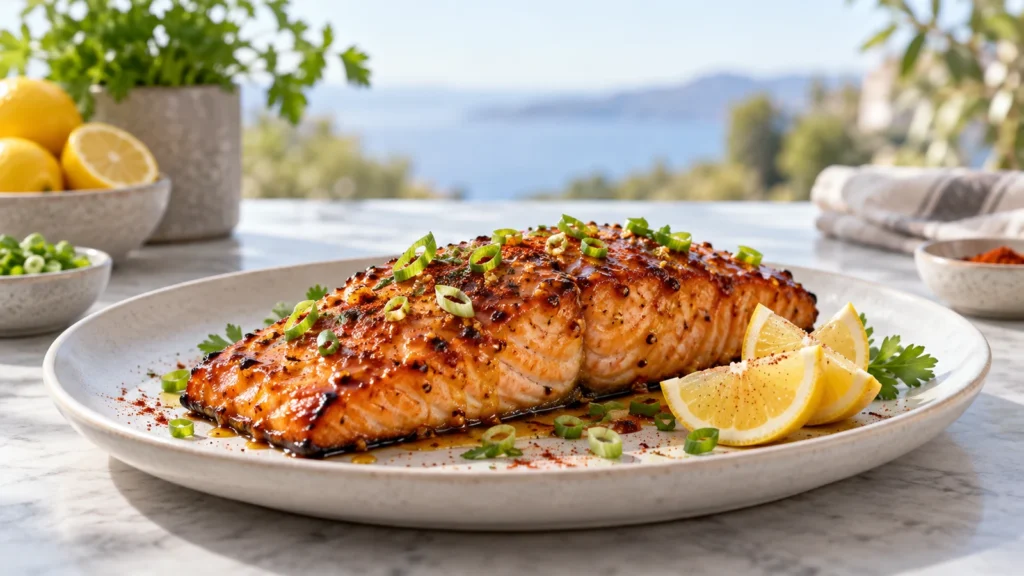
Properly cooked salmon is opaque at the edges, moist in the center, and flakes under light pressure. Albumin, the harmless white protein that appears on the surface, is normal, although a large amount can indicate aggressive heat or overcooking.
Fresh, Frozen, Atlantic, and Sockeye Adjustments
Thaw frozen salmon overnight in the refrigerator when possible, then pat it very dry. The FDA’s seafood selection and handling guidance explains safe thawing and storage practices.
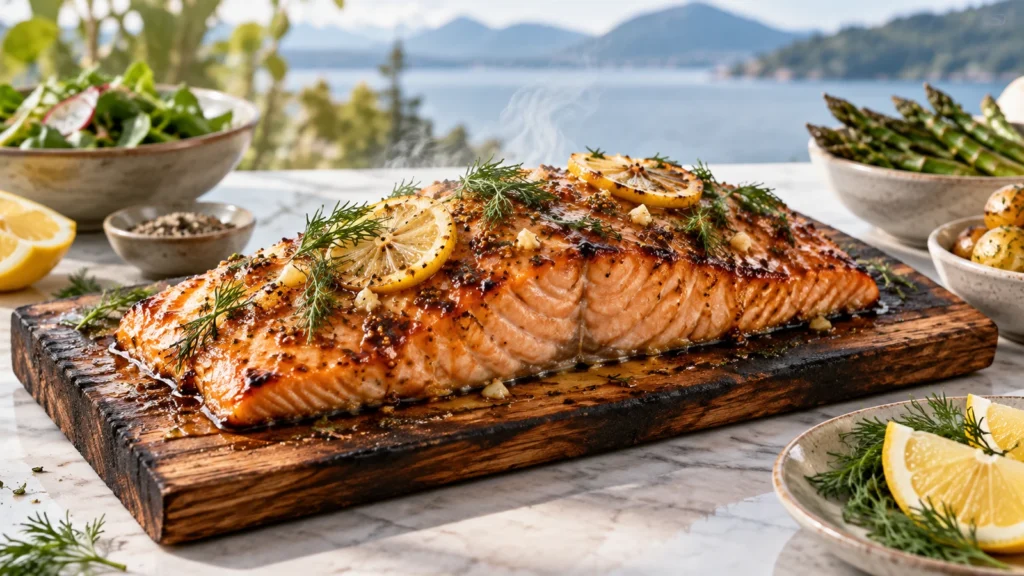
Atlantic salmon is generally thicker and fattier, so it remains forgiving during a longer bake. Lean sockeye cooks faster and can dry out; check it several minutes early. For a method devoted to that lean variety, see this baked sockeye salmon recipe.
A baked sockeye salmon recipe benefits from careful temperature checks because the fillets are often thinner than farmed Atlantic portions. NOAA also provides information about pink salmon, another relatively lean option that should be checked early.
Asparagus-Size Guidance
Pencil-thin asparagus may finish before thick salmon, so add it after the fish has baked for 4–5 minutes. Medium spears usually cook alongside 1-inch fillets. Roast thick spears alone for 4–6 minutes before adding the salmon.
Choose spears of similar thickness so they finish together. After trimming the woody ends, dry the asparagus thoroughly. Surface water creates steam and prevents the browned spots that give this baked asparagus salmon recipe extra flavor.
Expert Tips for the Best Baked Asparagus Salmon Recipe
- Dry every surface: Pat the fish and vegetables thoroughly so the seasoning adheres and the food roasts instead of steaming.
- Measure thickness: Judge timing at the thickest point of each fillet rather than relying only on its weight.
- Protect the flesh: Place skin-on fillets skin-side down; the skin buffers the salmon from direct pan heat.
- Leave breathing room: Use a large pan and one uncrowded layer. Crowding traps steam and produces soggy asparagus.
- Zest before juicing: It is much easier to remove fine lemon zest while the fruit is still whole and firm.
- Brush the sides: Coating more than the top distributes the garlic, mustard, and paprika evenly.
- Scale sensibly: Use two pans rather than packing one pan tightly; rotate and swap rack positions halfway through.
- Rest briefly: Three minutes allows the juices to settle without letting the baked asparagus salmon recipe become cold.
Variations and Substitutions
Herb and Citrus Variation
Replace the smoked paprika with Italian seasoning, or use dill for a classic pairing. Lime can stand in for lemon without changing the method. Fresh herbs are best added after baking so their color and aroma remain bright.
Sweet, Spicy, or Briny Variation
Add red-pepper flakes for heat, maple syrup for subtle sweetness, or capers for a salty accent. Use restrained amounts so the additions complement rather than overwhelm the garlic and lemon in the baked asparagus salmon recipe.
Vegetable Substitutions
Green beans and thin broccoli florets work well but may need a head start. Cherry tomatoes can roast beside medium asparagus. Cut zucchini into thick pieces to limit water release, and keep every vegetable in a single layer.
Creamy Topping Variation
For a richer finish, borrow the protective topping idea from a mayonnaise baked salmon recipe. A mayonnaise baked salmon recipe is especially useful for lean fish because the coating helps shield its surface from drying heat.
Different Salmon Inspirations
A baked salmon recipe Jamie Oliver can provide inspiration for alternate herbs and serving combinations. When adapting ideas from a baked salmon recipe Jamie Oliver, retain the temperatures and timing stated here so the asparagus and fish remain synchronized.
For a casserole-style meal, a sushi bake recipe salmon combines seasoned rice and fish in a very different format. Although a sushi bake recipe salmon is not a sheet-pan dinner, it offers a useful direction when you want a richer, scoopable dish.
Make-Ahead Guidance
Trim and wash the asparagus up to 2 days ahead, then dry it and refrigerate it in a covered container. Mix the olive oil, Dijon, paprika, and lemon zest several hours ahead, but add the minced garlic and lemon juice closer to cooking for the freshest flavor.
The salmon can be portioned and patted dry earlier the same day. Keep it covered in the coldest part of the refrigerator. For the best texture, assemble the baked asparagus salmon recipe immediately before the pan enters the oven rather than leaving seasoned fish at room temperature.
If entertaining, prepare the side dishes and serving platter first. Preheat the oven shortly before dinner, arrange the pan in about 10 minutes, and bake while guests settle in. This schedule keeps the fish moist and eliminates the need to hold it warm.
Serving Ideas for Baked Asparagus Salmon Recipe
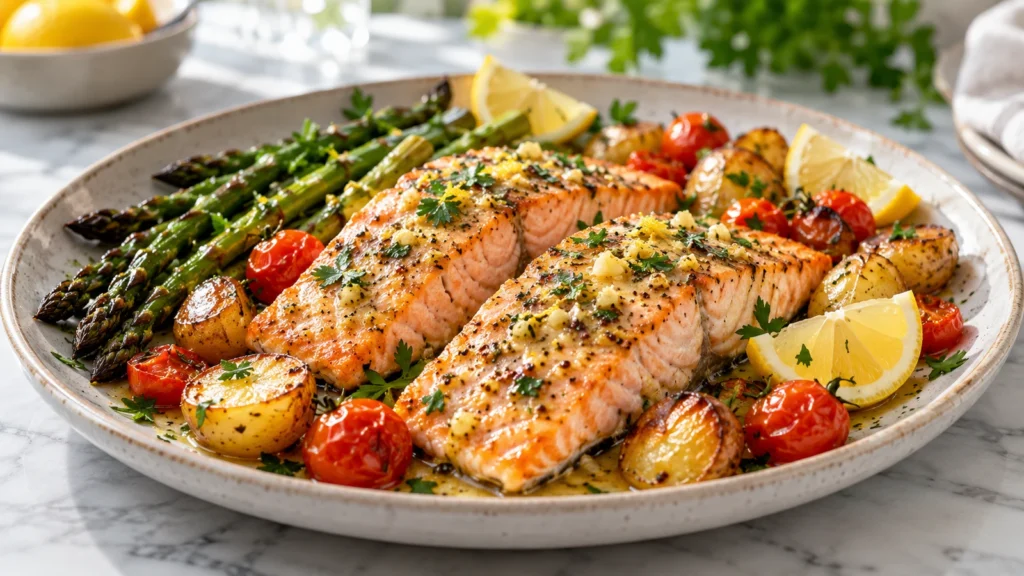
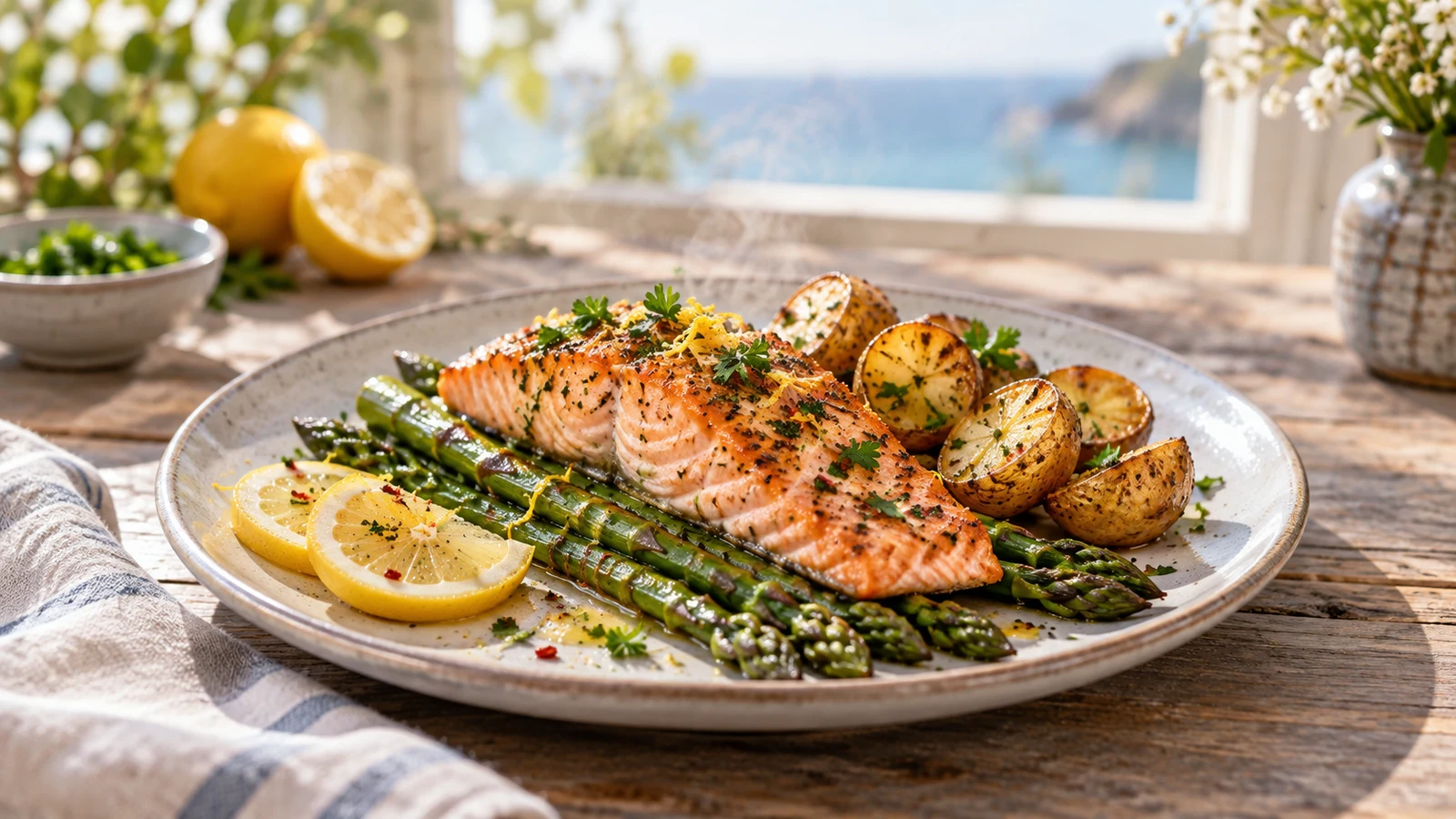
Serve the salmon and asparagus with rice, quinoa, couscous, roasted baby potatoes, or crusty bread. A simple green salad or cucumber salad keeps the meal light, while garlic mashed potatoes make it more substantial.
For a colorful plate, place the grain or potatoes on one side, add asparagus beside it, and set the salmon over the vegetables. Spoon any pan juices over the fish and finish with lemon wedges and fresh parsley or dill.
The lemon-Dijon flavor also pairs with lentils, herbed white beans, or a chilled pasta salad. If serving the baked asparagus salmon recipe for guests, offer red-pepper flakes and capers separately so everyone can adjust the heat and saltiness.
How to Store and Reheat
Refrigerate cooled leftovers in an airtight container within two hours and use within 3 days. Store the fish and asparagus separately when practical to protect their textures. Freeze cooked salmon for up to 2 months, but expect softened asparagus after freezing.
To freeze individual portions, wrap the cooled salmon securely and place it in a freezer-safe container. Label it with the date. Thaw it overnight in the refrigerator before reheating, and avoid repeated freezing and thawing.
Reheat covered in a 300°F (150°C) oven for 8–12 minutes, just until warmed through. A covered skillet over low heat also works. Avoid prolonged microwaving, which can make salmon dry; use 30-second intervals at reduced power.
Cold leftover fish can be flaked over salad, folded into cooked grains, or served in a sandwich. Reusing it cold avoids additional cooking and helps preserve the texture of the baked asparagus salmon recipe.
Troubleshooting Common Problems
Why Is My Salmon Dry?
The fillets were likely thin, lean, or cooked too long. Check earlier next time and use a thermometer. A spoonful of lemony yogurt sauce can improve already-dry fish. When following a baked sockeye salmon recipe, pay particular attention because lean sockeye loses moisture quickly.
Why Is the Asparagus Soggy?
Moisture or crowding caused steaming. Dry the spears, use a larger pan, and leave space between ingredients. If the salmon is done first, transfer it to a plate and roast the asparagus for a few extra minutes.
Why Is the Garlic Too Dark?
Finely minced garlic can burn under an extended broil. Mix it thoroughly into the oil and mustard rather than leaving large pieces exposed. If the surface already has enough color, skip the optional broiling step.
Why Did the Fish Cook Unevenly?
The portions may differ in thickness, or the oven may have a hot spot. Position thicker pieces toward the hotter area, rotate the pan once, and remove thinner portions first if necessary. Uniform fillets make the baked asparagus salmon recipe easier to time.
Why Is There White Protein on the Salmon?
The white material is albumin, a natural protein pushed to the surface during cooking. It is safe to eat. Patting the fish dry, avoiding overcooking, and using the short rest can reduce its appearance.
Why Did the Seasoning Slide Off?
Excess moisture was probably left on the salmon. Blot it thoroughly before brushing on the mixture. Dijon helps the oil-based seasoning cling, so combine the mixture well before applying it.
Related Salmon Recipes
- Try this baked sockeye salmon recipe when cooking lean wild fillets.
- A mayonnaise baked salmon recipe offers a creamy protective topping.
- Explore this baked salmon recipe Jamie Oliver for another oven method.
- For a completely different comfort-food format, a sushi bake recipe salmon variation layers seasoned rice and fish in a casserole.
Frequently Asked Questions
Should I blanch asparagus before baking it?
No. Medium asparagus becomes crisp-tender in roughly the same time as average salmon fillets. Only very thick spears benefit from a 4–6 minute head start in the oven.
Can I bake salmon directly from frozen?
Yes, although thawed fish seasons and cooks more evenly. Bake frozen fillets for several minutes first, drain any released water, add the seasoning, and continue until the thickest portion reaches a safe temperature.
Is foil or parchment better?
Parchment reduces sticking and makes cleanup easy. Foil tolerates broiling better and can encourage slightly stronger browning when lightly oiled. Check package limits before exposing either liner to high heat.
Can I use this method as a baked sockeye salmon recipe?
Yes. To use this as a baked sockeye salmon recipe, choose fillets of similar thickness and begin checking several minutes early. Sockeye is lean, so prompt removal from the oven helps preserve its moisture.
How does this differ from a mayonnaise baked salmon recipe?
This version uses an olive oil, Dijon, garlic, and lemon coating. A mayonnaise baked salmon recipe has a thicker, creamier topping that offers additional protection against drying and produces a richer result.
Is this the same as a baked salmon recipe Jamie Oliver?
No. This is an independent one-pan recipe designed around asparagus and a lemon-Dijon mixture. The related baked salmon recipe Jamie Oliver offers another approach for cooks seeking different oven-baked inspiration.
Can I turn this into a sushi bake recipe salmon?
Not without changing the dish substantially. A sushi bake recipe salmon normally layers seasoned rice and a creamy fish mixture in a casserole. Use that format when you want a shareable rice dish rather than individual fillets and roasted vegetables.
Can I prepare the baked asparagus salmon recipe for two?
Yes. Halve the ingredient quantities while keeping the oven at 425°F (220°C). Cooking time depends on fillet thickness, not the number of servings, so begin checking at the same point.
Can I double the recipe?
Yes, but divide the food between two sheet pans. Crowding one pan causes steaming. Rotate each pan and exchange their rack positions halfway through cooking for more even results.
Should salmon be covered while baking?
No. Leaving the pan uncovered allows the surface to roast and helps the asparagus develop browned edges. Covering the food traps steam and softens the vegetables.
What side dishes go well with this meal?
Rice, quinoa, potatoes, couscous, salad, and bread all pair well. Choose one starch for a filling dinner or add a crisp salad for a lighter plate.
Printable Recipe Card
Description: This baked asparagus salmon recipe combines garlicky, lemon-seasoned fish with crisp-tender asparagus on one convenient sheet pan.
- Preparation time: 10 minutes
- Cooking time: 10–16 minutes
- Total time: 20–26 minutes
- Servings: 4
- Temperature: 425°F (220°C)
- Estimated nutrition per serving: 390 calories, 35 g protein, 24 g fat, 8 g carbohydrates, 4 g fiber, and 620 mg sodium
Recipe notes: Use the ingredient list and numbered method above. Begin checking thin or sockeye fillets early, give thick asparagus a head start, and confirm doneness in the thickest part. Nutrition is an estimate and varies with fillet size, salmon type, and substitutions.
Final Thoughts
With careful timing and enough room on the pan, this baked asparagus salmon recipe produces moist salmon and properly roasted asparagus in under half an hour. Dry the ingredients, match the vegetable timing to the fillet thickness, and check doneness early for the most dependable result.
Serve the baked asparagus salmon recipe with fresh lemon and your favorite easy side. Its flexible seasonings, straightforward preparation, and minimal cleanup make it a practical meal for both busy evenings and relaxed dinners with guests.
Reviews
Reader reviews are managed separately (outside this build).