Salmon
Easy sushi bake recipe salmon: Irresistible Casserole
Try this easy sushi bake recipe salmon with seasoned rice, flaky salmon, cream cheese, spicy Kewpie mayo, furikake, and crisp nori at home tonight.
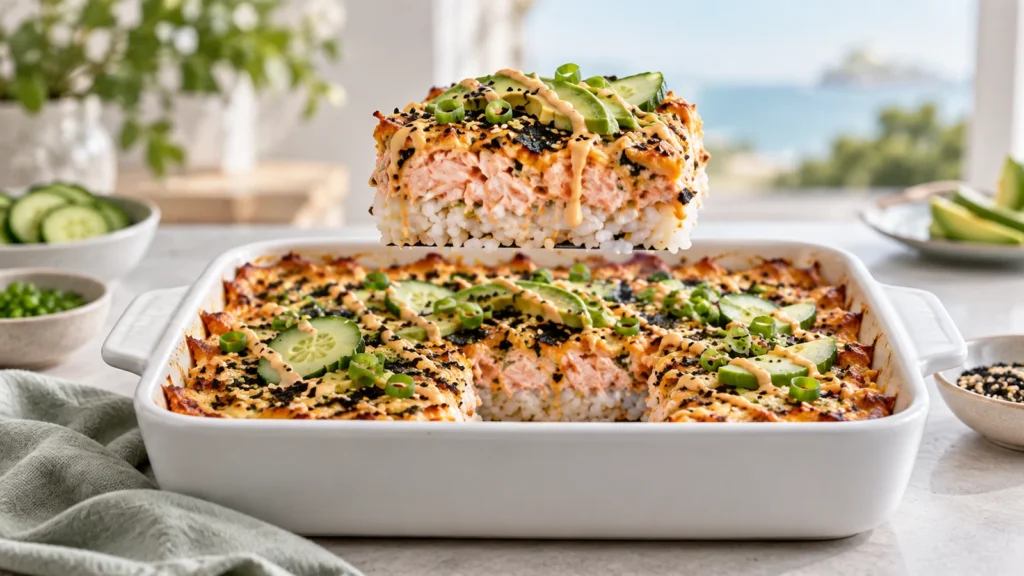
This sushi bake recipe salmon combines seasoned sushi rice, tender cooked salmon, and a creamy, lightly spicy topping in one easy casserole. It works because each layer is prepared separately, then baked just long enough to warm through without drying the fish or turning the rice gummy.
Serve warm spoonfuls with crisp nori sheets, sliced cucumber, and avocado. The contrast between creamy salmon sushi bake and crunchy nori makes it especially satisfying. Unlike a conventional baked salmon recipe Jamie Oliver readers might recognize, this shareable dish turns cooked fish into a complete rice casserole with Japanese-inspired flavors.
Table of Contents
Why You’ll Love This Sushi Bake Recipe Salmon
- Uses fully cooked salmon, so no raw-fish preparation is required.
- Feeds 8 people from one convenient 9×13-inch dish.
- Balances tangy sushi rice, savory furikake, and creamy heat.
- Can be assembled ahead and customized for different diets.
- Offers the comfort of a mayonnaise baked salmon recipe with the freshness of cucumber, avocado, scallions, and crisp nori.
Ingredients
- For the rice: 2 cups short-grain Japanese rice, 2 1/4 cups water, 1/4 cup rice vinegar, 2 tablespoons granulated sugar, and 1 teaspoon kosher salt
- For the salmon: 1 1/2 pounds skinless salmon fillet, 1 tablespoon neutral oil, 1/2 teaspoon kosher salt, and 1/4 teaspoon black pepper
- For the topping: 1/2 cup Kewpie mayonnaise, 4 ounces softened cream cheese, 2 tablespoons sriracha, 1 tablespoon gluten-free tamari or soy sauce, and 1 teaspoon toasted sesame oil
- For layering: 1/3 cup furikake, divided
- For serving: 2 packages roasted nori sheets, 1 sliced cucumber, 1 sliced avocado, and 2 sliced scallions
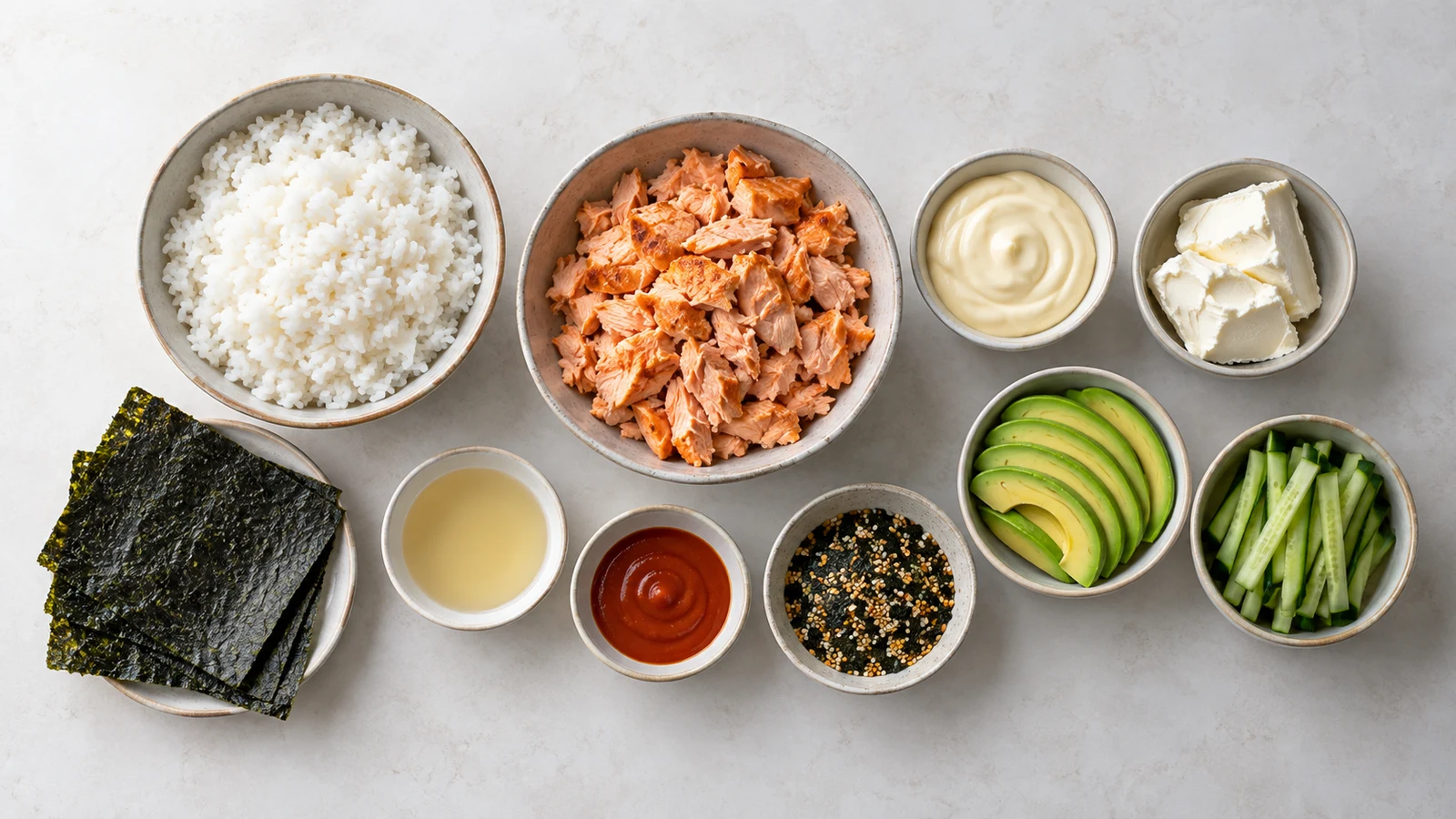
Kewpie mayonnaise is slightly sweeter and richer than standard mayonnaise. Check the labels on furikake, sauces, and mayonnaise if you need to avoid gluten, soy, sesame, fish, eggs, or dairy.
Choosing Salmon and Rice
Fresh or properly thawed frozen salmon works well. Choose a fillet with an even thickness so it cooks at a consistent rate. Atlantic salmon stays especially succulent because it contains more fat, while sockeye has a firmer texture and deeper color. If you want a baked sockeye salmon recipe variation, careful temperature monitoring is more important because this lean fish can dry quickly.
Short-grain Japanese rice supplies the lightly sticky texture needed to hold each scoop together. Long-grain rice will taste fine but will not produce the same cohesive layer. Sushi rice seasoning is also essential: its mixture of vinegar, sugar, and salt keeps this rich sushi bake recipe salmon balanced rather than heavy.
Equipment
- 9×13-inch baking dish
- Medium saucepan or rice cooker
- Rimmed baking sheet
- Mixing bowls, fork, and flexible spatula
- Instant-read thermometer
How to Make Sushi Bake Recipe Salmon
- Prepare the rice. Rinse the rice in cool water until the runoff is nearly clear. Combine it with 2 1/4 cups water, cook according to the package directions, then rest covered for 10 minutes. Rinsing removes excess surface starch and helps prevent gummy rice.
- Season the rice. Stir the rice vinegar, sugar, and salt until dissolved. Fold this seasoning gently into the hot sushi rice using a slicing motion; do not mash the grains. The dependable ratio is 1/4 cup vinegar, 2 tablespoons sugar, and 1 teaspoon salt for 2 cups uncooked rice.
- Cook the salmon. Heat the oven to 400°F (205°C). Rub the salmon with oil, salt, and pepper, then bake on a lined sheet for 10–14 minutes, depending on thickness. It should flake easily and reach 145°F (63°C) at its thickest point, consistent with FDA seafood safety guidance.
- Flake gently. Let the fish rest for 5 minutes, then break it into moist, bite-size flakes. Remove any skin or pin bones. Avoid crushing it into a paste.
- Make the spicy topping. Stir the Kewpie mayonnaise, cream cheese, sriracha, tamari, and sesame oil until mostly smooth. Fold in the cooked salmon. This mayonnaise baked salmon recipe method keeps the topping creamy, but overmixing can make it dense.
- Layer the casserole. Lightly oil the 9×13-inch dish. Press the seasoned rice into an even layer without compacting it firmly. Sprinkle with half the furikake, spread the salmon mixture over it, and finish with the remaining furikake.
- Bake and broil. Bake at 400°F (205°C) for 10–15 minutes, until the edges bubble and the center is hot. Broil for 1–2 minutes, watching continuously. Stop when small golden spots form; deeply browned or separated mayonnaise means it has gone too far.
- Garnish and serve. Rest for 5 minutes, then add scallions. Scoop onto nori with cucumber and avocado. For a contrasting side, try these crispy roasted potatoes.
Expert Tips for Sushi Bake Recipe Salmon
- Start checking thin salmon fillets early. The casserole receives additional heat, so cooking far beyond 145°F initially can leave the fish dry.
- Use freshly cooked, warm rice for the best seasoning absorption. Fold rather than stir aggressively to preserve distinct grains.
- Soften the cream cheese first so it blends without excessive mixing.
- Keep nori separate until serving; moisture quickly makes it chewy.
- For an 8×8-inch pan, halve every ingredient and begin checking after 8 minutes. Two 8×8-inch pans can replace one 9×13-inch dish.
- Let the cooked salmon rest before flaking it. This helps retain its juices and prevents excess liquid from thinning the topping.
- Use a flexible spatula to spread the salmon mixture gently. Pressing hard can compress the rice and make the finished casserole feel dense.
- Broil only after the center is hot. Broiling is for surface color, not for heating a cold sushi bake recipe salmon all the way through.
The most common mistakes are using wet, mushy rice, packing the rice too tightly, overcooking the salmon, and walking away during broiling. If the topping seems dry before layering, fold in one additional tablespoon of mayonnaise.
How to Build Clean, Even Layers
Spread the rice while it is warm enough to move easily, using damp fingertips or a flexible spatula to prevent sticking. Aim for a level surface rather than a firmly packed base. An even layer gives every serving the proper proportion of seasoned rice, furikake, and creamy fish.
Scatter the first portion of furikake to the edges before adding the topping. Then place spoonfuls of salmon mixture across the dish and connect them gently. This approach reduces dragging and keeps the rice layer intact. The result is a sushi bake recipe salmon that scoops neatly without becoming compacted.
Variations and Substitutions
For an asian baked salmon recipe variation, add 1 teaspoon grated ginger and replace half the sriracha with sweet chili sauce. For less heat, use 1 teaspoon sriracha or omit it and serve hot sauce separately.
Regular mayonnaise works in place of Kewpie; stir in 1 teaspoon rice vinegar and 1/2 teaspoon sugar to approximate its tangy-sweet character. Dairy-free cream cheese can replace conventional cream cheese in equal measure, while gluten-free tamari is the safest swap when ordinary soy sauce is unsuitable.
For a baked sockeye salmon recipe version, begin checking the leaner fish several minutes early to avoid dryness. Well-drained canned salmon also works: use about 18 ounces after draining and remove any unwanted skin or bones.
You may fold in 8 ounces of chopped imitation crab, reducing the salmon to 1 pound. Check the package for wheat and other allergens. For more salmon technique ideas, see this smoked salmon dry brine guide.
Mild, Spicy, and Savory Options
To make a mild mayonnaise baked salmon recipe variation, reduce the sriracha to 1 teaspoon and offer more at the table. This preserves the creamy texture while allowing each guest to control the heat. A small amount of extra tamari can deepen the savory taste, but add it cautiously because furikake is often salty.
For a brighter asian baked salmon recipe profile, mix the suggested ginger into the topping and serve extra cucumber alongside. You can also add more sliced scallions after baking. Do not add watery vegetables directly to the casserole, as their moisture can soften the rice and loosen the topping.
Using Sockeye or Canned Salmon
A baked sockeye salmon recipe version has a robust flavor that stands up particularly well to nori and sesame. Because sockeye fillets are often thin, inspect them before the full 10-minute mark. Keep the remaining quantities and final casserole temperature unchanged.
Canned salmon makes the dish more convenient, but it must be thoroughly drained before mixing. Large, moist flakes provide a better result than fish mashed into a paste. Taste the prepared mixture before adding any extra salt because canned fish and soy sauce may already supply enough seasoning.
Serving Ideas and Pairings
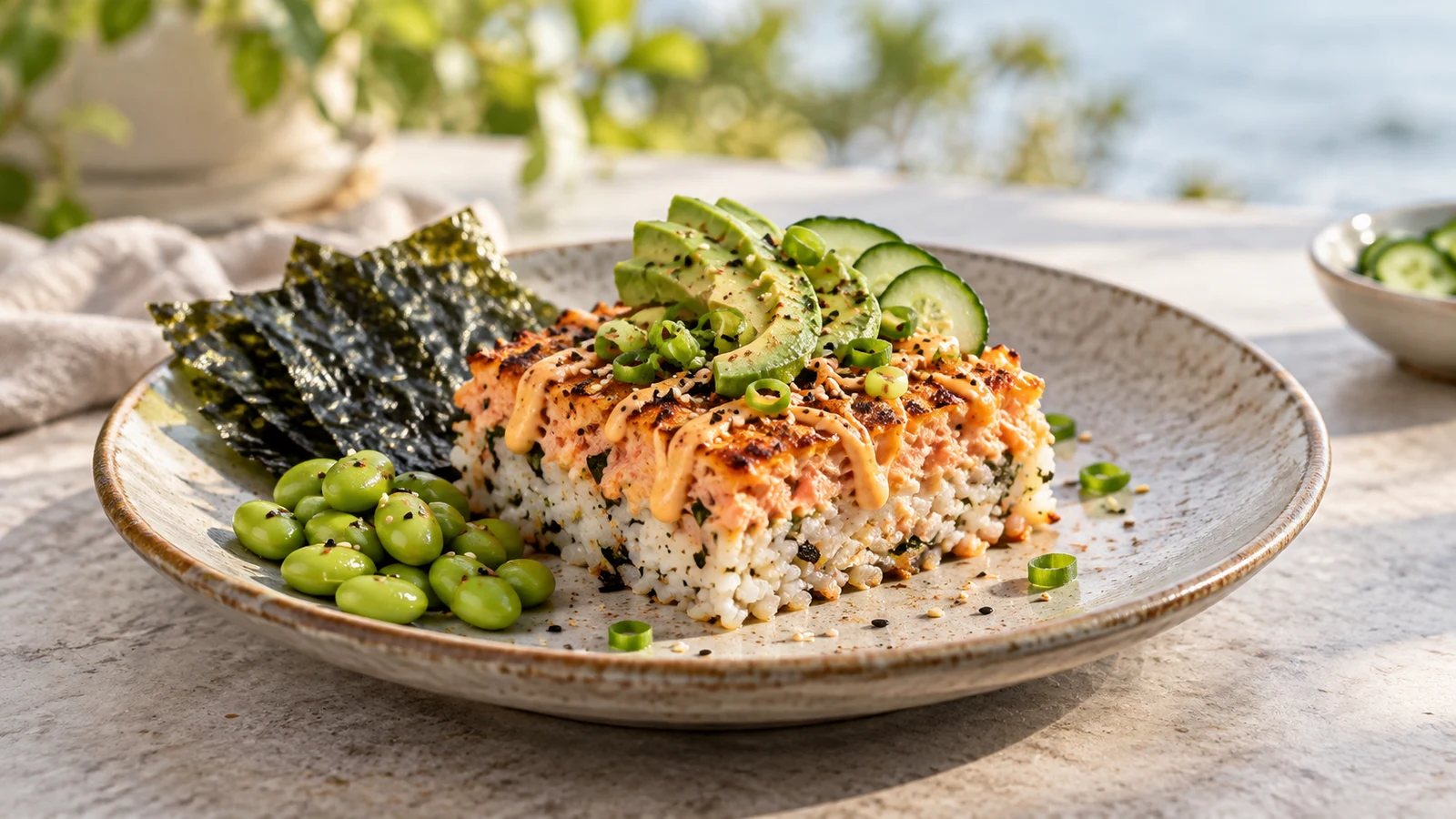
Place the hot casserole in the center of the table with nori, cucumber, avocado, and scallions in separate bowls. Guests can spoon a small portion onto each nori sheet and eat it immediately. Keeping the crisp ingredients separate is the simplest way to preserve the textural contrast that makes sushi bake recipe salmon so enjoyable.
Edamame, a crisp cabbage salad, steamed green vegetables, or a lightly dressed cucumber salad all complement the rich topping. For a heartier meal, serve small portions with crispy roasted potatoes. Avoid pairing several creamy sides with this mayonnaise baked salmon recipe because fresh or acidic accompaniments provide better balance.
For a casual gathering, cut nori sheets into palm-size rectangles and provide small plates. A wide serving spoon can reach both layers more effectively than a shallow utensil. Add avocado only at serving time to prevent browning, and replace the nori bowl whenever the sheets begin absorbing humidity.
Make-Ahead Instructions
You can cook and season the rice, bake the salmon, prepare the topping, and assemble the casserole up to 24 hours ahead. Cover it promptly and refrigerate. Store scallions, avocado, cucumber, and nori separately so the garnishes remain fresh and crisp.
Before baking a chilled sushi bake recipe salmon, let the dish stand at room temperature only while the oven preheats. Bake at the stated temperature and allow several extra minutes for the center to become hot. Do not rely on browned edges alone; the middle should be steaming before the brief broiling step.
If you prefer to prepare components separately, refrigerate the rice and salmon mixture in individual airtight containers. Assemble them within 24 hours, breaking up any firm clumps of cold rice gently. This method takes more space but makes it easier to correct the texture before layering.
How to Store and Reheat
Cool leftovers promptly, transfer them to shallow airtight containers, and refrigerate within two hours. Use within 3 days. The FDA’s refrigeration and storage chart offers additional guidance for safely handling perishable foods.
Reheat individual portions in the microwave at 50–70% power in 30-second intervals until steaming hot. For a larger amount, cover and bake at 350°F (175°C) for 15–20 minutes; add a teaspoon of water around the rice if it looks dry.
Freezing is possible for up to 1 month, though the rice and creamy topping become softer. Thaw overnight in the refrigerator before reheating. Never leave cooked rice at room temperature for extended periods; guidance on time-and-temperature controlled foods explains why cooked rice requires careful handling.
Best Way to Reheat Without Drying It Out
Use moderate heat and cover the portion loosely to trap some steam. If the rice feels firm, place the suggested teaspoon of water around its edge rather than over the creamy topping. Add fresh cucumber, avocado, scallions, and nori only after reheating.
A reheated baked sockeye salmon recipe version may dry sooner because the fish is lean. Check it early and stop as soon as the center is steaming. Repeated reheating reduces quality, so warm only the amount you plan to eat.
Troubleshooting Sushi Bake Recipe Salmon
Why is the rice mushy?
The rice may have retained excess surface starch, received too much water, or been stirred too aggressively after cooking. Rinse until the water is nearly clear, measure accurately, and fold in the vinegar seasoning with a slicing motion. Also avoid covering hot seasoned rice for a long period, which can trap excess steam.
Why is the salmon topping dry?
The fish was probably overcooked during its first bake or the assembled casserole stayed in the oven too long. Check thinner portions early and use the thermometer for accuracy. For this mayonnaise baked salmon recipe technique, the creamy ingredients protect the fish but cannot restore moisture lost through severe overcooking.
Why did the topping become oily?
Excessive heat can cause the mayonnaise and cream cheese mixture to separate. Bake only until the center is hot, then broil for no more than 1–2 minutes while watching constantly. Small golden areas are desirable; a deeply browned surface indicates that the topping has heated too aggressively.
Why does the casserole fall apart?
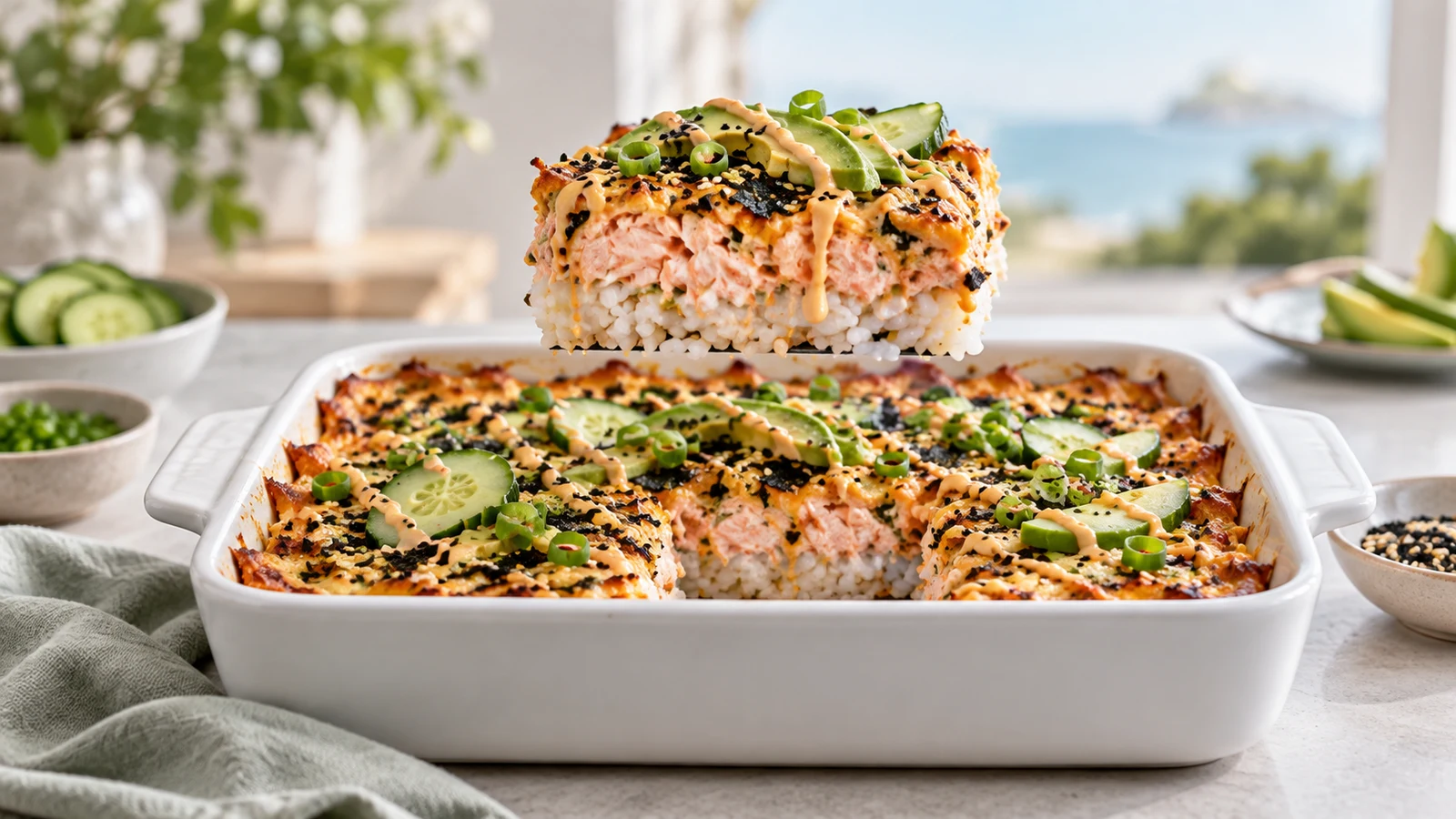
Sushi bake is meant to be scoopable rather than sliceable, but each spoonful should contain both layers. Rice that is too dry will not cling, while an overly wet topping can slide. Measure the rice water precisely, drain substitute salmon thoroughly, and rest the finished dish for 5 minutes before serving.
Frequently Asked Questions
Can I use raw salmon in the assembled casserole?
Cook it before assembling for predictable timing and texture. The final 10–15-minute bake is intended to heat the layers, not reliably cook thick pieces of raw fish. Confirm 145°F (63°C) with a thermometer.
Is leftover rice safe to use?
Yes, if it was cooled promptly, refrigerated within two hours, and is no more than one day old when assembled. Reheat the finished casserole thoroughly and discard rice with an unusual odor or questionable storage history.
What can replace Kewpie mayonnaise?
Use the regular-mayonnaise adjustment above, or choose an egg-free mayonnaise when needed. The flavor will differ slightly, but the creamy texture remains. For another approach to seasoned fish, review this smoked salmon brine recipe.
Can I make it without crab, and how does it compare with other salmon recipes?
Absolutely; this version needs no crab. A search such as baked salmon recipe jamie oliver typically points toward a conventional salmon entrée, whereas sushi bake adds seasoned rice, creamy topping, furikake, and nori in a scoopable casserole format; no affiliation is implied.
Can I turn this into a baked sockeye salmon recipe?
Yes. Use the same 1 1/2-pound quantity, but begin checking the fish several minutes earlier because sockeye is usually leaner and thinner than farmed Atlantic salmon. Once it reaches 145°F (63°C), rest and flake it as directed. The remaining assembly and baking instructions stay the same.
How spicy is this asian baked salmon recipe variation?
Two tablespoons of sriracha create noticeable but moderate heat once blended with mayonnaise, cream cheese, rice, and salmon. For a milder asian baked salmon recipe, start with 1 teaspoon and serve extra sauce separately. This makes the casserole suitable for guests with different heat preferences.
Can I prepare sushi bake recipe salmon for a party?
Yes. Assemble it one day ahead, refrigerate it promptly, and bake shortly before serving. Arrange the cold garnishes and nori while it heats. If you need more food, divide a double batch between two 9×13-inch dishes so both casseroles heat evenly.
Is this the same as a baked salmon recipe Jamie Oliver might publish?
No. The phrase baked salmon recipe Jamie Oliver generally describes searches for a more traditional fish-centered entrée. This recipe is an independent sushi-inspired casserole with seasoned rice, furikake, spicy mayonnaise, and nori; it is not associated with or endorsed by Jamie Oliver.
Can I use ordinary mayonnaise in this mayonnaise baked salmon recipe?
Yes. Replace the Kewpie with an equal amount of regular mayonnaise, then mix in 1 teaspoon rice vinegar and 1/2 teaspoon sugar. The flavor will not be identical, but this adjustment brings the topping closer to Kewpie’s richer, lightly sweet and tangy character.
Can I serve it cold?
The casserole tastes best warm because the topping stays creamy and the seasoned rice remains tender. Refrigerated leftovers may be eaten cold if they were handled safely, but their texture will be firmer. Fresh nori and vegetables should still be added immediately before eating.
Recipe Card
Yield: 8 servings
Prep time: 25 minutes
Cook time: 35 minutes
Total time: 1 hour
Oven: 400°F (205°C)
Method: Cook and season 2 cups short-grain rice. Bake 1 1/2 pounds salmon to 145°F (63°C), flake it, and combine it with 1/2 cup Kewpie mayonnaise, 4 ounces cream cheese, 2 tablespoons sriracha, 1 tablespoon tamari, and 1 teaspoon sesame oil. Layer the rice, 1/3 cup furikake, and salmon mixture in a 9×13-inch dish. Bake for 10–15 minutes, broil briefly, garnish, and serve with nori.
Approximate nutrition per serving: 510 calories, 25 g protein, 51 g carbohydrate, 22 g fat, and 720 mg sodium. Values vary by brands and garnishes. To scale, halve the recipe for an 8×8-inch pan or divide a double batch between two 9×13-inch dishes rather than using a deeper pan.
You can assemble the rice and salmon layers up to 24 hours ahead, cover, and refrigerate them. Let the dish stand at room temperature while the oven heats, then allow several extra baking minutes so the center becomes fully hot.
Final Tips for a Delicious Salmon Sushi Bake
This sushi bake recipe salmon succeeds when every layer keeps its own character: tender seasoned rice, moist salmon, a creamy topping, savory furikake, and crisp garnishes. Measure the rice water, avoid compacting the base, and watch the fish and broiler closely.
Whether you choose the original fish, a baked sockeye salmon recipe adaptation, or the ginger-enhanced asian baked salmon recipe variation, keep nori and fresh vegetables separate until serving. That simple step gives every warm scoop a crisp, refreshing finish.
This warm, creamy casserole is easy enough for a weeknight yet flexible enough for sharing. Keep the rice light, monitor the salmon carefully, and serve the nori on the side for the best texture.
Reviews
Reader reviews are managed separately (outside this build).