Salmon
Amazing baked salmon recipe jamie oliver-inspired
Try this baked salmon recipe jamie oliver-inspired with oven temperature, cooking time, doneness tips, dill-yoghurt sauce and simple serving ideas.
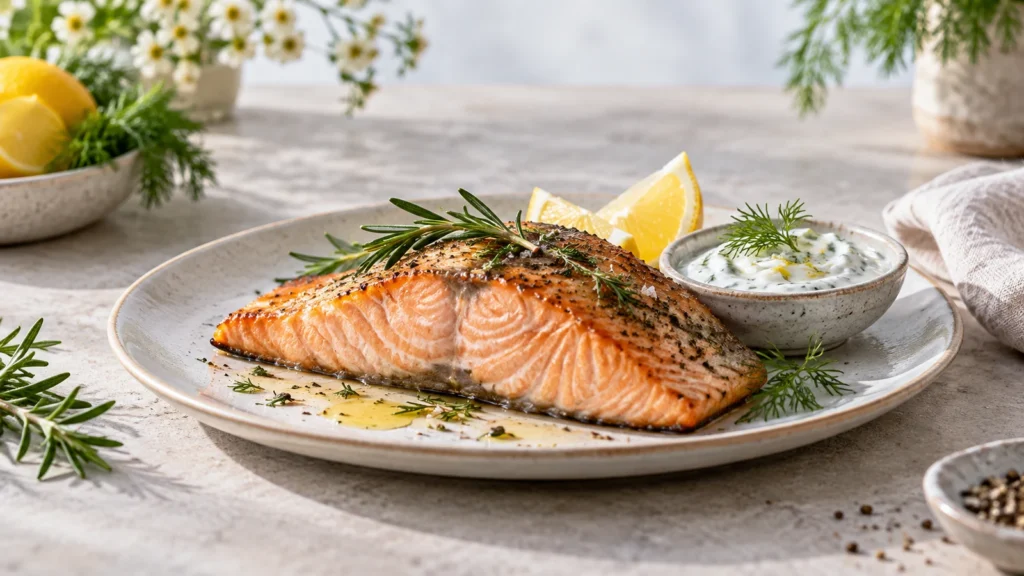
This baked salmon recipe jamie oliver-inspired dinner pairs tender, rosemary-roasted salmon with a cool dill yoghurt sauce. It is simple enough for a weeknight, yet a whole side of salmon makes an attractive centerpiece for guests.
The recipe draws inspiration from Jamie Oliver’s baked salmon with dill yoghurt, but it is an original preparation and is not officially authored, approved, or endorsed by Jamie Oliver. This baked salmon recipe jamie oliver-style approach emphasizes fresh herbs, lemon, high heat, and a creamy sauce served on the side.
Table of Contents
Recipe Overview
- Prep time: 15 minutes
- Cooking time: 12–20 minutes
- Servings: 4
- Difficulty: Easy
- Oven temperature: 425°F (220°C)
Why You’ll Love This Recipe
- High heat produces moist salmon with lightly browned edges.
- The bright dill yoghurt sauce takes minutes to stir together.
- You can use individual salmon fillets or a whole side of salmon.
- Roasted vegetables can cook alongside the fish for an easy salmon traybake.
- The seasoning is elegant but mild enough to pair with many side dishes.
- The method is easy to adapt into a baked sockeye salmon recipe when wild salmon is available.
Unlike a rich mayonnaise baked salmon recipe or a layered sushi bake recipe salmon, this version keeps the fish uncovered and serves the creamy element separately. That allows the rosemary, garlic, lemon, and natural flavor of the salmon to remain distinct.
Ingredients
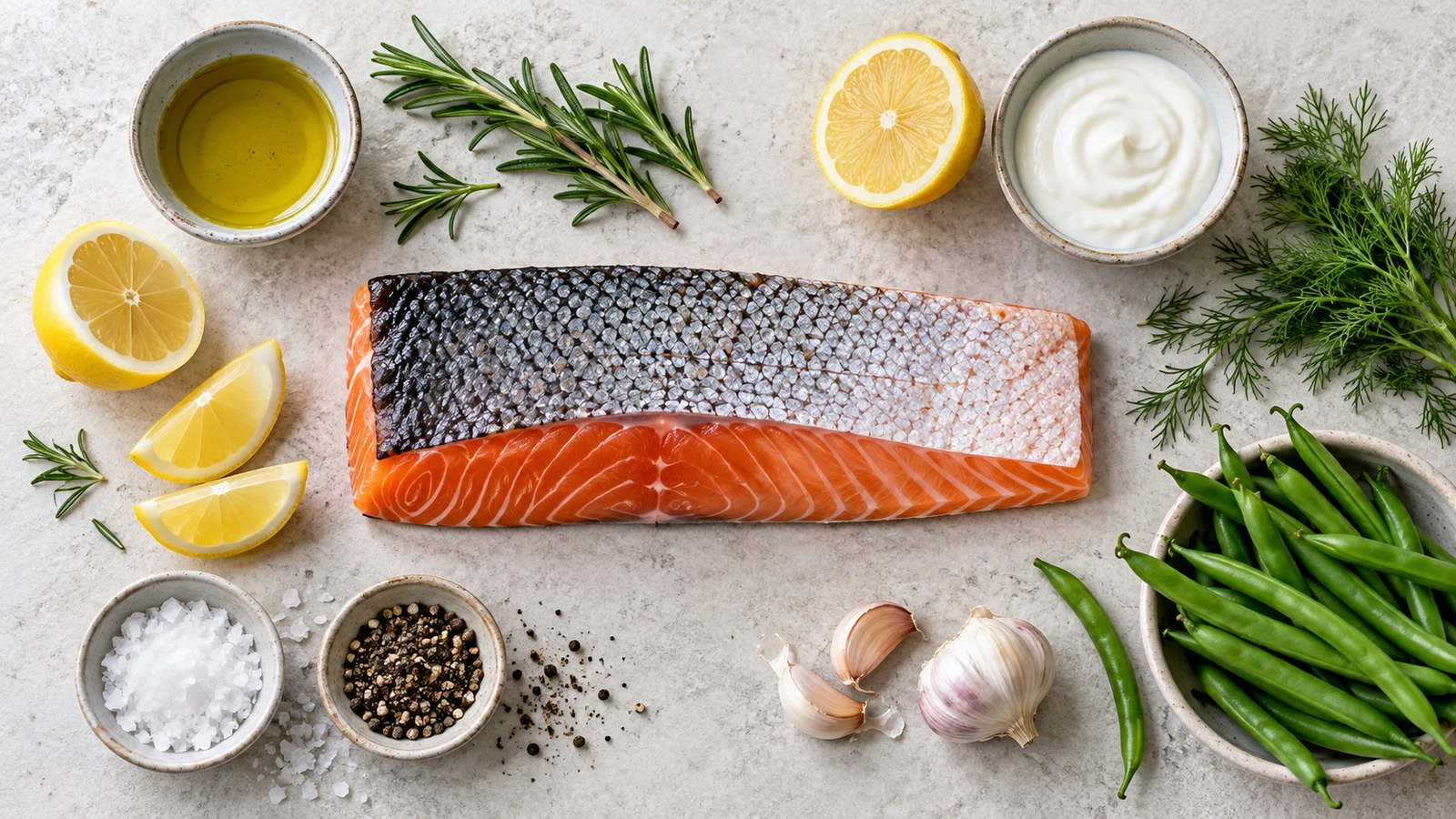
- 4 salmon fillets, about 6 ounces (170 g) each, or one 1½-pound (680 g) side of salmon
- 1 tablespoon extra-virgin olive oil
- 1 teaspoon finely chopped fresh rosemary
- ¾ teaspoon kosher salt
- ¼ teaspoon black pepper
- 1 lemon
- 1 small garlic clove, finely grated
- ¾ cup (180 g) plain Greek yoghurt
- 2 tablespoons chopped fresh dill, plus more for serving
- 1 teaspoon Dijon mustard
Equipment: Rimmed baking sheet, parchment paper, small bowl, fine grater, measuring spoons, and an instant-read thermometer.
How to Make This Baked Salmon Recipe Jamie Oliver-Inspired
- Heat the oven: Preheat to 425°F (220°C). Line a rimmed baking sheet with parchment paper.
- Prepare the fish: Pat the salmon dry. Check for pin bones and remove them with clean tweezers. Place the fish skin-side down, leaving space between fillets.
- Season: Rub with olive oil, rosemary, salt, pepper, garlic, and 1 teaspoon finely grated lemon zest. Squeeze 1 tablespoon lemon juice over the fish.
- Bake fillets: Roast 6-ounce fillets for 10–14 minutes. Begin checking thin or skinless pieces at 9 minutes.
- Bake a whole side: Roast a 1½-pound side for 15–20 minutes, checking the thickest part first. If the tail end is very thin, tuck it underneath for more even cooking.
- Rest: Remove the salmon from the oven and let it rest for 3 minutes. Carryover heat will finish the center gently.
Keep the portions in a single layer and avoid crowding the baking sheet. Open space lets hot air circulate and helps the surface roast instead of steam. This small detail gives the baked salmon recipe jamie oliver-inspired preparation its appealing browned edges.
Checking Salmon for Doneness
Perfectly roasted salmon should flake at the edges while the center remains moist and slightly translucent. Insert a thermometer sideways into the thickest part without touching the baking sheet. For official safety guidance, FoodSafety.gov lists a safe salmon internal temperature of 145°F (63°C).
Wild sockeye is leaner and thinner than many farmed varieties, so it cooks quickly. For a typical sockeye fillet, start checking at 8 minutes and expect 8–11 minutes total. For more species-specific detail, see this baked sockeye salmon recipe.
Visual signs are useful, but thickness varies too much for color alone to be perfectly reliable. Gently press the thickest area with a fork: the layers should begin to separate without looking chalky. A baked sockeye salmon recipe deserves especially close attention because the lean flesh can pass from moist to dry quickly.
Dill Yoghurt Sauce
Stir together the Greek yoghurt, dill, Dijon mustard, 2 teaspoons lemon juice, and a small pinch each of salt and pepper. Taste and add more lemon if needed. Refrigerate until serving, then spoon the sauce beside the warm salmon rather than covering its browned surface.
If the sauce becomes watery, use thick Greek yoghurt and dry the dill before chopping it. You can also strain ordinary yoghurt through a coffee filter for 20–30 minutes. Do not add excess lemon juice all at once.
The cold sauce is an important contrast in this baked salmon recipe jamie oliver-inspired meal. Stir it just before serving if a little liquid collects on top. For a smoother consistency, grate the garlic finely and chop the dill rather than leaving large stems.
Expert Tips for Moist, Flavorful Salmon
Choose Evenly Sized Portions
Fillets of similar thickness are more important than fillets of identical weight. A thin tail piece may finish several minutes before a thick center cut. If the pieces differ, place thinner portions toward the cooler edge of the baking sheet and remove them as soon as they are done.
Dry the Surface Thoroughly
Moisture left from packaging or thawing turns to steam in the oven. Blot every surface with a clean paper towel before adding oil and seasoning. This is helpful for the original preparation, a mayonnaise baked salmon recipe, or an asian baked salmon recipe because each benefits from a seasoning layer that stays in place.
Use Fresh Lemon Carefully
Lemon juice brightens the salmon, but leaving raw fish in an acidic mixture for hours can make its exterior firm or slightly chalky. Add the lemon when seasoning shortly before baking. Reserve wedges for the table so everyone can adjust the acidity on the finished fish.
Let the Salmon Rest
A brief rest redistributes heat and makes the portions easier to lift from the skin. Three minutes is enough; a long rest can cool the fish. Prepare the plates, vegetables, and chilled sauce before the salmon leaves the oven so dinner can be served promptly.
Serving Suggestions
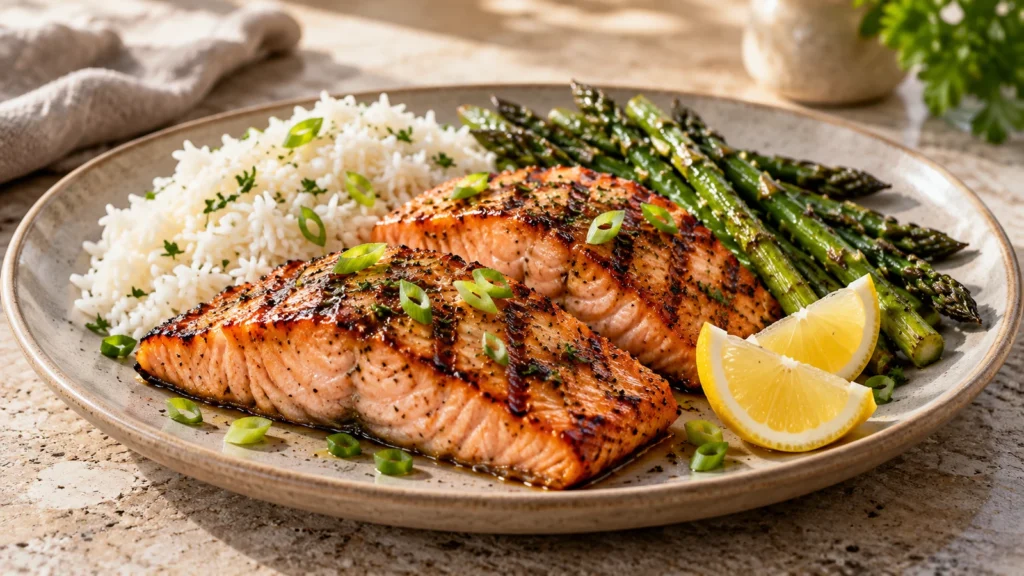
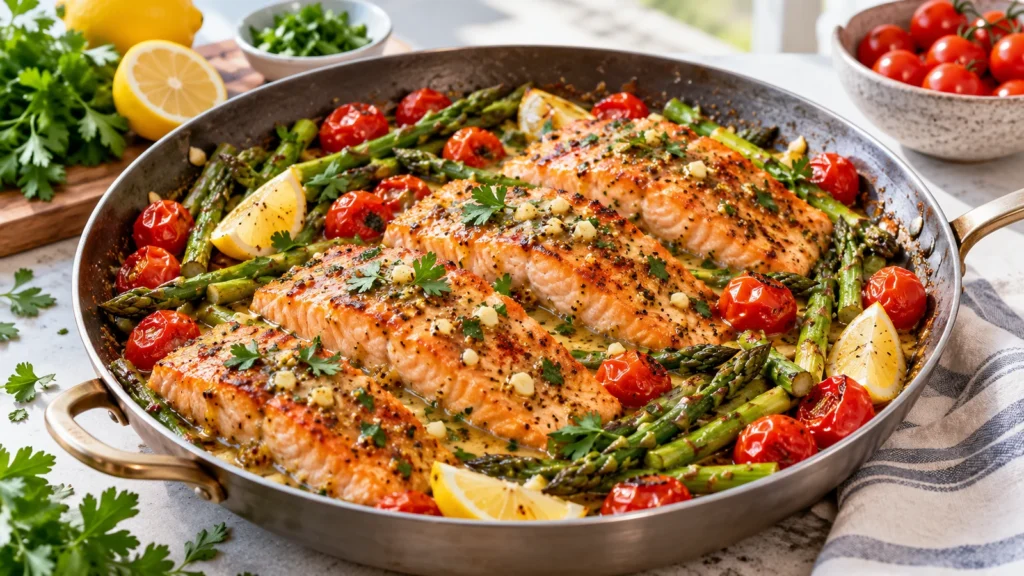
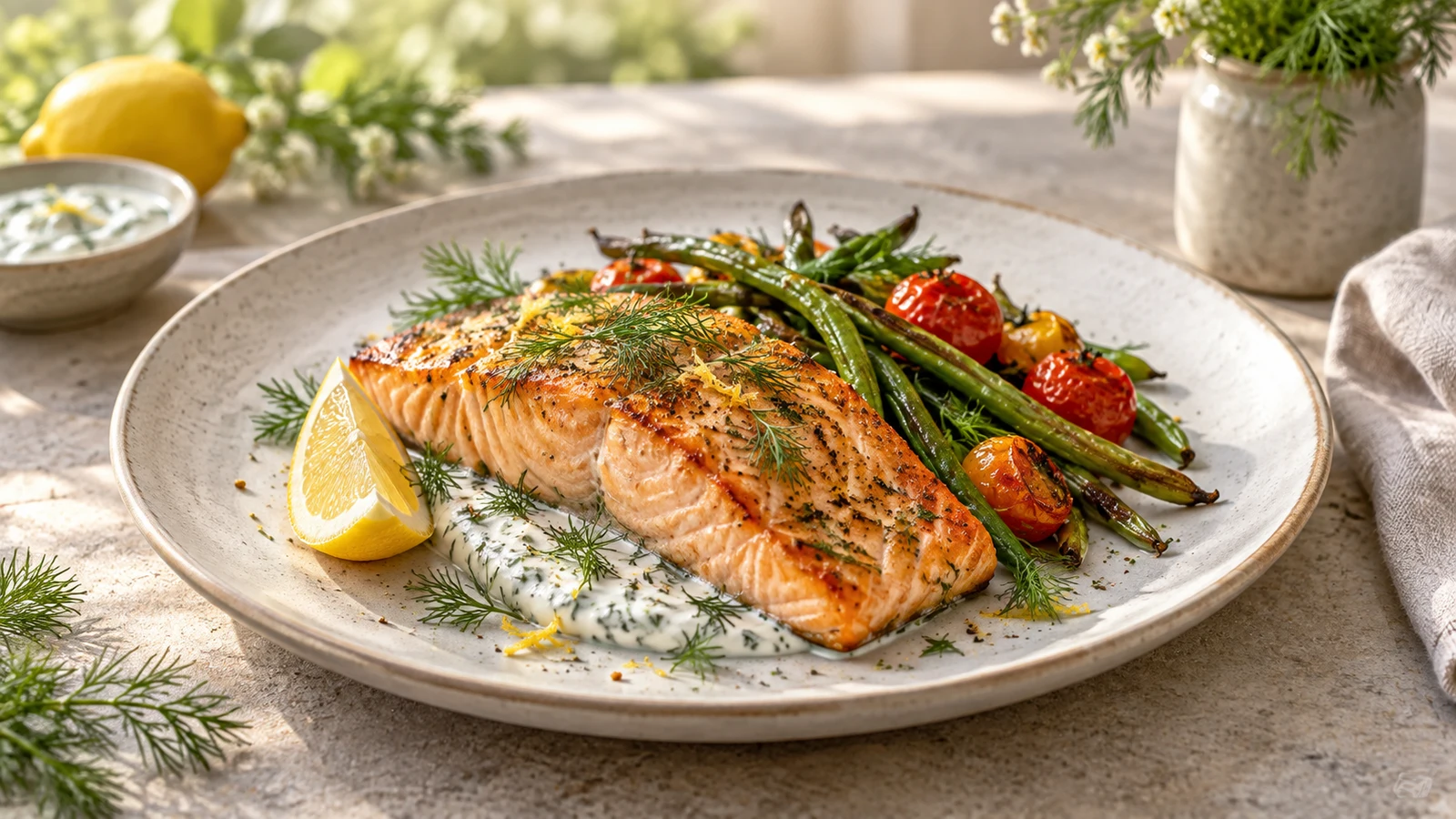
Serve the salmon with baby potatoes, asparagus, green beans, or a crisp cucumber salad. To make a salmon traybake, toss quick-cooking vegetables with oil and salt, roast them for 10 minutes, then add the fish and continue cooking until both are ready.
Rice, couscous, or crusty bread will catch the dill yoghurt sauce. For extra freshness, finish each plate with lemon wedges, dill, and a small drizzle of olive oil.
Casual Weeknight Plates
Pair each fillet with steamed rice and peas, roasted new potatoes, or a simple green salad. A small spoonful of sauce is usually enough because the salmon already carries garlic, rosemary, and lemon. Leftover cold salmon also works well over dressed greens the next day.
Serving a Whole Side for Guests
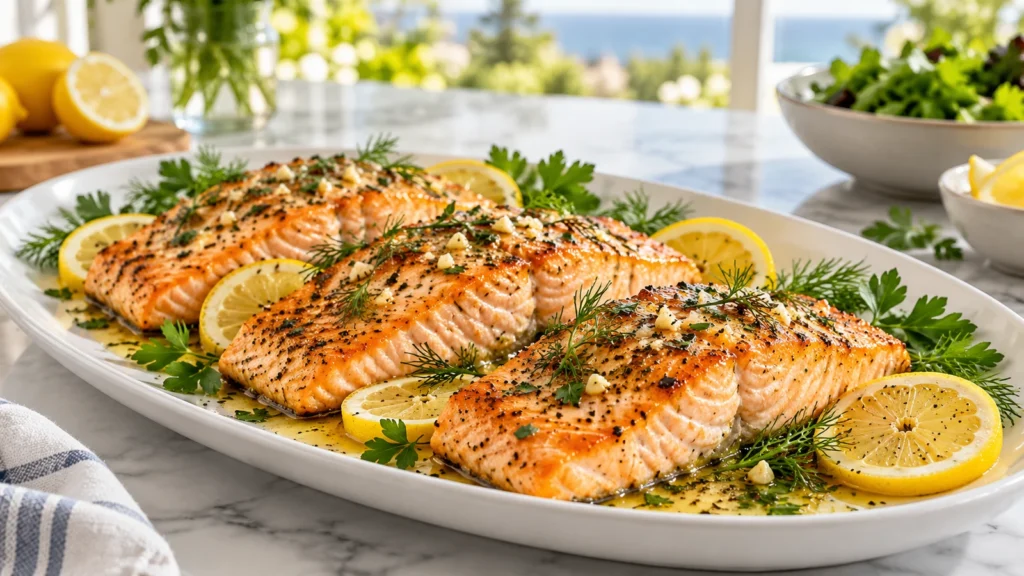
Transfer the rested side to a warm platter, leaving the skin behind if it releases easily. Garnish with dill and lemon wedges, then let guests take portions from the thick center or delicate tail. The generous presentation makes this baked salmon recipe jamie oliver-inspired dish suitable for a relaxed dinner party.
Choosing Sides for Different Variations
Plain rice and steamed greens complement an asian baked salmon recipe, while cucumber, avocado, and seaweed suit a sushi bake recipe salmon. For rosemary salmon, choose potatoes, green vegetables, or grains that will not overpower the dill yoghurt sauce.
Variations and Substitutions
Fresh or Frozen Salmon
Either works well. Thaw frozen salmon overnight in the refrigerator, unwrap it, drain away liquid, and pat it thoroughly dry before seasoning. Follow safe fish selection and handling guidance, including keeping seafood chilled and avoiding cross-contamination.
Skin-On or Skinless Salmon
Skin-on salmon is easier to move and the skin helps protect the flesh from direct heat. Bake it skin-side down. Skinless salmon also works, but parchment and a light coating of oil help prevent sticking; begin checking it a minute earlier.
Distinct Flavor Variations
A mayonnaise baked salmon recipe replaces the herb oil with a thin mayonnaise coating; omit the yoghurt sauce or serve it sparingly. For an asian baked salmon recipe, replace rosemary and dill with soy sauce, ginger, sesame oil, and scallions. Use tamari for a gluten-free option.
A sushi bake recipe salmon is a different dish: it usually layers seasoned rice with a creamy salmon mixture and is served with seaweed. Try this salmon sushi bake recipe when you want that casserole-style preparation rather than herb-roasted fillets.
Mayonnaise Variation
For a simple mayonnaise baked salmon recipe, spread only a thin, even layer over the fish so the topping does not overwhelm it. The coating protects the surface and provides richness. Keep the original baking temperature and begin checking at the same time because thickness still determines doneness.
Asian-Inspired Variation
When making an asian baked salmon recipe, use the alternative flavors as replacements rather than adding them to the rosemary and dill. Ginger, soy sauce, sesame oil, and scallions form a coherent seasoning profile. Serve the finished fish with rice and crisp vegetables.
Sockeye Variation
To turn the method into a baked sockeye salmon recipe, retain the lemon, rosemary, and garlic but check the fish several minutes sooner. Sockeye portions are often slim and naturally lean. A light coating of olive oil and precise timing help protect their texture.
Allergy-Friendly Swaps
For dairy-free sauce, use unsweetened plant-based Greek-style yoghurt. Replace Dijon with extra lemon if mustard is unsuitable. The core recipe contains no nuts or gluten, but check packaged ingredients for cross-contact warnings.
Scaling the Recipe
Allow 5–6 ounces (140–170 g) of salmon per adult. Double the seasonings and sauce for eight servings, but use two baking sheets so the fish is not crowded. Cooking time depends on thickness, not total weight.
Make-Ahead Guide
Mix the dill yoghurt sauce up to one day in advance and refrigerate it in a covered container. Chop the rosemary, wash the dill, and measure the dry seasonings ahead, but keep each component separate. Zest and juice the lemon close to cooking for the freshest flavor.
You may line the baking sheet and inspect the salmon for pin bones several hours ahead. Return the fish to the refrigerator in a covered container immediately afterward. Do not leave raw salmon at room temperature while preparing side dishes.
Season the fish shortly before it goes into the oven. This keeps the lemon and salt from changing the exterior texture. Whether preparing this dish or a baked sockeye salmon recipe, take the fish from the refrigerator only when the oven and remaining meal components are nearly ready.
Tips for the Best Results
- Choose pieces of similar thickness so they finish together.
- Pat the surface dry; excess moisture prevents browning.
- Measure the temperature in the thickest section.
- Do not wait for white protein to cover the fish; heavy white deposits often indicate overcooking.
- Keep the sauce cold until serving for a pleasant contrast.
- Use a rimmed sheet so any cooking juices remain contained.
- Check early because you can always return underdone salmon to the oven.
Troubleshooting Baked Salmon
Why Is the Salmon Dry?
Dry salmon usually spent too long in the oven or came from a particularly lean fish. Serve it with extra dill yoghurt sauce and shorten the next bake. This issue is especially common with a baked sockeye salmon recipe, so start checking at 8 minutes.
Why Is the Center Still Raw?
Very cold or unusually thick salmon may need extra time. Return it to the oven in 2-minute increments and check the thickest part after each interval. Do not raise the temperature, because more aggressive heat can dry the exterior before the center finishes.
Why Is White Material Appearing?
The white substance is albumin, a protein that becomes visible as salmon cooks. A small amount is normal and safe. Heavy deposits can indicate strong heat or extended cooking, but they do not make the fish inedible. Patting the fish dry and avoiding overcooking keeps the appearance neater.
Why Did the Salmon Stick?
Use intact parchment paper and coat the fish lightly with oil. Let cooked salmon rest before sliding a thin spatula beneath it. If the skin stays on the parchment while the flesh lifts cleanly, serve the flesh without the skin rather than forcing it loose.
Why Is the Sauce Thin?
Watery yoghurt, damp herbs, or too much lemon juice can loosen the sauce. Begin with thick Greek yoghurt, dry the dill, and measure the juice. If needed, fold in another spoonful of yoghurt and chill the sauce for 20 minutes before serving.
Common Mistakes and Fixes
If the salmon is dry, it likely cooked too long or was unusually lean. Serve it with extra sauce and check earlier next time. If it remains raw in the center, return it to the oven in 2-minute increments. Avoid broiling for the entire cooking period, which can scorch the herbs before the middle is done.
How to Store and Reheat
Cool leftovers promptly and refrigerate salmon and sauce in separate airtight containers for up to 3 days. Freeze cooked salmon without the sauce for up to 2 months; wrap portions tightly, thaw overnight in the refrigerator, and expect a slightly softer texture.
For gentle reheating, cover the salmon loosely and warm it at 275°F (135°C) for 10–15 minutes, or until heated through. A microwave also works at 50 percent power in 30-second intervals. Serve the dill yoghurt sauce cold and never freeze it, as it can separate.
Using Leftovers
Flake cold salmon into a salad, fold it through warm rice after reheating, or serve it in a grain bowl with cucumber and greens. Remove any skin and check carefully for overlooked bones. Add the yoghurt sauce only after reheating so it stays cool and creamy.
Leftover herb-roasted salmon can inspire a simplified sushi bake recipe salmon, but it should not be kept beyond the original 3-day refrigeration window. Reheating does not reset storage time, so label the container with the date it was first cooked.
Nutrition
One serving, including about one-quarter of the sauce, provides approximately 410 calories, 39 g protein, 25 g fat, 6 g saturated fat, 5 g carbohydrates, and 620 mg sodium. Values are estimates and vary with the salmon variety, fillet size, yoghurt, and exact amount of sauce served.
Frequently Asked Questions
What is the best oven temperature for salmon?
425°F (220°C) is ideal for fast cooking and lightly browned edges. A lower temperature is gentler but takes longer, while very high heat gives you less margin before the fish dries out.
Can I prepare the recipe ahead?
Mix the sauce up to one day ahead and refrigerate it. Season the salmon shortly before baking because prolonged contact with salt and lemon can alter its texture. If you prefer cured fish, use a purpose-built smoked salmon dry brine instead.
Should I cover salmon while it bakes?
No. Leaving it uncovered encourages light browning and prevents trapped steam from making the surface wet. If a very thick side browns too quickly, loosely cover it only near the end.
How can I tell whether salmon is fresh?
Look for firm, moist flesh with a mild aroma and no drying around the edges. Keep it refrigerated and cook it promptly. Previously frozen salmon can be an excellent choice when it has been properly thawed.
Can I use this method for a baked sockeye salmon recipe?
Yes. Use the same seasoning and oven temperature, but start checking at 8 minutes because sockeye is commonly thinner and leaner. Its deep color and pronounced flavor pair particularly well with lemon and fresh dill.
How does this differ from a mayonnaise baked salmon recipe?
The fish in this recipe is coated with olive oil and herbs, while a mayonnaise baked salmon recipe uses mayonnaise as a protective, creamy topping. Both methods can keep salmon moist, but serving yoghurt separately produces a lighter surface and clearer rosemary flavor.
Can I turn it into an asian baked salmon recipe?
Yes. For an asian baked salmon recipe, replace the rosemary, dill, and yoghurt profile with soy sauce, ginger, sesame oil, and scallions. Keep the salmon quantity, oven temperature, and thickness-based timing unchanged.
Is this the same as sushi bake recipe salmon?
No. A sushi bake recipe salmon is generally a layered casserole with seasoned rice and a creamy salmon mixture. This recipe roasts intact fillets or a whole side and serves a cool herb sauce alongside them.
Can I bake the salmon directly from frozen?
For the most even seasoning and reliable timing, thaw it overnight in the refrigerator first. Frozen portions release water and require longer cooking, making it harder to brown the surface without drying the outer layers.
Can I use dried herbs?
Fresh rosemary and dill provide the best texture and aroma. If fresh rosemary is unavailable, use a smaller amount of dried rosemary because its flavor is concentrated. Fresh dill is strongly preferred in the sauce, where dried herbs can taste dusty and remain firm.
How do I prevent odors when storing salmon?
Cool it promptly, then use a clean container with a tight-fitting lid. Store the sauce separately and keep both items in the coldest part of the refrigerator. Discard leftovers that develop an unpleasant odor or show other signs of spoilage.
Printable Recipe Card
Prep: 15 minutes
Cook: 12–20 minutes
Yield: 4 servings
Oven: 425°F (220°C)
Ingredients: Four 6-ounce (170 g) salmon fillets or one 1½-pound (680 g) side; 1 tablespoon olive oil; 1 teaspoon chopped rosemary; ¾ teaspoon kosher salt; ¼ teaspoon pepper; 1 lemon; 1 garlic clove; ¾ cup (180 g) Greek yoghurt; 2 tablespoons dill; and 1 teaspoon Dijon mustard.
- Heat the oven to 425°F (220°C) and line a baking sheet.
- Pat salmon dry and place it skin-side down.
- Coat with oil, rosemary, salt, pepper, garlic, lemon zest, and 1 tablespoon lemon juice.
- Bake fillets for 10–14 minutes or a whole side for 15–20 minutes, checking the thickest section for doneness.
- Rest for 3 minutes. Mix yoghurt, dill, Dijon, 2 teaspoons lemon juice, salt, and pepper; serve alongside.
A Simple Salmon Dinner to Repeat
With careful timing, a hot oven, and a fresh herb sauce, this versatile salmon stays moist and flavorful. The baked salmon recipe jamie oliver-inspired method is easy to serve with vegetables, potatoes, rice, or grains and polished enough for guests without requiring complicated preparation.
Once you are comfortable judging doneness, the core technique also provides a useful starting point for a baked sockeye salmon recipe, mayonnaise baked salmon recipe, or asian baked salmon recipe. When you want a creamy rice casserole instead, choose a dedicated sushi bake recipe salmon and follow its distinct layering method.
Reviews
Reader reviews are managed separately (outside this build).