Beef
Best Beef Jerky in Dehydrator Recipes: Foolproof Guide
Master beef jerky in dehydrator recipes with marinade amounts, exact temperature, drying times, doneness tests, storage, and food safety tips. Get started.
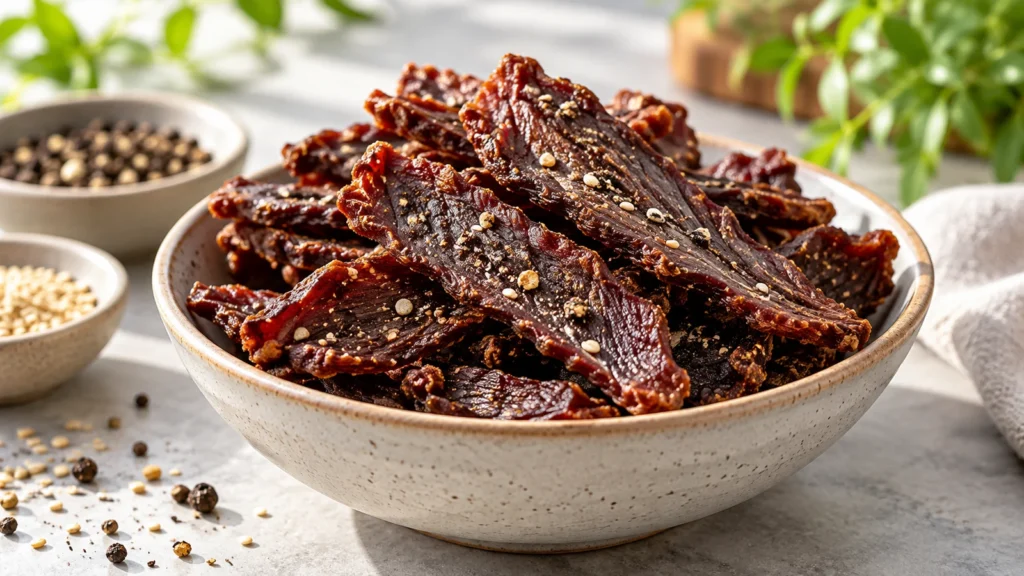
Beef jerky in dehydrator recipes work best with lean meat sliced 1/8 to 1/4 inch thick, heated safely, and dried at 160°F (71°C) for about 4 to 6 hours. The result should be dry and chewy, with strips that bend and crack slightly without snapping.
This foolproof beef jerky recipe includes a savory marinade, clear food-safety steps, objective doneness tests, and variations for sliced, ground, and teriyaki jerky. A 2-pound batch yields roughly 10 to 12 ounces, which is usually more economical than buying the same amount of premium packaged jerky.
Successful beef jerky in dehydrator recipes depend on consistency. Choosing a lean cut, trimming it carefully, making slices the same thickness, and leaving room for airflow will help every tray dry predictably.
Table of Contents
Why You’ll Love This Beef Jerky Recipe
- Reliable temperature and drying-time guidance
- Balanced savory flavor with adjustable salt and sweetness
- Instructions for slicing with or against the grain
- Options for spicy, gluten-free, low-sodium, and low-sugar jerky
- Simple doneness tests that do not rely on guesswork
- Practical storage advice for keeping each batch at its best
Best Beef Cuts for Jerky
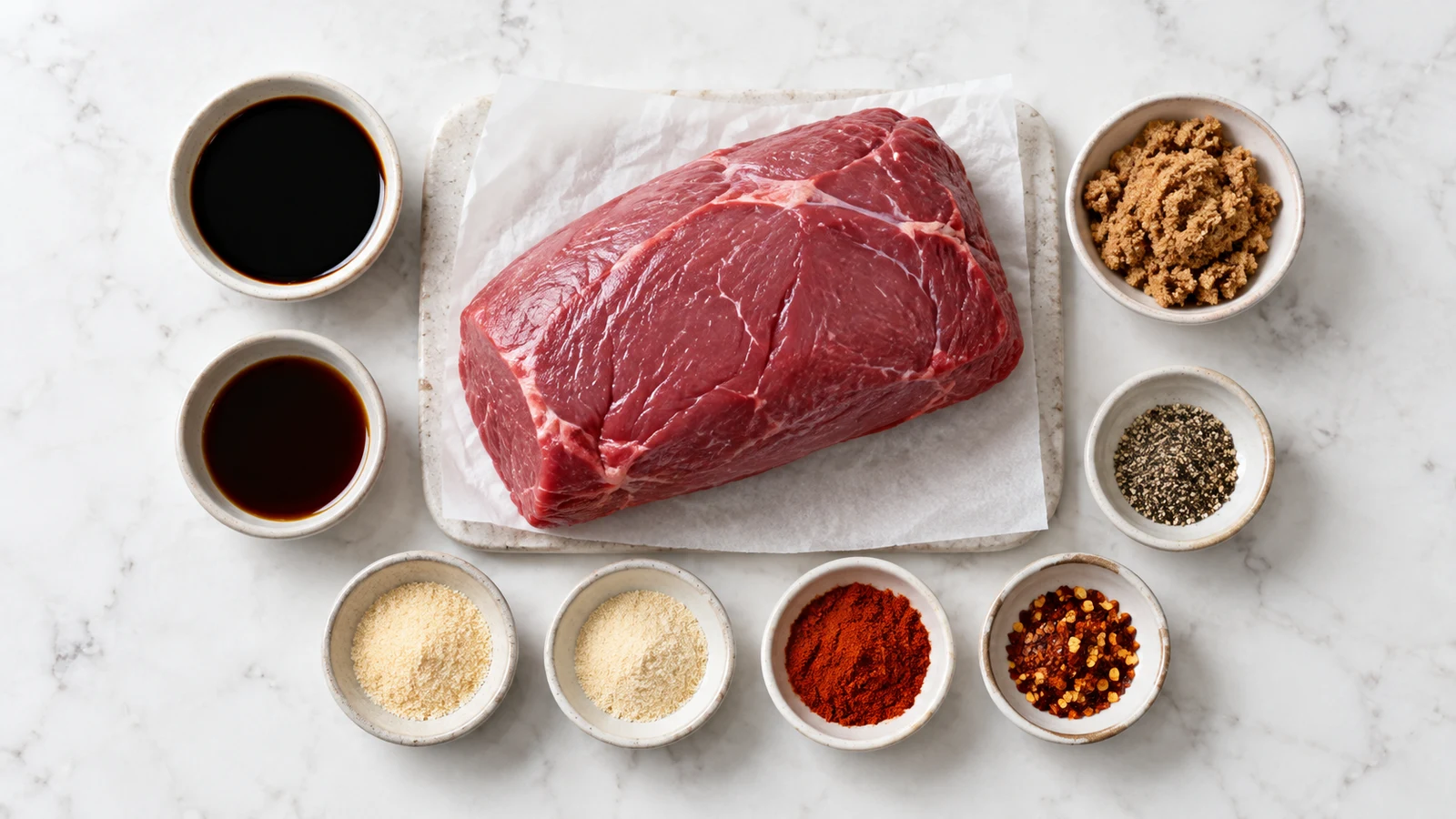
Choose very lean cuts such as eye of round, top round, bottom round, or sirloin tip. Eye of round is especially convenient because it is lean, evenly shaped, and easy to slice. Trim away visible fat and silverskin, since fat can become rancid and shorten the jerky’s storage life.
Top round and bottom round are good alternatives when eye of round is unavailable. Sirloin tip may be slightly more tender, but it can require additional trimming. Whichever cut you select, look for a compact roast with minimal internal fat and a clearly visible grain.
Avoid heavily marbled steaks and fatty cuts such as brisket unless you plan to eat the finished jerky promptly and keep it refrigerated. Lean beef produces a cleaner texture, absorbs the seasonings evenly, and supports a longer useful storage period.
Ingredients
- 2 pounds (907 g) lean beef, well trimmed
- 1/2 cup low-sodium soy sauce
- 1/4 cup Worcestershire sauce
- 1 tablespoon brown sugar
- 2 teaspoons smoked paprika
- 1 teaspoon coarsely ground black pepper
- 1 teaspoon garlic powder
- 1 teaspoon onion powder
- 1/2 teaspoon liquid smoke, optional
- 1/4 teaspoon curing salt containing 6.25% sodium nitrite, optional; use only according to its package directions
Equipment
- Food dehydrator with temperature control
- Sharp knife or meat slicer
- Rimmed baking sheet and wire rack
- Resealable bag or nonreactive covered container
- Instant-read food thermometer
- Paper towels
If you do not have a dehydrator, use an oven at its lowest setting with the beef arranged on wire racks. Keep the temperature near 160°F (71°C), allow moisture to escape, and begin checking sooner if the oven runs hot.
A temperature-controlled dehydrator is preferable because it maintains steady heat while moving moist air away from the meat. Before starting this beef jerky recipe, confirm that the trays are clean and that the fan and heating element operate normally.
Freezing, Slicing, and Grain Direction
Freeze the trimmed beef for 45 to 90 minutes, until firm but not solid. Slice it consistently 1/8 inch thick for crisp-edged jerky or up to 1/4 inch thick for a meatier chew. Uneven pieces finish at different times and increase the chance of damp centers.
Cut against the grain for tender jerky that is easy to bite. Cut with the grain for a traditional, firmer chew, or slice diagonally across the grain for a texture between the two.
Square off narrow or irregular ends before slicing if necessary. The small trimmings can be cooked separately rather than placed on the dehydrator trays. Keeping the main strips similar in length and width makes loading, rotating, and checking the trays easier.
Beef Jerky Marinade Recipe
Whisk the soy sauce, Worcestershire sauce, brown sugar, seasonings, liquid smoke, and optional curing salt until the sugar dissolves. This beef jerky marinade recipe provides about 3/4 cup, enough for 2 pounds of meat. For a different batch size, use approximately 3/8 cup marinade per pound of beef and keep every ingredient in the same proportion.
Add the sliced beef, press out excess air, and refrigerate for 8 to 24 hours. Turn the bag once or twice so all pieces remain coated. For another practical overview of dehydrator technique, see this beef jerky dehydrator guide.
The soy sauce supplies salt and savory depth, while Worcestershire sauce adds tang and complexity. Brown sugar rounds out the salt without making the basic beef jerky marinade recipe noticeably sweet. Smoked paprika and optional liquid smoke create a gently smoky finish.
Eight hours gives this beef jerky marinade recipe enough time to season thin slices. A full 24 hours produces a deeper flavor, but extending the soak beyond that may make the finished strips too salty or alter their texture.
Food-Safe Preparation
Marinate beef only in the refrigerator and discard used marinade unless it is boiled before reuse. The USDA jerky safety guidance recommends heating meat to 160°F (71°C) before dehydrating because many dehydrators may not heat raw meat quickly enough to destroy harmful bacteria.
Arrange the marinated strips on a wire rack over a rimmed pan without overlapping. Bake in a preheated 275°F (135°C) oven until the thickest strip reaches 160°F (71°C), usually about 10 minutes; verify it with an instant-read thermometer. Transfer the hot strips directly to the preheated dehydrator.
Wash your hands, knife, cutting board, thermometer probe, and any surface that contacts raw beef. Do not return heated strips to a plate that held raw meat. These habits are important for all beef jerky in dehydrator recipes, even when curing salt is included.
How to Make Beef Jerky in a Dehydrator
- Prepare the beef: Trim all visible fat, partially freeze the meat, and slice it uniformly 1/8 to 1/4 inch thick.
- Marinate: Combine the marinade ingredients, add the beef, and refrigerate for 8 to 24 hours.
- Preheat: Set the dehydrator to 160°F (71°C). Remove the strips from the marinade and blot away excess liquid with paper towels.
- Heat safely: Heat the strips in a 275°F (135°C) oven until their internal temperature reaches 160°F (71°C).
- Load the trays: Place strips in a single layer with at least 1/4 inch of space between them. Do not let pieces overlap or fold.
- Dry: Dehydrate at 160°F (71°C) for 4 to 6 hours. Rotate trays from top to bottom and turn strips after about 2 hours if the machine dries unevenly.
- Test: Begin checking thin pieces at 3 1/2 hours. Remove each piece when it passes the bend test, allowing thicker strips more time.
- Cool: Let the jerky cool completely on a clean rack before packing it. Warm jerky can release condensation inside its container.
The exact time depends on slice thickness, humidity, marinade sugar, and dehydrator performance. This dehydrator jerky reference from Virginia Beef offers additional preparation guidance.
Expert Tips for Beef Jerky in Dehydrator Recipes
- Measure thickness: Check the first few slices with a ruler so you can adjust your knife angle before cutting the entire roast.
- Keep slices uniform: Pieces of matching thickness are more likely to finish together.
- Blot thoroughly: Pooled marinade makes surfaces sticky and slows drying.
- Protect airflow: Leave open space around every strip and avoid covering the center vents of the trays.
- Rotate when needed: Move trays from top to bottom if your model has warmer zones.
- Remove pieces individually: Thin strips may finish before thicker ones, so do not over-dry the whole batch while waiting.
- Cool a sample: Let one test strip rest for 5 minutes before judging its final texture.
Keep notes about the cut, slice thickness, marinating time, tray position, and drying duration. Those details make future beef jerky in dehydrator recipes easier to reproduce because dehydrator models and kitchen humidity vary.
Doneness Tests and Troubleshooting
Properly dried jerky feels firm and dry, with no cool, soft, or wet spots. When bent, it should flex and develop small surface cracks but should not break cleanly. Tear open the thickest piece: the center should show dry fibers without visible moisture.
- Brittle: The slices were too thin or dried too long. Check the next batch earlier.
- Greasy: Too much fat remained. Trim more thoroughly and use a leaner cut.
- Sticky: Excess marinade or sugar remained on the surface. Blot well and reduce sweetener.
- Too salty: Shorten marinating time or replace more soy sauce with water.
- Moist inside: Return the jerky to the dehydrator and continue drying, then test the thickest pieces again.
- Unevenly dried: Check for inconsistent slicing, crowded trays, or blocked airflow. Rotate trays and remove completed pieces.
- Weak flavor: Make sure every strip contacts the marinade, turn the bag during refrigeration, and use the full 8-hour minimum.
Why Is My Jerky Dark Around the Edges?
Very thin edges dry faster and can darken before the center is ready. High-sugar marinades also brown more readily. Slice as evenly as possible, blot the surface, and start checking sweetened batches at 3 1/2 hours.
Why Does the Texture Change After Cooling?
Hot jerky feels softer and more flexible than cooled jerky. Judge doneness only after a sample has cooled for about 5 minutes. This prevents an otherwise good beef jerky recipe from becoming brittle through unnecessary extra drying.
Variations and Substitutions
For low-sodium jerky, use reduced-sodium soy sauce, omit curing salt, and replace 2 tablespoons of soy sauce with water. For a low-sugar version, omit the brown sugar. Make it gluten-free with certified gluten-free tamari and gluten-free Worcestershire sauce.
For spicy jerky, add 1 to 2 teaspoons red pepper flakes or 1 tablespoon sriracha. A smoky version benefits from chipotle powder, while cracked coriander and extra black pepper create a peppered finish.
Peppered Beef Jerky
Press a little additional coarsely ground black pepper onto the blotted strips before heating. The pepper adheres to the damp surface and forms a bold crust as the meat dries. Keep the original 1 teaspoon in the marinade for flavor throughout each strip.
Garlic and Herb Variation
Add dried rosemary or thyme for an aromatic variation, using a restrained amount so the herbs do not overpower the beef. Keep the original garlic powder and all liquid ingredients unchanged to preserve the marinade balance.
Ground Beef Jerky Recipe
Use 2 pounds of beef that is at least 90% lean and mix it thoroughly with the seasonings, but reduce the liquid marinade to about 1/4 cup so the mixture holds its shape. Refrigerate for 4 hours, then use a jerky gun to form thin, even strips. Heat to 160°F (71°C) and dehydrate at 160°F until firm and dry, generally 4 to 6 hours.
For expanded shaping and seasoning instructions, follow this ground beef jerky recipe. Unlike sliced jerky, a ground beef jerky recipe needs careful mixing so the seasoning is distributed evenly and the strips hold together.
Teriyaki Beef Jerky Recipe
For a teriyaki beef jerky recipe, replace the Worcestershire sauce with 1/4 cup pineapple juice and add 2 tablespoons honey, 1 teaspoon grated ginger, and 1 teaspoon sesame oil. Because sugar increases stickiness and can darken quickly, blot the strips carefully and begin checking them after 3 1/2 hours.
This teriyaki beef jerky recipe has a sweeter, more aromatic finish than the savory base version. Arrange the strips with generous space because the honey makes their surfaces tackier during the early part of drying.
Make-Ahead and Storage Details
You can trim and partially freeze the roast a day before marinating. The sliced beef may remain in the beef jerky marinade recipe mixture for 8 to 24 hours, making it convenient to prepare in the evening and dehydrate the following day.
Condition cooled jerky by loosely packing it in a clean container for 24 hours, shaking it occasionally. If condensation appears, return the strips to the dehydrator. Store homemade jerky in an airtight container for up to 1 week at room temperature, 1 month in the refrigerator, or 3 months in the freezer. Refrigeration is the safest choice when curing salt is omitted.
Divide a large batch into several small containers instead of repeatedly opening one package. Removing only the portion you need limits exposure to humid air. Label refrigerated or frozen portions with the preparation date and variation, especially when making several beef jerky in dehydrator recipes at once.
For freezing, package the completely cooled strips in small airtight portions. Thaw a portion in the refrigerator while it remains sealed, then let it stand at room temperature for about 10 minutes if you prefer a softer chew.
Discard jerky that develops mold, an unpleasant sour or rancid odor, unusual discoloration, slime, or new moisture. Jerky does not need reheating, but chilled pieces can rest at room temperature for 10 minutes to soften slightly.
Serving Ideas
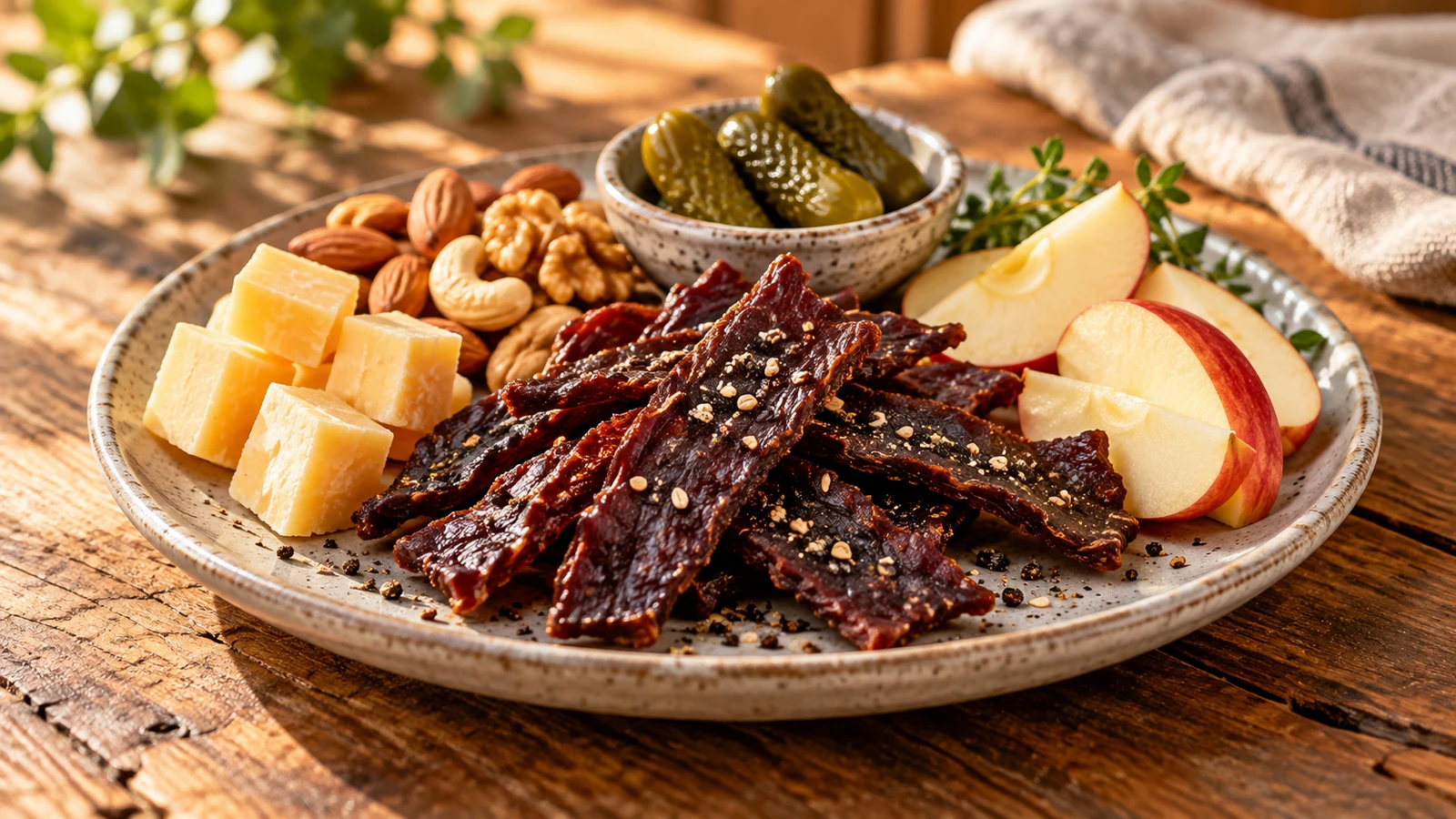
Serve jerky as a protein-rich snack with cheese, nuts, pickles, apple slices, or fresh vegetables. Its concentrated savory flavor also pairs well with mild crackers and unsweetened dried fruit.
Pack individual portions for road trips, hikes, lunch boxes, or busy afternoons, keeping normal food-storage precautions in mind. Cut larger strips into bite-size pieces before serving to children or placing them on a snack board.
Chopped jerky can add savory flavor to scrambled eggs, baked potatoes, soups, or trail mix. If adding it to a cooked dish, use a modest amount and taste before adding extra salt because the dried meat is already well seasoned.
Nutrition
A 1-ounce serving contains approximately 90 calories, 13 grams protein, 3 grams fat, 3 grams carbohydrate, and 450 milligrams sodium. Values vary with the cut, marinade absorption, and final moisture content.
Frequently Asked Questions
How long does beef jerky take in a dehydrator?
Most 1/8- to 1/4-inch strips need 4 to 6 hours at 160°F (71°C). Start checking early because thin pieces and powerful dehydrators may finish sooner.
Can raw beef go directly into a dehydrator?
For a safer beef jerky recipe, heat the beef to 160°F (71°C) before dehydrating. Do not assume the dehydrator will bring cold raw meat to a safe temperature quickly enough.
Why did my jerky spoil?
Likely causes include fatty meat, insufficient drying, packing before cooling, or exposure to moisture. Trim carefully, confirm dry centers, cool completely, and refrigerate uncertain batches.
Can I double beef jerky in dehydrator recipes?
Yes, double the beef and every marinade ingredient proportionally, but avoid overcrowding. Dry in separate batches if the trays cannot maintain open airflow around every strip.
Can I shorten the marinating time?
Thin strips need at least 8 hours to develop the intended seasoning. A shorter soak may produce a mild or uneven result. Turn the bag occasionally and keep it refrigerated throughout the marinating period.
Can I reuse the beef jerky marinade recipe mixture?
Do not reuse marinade that has contacted raw beef unless it is boiled first. For a dipping or basting sauce, reserve a separate untouched portion before adding the meat.
Does a ground beef jerky recipe need a jerky gun?
A jerky gun is the easiest way to create strips of uniform width and thickness. Whatever shaping method you use, compact the mixture well, heat it to 160°F (71°C), and dry it until firm with no moist center.
Why is a teriyaki beef jerky recipe stickier?
Honey and other sugars retain tackiness and brown more quickly than the savory base marinade. Blot each strip thoroughly, leave plenty of airflow, and begin checking the batch after 3 1/2 hours.
Should homemade jerky be refrigerated?
Refrigeration is recommended for longer keeping and is the safest choice when curing salt is omitted. Properly dried jerky may be stored in an airtight container for up to 1 week at room temperature, but discard it if moisture, mold, or an off odor develops.
How do I know whether the center is dry?
Cool a thick piece for 5 minutes, bend it, and tear it open. It should flex with fine surface cracks and reveal dry fibers without a wet, cool, or soft center. Return uncertain pieces to the dehydrator.
Recipe Card
Yield: 10 to 12 ounces, about 10 servings
Preparation time: 25 minutes
Marinating time: 8 to 24 hours
Drying time: 4 to 6 hours
Temperature: 160°F (71°C)
Instructions: Trim and partially freeze 2 pounds lean beef, then slice it 1/8 to 1/4 inch thick. Marinate in soy sauce, Worcestershire sauce, brown sugar, and seasonings for 8 to 24 hours. Blot dry, heat to an internal temperature of 160°F (71°C), and arrange on dehydrator trays with space between the pieces. Dry at 160°F for 4 to 6 hours, rotating trays as needed, until the strips bend with fine cracks and contain no moist center. Cool completely before storing.
Notes: Drying time varies by thickness and equipment. Remove finished strips individually, refrigerate for longer keeping, and discard any jerky that develops mold, moisture, or an off odor.
Final Tips for Reliable Homemade Jerky
With lean beef, even slicing, safe preheating, and careful doneness checks, this beef jerky recipe becomes a repeatable project rather than a guessing game. Adjust the marinade to suit your taste while preserving the same spacing, temperature, and drying principles.
The best beef jerky in dehydrator recipes balance flavor, food safety, airflow, and patient testing. Once you know how your machine handles uniform slices, you can confidently try the savory base, a ground beef jerky recipe, or a teriyaki beef jerky recipe while keeping the essential method consistent.
Reviews
Reader reviews are managed separately (outside this build).